
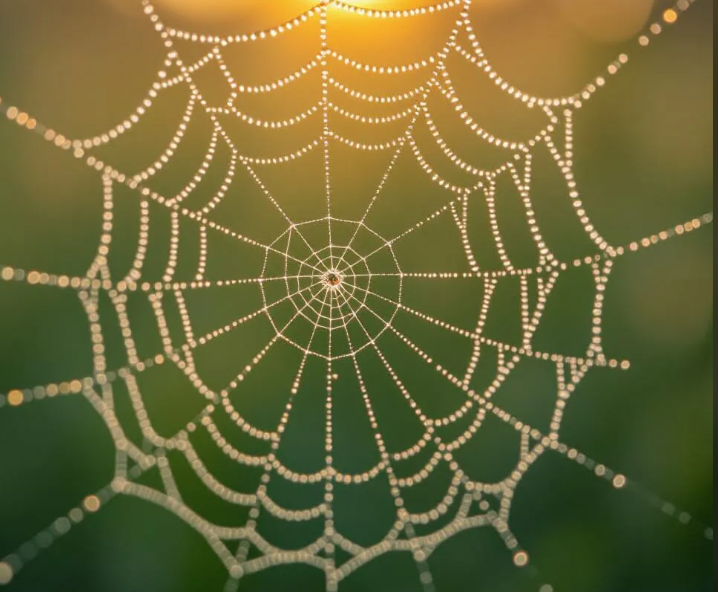
Tipø - Kolobvol silk
Tipø is as ancient as the Kolobvol. silk is produced from spiders, and Tipø, its much stronger cousin, is produced from the Kolobvol. Tipø determined the state of trade in world politics, as it was a strong, elastic material that lasted for long periods of time and had numerous uses. Traditionally, the Kolobvol would use it for their homes, snares, scarves and bags.
While enslaved by the Jant and later by Zevemlyans, Tipø began to be used in more textiles, primarily clothes.
After The Daebzat Crater War, Anadi, now with the ability to take aulvinoid shape, and many living in Aulvi cities, began experimenting with Tipø, creating weapons, bridges, and other materials out of their natural fibers.
Now, with Zevemlya refusing to return the enslaves Kolobvol, the free Kolobvol look very poorly on anyone who trades for Zevemlyan "slave" Tipø, and refuse trade to any business that trades in such textiles. Kolobvol refuse to let anyone else do the initial sale of Tipø due to the historical connotations, and fresh Tipø products always have the oversight of at least one Kolobvol.
Properties
Material Characteristics
Tipø looks smooth, soft, and lustrous. It has a natural, pearlescent sheen that subtly shifts in color as light hits it from different angles. It drapes beautifully, feels luxurious against the skin, and can have slight variations in weave, giving it a rich, organic feel.
Physical & Chemical Properties
Mechanical Properties
1.0 Tensile strength
- Between 1.5-3.0 GPa (gigapascals)
1.1 Elasticity and extensibility
- Dragline silk extensibility ~50–60%
- Capture-web types could stretch 300–500%
(This means a 1-meter strand could extend to 1.5–1.6 meters without breaking, and that specific web-types can extend up to 3-5 meters per meter of fabric.)
1.2 Toughness
Reference for average sized spider silk given to show actual strength of Tipø.
- Real spiders: 160 MJ/m³
- Kolobvol : 250–500 MJ/m³ conservatively
- Optimized combat/hunting silk: 600–800 MJ/m³ possible
For context:
- Aulven moth-silk (common silk) is ~50 MJ/m³
- Aluminum is ~30 MJ/m³
Real dragline silk: 2–10 μm diameter.
Human-sized spiders plausibly spin:
- 0.3–1.0 mm dragline equivalents
- 1–3 mm for structural threads or anchor lines
These threads are similar to very thin climbing rope, but vastly stronger.
2.0 Load-Bearing Capacity
2.1 A 1 mm diameter thread at 2 GPa tensile strength has:
- Cross-sectional area (A): πr² = 0.785 mm²
- Breaking force = ~1570 N = 350 lbs (~160 kg)
→ A single strand can support a Kolobvol and its prey.
2.2 A 3 mm diameter anchor cable would support:
- 9× the area
- ~3,150 lbs (~1,400 kg)
Multiple strands braided together become essentially organic suspension-bridge cables, like the webways spanning Gënlèul- Land of Dawn's spires.
3.0 Structural Behavior
3.1 Braided cables
- Stronger than steel by weight
- Lighter than aluminum
- More flexible than traditional rope
- Stronger in humidity and the cold
3.2 Dynamic responses
- Web structures deform, rather than breaking
- Dissipate huge amounts of kinetic energy
- recoil gently to reset tension
(Examples of the last one would be the Tipø nets crafted to allow Kolobvol to fall from great heights to arrive close to the ground with no harm.)
Origin & Source
This silk has only existed in this quality since the Kolovbol gained the ability to shift into aulvinoid forms. Kolobvol now have more manual dexterity for weaving the silk, and that has increased it's strength from 1-2GPa - 1.5-3GPa, drastically increasing its tensile strength
(Unfortunately, for the enslaved Kolobvol of Zevemlya, this has made them a more valuable commodity, and has decreased the likelihood of their freedom.)
Life & Expiration
Tipø can last anywhere from 20-500+ years, in theory, according to aulven and Kolobvol scientists, based largely on sun exposure, humidity, and microbial activity. Tipø webways (which are partially resin hardened) should be repaired every 50 years or less, as the conditions of the desert provide that they should stay strong and maintain flexibility for at leasst a century.
Summary Table (Quick Reference)
| Tipø Type | Average Lifespan |
|---|---|
| Natural dragline | 20–120 yrs |
| Resin-hardened | 200–400 yrs |
| Ceramicized / weapon-grade | 400–900+ yrs |
| Adhesive / capture silk | 5–20 yrs |
Note: These only apply to silk that has been prepared, unprepared silk can deteriorate in as little as two weeks, or sooner if damaged
History & Usage
History
Historically Tipø has been a very valued resource, and allowed the Jant to dominate trade in their region for centuries at the expense of their Kolobvol slaves. Now, Zevemlya maintains slaves, but the quailty of their silk as still not as good as the silk freely crafted by the free Kolobvol who are beginning to sell it on their own terms for greatly increased value to previous silk.
Discovery
FIrst used by Kolovbol in their natural hunting and living structures.
Everyday use
Commonly used in clothes, textile, construction and recently, weapon making
Cultural Significance and Usage
This material relfects the culture of the Kolobvol, and is deeply related to their sense of self, and many cultural traditions. The fact that the Zevemlyans still use their slaves to craft silk is seen as the gravest of atrocities in Kolobvoli culture.
Industrial Use
Resin-hardening of Tipø
1. Resin creation phase
- Aulven Resin is obtained, typically from silverwood trees, though resin from other trees is not uncommon
- Resin is put through clarifying procedure before being prepared for Lamination Phase
2. Lamination Phase
Process
- Raw Tipø strands are laid under tension on frames or woven into sheets.
- Resin is extruded directly onto the Tipø while still warm.
What happens structurally
- Resin fills microscopic voids between fibrils.
This dramatically:
- Increases stiffness
- Improves impact resistance
3. Controlled Curing
The resin does not harden immediately.
Instead, curing occurs via:
- Reduced humidity
- Mild heat from hearths, or shaded desert sun
Over hours to days:
- Resin polymerizes
- Silk-resin composite becomes rigid but not brittle
Result: Resin-Hardened Tipø
Properties:
- Stronger than steel by weight
- Slightly flexible under extreme load
- Resistant to UV, rot, and moisture
- Can still bend without cracking
- Repairable by adding fresh resin
Used for
- Kolobvol battle fans
- Armor plates
- Weapon cores
- Structural components
Ceramicization process of Tipø
(Blade / edge / monofilament / heirloom weapon grade)
Ceramicized Tipø is not flexible — it is hard, glass-like, and terrifyingly sharp.
This process sacrifices elasticity for permanence and cutting power.
1. Pre-Crystallization Selection
Only exceptionally pure, high-quality Tipøcan be ceramicized.
Requirements:
- No knots
- No adhesive residues
- Extremely uniform fiber diameter
- Fully resin-free at this stage
Failed fibers shatter during processing.
2. Mineral Infusion (Biological Doping)
The silk is soaked in a mineral bath prepared by the Kolobvol or aulvi aides, containing:
- Silica (like quartz)
- Calcium phosphate
- trace aluminum
- Ionic stabilizers (magnesium or boron)
- Prepare the fiber for inorganic transformation
3. Thermal Transformation (“Glass-Threading”)
The silk is then exposed to controlled heat, not fire:
- Low oxygen environment
- Temperatures high enough to:
- 1. Dehydrate proteins
- 2. Denature flexible regions
This step:
- Drives off bound water
- Collapses organic elasticity
- Causes minerals to condense
The silk becomes:
- Opaque or milky
- Extremely hard
- Acoustically sharp (rings when struck)
4. Final Annealing
Slow cooling prevents cracking.
Residual organic protein remains as a reinforcing scaffold, preventing catastrophic shatter.
Result: Ceramicized Tipø
Properties
- Tensile strength: still extremely high
- Elasticity: very low
- Hardness: rivaling obsidian and advanced ceramics
- Edge retention: exceptional
- Lifespan: centuries to millennia if protected
Used for
- Fan edges
- Monofilament weapons
- Silkblades
- Needles
- Execution wires (Kolobvol slave owner hunters)
- Sacred arms
Manufacturing & Products
Made into weapons, structures, clothing, and moisture absorbing nets
Environmental Impact
no hazards naturally to the environment
Reusability & Recycling
clothing and other products are potentially recylcable
Distribution
Trade & Market
Zevemlyans sell "slave Tipø" which Kolovbol merchants abhor, and will not trade with anyone who sells it
Kolobvol merchants craft Tipø and sell to Ngākauwhenua, Kaigara , Faernyr , Huevara - Tressovar , Archduchy of Aildëhn, and Borvannia, with intent to extend trade to Aurora in the near future.
Storage
silk stored in cool, only slightly humid spaces lasts longer, though even stored in warm, dry spaces, if prepared correctly, can last for extended periods of time.
Law & Regulation
Anadi have very strict rules on the sale of "slave Tipø, and allow only Kolovbol to do the actual trade of Tipø

Comments