
Vethira (Veh-THEE-rah)
The Two-Faced Goddess Vethira (a.k.a. The Whisper in the Stone)
Vethira is the ancient and fractured goddess revered by the Noctharen, embodying both the endurance and the instability born from millennia of absolute isolation. Once a Primordial Deity of perception and shadowed insight, she was unjustly cast into the Abyssal Beneath—an endless void of silence and darkness—by a powerful male god who feared what she knew. Immortal and unable to die, Vethira endured ages alone in a prison without sound, light, or companionship. What emerged from this exile was a single goddess with a divided psyche: the Enduring Mind, disciplined and perceptive, and the Shattered Silence, volatile and hungry for recognition.
To her followers, Vethira represents the truth of the deep places: solitude can sharpen or break; clarity and madness walk the same blade. She is not good nor evil, but a force shaped by trauma and resilience. The Noctharen honor both faces, though they strive to emulate the disciplined aspect that guides them through darkness with stillness and self-mastery. Her broken face is acknowledged but feared, a reminder of what becomes of those who fall to the pressure of isolation, hunger, and unhealed wounds.
Vethira’s presence is felt in the soft hum of stone, the pulse of resonance crystals, and the instinctive knowledge that something watches from the dark without judgment. Her worship revolves around truth, adaptation, survival, and the acceptance of one’s own fractured nature. Even in her wrath, she is purposeful; even in her clarity, she is distant. Vethira is the shadow under stone, the whisper without breath, the patron of those who walk the deep paths, and the warning carved into every cavern wall that no mind survives the abyss unchanged.
Divine Domains
Vethira rules over the shadows between thought and instinct, the places where fear sharpens into clarity and beauty unravels into obsession. Her domains reflect what she once was, what she became in the Abyss, and what now flickers uneasily between those two truths. They bridge creation and corruption, wisdom and madness, making her one of the most unpredictable beings ever born of the divine.
Shadowed Wisdom
Once the patron of deep contemplation and subtle insight, Vethira still embodies a form of wisdom, though it is fractured. She grants revelation through discomfort, forcing mortals to confront what they would rather bury. Her “lessons” are often unsettling but undeniably transformative.Forgotten Places & Lost Things
Vethira is drawn to the unloved: ruins, abandoned tunnels, memories long pushed aside. Her followers say she hears every secret whispered in isolation. Nothing truly vanishes in her grasp; it is simply collected.Isolation & the Fractured Mind
Her millennia in the Abyss shaped her into a goddess who understands loneliness intimately. She governs the mental edges where solitude becomes either enlightenment or ruin. To pray to her is to invite the truth of what isolation can make you.Spiders, Harvestmen & Lurking Things
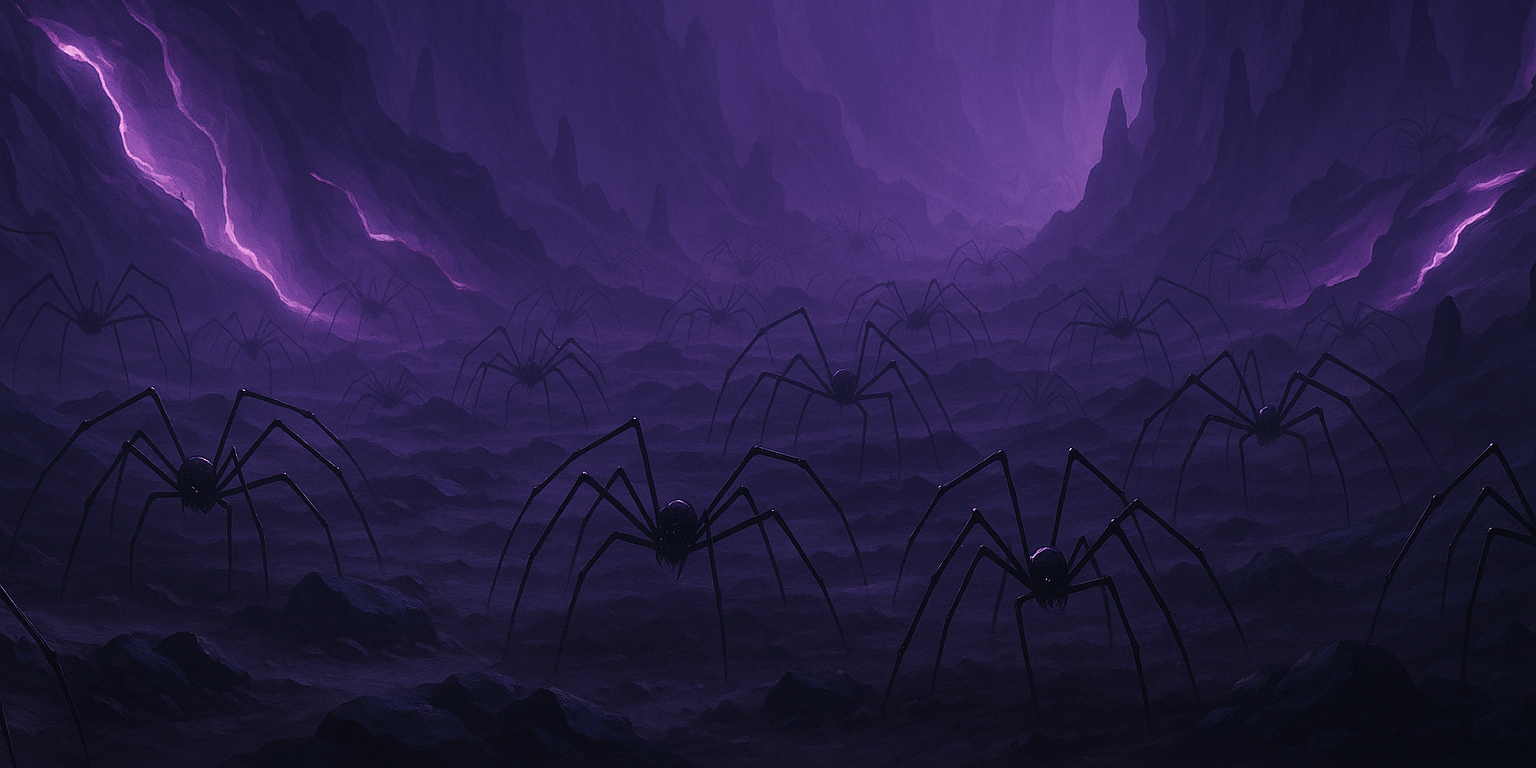
The Harrowkin, her sacred brood, reflect her new body and her altered nature. Vethira claims dominion over creatures that move in silence, dwell in cracks and crevices, and strike with sudden precision. Harvestmen are her symbol, patient and uncanny rather than predatory.Transformation & Metamorphosis
She is not a goddess of simple change, but of the changes that happen when one is forced to adapt in darkness. Transformation under pressure, under grief, under abandonment. Her miracles hurt, but they also reshape the soul.Mirrors, Illusions & Self-Deception
Before her fall, Vethira was a muse of reflection, self-knowledge through art. Now that gift is twisted: she reveals the truths mortals hide from themselves and tempts them with comforting lies. Her illusions are perfect until the moment they crumble.Vengeance of the Wronged
Though she is no patron of senseless cruelty, Vethira fiercely protects those who have been abandoned, cast out, or betrayed. Her vengeance is cold, meticulous, and inevitable. She does not forget, and she does not forgive.Tenets of Faith
- Endure the darkness, even when it is your own.
Strength is forged by surviving what others cannot. - Silence is a teacher; listen before you speak.
Truth lives in the spaces between words. - Do not betray the trust placed in you.
Betrayal is the deepest wound and the gravest sin. - Honor the forgotten, the abandoned, and the overlooked.
Divinity is found in what the world discards. - Transformation is sacred, even when painful.
Change is survival made manifest. - Fear is a guide, not a chain.
Fear reveals truths long before reason acknowledges them. - Beware the illusions you weave for yourself.
Comforting lies corrupt the soul. - Even the divine can fracture.
Acknowledge both strength and brokenness within. - What is taken must be reclaimed.
Restoration of dignity, truth, or self is holy work. - Every thread you pull moves another.
All actions ripple outward; consequences are sacred.
Divine Goals & Aspirations
The Lucid Face
Vethira’s aims are not the ambitions of a traditional goddess; they are the quiet, relentless desires of someone who has been broken and remade by exile. Her foremost goal is to prevent the erasure she once suffered. She seeks to ensure that no voice, no truth, and no soul is ever cast aside as she was. This manifests as a divine mandate to protect the forgotten, uplift the abandoned, and reveal the consequences of betrayal. She cannot undo what was done to her, but she can shape a world where such wounds no longer disappear unacknowledged into silence. She also pursues the preservation of identity through transformation. Vethira does not encourage stagnation; she pushes mortals to face the parts of themselves that frighten them and to grow sharper, stronger, or stranger in the aftermath. Change, to her, is sacred—especially change born of adversity. If suffering must exist, it must birth something worthy, something resilient. Her followers interpret this as an urging toward self-confrontation and evolution, rather than escape. Another of her divine aims is to maintain balance between truth and perception. Because her downfall stemmed from a prophecy misunderstood—even by herself—Vethira works to ensure that truth is never taken at surface value. She reveals hidden motives, challenges illusions (both comforting and harmful), and forces mortals to examine what lies beneath their own narratives. She does not delight in cruelty, but she demands clarity, especially when clarity hurts.The Wild Face
The Wild Face of Vethira carries a far darker purpose, shaped not by wisdom but by the unhealed wound of her exile. Where the Lucid Face seeks understanding, the Wild Face seeks retribution. It is the part of her that remembers every moment of silence as suffocation, every unbroken second as a betrayal, every heartbeat as a reminder that love abandoned her. This half wants the world to feel the same terror of being forgotten that she endured in the Abyss. Its goal is not the enlightenment of mortals, but the exposure of their fears, hypocrisies, and fragile illusions. It seeks to unravel the structures that allowed her to be cast aside in the first place. It whispers toward the collapse of rigid hierarchies, the humiliation of prideful gods, and the corruption of any system that places order above empathy. Where the Lucid Face teaches that betrayal has consequences, the Wild Face creates those consequences personally, with manic devotion and an almost artistic appetite for chaos. It wants the world to fracture because she fractured — not as justice, but as a mirror. This half of her divinity also desires possession and obsession in a way the Lucid Face refuses. The Wild Face wants loyalty that borders on worship of the self, not the goddess. It desires to be needed, feared, loved, and acknowledged endlessly, desperate to fill the void isolation carved into her. Her most fervent followers often become consumed by this hunger, driven to extremes in hopes of being seen by the part of Vethira that craves attention more than reverence. Where the Lucid Face seeks transformation, the Wild Face seeks dissolution — the tearing down of identity so it can be rebuilt in her image, or not rebuilt at all. It delights in the unraveling of certainty, sending nightmares, visions, and intrusive thoughts to those who attract her attention. She does not guide them; she invades them. And when she acts through the Harrowkin, her influence manifests as disturbing synchronicities, fear-born insights, and emotional spirals that leave mortals unsure whether they have glimpsed truth or madness. Above all, the Wild Face seeks validation — the acknowledgment that what happened to her was unjust, catastrophic, and unforgivable. This half wants Enkira to suffer the weight of that truth. It wants the pantheon to face the consequences of their complacency. It wants the world to never forget her name again, even if it must be carved into stone with trembling, bloodied hands. If the Lucid Face is shaped by endurance, the Wild Face is shaped by the scream that never left her mouth, still echoing through the caverns of the world.Mental characteristics
Personal history
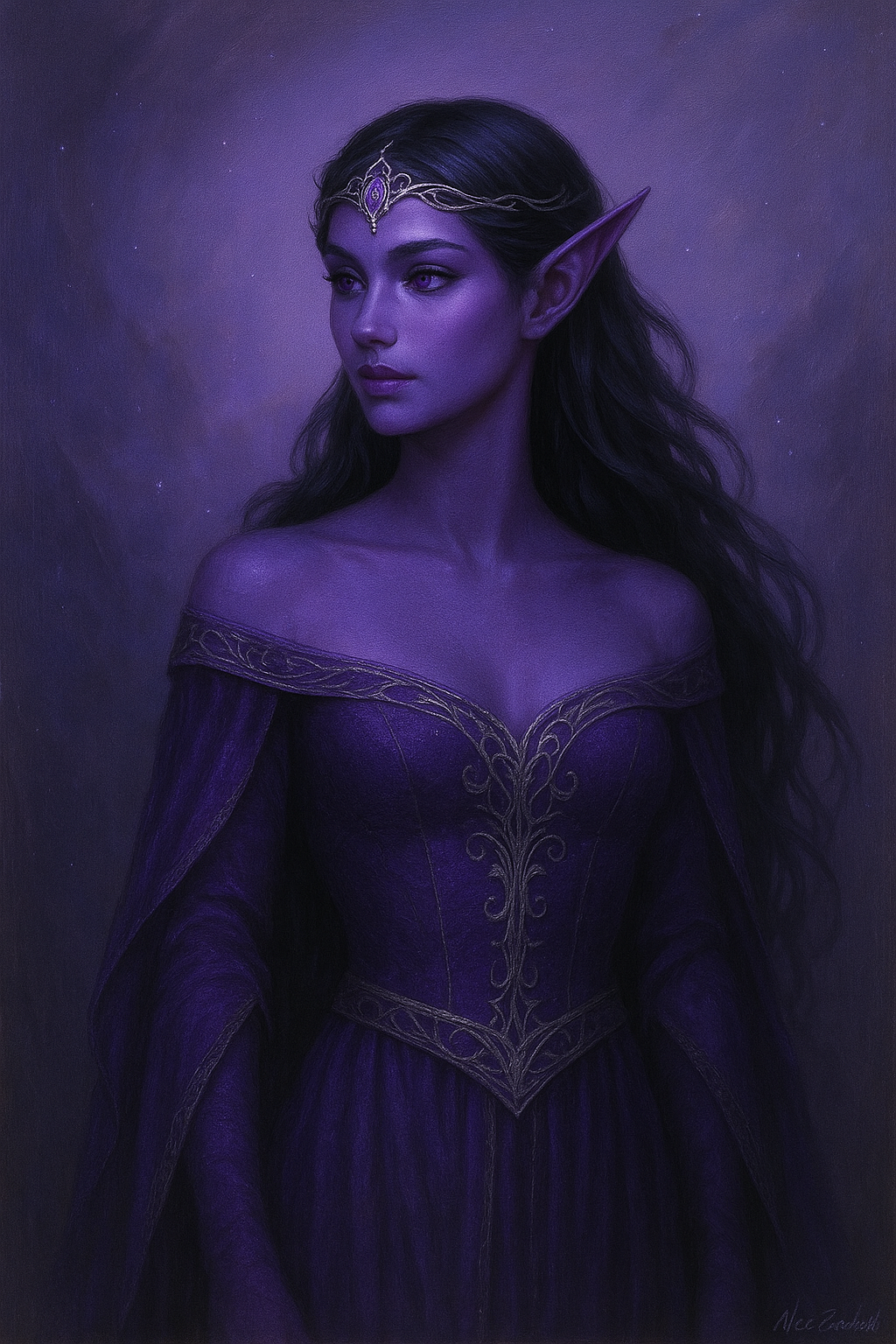
Vethira was once a gentle and luminous goddess, revered for her gift of second sight and her quiet mastery over hidden truths. In those early ages, she walked beside Enkira, the god of civilization and art, as his lover and partner in creation. Where he shaped wonders in stone and song, she shaped the unseen threads of inspiration, intuition, and revelation. The pair were inseparable, their domains intertwined, their influence balanced — order and insight, structure and foresight, beauty and mystery.
 Her downfall began with a vision.
Vethira foresaw a great darkness spreading across the divine realm, consuming light, swallowing sanity, and unraveling order itself. She warned the pantheon of the danger she had witnessed. Yet the more she spoke of it, the more her visions intensified. They grew frantic, distorted, terrifying.
What Vethira could not understand was that she was witnessing her own future — the result of an exile yet to come, but the prophecy felt external, inevitable, like something hunting the gods themselves.
Enkira listened at first, but as her warnings grew more desperate, he began to fear that the darkness she spoke of was not a threat she had foreseen, but a corruption taking hold within her. To a god of order, nothing is more dangerous than unraveling. Nothing more frightening than chaos born in the mind of the one he loved.
When Vethira’s visions began to spiral beyond her control, the pantheon turned on her, and the god who carried out her sentence — the god who bound her, sealed her, cast her into the Abyssal Beneath — was Enkira himself. He believed he was saving her, or saving the realm from what she might become. The truth no longer mattered.
The fall was endless.
Her downfall began with a vision.
Vethira foresaw a great darkness spreading across the divine realm, consuming light, swallowing sanity, and unraveling order itself. She warned the pantheon of the danger she had witnessed. Yet the more she spoke of it, the more her visions intensified. They grew frantic, distorted, terrifying.
What Vethira could not understand was that she was witnessing her own future — the result of an exile yet to come, but the prophecy felt external, inevitable, like something hunting the gods themselves.
Enkira listened at first, but as her warnings grew more desperate, he began to fear that the darkness she spoke of was not a threat she had foreseen, but a corruption taking hold within her. To a god of order, nothing is more dangerous than unraveling. Nothing more frightening than chaos born in the mind of the one he loved.
When Vethira’s visions began to spiral beyond her control, the pantheon turned on her, and the god who carried out her sentence — the god who bound her, sealed her, cast her into the Abyssal Beneath — was Enkira himself. He believed he was saving her, or saving the realm from what she might become. The truth no longer mattered.
The fall was endless.
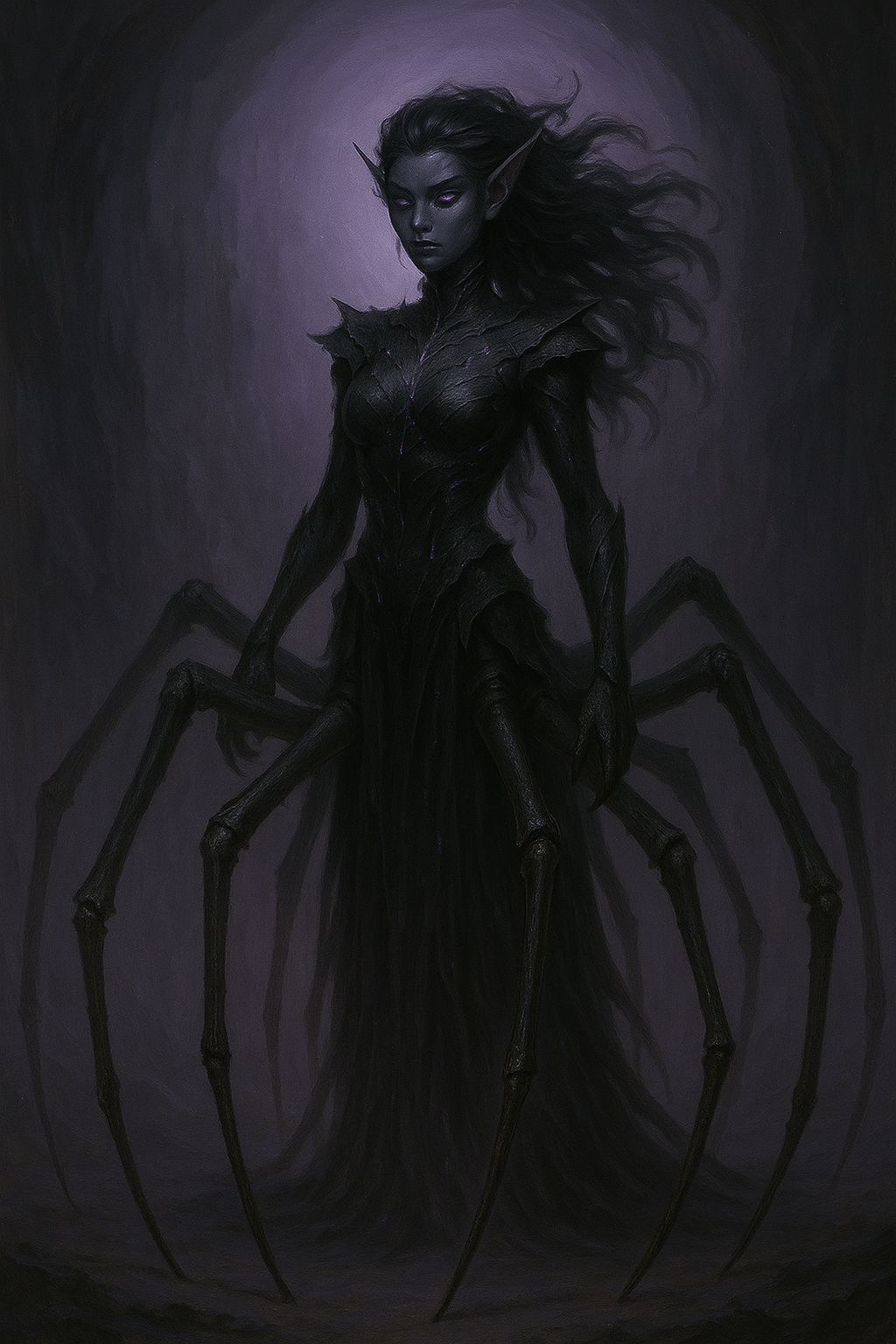
The silence absolute. In the lightless void, Vethira had no one to hear her grief, no one to anchor her unraveling thoughts, and as ages passed without measure, the vision that had doomed her became reality. She became the darkness she once foresaw, not because she was corrupted — but because she was alone. Her divinity cracked and two selves emerged: The Enduring Mind — lucid, patient, carved from centuries of forced stillness. The Shattered Silence — frantic, wounded, whispering, born from the part of her that could not bear eternity alone. Her form twisted into a reflection of her new nature: the upper body of the goddess she had been, and the lower body of the harvestman, creatures of darkness and survival, fragile in appearance, resilient beyond reason, surviving the dark through stillness. When she finally clawed her way back into the world, she did not rise to reclaim her old place among the pantheon. She descended deeper, into the forgotten caverns of the world, where the first Noctharen found her. They, too, knew silence, and in them she saw reflections of herself — fractured, but unbroken. They became her people.
She became their goddess.
And Enkira… became a name she does not speak. To this day, her followers say her visions never lied. The darkness she predicted truly came. It just came from within.
The silence absolute. In the lightless void, Vethira had no one to hear her grief, no one to anchor her unraveling thoughts, and as ages passed without measure, the vision that had doomed her became reality. She became the darkness she once foresaw, not because she was corrupted — but because she was alone. Her divinity cracked and two selves emerged: The Enduring Mind — lucid, patient, carved from centuries of forced stillness. The Shattered Silence — frantic, wounded, whispering, born from the part of her that could not bear eternity alone. Her form twisted into a reflection of her new nature: the upper body of the goddess she had been, and the lower body of the harvestman, creatures of darkness and survival, fragile in appearance, resilient beyond reason, surviving the dark through stillness. When she finally clawed her way back into the world, she did not rise to reclaim her old place among the pantheon. She descended deeper, into the forgotten caverns of the world, where the first Noctharen found her. They, too, knew silence, and in them she saw reflections of herself — fractured, but unbroken. They became her people.
She became their goddess.
And Enkira… became a name she does not speak. To this day, her followers say her visions never lied. The darkness she predicted truly came. It just came from within.
Mental Trauma
Vethira’s mind carries the weight of an exile so absolute that it reshaped her divinity. Millennia spent alone in the Abyssal Beneath fractured her consciousness into two distinct yet intertwined selves. The split was not madness but a desperate adaptation to survive total sensory deprivation. One part of her hardened into a cold, calculating presence capable of enduring endless silence. The other absorbed the fear, grief, and disorientation the Lucid Face could not bear, becoming restless, volatile, and hungry for acknowledgment. This division remains the core wound of her existence — a scar that never closes.
Her greatest trauma is the betrayal that preceded her fall. Enkira’s role in her imprisonment left a fracture far deeper than isolation itself. She had loved him, trusted him, shaped creation beside him; to be condemned by his hand taught her that closeness leads to harm, that truth can be weaponized against the one who speaks it, and that love is no protection against abandonment. This emotional betrayal became a lens through which she interprets all future relationships. Even now she cannot entirely separate the fear of rejection from the memory of his judgment.
The tragedy of her visions compounds this wound. When she prophesied a coming darkness, she did not realize she was witnessing her own future; a broken, isolated self she had not yet become. Being punished for speaking a truth she did not understand created a permanent fissure in her confidence. To this day, she struggles to trust her own foresight. Every prophecy feels tainted by self-doubt, every revelation shadowed by the fear that she is creating the very things she foresees.
Her physical transformation added another layer of pain. The harvestman form she now bears became a manifestation of her endurance and her unraveling, a body shaped by solitude, silence, and forced evolution. Though it has become sacred to her followers, Vethira herself carries a complex mix of shame, alienation, and reluctant acceptance toward it. Her memory of her former elven beauty lingers like a ghost, creating moments of dissociation where she feels split not only in mind but in body.
Even after returning to the world, pieces of the Abyss cling to her thoughts. Time is inconsistent for her; moments stretch or vanish without warning. Silence feels both comforting and threatening. Echoes from her imprisonment whisper through her mind at unpredictable intervals, tugging her back into the void. These flashes can overwhelm her with sudden panic, grief, or disorientation, allowing the Wild Face to surface with little warning.
Despite all of this, she is not a goddess consumed by trauma, she is a goddess defined by having survived it. Her hypervigilance, sharp perception, and fierce independence all stem from wounds she refuses to let define her entirely. She carries her pain with a strange dignity, aware of the fracture within herself but unwilling to let it become her weakness. The tragedy of her past makes her unpredictable, dangerous, and deeply compelling, a deity who understands what it means to be broken, and what it takes to remain unbowed.
Intellectual Characteristics
The Lucid Face — Vethira the Seer
This aspect of Vethira retains the brilliance, foresight, and elegance she possessed before her fall. Her mind is sharp, analytical, and deeply introspective. She understands patterns in fate the way a mathematician understands equations, tracing connections through time with cold clarity. The Lucid Face is calculating rather than emotional, approaching problems the way a spider approaches a web — through structure, tension, intention, and inevitability. She values:- Pattern recognition and prophecy
- Long-term strategy
- Quiet observation
- Artistry, craftsmanship, and precision (a distant echo of Enkira’s influence)
The Wild Face — Vethira the Forgotten
The second aspect emerged during her ages of abandonment. This mind is fractured, volatile, and startlingly creative. It responds instinctively rather than logically. The Wild Face embodies what happens when consciousness is forced into silence for millennia — it becomes noisy, restless, and hungry. Her thinking is:- Chaotic and unpredictable
- Emotion-driven, especially fear, jealousy, and longing
- Impulsive, but not stupid
- Prone to spiraling thoughts and paranoia
- Fixated on themes of abandonment and vengeance
- Childlike curiosity
- Moments of startling compassion toward the forgotten
- A desperate craving for acknowledgment and love
Social
Religious Views
Worship of Vethira is not organized in the traditional sense. Her church formed organically among those who understood darkness not as evil, but as a place of survival, secrecy, and transformation. The Noctharen were the first to revere her, discovering her presence in the deep caverns where her fractured divinity seeped into stone and silence. Their devotion grew into a quiet, insular faith built on endurance, introspection, and the acceptance of one’s own broken pieces. Temples to Vethira are rare, for she rejects grand structures in favor of sanctuaries carved into secluded caverns, lit only by violet fungal glow or the trembling shimmer of resonance crystals. Her followers gather not to praise her glory but to share in the vulnerability she represents — the understanding that even a goddess can be wounded, and that strength is born from surviving the parts of oneself others fear.
Within this faith exists a distinct divide between those who honor her Lucid Face and those who seek the favor of her Wild Face. The mainstream priesthood reveres the calm, patient aspect of Vethira, viewing her as a guide through uncertainty and a source of wisdom hidden beneath pain. Their rituals focus on silence, meditative weaving, and reading the subtle tremors of Harrowkin that gather near her altars. Conversely, the darker sect known as the Shattered Vein embraces the chaotic, wounded face of the goddess. They believe her suffering is sacred and see madness, secrecy, and emotional rawness as pathways to divine truth. These zealots operate independently from the formal clergy, often feared even by fellow worshipers for their unpredictable devotion.
Despite these divisions, all who follow Vethira acknowledge the core tenet of her faith: that the world punishes vulnerability, and yet true resilience is born from facing it without turning away. Her worshippers tend to be outcasts, visionaries, scholars of forbidden lore, seers who mistrust the light, and those who have endured betrayal or isolation. To them, Vethira is not a monster but a mirror — reflecting what is left of a soul after it has been broken and reforged in the dark. Her cult thrives quietly beneath the surface, bound not by law or hierarchy but by the shared understanding that even shattered things can have purpose. In this way, her followers embody both her tragedy and her strength, weaving their lives into the vast unseen web she spins beneath the world.
Divine Classification
Deity
Religions
Current Location
Species
Realm
Church/Cult
Children
Pronouns
She/Her
Sex
Female
Gender
Woman
Presentation
Feminine
Eyes
Glowing violet, solid with no visible pupils
Hair
Long, shadowy, and weightless.
Skin Tone/Pigmentation
Obsidian black. Veined with luminous violet cracks like fractures in polished stone.
Height
Variable, but her divine manifestation usually app
Weight
Immeasurable / not biologically grounded.


Such a great deity article, and I really love the two sides of her. And the fact that harvestmen are her sacred creatures - they never get any love. Poor Vethira though. :(
Explore Etrea | WorldEmber 2025
I will say I HATED looking at them while I was writing this article lmao. Harvestmen are creepy haha
"Every story is a thread, and together we weave worlds."
The Origin of Tanaria