

Dathomirian ([dæθəmi:ɹi:ən])
Naming Traditions
Unisex names
Dathomirian names were rarely unisex, given the nature of their society. However, many Dathomirian names were short to medium in length and often avoided overly complex structures. They frequently balanced hard and soft consonants, placing harsher sounds like "T," "K," or "Z" against softer or vowel-heavy syllables.
Other names
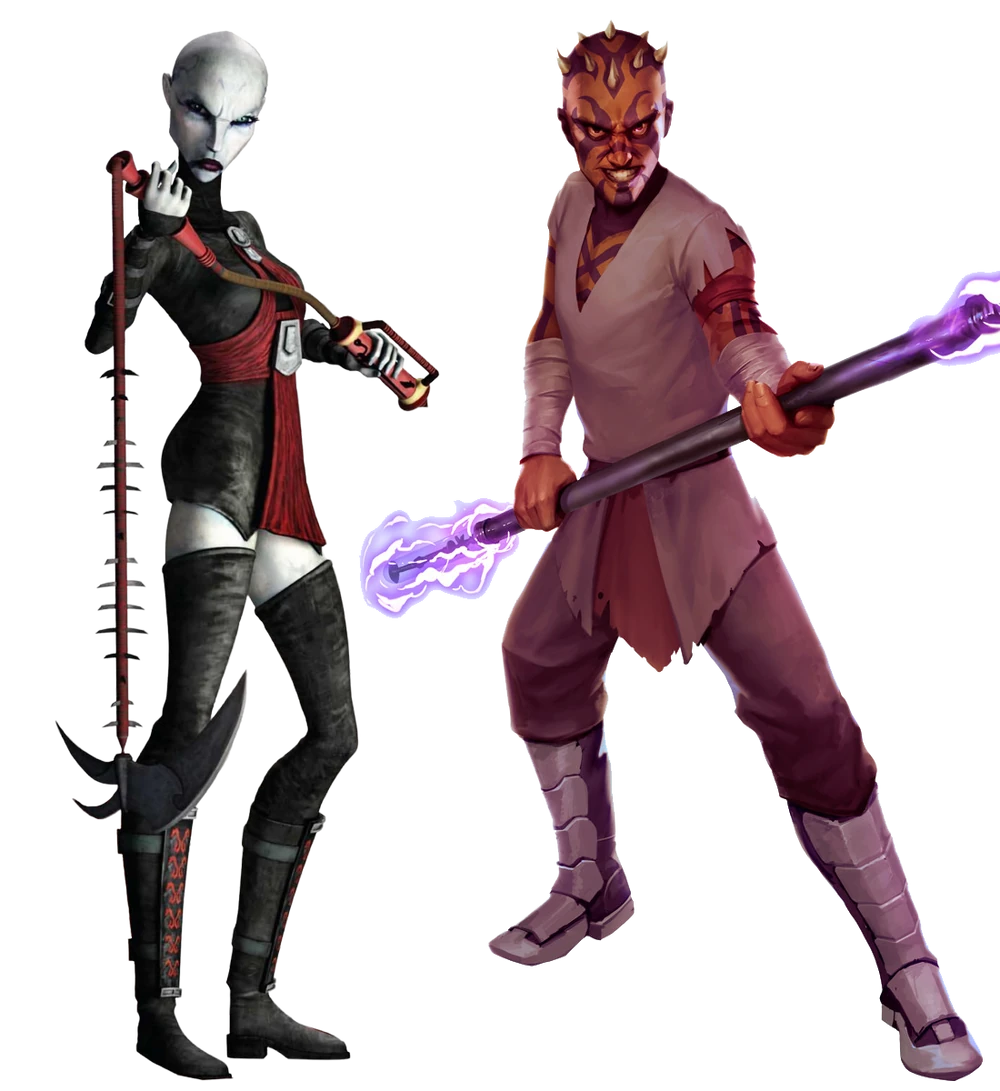
Nightsisters called their leaders "Mother," while the Dathomirian males, especially Nightbrothers, referred to each other as "Brothers."
Culture
Major language groups and dialects
Dathomirian
- An isolated and distinct evolution of the Peridean language that flourished on Peridea and subsequently on Dathomir.
Paecian
- A little-known language. Some Nightsisters claimed to speak Paecian and mixed it with Galactic Base Standard.
Culture and cultural heritage
The first sentient beings to leave Peridea did so before the advent of artificial hyperspace travel, relying instead on purrgil migration to reach the known galaxy. These early Perideans were explorers who willingly rode the purrgil in search of new worlds. Eventually, this group settled on Iridonia, adapting to their new environment over generations and evolving into the Zabraks known today. They had left Peridea by choice and never returned, thereby severing their connection to their ancestral world.
Meanwhile, the remaining Perideans continued their culture and eventually became the Dathomirians. Over time, the knowledge of this migration was lost, leading later galactic historians to mistakenly classify the Dathomirians as a subset of Zabraks, rather than recognizing them as a parallel offshoot from a common ancestor. However, the Dathomirians retained oral traditions and ancient records of their lost kin. The presence of Reflex Point on Seatos suggests that they had the means to navigate back to the known galaxy, either through purrgil travel or star maps. However, by the time they rediscovered Iridonia, circumstances had changed significantly.
Peridea suffered a catastrophic decline due to a civil war between rival Witch Kingdom rulers. While the Perideans had once maintained a more balanced relationship with the Force, some fell deeper into the dark side, creating a dangerous schism and giving rise to a powerful leader who sought to consolidate all power under one rule. This triggered an internal struggle that ravaged Peridea, ultimately leaving it barren. In the aftermath, the survivors of this conflict—those unwilling to continue the cycle of destruction—sought escape, hoping for peace among their distant kin.
The Perideans who left viewed Iridonia as their best hope for survival and stability. They believed their ancient kin would welcome them as lost brothers and sisters, especially if the Zabraks retained knowledge of their shared history on Peridea. However, this idealistic vision was shattered upon their arrival. The Iridonians, some of whom were Force-sensitive, recognized the tainted power within the Perideans. They feared that these newcomers carried the corruption associated with the recently emerged Sith and would bring destruction upon them. By this time, the Jedi Order had already been established on Iridonia, and these early Force traditions actively opposed the darkness, reinforcing the divide between the two groups.
The Perideans, already hardened by war and survival, refused to accept rejection without a fight. This led to immediate violence, culminating in an Iridonian purge of Peridean influence. The surviving Perideans, now completely displaced, were forced to flee once more. Their journey took them to Dathomir, where they fully embraced their new identity, turning away from their lost kin forever.
Art & Architecture
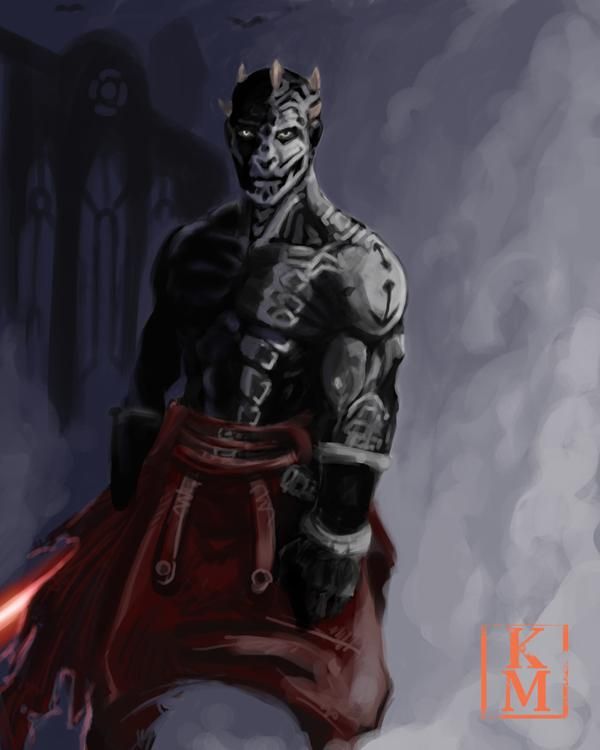
Nightbrothers practised painting glyphs using acid from hydraatis on hard rock surfaces. Their usage was deliberately careful to preserve accuracy and damage to themselves. Those who were master calligraphers—rare positions within the society—were highly valued for their talents.
Tattoos were done similarly. Artists etch designs with this acid directly onto the skin. The ink comes from the mushling. The pods of the mushling were boiled down into a yellow paste and then mixed with pigments, like clay and ash, to create a paste. This paste is applied to the acid-etched design and then wrapped up and sealed to facilitate a chemical reaction between the acid and the paste, which colours the tattoos and effectively burns them into their skin.
Common Customs, traditions and rituals
Their society was matriarchal in nature, and the Nightsisters were particularly dominant. Dathomirians respect and value power over everything else, which is why the Nightbrothers tolerate the poor treatment they receive from the Nightsisters.
Dathomirians were reclusive people who hid dark secrets. Female Dathomiri lived as witches and were particularly skilled in dark-side magick and voodoo, which had powers such as raising the dead or making one invisible.
Some female Dathomirians lived in clans, while others were of no clan. The males were tribal, living a brutal life in various clans across the planet. Even in these separate clans, the males, particularly the Nightbrothers, remained non-dominant in society.
The Nightbrothers respected power and honour above all else, often fighting in a combat arena to demonstrate their strength with the intent to win. Although hostile to outsiders, one who proved powerful could be given substantial influence over the group, be it through respect or fear, even allowing them to gain leadership over society or the Nightbrothers' worship.
Birth & Baptismal Rites
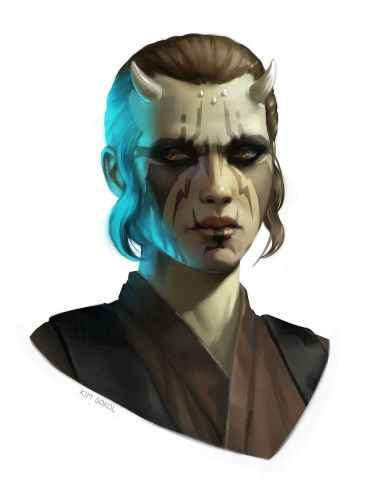
Between their first year of birth and their fifth, a Nightbrother would receive their facial tattoos from their mother. These often mirrored the Nightsister's own tattoos, signalling to other Dathomirians, both male and female, that this child belonged to a specific family.
Coming of Age Rites
As the chemical reaction between the acid and the paste oxidises and colours the tattoos, the substance becomes toxic. This poison often courses through a Dathomirian's blood for several days and up to several weeks, making surviving the tattoo a test of strength and a rite of passage into adulthood.
The best and boldest of the Nightbrothers faced another rite of passage in which they battled beasts known as chirodactyls. Those who faced these behemoth creatures and survived were deemed worthier than others.
Common Taboos
Many Dathomirians were Force-sensitive. However, unless allowed by the Nightsisters, it was not the place of Dathomirian males to use or even speak about their Force powers should they have any. Providing training for these powers was also generally unthinkable.
Common Myths and Legends
A legend about Peridea existed among the Nightsisters. It described the planet as the original home of their people, who rode the purrgil to travel between galaxies.
Historical figures
- Sinza
- A legendary exiled Dathomirian Sith and witch. After aligning herself with the Sith, Sinza led many Dathomirian witches against the Jedi during the Great Scourge of Malachor. It is said that she was the last person standing before everyone was petrified for eternity and that her body is still on Malachor among the dead.
Ideals
Courtship Ideals
A ritual known as the Selection happened when females wanted to choose a mate. Males would undergo brutal trials to prove themselves, after which the winner would become the Nightsister's mate and servant.
Major organizations
- Witch Kingdom of the Dathmiri
- Nightsisters of Dathomir

Comments