

Trishna-Kapur, the Rain-Maker
Ruatiwangan Sky Goddess of the Rain, Storms, and Community
"...are we not concerned that the Bond-Bringer's teachings will gnarl their cultures and customs if this imbalance is allowed to continue, Brother Mokele?" "It is a concern, yes - but there is little that can be done. We risk a greater catastrophe in attempting to correct the cultural and societal influence of the Bond-Bringer, in the wake of The Lotus King's severance. Need I remind you, Sister Busara, that the Prime Directive remains our foremost concern?" "...no, Brother Mokele. I know full well the importance of our mission, it's just...I fear for what her teachings will do to them, over time. Without the Thought-Giver to counterbalance the Bond-Bringer..." "Enough, Sister Busara. Your kind heart does you credit, but you go too far - need I remind you the catastrophic consequences of our last attempt to correct the cultures of this land? Besides, the Bond-Bringer remains an undoubtedly good influence upon them - far worse, I think, to deprive them of her kind teachings." "Yes, of course...you are of course correct, Brother Mokele. But too much of a good thing can do harm, can it not?" "Undoubtedly, yes. But the times where we could intervene in their societies and cultures are long past, Sister Busara - they honor and revere us, but our Empire has collapsed and our numbers are thinning more and more with each passing year. By doing as you suggest, we risk overplaying our hand - and could easily turn their reverence into enmity, thus risking our extinction. By attempting to intervene in the hopes of correcting a perceived failing...we could do more harm than good. Moreover, Sister Busara, if I could offer you some advice?" "Y-Yes, of course. I would welcome it." "...you think too lowly of them. And far too highly of us, for that matter. The people of this land are resilient beyond measure - they have endured worse. We must believe in them - in the people we created and guided - to see this struggle through. Such is our duty, as caretakers of this sacred land and the creatures upon it, is it not? We should put our faith in them - and be here to catch them when they fall. Perhaps this is a lesson you will learn when you have children of your own, Sister Busara...it is an exercise in futility, sometimes, to impart a lesson onto a child who does not want to obey you. Sometimes, the best you can hope for is to be there for them when they fall - to catch them in kindness when they are ready to listen."Title(s): The Rain-Maker, The Bond-Bringer, The Woman at the Window, The Outstretched Hand, The Ghost at the Gathering, The Village Mother, She who sleeps in clouds, Sister Moon, The Walls that guard the heart, The memory that never fades, The love that never ends Alignment: Lawful Good Favored Weapon: Fauchard Obedience: Draw a ritual circle that contains two triangles overlaid atop one another(One pointed up, another pointed down) using whatever materials are on hand - preferably water or rainwater - and place items within one triangle once it is drawn that belong to or otherwise symbolize your closest friends, family members, or home village or community. Once this is done, place an equal number of items within the other triangle that belong to or otherwise symbolize your most hated enemies, foes, or those that have done you or your community the most wrong. Once both triangles are filled, sit in the center of the circle and the center of the triangles and meditate on the memories of all those the items placed represent - praying to the Rain-Maker to grant you the strength to forgive your foes and protect your friends. Once an hour has elapsed, collect the items and destroy the circle and its contents. Effect: Whenever you would cast a spell or use an ability or effect that would gain extra beneficial effects if used or cast outdoors in storm weather, you are treated as in such a location for the purposes of that spell, ability, or effect. By concentrating for one full minute while you have uninterrupted line of sight and effect to a cloud you can see high above, you can throw your sight into the cloud and look down upon the ground from it. You have no control over the cloud's movement during this time, and can view the space inside the cloud as well as all that lies below it as if looking down from the center of the cloud. You can return your sight to your body as a swift action - and return automatically if you are dealt lethal or nonlethal damage. Finally, at dawn each day, you can spend ten minutes in ritual contact with a close ally or friend and duplicate one feat either you or the target possesses onto both of you for the next 24 hours - during which time you are both treated as possessing the chosen feat for all intents and purposes as if you met all prerequisites involved and had taken it yourself. You may only copy one feat at a time in this manner.
Divine Domains
Air, Community, Weather, Destruction, Water, Protection, Healing
Artifacts
Due to the secretive and somewhat xenophobic nature of the Kapuri faith, little information has ever been conclusively found about the artifacts within their possession - a fact which has cast an increasingly large shadow of suspicion upon the faith in recent centuries as it is becoming increasingly clear to many that this secrecy is, in all likelihood, not due to their lack of artifacts...but indeed likely the opposite. Such artifacts, though many have been purported to exist, have vanished from the rumor-mill of Ruatiwanga shortly after they have been spoken of - as if the faith's mysterious leadership has gone to great lengths to snatch up all such relics and artifacts before they can be found and collected by outsiders.
Holy Books & Codes
The Bond-Bringer's Teachings
Divine Symbols & Sigils
A raindrop between two cupped hands
Tenets of Faith
Welcome the weak. Thou shalt spare those who cannot fight - they shall be taken in and cared for as one's own family.
Honor thy word. Never go back on or break your word, but do not give it lightly. To break one's word is to sin before God - no matter or what who caused it to break.
Forgive and Forget. Do not allow thyself to be weighed down by regret, by grudge, or by hatred. Honor thy word and forgive those who have wronged you before it poisons your soul.
For friend and family. If thou must act, act in the interests of thy family, thy friends, and thy neighbors. Do not let the pursuit of life's pleasures nor the affairs of the outsider distract from what truly matters.
Trust and Generosity. Be kind and compassionate above all, and give what you can to he who needs it. Never betray another's trust nor reveal knowledge told to you to he who would not treasure it as you do.
Holidays
Much like the artifacts of their faith, the holidays of the Kapuri faith are oddly kept secret by the faithful - outside of local tribal holidays specific to the various villages across Ruatiwanga, the wider "holy days" of Trishna-Kapur have never quite been made public for reasons that have, suspiciously, also never been made quite clear.
Divine Goals & Aspirations
To temper the cruelty of life with kindness and generosity.
To foster the bonds of friendship and family.
To bring living beings close to God through compassion and understanding.
Followers and Priesthood
Though the continent of Ruatiwanga and its people are a polytheistic culture who venerates each of the Six Sky Gods of Haako-san-tara as a collective pantheon, it is not usually uncommon for the particularly devout to dedicate themselves to one such deity within the pantheon - and in the case of Trishna-Kapur, better known to the citizens of Ruatiwanga as The Bond-Bringer and the Rain-Maker, Second of the Sky Gods of Haako-san-tara and Wife to Akasha-Palla(Brother Sun and God of the Dawn, Dusk, and Battle), this typically entails those who find themselves particularly drawn to rain, storms, catastrophe, or who find particular solace and/or relief in the ideals and comforts of family, forgiveness, trust, and generosity. Although often portrayed as one of the two "Shersuran Deities"(Both in their classic appearances and depictions as lions, and as the two foremost gods of the Shersuran people), Trishna-Kapur is one of the most widely beloved and worshipped Gods all across the continent of Ruatiwanga regardless of one's race, class, culture, or place of origin - for many, especially the weak and helpless, the Rain-Maker's faith holds a special appeal as one whose teachings of tolerance, forgiveness, and aid resonate strongly with creatures of many walks of life. For such creatures, it is a natural and easy thing that they might devote themselves more wholly to the teachings of the Rain-Maker - for they are often the ones who have experienced the worst that Ruatiwanga as a continent has to offer, and emerged with love and compassion in their hearts for those that the horrors of war, battle, isolationism, and death have wrought the worst fates upon, often turning to the Rain-Maker's faith as a way to ensure the suffering they witnessed or suffering does not continue, or to simply ensure that those they wish to protect most are spared the horrors they have witnessed or experienced in the past. As one of the most welcoming and open faiths across Ruatiwanga, the faith of the Rain-Maker is often spread by preachers, wandering mystics, and even normal members of the faithful who end up taking in those in need during the normal execution of their duties - which often can drive those they help into the arms of the Rain-Maker after they experience firsthand the kindness and benevolence of her teachings and of her followers. Because of this, adherents of the Rain-Maker tend to be followers for life - carrying the principles and teachings of their Goddess with them even when the paths and courses of their life often take them far afield, as reminders of the fond memories and kindnesses once visited upon they who were once in need by their forebears in the faithful. Because of this, it is not uncommon for the depth of their devotion to their Goddess and their fellows to lead many to label them as "cultists" or with other derogatory titles intended to slander them - as many are often off-put by their devotion and dedication to the ideals of the Rain-Maker and the extents they are willing to go to so as to see her goals carried out. Populous in both number of faithful and the degree of devotion those faithful possess to her ideals, the followers of the Rain-Maker prefer to dress in thick burlap cloaks, heavy boots, layered clothes and pants or other heavy travelling garb alongside large sturdy hats to help fend off the wind and rain, often swathed in dark and stormy greys as well as bright and refreshing blues; the colors of storm and rain. Often preferring tight and heavy clothing to best endure inclement weather that they might proselytize, preach, or carry out their daily duties to their tribe or to their Goddess in wind, rain, or shine, the followers of the Rain-Maker are often large purveyors and enjoyers of jewelry - especially cultural items such as bead necklaces, simple fanged amulets, and any other items that might remind them of home or of friends and family(Many of which have often been passed down through family lines or tribal lineages for decades or even centuries). Despite their often heavy and unassuming garb that often paints them as rough and tumble travelers, the followers of the Rain-Maker place great emphasis on hygiene and cleanliness - often abiding rituals of cleansing under waterfalls or in pools of rainwater as a sign of devotion to their Goddess before major events, rituals, or even helping others do so as a means of physical and spiritual cleansing. As an especially ordered and organized faith, followers of the Rain-Maker maintain a complex series of parishes and denominations across Ruatiwanga that makes them outliers even amongst the faithful of other "orderly" sky gods - keeping in contact with one another via in-person meetings at local churches and more distantly via magical and physical correspondance such as letters and pictograms, followers are ranked according to the breadth of their service to the Rain-Maker as well as by the notable acts they have performed in her service; often placing greatest emphasis on number of recruits brought into the fold, number of hostile outsiders expunged, or even simply the number of people one has helped in the line of duty. Often, one member of each local community of faithful is selected as "The Emissary" - an Pseudo-Martyr like role that places the chosen member of the faith as the sole member of the local faithful allowed to maintain communication with other parishes or groups of the faithful. This is perhaps one of the most serious and sacred duties in the faith - and one that they take very seriously, to the point of even forbidding other members of the faith from glimpsing the means by which the chosen Emissary remains in contact with other groups of the faithful on threat of exile or worse. Oftentimes, this role is taken so seriously and treated with such secrecy that it has not been uncommon for certain remote parishes to lose contact with the outside world when their Emissary perishes unexpectedly without having the time to write a will or leave instructions on how to perform their duties once they are gone. Often divided up into local "parishes"(Often encompassing a village or a slightly larger "local area") led by the eldest and/or most senior member of the faith in the area, the faithful of the Rain-Maker are communal and kind within their chosen parish or community - but often place great emphasis on secrecy and resistance against the foreign and the outsider, making them a secluded bunch who, while friendly and caring to those within their community, can thus come off as "cult-ish" to those looking in from the outside, as certain sects of the faithful are often reticent to trust outsiders; even other members of the faithful that have arrived from far-off parishes for one reason or another. Often, they daub their skin, fur, or clothing with lines and dashes and dots as a way of honoring their Goddess - and to clearly display their station and rank within the faithful to others via the secretive "dash-dot" system used by the faithful to signify rank via simple lines and dots upon one's skin, fur, or clothing. However, these odd lines and dots are also believed to have religious significances and meanings seldom spoken of to outsiders. Though many have long been curious, the identity of the faith's "central leader" that coordinates the actions and duties and logistics of the hundreds of parishes across Ruatiwanga has never been conclusively established outside the ranks of the faithful - and indeed, even amongst the lower ranks of the faithful, all that is spoken of about such a figure is their title: The Greyfather.Ethics
Though at first glance the followers of the Rain-Maker often seem to be naught but benevolent, warm, welcoming shepards, they are by no means without fault nor flaw - they are simply perhaps the best amongst the religions of the Sky Gods at hiding the dark sides of their own faith. Undoubtedly, the followers of the Rain-Maker are avid believers in a degree of goodness that is rare in many corners of modern-day Ruatiwanga - believing fundamentally in the value of offering aid to the weak and any who cannot fight for any reason and caring for others as if they were one's own family - however, their own equally avid beliefs surrounding the ideals of community and family and the prioritization of such things above all else often make them natural xenophobes, racists, or worse under the guise of "casting out the outsider and the foreign", even if they often fall into such beliefs out of a good-natured desire to protect that which they love and cherish most above all else. In many ways, the faith of Trishna-Kapur is best described as "The Path by which man can become closest to God" - it is a goal that in many ways occupies all parts of their lives and religious ethics; A goal which lies at the center of their faith as the ultimate quest they seek: To, ultimately, become one with god - and create the perfect world that all living beings, as children of God, deserve. They seek spiritual enlightenment above all else, and pursue the ideal world where all creatures, no matter be they friend or foe, can live in bliss without strife or struggle - even their most hated of enemies. Just as they believe that the species of Ruatiwanga were made in the image of God, so too do they believe that they must act as and become one with God - to know her glory, to know her kindness, and to better their lives and those of others by following her teachings. Ultimately, though, the followers of the Rain-Maker believe in the fundamental right of all beings to trust and kindness no matter their place or station - while their individual beliefs may hold weakness as a sin, it is of greater importance to them that those who cannot fight or who cannot stand up for themselves are not unduly punished for their mere nature. To them, to turn away from others in their time of need, to deny the bonds between living creatures as fellow children of god, is to deny the very fundamental aspects of life, to deny the gods, and to deny Trishna-Kapur herself - to turn away from another and slay them when they cannot hope to resist, to them, is not an honorable act; it is a denial of the bonds of family, togetherness, and unity not only laid down by the gods, but a denial of the very gods themselves - whom the faithful often conflate with what they represent. Generosity and Kindness, forgiveness and fostering of bonds - it isn't merely a profound form of devotion to them, it is a way to literally honor Trishna-Kapur - for she is those very things, and those very aspects of their lives. In a very real sense, the act of kindness, of honoring one's word, of upholding another's trust, however, small, are real parts of their Goddess - tangible, perceivable parts of their lives in which they can be close or one with their Goddess. To them, it would be best summarized thusly: While it is undoubtedly the easier and quicker route to slay another - and perhaps even justify the act by whatever standards and beliefs you hold dear - it is a far deeper and far more profound act of faith and devotion to reach a hand out to one whom you hate, whom you would otherwise slay, and aid them as you would a family member. The act of violence itself is not what followers of the Rain-Maker spurn - it is the callous employment of it that they so despise. For, ultimately, they believe that slaughtering the weak wantonly and without care is not only the domain of beasts and animals, but an act of spiritual and emotional suicide - one that carries the destructive allure of the easy and familiar path, while casting aside the tougher but more spiritually and emotional profound path of reaching out a hand to those in need rather than a closed fist. Along this path in their belief of emotional and spiritual maturity, the followers of the Rain-Maker believe deeply in forgiveness and letting go of ones grudges and hatreds - yet, moreso for oneself than for others. For, it is not the acts that those grudges or resentments will lead to that they shun, but the emotional and spiritual effects holding on to such hatred and negativity has upon one's own being - to carry such things, to them, is a sad and lonely thing in the same way that the path of the martyr is a sad and lonely thing. Though many followers of the Rain-Maker are the first to admit that sometimes such things are necessary, that sometimes it is only right and natural to hate another for what they have done - but it is often their fervent and ardent belief that it is as much of a kindness to yourself as it is to others to look inward and find it in yourself to not only forgive those who have wronged you, but to forgive yourself and move on from your pain; to truly assess whether such things, carried with you, would do you good. This, to them, is the closest man can get to God - the divine act of forgiveness. It is never easy, of course - and sometimes it may well feel impossible - but to utter the words "I forgive" and mean them sincerely is, to them, an act of love and worship that is, itself, divine. Going even further, followers of the Rain-Maker often stand against violence when it threatens to overtake every aspect of their lives or the lives of those around them - they are often the first to look for a better way, to remind others that there is more to life than death and blood, and the first to approach the world with a hand oustretched in generosity to give to those who need it most. Again, rare is the follower of the Rain-Maker who swears off violence - but their beliefs teach them that while violence and anger and the like are the tools with which the village is protected, kindness and generosity are the tools by which its future and the future of its children is secured. To have one without the other, to them, is to bring knowing harm unto one's kin and community - it is better, they believe, to approach the world with open arms and open palms and be found wanting, resorting to violence only when teaching and kindness fail, than to approach with the world with teeth bared and weapons raised - for the latter is, unfortunately, a policy that for better or worse rarely truly 'fails' unless he who seeks it realizes such himself. This makes them natural optimists - better to try the kinder approach and fail temporarily, than embrace the easier and more violent approach and risk falling into a spiritual death where, to the truly deprived, violence can never truly fail. In the end, nothing is as sacred to the followers of the Rain-Maker than the ideals of family, community, and friends - these bonds mean everything to them, and they believe wholeheartedly in doing everything and anything to stand in their defense and work towards their betterment. To dedicate oneself to one's family, to care for another beyond yourself, to take the harder path and live for one's community - it is the key means by which life is elevated beyond beasthood by the Gods, and is the means by which man might know God in his heart, if only temporarily. Unfortunately, it is precisely this ideal which so often leads many faithful down the path of darkness - for it is also the belief of many that the pursuit of the betterment of one's community and family to the complete exclusion of all else is not only desirable, but intended; That the outsider and the foreigner should be turned away, their influence expunged, unless the most dire of circumstances present themselves - that the wellbeing of their family is paramount, even if the outsider or the foreigner must suffer in the meantime. It is, unfortunately, an all-too familiar ideology in Modern-Day Ruatiwanga - one that not all followers of Trishna-Kapur ascribe to, but one that more and more fall into with each passing year...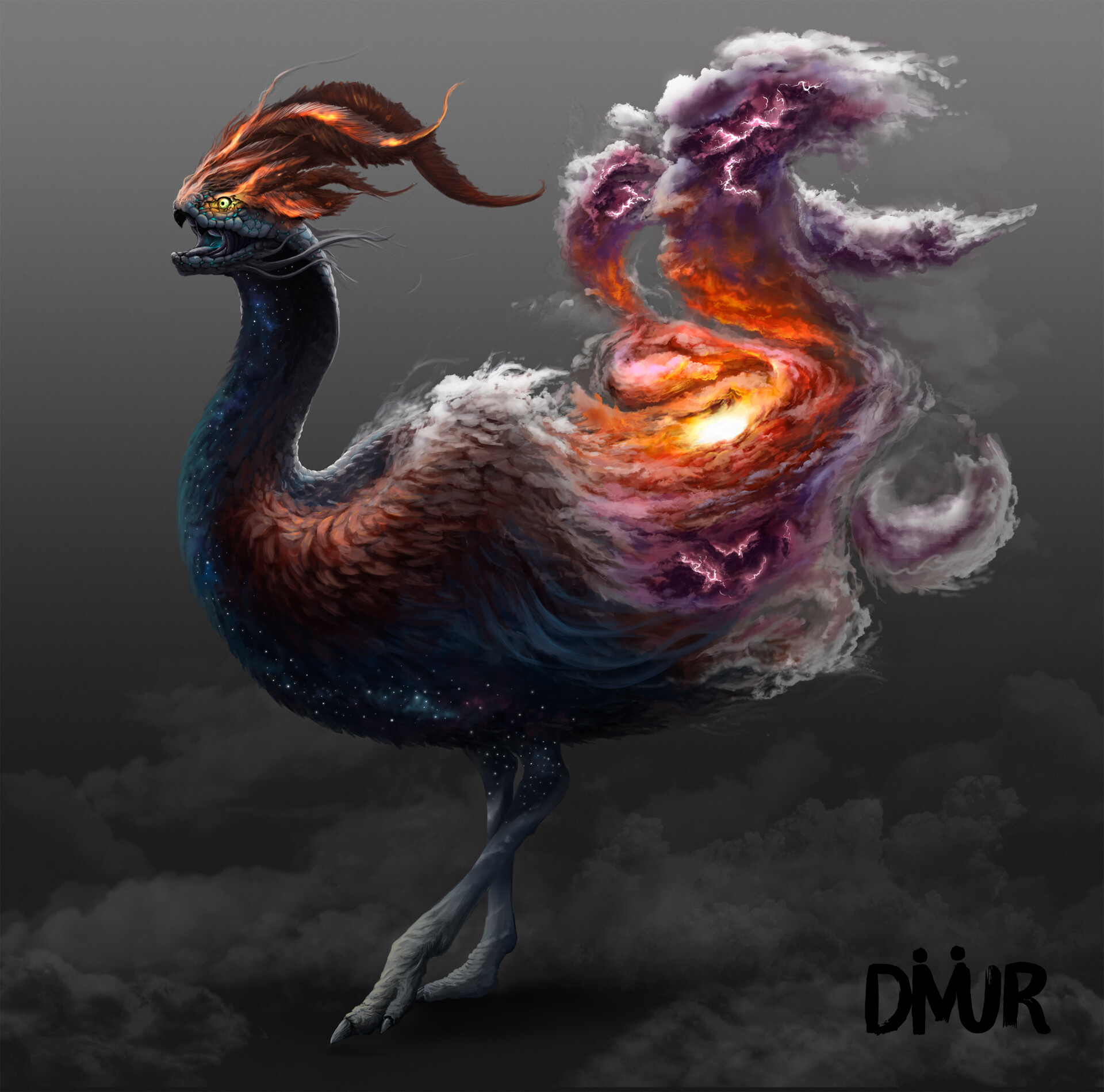
"Take care that by welcoming the rains, one does not invite a flood"
Children

Comments