
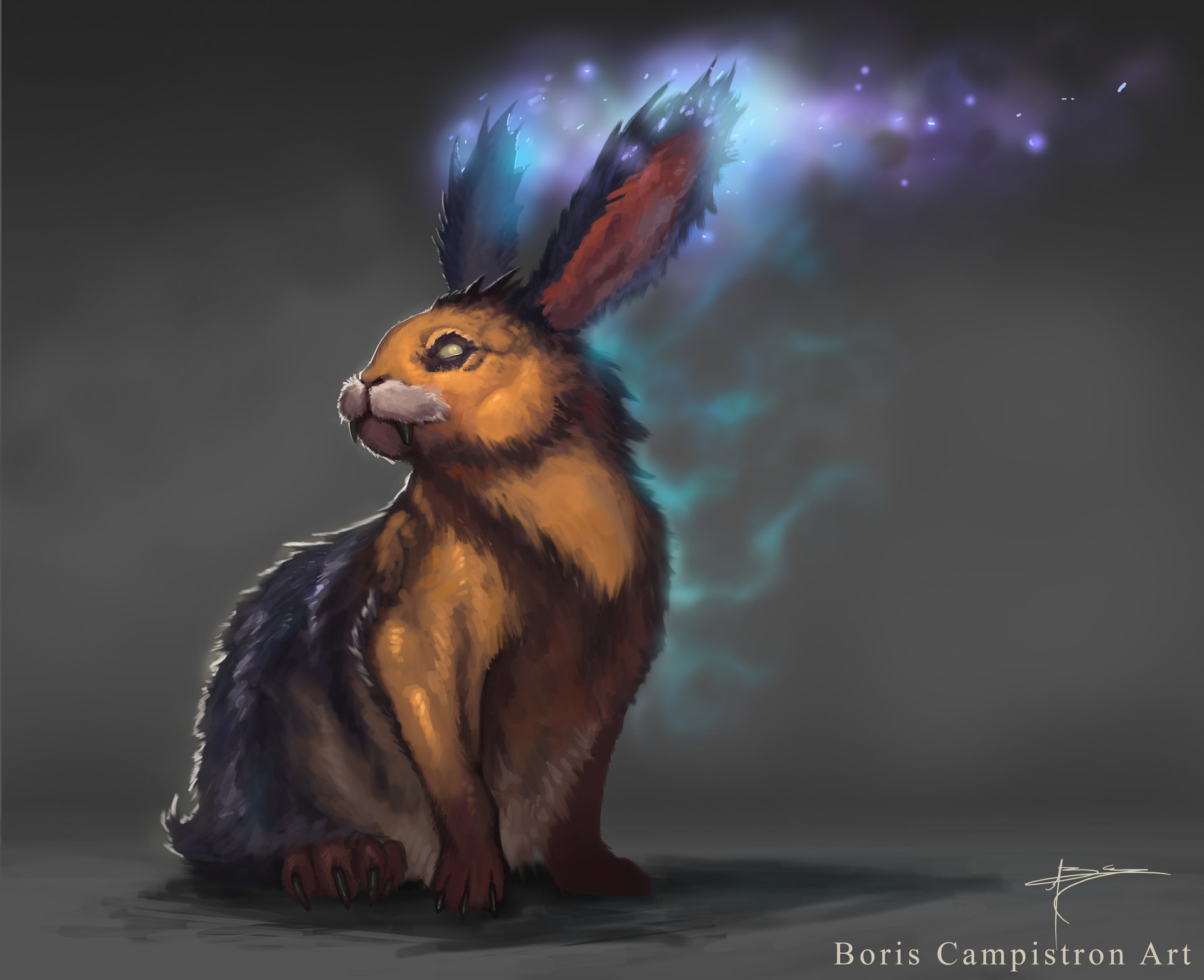
Dharmu-Tavakhra, The Thought-Giver
The Ruatiwangan Sky God of the Ground, Horizons, and Travel
The Third Bloodline has been severed, it seems - in the end, I could not stand against the flow of fate...could not parry the continental deathblow before it fell. So close...if only things had been different. If only I had been given one more day... Alas, the tribes of Sun and Moon proved even more cowardly than expected - the continental deathblow fell before its allotted time, and now we are all damned because of it. Those impulsive cubs undoubtedly can scarcely fathom the chaos their actions will unleash in the coming centuries - for all their talk of glory and pride, they can rarely see beyond them. With the Third Bloodline severed, the Divine Mandate shall fall - and with it, any hope of tracking where the third bloodline reappears, if indeed if ever even can. The other inheritors will demand blood - not even I could hope to dissuade them from that revenge, now...if I even cared to. They will stain their hands with the blood of their fellows, and their bloodlines shall fragment beneath the strain of kin-killing. I cannot allow that. In an ideal world, it would be the duty of the Inheritor of the Fourth Bloodline to mete out vengeance - only their spirit origin could possibly hope to survive such an act - but I cannot allow such a burden to fall to such a naive child. They are simply too young...too naive, too...bright. Their mind could not endure. It shall fall to me, then - the Lotus King of Isu shall deliver righteous vengeance upon the two traitors. It can happen no other way. May Dharmu-Tavakhra forgive me - the spirit origin his bloodline affords me is the most flexible and resilient of any of the six, but even it cannot hope to endure the enormous burden of a back-to-back kin-killing. One, perhaps, but not two; My essence will simply shatter beneath the strain - and as I wane, so too shall his holiness. It is a fate I shall force upon my own god - to be scattered by the sin of kin-killing. I fear for this continent - as his influence fades, only bitter hatred shall take its place. No more shall the children of god delight in the seeking of his realms and their beauty - no more shall they know humility or tolerance; No more shall they delight in learning and understanding the mysteries of God, or delight in the equality of God's children. No more - and I fear that only scratches the surface of what is to come. Though I fear I shall not know the luxury of an afterlife for what I must do, I hope to see you again in the next world, Lord J'wala - that I may kneel before you and beg your forgiveness for shattering your great dream. Still - perhaps all is not lost. Perhaps...the Lotus King has one last great trick up his sleeve... ...if the deathblow can be forestalled until the child of the Revolution arrives...Title(s): The Thought-Giver, The One Below All, The Wish-Planter, The Father in the Furrow, The Rumble in the Rock, The Quake in the Cavern, Father Udongo, Father Ambition, The Great Cave Elder Alignment: Neutral Good Favored Weapon: Kukri Obedience: Spend an hour with your face and head covered while underground, in a dirt hole, atop a thin layer of sand, or otherwise in a place with some form of literal or symbol connection to the ground - during this hour, mar your face with soil, dirt, or sand and do not lift your forehead from the ground for the entire time. Spend this time praying to Dharmu-Tavakhra, facing Isu, the City of Daggers as best as you are able, while vowing to fight for the freedoms and equalities of those who lack them via any means necessary. Once the hour is up, pick up a rock or other souvenir from the surrounding area and leave the previous such souvenir gained during the previous time this obedience was performed. Effect: Opening your soul to the infinite energies of the earth, you are possessed by a shard of the legendary Lotus King of Isu who once served as the Divine Inheritor of the Bloodline of Dharmu-Tavakhra - you gain the Hide in Plain Sight feature of the Shadowdancer, and gain immunity to one special sense of your choosing(Blindsense, Tremorsense, Blindsight, Etc). You gain the Secret Page, Erase, and Sepia Snake Sigil spells as SLAs 3/day each with a CL equal to your HD. Finally, you gain Craft(Tattoos) as a class skill and gain a +5 sacred bonus to it, as well as the Inscribe Magical Tattoo feat as if you had a Caster Level equal to your HD.
Divine Domains
Earth, Magic, Liberation, Artifice, Knowledge, Animal, Luck, Travel
Artifacts
Though they once possessed more notable relics said to have directly descended from ancient times where they were gifted to the mortal realms by Dharmu-Tavakhra himself, in the modern days the only remaining relics of the Tavakhran faith are the Six Shattered Reliquaries of Isu - six belongings believed to have once belonged to the legendary Lotus King of Isu who lived nearly six hundred years ago before the scattering of the Divine Bloodlines as the Divine Inheritor of Dharmu-Tavakhra. These items, commonly agreed upon to be the Blade, Bow, Knife, Censer, Grimoire, and Heart, are each relics of unimaginable power that are believed to survive well into the modern day - each appearing across the continent in times of great need or tyranny to shatter the status quo and protect the helpless. Most notably and most recently, the Blade was used atop the Mesa of M'bogu fifty years ago to deliver a mountain-shattering deathblow to the Mad Monarch of Mwatha, a Shersūran warlord who came close to unleashing a divine plague to scour the Bhadu from the continent forever. That final cataclysm, fought between the Mad Monarch and a Lone Bhadu believed possessed by the Lotus King, proved so intense that when the final blow from the Blade fell upon the Mad Monarch's adamantine hide and finally cracked it asunder, the force of the blow cracked the entire mesa clean in half and sent shockwaves so powerful rippling across the Sea of Six Prophets that the city of Qatraxus, City of Treasures, was nearly flooded half a world away on the other side of the continent of Ruatiwanga. Though the blade was subsequently lost in the struggle following the Mad Monarch's death, its usage reminded Ruatiwanga of the power of these fearsome artifacts.
Holy Books & Codes
Though Dharmu-Tavakhra once possessed a mighty holy tablet known as The Origin Slate, the slate was destroyed by the followers of Akash-Palla and Trishna-Kapur nearly 600 years ago during their battle against The Lotus King of Isu - now, Dharmu-Tavakhra has no codified holy book; Though the aged remnants of the various diaries and books and poems penned by the Lotus King of Isu have, over time, come to fulfill a similar purpose to the faithful.
Divine Symbols & Sigils
A mountain with a line drawn down its middle
Tenets of Faith
Blessed be the Penitent. Thou shalt seek neither status nor recognition nor exaltation from any but God.
Free the Lands of God. All who walk the lands of God shall be equal beneath his gaze and in access to his bounties.
Rejoice in the Realms of God. It is the duty of every child of God to bear witness to as much and as many of the wonders of God as possible, no matter how remote, how distant, or dangerous.
Question the Brilliance of God. Study, learn, and understand the world of God at any cost. Leave no question unanswered or fact unchallenged and prove the glory of God through Thesis, Antithesis, and Synthesis.
Spread the Brilliance of God. Thou shalt not fault the doubter or the nonbeliever for their very nature - meet them in good faith and teach them of the brilliance of God and his creations. Only those who relish in their ignorance or who, armed with knowledge, yet Blaspheme, shall know your wrath.
Holidays
The followers of Dharmu-Tavakhra hold only one holiday sacred - it has no single name, but is universally held on the Sixth Day of the Sixth Month and is commonly believed to be the anniversary of the death of The Lotus King of Isu, a holy figure in the Tavakhran faith that holds a station similar to a sacred prophet.
Divine Goals & Aspirations
To spread patience, understanding, and wisdom across Ruatiwanga.
To teach mortals to travel and enjoy in the realms of God.
To help educate mortals on debate, philosophy, and all manner of scientific and scholarly topics.
Followers and Priesthood
Though the continent of Ruatiwanga and its people are a polytheistic culture who venerates each of the Six Sky Gods of Haako-san-tara as a collective pantheon, it is not usually uncommon for the particularly devout to dedicate themselves to one such deity within the pantheon - yet, for The Thought-Giver, Sixth of the Sky Gods of Haako-san-tara and Husband to Jaku-Pushana(Mother Ocean, Goddess of Water, Tides, and Life), such an occurance could not be rarer in the modern day. Though he was once one of the most widespread and populous of all the Sky Gods of Haako-san-tara, Dharmu-Tavakhra has long since fallen out of favor with the people of Ruatiwanga - where once his followers often found his faith within the countless schools, coffee shops, and universities across the continent where all manner of Scholars once laughed and studied into the long hours of the night peeling back the secrets of the universe through mathematics and understanding, drawn to his faith through curiosity, tolerance, a desire to explore and see the world, or even out of a strong desire to help spread the glory of the Sky Gods to others, now the followers of The Thought-Giver are few and far between. Now, the once legendary universities of Ruatiwanga have all but closed - the scholars all but gone, the smoky hookah shops and academic halls where all the glories of the Gods were once catalogued and explained with science and faith in equal measure dark and silent - ancient, silent echoes of a time hundreds of years passed where the creatures of Ruatiwanga once delighted as kin in learning about the beautiful world made by the Gods. Once, in ancient and brighter times, the followers of Dharmu-Tavakhra adorned themselves simply; delighting in humility before the eyes of gods in accordance with the teachings of Dharmu-Tavakhra. Once, the followers of The Thought-Giver dressed plainly and in whichever manners best hid their physical forms - which they believed better insulated them from the unwanted status and recognition they believed interfered with their scholarly and pious work - most oftne using turbans, keffiyehs, or other head and face-obscuring headwear adorned with gemstones, minerals, or other items evoking the power and visage of the earth. Dressing practically and in a manner best suited to travel, the faithful of Dharmu-Tavakhra in ancient times often wore thick boots and gloves along with thick travelers cloaks - often combined with thick robes suited to both long nights in scholarly studies and long days on the road, often with natural earthen colors such as brown, grey, tan, and the like. Belts, pouches, holsters, backpacks, and the like were also common accessories enjoyed by the faithful - both for practicality and as a way to show off their faith and what little status they allowed themselves to have. Now, the followers of Dharmu-Tavakhra are few and far between - his faith entirely forgotten in some sections of the continent - meaning most of those ancient traditions have been lost forever. For followers of the modern day, they dress far more subtly and simply than their ancestors - preferring clothes and outfits suited for adventuring and traveling above all else, though they often retain the preference for headgear that obscures their heads and faces as much as possible to remain humble before God and Man alike. There is seldom a unifying color, theme, pattern, or style of dress amongst the faithful - as they are almost never populous enough in a given area to warrant organization into a church, parish, or group of any kind - though modern followers of The Thought-Giver often delight in collecting souvenirs from the many places they have traveled and using them as accessories and adornments on their person; oftentimes using such souvenirs to fashion makeshift holy symbols. Additionally, while tattooing has always been an important part of Dharmu-Tavakhra's faith, it has become even moreso in the centuries following the decline of his faith - his followers, now paranoid and untrusting after centuries of exile, distrust, and sometimes even open hunting from their fellows turning them to tattoos and other bodily arts to coat their skin, fur, or bodies in the results of their scholarly efforts; often turning their bodies into canvases of mathematical formulae, archiectural designs, or whatever scholarly fields they focus in. Unfortunately, though they once held near universal respect from all Ruatiwangan as the shining paragons of Ruatiwangan science and as perhaps the greatest and proudest cultural accomplishment of the era, followers of Dharmu-Tavakhra in the modern day enjoy no such attentions - they are often ostracized and ridiculed by their fellows as adherents of an ideology many consider Naive or overly Idealistic, relics of a time best forgotten, or in many circles even outright hunted by certain adherents of other Sky Gods(Namely Akash-Palla and Trishna-Kapur) for their ancient ties to the Lotus King of Isu in pursuit of an ancient grudge dating back nearly 600 years. For all these reasons and more, followers of Dharmu-Tavakhra are rarely recognized as such in the modern day - often preferring to hide their faiths where possible. They tend to serve as adventurers, explorers, or scholars wherever such professions can find gainful employment or local support - often switching between all three and more as needs arise - though in many areas they go to decent lengths to disguise their scholarly tasks and hide them from the eyes of skeptics or close-minded tribes who would otherwise react violently to their attempts to learn and understand the world around them. Oftentimes, they can be found seeking out patrons to support their work - though just as many can be found devoting themselves to adventuring parties and explorers across the continent.Ethics
In many ways, the followers of Dharmu-Tavakhra are best described as "Those who seek to understand how the world works, that they may better understand the glory of the Gods who made it" - this quote, though simple, perhaps best encapsulates the ideology they ascribe to. Humble and inquisitive, the followers of The Thought-Giver believe dutifully in the notions of humility and anonymity - believing that to seek status, station, recognition, or exaltation is an act inherently tied to the Ego and thus one that carries one further and further away from the Gods. To them, while the notion of being granted such gifts is not intrinsically blasphemous or heretical provided they are not sought out or specifically requested, the act of desiring such things and seeking them out clouds the mind and stains the spirit - and hinders the mortal ability to feel and commune with God, meaning that while only the most extreme followers of The Thought-Giver completely eschew all status, station, and rank(Sometimes even going so far as to forgo their own names and identities) to be closer to the Gods, all of his followers believe that to seek such things is an inherently selfish and blasphemous act that leads only to isolation of the soul; to them, worldly affairs such as those are things best tolerated in the interests of pursuing the scholarly, intellectual, and spiritual pursuits that truly matter which they believe mortals were made to pursue. Perhaps even more importantly, however, they are curious and inquisitive by nature - for while despite all their piousness and faith, to the surprise of many who meet them the followers of the Thought-Giver are some of the most scientifically and intellectually minded people one may ever meet. Deep and profound believers of philosophical principles of Thesis, Antithesis, and Synthesis as tools to seek higher realms of thought and understanding as well as in science and all scholarly pursuits, followers of The Thought-Giver believe that to accept things at face value or "just because" is a sinful and lazy act, and one that even goes so far as to bring shame upon one and the gods who watch over them. For, to them, one can only truly call themselves faithful or pious if one questions and learns of the world around them - if the glories of the gods and all they have made cannot be questioned or understood, they believe, are they really even worthy of being called divinity? To followers of Dharmu-Tavakhra, the answer is a resounding no - only by studying, researching, asking questions, attempting to disprove everything they know and then accepting only that which is unassailable fact, can one truly come to appreciate the beauties and glories of the Gods and the gifts they have given to the mortal world; only then can one truly find certainty in faith through comprehending how vast and awe-inspiring the world truly is. Though this at times makes them natural debaters, bickerers, and quibblers, they hold the ideals of curiosity and the scientific method truly close to their hearts - and believe that the pursuit of knowledge and of understanding the mysteries of God is one of, if not the most pious acts one can undertake as a mortal being. Their love for all things scholarly rarely stops there, however - for the followers of the Thought-Giver are firm believers in welcoming even the most doubtful, hateful, or outspoken nonbelievers into the fold with patience and understanding; holding the idea that no being should be disparaged or shamed for their ignorance very near and dear to their hearts. To them, the act of question and answer - of debate and teaching - is at the core of their worship of the divine; and that only the truly ignorant or unworthy would turn away an opportunity to meet such creatures in good faith and instruct and educate them on the brilliance of God, of their beliefs, and of the intellectual wisdoms of the world and hopefully, as a result, teach them a better way than ignorance and hate. Even foreigners and those belonging to different faiths, they believe, are deserving of this patience - and indeed, many followers of the Thought-Giver relish the chance to speak to such beings even moreso than usual, treasuring the idea of exchanging beliefs and coming to an understanding with a completely different culture and faith a beautifully central tenet to their faith and to science itself. Even if they do not come to full agreement, what ultimately matters to them is the dispelling of ignorance and the spreading of knowledge - for if a creature, so properly armed and educated, still chooses to indulge in their ignorance or continue to Blaspheme even having been taught and tutored, then it becomes the duty of the faithful to dispense the wrath of God appropriately in whatever forms that may best take. To that end, followers of the Thought-Giver are natural explorers and wanderers - believing that, as children of God(Whether one believes or not), it is one's duty to bear witness to the glory and splendor of the world they live in. This, they consider one of the most centrally spiritual tenets of life itself - to behold the world in which they live, to wander and explore the corners of God's land and see its mysteries, to see its ugliness and beauty in equal measure; it is ultimately born of the their central religious desire to test themselves constantly - to constantly seek to disprove their own beliefs and thus reinforce the beliefs that are truth and emerge all the more pious for it. To the followers of the Thought-Giver, it is no mere matter of simple morality or divine teaching - it is an obligation, a duty, a central tenet of being alive that drives one to roam and explore; To broaden one's worldview and contrast one's scholarly knowledge with worldly experiences. As a result, they are frequent pilgrims and constant adventurers - either to seek out some long forgotten scrap of knowledge to further their scientific understanding or simply to see the world and relish in its beauties as a way to enrich themselves and their souls. Finally, and perhaps most tragically in the modern-day, followers of The Thought-Giver believe most ardently in the ideals of equality under God - believing that all creatures that walk upon and within the lands of God are, by right and divine mandate, equal - and therefore deserving of equal access to the bounties of God. While in ancient times scholarly of Dharmu-Tavakhra debated and bickered constantly over the precise definitions of "equal" and of what it meant to "walk the land", which exactly "bounties" means in various contexts, and which creatures qualified for such protections, modern followers of The Thought-Giver tend to abide a more general consensus of their beliefs - often standing firm against slavery, against oppression, and especially against the treatment of other sentient races as things to be hunted and killed(As the Shersūra often do with the Bhadu). Ultimately, though, the exact definitions of such things are up to personal interpretation - though the injustices of the modern day make it hard for many followers of the Thought-Giver to truly ignore certain facets of life in Ruatiwanga.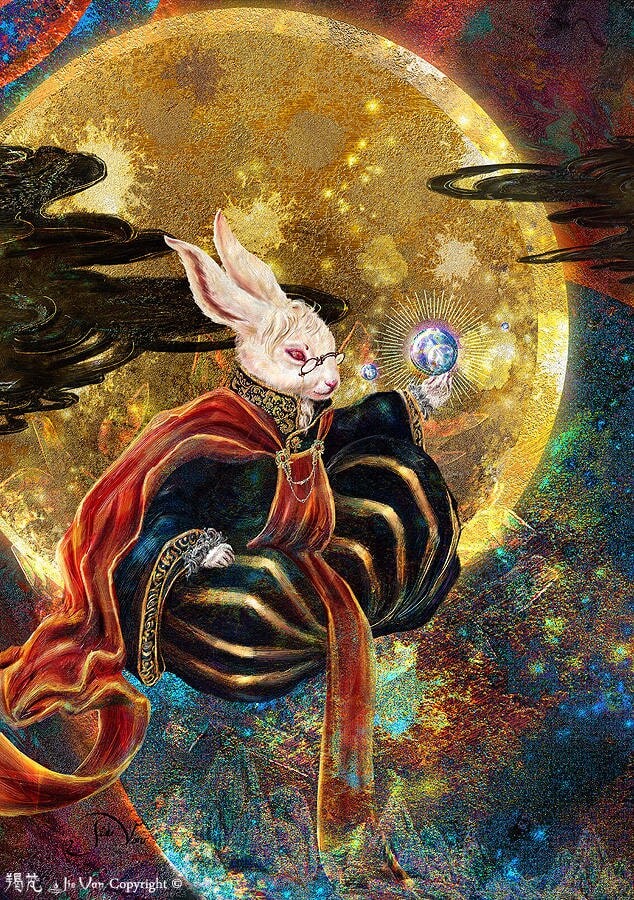
Divine Classification
Major God
Children

Comments