
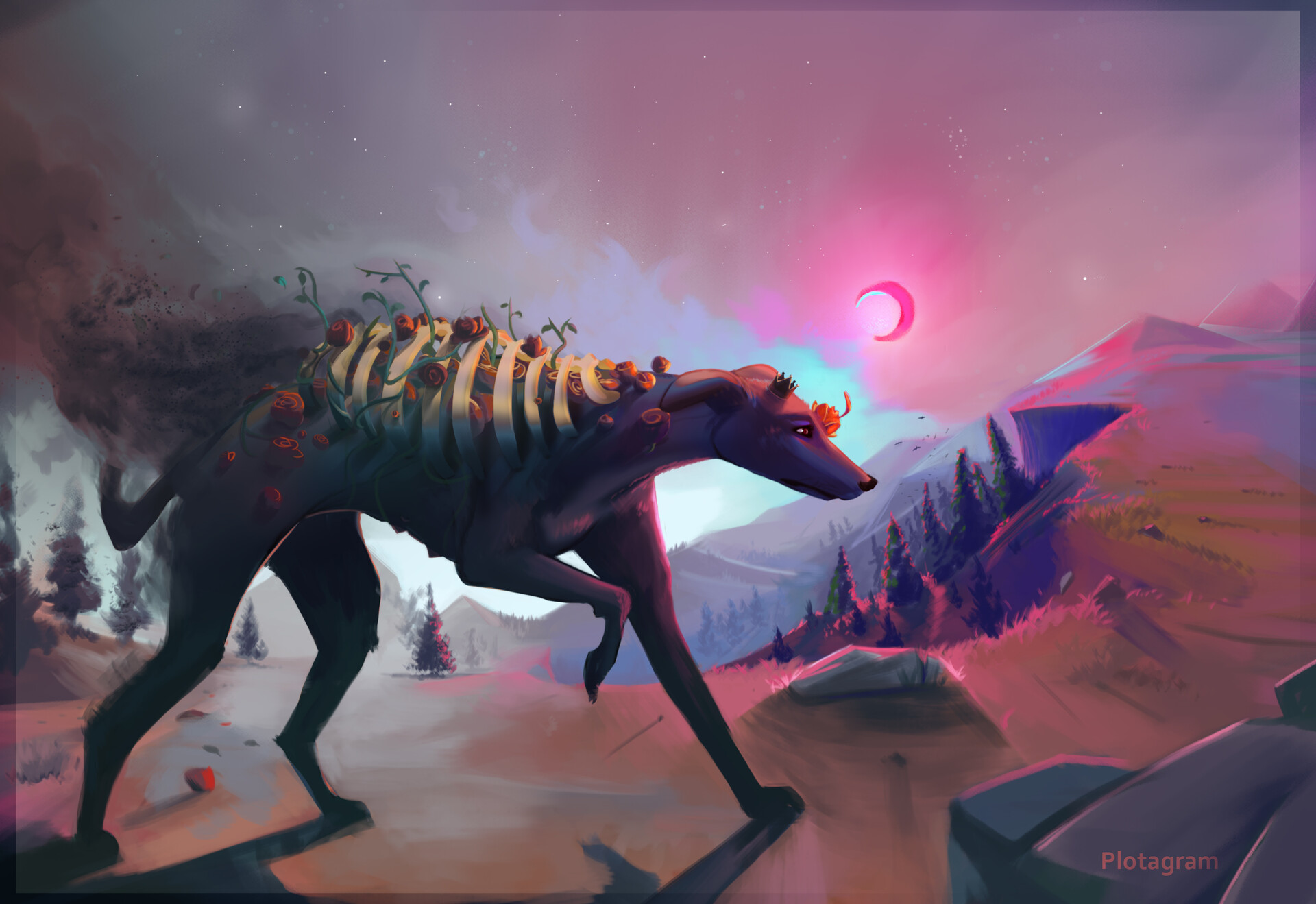
Raj-Āng-Māt, the Breath-Taker
Ruatiwangan Sky Goddess of the Sun, Wind, and Death
Dearest Radi,
It has been some hundred years now since you died, and I still think of you as if it were yesterday - and write as if these letters will somehow find you. I only hope you can find it in you to forgive your brother for his needless sentimentality, and the irregularity with which he has written you of late.
Looking through my past letters, I fear my abnormally long life has dulled me to everything but my duty - my letters grow more and more infrequent, written only when I find myself truly disturbed. I wish it was not so - but today is no different. Perhaps this is the only introspection I can allow myself, anymore.
I engaged the Children of Iron in another skirmish last week, on the fields outside Saganaoa - this time, they deployed a mighty Iron Spider-Demon against me and my armies. It was unlike anything I had ever seen before - as big as a castle, and moved entirely of its own volition, as if possessed...I shudder at the mere memory of it, even now. In the end, my armies and I brought it down of course, but not without casualties - more senseless deaths in this 'war that is not a war'.
Yet what moves my hand to paper today is not the memory of that encounter, but the conversation I had with its rider once I reached its screaming heart - the shattered man who lay entombed within the Iron Spider-Demon. His words, which I shall not record here for all our sakes, have in retrospect I believe, shaken me to my core - for they have burdened me with a true and final understanding of my foes, the Children of Iron.
How naive I was, to think that one day we could coexist as neighbors and allies. How foolish I was, to look into the eyes of their Living God-King on that day I bested him at the negotiating table and think I could bridge the gap between us - I see now we can never truly coexist.
"Live a life worthy of death" - these are the teachings of Raj-Āng-Māt, and perhaps the greatest and most central tenet of our cultural identity. To live, to be worthy of the end...of this sacred cycle laid down by the gods...to live a life worthy of being taken...there is no more central idea to us. Death, to us, is good and just - a creation of the gods, to be revered and respected. No matter whether one believes in an afterlife or not, death is not evil - to us, it is what we must prove ourselves worthy of. To prove ourselves worthy of this life we were given - to the world of God's bounties and beauties we have been thrust into, and cherish them as our own. Yet, to the Children of Iron, it could not be different.
To them, Death is no sacred thing - no good and just facet of the world, made by the Gods - no thing to be honored, or given reverence and respect. It is an enemy - an equation to be solved. The last great foe they cannot beat. There is nothing sacred in death to them, for there is nothing sacred in life but themselves - but life itself. They struggle and buck against the end at any cost...no matter what they must defile or desecrate to endure, they will do so at a moment's of hesitation. They are all mad, Radi - much like their God-King, they would burn the world to ash if it meant victory. What I thought was the follies of their mad God-King was in truth the follies of their civilization, reflected in his eyes - they hold no respect for God, or the world he has made. They do not treasure his wonders, or reflect on his greatness - like a cancerous tumor, life is its own reward, feeding upon itself endlessly; whose only goal is growth at any cost, even if the host suffers as the tumor expands. We are so fundamentally different...our views on death so utterly opposed...I see now, peace was never an option.
And yet - beneath all my empathy for them, and their miserable lot in life - I feel dread. For now, I can see - what mad foe must a beast face, to grow so swollen and distended? What environment must it have adapted to, to grow so feral and mighty?
What if the Children of Iron are not our greatest foe?
Title(s): The Breath-Taker, The Breath-Giver, Lord of the Third Summit, Lady of the Summer Haze, The Wind which Scours, The Breeze which Loves, The Heavenly Maker, She who dwells Beyond, Old Lady Love, Old Lady Light,
Alignment: Lawful Neutral
Favored Weapon: Khopesh(Any PC or NPC with a rank in a divine casting class gaining power from Raj-Āng-Māt is treated as proficient with a Khopesh)
Obedience: Spend an hour digging a grave big enough for you to lie down in, then lying down within and contemplating the course of your life and all you have done and would yet see done before your time is up - do so with your eyes closed and wearing the holy colors of Raj-Āng-Māt(Or having objects with such colors on you or nearby, if wearing them is not feasible). Once the hour is up, place one bone, one flower, and one object symbolizing something you enjoy doing, someone you love, or something or someone you would like to study how to do better or get to know better, then fill the grave back up with dirt. In areas where digging is not feasible, lie upon the ground and place the items on the place where you laid instead, but be sure to fill part of the hour with exercise or some other kind of manual effort to replicate the digging's fatigue.
Effect: You gain the Signature Skill feat for one skill of your choice for 24 hours(or until you next perform this obedience and choose another skill, whichever comes first)(Using your HD+5 in place of skill ranks in that skill for the purposes of the feat). Additionally, you can select one creature within 60ft that you can see as a swift action - for the next round, that creature alone is treated as if within a windstorm blowing in a direction of your choosing, and must make a Fortitude Save(DC based off your highest Mental Ability Score) at the start of their next turn or be blown 1d4x10 feet in the direction you chose, taking 1d6 bludgeoning damage if they impact an obstacle that would inhibit their movement along the path.
Divine Domains
Air, Weather, Charm, Repose, Death, Plant, Animal, Healing
Artifacts
As one of the most widely worshipped, commonly known, and well-liked of the Six Sky Gods of Haako-san-tara, Raj-Āng-Māt has some of the most accessible and commonly known artifacts of any of the Sky Gods - which are listed below.
- Dreampiercer's Needle: This artifact, one of the most common artifacts of Raj-Āng-Māt, is not one item specifically but any small, light blade(Typically a dagger or other light, thin blade) that matches a series of exacting specifications. These items, which must be made of bone, are ideally carved from the bones of Borzoi Canines - though any canine bones or natural animal bones in general can be substituted in a pinch(though Canine Bones and, most specifically, Canine bones from a Borzoi Breed work best). Once carved, these items' blades are engraved with the symbol of Raj-Āng-Māt and inlaid with either obsidian or onyx dust, or an identical gemstone within the pommel. Once properly made and sanctified within holy ground, these blades allow for the performance of rites to gaze into the minds of dreaming creatures the blades can make contact with or, more prominently, to gaze into the dreams of the dead and allow for the living to commune with corpses long after their demise - though more shoddily made daggers lead to more unpredictable and unexpected results. These items must be made of natural materials(And thus do not function when made of refined, smelted, or processed metals or materials), and often degrade with each use - though especially well-made blades made by the hands of the especially devout or in especially hallowed ground may last virtually forever. However, they are simple to craft by design - as each village shaman or elder across Ruatiwanga often is found to be in possession of one or more such daggers, as they can be tailored to function against certain bloodlines, species, or the like during the creation process with relative ease. When used offensively, these needles can also induce sleep and dream states unnaturally quickly, or otherwise alter or mess with the target's state of consciousness.
- Martyr's Annulment Blade: These large blades, crafted exclusively in holy or hallowed sites dedicated to Raj-Āng-Māt, are powerful tools often bestowed upon those who prove themselves as honored champions of the faith or who otherwise earn the favor and blessing of the faith or Raj-Āng-Māt herself. Appearing at first to be beautiful and gorgeous bronze or bone blades with gemstone or other valuable material inlays or decorations, these blades are universally useless in battle - so dull they cannot cut and so light they cannot cause significant bludgeoning damage. Instead, the blades are potent tools for arbiters who seek to control the conditions of battle - for when the blades are thrust into the ground while laws or rules of battle are carved into the length of the blade, those very laws will become immutable, unbreakable edicts upon the battlefield surrounding the weapon until such a time as the weapon is destroyed or removed from the ground.
- Staff of Six Summits: The single greatest artifact of Raj-Āng-Māt, the Staff of Six Summits is a singular item of such legendary power that it is kept under the greatest of guard at all times within The Fountainhead Cathedral, sacred site where Raj-Āng-Māt's power is greatest, or otherwise kept in the possession of the High Priest of the Faith. This staff, said to have originally belonged to the first Nabī High Chief who ruled over Ruatiwanga tens of thousands of years ago, is said to have been the first true artifact given to the mortal realm by the Six Sky Gods of Haako-san-tara - blessed and imbued with the powers of the Six Sky Gods and given to Raj-Āng-Māt for safekeeping, who in turn gifted it unto her greatest follow as a symbol of the compact between man and God. Supposedly able to channel the powers of the Six Divine Bloodlines and wield the powers of the Gods, the staff is believed to be a sentient relic that chooses and guides its wielders as much as it is used by them, and only reveals its true and terrible power when it deems it appropriate. Even when its true power is sealed away by the staff's intelligence, the staff grants its owner full power and authority over the domains of Raj-Āng-Māt - allowing them to wield true and total authority over death, sun, wind, love, and all things attributed to The Breath-Taker. Beyond this, the staff is critical to the Six-Summit Trail walked by Ruatiwangan Pilgrims since ancient times - for only it can open the gateway to the final, ephemeral "Seventh Summit" that awaits at the end of the path, said to be the audience chamber where mortals may stand before the Sky Gods and behold them in all their true and terrible glory.
Holy Books & Codes
The holy books of Raj-Āng-Māt, known to the people of Ruatiwanga as The Tomes of the Giver and the Tablets of the Taker, are twin codices on the nature of life and death which were copied down onto stone slabs from the original carvings made onto the Third Sacred Summit of Haako-san-tara which now lie at the heart of The Fountainhead Cathedral, and have since been distributed into nearly every village and population center across the continent.
Divine Symbols & Sigils
A sun at the center of a triangle made of three bones
Tenets of Faith
Honor the rules of engagement. Never stoop to insults, slander, or rely solely on trickery upon the battlefield. If thou must do battle, let it be with skill and honor.
Honor the dead. Thou shall not deny the dead their final words and shall endeavor to see them honored in accordance with their customs after death. Guard the honor of the dead wherever possible.
Honor thy foes. Thou shalt study those who stand against you that you might see, feel, and love the world as they do. If thou must take a life, it is thy duty to do right by those thy victim left behind.
Honor the life you were given. Take chances, leave your comfort zone, and meet new people. Say yes to opportunity wherever possible, and never allow thyself or another to waste their life or die a meaningless death.
Honor the rites of death. Never knowingly bring harm to a crypt, tomb, grave, or other home of the dead and guard them from damage at the hands of others. Never allow blood to be spilled during funerary rites or upon sites sacred to the dead.
Divine Goals & Aspirations
To teach all creatures to live their lives in such a way as to be worthy of the world they were born into and the lives they were given by the Gods.
To never see a life squandered or wasted.
To see the dead honored and respected before, during, and after their deaths.
Followers and Priesthood
Though the continent of Ruatiwanga and its people are a polytheistic culture who venerates each of the Six Sky Gods of Haako-san-tara as a collective pantheon, it is not usually uncommon for the particularly devout to dedicate themselves to one such deity within the pantheon - and in the case of Raj-Āng-Māt, better known to the citizens of Ruatiwanga as The Breath-Giver and the Breath-Taker, Third of the Sky Gods of Haako-san-tara and Wife to Tig-Ra-Lan(Grandfather Time and God of the Moon, Stars, and Time), this typically entails those who find themselves exposed to or surrounded by death, those who are especially pious or who are otherwise especially fervent believers in the ways and practices of the Sky Gods, those who fear death or those who seek answers or comfort about it, or those who are otherwise faced with some great offense, blasphemy, or dishonor done upon the gods or their followers and thus come to find they seek to prevent such things from happening again, though the list is hardly an exhaustive one. Indeed, the reasons one may join the faith of The Breath-Taker are manifold even amongst the ranks of the Six Sky Gods of Haako-san-tara - even those who once belonged to the faiths of the other Sky Gods can often find themselves drifting into the orbit of the faith of Raj-Āng-Māt when they bear witness to acts or beliefs in other faiths which they believe stand in opposition to the Gods which should be corrected or punished, though other creatures who undergo all manner of events which inspire a desire to uphold the honors of life and death and who are confronted with the stark realities and very real and understandable terrors of their own mortality and seek answers regarding them may also easily find themselves drifting into the faith of The Breath-Taker. Despite the vast breadth of Raj-Āng-Māt's popularity and faith across the continent of Ruatiwanga, the Breath-Taker's faith is a bit unique amongst the Sky Gods in that, as widespread and as popular as it is, it occupies a unique position as a faith with perhaps the greatest number of followers, but the fewest number of truly dedicated followers(Perhaps only ahead of The Thought-Giver) - in other words, her following has plenty of breadth, but often little depth; For while many enjoy the teachings of her followers and often are passingly familiar with her rites and practices for use in their everyday life, few creatures across Ruatiwanga have the spiritual fortitude to devote themselves to the Breath-Taker in a deep and profound spiritual manner, due to the profound and spiritual nature of her domains and teachings. As such, while in theory her followers can and often do come from any and all walks of life across Ruatiwanga, in practice Raj-Āng-Māt's true "followers"(Those who find meaning in and devote themselves to her teachings in a manner greater than the typical transactional or surface level nature many other Ruatiwangans engage with her faith in) typically come from the especially philosophical, disturbed, pious, the elderly, or any who find themselves curious or possessed of the spiritual and mental maturity to contemplate matters of death and what it means for themselves and the world around them, or those who, having suffered tragedies and losses in their lives, have come to possess a mature relationship to those things and seek to see the dead honored or otherwise deepen their understanding of those things in an effort to find closure. In essence, one must have an innate curiosity, desire for understanding, or comfort in being uncomfortable to truly be a follower of Raj-Āng-Māt - for it is within these emotions that they contemplate on their own mortalities, on the nature of life and death, and what it truly means to live a worthy and fulfilling life. Of course, exceptions always exist - but it is these who are most commonly found within the faith and/or those who are most likely to explore The Breath-Taker's mysteries with deeper enthusiasm and understanding. To those who truly dedicate themselves to her faith, followers of The Breath-Taker often dress in light pinks and purples - the colors of the stars, of dreams, and of the alien and the unknown and of dreams, with white accents or some combination of the previous three colors. They prefer loose and comfortable clothes wherever possible, and often sew cloth, skin, or fur patches onto their clothes to denote their culture or village of origin, the location of their home denomination of the faith, their rank in the faith, and whatever other information they deem important enough to allow others to see at a glimpse. As big believers in the spiritual significance of relics and items of power, followers of The Breath-Taker are almost universally gifted with some manner of ritual implement upon their true introduction into the faith as a full-fledged member - most commonly a walking stick, dagger, or other practical item on which they are expected to carve their own understandings of life and death onto as they grow as a person throughout their lives, though many members of the faith also take pride in carving the names of those they have helped find peace or of those they are most proudest of helping on such items as well. They often care little for piercings or adornments and make no spiritual laws against or in favor of them, believing the physical form to be ephemeral and thus the domain of the one who inhabits it, placing much more emphasis on one's spiritual body and the ways by which one must keep it "pure" and "clean". As an especially ordered and organized faith, followers of The Breath-Taker are often assigned rank and station depending on the duration of their service to the faith - with service given in monasteries, convents, or otherwise places deemed "Especially Pious" weighted more favorably for the ranks bestowed. These ranks, denoted by both the patches worn upon their robes and by the colors of their garb, with darker purples and pinks and more stark white accents being considered signs of higher station, are the only true unifying identification amongst the faithful besides their traditional robes and styles of dress, as well as the presence of the Holy Symbol of The Breath-Taker upon them, often in the form of a necklace, patch, or easily replaceable and/or maintainable item - as the faith often considers more unifying styles of dress unneeded trappings of excessive attachment, preferring instead to allow its members to dress as they wish so long as they fall within the loose guidelines of the faith according to their local customs and environmental needs. Regardless of their dress, followers of The Breath-Taker can be found in virtually every settlement and remote corner of Ruatiwanga - often congregating into local churches and parishes built within or near settlements so as to best offer their services to their fellow locals for burials, spiritual guidance, and the like with more spiritually enlightened masters often retreating to remote or hard-to-reach monasteries or temples located in high places to contemplate the mysteries of Life and Death and to ensure their wisdom is given only to those who show the willingness to seek them out, as the faith often places spiritual emphasis on toil or "honorable work" done in service to God or one's own betterment. Ultimately, they are those other Ruatiwangans of all creeds, classes, and walks of life turn to in times of spiritual need - whether that be as gravekeepers or tenders of the dead or as priests and monks who offer guidance and wisdom to those who have become lost or who seek answers in their lives on the nature of God and what it means to live.Ethics
In the most succinct and poetic terms, the ethics and beliefs of the followers of the Breath-Taker can be distilled down into the following epithet - "Live a life worthy of Death". Everything they do and live for is, ultimately, in service to this belief - deeply spiritual and honorable, the followers of Raj-Āng-Māt believe, inherently in Death as a Good and Just part of this world; a constant created by and overseen by the Six Sky Gods of Haako-san-tara who created Heaven and earth that is, whether one likes it or not, as just and as good of a facet of the world as nature and life itself. This, ultimately, is the key to understanding their ethical and moral beliefs - to them, Death and the cessation of being is an inherently Good and Honorable thing; It may be scary, it may be frightening or hard to understand or comprehend, but it is never an enemy - never a thing to be ran from, or escaped. It is one's sacred duty - the final part of one's life laid down by the Gods and one of the only constants of life itself - and to the followers of Raj-Āng-Māt, the mere fact that Death was given unto mortals by God makes it a fundamentally rewarding and respectable facet of life. It is, to them, the ultimate expression of beauty and dignity - the last great gift from God all beings are entitled to and owed, and one that all creatures must, inherently and fundamentally, live and labor to prove themselves worthy of; for a being who cannot or does not die, to them, is a being who has failed the Gods and been denied their last great gift. To this end, the followers of The Breath-Taker believe in living a life of honor, which they believe is the key to keeping a pure and clean spirit - especially when that honor concerns death or the events surrounding it, which they believe is most vital to one's spiritual wellbeing. To uphold one's honor, especially in the face of death and in the acts surrounding the giving and the taking of life, is to honor God and perhaps more importantly the most critical and fundamental aspect of being a children of God - life, and the cessation of it - a thing which is a concept unique to mortal creatures, the children of God. Even before they step into battle, followers of Raj-Āng-Māt believe that it is vitally important to do battle with honor - to never needlessly besmirch a foe's character or bring victory solely through underhanded means(The specifics of what this entails vary somewhat from parish to parish, but are just as vitally important no matter the details), to do battle with skill and honor so that the death that follows is not stained with the sins of mortal recklessness, of spiritual chaos, or of sin and dishonor is vitally important to them. To honor one's foes with skillful battle and honorable combat, to respect one's enemies even as you slay them - to not slander their character and treat them as a living being rather than an animal is to honor the gods, yourself, and your foe as well as the act of Death itself; any other death dealt by any other means, to them, is Dishonorable - and is thus reflected in the resentments of the dead and the displeasures of the Gods which, they believe, is often manifested in the world through the Undead, Natural Disasters, Misfortune, and the like. However, the duties and beliefs of the faithful do not stop there - even in victory, they believe that the sanctity of death must be upheld; Even as one claims victory and stands before their foe, victorious, one must not shy away from their foe's final moments and honor them by not only allowing them their final words(the Disrespecting of which is, to the faithful, an offense on par with blaspheming against the Gods themselves), but ensure the dead are cared for and respected even once their spiritual and mental forms decouple from their physical ones. To them, just because a foe's mind and soul have moved one does not give one the right to desecrate their body nor leave it to rot in dishonor - it is important not only to preserve the honor of the deceased, but your own in the eyes of the Gods to honor the dead as best you can; to express love and compassion for one's fellow man even in the most violent and grisly of moments to show that one, despite the violence, is still a caring creature at heart even if that means that one must do right by those your victim left behind in death - whether that means caring for now orphaned children, simply giving the news of the death to a grieving widow, or more. To not abide these rites, they believe, is to ultimately kill yourself slowly but surely - a living death of the spirit. The exact lengths the faithful believe one must go to after death vary wildly from parish to parish, and the circumstances of the individual act - but by and large, such beliefs play into the Rajaan notion of "honorable labor" to purify the spirit(Which are often at the core of the Rajaan desire and belief to help and teach others of their own spiritual understandings, thus serving as mentors and teachers for others in need While the Gods and one's fellow man may be satisfied with "The best that is feasible in the current moment", the greater the inconvenience one submits themselves to in service to their fellows, the greater the act of piety and spiritual cleansing that results. In many ways, these Rajaan beliefs play into a deep and profound spiritual belief of humility and love towards their fellows even in the ugliest and most violent moments man can enact on his fellow man - actions and ideals which maintain one's spiritual and mental purity even in the face of the bloodiest and most violent battlefields. To see one's foes and not just recognize them by their appearance, but to truly empathize with them and understand who they are, how they think, how they love and who they love - these are the most fundamental tenets of mortality that must be protected, lest one fall into the trappings of tribalism, of the 'us versus them' mentality, of the fallacy of forgetting that, below it all, one's foes are as loving and caring as you and, ultimately, forget the sanctity of life and death as one grows used to and begins to grow accustomed to such horrible things and to regarding their enemies as "things" rather than "people" - yet another slow death of the spirit. Rajaans, ultimately, believe that death is every bit as beautiful as life - holding the ideals of empathy, humility, love, and compassion nearest and dearest to their hearts as the ideals they must subscribe to even as they constantly seek to do everything in their power to find meaning in their life and to not waste the life they were given. These two notions(To not die a meaningless death and to find purpose in life), ultimately, if one can abide them, are vitally important to all living creatures - and to that end, Rajaans often delight in taking chances, leaving their comfort zone, meeting new people, and seeking new experiences to enrich their lives - all acts which they believe are so vitally integral to the mortal experience that all creatures should do so as much as is feasible and possible to honor the Gods who made them and, ultimately, make their life they are proud of and one worth living. However, with that said, what ultimately matters most to the followers of Raj-Āng-Māt is meaning and purpose - to find both, to help others find both, to not deny either to others even when you must come to blows and extinguish the light of another of God's Children, are keys to not only honoring life and death, but to honoring and respecting one's self and, in the end, living a life that is worthy of death; that is worthy of being a part of the great cycle of the world and, regardless if one believes in an afterlife or not, was lived proudly and without compromise to one's honor or spiritual pride as a child of God; a life that, even if it was never known or remembered by any other, was full of meaning, of love, of purpose no matter how grand or small - even after death, where love and compassion and protection are so often abandoned. To live, ultimately, is not its own reward - indeed, to simply "live a life for its own sake" is among the worst sins Rajaans believe a child of God can commit - it is precisely because that there is an end that life has meaning. To simply live on, without purpose or meaning beyond life itself, would be cancerous and terrible - what matters most is to be able to, ultimately, stand proud in one's dying moments and say "Not once did I deny my fellows their dignity, even though circumstances bid me slay them - not once did I take the easy path for the sake of mere convenience, or laziness, or apathy. Not once did I dishonor those I slew or met, bring it to those long dead, or deny the chance to help another keep or find their own anew - mine was a life of purpose, of meaning, which I am proud of even if all the world is not.".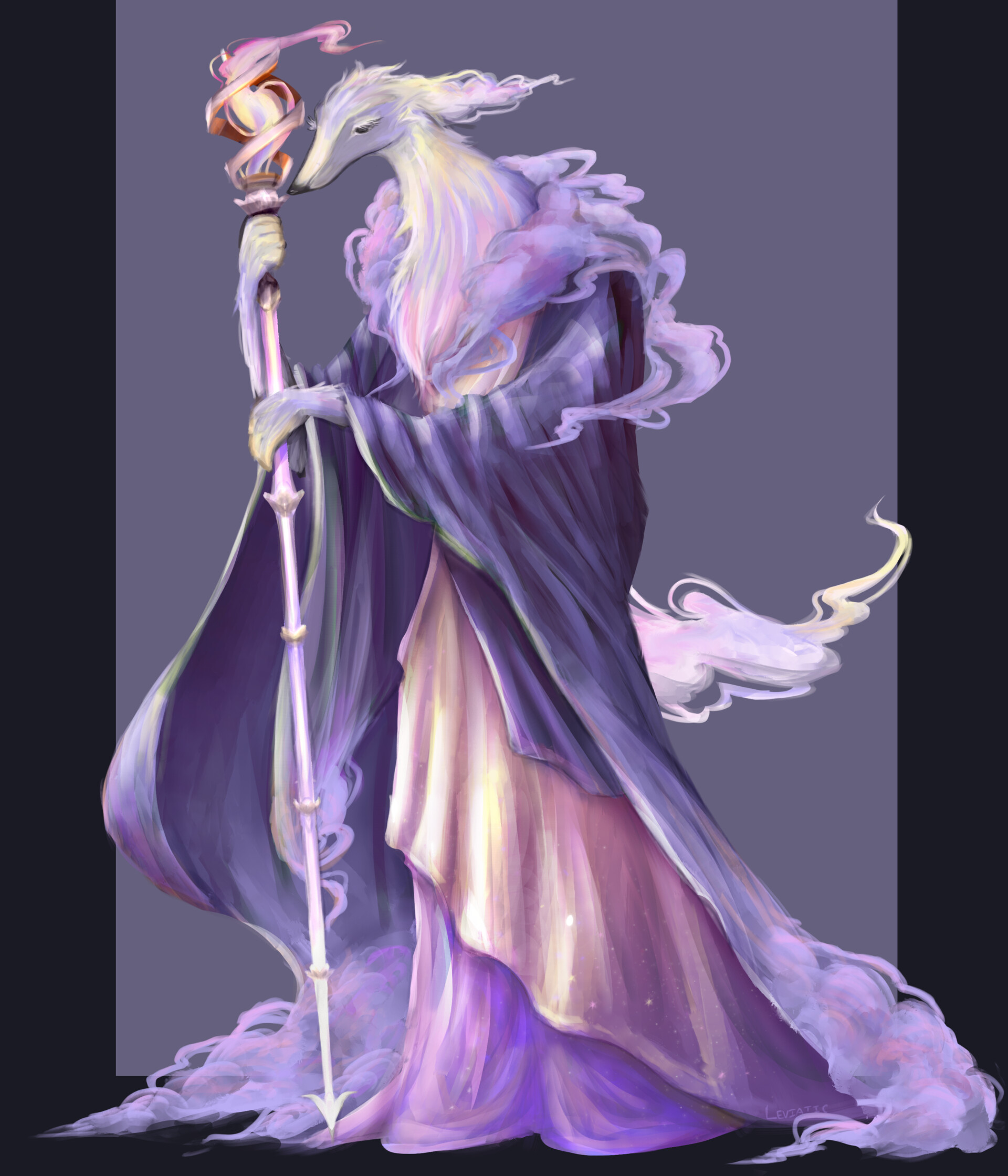
Divine Classification
Major God
Children

Comments