Lydia Quillston


GM-Info!
Work in progress!
Slightly NSFW!
FEATURED
Lady Lydia Amaranth Quillston (née Peregrine) once graced the Imperial court, her laughter tinkling like crystal amid chandeliers. Marriage to shipping magnate Lord Edwin Quillston whisked her to Bridgeport, where prosperity bought a marble townhouse upon Honeyell. Bereaved two winters past, Lydia finds widowhood an echoing affair. Armed with fortune and ennui, she has dedicated herself to rooting out indecency – a crusade pursued with the fervour of one who suspects pleasure is a sin chiefly because she herself longs for it.
Yet when Edwin presented her with an opaline locket on their wedding day, something gentle unfurled. That softness curdled into suspicion the first time he stayed late at the harbour office.
Jewelled quill in hand, she pens florid columns for The Bridgeport Beacon, signing them “L.Q.” Servants whisper that her late husband’s ledgers hide questionable dealings and that Lydia forbids anyone to enter the locked west study after dusk. She takes tea alone at precisely four o’clock, staring toward the distant docks as though expecting monsters to crawl up the mooring lines.
Her secret pastime is falconry; at dawn she releases a white gyrfalcon, Avarice, above the estuary, watching its spiral as though measuring the city’s moral barometer. When the bird returns with brine‑sprayed feathers, Lydia carefully dries them by the hearth, murmuring apologies no one must overhear.
"She never raises her voice. She simply removes your weaker argument and invites you to stand without it." -- Percival Latchley
Within a fortnight a holding company - Quill & Quire Limited - quietly purchased sixty per cent of the Beacon. Only after signatures were dry did anyone learn the company was hers. Ownership brought a column and a code. She dismissed the most lurid illustrator, cancelled three serials that traded in smut, and set a standard for language and imagery that nudged the paper back towards public service. She did not outlaw gossip; she insisted it be written with care. Her Saturday essays - precise, chilly, and oddly compelling - now anchor the paper’s tone. Profits dipped for a season and then steadied. The Beacon kept its licence and, more importantly, its standards.
Against the Illustrated Obscenity
"Art that travels only as far as the epidermis is not art; it is a draught that chills and leaves no memory." -- L.Q.

"Art that travels only as far as the epidermis is not art; it is a draught that chills and leaves no memory." -- L.Q.
Her upbringing was austere: governesses drilled deportment in draughty corridors; tutors fed her languages alongside religious values. She excelled at the pianoforte, though she now refuses to play. Music, she claims, is the seductive cousin of disorder.
Social seasons in the capital sharpened Lydia’s tongue. She discovered that a compliment delivered at half‑volume travels farther than a shout. Friends drifted into admirers; admirers into pawns.
The Bridgeport Beacon
Lydia began with polite submissions to the Bridgeport Beacon: cool, moral essays on civic decency and public vice. Three times they were returned with courteous slips. She stopped sending pages and started reading the paper itself - its accounts, its contracts, its small print. The figures soon spoke. Subscription monies wandered into "promotional allowances", a printer was paid twice under neat initials, and advert rates reserved for a charity’s notices were granted to profitable tonics. She requested a private meeting with the proprietor, Mr Percival Latchley; the conversation was brief, the tea untasted.Her husband, his head, and his legacy
Sir Alastair Quillston made his fortune in goods that carried the scent of distance - southern dyes, cardamom and clove, tallow, whale oil, bright glass beads, and the more delicate trade in poppy tinctures that respectable men preferred to style "medical spirits". He kept two sets of manners and, as Lydia later learned, two households: the grand townhouse in Bridgeport and a quiet chapel life in Queenshaven with Rosamund Hale, a ship-chandler’s daughter. Lydia uncovered the deceit by balancing columns that refused to settle - regular remittances to “R. Hale, household”, and purchases for “Heloise”, a name shared not by a daughter but by one of his brigs. She travelled south, sat unseen in a back pew, and watched the devotions of a woman who believed herself a wife. His death came at sea, recorded as mischance: a pilot, recommended by interested parties, misjudged the outer reef during a hard squall. Lydia arranged the circumstances with a level head and a steady hand - no daggers, only nudges. The harbour called it accident; Lydia ensured Queenshaven received enough support to remain decent, never indulgent. From the wreckage divers salvaged the Saint Heloise’s figurehead, a woman’s face carved in Sir Alastair’s likeness as a private jest between shipwright and owner. Lydia had the figure fixed to a bracket in her counting room. Visitors, mistaking it for a bronze bust, call it “his head”. It watches over the ledgers like a warning against sentiment.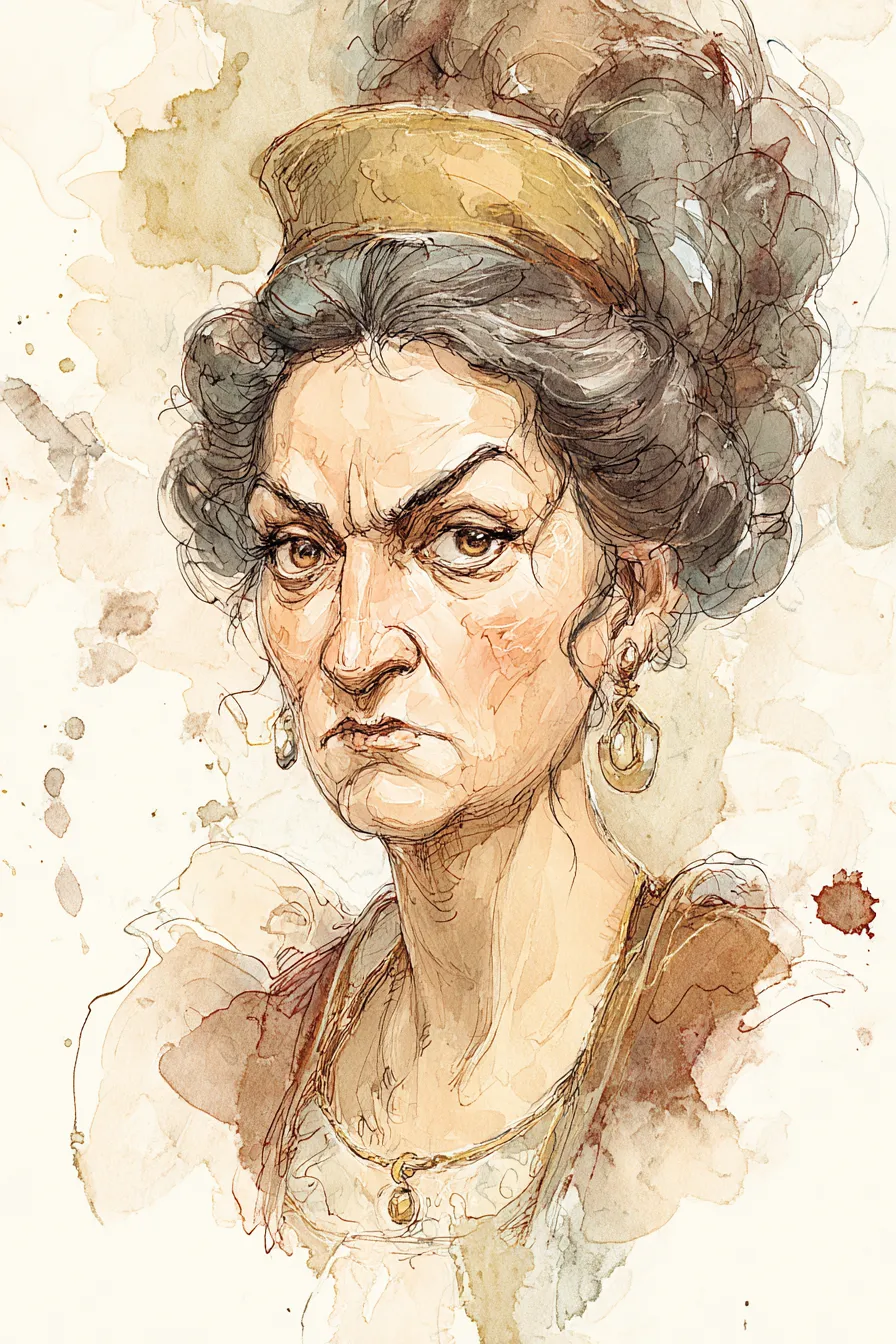
 Brought to you by
Current Location
Species
Year of Birth
2811 PB
54 Years old
Children
Hair
grey updo
Height
165 cm
Weight
54 kg
He left practical riches rather than poetry: three brigs - the Saint Heloise, the Northwick, the Larkshead - two coastal cutters, and warehouse leases in Bridgport's Mereway district. Lydia retained them all and set capable hands to work. Mrs Temperance Blythe, once a customs clerk with a ledger for a memory, serves as harbour factor; Efram Cole oversees manifests and can smell a forged bill at twenty paces; Sera Nix manages inventories with unerring pencils and an incorruptible conscience. Lydia walks the quays without fanfare, asking awkward questions about draught, tonnage and why a crate of "lantern chimneys" rings like powdered stone. She seldom raises her voice. She writes a note. By morning, the lapse is corrected.
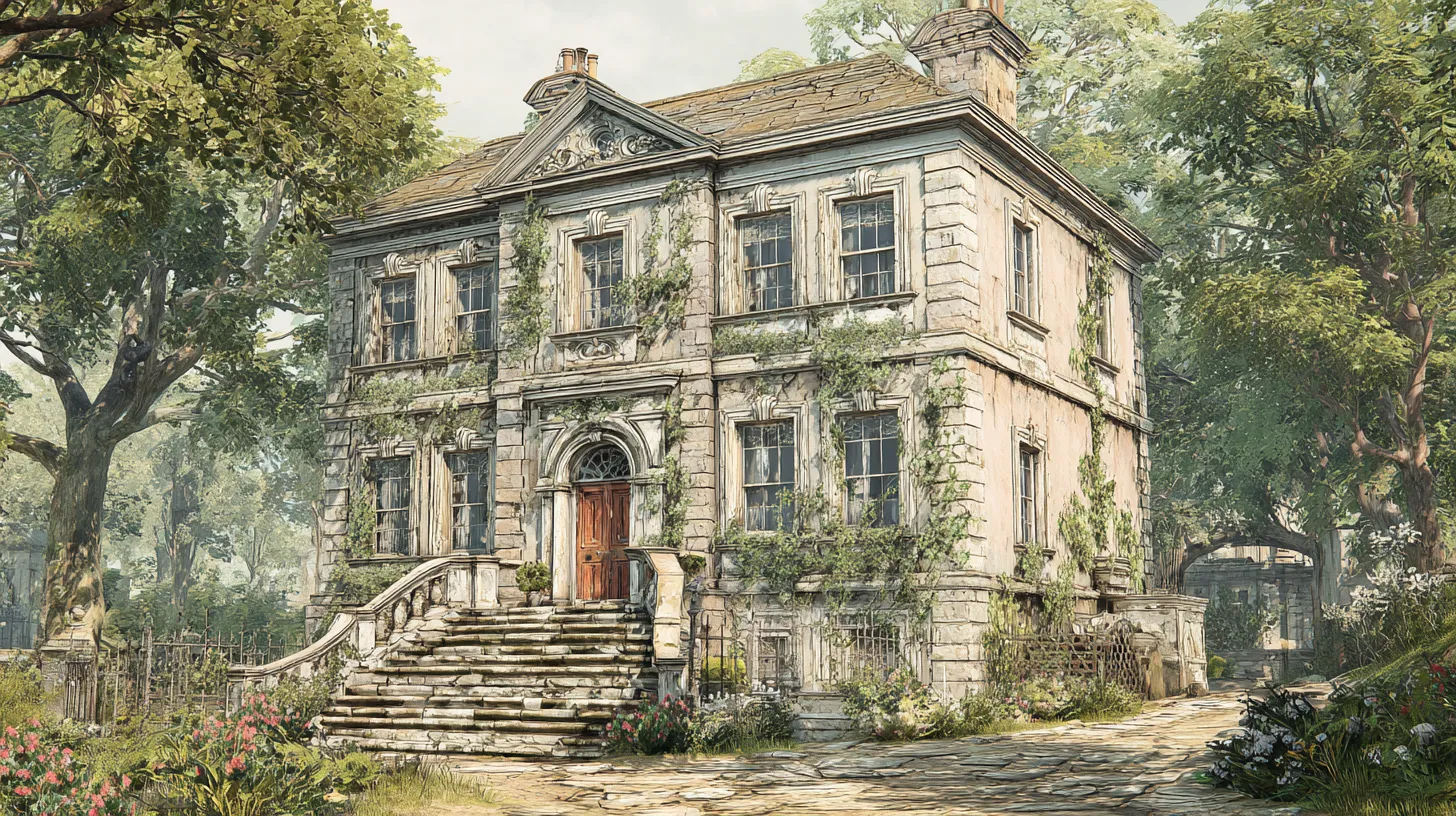
Quillston Estate by Tillerz using MJ
Current Life and Health
Lydia is not a frail recluse; she is a measured woman who paces herself. A disorder of the heart and nerves requires daily medicine - foxglove in careful drops at dawn, a tonic of iron and orange peel at noon, and, on rare evenings when the tremor threatens to spoil her hand, a thimble of laudanum prescribed by Dr Beresford. She keeps the bottles in a velvet case beside her desk and treats the regimen as another ledger to be kept tidy. On good mornings she walks the harbour - five, ten, fifteen coils of rope - until her pulse finds its rhythm. On others she works from the quay office with the window ajar, listening to the creak of cordage and the jingle of her falcon Avarice’s bells. Her routine is crisp rather than joyless. She attends to the warehouses twice a week, visits the pressroom unannounced, and dines sparingly but well. She practises the small economies of a ship’s captain: early to desk, lists made, ink squared, decisions signed. When rumours rise, she prefers long walks and longer notes to scenes. Staff have learnt that her silence is rarely empty; it is simply thinking at work.Goals and Desires
Publicly, Lydia seeks a cleaner city: fewer indecencies passed off as entertainment, fewer back-alley tonics sold as cure, and a harbour where bribes do not decide which ship unloads first. She wants the Beacon to be read by tradesmen at noon and magistrates at night, and she means to make the paper a standard against which lesser sheets look shabby. She plans to consolidate control of the piers, prune the worst middlemen, and raise the floor for wages in her employ - order first, then decency, then prosperity.
Of Lamp-Posts and Lapses
"A city that will not illuminate its streets must illuminate its shame; darkness is not a cloak but a confession." -- L.Q.
"A city that will not illuminate its streets must illuminate its shame; darkness is not a cloak but a confession." -- L.Q.
Against the Illustrated Obscenity
A postulate for the education of the eyeBy Lydia Quillston Art that travels only as far as the epidermis is not art; it is a draught that chills and leaves no memory.
There is abroad in our streets a commerce of pictures that pretends to be wit and sells, in truth, only appetite. It flatters itself as freedom and is merely negligence; it calls itself modern and is simply noisy. The eye is the swiftest tutor the soul possesses. Let us not hire it to teach vulgarity.
I. On the proper office of images
Pictures in a public print exist to clarify, to instruct, and - when duty permits - to delight without debasing. They may lend a face to a name, a shape to a ship, a plan to a bridge, a bloom to a flower. They are companions to sense, not accomplices to impulse.II. On the injury done
Illustrated obscenity injures three constituencies at once: the young, whose imaginations it stains before judgement has furniture; the citizen, whose appetite it stokes against his better quiet; and the craft itself, which withers when draughtsmanship is harnessed to prurience. A city that teaches its people to leer cannot teach them to look.III. On profit as a poor argument
We are told these pictures "pay their way". So do many nuisances. The jingling till is no charter for indecency. A newspaper is not a tavern wall, and even taverns sweep.IV. On restraint and liberty
Let no one cry "censorship" where discernment is all that is required. Freedom is not the right to publish any line that can be drawn; it is the duty to choose which lines are worth drawing. Restraint is the architecture within which liberty has rooms.V. On thresholds for publication
Henceforth, at the Bridgeport Beacon, an illustration shall be refused if any two of the following hold:- The human figure is rendered primarily as an appetitive object rather than as a person.
- The vantage offered to the viewer is that of the voyeur.
- The scene exists chiefly to insinuate what it will not dare state.
- The subject is unnamed, uncontexted, or anonymised for titillation rather than protection.
- The caption winks. (A newspaper does not wink.)
VI. On subjects welcome and worthy
We will gladly print: the plan of a quay, the section of a mill, the dignified portrait, the stage in the moment before the jest, the map, the chart, the saintly botany, the honest animal, the instructive diagram. Draw me a beam, a buttress, a bloom; show me a street before and after its paving. These things educate the public mind without pawning the public modesty.VII. On tests plain enough for any editor
Every picture shall pass three gates before it meets the press:- The Lamp Test: does it illuminate something real?
- The Stairs Test: could you carry it up the stairs to your own parlour without apology?
- The Child Test: could a child, passing the open page, see it and lose nothing he ought to keep?

I am sort of torn between disliking her, admiring her, and feeling sorry for her
Explore Etrea | WorldEmber 2025
Then I did it all right. X-D