

Octavius Athomath
High King of Alagor Octavius Acteron Athomath
Octavius Acteron Athomath (9 June 78 BFE – 0 AFE) was the High King of Alagor from 56 BFE until his death in 0 AFE. He was one of the most prominent monarchs of the pre-imperial era and played a central role in a number of major historical conflicts across the realms. His reign spanned key events such as the Second Suian War, the rise and dissolution of the Cult of Atrops, and the Alagorian Civil War. He held the distinction of Lord Supreme of Magic for over four decades, and served as Supreme Commander of the United Ranger Core during the Galactic War of Avalon. His death during the Tournament of the Supreme marked the end of the Fractured Crown Era and preceded the formation of the Sapphire Empire.
Octavius was born in the ancestral royal palace of Athomathia during the reign of his mother, High Queen Melania Athomath. As the only child of Melania and King Consort Leopold Athomath, he was heir presumptive from birth. His position remained constant throughout his youth, though he was kept largely from public life following the First Suian War. Educated privately at home, Octavius received instruction in statecraft, diplomacy, and military theory. In 56 BFE, he married Ninym of Su. Upon his mother’s abdication, the crown passed to Octavius, beginning a reign that would eventually span nearly six decades and define the closing chapters of the pre-imperial era. He and Queen Ninym would go on to have two children: Alexander and Aindranla. After Ninym’s death, Octavius later married Nichole Katie, former United Chancellor and now Queen Mother. They had twins, Leo and Irisa Athomath.
Octavius ascended to the Alagorian throne in 56 BFE following the abdication of his mother, High Queen Melania Athomath. His reign spanned over five decades and encompassed several of the most defining conflicts of the pre-Imperial era. In the early years of his rule, Octavius led Alagor through the Second Suian War in 44 BFE, during which both Queen Mother Melania and Queen Ninym were killed. His sanctioned duel against Arabella the Reaper led to his recognition by the Council of 75 as Lord Supreme of Magic. In 24 BFE, following two decades of seclusion, Octavius reconnected the Realm of Avalon, disconnected in approximately 6103 BFE, and entered—being trapped in the realm for six years—founded the United Ranger Core, an independent military contractor which he led throughout the Galactic War. Hiding his true nature from the United Alliance and the Gala Gonian Hegemony, he fought primarily alongside the former and helped retake territories during the height of the conflict, eventually being name Supreme Commander of All U.A. Military forces. The war's final phase overlapped with the Alagorian Civil War, which was initiated by his daughter reign as the Emerald Queen of Alagor. He returned to Alagor in 18 BFE and retook the throne following her defeat.
Key events in his reign included his coronation alongside Queen Ninym in 56 BFE, multiple appearances in the Tournament of the Supreme, and a series of formal state visits to Avalon in the postwar period. While his extended seclusion earned mixed reactions, public sentiment remained sympathetic, viewing his withdrawal as a response to personal tragedy rather than political failure. He died in 0 AFE during the Tournament of the Supreme in an incident coinciding with his granddaughter’s unexpected public emergence. In the aftermath, Queen Nichole and Princess Irisa declined succession. The crown passed to Salena Athomath, who would later establish the Sapphire Empire.
Early Life
Octavius was born on 9 June 78 BFE in the ancestral royal palace of Athomathia, the only child of High Queen Melania Athomath and her consort, King Leopold Athomath. His birth occurred during the early reconstruction period following the First Suian War, and was kept a private affair within the palace walls. Soon after, he was held by the Cardinal Dragon Sera'vishar, in keeping with tradition surrounding the Athomath lineage. He was given the name Octavius Acteron—his middle name drawn from his maternal grandfather. While he would later be known publicly by his full name, within the palace he was affectionately referred to as "Tavis" by Ninym of Su, his future wife and childhood companion.
With the loss of his father during the First Suian War, Octavius spent his formative years under the care of his mother and the guidance of Chancellor Putnam, who served as a political mentor and surrogate paternal figure. Having no living grandparents or extended family, he was largely raised within the structured environment of the royal household, surrounded by senior court officials and a contingent of Praetorian Guards who became closely bonded with the young heir. He developed a quiet and reserved disposition, rarely appearing in public during his youth—a choice made deliberately by his mother, who sought to shield him from court life in the aftermath of war.
Octavius was educated at home, primarily in Athomathia, with occasional seasonal stays at Whispering Pines Lodge in the royal forest. His studies, overseen by a rotating team of tutors under Putnam's supervision, emphasized governance, language, literature, and military theory. While not noted for any early brilliance or public charisma, he was seen by those close to him as observant and serious-minded. He spent much of his time with Ninym of Su, Putnam’s adopted daughter, who was raised in the palace alongside him. More outgoing by nature, Ninym often drew Octavius into her interests—particularly her fascination with the ocean—which he quietly shared. He was also known to enjoy watching Praetorian sparring matches, though he rarely participated.
A rare early remark came from King Yolen of Helfor, who observed during a state visit that Octavius and his own son, Prince Rowlan, seemed to bond well despite their youth—an early indication of the diplomatic awareness Octavius would later come to demonstrate in adulthood.
Heir Apparent
Octavius was formally acknowledged as heir to the Alagorian throne at birth, and styled Crown Apparent throughout his early life. As the sole child of reigning High Queen Melania Athomath and King Consort Leopold, he was first in the line of succession, and no rival claim was ever expected. His position was reaffirmed during a formal investiture before the Royal Court at age sixteen, which also marked his first public appearance with Ninym of Su, unofficially beginning their courtship, during a traditional court dance.
His early education was conducted privately within the palace, overseen by a selected team of instructors. He received lessons in Alagorian history from Chancellor Nolan Putnam, military theory from the Prefect of the Praetorian Legion, and occasional diplomatic instruction from his mother. Court etiquette was taught by Helena Vern, an official of the Royal Etiquettary. A limited social circle was permitted, and he was not enrolled in any formal youth orders or academies.
During this time, Octavius was kept largely from public life. At the age of twelve, he was required by his mother to establish his own household and court, marking his first steps into royal responsibility. He began hearing minor petitions and made regular appearances in the Alagorian Senate under the guidance of Chancellor Putnam. While Queen Melania traveled frequently across the realm, she maintained close contact with her son through personal letters, often delivered by royal Onyxbray messengers.
Marriage
Octavius met his future wife, Ninym of Su, in early childhood. The daughter of Chancellor Nolan Putnam by adoption, and a war orphan of the First Suian War, Ninym was raised within the royal household at Athomathia and became a constant companion to the young heir. From an early age, she was noted for her assertiveness and charm, often seen leading Octavius by the hand through palace corridors. Though it is unknown precisely when their relationship turned romantic, it was widely speculated at court following Ninym’s appearance as Octavius’s chosen partner in the investiture dance at his reaffirmation as Crown Apparent. Their engagement was formally announced in 56 BFE, marked by the commencement of their Keshri Beads.
The wedding took place later that year within the ancestral palace at Athomathia. It was attended by the five reigning monarchs of the Alagorian kingdoms, their consorts, and heirs, as well as the provisional governor of Su. By the time of the ceremony, Ninym had become a widely admired figure across the realm. Following the rites, Queen Melania declared her intention to abdicate, having ruled alone for over twenty years. The announcement was received as both a symbolic gift and a formal transition of authority to the newlywed couple. No notable opposition to the union was ever recorded.
After the wedding, Octavius and Ninym remained in residence at the palace. As a private gesture, Octavius—alongside Chancellor Putnam—presented Ninym with a custom-built sea yacht, secretly constructed over the course of a year in honor of her lifelong love for the ocean. They spent several weeks sailing across the Marasé Valtar before returning to their public roles. Their first child, Alexander, was born in 54 BFE, followed six years later by a daughter, Aindranla.
Three Decades after Ninym’s death during the Second Suian War, Octavius married Nichole Katie, former United Chancellor and longtime postwar political partner. The marriage was held publicly in 7 BFE, and was attended by envoys from nearly all seventy-five realms. The union attracted comment from the Gala Gonian High Arbiter, who issued a formal rebuke, though it was widely dismissed as diplomatic posturing. The couple continued to reside at the expanded royal palace and welcomed twins later that year: Leo and Irisa.
Reign (56 BFE - 24 BFE)
Accession and coronation
The coronation of Octavius and Ninym followed their wedding in 56 BFE, formalizing their succession to the High Throne. While the ceremony was observed publicly within Athomathia, its most sacred rite occurred in private: the couple crossed the Crown Strait to stand before Sera'vishar, Cardinal Dragon of the West, who has confirmed every Athomathian monarch since the founding of the Seven Kingdoms. Upon their return, they were proclaimed High King and Queen across the Realm.
The transition was universally acknowledged. Formal reaffirmations of loyalty arrived from the monarchs of the remaining five kingdoms and the provisional governor of Su, each offering blessings for the new reign. Public sentiment within Athomathia was particularly warm toward Queen Ninym, whose standing among the people had grown steadily in recent years.
Their first child, Alexander, was born in 54 BFE to great celebration in the capital. Six years later, the birth of their daughter Aindranla deepened the public’s affection for the royal family. Ninym, already viewed as a symbol of renewal after the First Suian War, became further enshrined in the popular imagination as a maternal figure of peace and strength.
Early Reign
From Octavius’s birth onward, the Realm of Alagor remained unified under the Draconian Pact, a coalition of the Seven Kingdoms forged in antiquity beneath the High Throne. By the time of his accession in 56 BFE, his role as sovereign of Alagor was firmly established, with ceremonial recognition from the Council of 75 and warm acknowledgments from Queen Melania’s diplomatic peers abroad. In 56 BFE, Octavius and Queen Ninym embarked on a seven-month progress across the Six Kingdoms of Alagor, marking the first time a reigning monarch had set foot in Su since Kylok’s exile. The return of Ninym to her war-torn homeland, where she had not been seen since early childhood, drew immense public celebration. Throughout their tour, the royal couple were met with jubilant welcomes, reaffirmations of fealty, and widespread admiration—especially for Ninym, whose status as both queen and war orphan resonated deeply among the Suian people.
In 50 BFE, Octavius faced criticism after private remarks surfaced questioning the Council of 75's neutrality during the First Suian War. The incident briefly drew attention from outer realms, though it had little formal consequence. That same year, Arabella the Reaper assumed the title of Lord Supreme of Magic. While her rise held no direct bearing on Alagorian affairs, Octavius was reported to have expressed unease over her temperament and approach.
In 50 BFE, reports from the provisional government in Su indicated a growing resurgence of loyalist sentiment toward the exiled former king, Kylok. The High Throne received word of unrest through official dispatches from regional Centurion Orders, who described the emergence of rhetoric, symbols, and figures reminiscent of the First Suian War. With no formal system in place to address leadership instability within the provisional regime, it fell to Octavius to determine whether intervention was required. He directed the Senate to consult with senior magistrates, advisors to the High Council, and the Prefect of the Praetorian Legion. After deliberation, no military action was authorized, though increased observation of the Suian frontier was quietly ordered.
In 48 BFE, Kylok—exiled since the end of the First Suian War—escaped the Vel’karin Islands and returned to Su. With the support of loyalist factions, he overthrew the provisional government and reclaimed the throne without armed resistance. Notices were sent to the Seven Kingdoms declaring his sovereignty and warning that any incursion into Suian territory would be treated as an act of war. Although the High Throne made no immediate reply, it was widely reported that Queen Ninym reacted with deeply unsettled. The circumstances of Kylok’s return raised concern among the kingdom courts, particularly regarding how his movements had gone undetected across multiple borders.
Not long after Kylok's return to Su, signs of upheaval began to surface across the kingdom. Labor drafts were imposed in border provinces, and dark spires of obsidian rose without explanation—later linked to a group calling itself the Cult of Atrops, believed to have influenced Kylok even during the First Suian War.
Over the next three years, reports mounted of persecution against known sorcerers and the quiet militarization of Su’s frontier towns. In 46 BFE, a conclave of the six remaining Alagorian monarchs was held in Athomathia to assess the threat. Though Kylok’s actions were widely condemned, the assembly concluded that, as the Cardinal Dragons had not stirred, the Draconic Pact remained unbroken—granting Kylok technical sovereignty.
Despite increasing unrest in Su and appeals from within the Senate, both Octavius and Ninym resisted immediate action, seeking to prevent the outbreak of another realm-wide conflict. By 45 BFE, however, calls for intervention had grown urgent, as atrocities against magic-wielders spread and fears of a second Suian war began to take root.
Second Suian War
In early 44 BFE, increased military activity along the Suian-Helforian boundary prompted concerns among the six Alagorian crowns. Skirmishes between Helfor’s Riding Lords and Suian patrols resulted in the capture of a suspected member of the Cult of Atrops, who revealed that a series of obsidian towers under construction throughout Su were intended to fuel a ritual object of unknown purpose. While initially believed to suppress magic, the towers were later shown to have no such effect. Reports were submitted to the Council of 75, and preliminary steps were taken to coordinate defensive measures among the kingdoms.
Despite mounting tension, Queen Ninym proposed a diplomatic mission to Su. Kylok accepted the request and agreed to clear a route for the delegation. While Octavius remained at the border, Queen Ninym and Queen Mother Melania entered Su under guard. At the same time, Octavius encountered Arabella the Reaper, who had entered the Realm following reports of cult activity. A confrontation ensued, culminating in a duel in which Octavius unexpectedly demonstrated magical aptitude. Arabella was defeated, and the title of Lord Supreme was transferred to him in accordance with Pact of the Supreme.
Shortly thereafter, the royal convoy was rerouted due to a storm. Suian forces, misidentifying the group as an invasion column, engaged. Queen Melania was killed, while initially presumed dead, later reports confirmed Ninym had been taken hostage by the Cult of Atrops. News of her apparent death triggered the full mobilization of Alagor’s six armies under Octavius’s command.
The towers were dismantled en route, delaying the march to Varnel, where the Siege of Su commenced. It was later confirmed that the Cult of Atrops intended to use Queen Ninym in the creation of an artifact referred to as the Amulet of Atrops. A final engagement took place atop Suvenn Hall between Octavius and Kylok, ending in the latter’s defeat. According to postwar accounts, the amulet was completed upon Queen Ninym’s death. Kylok’s subsequent disappearance was attributed by contemporary sorcerers to a surge of ontological force originating from the King Octavius. No official explanation was issued.
Following the campaign, Su’s monarchy was dissolved and the territory placed under senatorial governance. The Amulet’s location remains unverified, and no official record of its containment has been released. Octavius returned to Athomathia in mourning and withdrew from public engagements. His seclusion marked the end of Alagor’s most expansive military campaign since the First Suian War.
Despite Kylok’s reported ontological erasure during the Siege of Su, King Octavius later mandated the restoration of his name to the official record. The act is widely interpreted as a response to the king’s alarm at the magnitude of power he had wielded.
Seclusion
Following his return to Athomathia in 44 BFE, Octavius entered a period of extended seclusion, marked by a near-total withdrawal from public life after the funeral of Queen Ninym. Though he remained sovereign and retained the title of Lord Supreme of Magic, administrative governance of the realm was gradually assumed by the Senate. He ceased regular appearances but continued to fulfill minimum ceremonial obligations and attended the Tournament of the Supreme, which he hosted biannually in accordance with his station.
During this time, Octavius received the Council of 75 in a formal audience, though records from the session are sparse. He did not relinquish the title of Lord Supreme, a decision some interpreted as penitential. Days later, he summoned a private instructor in magic theory, resulting in the arrival of Roxy Dorvin. Their instruction—conducted in the Whispering Pines forest outside Athomathia—spanned eighteen months and was reportedly opposed by members of the Praetorian Order due to Dorvin’s methods. By the close of 42 BFE, Octavius was ranked Alpha under the Sapphire Empire’s sorcery register, an achievement considered unusually rapid in magical development.
Though rarely seen, he continued to represent the Council as Supreme during interrealm assemblies and diplomatic occasions where attendance was required. Accounts from this time described him as composed but emotionally remote. Public commentary largely avoided speculation on his condition, focusing instead on the upbringing of his children and the wellbeing of the royal household. His ongoing success in the Tournament of the Supreme further solidified his authority, but observers noted a widening emotional distance between the King and his daughter, Aindranla—a rift later associated with her emergence as the Emerald Queen.
Octavius emerged from seclusion in 24 BFE following that year’s tournament. By then, the realm had stabilized, and the King's reappearance was marked by a surprising shift in his nature.
Avalon Isolation (24 BFE-18 BFE)
The period following Octavius’s disappearance into Avalon marked one of the most unique chapters of his life. For six years, the High King of Alagor was entirely absent from the connected 74 Realms, presumed dead and formally unreachable. During this time, he operated under deep concealment in Avalon which had developed along wholly divergent lines—without magic, or knowledge of the other Realms, and without any understanding of the forces that governed the Realms. The following account, reconstructed from postwar debriefings and later interviews conducted during the Reconnection Period, details his actions during this period and the foundation of the United Ranger Core.
Reconnection and Disappearance
In 24 BFE, Octavius reestablished contact with the long-lost Realm of Avalon, believed severed from the rest of the Realms since the time of Merlin's final rites in 6103 BFE. The event occurred shortly after the conclusion of that year’s Tournament of the Supreme, which he hosted in accordance with his role as Lord Supreme of Magic. Acting alone and without formal escort, Octavius passed through the newly formed portal to Avalon, entering the realm at a leyline convergence on the planet Galbon, located along the contested border of the United Alliance of Planets and the Gala Gonian Hegemony.
The portal collapsed shortly after his crossing. Later testimony from the King would attribute this to the low residual Leyline energy within Avalon following its ancient severance, which allowed only a brief opening before the weave destabilized. While sufficient to permit partial flow of magical current into the realm, it rendered further transit impossible, stranding Octavius within Avalon for the next six years.
Upon arrival, Octavius discovered a realm radically different from those of the interconnected Realms. Avalon, having evolved independently for millennia, had advanced into a post-industrial, galactic civilization governed by technology, and populated almost entirely by baseline humans. Magic was unknown and long forgotten, and the realm’s linguistic structures had diverged beyond the reach of magical translation. With enchantments unavailable due to the ambient suppression of magic and weave detachment, Octavius was forced to adapt without arcane assistance.
In the initial weeks of isolation, he made contact with several minor settlements near the Galbon conflict zone, studying the local language through immersion. Alagorians’ natural neuroplasticity allowed him to accelerate comprehension and achieve basic fluency within months. Recognizing the absence of any reference to the Realms, magic, or other species, he resolved to conceal his true identity and origin. His physical resemblance to humans allowed him to pass without notice, and he adopted the cover of an offworlder from an unregistered fringe colony.
The unexpected severance and radically different environment marked a definitive break from the political world of Alagor. Publicly unaccounted for and with no way to communicate, Octavius was presumed dead. His absence triggered a constitutional crisis across Alagor, but no formal declaration of death was issued due to the ambiguous status of his role under the Pact of the Supreme. The title of Lord Supreme remained suspended in limbo, awaiting either proof of his death or the hosting of the next Tournament. Unbeknownst to the realms, Octavius’s concern over the looming failure to meet the Tournament’s requirement would become a primary driver of his actions within Avalon.
Adaptation and Concealment
Cut off from the Weave and trapped in an unfamiliar realm, Octavius spent the early months of his time in Avalon in total isolation. Without magical tools to decipher the local language, he was forced to rely on observational learning and natural integration. He gradually acquired basic fluency through direct interaction, aided by the neural adaptability of his species, and began to move quietly through the border settlement of Galbon.
What he found was a realm in the midst of a galactic war. The United Alliance of Planets, a human interstellar confederation, was engaged in a losing conflict against the Gala Gonian Hegemony—a reptilian empire that had steadily expanded into Alliance territory over the past four years. Technology had advanced to a degree far beyond anything found in the connected Realms: orbital infrastructure, faster-than-light travel, and AI-driven networks were commonplace. Magic was not only forgotten—it was absent, both as concept and as function.
Octavius concealed his identity entirely. He presented himself simply as Octavius Athomath, a traveler from a distant and culturally isolated world. He avoided attention and embedded himself in the margins of Avalonian society, careful never to reference Alagor, the Realms, or the magical systems that defined his previous life. In his interviews later, post the Alagorian Civil War, he reflected that he feared any attempt to explain his origin would result in imprisonment, institutionalization, or worse—particularly in a society already locked in xenophobic tension due to the war against the Gala Gonians.
Publicly, he passed as human. Privately, he began to observe. His grief for Ninym remained close, and in later writings, he admitted to operating largely on what he called “autopilot,” continuing forward only because inaction would lead to the activation of the Pact of the Supreme’s death clause. Without a Tournament, he would not survive past the second year. In the absence of a Realm to host it in, and with no immediate means of return, he began formulating an alternative.
Formation of the United Ranger Core
By the tenth month of his time in Avalon, Octavius had quietly laid the groundwork for a plan that would allow him to survive the requirements of the Pact of the Supreme while maintaining his cover. Under the war clause of the Pact, a Supreme unable to host a Tournament could extend their tenure for up to five years, provided they engaged in a conflict of sufficient scale. The Galactic War qualified, but to join it formally, he needed both an identity and a command.
Operating from the Galbon system, Octavius began liquidating personal valuables he had brought through the portal—materials of high intrinsic worth by Avalonian standards. He used the proceeds to make strategic acquisitions under a series of falsified front identities, including decommissioned infrastructure, outdated starship hulls, and orbital facilities abandoned due to wartime resource shortages. The most notable of these was a dormant shipyard in orbit over Galbon, which he reactivated under the guise of a private salvage and defense contractor.
From there, he began assembling personnel. His initial recruits were disenfranchised scientists, independent engineers, and development teams whose work had been shelved by the United Alliance due to budgetary collapse and military triage. Many had been responsible for experimental technologies—stealth drive systems, regenerative hull plating, and short-phase quantum jump arrays capable of micro-scale FTL repositioning within gravitational wells. These advancements had been deemed too unstable or logistically unviable for mass deployment by the Alliance. Under Octavius’s direction, they were revived, integrated, and field-tested—granting the U.R.C. fleet a degree of tactical mobility and survivability unseen in conventional naval doctrine.
Once the facility was functional, Octavius turned to personnel recruitment. He quietly approached former United Alliance officers and veterans who had been discharged or passed over for recall. Many had been sidelined due to injury, age, or politics. To them, Octavius offered purpose, command, and autonomy. These individuals would become the early Admiralty of the United Ranger Core (U.R.C.), a shadow organization formed independently of the United Alliance yet oriented toward its defense.
In the final weeks of the first year, the veil of secrecy was nearly broken. During a scheduled maintenance cycle aboard the U.R.C. flagship Avenger, two independent thieves—Nichole Katie and John Gavanish—successfully infiltrated the shipyard and boarded the vessel, intending to hijack it. Unknown to them, Octavius himself was aboard, finalizing logistics and continuing to reinforce his cover as the organization's nominal founder. Rather than execute or detain the intruders, Octavius confronted them directly. Impressed by their skill and adaptability, he offered them a choice: join the Ranger Core, or be held indefinitely until its existence was made public.
They chose service. Both would go on to play critical roles in the U.R.C.—Katie eventually becoming Vice Commander, and Gavanish joining the Admiralty.
With infrastructure secured, personnel recruited, and operations online, Octavius prepared for formal entry into the war. Months before the end of the second year, the U.R.C. launched its first offensive strikes against Gala Gonian positions within contested Alliance space, marking the organization’s public emergence—and triggering the five-year war clause of the Pact of the Supreme.
The War Years
With the first strike against Gala Gonian forces, the United Ranger Core formally entered the Galactic War as an independent actor. The engagement, which took place near the contested asteroid colonies of the Jexari Belt, drew immediate attention from both sides of the conflict. U.R.C. vessels demonstrated an effectiveness far exceeding that of standard Alliance fleets. Within weeks, the media began speculating on the origins of the Rangers, while the United Alliance Senate issued a formal inquiry into their chain of command. No clear answer emerged.
Over the following year, Octavius led a series of rapid-response operations across U.A. space, executing raids, rescues, and counter-assaults with near-total autonomy. His identity remained unverified; to the public and the press, he was simply referred to as “the Commander,” a foreign tactician from an unaligned world who had appeared at the moment of greatest need. His results spoke louder than questions. Losses in key sectors slowed, and several Gala Gonian advances were reversed. The U.A. Senate, caught between suspicion and desperation, chose pragmatism: they formally recognized the United Ranger Core as a sanctioned auxiliary and placed Octavius in command of all Alliance military forces.
This elevation—unprecedented for a non-citizen with no known background—was met with mixed reactions. Public confidence soared, fueled by dramatic battlefield victories and broadcasts of liberated colonies. But within the Senate, disquiet grew. Octavius refused to submit to standard military oversight and declined all requests for personal debriefing or biometric registration. His control over the U.R.C. remained absolute, and many within the political establishment viewed him as a liability wrapped in necessity.
By the second year of his formal command, the war’s momentum shifted. G.G.H. fleets adapted to Ranger tactics, and several major battles resulted in severe losses for the Alliance. In system after system, Octavius was forced into retreat, conceding territory as the Hegemony pressed deeper into human space. Media coverage turned hostile, portraying him as aloof and untouchable, an outsider given unchecked power. A growing faction in the Senate began calling for the federalization of the U.R.C., demanding that it be placed under senatorial oversight and integrated into the formal military command structure.
A now-iconic moment came during a public departure from a Senate defense session, as Octavius passed through a corridor of journalists. When asked if he still believed the people were right to trust him, he paused, looked directly at the cameras, and replied:
Let them judge me by what I do next.
Two weeks later, in the final days of his third year in Avalon, Operation Long Night began.
Operation Long Night
Initiated in the final days of Octavius’s third year in Avalon, Operation Long Night represented the most ambitious military maneuver of the Galactic War. While public sentiment turned against him and the United Alliance continued to suffer defeats, Octavius had been executing a long-form strategic deception beneath the surface of the war.
Over the prior eighteen months, he had secretly deployed segments of the U.R.C. fleet behind advancing Gala Gonian lines. As United Alliance territories fell and defensive positions were overrun, these hidden Ranger elements—scattered across moons, asteroid belts, and orbital graveyards—remained dormant, tracking fleet movements and supply routes while avoiding all open engagement. Their existence was known only to the U.R.C. Admiralty and to Octavius himself.
At the same time, he ordered a gradual withdrawal of conventional Alliance forces to a heavily fortified line, later referred to as the Maginot Perimeter. Publicly, this appeared as a desperate consolidation—another sign of strategic failure. Privately, it was a staging ground.
On the eve of the operation’s activation, Octavius and the Admiralty—now including John Gavanish and Vice Commander Nichole Katie—executed a full-spectrum communication blackout across U.R.C. channels. As G.G.H. fleets pressed forward to what they believed was the final line of resistance, U.R.C. stealth units behind their positions simultaneously came online.
The trap sprung in a matter of hours. With Alliance forces pushing from the front and U.R.C. fleets rising from behind, the G.G.H. armadas were encircled across multiple systems. Supply lines were severed, communication arrays disabled, and retreat corridors collapsed. Cut off and surrounded, the G.G.H.’s offensive capabilities were systematically dismantled.
By the operation’s end, the Hegemony’s main assault armada—representing nearly half of their offensive naval strength—was annihilated. The surviving fleets were forced into a defensive posture, pulling back to inner territories and abandoning key holdings across the contested zones.
The reaction was immediate. Octavius was vindicated in the eyes of the public, the media reversed its tone, and the Senate’s movement to federalize the U.R.C. evaporated. He declined to comment on the operation’s details, issuing only a single statement to the Alliance networks:
I do not ask for trust. Only time to finish what I've started.
The remainder of the year saw the war’s momentum shift decisively. The U.R.C. led the charge across reclaimed systems, while Alliance morale surged. Though the conflict was not yet over, Operation Long Night became the strategic pivot point of the war—one which elevated Octavius from a figure of suspicion to one of myth.
The Final Campaign and Exit Strategy
With the destruction of the Gala Gonian assault armada and the restoration of several key sectors, the United Alliance entered its final phase of the war—a steady counteroffensive into Hegemony-controlled territory. Over the next three years, the U.R.C. led combined operations across multiple star systems, pushing deeper into enemy lines and reclaiming strategic footholds long thought lost. Though the war remained brutal, the tide had irreversibly turned.
Octavius increasingly began deploying to ground battlefields personally, particularly in raids targeting Gala Gonian command elements. In dozens of engagements, enemy commanders were found dead—killed not by gunfire or explosives, but by blunt-force trauma. Reports circulated of a figure who fought without armor, without weapons, and with no need for support. Though dismissed by most as battlefield exaggeration, rumors began to spread that the U.R.C.’s mysterious leader was not, in fact, human. The truth, quietly unspoken by those who fought beside him, was that Octavius had indeed begun engaging enemies directly—eliminating high-ranking targets with his bare hands.
These actions contributed to the growing legend of “the Scourge” among G.G.H. forces—a figure described not as a man, but as a force of inevitability. Though his true identity remained concealed, his presence on the battlefield became both a rallying point for Alliance troops and a symbol of terror to the Hegemony.
In early 18 BFE, Theria had confirmed that Leyline energy—slowly restored over the previous six years—had stabilized enough to permit a portal to be opened at specific convergence points. The planet Seratis, a highly contested industrial stronghold deep in G.G.H. space, sat atop one such point. A final campaign was organized to retake the system, with Octavius overseeing logistics from the flagship Avenger.
By this period, Octavius maintained overall command but began to withdraw from front-line visibility. He delegated increasing operational authority to Vice Commander Nichole Katie and Admiral John Gavanish, focusing instead on long-term objectives and containment of classified information regarding his identity. In 20 BFE, he informed his aide-de-camp, Jessie Theria, of his true nature as High King of Alagor and Lord Supreme of Magic—making her the only individual in Avalon aware of his full origin. From that point forward, she played a central role in the coordination of both military strategy and his eventual departure plan.
In secret, he prepared to leave Avalon.
Just prior to the battle, Octavius transferred command of the U.R.C. to Nichole Katie and issued final orders under sealed directive. He then departed the Avenger with Theria's assistance, landing covertly on Seratis to position himself at the Leyline nexus. Once there, he activated a personal slate transponder broadcasting his exact location to all forces in-system, including the Gala Gonian fleet.
High Arbiter Kal’thax, Religious war leader of the G.G.H., descended to the surface personally to eliminate Octavius from the war. During the confrontation, Kal’thax witnessed firsthand that his opponent was not human, marking the culmination of Octavius fear campaign. Despite the Arbiter’s strength, Octavius emerged victorious and activated the portal at the convergence site. While Kal'thax ordered the Kaath to fire on his location.
Moments before the orbital bombardment commenced, Admiral Gavanish arrived to extract the commander. Octavius refused evacuation. Instead, he forcibly pulled Gavanish through the Leyline portal alongside him, ensuring his survival while preserving the illusion of his own death.
Believing him lost, Nichole Katie initiated the final phase of the campaign. Ordering the Avenger scuttled, and directed the vessel into a ramming trajectory with the Kaath. The destruction of the war totem shattered remaining resistance in-system. Effectively forcing the Hegemony into a white surrender, and beginning the stage for later peace talks.
Alagorian Civil War and Invasion of Avalon (18 BFE - 18 BFE)
The King Returns
In 18 BFE, six years after his disappearance into Avalon, Octavius Athomath reappeared in the Realm of Alagor under extraordinary circumstances. His return came not in triumph, but in secrecy—wounded, disoriented, and recovering from radiation exposure suffered during the orbital bombardment that struck the surface of Seratis. The king’s sudden reemergence occurred at Fort Vel’Raink, the final stronghold of the decimated Praetorian Guard, nestled near the kingdom of Loradel. Octavius awoke mid-raid, as one of Aindranla’s Magistrates launched an assault on the bastion. His intervention during the battle marked the first confirmed sighting of the king since the portal to Avalon had closed behind him six years prior.
In his absence, the political landscape of Alagor had collapsed into war. Two months after his unexplained departure, his daughter Aindranla—Crown Apparent and ruler in waiting—was approached by the Cult of Atrops. They offered her a path to power without opposition in Athomathia, in exchange for her aid in locating an object of interest: now believed to be the Amulet of Atrops. Accepting their support, Aindranla seized the capital and declared herself High Queen, invoking her legal claim under the laws of succession.
When the remaining monarchs of the Seven Kingdoms refused to recognize her sovereignty—citing the possibility Octavius was still alive—she responded by declaring war. Within three years, one kingdom after another fell. To secure her control, she imprisoned the four Cardinal Dragons within their mountain sanctuaries and initiated a restructuring of the realm's administrative apparatus. The Council of 75, fearful of her growing power, veiled the entire realm from interrealm travel—a move that ultimately proved ineffective due to residual weave energy from Avalon’s restored connection.
By the end of her campaign, Aindranla stood uncontested. The last kingdom to fall was Loradel, where she executed the ruling king and took his newborn daughter Fiona as hostage, installing his wife Elara as regent. With the realm under her heel, she established her Magistrate system, binding regional governors with the Mark of the Hallowed. The White Knights—transformed from the former Centurion Legion—enforced her rule.
Whisper of Rebellion
Octavius's return in 18 BFE—after six years presumed dead—was met with disbelief across Alagor. The realm he had once ruled had been reshaped under Aindranla's regime. The Praetorian Order had been reduced to a handful of surviving members, and the Centurion Legion had been dissolved and restructured into the White Knights, a force loyal to Aindranla. The militaries of the Seven Kingdoms had either been broken or folded into her control through forced conscription.
Initial reports of his reappearance at Fort Vel’Raink, during a raid by one of Aindranla’s Magistrates, were dismissed by many as misinformation or myth. The fort, located near the Kingdom of Loradel, had served as a last refuge for the remnants of the Praetorians. Octavius had arrived through a portal from Avalon, weakened from radiation exposure during the Seratis bombardment and drained by the years-long absence from the Weave. He awoke during the assault, repelled the attackers, and was recognized by surviving Praetorians and their commander.
Though initial public reaction remained skeptical, news of the king's return began to spread gradually. The reappearance caused ripples of unease among Aindranla's followers, especially those within the White Knights. While some dismissed it, others feared its truth, recalling the King’s prior exploits and the lingering mythos surrounding him.
Seeking clarity rather than immediate confrontation, Octavius departed Fort Vel’Raink soon after. Accompanied by Lord Commander Aayla Torin, John Gavanish, and his remaining Praetorians, he journeyed west toward the sealed lair of Sera’vishar, the Cardinal Dragon of the West, whose mountain lay near Loradel. At the town of Milltown, he left the group behind and proceeded alone into the mountains.
Octavius’s private audience with Sera’vishar marked a key awakening point for the king in his mindset at the time. The dragon, still bound under the effects of Aindranla’s imprisonment, disclosed several revelations, including the reasons for prior draconic inaction. The Draconic Pact that bound the four Cardinals to the sovereign monarchs of Alagor was never triggered during Kylok’s reign—not out of malice, but due to a legal technicality: Kylok, an adopted royal of the Sixth Family, was not blood-bound to the throne, and thus not recognized by the Pact. The dragons were unaware of his ascension, and consequently, the devastation that followed. These revelations reframed not only the First and Second Suian Wars but the broader silence of the dragons during Alagor's darkest chapters.
At the conclusion of their exchange, Octavius was challenged by Arabella the Reaper under the War Provision of the Pact of the Supreme. Their duel ended in her defeat, confirming Octavius’s continued claim to the title.
Outbreak of Civil War
The Alagorian Civil War formally began with the liberation of Loradel. Following his confrontation with Sera’vishar and the confirmation of his title as Supreme, Octavius led a force of Praetorians to free the Kingdom from Aindranla’s control. Queen Regent Elara, still acting in place of the captive Princess Fiona, pledged immediate allegiance to Octavius upon Loradel's liberation.
Concurrent to these events, Aindranla launched an unannounced invasion of the Realm of Avalon. Utilizing her Magistrate Heliax—who had replaced United Alliance Chancellor Herald Whinestone—she orchestrated a false-flag strike on the Hegemony capital world of High Garden, framing it as a U.R.C. attack. The incident disrupted ongoing peace talks between the U.A. and the Gala Gonian Hegemony and initiated renewed hostilities across Avalon. Jessie Theria, Octavius’s aide-de-camp and bearer of an assigned leyline waypoint, was intercepted during this period and delivered to Aindranla.
Following the Loradel campaign, Octavius advanced on the Kingdom of Valtoria. The battle concluded with the defeat of White Knight occupation forces and the restoration of Queen Meridelle to the throne. Valtorian fleets were placed under Octavius’s command, consolidating a second major front against Aindranla’s regime.
Athomathia Campaign
The Athomathia Campaign was a major military operation conducted by Octavius during the final phase of the Alagorian Civil War. Launched after the liberation of Valtoria, the campaign aimed to retake Athomathia, the capital of Alagor and seat of Aindranla Athomath's regime.
With the allegiance of Loradel and Valtoria secured, Octavius's forces crossed the Crown Strait and landed on Alagor’s northern coast. The advancing force was composed of surviving Praetorian units, former Centurions, and various loyalist-aligned regional commands operating under a restored chain of command.
During the preceding Valtorian operation, Lord Commander Aayla Torin was captured and transported to Athomathia. She was subjected to prolonged interrogation and emerged in a vegetative state. Recovery operations were unsuccessful.
The campaign culminated in the Battle of Athomathia, marking the final major engagement of the civil war. Loyalist forces clashed with the White Knights at the outer defensive ring of the capital. During the battle, Sera’vishar—honor-bound under the Draconic Pact—entered the conflict but was killed by Aindranla shortly after arrival, before she could fully engage.
In response, Octavius deployed the Light of the Supreme, a power rarely invoked by a sitting Lord Supreme of Magic. Its use caused extensive destruction across multiple districts of the capital and dismantled the command structure of the White Knights.
Octavius proceeded to the palace complex and engaged Aindranla directly. The duel ended in Aindranla's defeat and the accidental death of Prince Alexander. Octavius was seen leaving the palace carrying Aindranla in an unconscious state.
Following the campaign’s conclusion, Octavius traveled to the Realm of the Supreme and ordered the Council of 75 to lower the Veil surrounding Alagor, reestablishing inter-realm access. He then initiated a targeted intervention in the Realm of Avalon, deploying forces to locate and arrest Velsairis Kyrethi Victor Thayne and High Magistrate Heliax, thereby terminating Aindranla’s covert military operations in that realm and concluding the Avalonian front of the war.
Aftermath and Containment
Following the conclusion of the Battle of Athomathia and the collapse of the White Knight regime, Aindranla Athomath was taken to the Realm of the Supreme and placed on trial before the Council of 75 for the abuse and weaponization of arcane power. Although Octavius formally recused himself from judgment in his role as Lord Supreme of Magic, he opposed calls for execution. During deliberations, it was proposed that a newly reconnected, uninhabited realm—designated the 76th—be utilized as a permanent prison. Aindranla was subsequently sentenced to indefinite exile and veiled within that realm.
The dismantling of Aindranla’s governing infrastructure followed in the immediate aftermath. The White Knights were officially disbanded. Most members were granted pardons under the condition that their service was compelled by coercion or fear. Senior command staff were detained and tried. The seven High Magistrates, who had held regional power across Alagor during the war, were each found guilty of war crimes and executed by conventional means.
The Mark of the Hallowed, a binding magical sigil used to enforce loyalty among Magistrates and select enforcers, proved impossible to remove following the death of its original architect and the absence of Aindranla herself. As of current records, all known marked individuals remain under medical or arcane observation.
While Octavius was broadly welcomed as a returning monarch, and public sentiment across the Seven Kingdoms favored the resolution of the war, his decision to imprison rather than execute Aindranla generated minor controversy. Several members of the Council of 75 resigned in protest, though no official dissent was issued by the Council as a body. The Alagorian Senate, joined by the monarchs of the six other kingdoms, formally reaffirmed Octavius's sovereignty as High King of Alagor.
Subsequent efforts focused on the systematic reconstruction of Alagorian governance, and the removal of Aindranla’s lingering influence across civil and military institutions. As Lord Supreme of Magic, Octavius also initiated diplomatic engagement with the Realm of Avalon, beginning a new period of inter-realm communication and technological modernization.
Second Reign and the Reconstruction of Alagor
Following the conclusion of the Alagorian Civil War and the imprisonment of Aindranla Athomath, Octavius resumed his role as High King of Alagor and Lord Supreme of Magic. His second reign is commonly referred to as the Reconnection Era, named for both the restoration of inter-realm travel after the lowering of the Veil and the political, technological, and social modernization efforts that followed. This period formally began with the 18 BFE Tournament of the Supreme and ended with Octavius's death in 0 AFE.
Reconstruction of Alagor
One of Octavius’s first initiatives during this period was the dismantling of the remaining structures of Aindranla’s regime. The White Knights were formally disbanded, and efforts were made to reconstitute the Centurion Legion and Praetorian Order. The capital city of Athomathia underwent extensive reconstruction, with assistance from the five other kingdoms of Alagor, who also purged their territories of remaining loyalists to Aindranla’s administration. Multilateral aid missions were conducted between the kingdoms, and celebratory demonstrations were reported in multiple regions following the Emerald Queen's deposition.
Reintroduction to the Realms
With the Veil lifted, the Realm of Alagor rejoined the larger inter-realm political framework. Refugees and citizens from across the other realms began returning to Alagor after years of restricted travel. Octavius conducted formal diplomatic visits to both the United Alliance of Planets and the Gala Gonian Hegemony within the Realm of Avalon. In these audiences, he introduced Avalon’s galactic leaders to the history, structure, and politics of the broader Realms.
During this period, Alagor and the United Alliance signed a formal treaty establishing joint assistance protocols and cooperative modernization programs. Concurrently, newly elected United Chancellor Nichole Katie oversaw the official federalization of the United Ranger Core (U.R.C.), formally dissolving the United Alliance's standing military and integrating its resources.
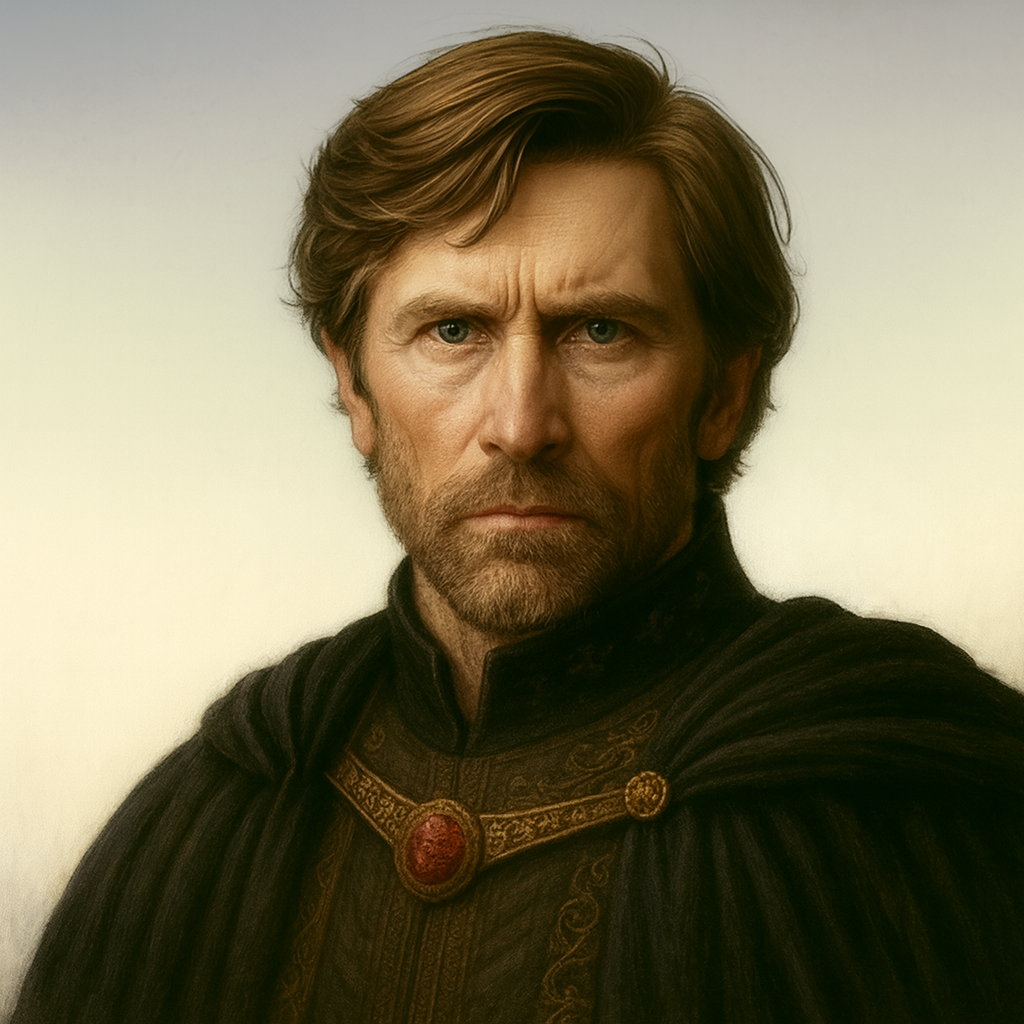
- High King of Alagor
- Lord Supreme of Magic
- Commander-General of the United Ranger Core (U.R.C.)
- The Last Monarch of the Old Realms (Posthumous)
