

B20 Church of Pelor
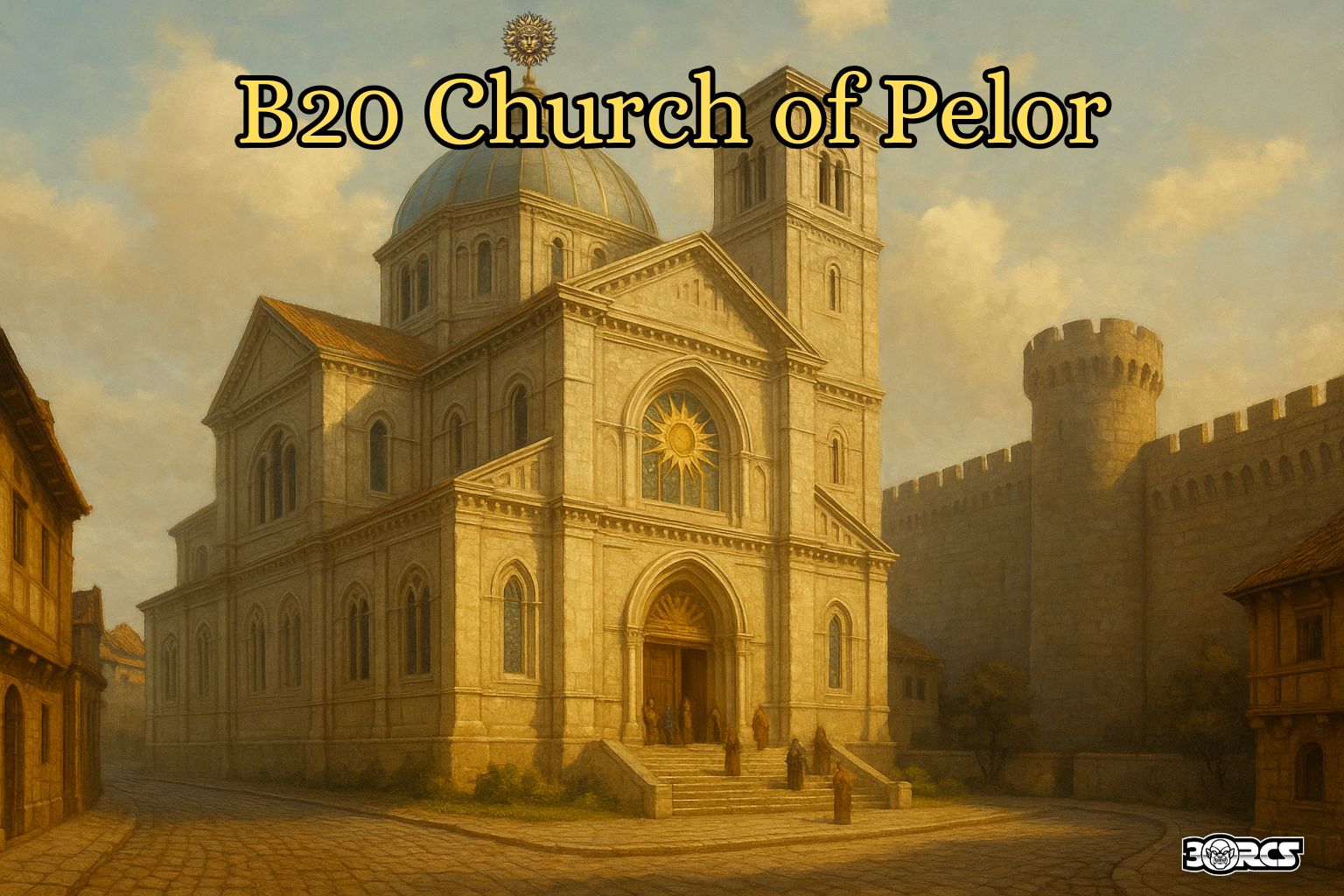
This graceful tall, airy, building proudly stands over the village as beacon of good and Righteousness. The very stones of white alabaster glow with a soft light that can be seen from anywhere in the city. Each side of the building boasts large high arched windows that are placed so the sun shines into most of the rooms throughout the day. Stepping inside you smell fresh pine and see bright polished floors and walls. The rooms feature open, sunny visages of the buildings and walls of Verbobonc. The halls and rooms are kept scrupulously clean. Many pilgrims of Pelor who stop here to rest before continuing on their journey across the realm. Many devout travelers can be found in the central gardens where they relax and plan for their future journeys and exploits. The entrance foyer opens into a large open domed sun drenched worship hall with focused channels of pure sunlight setting the altar of Pelor aglow. Across the dome an encompassing myriad of scenes painted across the entire dome of the old faith's The Summer Tree with Pelor as the central figure.
A Beacon of Light and Goodness
The Church of Pelor in Verbobonc is more than a neighborhood temple: it is the chief city seat of Pelor’s faith in the Viscounty, a place where pilgrims, commoners, and nobles come seeking healing, mercy, and moral clarity. Its alabaster shell glows softly even at dusk, making it a literal and figurative beacon for the good-hearted of Verbobonc.
Bishop Charles Evertide governs from here: a measured, compassionate prelate known less for miraculous fire than for the quiet, unshakable warmth of his presence. He advises Viscount Wilfrick, mediates between rival churches, and serves as one of the most trusted moral voices in the city.
History and Background
The Church of Pelor has been a spiritual cornerstone in Verbobonc for centuries, deeply intertwined with the city's development and the well-being of its people.
- Foundational Role: Established to serve as a spiritual guide and refuge, the church has long been a place where pilgrims and travelers find solace and strength.
- Evolution: Over the years, the church has adapted to the needs of Verbobonc's citizens, continuously expanding its services and outreach programs.
Exterior & Grounds
The Alabaster Shell
- Architecture: A tall, airy basilica of white alabaster, buttressed and windowed so that sunlight pours into nearly every room from dawn to dusk. At night, lanterns behind stained glass bathe the surrounding streets in soft gold. B20 Church of Pelor
- Dome & Windows: A great crystal dome crowns the central nave, ringed with murals of Pelor’s saints. Long, arched windows depict the Summer Tree myth—Obad-Hai’s cycle of death and rebirth with Pelor as the one who cuts him down and buries him in Beory’s embrace.
Temple Gardens
Behind the main hall stretches a walled garden open to the faithful and the poor:
- Cobbled paths winding between flowerbeds and fruit trees, every spray impeccably tended.
- Fountains and bird-basins where sparrows and doves bathe; a stone-edged pond holds large golden fish that watch visitors with comical solemnity. B20 Church of Pelor
- Benches shaded by carved sun-disks, where pilgrims plan their roads and locals take quiet counsel with junior priests.
The gardens double as a triage and refuge during crises: tents can be raised here in times of plague, fire, or war.
Interior
The Grand Nave & Altar of Pelor
The entrance foyer opens into a vast, domed worship hall:
- Polished stone floors reflect the concentrated shafts of sunlight that fall from the crystal ceiling, converging upon a stout white marble altar. B20 Church of Pelor
- The altar is almost austere—only the sun-face sigil of Pelor, a cluster of crystal globes burning with steady radiance, and a few carefully placed offerings. The simplicity is deliberate: this space is for reverence, not display.
- Incense and lamp-oil hang faintly in the air, but the room is kept spotless, every brass fitting gleaming. This is where Bishop Evertide celebrates major feasts, leads interfaith processions, and gives sermons that can move hardened mercenaries to quiet tears.
Bishop’s Office – The Pastoral Hearth
Off a side cloister lies the Bishop’s study:
- A compact room with a cheerful hearth, a sturdy oaken desk, and shelves heavy with tomes of Pelor, Rao, Zodal, and other good-aligned faiths.
- On the blotter rest a half-finished sermon, an inkwell, and a ledger of donations and relief funds. Evertide’s office is functional rather than opulent—more war-room of mercy than palace.
- This is where he receives delegations, troubled commoners, and (rarely) adventurers seeking counsel on matters of conscience rather than coin.
Hospitium & Dining Hall
Attached wings house:
- Pilgrim dormitories offering free bed-space for the devout and low-cost lodging for anyone in need.
- A simple refectory where soup and bread are served at minimal cost—no one is turned away hungry if the larders can stand it.
Healers and lay-brothers move constantly between nave, gardens, and halls, making the church feel lived-in, not museum-quiet.
Politics with Lords of Verbobonc and the Viscount
The Church of Pelor maintains a complex relationship with the secular leaders of Verbobonc, balancing spiritual authority with political diplomacy:
- Liaison Functions: Acts as a moral and ethical advisor to the Viscount and local lords, influencing governance with the teachings of Pelor.
- Support and Influence: The church's support is often sought in civic matters, from social welfare programs to legislative counsel.
Goods and Services
The Church of Pelor offers a wide array of services, both spiritual and practical, to its congregation and the wider community:
- Accommodations: Provides free lodging for the faithful and nominal charge lodging for the needy.
- Healing Services: Offers sunlit healing services, including free treatments for minor wounds and discounted services for more severe conditions.
- Nutritional Support: Operates a dining hall that serves basic sustenance at minimal cost to ensure no one goes hungry.
- Spiritual and Navigational Guidance: Maintains a collection of maps and offers information to aid travelers in their journeys.
Church Office
The clergy’s office within the church is a hub of administrative and spiritual activity:
A fire blazes merrily within the compact hearth of the clergy’s office within the staid, well-kept church. At its center lies a desk with a blotter, upon which a half-finished sermon lies next to an inkwell and quill. Next to the blotter, a copy of the order’s holy book rests by a ledger tracking donations and expenses flowing through the church’s coffers. Though not outwardly extravagant, the furniture is of sturdy construction, its dark wood polished carefully with oil to maintain its finish. Tomes line the shelves built into the wall behind the desk, several of which are books of other orders and faiths.
- Setup: Equipped with a desk, holy books, a ledger for donations, and a fireplace, the office is the administrative heart of the church.
- Library: Houses religious texts and writings from various faiths, reflecting the church’s commitment to comprehensive spiritual knowledge.
Temple Gardens
The gardens of the Church of Pelor are a serene escape for meditation and relaxation:
Cobbled paths lined with fountains and statuary wind their way through lush garden beds brimming with blooming flowers and verdant shrubbery. Painstakingly maintained, the gardens present an idllyic image with not a blade of grass out of place. Birds gather in the trees, whistling pleasantly and diving into stone water basins strewn throughout the area. A pond, meticulously lined with flat stones, contains several large, golden-scaled fish, which eye passersby with an almost human-like cunning.
- Design: Features cobbled paths, fountains, statues, and meticulously arranged flora that create a tranquil environment for contemplation.
- Wildlife and Water Features: Includes bird-friendly trees and a fish pond, enhancing the garden’s natural beauty and appeal.
Altar of Pelor
The central worship hall of the Church of Pelor is designed to focus and amplify the divine light of Pelor:
The room smells heavily of incense and oil, and smoke hangs in a curtain about the room. The altar itself is a stout, spartan structure of white marble, adorned with the fiery holy symbol of Pelor, a cluster of crystal globes shine with brilliant light, a stick of incense, and little else. But each item is placed with care and thoughtfulness, and the room itself is meticulously clean and sparse. This is a place of worship, of reverence. The wall and ceiling high above is pure crystal glass which focuses the suns light onto the altar bathing it in Pelor's divine glory.
- Construction: The altar, made of stout white marble, is minimally adorned, focusing all attention on the sacred symbols of Pelor.
- Divine Light: The crystal glass dome and walls concentrate sunlight onto the altar, symbolizing Pelor’s blessing and presence.
Hooks for the Temple of Elemental Evil / Noble Ambitions Campaign
1. The Lantern Against the Temple
Whispers of undead stirrings, blighted fields, and cult symbols reach the Bishop from refugees and merchants on the Velverdyva. Evertide believes something old and foul is waking near Nulb, but lacks proof. If the PCs bring him signs—from Emridy Meadows graves, Nulb, or the Temple ruins—he becomes a powerful spiritual ally and advocate in council debates.
2. The Pelorian Inquisitors
A small cadre of Inquisitors of Pelor passes through Verbobonc en route to investigate rumors of necromancy in the countryside. Evertide quietly suggests the party accompany or “keep an eye on” them, knowing zealots can do harm along with good. This can drag the PCs straight into conflict with hidden Temple cells.
3. Mercy vs. Retribution
As the city grows tense—between St. Cuthbert’s cudgels, Trithereon’s radicals, and frightened nobles—Evertide may ask the party to choose: stand with him in advocating mercy and measured justice, or side with harsher voices calling for purges and crusades. Their stance will echo throughout later scenes in Noble Ambitions.
4. A Quiet Audience
If the heroes become notable in Verbobonc, they may be summoned to a private audience in the sunlit nave. Evertide asks them not for blind allegiance, but for honesty:
- What have you seen in Nulb?
- What is truly happening near the old Temple?
- Are you willing to bear light into that shadow, knowing it may cost you everything?
Their answers may determine whether the Church of Pelor stands behind them when the Temple of Elemental Evil rises again.
The Summer Tree with Pelor as the central figure
Each spring, Obad-Hai is born and grows into an eager and daring boy. At the threshold of summer, Ehlonna comes to him and guides him to manhood. In the summer, Obad-Hai becomes the Stag King and leads the Wild Hunt. His strength withers in the autumn until he is the Shalm. At the last breath of the year, Nerull comes and slays him with a single stroke and hangs the corpse from the Summer Tree for seven days, at the end of which Pelor cuts him down and buries him so that he is in the embrace of his mother, Beory . Ehlonna comes to the grave and waters it with her tears. From that grave sprouts a sapling that gives forth a single fruit. The fruit ripens, falls to the ground, and splits open to reveal the boy – Obad-Hai – beginning the circle anew.
Verbobonc Locations Referenced by Type
“A lantern for the weary, a thorn in the side of darkness.”
Type: Cathedral / Great Temple
District: Business Quarter (dominates the southern edge of the district)
Owner: Bishop Charles Evertide, “The Gentle Flame”
Primary Factions: Church of Pelor, Clerics & Inquisitors of Pelor, Paladins of Pelor, allied healers and charities of Zodal & Ehlonna
Notable People
Several key figures play vital roles in the functioning and outreach of the Church of Pelor:
Bishop Charles Evertide
The head priest, known for his extensive charitable works and personal dedication to the community's well-being. Serves as spiritual advisor to Viscount Wilfrick and is respected across the noble houses as a moral compass rather than a political rival.
Bishop Gerard Royston – Vicar Inquisitor of Pelor
Tall, hard-eyed, and severe in white robes or gleaming plate, Gerard Royston serves as Bishop Evertide’s militant vicar and Inquisitor-General.
- Role: Trains and commands Pelorian paladins and battle-clerics; oversees doctrinal discipline.
- Manner: Stern, uncompromising, speaks in judgments more than suggestions.
- Beliefs: Demands purity and swift justice against heresy, corruption, and undead threats.
- Tension: Quietly clashes with Evertide’s gentler, merciful approach, even while standing beside him in opposition to darkness.

“In the shadow of Verbobonc’s walls stands Pelor’s house:
where every dawn is a promise, every wound a petition,
and no soul leaves without having stood, if only for a moment,
in the full and honest light of the Sun Father.”
Goods & Services
The Church of Pelor is a natural hub for PCs looking for aid or moral guidance.
Healing & Support
- Free or low-cost care for minor injuries and disease; more potent curative magic is available on a sliding scale, often tied to service, vows, or quests rather than raw coin.
- Access to exorcism and undead lore, with Pelorian inquisitors taking a keen interest in any sign of necromancy or fiendish corruption—especially in connection to the Temple. Pelor
Shelter & Guidance
- Safe lodging within the pilgrim halls, useful if the party is wanted by political enemies but still trusted by the church.
- Maps and route advice for travel into the Kron Hills, Gnarley Forest, or the frontier—compiled from missionary and crusader accounts.
- Moral counsel: Evertide will not tell heroes which path to choose, but will force them to face what those choices mean.
Mechanical Boon (Optional Rule of Thumb)
At your table, you might allow:
- After sincere confession or service at the altar, a character gains Pelor’s Blessing: once before the next dawn, they may add +1d4 to a saving throw against fear, necromancy, or darkness-themed magic. When they do, the DM is encouraged to describe a fleeting warmth or ray of light cutting through the gloom.
Meeting Bishop Charles Evertide
Priests and lay-brothers move quietly along the side aisles, their voices a low murmur beneath the soft crackle of candles. To your right, a cluster of townsfolk kneel before a side shrine, faces lifted as if to drink in the warmth.
A figure in simple but finely worked vestments turns from the altar as you enter—a man in late middle years, silver hair neatly bound back, bronze-toned skin lined more by smiles than frowns. His sun-disc holy symbol glows softly at his breast, not with ostentatious magic but with careful polish and long use.
His gaze settles on you: weighing road-dust and weariness, scars and questions, and finding none of it strange. There is a steadiness in his eyes like fire seen through hearthstone—contained, but very much alive. He steps down from the altar steps and comes toward you with unhurried, welcoming tread.
Bishop Charles Evertide – Dialogue
“Welcome, travelers. You stand beneath Pelor’s roof now; be at ease.”
He inclines his head, not as a prince to petitioners, but as a host to guests long expected.
“I am Charles Evertide, bishop of this house. I see the road has had a stern conversation with you—boots worn thin, eyes a little older than your faces.”
A faint smile touches his mouth, softening the lines of his features.
“If you seek bread, we have it. If you seek healing, we will give what we can. If you seek only a place to sit in the light and remember why you took up steel in the first place… we can offer that, too.”
His gaze moves from one of you to the next, gentle but intent, as if reading burdens not yet spoken aloud.
“Come—tell me what brings you to Pelor’s hall. Is it wounds of the flesh, or wounds of the heart… or news of some darkness stirring where the sun’s gaze has grown thin?”


Comments