


Venlin Vaults
“The vaults only look dark if you are new. Once your eyes stop searching for the sky you notice how much life hides in the corners.”
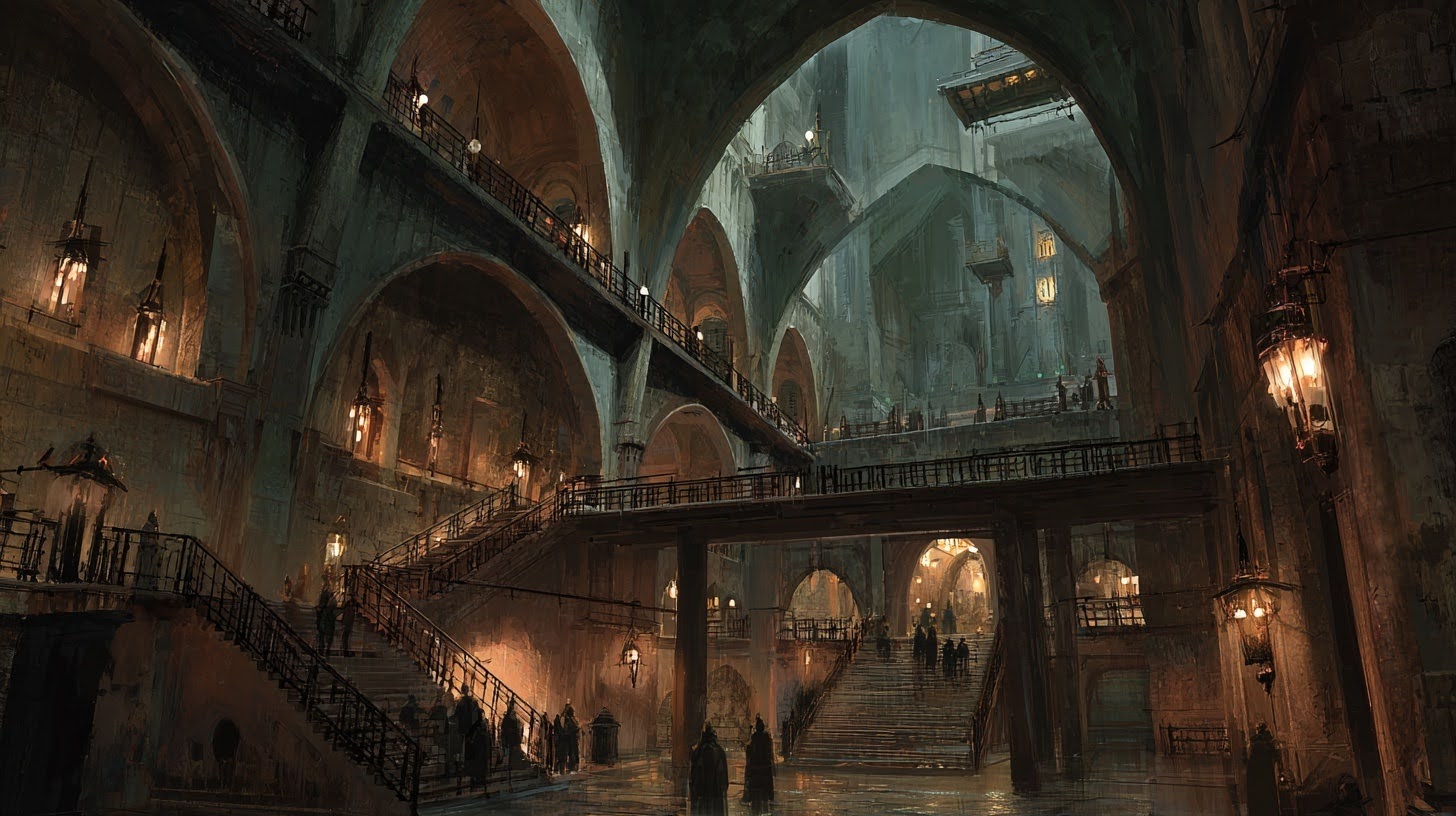
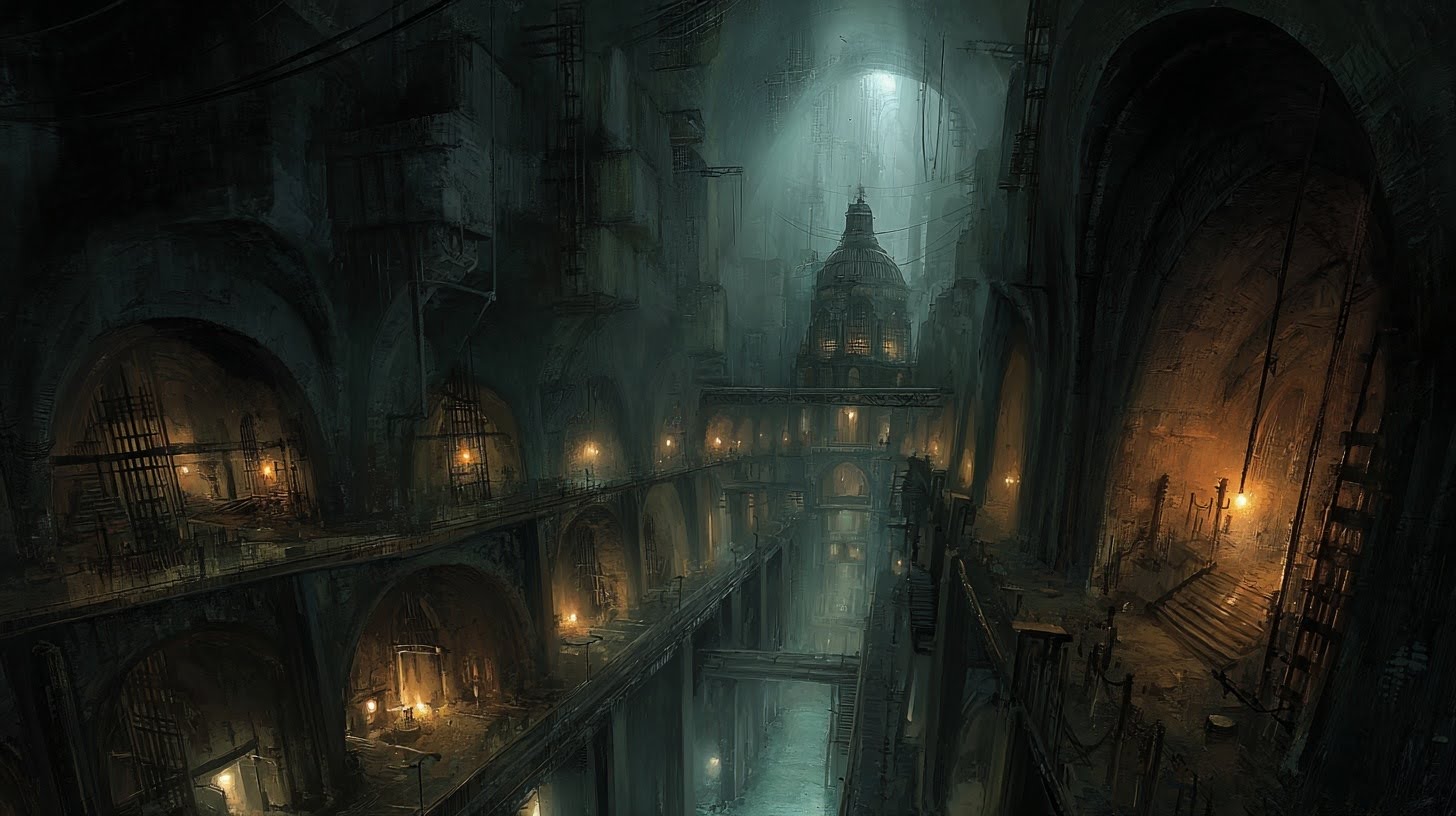
Lanternlight clings to the stone like old memory, tracing the arches that have carried Venlin’s weight for nearly nine centuries. The first tunnels were cut by the Astaray Knights with the steady patience of soldiers who expected the mountain to test them. Their chisel marks still hide beneath newer layers of plaster and paint, a reminder that the vaults were born from discipline long before they became the city’s shadowed heart. Every corridor carries the echo of that early purpose even as it strains under the pulse of a very different life. Generations have folded their stories into these tunnels. Stalls cluster beneath load-bearing pillars where armor racks once stood. Family altars hide in the alcoves carved for patrol rest stops. A winter market spills through a hall shaped originally for troop mustering. The vaults grew outward without permission, shaped not by architects but by need, habit, and the quiet audacity of those who refused to let the stone remain cold. As centuries passed, the mountain absorbed these changes without complaint and became something more than foundation. It became witness. In the dimmer lanes the air carries the layered signatures of the people who have lived here longest. A lingering curl of incense. Steam from a backroom kitchen wedged into the old signal chamber. The distant rhythm of tools striking metal in workshops sunk far deeper than any Knight ever planned. Life here moves with an unhurried certainty, untouched by the polished restraint of the surface. Deals are struck in half-light. Arguments resolve themselves just out of sight. The vaults keep their own pace, answering only to the generations that raised their families in the warmth beneath the stone. Yet the noir edge beneath it all never quite softens. The Voss family’s influence threads through the vaults as plainly as the lantern chains. Their presence is neither hidden nor advertised. It is understood. Corners once meant for supply caches now serve as offices where quiet decisions redirect the current of undercity life. Tension never rises loudly here. It moves like groundwater, steady and unseen, guiding the vaults into a stability that owes as much to unspoken agreements as to stone arches and support beams. Even with that undercurrent, the vaults remain the most human part of Venlin. Down here the city sheds its immaculate façade and reveals the texture that history rarely preserves on the surface. Walls patched by different hands across different eras. Stones polished by boots that walked the same route for decades. Markets that open only when the mountain wind howls above. The vaults are not the mirror of Venlin. They are its memory and its pulse, shaped by discipline, frayed by time, and kept alive by the people who long ago decided the mountain was not something to escape but something to inhabit.
Purpose / Function
“If the sky falls, trust the mountain. It has been keeping Venlin alive since long before any of us were born.”
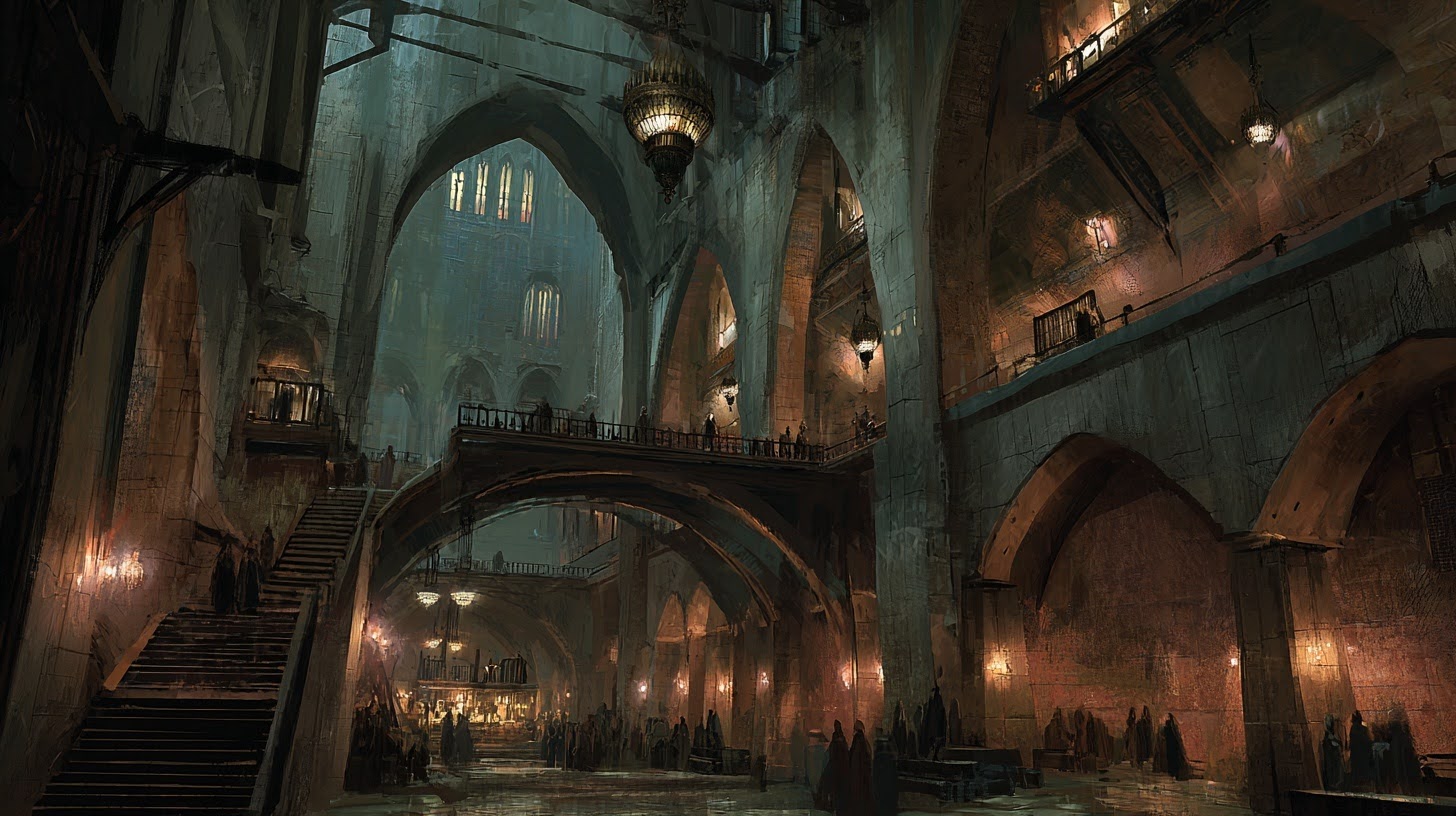
The Venlin Vaults were created to give the capital a place that could hold firm when the surface could not. The early rulers of Areeott understood the risks of open sky and open stone, so they invested in a refuge that did not depend on weather, supply lines, or the fragile optimism of peace. The arcane engineers of Xal Kanan shaped the first halls with a clarity of intent that still lingers in the stones. These rooms were meant to preserve life when all else failed. Everything that came later grew outward from that single need for security. The stability of the vaults gave them their next role. The winters of the Agriss Mountains are relentless, and the surface of the city cannot always function under their weight. The vaults remained temperate and accessible, so merchants and families learned to treat them as a reliable route rather than an emergency shelter. Traffic moved through these halls at all hours. Shops opened where barracks once stood. Workers timed their days by lantern cycles instead of sunlight. What began as protection became a part of ordinary movement through the capital. This dependable rhythm allowed the vaults to carry the parts of daily life that did not fit neatly into the surface world. Areeott values order and precision. Those expectations leave little room for any moment that might unsettle the image of perfection above. The vaults absorb these moments without complaint. Arguments that need privacy, conversations that require careful timing, and communities that do not want the bright scrutiny of the surface all find space here. The stone provides shelter in more ways than one and that quiet acceptance has become one of the core reasons the undercity thrives. Authority followed soon after. The Voss family stepped into the role long before the modern era of Venlin, and their guidance keeps the vaults functional in ways official structures cannot. Their influence does not replace the laws of the kingdom. Instead, it fills the gaps where the surface refuses to look. Disputes are settled before they escalate. Boundaries are respected because consequences are understood. The presence of the Voss family gives the vaults a steady spine that prevents chaos without forcing the undercity to imitate the perfection above it. In moments of danger the vaults return to the purpose that first shaped them. When dragons strike from the Azar Empire or when conflict shakes the capital, people turn to the stone corridors that have protected generations before them. The reinforced chambers hold entire districts. The air remains calm when the streets do not. These halls have sheltered families through invasions, uprisings, and the long violence of the Arin Civil War. The vaults have never lost their ability to preserve life in the face of disaster. Through all of these roles the vaults became something essential to Venlin that cannot be captured on the surface. They are not an escape from the city above nor a reflection of it. They are the place where life continues without performance, where history carries forward through daily habit rather than ceremony, and where the mountain accepts every part of the capital without judgement. The vaults serve because they endure and they endure because they are needed. Nothing about their purpose feels finished, and that is precisely why they remain the center of gravity for the city that lives above them.
Alterations
“Old stone has its own way of warning you. If a hall feels wrong, choose another. The ones who live here learned that the hard way.”

Architecture
“Ask ten families who carved which rooms and you get ten answers. The vaults grow on their own now. We just try not to get in their way.”
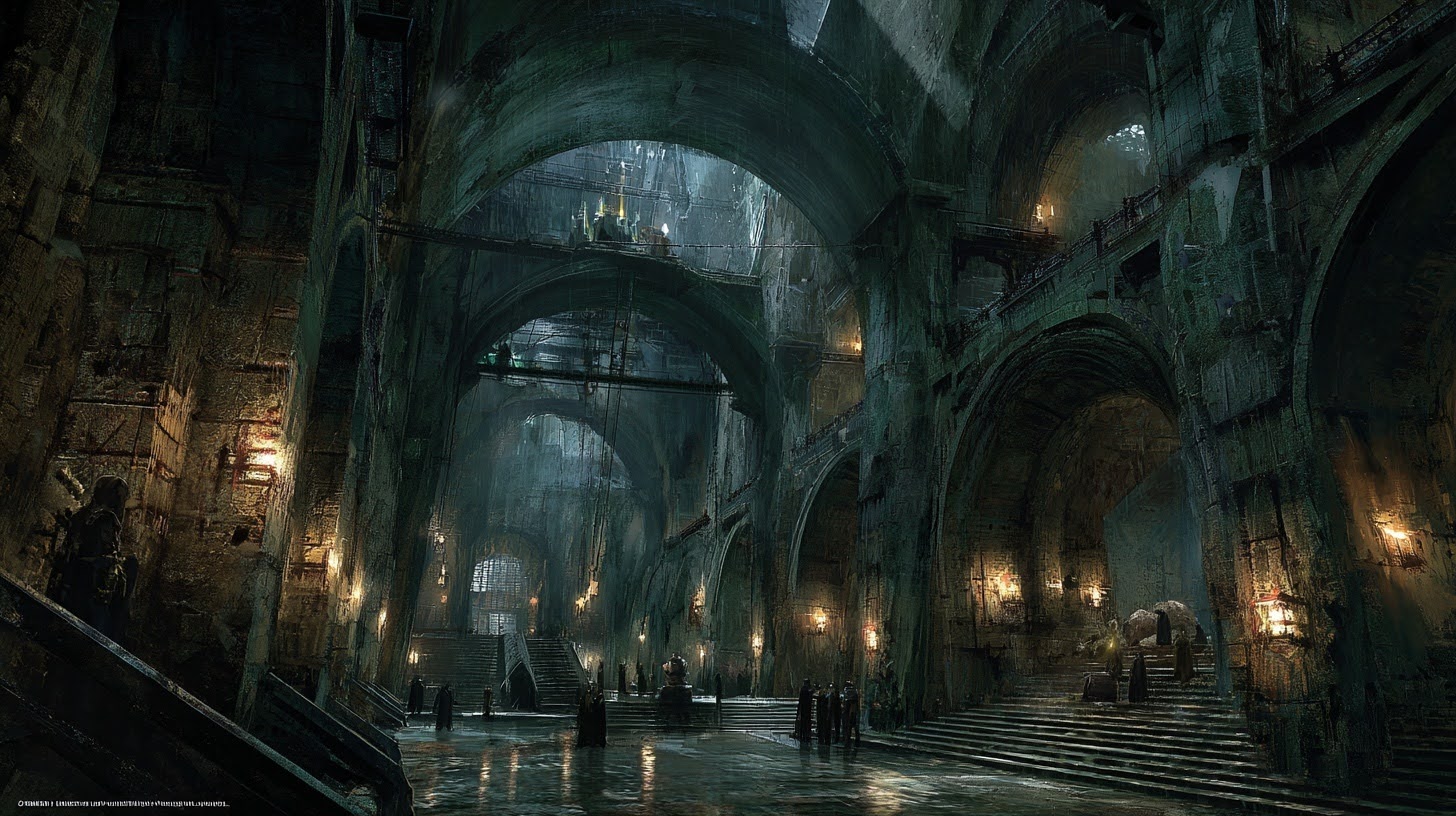
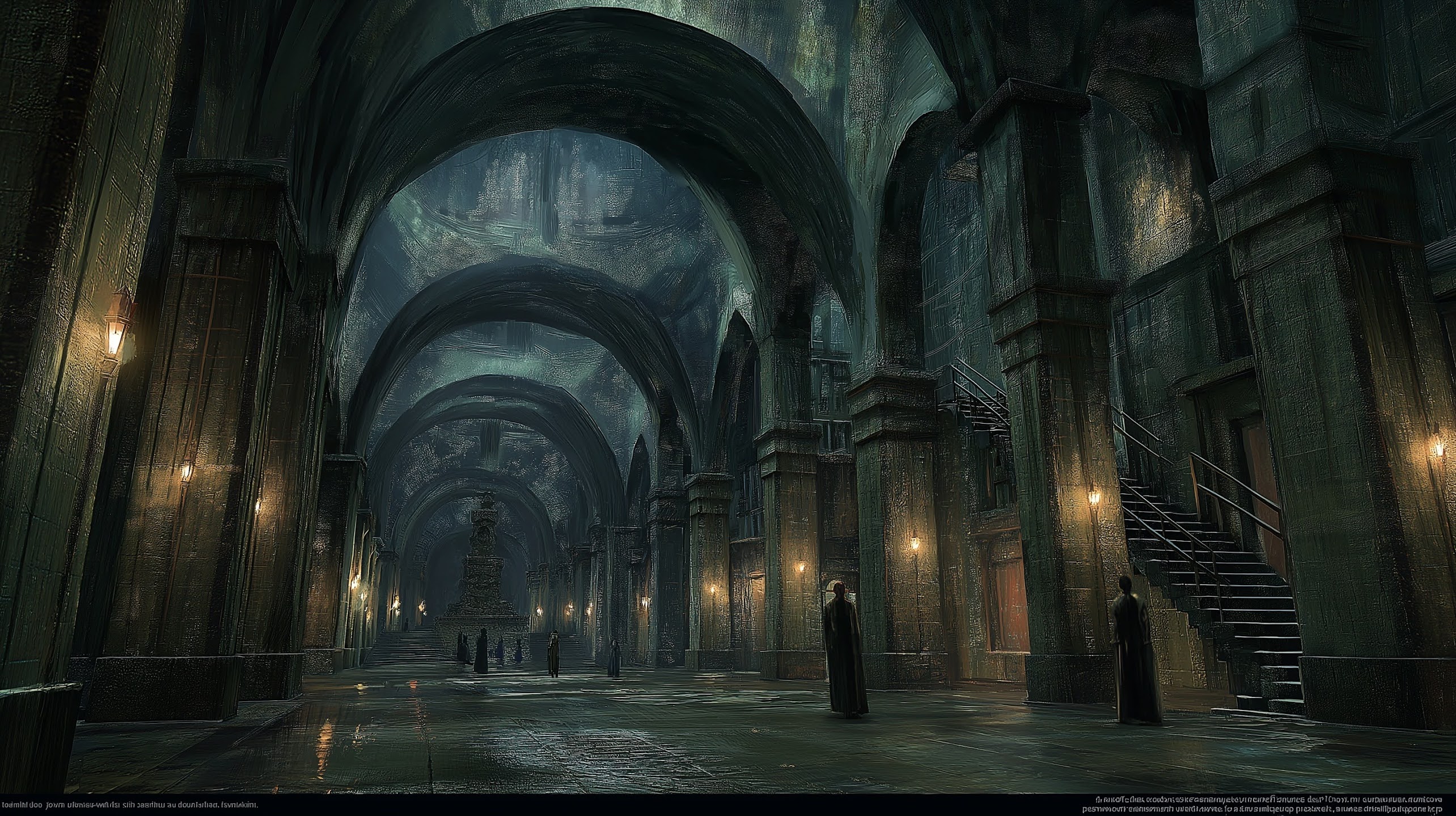
The architecture of the Venlin Vaults carries the imprint of its earliest creators even beneath the layers of later habitation. The first passages were shaped by arcane force rather than hand tools, leaving surfaces that feel unnaturally smooth beneath the lantern glow. These walls were engineered to endure pressure from the mountain above and to hold steady even during the violent tremors that sometimes roll through the Agriss range. The result is a network of corridors that feel more carved than built, as if the stone had been opened rather than constructed. As civilian life expanded into these spaces, the stark geometry of the original design began to soften. Residents added wooden facades to bare chambers. Merchants raised small archways to break the monotony of the long halls. Families painted sections of wall in muted colors to mark their own stretches of corridor. Nothing in these additions hides the age of the vaults, but together they create a layered texture that records centuries of quiet adaptation. The mountain holds all of it without complaint and seems to accept each alteration as part of its own long story. The larger chambers reveal how the vaults evolved to serve movement and gathering. Support pillars rise in rhythmic intervals shaped by the early engineers to distribute the weight of the city above. Between them, wide passages open into markets, workshops, and communal squares where sound gathers in soft echoes. The ceilings arch high above these rooms and the lantern chains trace their curves like constellations that shift only when the city elects to rehang them. Every broad hall feels anchored by purpose even if that purpose has long since changed. In the deeper reaches the architecture tightens again. Narrow corridors twist through uneven paths where early defensive layouts meet later civilian improvisation. Some walls bow slightly where builders worked around natural stone formations that refused to be moved. Others bend at angles that do not match the logic of the upper layers. These irregularities give the vaults a sense of organic growth. The structure does not present itself as a perfect grid but as a living record of adjustment and necessity. Navigating these stretches requires familiarity or patience, and strangers often find themselves looping through the same intersections without realizing it. Across all of this, the vaults maintain a visual language distinct from the surface of Venlin. The city above favors symmetry, clarity, and careful ornament. The undercity favors endurance. Stone patched by different eras. Wooden beams braced against old load points. Lantern hooks hammered into places that once held signal crystals. Everything here carries the marks of hands that lived through seasons of hardship and found ways to make the stone feel inhabited. The architecture reflects a world shaped by resilience rather than ceremony, and that distinction defines the character of the vaults as strongly as any law or history.
Defenses
“People call this place the undercity. Those who live here just call it home. The surface can keep the stories it likes.”
The defenses of the Venlin Vaults begin with the mountain itself. The earliest architects chose their location with precision, placing the main corridors deep enough that the weight of the Agriss stone forms a natural barrier against siege or invasion. The thickness of the rock does what walls cannot. It muffles impact, absorbs shock, and renders most surface threats irrelevant. Even in the oldest records, there is no mention of these foundations ever failing. They were shaped to outlast catastrophe and time has proven that intention sound. The original arcane engineers of Xal Kanan reinforced the vaults with structural wards that remain embedded in the stone. These enchantments were not designed for spectacle. They were meant to keep the mountain steady and the chambers secure when stress pressed against them. The wards distribute force across the entire network, preventing collapse even when the city above suffers heavy impact from attack or natural disaster. Though ancient, the enchantments still hum faintly when the vaults settle after a tremor, a quiet reassurance that the old protections endure. Entrances to the vaults were planned with defense in mind. Most of the oldest access points funnel through narrow transitional corridors that can be secured quickly. Several were built with choke points that limit the number of attackers who can advance at once. These features were not meant for the modern world but they remain functional and respected. Even during peaceful times, the people of Venlin understand that the design of the undercity gives them a strategic advantage. The mountain guides movement in ways no open street ever could. During the ages of conflict that followed the creation of the vaults, the residents adapted these features with practical additions. Reinforced doors appeared in districts close to major access routes. Heavy stone blocks were positioned near key intersections so they could be dropped into place during emergencies. Patrol paths were kept clear for those responsible for maintaining order. Each modification was made quietly and without ceremony, often after a moment of danger showed where a weakness might lie. None of these additions interrupt daily life but they remain ready when the need arises. In times of war, the vaults have proven their value more than once. During dragon assaults from the Azar Empire, families moved swiftly into the deeper chambers. Fire and falling debris struck the surface while the undercity remained calm beneath it. When conflict spread during the Arin Civil War, the vaults sheltered entire districts for weeks at a time. Their layered design prevented the panic that often follows disaster. People knew the routes. They knew the gathering points. They trusted the stone to hold and it always did. The greatest defense of the vaults, however, comes not from magic or architecture but from familiarity. Generations of residents understand how to navigate the undercity with an ease no outsider can match. They know which corridors bend back on themselves, which halls lead to shelter, and which paths avoid the confusion created by centuries of alteration. This knowledge forms a living barrier that protects the people as effectively as any spell. The vaults are not a labyrinth by accident. They are a place shaped by time and memory, and that memory keeps Venlin safe when the world above grows uncertain.
History
“Walk far enough into the vaults and you can feel the centuries shift under your feet. The city above may change, but the stone keeps its memories.”
Tourism
“These corridors were built to keep the worst outside. What people forget is that they also keep certain troubles quiet.”
Visitors who arrive in Venlin often hear about the vaults long before they see them. Guides speak of the undercity with a mix of caution and admiration, and travelers grow curious about the place where the capital supposedly reveals its true character. The vaults are not polished attractions and they were never designed to welcome outsiders, yet they still pull in those who want a glimpse of the life that exists beneath the immaculate streets. Even the entrances give this away. They are understated, sometimes hidden, and always framed with the weight of stone that hints at an older purpose. Most travelers begin their exploration in the broader market halls. These areas present the vaults at their most hospitable, with lantern light cast across rows of stalls and food vendors who have worked the same corners for generations. The pace feels different from the surface. It is slower, warmer, and less concerned with etiquette. Visitors often find themselves lingering at small shops that sell crafts unique to the undercity, especially items shaped from materials pulled directly from the mountain. These markets function as an introduction, easing travelers into a world that becomes stranger and more compelling the deeper they go. Some tourists come seeking novelty rather than culture. For them the vaults offer a setting far removed from the structured beauty of Venlin above. They walk the twisting lanes that residents navigate without thought and marvel at how the architecture folds in on itself. Guided walks highlight features that rarely appear in surface brochures, such as the old defensive chokepoints, the irregular chambers left behind by early arcane shaping, or the narrow paths that thread through districts where families have lived for centuries. Even the uneven acoustics of the vaults become part of the experience, with echoes that seem to move ahead of or behind the traveler. Other visitors are drawn by stories that circulate through taverns and trade posts across Aerith. These tales speak of hidden rooms, rare performances, secret eateries, and gatherings that shift locations without warning. Many of these stories are exaggerated, but the vaults possess enough mystery to make the rumors believable. Tourists hoping to find these places often hire guides who have lived their entire lives below the mountain. Without such help, most outsiders would wander in circles without realizing it, since the vaults rarely grant orientation freely to those who do not already understand their rhythm. Night life in the vaults carries a reputation that both attracts and intimidates travelers. Some districts transform after sunset into a network of taverns, gambling dens, and music halls where surface propriety gives way to a more relaxed atmosphere. Tourists who seek excitement find it easily, though they quickly learn that courtesy matters even when rules are not written. The vaults welcome strangers, but they expect discretion. Those who treat the undercity like a spectacle rather than a community often find their visits shortened by locals who know how to end trouble without involving the surface. Despite the lure of entertainment, many visitors arrive with genuine respect for the cultural depth of the vaults. Scholars, artists, and historians spend days documenting how families have preserved traditions that never found footholds aboveground. They study murals that have survived for centuries, listen to oral histories that echo along the stone walls, and observe how neighborhoods maintain their identity despite constant change. These travelers often leave with a sense that the vaults hold layers of history that cannot be understood from the clean lines of Venlin’s surface alone. Tourism in the vaults remains steady but never overwhelms the undercity. The people who live there allow outsiders to pass through without altering their own routines. Visitors sense that the vaults are shaped by the needs of the residents rather than the expectations of guests. This creates an experience that feels authentic, slightly unpredictable, and deeply tied to the history of Areeott. Tourists return to the surface with stories that differ in detail yet share a common truth. The vaults reveal a side of Venlin that cannot be crafted for display. They show the city as it has lived, not as it wishes to appear.
“Nothing in Venlin tells the truth out loud except the stone underfoot.”
Alternative Names
The Undercity
Type
Megastructure, Land based
Parent Location
Owning Organization
Contested By



Wow, this is a really solid read. I particularly like the aspect of the history becoming habitable, that was a solid line, and added a lot of gravitas to that section.
Thank you for even taking the time to read it! <3
It was my pleasure!