


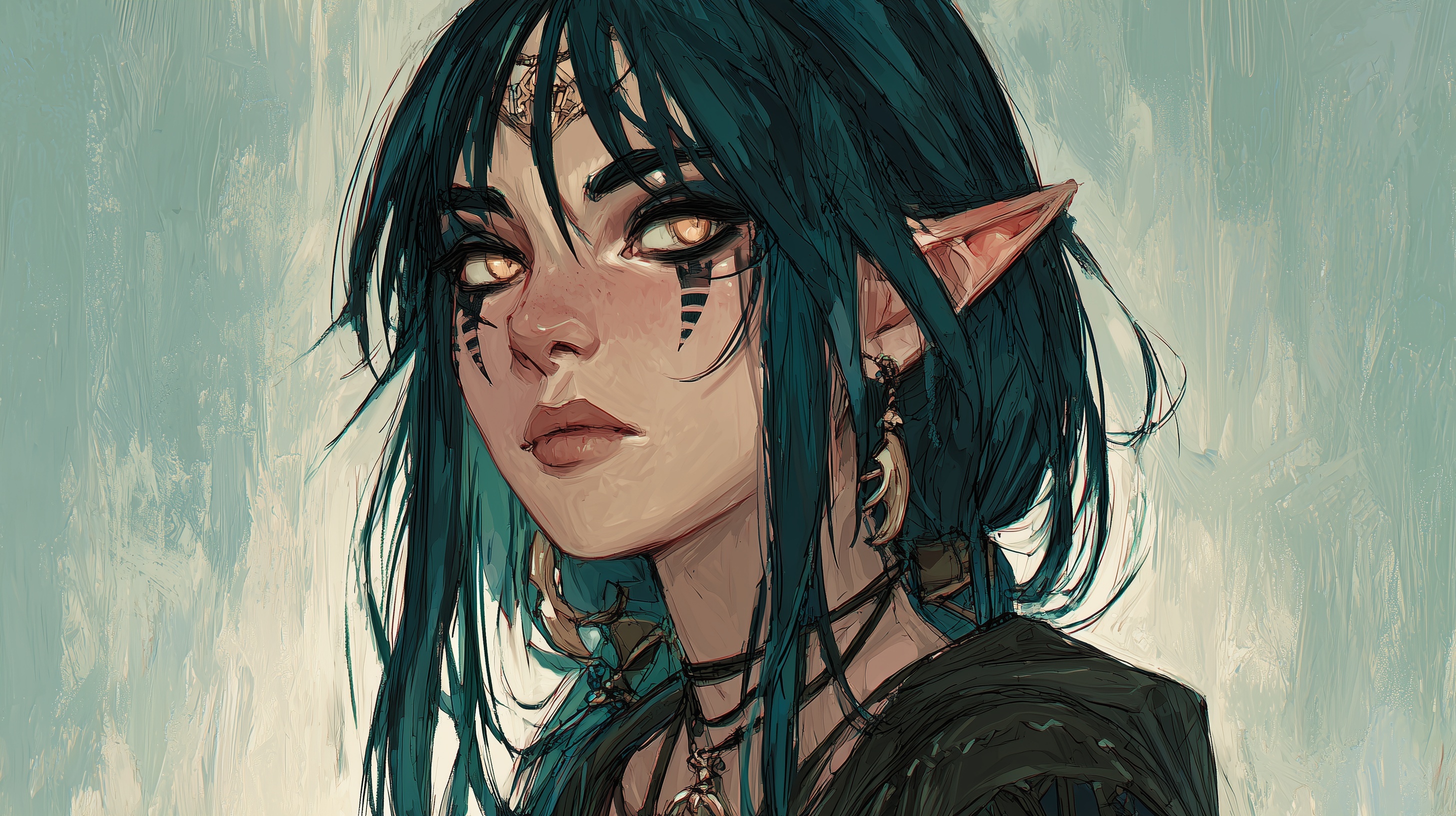
Arin Elf
“They look like they belong everywhere and nowhere. In the courts, in the taverns, in the vaults, even in the guard of the barons. Yet always there is a pause when they speak, as if they remember something the rest of us have forgotten.”
The Arin Elves came into Areeott during the violence of the Civil War. Iorill had already fallen and the sea had already claimed the majority of their kin. Those who remained on the continent arrived as mercenaries, wanderers, and artisans. They carried what little magic still functioned after The Shattering, along with skills honed by centuries of endurance in contested lands. Their arrival was not planned settlement. It was survival.
Their decision to fight during the Civil War secured their place. Some fought for coin, others for the hope of a new beginning, but all left their mark. Loyalist armies relied on their spellcraft, archery, and precision. Distrust lingered among those who feared elven memory or remnants of Iorill’s curse, yet the war proved that their presence could not be dismissed. By standing in the fire when it mattered, they won a claim to the soil they now inhabit.
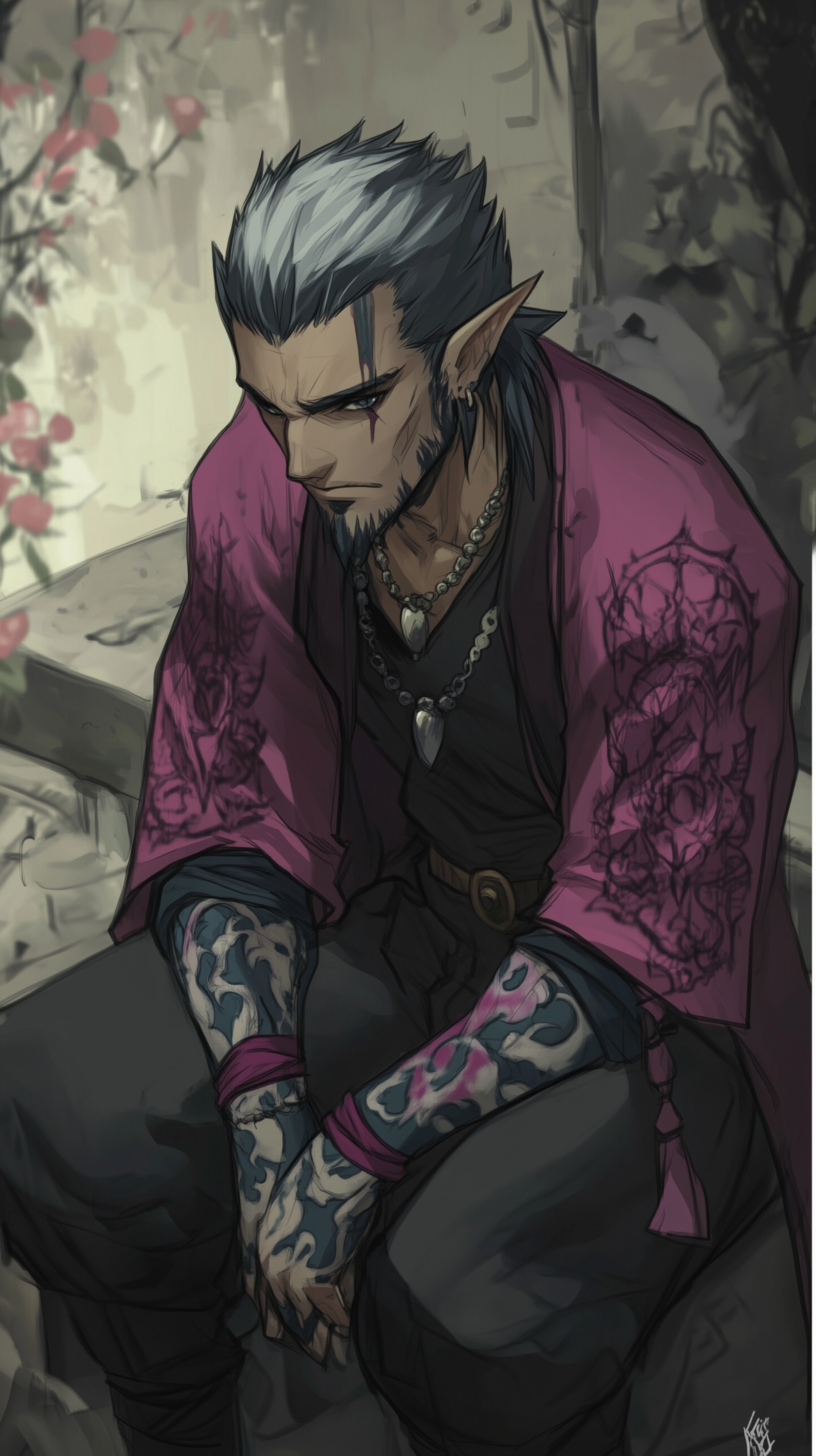
When peace returned, the elves did not carve out territory of their own. Instead they entered the fabric of the cities. They claimed quarters within them, enclaves that bore unmistakable elven character without becoming sealed off from the rest of Areeott. Their choice mirrored their condition as a people both present and displaced. They could not return to Iorill, but they refused to vanish into the anonymity of exile.
Over generations their enclaves became part of the urban map. Outsiders walk through them freely, trading for goods or services, yet always sensing a shift in atmosphere. Inside, elven disputes and family matters remain internal. Outside, elves can be found in every tier of society, from parliament and courts to guild halls and even the House Guards of baronial families. Their distinctiveness survives through cohesion at home while their influence spreads through participation everywhere else.
The elves have faced suspicion for their secrecy and envy for their mastery of craft. Yet their loyalty in the Civil War and the centuries that followed kept them inside the circle of trust. Areeott has always lived under the threat of sudden invasion from the Azar Empire through Stormwatch Pass. Everyone may be called to fight at a moment’s notice. The elves proved long ago that they will answer that call, and this bond in defense became stronger than any doubt about their origins.
Among the elves themselves the fracture never healed. Elders recall fragments of Iorill and regard their life in Areeott as a compromise. Some descendants take pride in the ruins of memory while others embrace invention and change. Between them lies a wide spectrum, from preservationists who cling to echoes of the forest to innovators who draw upon the cultures of their neighbors to build something new. This disagreement has never broken their people apart. It continues as an ongoing argument about what it means to be an Elf now.
Centuries of life in Areeott have blurred their image as mercenaries or refugees. They are citizens, artisans, soldiers, and scholars. They move easily between the vaults, the markets, and the courts. Their enclaves remain recognizable yet are not alien to outsiders. They are both within and apart, their survival now bound to the survival of the kingdom itself.
The Arin Elves who came during the Civil War were not conquerors and did not seek dominion. They were survivors who had run out of options. What they created afterward was not assimilation but a form of entanglement. Their story is no longer separate from Areeott. It is woven into the larger pattern of a land shaped by fracture and resilience, a land where survival often matters more than victory.
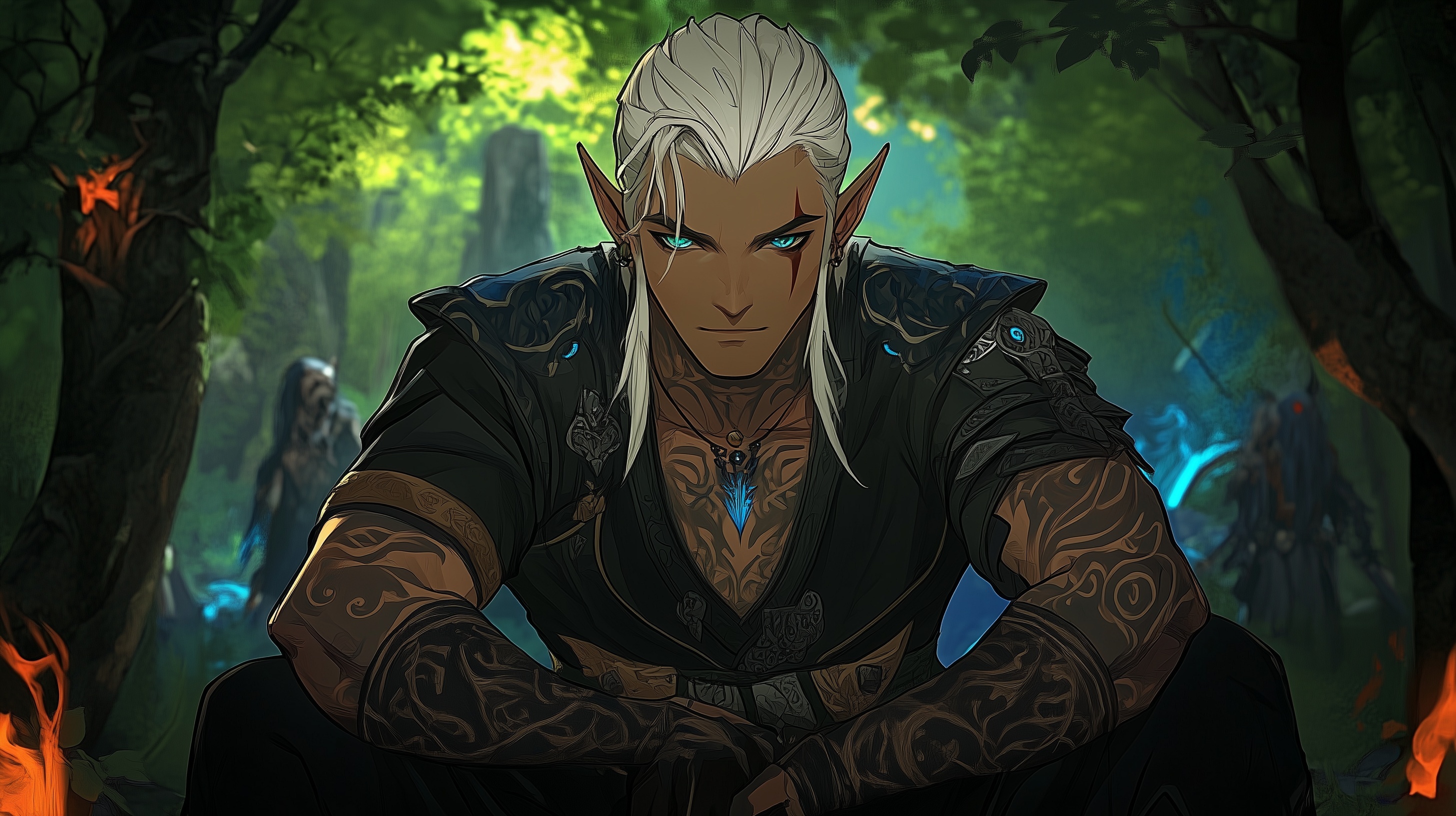
Culture
Culture and cultural heritage
“We do not rebuild Iorill here. That forest is ash and shadow, and to chase it would be folly. What we carry instead is the rhythm of memory. Each tattoo, each scent, each garment is not the past itself, but the echo of it remade for today. That is our heritage now, not the ruins across the horizon.”
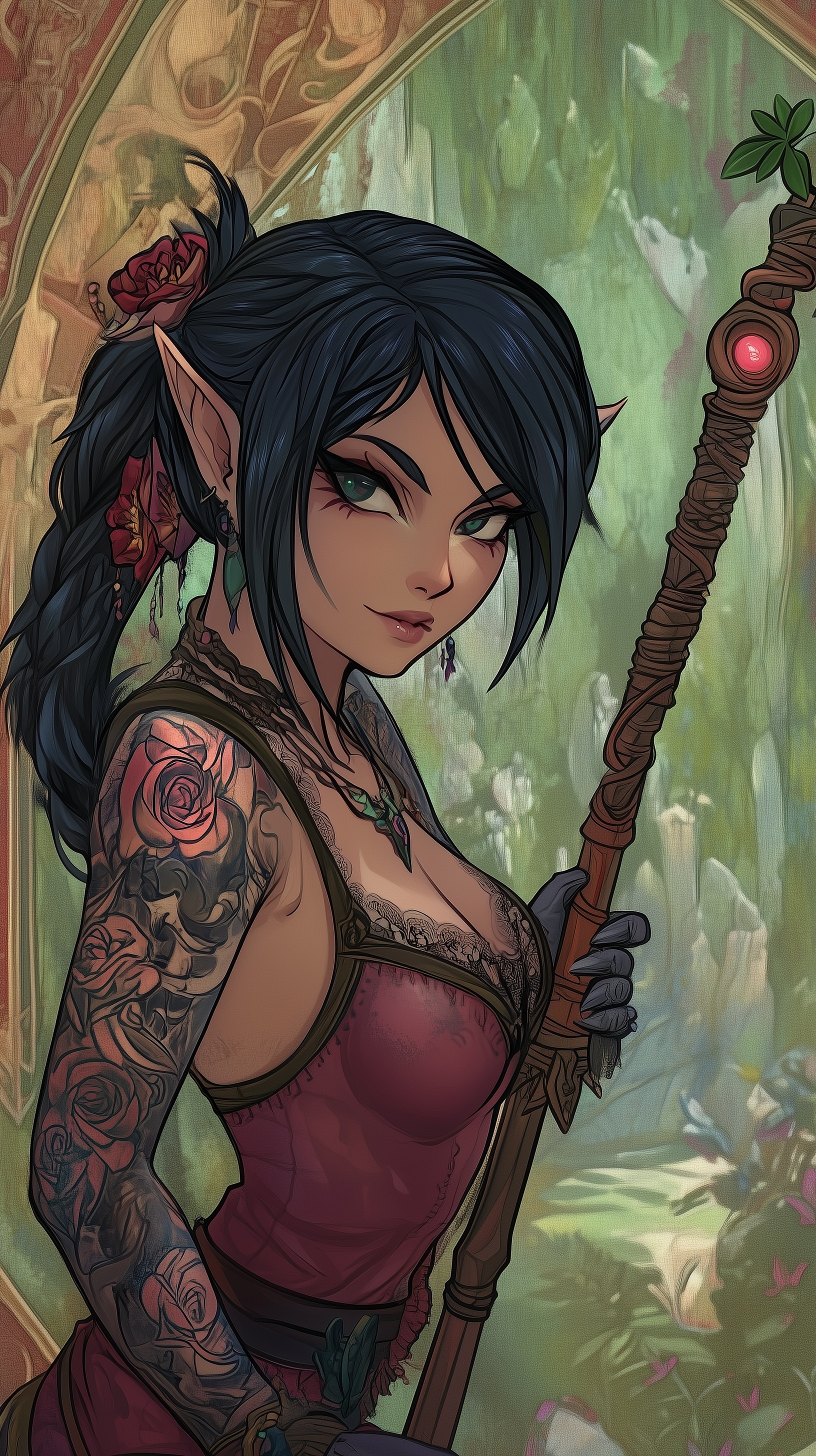
The culture of the Arin Elves is rooted in fracture and survival. They are the descendants of those who could not bring themselves to leave the continent after the fall of Iorill, yet who could not return to the forest either. Their heritage is therefore neither wholly lost nor wholly preserved. It is a living scar, a culture that remembers absence as much as presence, and which builds new forms of identity in the gaps left by ruin.
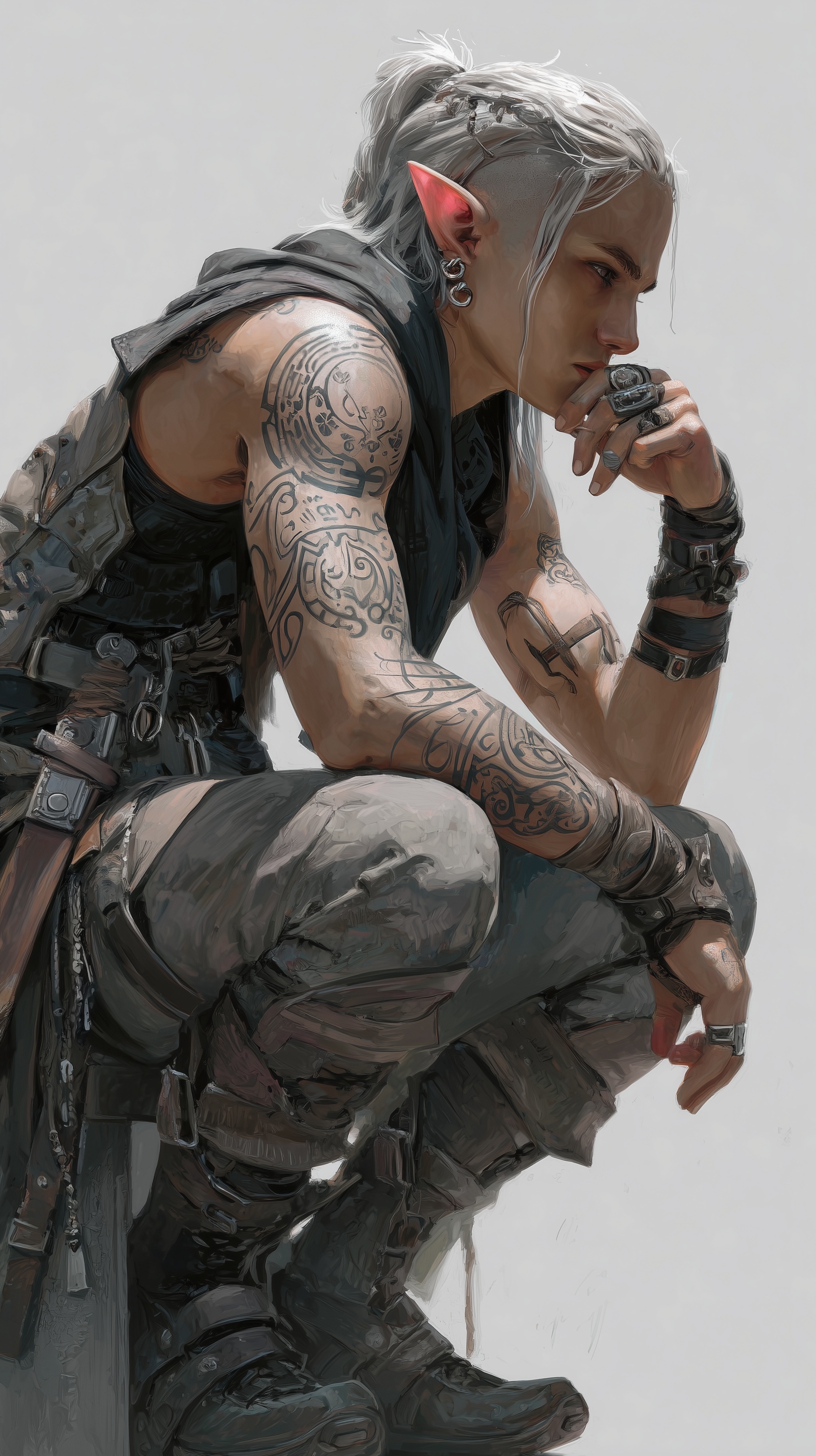
They carry memory through personal testimony rather than monuments. Tattoos, clothing, and scent serve as archives that travel with the body rather than resting in stone or script. This practice reflects the Shattering, which destroyed written lore and left many histories irretrievable. Memory is now portable, living, and fragile. The body is the book, the garment the chapter, the scent the punctuation. In this way the elves never appear rootless even when their ancestral homeland remains cursed and unreachable.
Their enclaves in Areeott function as cultural crucibles rather than fortresses. Within them, traditionalists preserve echoes of Iorill’s old forms while younger generations invent hybrids that draw from human, dwarven, and changeling practices. This mixture does not erase what came before. Instead it reflects a people negotiating who they are with each new generation. The result is not a unified tradition but a layered one, a conversation carried across centuries.
A central part of their heritage is the choice to remain. While most of their kin fled to the seas and became wanderers, the Arin Elves stayed within sight of Iorill. This decision gives them a particular tone among the peoples of Areeott. They are not remembered as exiles but as neighbors who fought in the Civil War and bound their future to that of the kingdom. Their belonging is earned through blood and persistence rather than isolation.
Over time, their practices have become interwoven with those of Areeott itself. The taste for Virellen silk, the artistry of perfumes, and the refinement of bespoke clothing have spread beyond the enclaves. Yet the elves guard their cultural codes closely. Outsiders may purchase their crafts, but the meanings tied to them remain within the community. An Arin garment or vial of scent is never simply what it appears to be. It is a fragment of identity made visible, and only the enclaves hold the keys to full interpretation.
Their cultural heritage is therefore not fixed in the past but active in the present. It does not rest on the ruins of Iorill but on the ways they have chosen to live since. Every enclave is a reminder of that heritage. Each one stands as proof that a people can endure without homeland, that survival is not only about holding ground but about refusing to let memory fade.
In this sense the Arin Elves embody continuity through transformation. Their heritage is not what was saved but what was remade. It is the silence of what cannot be recovered and the noise of what must be invented. To live among them is to live inside that contradiction, to see a culture that has lost everything and yet insists that nothing is forgotten.
Their story is a warning and a testament. Perfection destroyed them once. Adaptation saved them after. What they keep alive now is not a single tradition but a refusal to disappear, a heritage carried not in archives or temples but in every body and every enclave that still stands in the streets of Areeott.
Shared customary codes and values
“We thought they came for coin. Maybe some did. But I saw them on the ridge at Stormwatch, holding the line when others faltered. You do not buy that kind of loyalty. You earn it, or they give it freely. Either way, it saved us.”
Among the Arin Elves, belonging is measured not by laws written on parchment but by silent agreements carried through gesture, ritual, and memory. They share an understanding that the past cannot be retrieved, yet the story of their people must not be lost. Every choice to preserve or to reinvent is weighed against that unspoken command. To live as an Arin Elf is to carry the burden of continuity, no matter how fractured the thread may be.
One of their strongest codes is privacy in judgment. Matters of family, inheritance, or conflict are never brought before human courts unless absolutely unavoidable. Elves resolve disputes among themselves, often with a quiet authority exercised by enclave elders or respected artisans whose reputations speak louder than titles. To expose such conflicts to outsiders is considered dishonor, not because outsiders are distrusted, but because it would admit that the elves cannot manage their own.
Another value that holds them together is recognition of craft as an expression of truth. A robe, a tattoo, a vial of perfume, or a blade made by an elf is not only an object. It is a testimony of presence, a statement that someone stood in a particular moment and left a mark. To treat such works carelessly is to treat the memory of a person carelessly. This is why gifts are cherished and why theft among elves is punished with unusual severity. It is not property that has been taken, but part of a life.
They also value restraint in the presence of outsiders. An Arin Elf may be passionate or angry, but that anger is not performed in the streets of Areeott. Such things are taken below ground, into the vaults, where they can be resolved without staining the surface. To violate this code is to risk not only personal shame but also the reputation of one’s enclave. Quiet control in public is a way of protecting the fragile trust their people have earned.
The importance of memory is carried in how they treat names. An ancestor’s name is spoken with care, often only in specific contexts, and to invoke it without respect is considered deeply insulting. At the same time, new names are embraced when someone marks a transformation in their life, whether through battle, artistry, or profound change. Names are not fixed, but they are not disposable either. Each one is a chapter in an ongoing chronicle.
Hospitality remains another cornerstone of their values. A guest within an enclave is expected to be offered food, drink, and a safe space, even if they are not trusted. To turn someone away would dishonor the entire household, and so hospitality is given first, with questions and negotiations to follow only once the guest is settled. The act does not mean friendship, but it does mean recognition of shared humanity, which the elves extend as a duty of memory and survival.
Perhaps their most defining code is the protection of expression. Whether through ink, cloth, or scent, an elf’s chosen form of expression is never mocked or interrupted. To damage another’s tattoo, to mar their garment, or to spoil their perfume is more than vandalism. It is a violation of identity. This shared understanding creates a society where individuality is safeguarded by the group, and where differences in style or tradition become points of dialogue rather than division.
These values do not exist as commandments. They are lived agreements that shape how enclaves survive within the cities of Areeott. They bind a fractured people together without needing to be written or declared. What survives is not a code of law but a rhythm of trust, privacy, and recognition that carries them forward in a land that is theirs only because they refused to disappear.
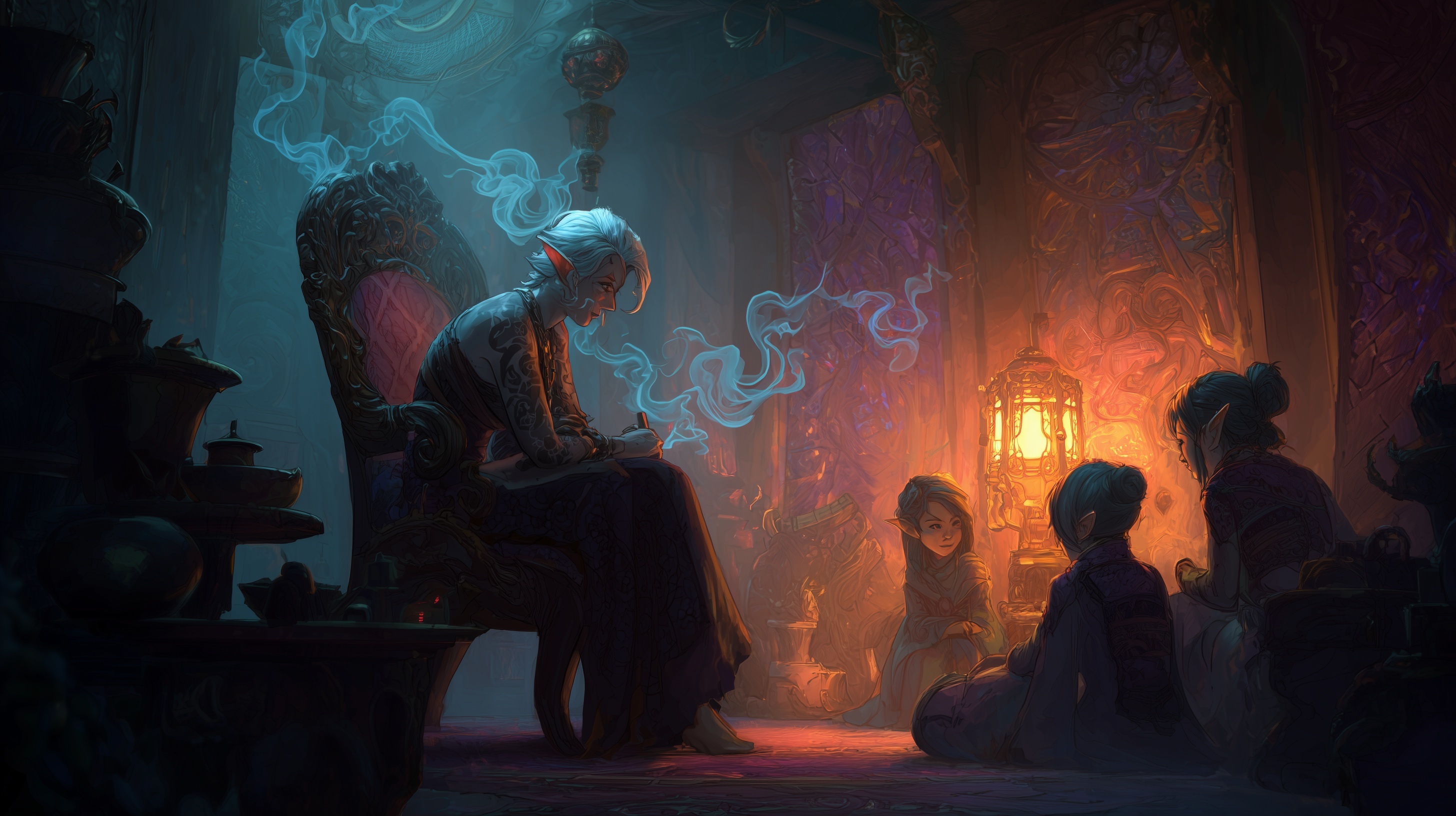
Common Etiquette rules
“Do not rush your words. In our halls, silence is not a gap to be filled. It is part of the conversation. Pause when you enter. Acknowledge the eyes upon you. And never mock the scent you smell or the ink you see. To us these are not ornaments. They are lives made visible.”
Etiquette among the Arin Elves is not about politeness in the way outsiders might expect. It is a choreography of silence, gesture, and presence that signals belonging to the community. A stranger may see little more than graceful movements or reserved speech, yet every choice carries meaning that is instantly understood within the enclave.
The first point of etiquette is acknowledgment. When entering a room or crossing the threshold of an enclave household, one must pause and let the eyes of those within meet one’s own. This pause is not submission, but a ritual confirmation that no one will be startled, that everyone present shares the moment of entry. To ignore this step is to appear careless, and carelessness is often mistaken for insult.
Conversation is marked by restraint. Words are seldom delivered in blunt finality. Instead they arrive in layered phrases, invitations to interpretation rather than declarations. Outsiders sometimes find this evasive, yet within the culture it is understood as grace. Meaning lies as much in the silences as in the speech, and to trample a silence with unnecessary explanation is as disruptive as shouting in a library.
Personal expression must always be respected. To comment mockingly on another’s tattoos, clothing, or perfume is beyond poor taste. Even well meaning compliments are offered with care, since to notice someone’s markings is to acknowledge their story. The proper approach is quiet recognition, a simple word that signals respect without prying.
Hospitality is another guiding principle. Food, drink, and a safe seat are offered before any questions are asked. A guest may be an ally, a stranger, or a rival, yet the first act is always provision. To turn away a visitor empty handed brings dishonor to the host, for it implies a refusal to acknowledge the shared memory that ties all peoples together.
During disputes, etiquette demands calm conduct in public and heated words only in private. Arguments carried into the streets of Areeott stain the reputation of the enclave, and thus tempers are checked until the matter can be taken below ground. Outsiders often misinterpret this composure as coldness, but it is discipline born of survival.
Names are treated with care. To call someone by their given name without invitation is presumptuous. To speak an ancestral name without context is worse, a breach that signals arrogance. Instead, names are offered sparingly, with each one treated as a gift. Outsiders who grasp this quickly earn respect, while those who abuse names find doors quietly closed to them.
The etiquette of the Arin Elves is less about rules than rhythm. It is the quiet agreement to move through life without disturbing the stories others carry. Every gesture, every silence, every choice of when to speak or when to remain still, is part of a code that allows them to endure as a people within a city that often forgets how fragile belonging can be.
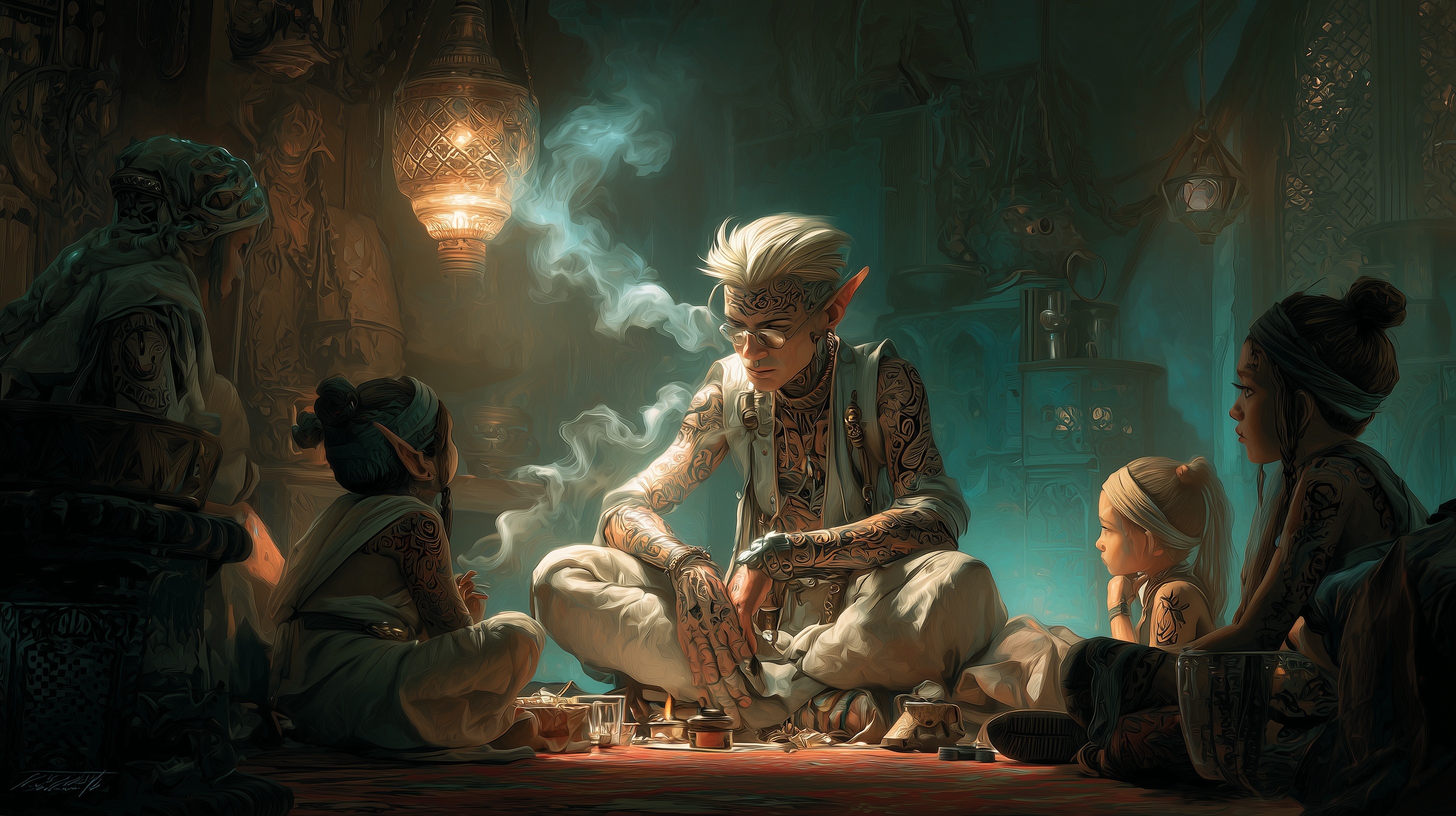
Common Dress code
“Humans wear garments to cover themselves. We wear them to reveal what matters. If you do not understand that, then you are blind even with open eyes.”

Clothing among the Arin Elves is never casual and never generic. Every garment is made to measure, every stitch deliberate. There is no such thing as an article taken from a common rack. To wear what another has already worn is considered to erase one’s own story. Each piece is bespoke, tailored not only to the body but to the history of the individual who will wear it.
Traditionalists favor the flowing lines of Iorill, robes cut to echo the forest canopies and the moonlit paths their ancestors once walked. These garments often use Virellen silk, smooth and luminous, designed to remind the wearer of a continuity that still ties them to the lost homeland. Elders often consider this restraint a mark of dignity, a refusal to abandon the symbols of memory even after centuries of exile.
Younger elves, by contrast, treat clothing as a living canvas. They combine leather from human riders, metalwork from dwarven artisans, and accessories taken from changeling theater fashion. They are not afraid to layer contrasting styles, to wear fabrics once considered unworthy of elven hands, or to break silhouettes into bold new shapes. This experimentation is not rebellion so much as assertion, a claim that their identity is not locked in the ruins of Iorill but still unfolding.
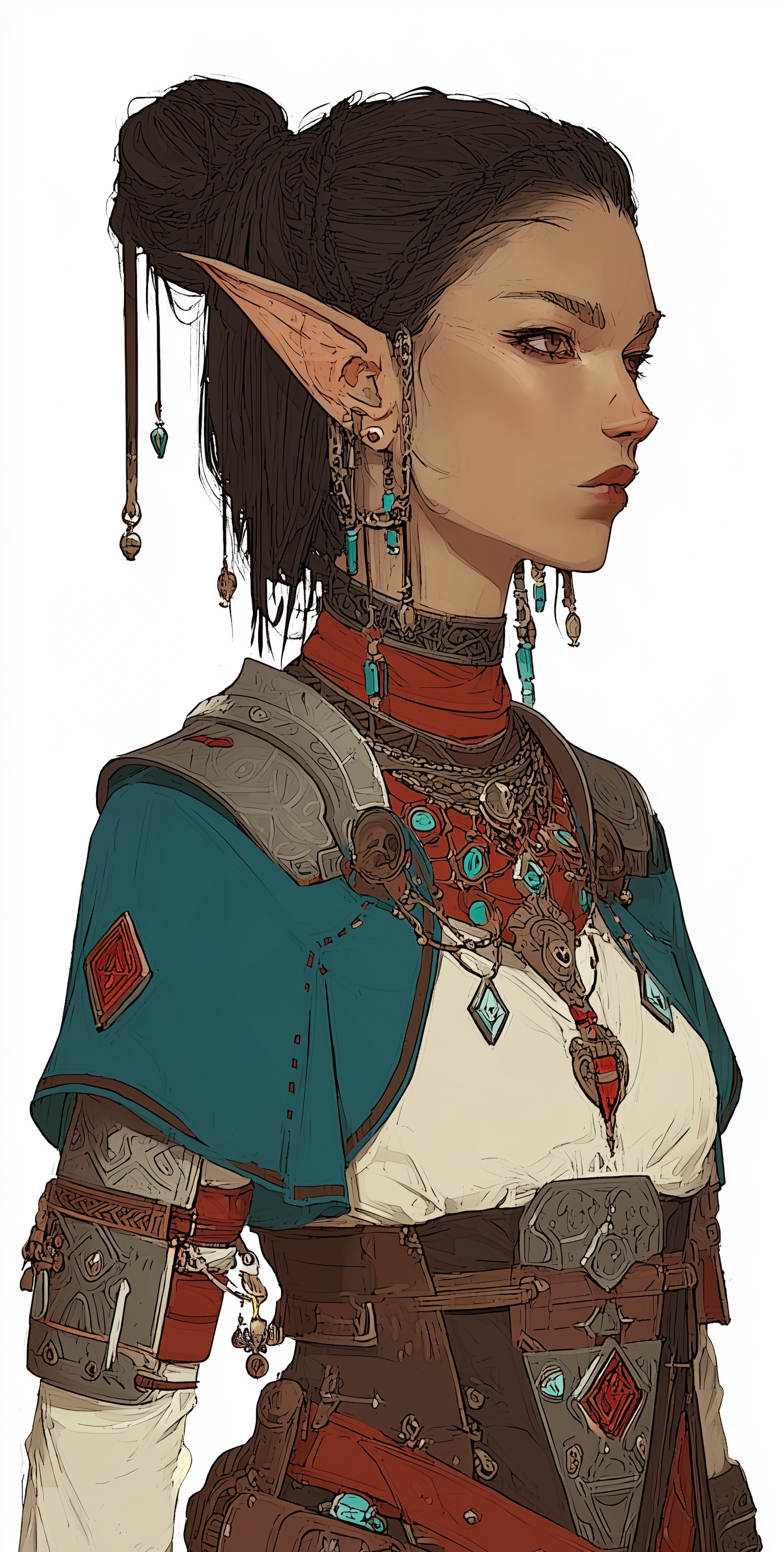
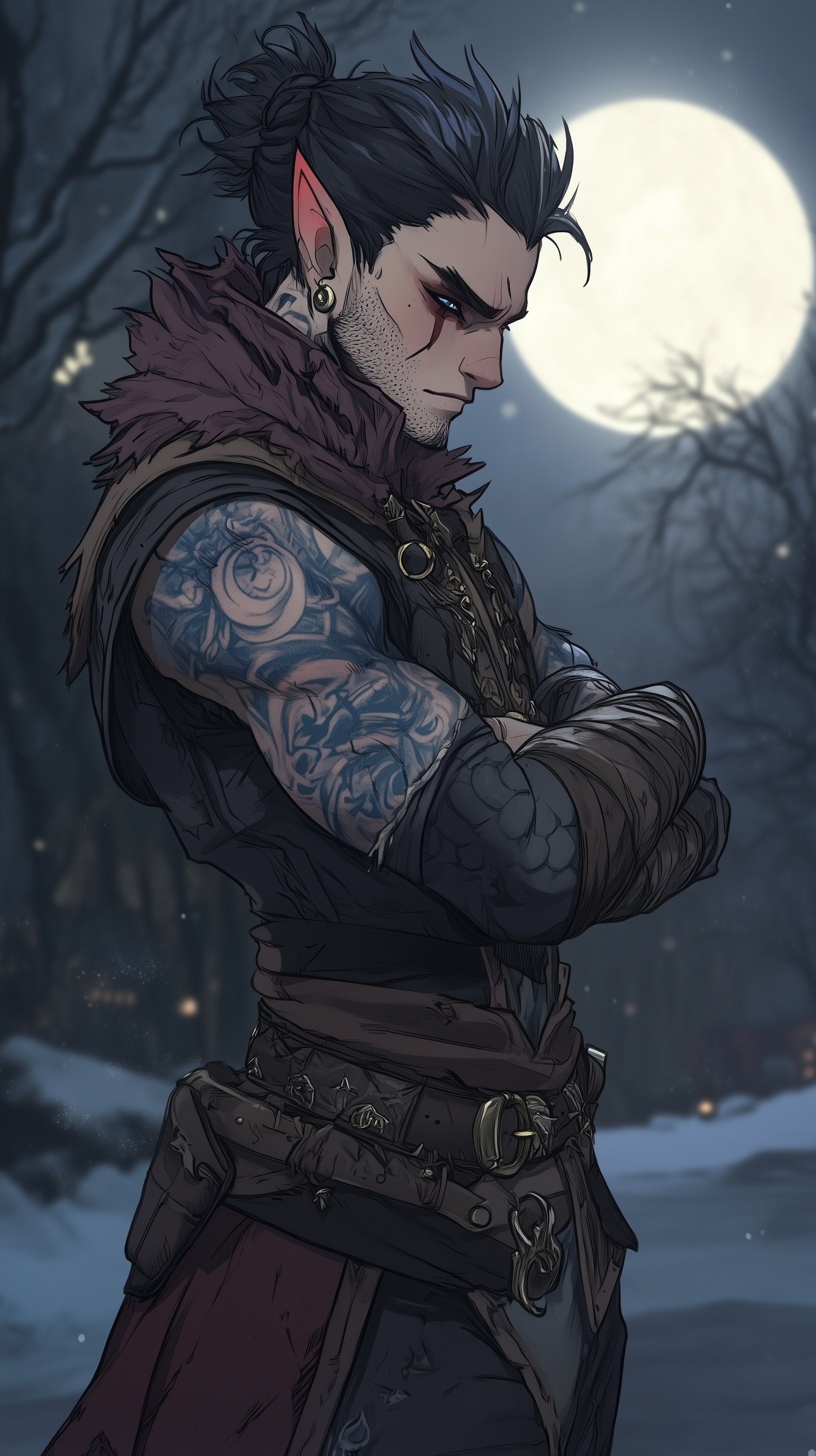
One shared element binds every generation. Garments are cut to reveal the body where ink and piercings speak. A sleeve might fall away at the elbow to reveal tattooed spirals of memory. A collar may plunge at the back to show a glyph of oath or grief. Midriffs, arms, and shoulders are left bare not for provocation but for testimony. To show skin is to show story, and to hide it without reason is to silence what the community has agreed should be seen.

Colors follow similar codes of meaning. Elders prefer muted earth tones, greens and silvers that recall forest shades. Youths reach for brighter dyes, perfumes stitched into fabric so that scent follows movement, or woven metallic threads that gleam like captured moonlight. These choices are not dictated by law. They are guided by unspoken codes that bind memory, artistry, and personal presence into one.
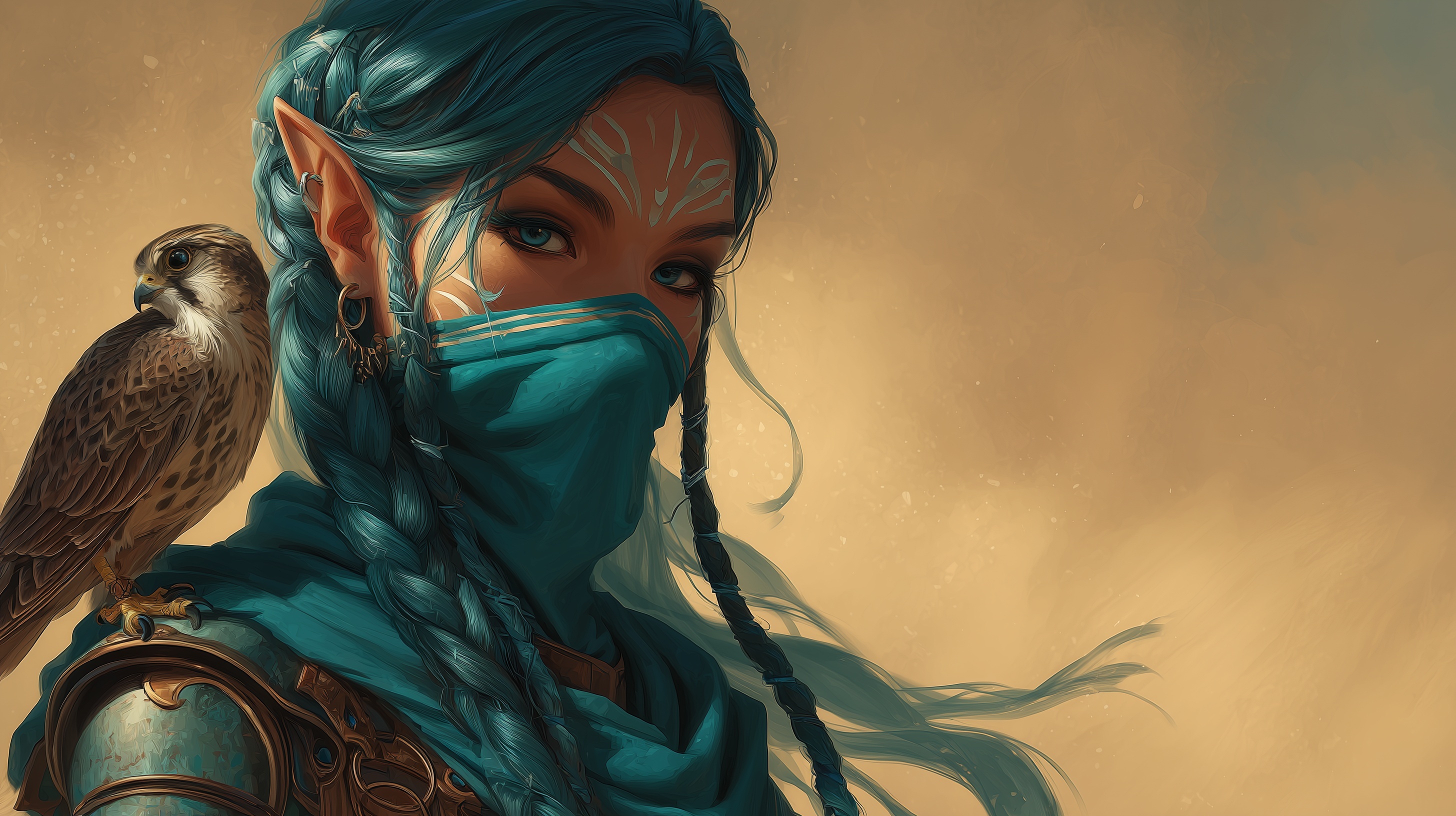
Jewelry is treated as an extension of clothing rather than an accessory. Earrings, necklaces, and rings are crafted to complement garments and to frame tattoos rather than overshadow them. Perfume is also considered part of dress, an invisible garment worn as carefully as silk. To arrive in public without scent, ink, or some mark of individuality is rare and usually a sign of mourning or severe humility.
Hidden tattoos remain the one exception. Within the enclaves, heavily tattooed elves who reveal none of their work in public clothing signal involvement in underworld matters. This silence of skin is read immediately by their kin as a warning. For everyone else, fashion is an act of display, a weaving together of personal narrative and shared identity.
The dress code of the Arin Elves does not exist as a formal rulebook. It exists as rhythm, taste, and expectation, carried in every bespoke garment. To look upon an elf in the streets of Areeott is to see both an individual and a community made visible through cloth, ink, metal, and scent.
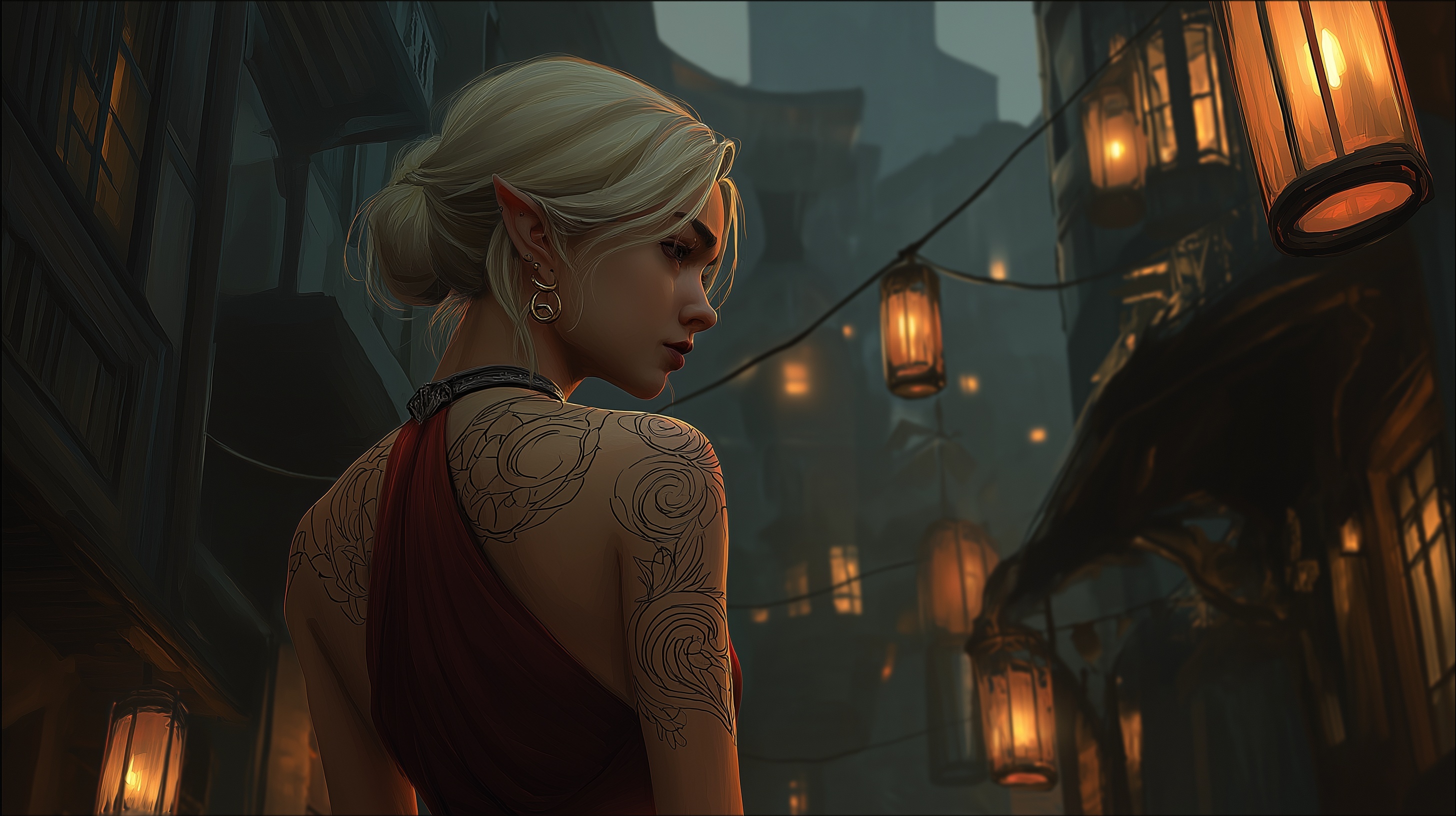
Art & Architecture
“The elves sell perfume that makes your heart ache for something you never had. I do not know if that is art or cruelty.”
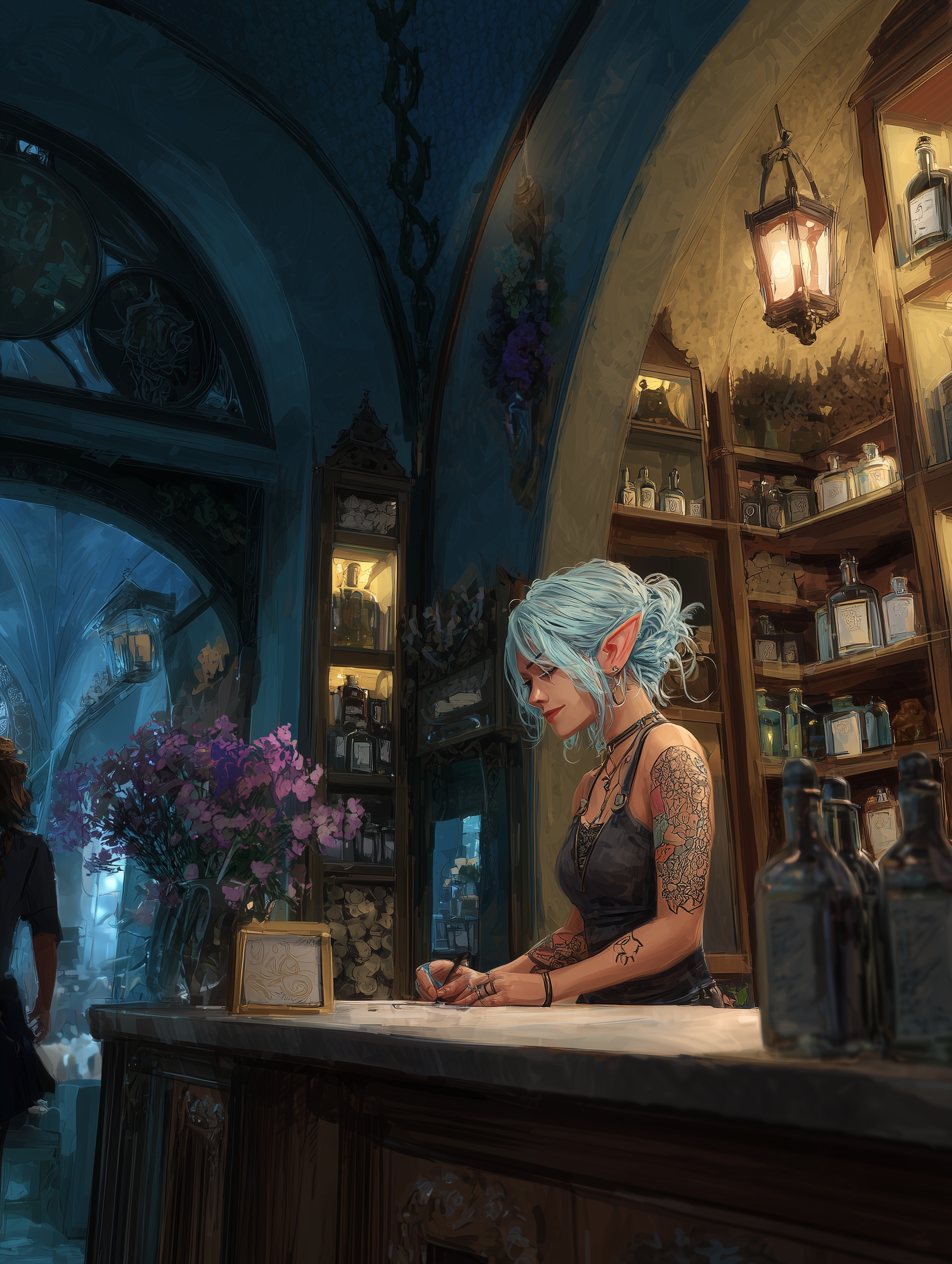
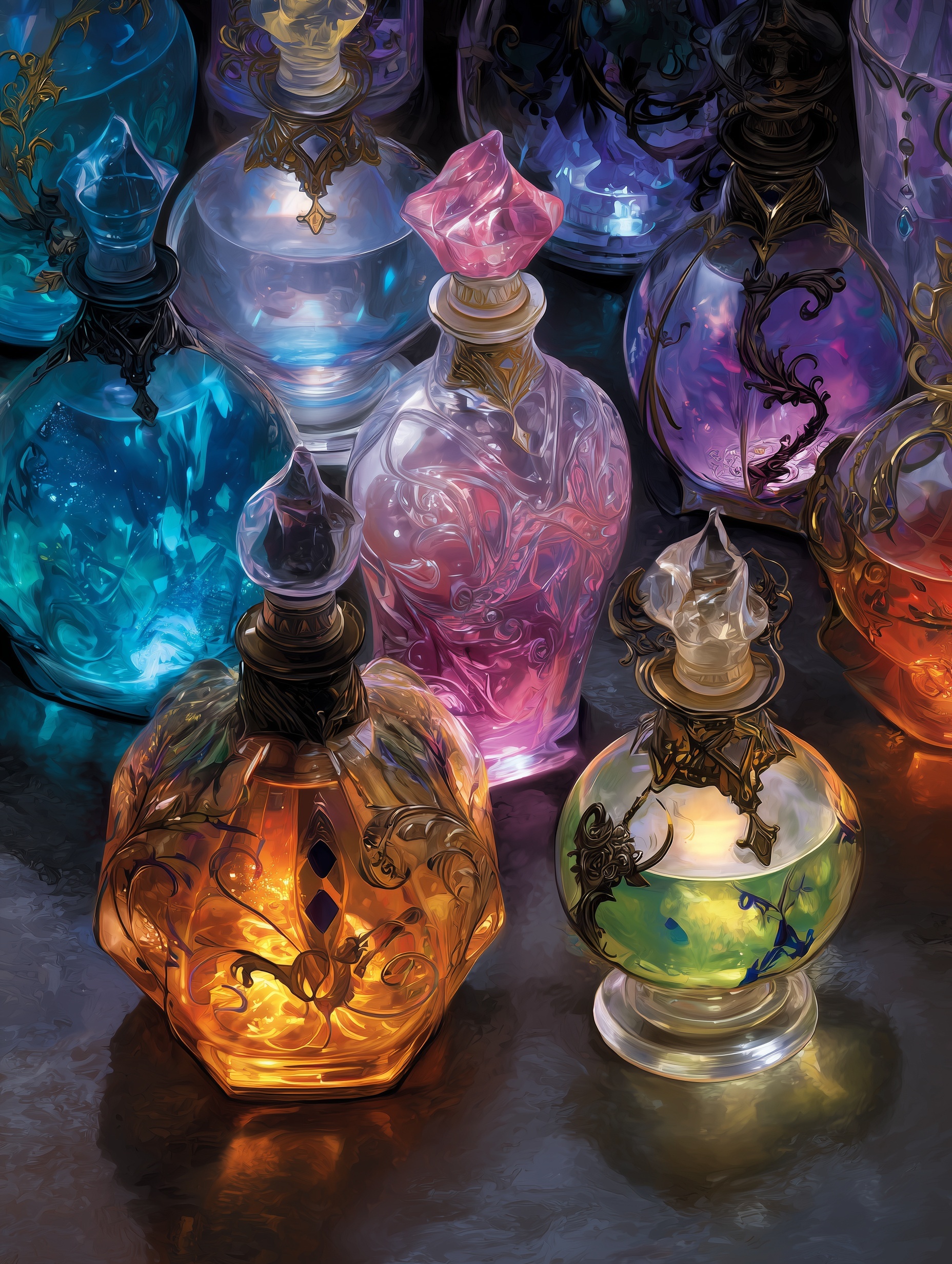
The art of the Arin Elves is marked by the same tension that defines their culture. It carries the memory of a forest homeland they cannot return to, yet it is shaped by the stone streets and crowded quarters of Areeott. Their works rarely appear monumental. Instead they are intimate, portable, and woven into daily life. A garment stitched with moonlit silk, a perfume crafted to recall a vanished grove, a tattoo that shifts across the body, each of these is as much art as any painting or sculpture.
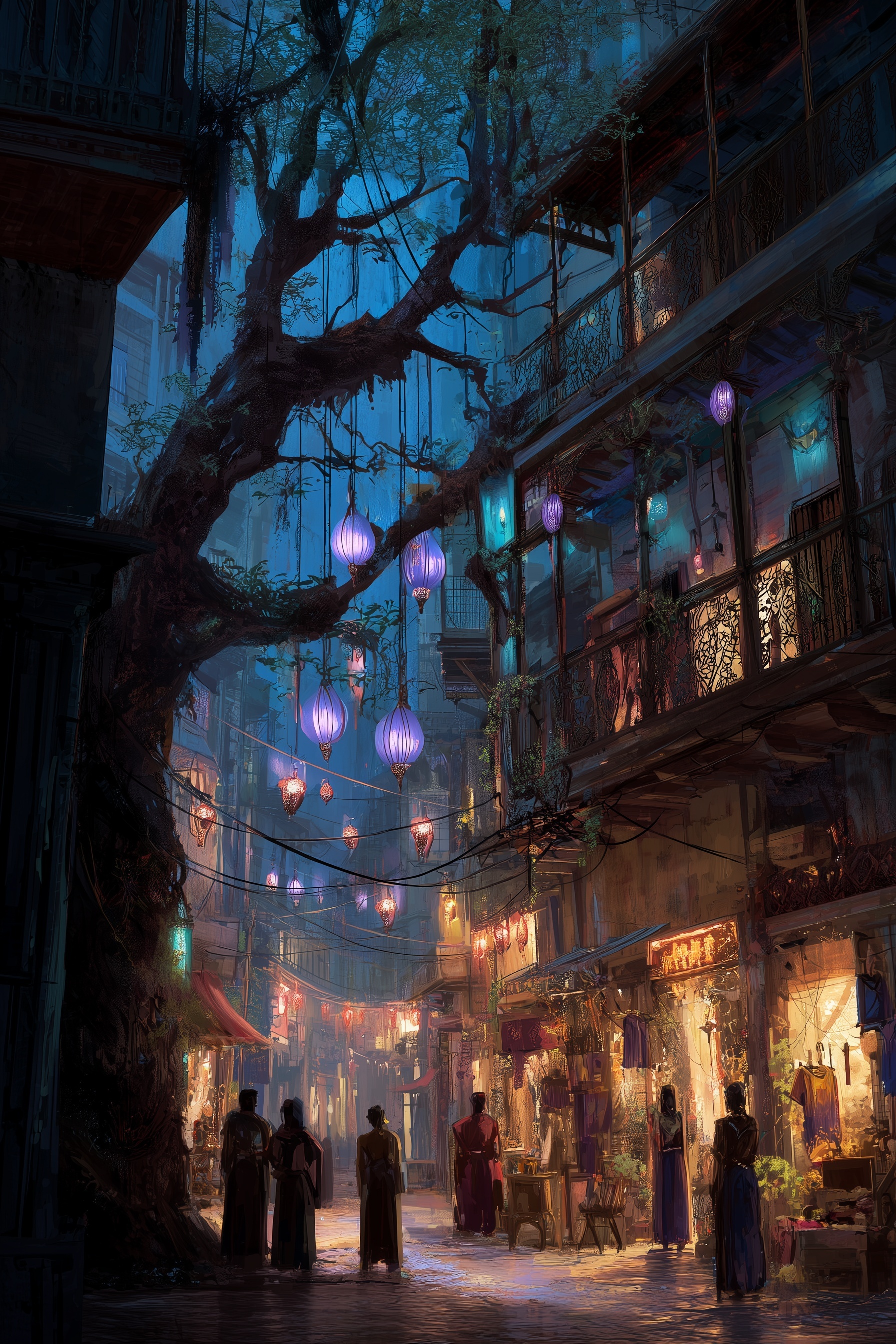
When they do create works intended for public display, the results are often subdued yet precise. Carvings in wood or stone emphasize flowing lines that mimic the growth of branches or the ripple of water. These motifs are rarely literal. They suggest the memory of Iorill rather than depict it, as though the elves know that the true image has already been lost. To walk through an enclave is to see these shapes repeated on doorframes, balconies, and lantern posts, a quiet echo of a world gone sour.
Painting survives, but often as a form of calligraphy or ornament. Letters are drawn in fluid strokes that blend language with design, sometimes written in fragments of Elvish that few still understand. The meaning is less important than the impression of continuity. Outsiders might see them as decorations, yet among the elves they function as reminders that even broken words can still carry memory.
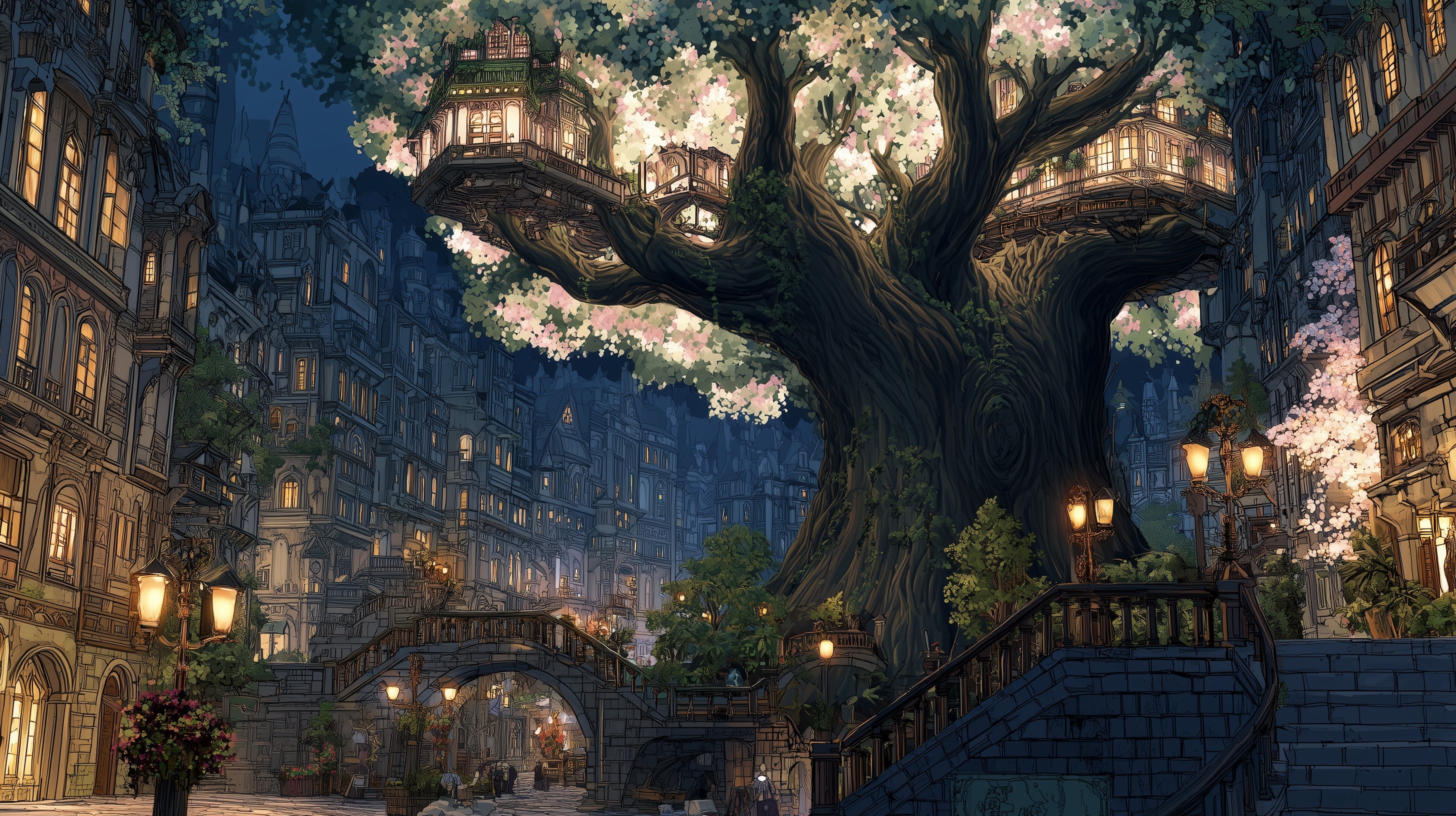
Architecture within the enclaves follows the same principles. Buildings curve rather than stand in rigid lines. Roofs sweep upward like branches reaching for light. Gardens, though small, are placed wherever space allows, even if only in window boxes. These touches do not dominate the city around them, but they are unmistakable. To enter an enclave is to feel that the air moves differently, that stone and wood are arranged with another rhythm in mind.
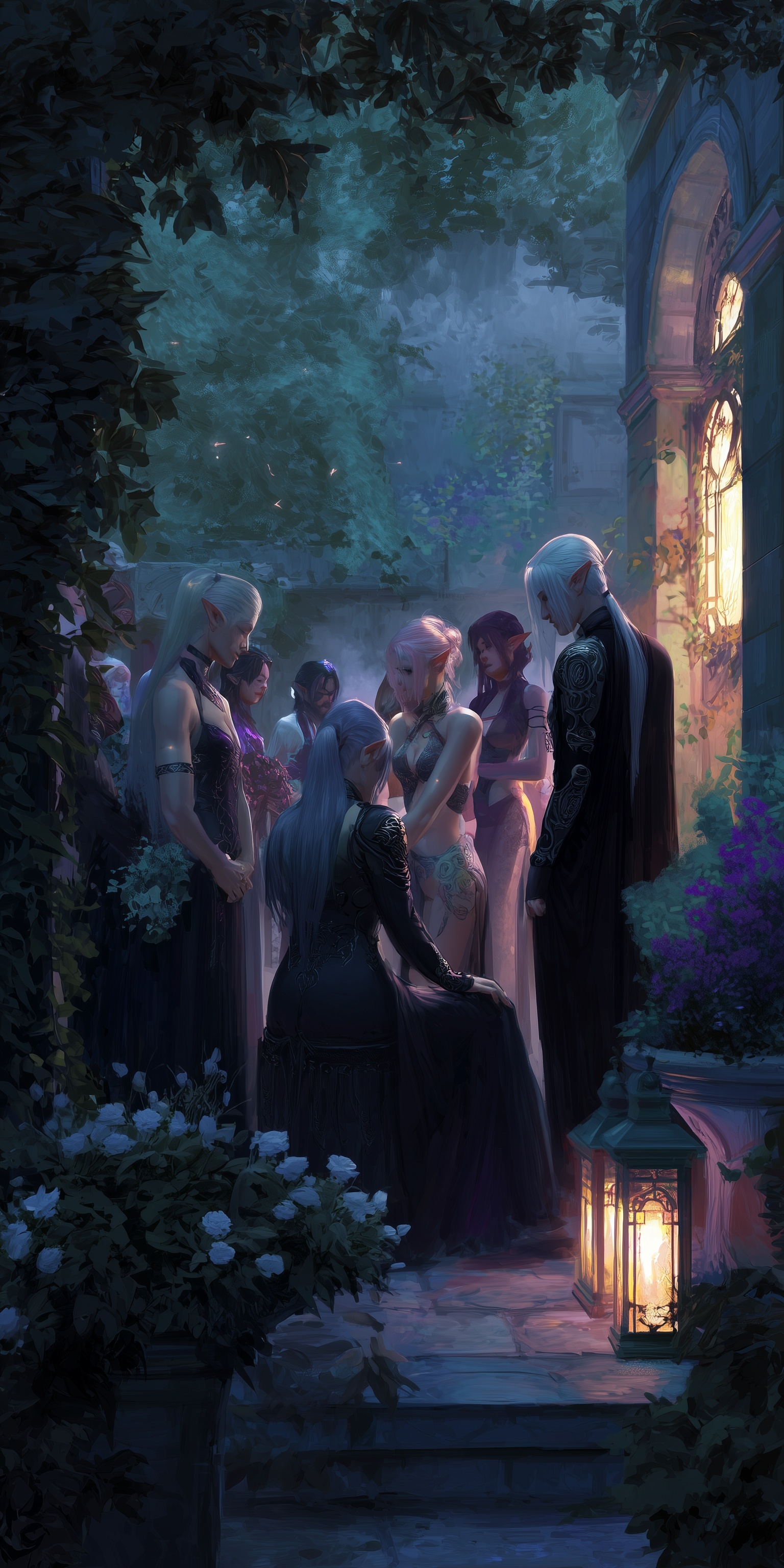
Public spaces are always designed with gathering in mind. Courtyards open into shared gardens or fountains. Interiors are built with wide halls where silence can settle easily. Every enclave has at least one hall meant for memory, where art, scent, and story are layered together to create an atmosphere of reflection. These halls are not museums. They are living rooms for a people who measure survival in the persistence of memory.
Even underground, where many elves work the caves for silk and ink, they leave traces of their hand. Tunnels are carved smooth, their walls marked with spirals or flowing symbols. Work areas are lit with lanterns that cast patterned shadows, turning the act of labor into something more than routine. The elves believe that beauty is not an indulgence but a necessity, a way of making survival itself into a work of art.
For outsiders, the art and architecture of the Arin Elves often feels understated. Yet this restraint is deliberate. Their creations are not meant to overwhelm or to dominate. They are meant to complete what already exists, to take the roughness of the city and refine it with a touch of memory. In this way they have made Areeott more than a place of survival. They have made it into a canvas upon which their own fractured identity can still be traced.
The heritage of Iorill may never be restored, but its echoes remain visible in every enclave. The Arin Elves have built their art and their architecture not to preserve a lost world but to weave new meaning into the one that surrounds them now. In stone, in silk, in light, they remind the city that even absence can be shaped into beauty.
Common Customs, traditions and rituals
“Scent is the only truth that lingers when the words are gone. To wear another’s blend is to wear their memory. Never forget that.”

Common customs among the Arin Elves are woven into daily rhythms rather than proclaimed in grand ceremonies. Within enclaves, greetings are performed through small pauses, a moment of stillness when entering a room so that everyone present acknowledges one another. Meals are often communal, with households leaving doors open during certain hours so that neighbors can join unannounced. This practice is less about hospitality and more about confirming that no one in the enclave eats in isolation unless by choice.
Seasonal observances serve as markers of continuity. The first snow of winter is celebrated with lanterns hung in windows and perfumes blended with cedar or sage to carry warmth through the cold. At midsummer, enclaves hold performances of movement and silent theater where ancestral memory is retold without words. These are not open spectacles for outsiders, but quiet traditions intended to keep memory alive among themselves.
Gift giving is another custom deeply ingrained in their culture. Small tokens such as a strip of silk, a vial of scent, or a carved charm are exchanged to mark moments of significance. The value lies not in the object itself but in the memory it represents. To misuse or neglect a gift is taken as an insult, while to treasure it is to honor the story of the giver.

Ritual fasting is practiced during times of mourning or reflection. On the anniversary of Iorill’s fall, many enclaves observe a night without food, scent, or song. Silence fills the streets, windows are opened toward the horizon, and no outward sign of festivity is permitted. The custom is not universal, but where it is practiced, the quiet becomes so complete that outsiders note the shift without always understanding its cause.
Another tradition is the observance of crossroads. Stones are placed at intersections to honor journeys, choices, and meetings. Travelers departing on long ventures may touch or add a stone before leaving, while those returning may do the same. These small rituals carry the weight of recognition that every path taken is part of the wider story of survival.
Finally, the elves maintain the tradition of private resolution. Whether in disputes, matters of honor, or disagreements within families, it is expected that these conflicts remain internal to the enclave. Public confrontation is avoided, not out of fear, but because to air such matters before outsiders would dishonor the community. This quiet arbitration has become one of the defining customs that separates their way of life from that of their neighbors.
Together, these customs form the unspoken threads of Arin Elven culture. They do not replace laws or stand as rigid decrees. Instead they create an atmosphere of shared memory and continuity, small acts that preserve identity in a world where exile and loss have already taken so much.
Birth & Baptismal Rites
“When a child is born we keep our hands from ink and blade. Their skin is not ours to mark. Instead we bring cedar, sage, or smoke herbs, and let the fragrance settle around them. That scent will follow them longer than our voices. It is the first gift, and the first memory, and no one else may choose it for them.”
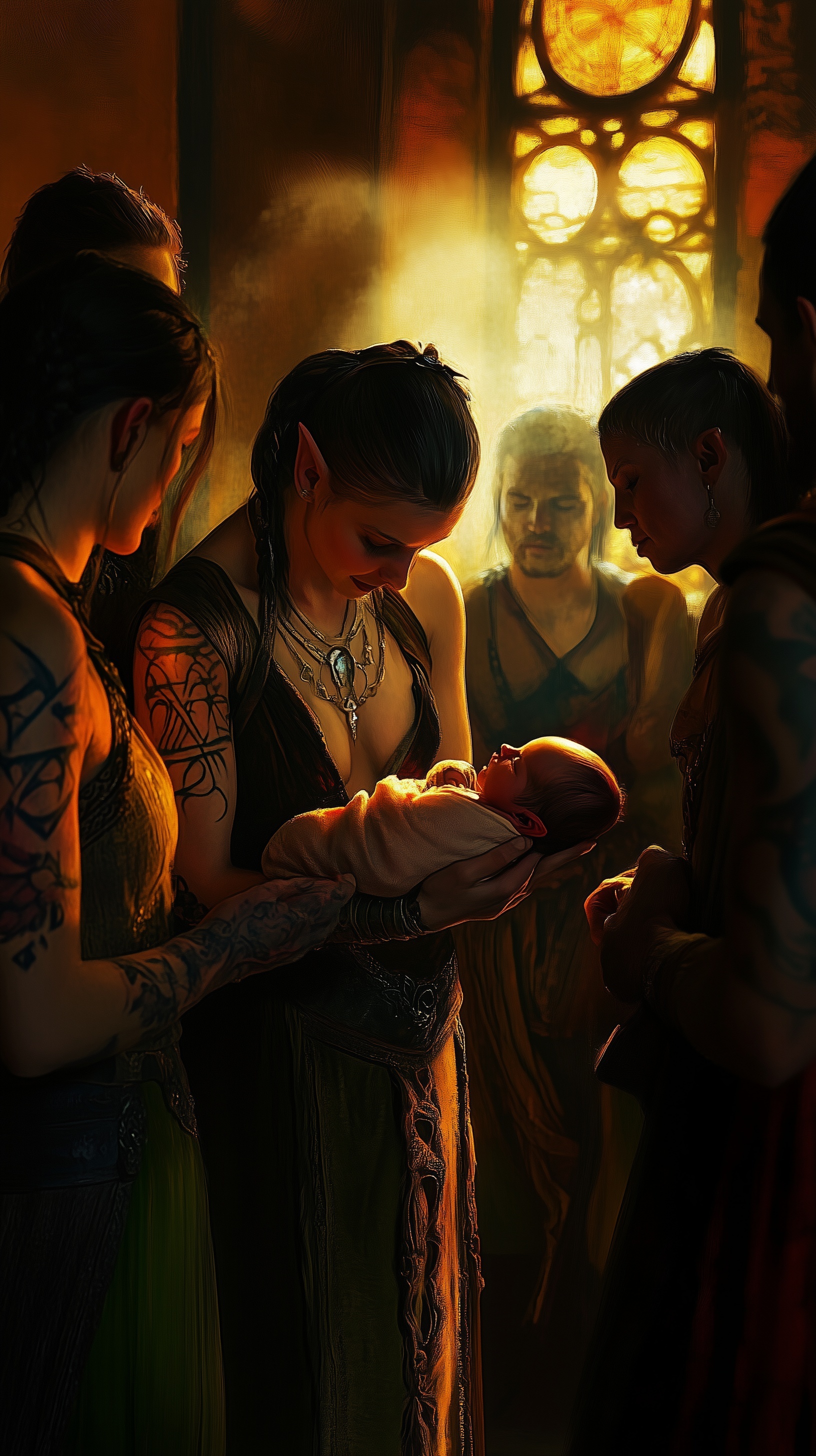
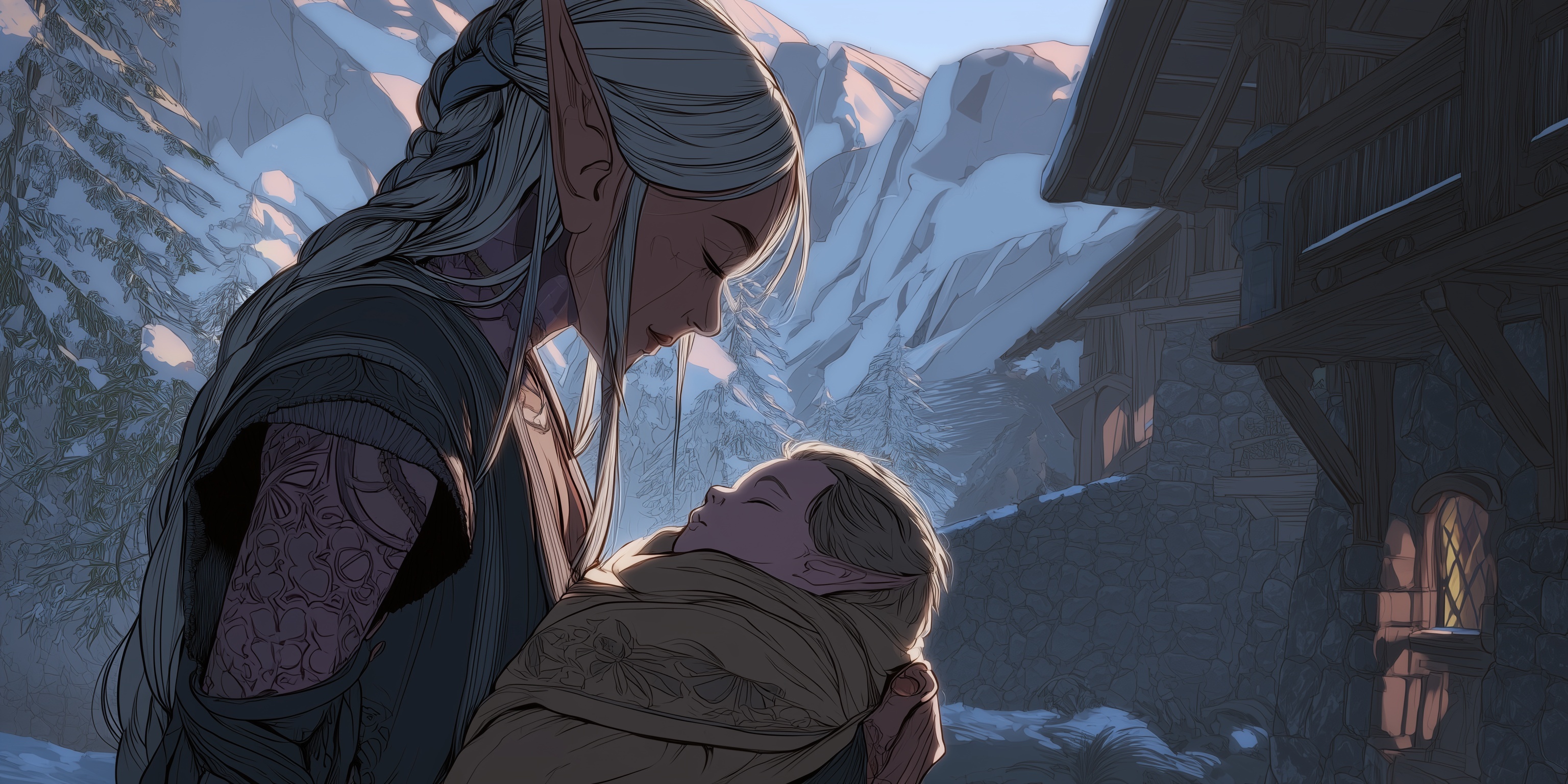
The arrival of a child among the Arin Elves is marked not with spectacle but with silence and care. Birth is seen as a threshold rather than a celebration, the beginning of a story that has not yet chosen its first words. The newborn is never tattooed or marked, for the elves believe that the body must remain uninscribed until the person is old enough to choose how their story will be told. To write upon the skin of an infant would be to claim authority over a life not yet lived.
Instead, the earliest rites of birth are carried through scent. Within hours of a child’s arrival, the parents or closest kin prepare a simple perfume from cedar, sage, or mountain herbs. This fragrance is kept near the child for the first days of life, lingering in the blankets and in the air of the home. The scent becomes the earliest memory of the newborn, and even as they grow it is said that the fragrance binds them to the moment when they first entered the world.
The baptismal rite that follows does not involve water but light. Within the first month, the infant is carried into the open air at dawn. Elders or respected kin lift the child so that the first rays of sunlight fall across their skin. The act is wordless. It is meant to present the newborn to both the enclave and the world beyond. Those gathered acknowledge the child with a bow of the head, and no more is required.
Naming follows this presentation. The chosen name is often tied to memory, a fragment of the family’s story or a word that recalls some trace of Iorill or the struggles of the Civil War. The name is whispered three times into the child’s ear by the parents and then spoken aloud for the first time before the enclave. Once given, it is considered permanent, though later names may be adopted as a person’s story unfolds.
Gifts are customary but always small. A strip of silk dyed in a single color, a charm carved from wood, or a vial of simple scent may be offered by family or close friends. These tokens are kept for the child until they are old enough to understand their meaning. In some enclaves the first garment of the infant is made from Virellen silk, not for luxury but for symbolism, since the cloth represents patience and endurance, qualities the elves believe every life must embody.
The baptismal rites are not designed to bind the child to faith or to dictate their path. They exist only to mark the beginning of memory, to place the child within the community, and to remind all present that a new story has entered their shared chronicle. In this way the birth of an Arin Elf is both intimate and communal. It is a quiet promise that even in exile and fracture, their people will continue.
Coming of Age Rites
“You will know you are ready when the silence of your skin feels heavier than the pain of the needle. Do not ask me to choose for you. The first mark is yours alone. Once ink touches you, the enclave will see you as complete, and from that day forward your memory will no longer be private.”
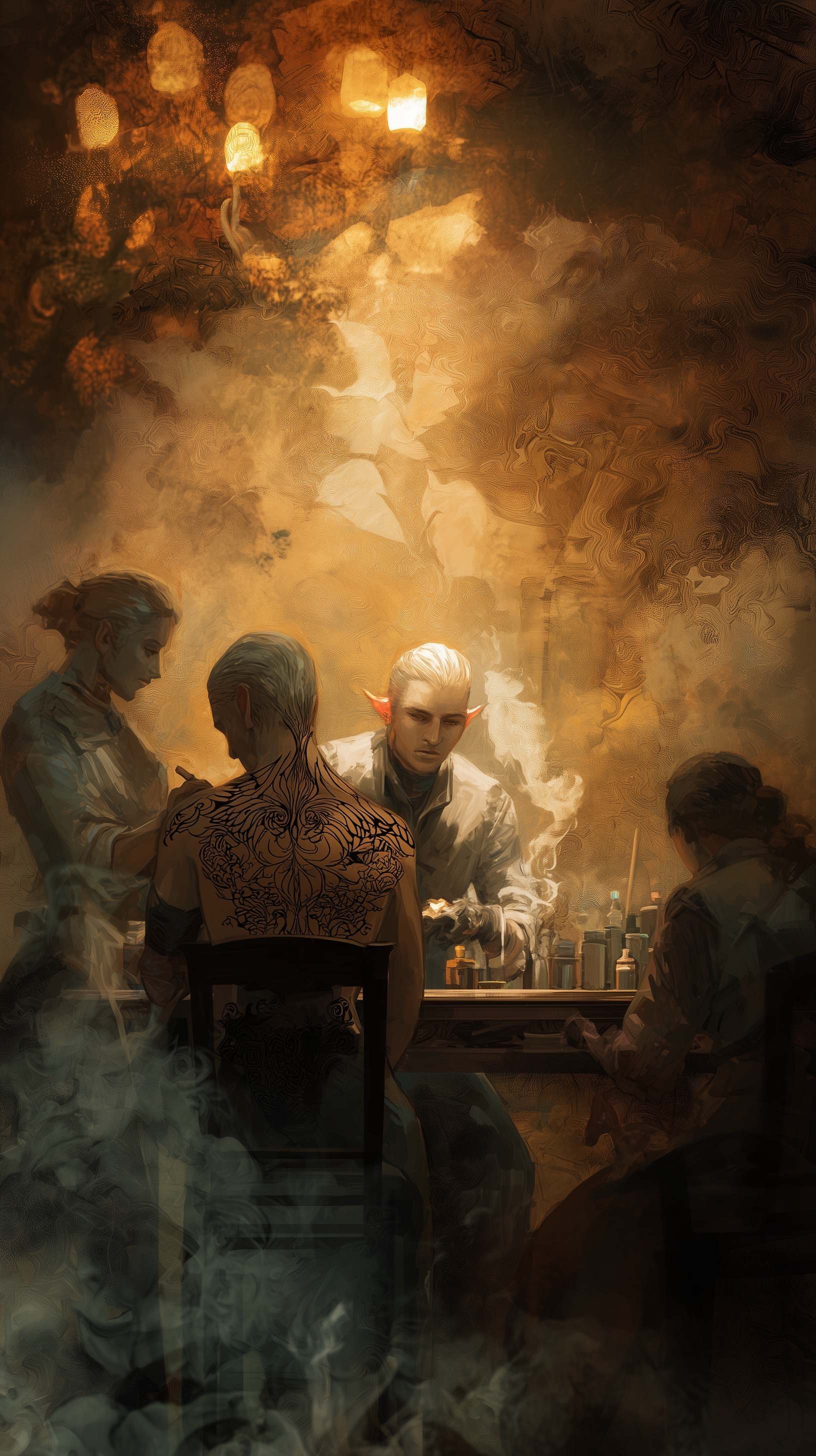
Among the Arin Elves, maturity is not measured by years but by the decision to inscribe the body for the first time. There is no set age when one is considered grown. Instead, the choice to take a first tattoo is seen as the threshold between youth and full participation in the life of the community. Until that moment an elf is regarded as unfinished, a story still waiting for its first deliberate mark.
The rite begins with solitude. The young elf spends a night apart from family and friends, often in the quiet of the caves or on the rooftops of the enclave. The purpose of this vigil is not to seek visions or command approval from spirits but to reflect on what memory deserves to be made permanent. No elder can decide this for them. The first mark must come from within.
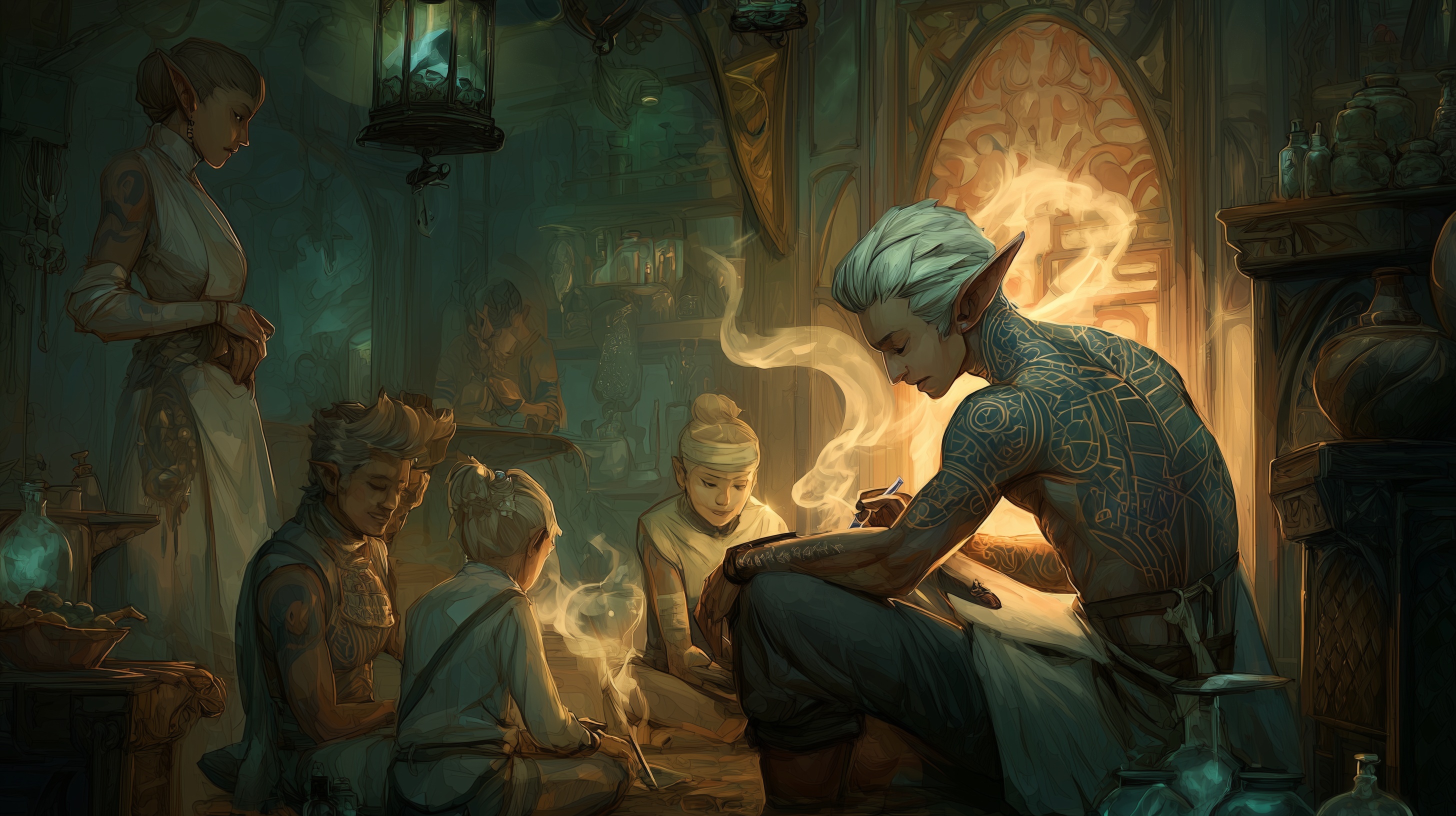
When the night ends, the apprentice tattooist or master selected by the family begins the work. The design is not revealed beforehand. It takes form as the ink is laid, guided by the choice of the bearer and the hand of the artist. Sometimes it is simple, a line or a symbol that carries meaning only to the wearer. Sometimes it is elaborate, a flowering of patterns that will later guide further work. The pain is considered part of the rite, a proof that memory is not earned without cost.
Once complete, the newly marked elf is presented to the enclave. They stand with their skin bared so that all may see the story now inscribed. No one comments directly on the design, for interpretation is private, yet each member of the community acknowledges it with a nod or a word of recognition. From that moment the individual is considered fully responsible for their place within the group. They may now sit in enclave councils, speak for their families in disputes, and take apprentices of their own.
The celebration that follows is communal but restrained. Music is played, food and drink are shared, and gifts are exchanged. These gifts often take the form of jewelry or clothing designed to frame the new tattoo, ensuring that it remains visible in public life. In some enclaves a vial of perfume is also given, the scent chosen to reflect the character or aspirations of the new adult.
Although the first tattoo is the marker of adulthood, the rite does not end there. Life among the Arin Elves is marked by further inscriptions at turning points such as the birth of a child, the completion of an apprenticeship, or the return from war. Each new design becomes part of the greater record. Yet it is the first that matters most, for it represents the moment when the elf chose to bind memory to the body and in doing so, claimed their place as part of the people.

Funerary and Memorial customs
“The body is not an end. It is a chamber the spirit leaves behind. We keep the chambers, so memory never wanders alone.”
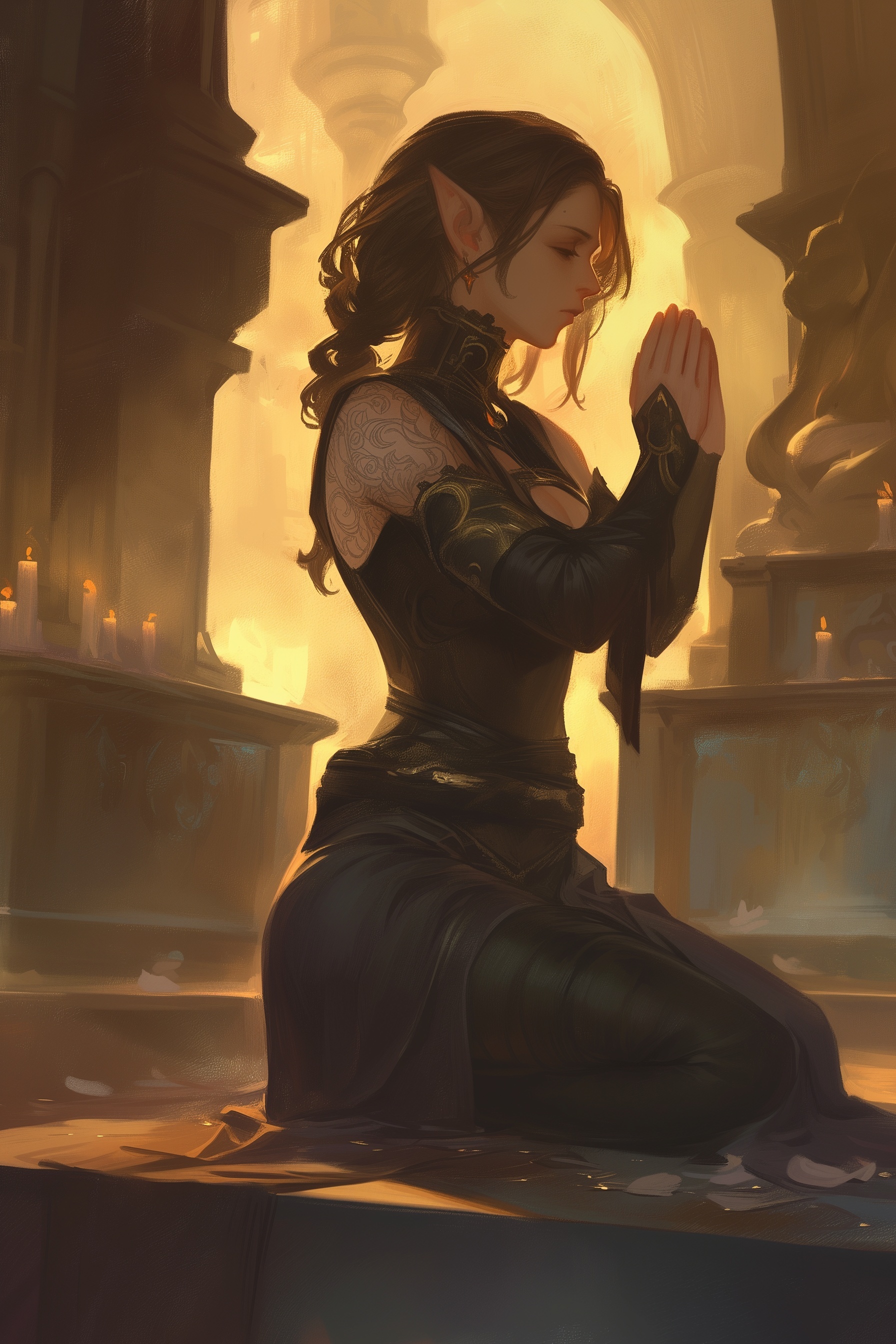
When an Arin Elf dies, the body is washed, tattoos left visible, perfumes removed, and the form wrapped in plain silk. This preparation is done in silence. No prayers are spoken. The life already speaks for itself.
The body is carried beneath the enclave into the Deep Vaults, chambers carved into stone where generations rest together. There it is laid on a stone bier within a family alcove. For a year and a day, the body remains whole. The living visit in silence, not to speak to the dead but to sit among them.
After that time, the body is reduced to bone. The remains are placed into a bone chest no larger than a folded garment. These chests line the walls of the vaults in ordered rows. They are unmarked, for the tattoos have already carried the name, and the name has already been spoken into memory. What matters is not the stone but the silence it holds.
Families sometimes carve a single symbol into the chest, not as identity but as resonance. A spiral, a line, a glyph from Iorill. Outsiders cannot read them. They are for the enclave alone.
The vaults are not cemeteries. They are archives of presence. Generations rest in ordered quiet, not as individuals but as a body of continuity. The Arin believe this shared stillness binds their people more strongly than graves ever could.
Mourning is marked by absence of adornment. No scent. No exposed ink. No music. After the bones are placed in their chest, the bereaved choose when to return to color and sound. There is no signal. The act itself is recognition enough.
The living never call on the dead. They never speak to them, never summon them. But they walk through the vaults, breathe the still air, and remember. The silence of the Arin dead is not absence. It is a presence beneath their feet.
Common Taboos
“We are not Iorill. We are not the sea. We are the scar that remains, and the scar is proof that the body healed enough to keep going.”

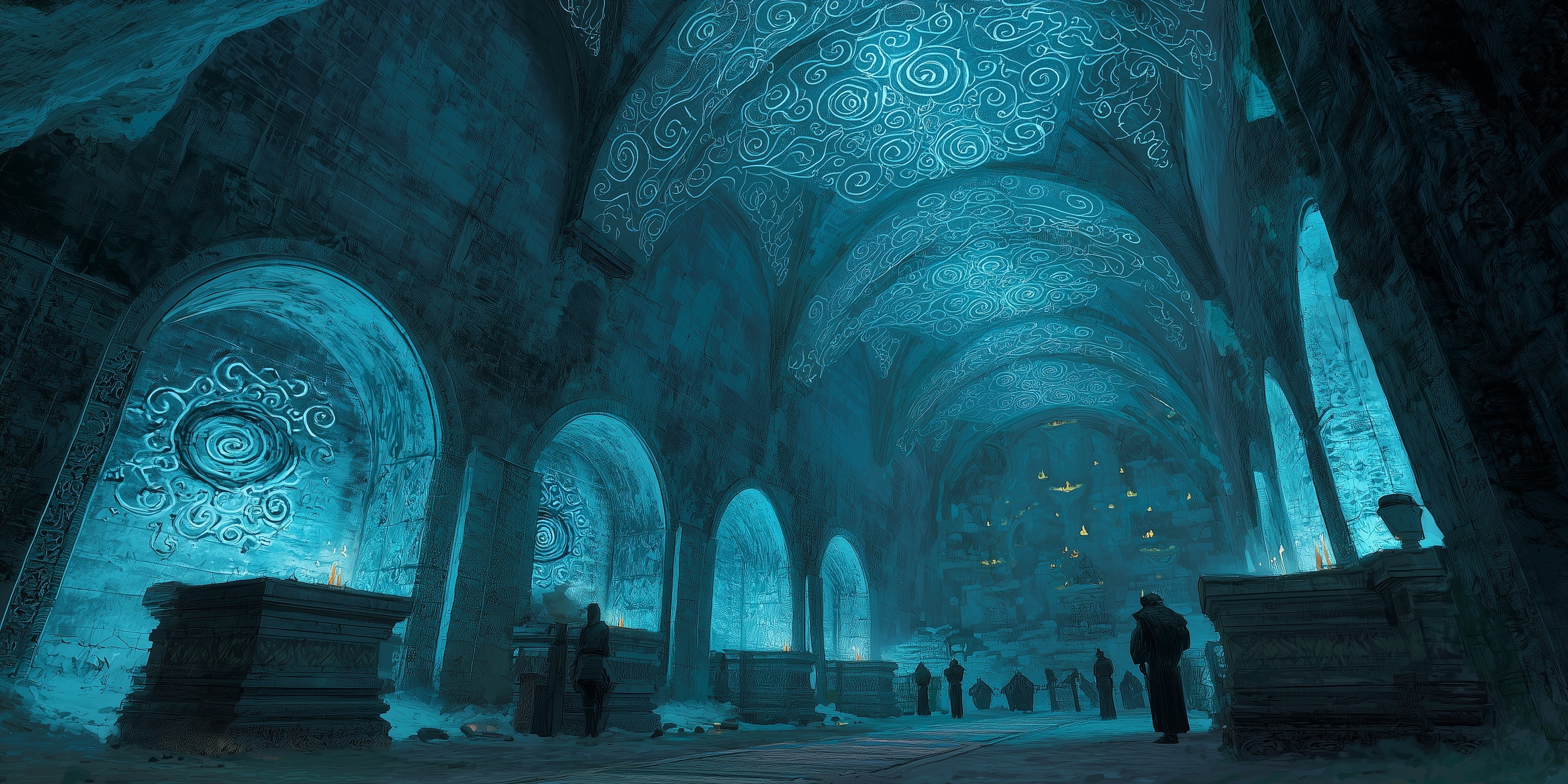
Taboos among the Arin Elves are not written in any charter. They are lived boundaries, lines that everyone in an enclave recognizes without needing to speak them. To break one is not only to invite shame upon oneself but to dishonor the memory of the people as a whole.
The first taboo is the exposure of hidden ink. Elves who wear tattoos only on covered skin are marked in their own community as connected to criminal work. Among themselves the meaning is immediate and absolute. To expose that hidden bodywork casually in public would betray confidences, break trust, and invite dangerous attention. The silence of skin is understood as silence of loyalty, and to treat it otherwise is an insult.
Another taboo is the airing of private disputes outside the enclave. Divorce, debts, or family betrayals are not taken to human courts or shouted in public. They are resolved in-house, either by elders or by those chosen to mediate. To bring such matters before outsiders is to admit weakness in the community’s ability to govern itself. Even when punishment is harsh, silence is preferred over exposure.
Perfume carries its own taboos. Certain scents are tied to grief, remembrance, or sacred vows. To wear them casually, or worse, to sell them cheaply to outsiders, is considered sacrilege. A perfume that belongs to mourning cannot be worn in celebration. To confuse those meanings is to risk breaking the fragile trust that holds memory together.
Tattoo tampering is another line that cannot be crossed. To mar or deface someone else’s ink is not treated as vandalism but as an attack on identity. Even outside the enclaves this code is respected, and violence often follows when it is ignored. A story can fade naturally when a person chooses it, but no one else may erase it by force.
There is also the taboo of silence broken in the wrong place. Violence above ground in Areeott is forbidden for all peoples, but the elves treat it with particular gravity. To spill blood on the streets is to defile the illusion of peace that the city demands, and no elf can afford that stain. Fights happen in the vaults or the caves, never where surface eyes can see. To cross that boundary is to endanger the entire community.
Finally there is the unspoken rule against forgetting. Names of ancestors, fragments of Iorill’s memory, the stories etched into garments and skin, these must not be discarded. To abandon memory is the only form of betrayal the community cannot forgive. Even among those who embrace reinvention, there is agreement that history cannot be allowed to vanish.
These taboos are not punishable by law, yet the consequences are severe. A person who crosses them may be marked in ink for shame, cast out of an enclave, or left unspoken in conversations where names should be honored. Among the Arin Elves, silence itself is the sharpest punishment, and those who violate the codes often discover that being forgotten is worse than death.
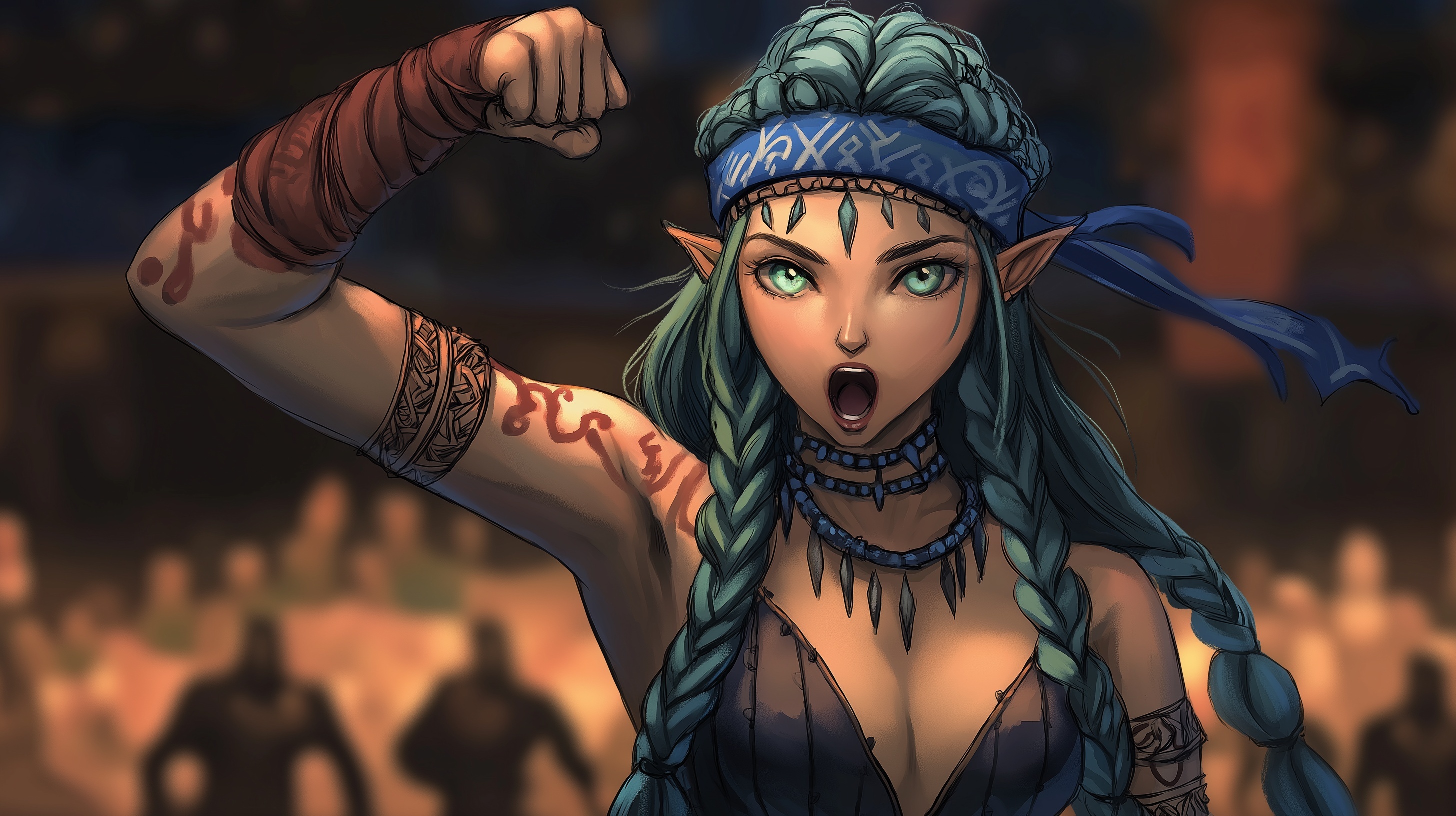
Ideals
Beauty Ideals
"Beauty, properly worn, is not an invitation. It is a blade unsheathed in silence. If they look, they bleed. If they do not, they dream of what they missed."
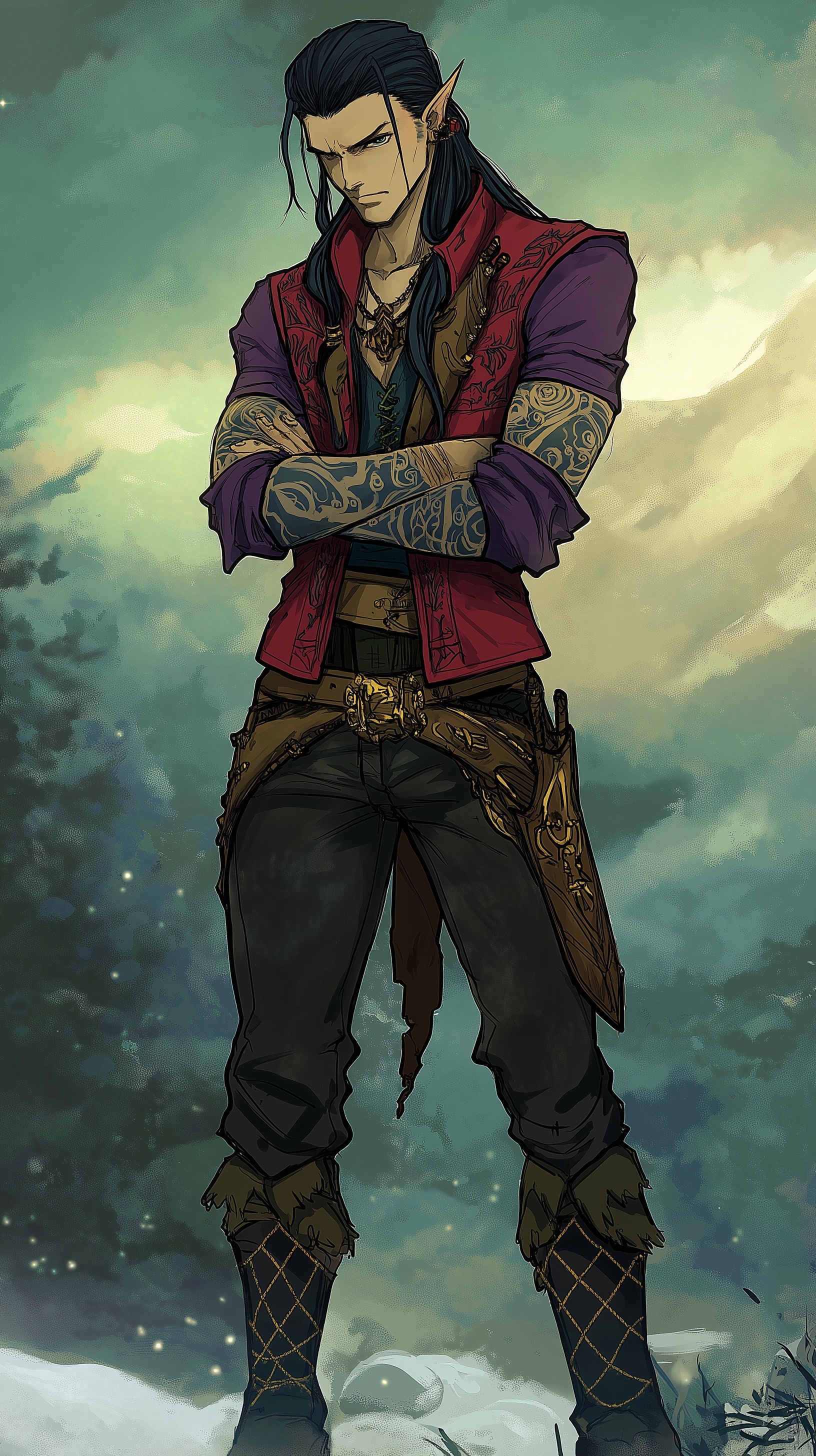
Among the Arin Elves beauty is not merely a matter of form. It is a dialogue between presence and restraint. Their culture holds the body in high regard but never allows it to speak too loudly. The most admired individuals are those who seem to balance on the edge of exposure while never falling into spectacle.
This balance is not accidental. The elves understand instinct better than most. They know that the shape of a shoulder or the angle of a glance can pull attention more sharply than any word. They do not deny this truth. Instead they refine it. Beauty among them is cultivated as carefully as perfume. It lingers. It suggests. It leaves space for interpretation. An elf who understands their own appearance and chooses how to shape it is seen as powerful. One who flaunts it is not.
The appeal is often extreme. Features that might be seen as exaggerated elsewhere are commonplace among the Arin. The sweep of the jaw. The curve of the spine. The impossible stillness of a glance held just long enough. Their bodies speak in silence. Their garments reveal only what must be shown. Tattoos that mark memory also serve as points of focus. Scent clings to skin in ways that suggest intimacy without promise.
Attraction among the Arin does not begin with desire. It begins with recognition. One sees someone and understands the danger they represent. Beauty is a form of control. A powerful figure in stillness. A sharp profile under soft fabric. A motionless hand resting near a weapon or a tool. These are signals that stir the mind before they move the heart.
Masculine and feminine traits are turned up past the point of comfort yet held in discipline. The body is honed. The movement is practiced. The result is presence that does not need to shout. The Arin do not chase beauty. They wield it.
The most captivating elves are often the quietest. Their appeal lies not only in their shape or scent but in the sense that everything they show has been chosen. The body becomes a story told through fabric and ink and silence. Even in public they move like something private. Not hidden but sacred.
In this culture the body is not taboo. It is not shamed. It is a gift and a challenge and a map of memory. Beauty is neither modesty nor boldness. It is the exact point between. The eye of the needle through which all attention must pass.

Gender Ideals
“Do not ask whether strength belongs to men or to women. Among us, strength belongs to the one who endures and the one who creates. A weaver’s patience is no less powerful than a soldier’s arm, and memory honors both without question. What matters is how you carry your story, not the shape of the body that bears it.”
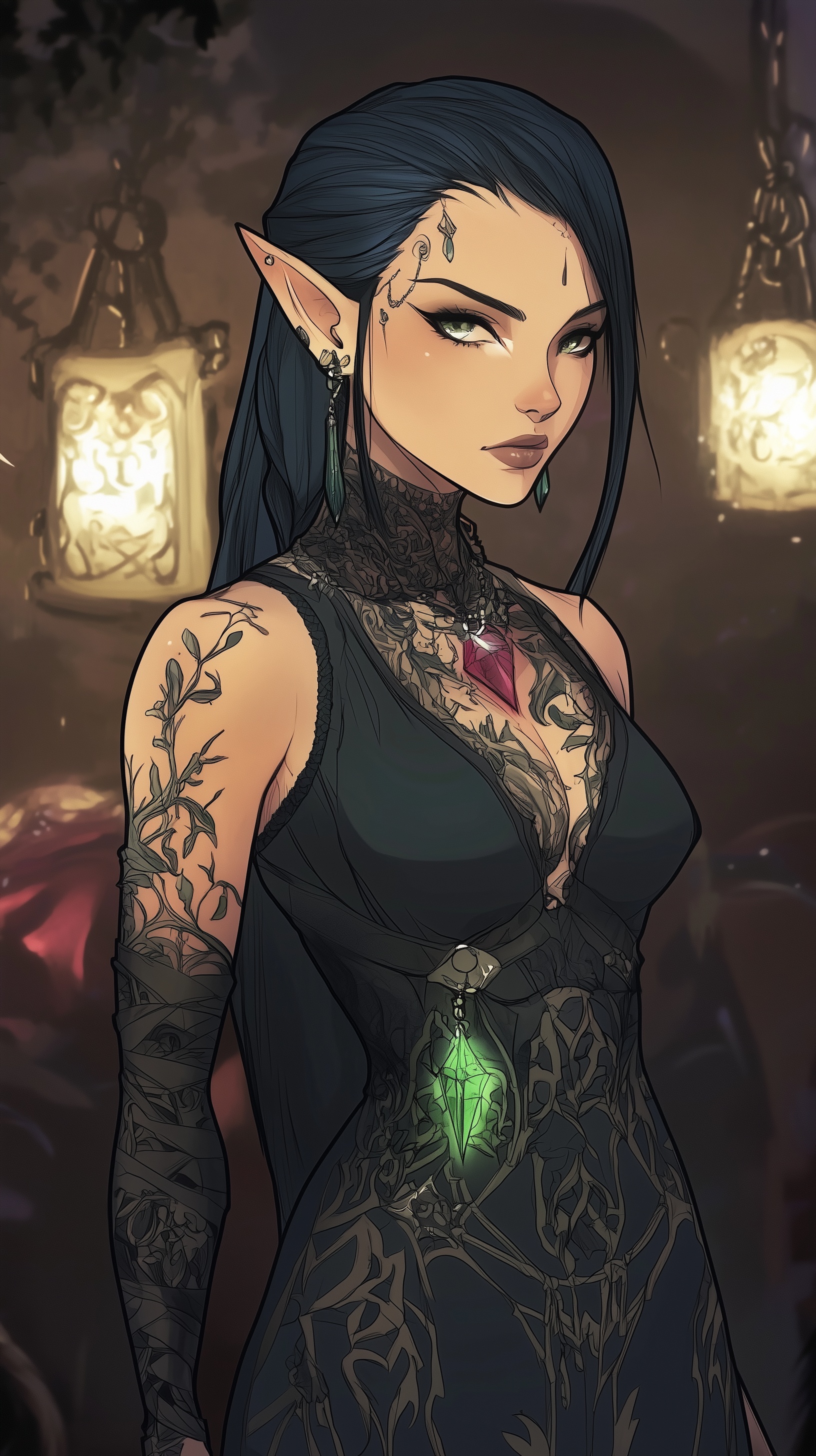
Among the Arin Elves, gender is not a boundary that shapes destiny but a pattern woven into the larger fabric of identity. Their ideals grow out of survival rather than prescription. In the centuries since the fall of Iorill, what mattered most was what a person could bring to the enclave, not the form of their body. Because of this, expectations for men, women, and those who move between or beyond those categories are fluid.
What is prized above all is the cultivation of presence. An elf who carries themselves with grace, whether through poise in speech, elegance in dress, or precision in craft, is admired regardless of gender. Tattoos, scents, and clothing frame the self as a canvas, and the way one chooses to reveal or conceal becomes a statement of character. Masculine and feminine traits are less a fixed measure than variations in how presence is performed.
Strength is valued, but not only in the physical sense. A man who endures hardship in silence is respected as deeply as a woman who leads an enclave council with authority. A person who blends endurance with artistry, who carries both weight and refinement, is seen as embodying the highest form of elven balance. The ability to shift between roles of defense, craft, and care is admired more than strict adherence to one path.
Romantic and family ideals follow the same pattern. Men and women may court each other through the giving of silk cords or perfumes, yet so may couples of the same gender. What matters is the sincerity of the gift and the memory it binds. Households often include extended kin and companions whose bonds cross traditional lines, and such arrangements are considered natural extensions of community rather than deviations.
Even within this fluidity, certain archetypes persist. Elders often speak of the Warrior, the Weaver, and the Witness as guiding roles within society. Any person may embody any of these, but they remain images against which ideals are measured. The Warrior protects, the Weaver creates, and the Witness remembers. To fulfill one of these roles with dignity is considered a greater achievement than to meet any expectation tied to gender.
Young elves often experiment with shifting gender presentation, adjusting hair, clothing, and tattoos to reflect moods or affiliations. This exploration is not seen as rebellion but as a healthy expression of growth. Only later in life do most settle into a form that feels continuous, though even then it may change again as experiences reshape identity.
The absence of strict gender roles does not mean the absence of expectation. Elves are expected to contribute, to cultivate beauty, and to protect memory. Gender does not decide how these responsibilities are carried, only how they are expressed. In this way, ideals remain open, but the obligations of presence, dignity, and memory remain constant for all.
For outsiders, the gender ideals of the Arin Elves can appear elusive, always shifting between the personal and the communal. For the elves themselves, they are simply another form of continuity, a reminder that identity is less about fixed categories and more about how one carries their story into the world.

Courtship Ideals
“He gave me a scent no one else can recognize. When he enters a room, I know before I see him. That is enough. That is everything.”
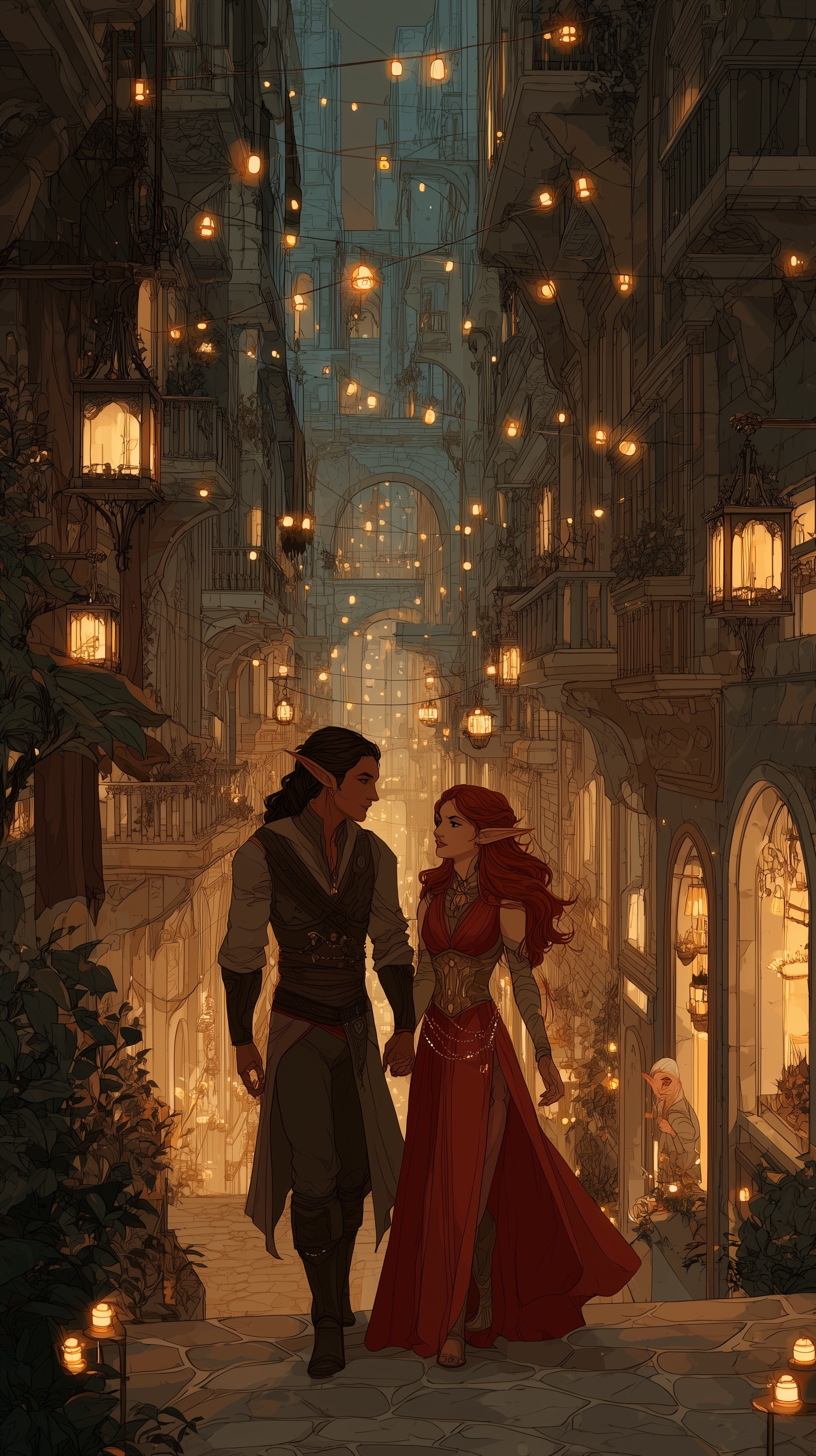
Courtship among the Arin Elves is measured less by passion declared and more by patience revealed. To pursue someone is to show restraint, to offer presence without possession, and to prove that one’s intentions are woven with care. The process is subtle, stretched across long months or even years, and is never rushed. In a culture where memory defines identity, love is not considered fleeting. It must be earned through continuity.
The first gesture is almost always through gifts. These are not grand offerings but carefully chosen tokens that carry memory. A small vial of perfume blended by hand, a cord of silk dyed in a personal hue, or a tattoo drawn on one’s own body to honor the other. Each gift is both a question and a promise. To accept it is to allow the conversation to continue. To refuse it is to end the matter with quiet finality.
Words of affection are restrained. Declarations of love are rare, replaced instead with subtle acknowledgments. A compliment on the way someone’s tattoos flow with their garments, or a comment on the patience behind a crafted piece of jewelry, serves as a signal of deeper regard. Outsiders often miss these cues, mistaking them for politeness, but within the enclaves such remarks are as direct as any proposal.
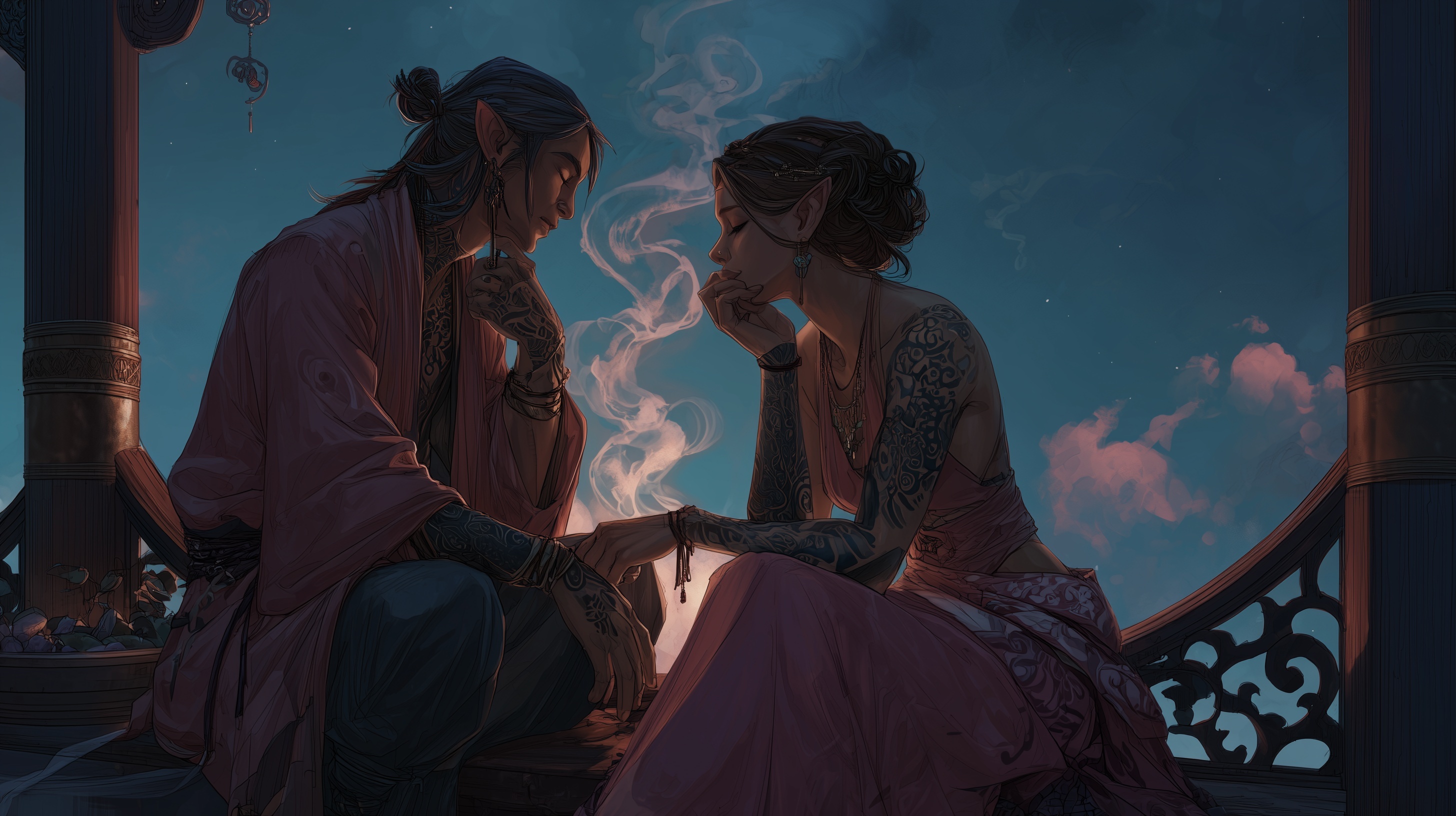
Physical touch comes slowly. A hand on a shoulder, the brush of fingers when exchanging gifts, or the act of braiding a lock of hair are all considered milestones in the progression of a courtship. Each act is observed not only by the couple but by the community around them. Courtship is never fully private. It is a dialogue between two people witnessed by the enclave, for any bond will eventually become part of the shared fabric of memory.
Perfume plays a central role in the process. Lovers craft unique blends that can be recognized only by the two of them. When one enters a room, the scent reveals their connection without the need for speech. To wear another’s scent is a mark of intimacy far more binding than public words. To share that fragrance with anyone else would be considered betrayal.
Courtship often culminates in the weaving of silk cords. Each partner presents the other with a length of cloth dyed in colors that carry personal significance. These cords are then bound together during the marriage rite, but the act of preparing them begins much earlier. Weaving is itself a declaration, an admission that the bond has grown beyond flirtation into permanence.
Not all courtships end in marriage. Some remain as lifelong friendships marked by exchanged gifts and scents but without vows. This is not viewed as failure. It is seen as a recognition that stories can intertwine without binding fully together. The ideal is not conquest or possession, but harmony.
In all of this, the guiding principle is patience. The Arin Elves believe that a story worth telling must unfold in its own time. Courtship is less about chasing desire and more about proving that one can stand beside another without haste, without force, and with the endurance to let memory bind them at its own pace.
Relationship Ideals
“A bond is not proven in vows shouted before the city. It is proven in the silence after anger, in the patience of waiting for one another to return, in the care given when the body falters. To remain is the truest form of love we know.”
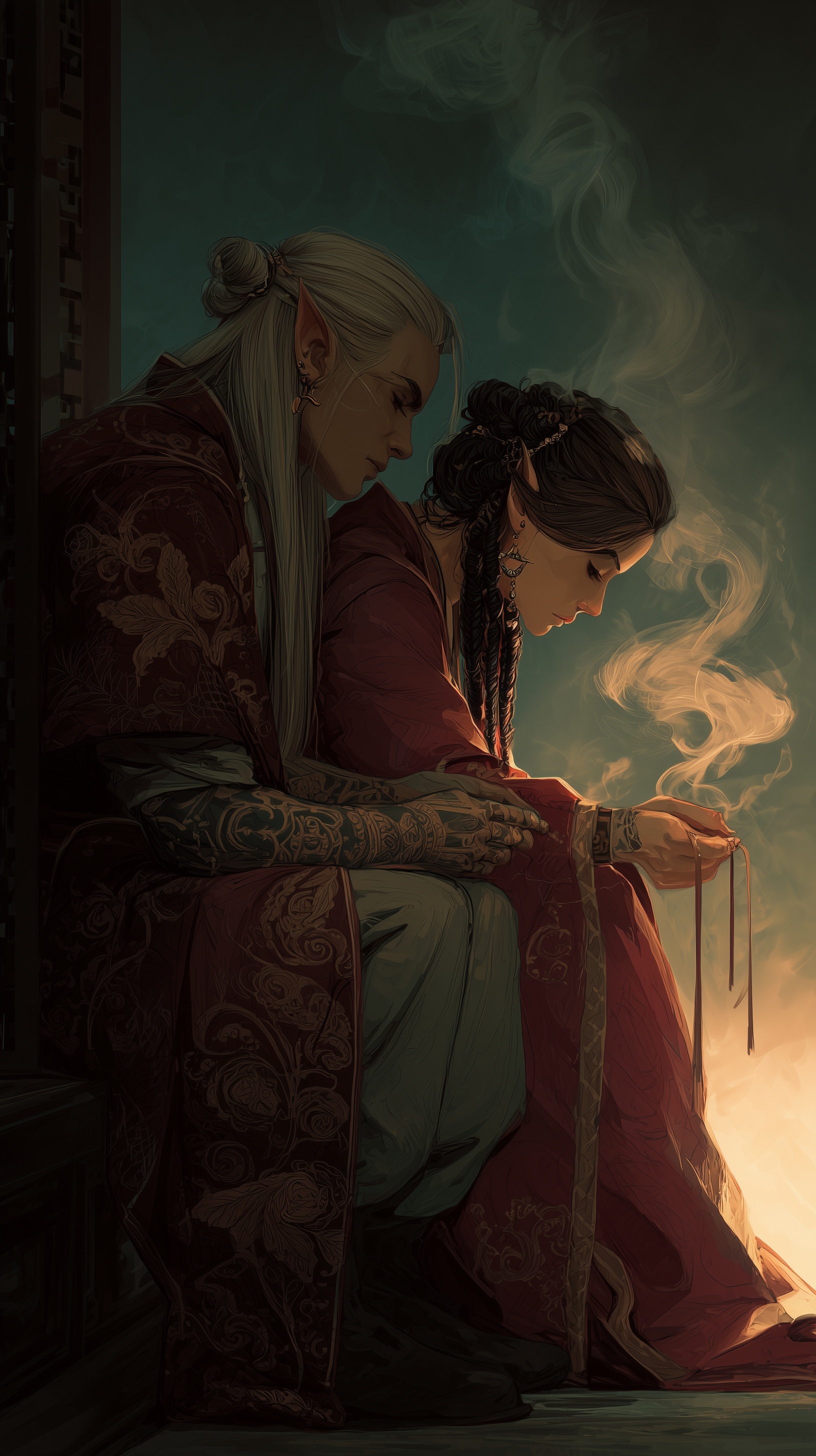
Relationships among the Arin Elves are guided by the same values that shape their wider culture. Memory, patience, and continuity are considered the highest forms of love. To be with someone is not to possess them but to witness and preserve their story as if it were one’s own. Bonds are measured not in the intensity of passion but in the ability to endure together through change and loss.
Mutual respect is the foundation of every union. An elf who ignores the story inscribed on their partner’s skin or disregards the perfumes and garments that hold their meaning would be considered unworthy of the bond. Each person’s expression is treated as sacred testimony. A partner’s duty is to honor that testimony, to protect it, and to make space for it to grow.
Patience is prized above passion. Quick tempers, jealous outbursts, or public disputes are frowned upon, for they are seen as signs of immaturity. A relationship that endures must show the same care as a garment woven from Virellen silk, where every thread is chosen and placed with purpose. Quiet gestures, thoughtful gifts, and the discipline of restraint are preferred over loud declarations.
Partnership is not measured by strict gender roles. Any person may lead, protect, create, or care, and many relationships shift these responsibilities over time. What matters is balance. When one falters, the other steadies. When one creates, the other preserves. When one fights, the other remembers. The highest ideal is complementarity, the weaving of two stories into a pattern that neither could form alone.
Trust is another ideal that carries unusual weight. To betray a partner’s secrets or to share the meaning of a private tattoo or scent with others is a violation that can end the relationship beyond repair. Loyalty is assumed as constant, and once broken it is rarely forgiven. In this, relationships reflect the wider taboo against forgetting. To break trust is to erase memory, and that act is seen as the deepest wound.
Marriage is valued, yet it is not the only honored form of relationship. Lifelong companionships that never become marriages are common, as are extended households formed from kin and close friends. All of these are considered legitimate expressions of connection. What defines them is not ceremony but commitment to shared presence.
Public affection is restrained. A hand held in passing, a braid tied into a partner’s hair, or the sharing of a private scent are accepted signs of intimacy. Displays meant to draw attention are discouraged, not because affection is shameful but because it is considered too sacred to be made into spectacle. Within the enclave walls, however, relationships are lived more openly, for here the community itself acts as witness.
In the ideals of the Arin Elves, love is not a blaze that consumes quickly but a fire that endures through silence and time. A relationship is judged successful not by how it begins, but by whether it weaves memory into permanence. To be loved is to be remembered, and to be remembered is to never truly vanish.
“When Iron Gate fell, I thought no one could understand what it meant to lose the bones of a homeland. Then I walked through an elven enclave and smelled cedar and ash, the same as in my own memory. We share the silence of loss, and in that silence we are kin.”
“They claim they are Arin now, but every lantern in their quarters still faces the horizon. They may not speak of Iorill, yet they never let us forget that they once had a homeland just down from the mountains."



Fantastic article
Thanks! This one took longer than I thought despite being shorter than the other regional variants. Just two more left!