
Daiyotera Temple
What's the purpose of this building?
It's where the Daiyoists go to pray and gather. It's also a known place of sanctuary to all who enter.
How does this building look and feel?
The temple wasn't always a temple. First, it belonged to the Great Genji, who was given a larger home and plot of land, and allowed to assist in the design of it. He earned it by virtue of his many brave and mighty deeds, but that's a story for another time.
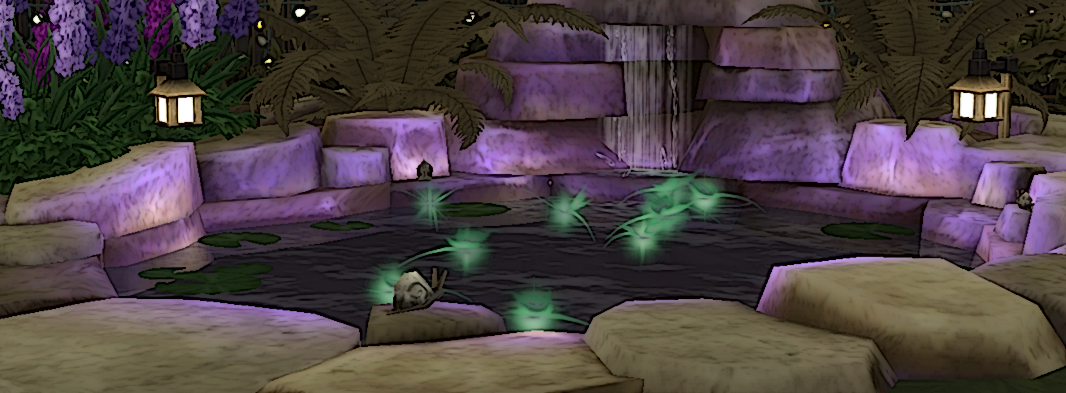
His house was built in the Japanese Edo style close enough to a small pond that he claimed it, and not far from the steady flow of one of Willowmoor's famous two rivers. When he faced a transitional period in his life, he elected to abandon his solitary lifestyle to move in with roommates, and he donated the temple to what was then viewed as a cult by much of Willowmoor.
The "cult" grew into a recognized religion soon enough and today boasts more than half of the town as its followers or Daiyoists. As such, it was already receiving constant renovations by those dedicated Diayoists long before it was fast-tracked to receive a government sanctioned upgrade (with a host of other public buildings and private homes, of course).
Today, it has spread out and grown taller, maintaining its Edo period style with help from some of the Watari who are more familiar with that look. The expansive main floor is primarily for prayers and ceremonies that involve lots of people while the next two floors are for more private prayers because they are first and foremost the sanctum of the religious leader, the Sun Prophet. She lives in a house elsewhere with her granddaughter, but if she's on the temple premises, you'll either find her upstairs...
Or you'll find her outside in the ever-expanding garden with its wide variety of flowers, trees, shrubs, and other plants, as well as ponds and fountains, plenty of ornamental benches to sit on, delicately painted lanterns scattered strategically around, and even a small pavilion with a table and chairs where the Sun Prophet will have and serve tea.
From top to bottom and inside to out, it always smells sweet and the scent is always powerful. The garden has the flowers, of course, but even inside, the smells of tea and incense mingle together to form a heavy perfume that sends some followers into a meditative state while others simply get sleepy. There's no meat allowed in the temple, so typically no food ends up inside.
The walls of the main floor are decorated with scrolls of words in the mysterious language the Sun Prophet speaks fluently, known to the followers as the Sacred Tongue or Daiyogo.
In her quarters upstairs, the furnishings are luxurious and comfortable, and it's said that her space is so big because it contains all her magnificent robes, headpieces and ceremonial jewelry.
Comments