Lumai (luˈmaɪ)
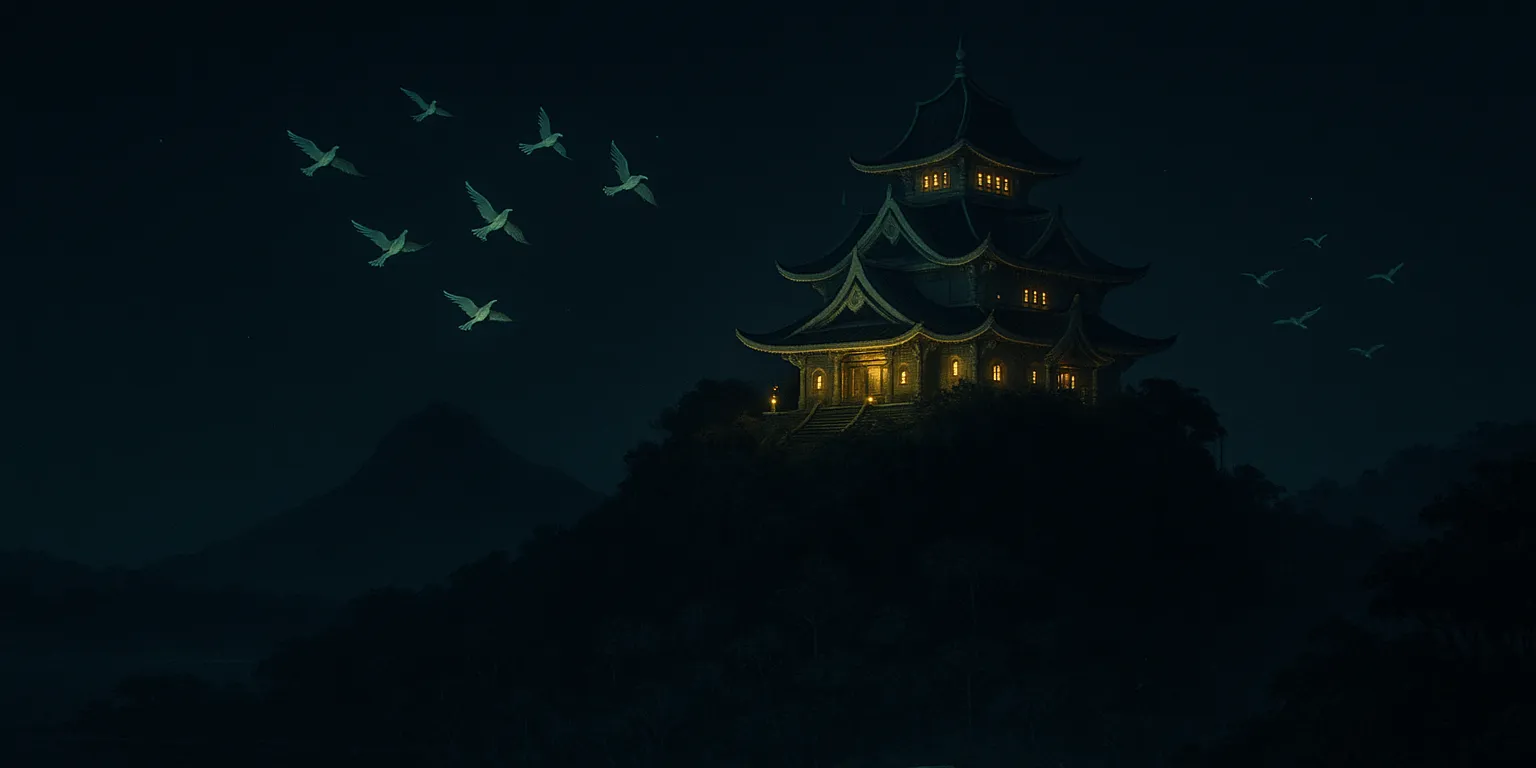
Lumai is the largest island in the Bay of Mynilad. Sacred to the Ilogaro people, it is believed to be the dwelling place of Luek, the god of the bay. The island is home to the Pangdambana ni Luek and is regarded as one of the most haunted places in the Tagápulo Empire.
A Holy Place
The Ilogaro have worshipped Luek, god of the Bay of Mynilad, for as long as humans have lived on Pulo. At the heart of this devotion lies Lumai, where the Ilogaro built the magnificent temple known as the Pangdambana ni Luek. Those who seek Luek's protection are drawn to the island, where any who obey the temple's rules are granted sanctuary and their safety is guaranteed by the god himself.
When the Tagápulo first conquered the Ilogaro, they allowed the island of Lumai to remain independent of the Empire, out of respect for Luek. Over the centuries, however, the Empire steadily eroded this independence, even building a fortress on the island's north coast to help defend the capital in case of attack. The priests protested each encroachment by Imperial forces but were ultimately unable to uphold the agreement between temple and throne. Luek has prevented any harm to worshippers who claimed sanctuary on the island, yet has done nothing else to hinder the Imperial presence.
The Weeping Plague
In 3882, the Weeping Plague first appeared on the island of Dagkut and quickly spread across the Kapuluan archipelago. This devastating illness overwhelmed the Empire's ability to care for the afflicted. In a desperate attempt to contain the sickness, the Emperor declared Lumai a quarantine zone for all who were infected - a decree later expanded to every island in the Bay of Mynilad, as well as to ships anchored there. Thousands of the sick and dying were transported to Lumai and placed in the care of the priests of the Pangdambana ni Luek. Though the Empire provided some supplies, they were far from sufficient. Temporary shelters for the sick rose across the island, but despite the priests' tireless efforts and the miracles of healing granted by Luek, thousands perished within them. The burden was far beyond what the temple could bear, and the plague soon claimed many of those who cared for the sick.
Even now, long after the plague has passed, many of the dead remain as restless shades. On moonless nights, the vanished shelters manifest once more, and the stillness of the island is broken by phantom coughing and moans of anguish. These spirits are not malicious, but trapped in their final moments of suffering, seldom aware of the living who witness them. The priests of Luek strive to comfort and release these souls, yet it is said that centuries will pass before all are freed from their pain.
A Living Legacy
The Ilogaro had never been content as citizens of the Empire. They were never granted equal status with the Tagápulo, and while the Empire honored their gods, it did not extend the same respect to their people or their customs. Throughout history, small localized uprisings flared as villages or bands of Ilogaro sought to cast off Imperial rule. But the movement to drive out the Tagápulo truly gained momentum in the aftermath of the Weeping Plague. The mass deaths - and the hauntings that followed - fueled deep resentment against the emperor and ignited the largest rebellion in the Empire’s history in 3907.
For three years, Ilogaro rebels fought fiercely, even forcing an evacuation of Mynilad. Though the revolt was eventually crushed, the Empire could not extinguish its spirit - because of Lumai. The surviving rebel leaders found sanctuary in the Pangdambana ni Luek, where the god himself prevented Imperial forces from seizing them, halting all ship traffic through the bay for weeks. When the Empire attempted to exterminate the Ilogaro outside the sacred island, Luek again intervened, shielding all who could reach the waters of the Bay of Mynilad.
Today, seventy-five years after that rebellion, its embers still smolder around the bay - waiting for the right moment to burst into flame.
Geography
Lumai is the remnant of an extinct volcano. Its landscape is dominated by a great rocky hill that rises from the surrounding greenery, forming the island's core. At its summit stands the Pangdambana ni Luek, commanding a sweeping view of the entire bay. The island's soil is rich and fertile, its beaches sandy and strikingly beautiful.
Lumai is home to several dozen bird species, some found nowhere else. The most celebrated is the Lumai Dove, a green-and-white bird said to bring good fortune to those who feed it. The priests of Luek maintain hundreds of feeders on the temple grounds, and birdsong fills the island from dawn to dusk.
Much of Lumai remains undeveloped, its interior a dense rainforest. Mangroves fringe its shores, while a vibrant coral reef thrives in the waters offshore.
Geographic Details
Location: Southwestern RegionLatitude: 18.73 degrees North
Longitude: 27.2 degrees West
Average Elevation: 7 ft
Highest Point: 322 ft
Lowest Point: 0 ft
Area: 21.2 sq mi
Related Articles
This article was originally written for Spooktober 2024. You can find all of my Spooktober Articles at Spooktober Central.
This article was originally written for Spooktober 2023. You can find all of my Spooktober Articles at Spooktober Central.

Those poor priests (and sick people). Despite it all, sounds like a beautiful place to live at least.
Explore Etrea | WorldEmber 2025
It’s a wonderful island, as long as you’re ok with ghosts.