
Luek (ˈlu.ɛk)
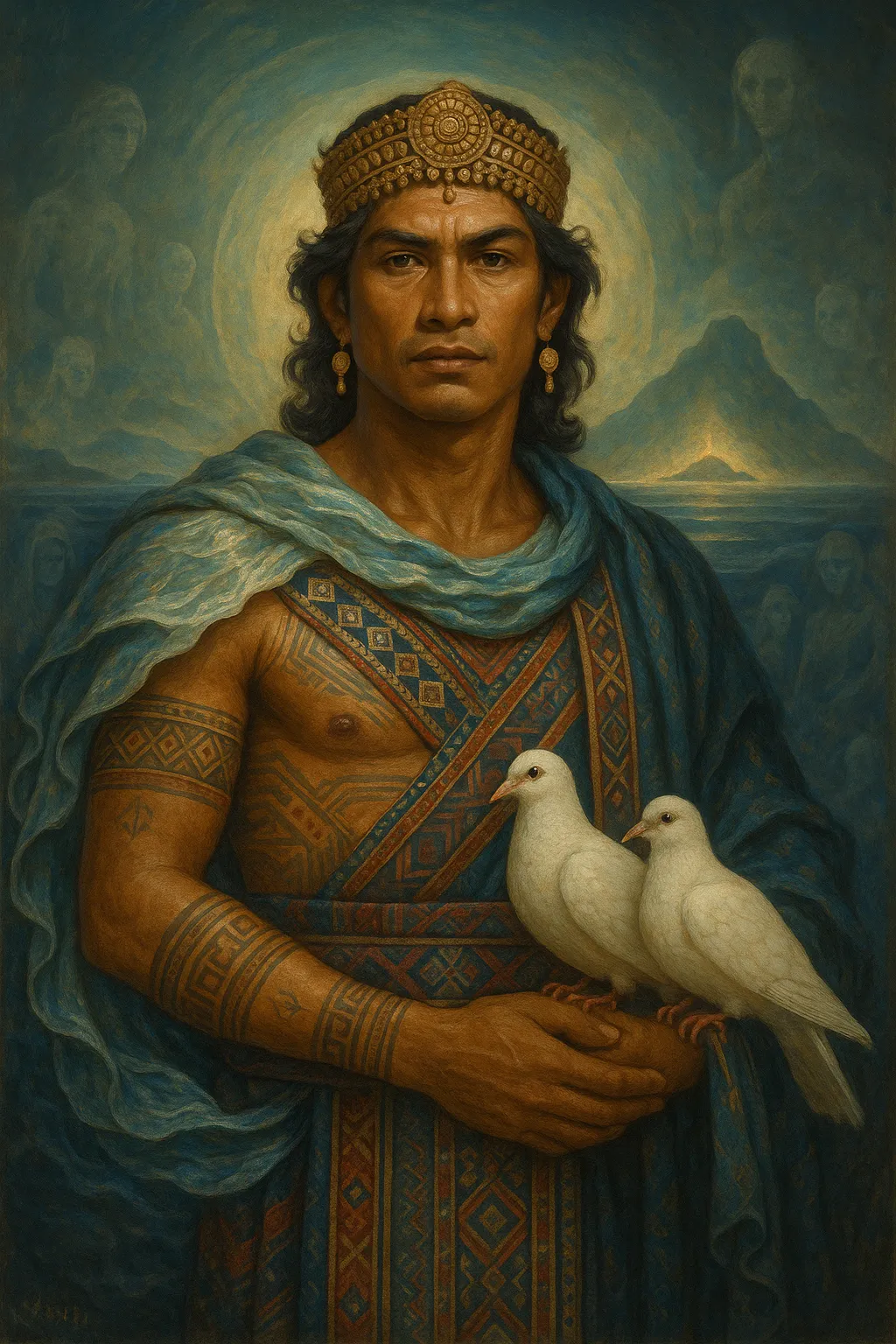
Luek is the god of the Bay of Mynilad and the patron deity of the Ilogaro people. The Ilogaro believe that the world is centered on the bay and on the holy island of Lumai - that is, the world extends outward from Lumai an equal distance in every direction. Luek is a god devoted to justice and fairness, and his priesthood has traditionally adjudicated all disputes among the Ilogaro. In the centuries since the Tagápulo conquered the Ilogaro and the bay, they too have adopted the worship of Luek, but they have often been frustrated that the god continues to shield the Ilogaro from the Empire.
Before the Empire
Before the Tagápulo followed the Ilog Pasi to the Bay of Mynilad and conquered the region, the northern part of Pulo was the sole domain of the Ilogaro. They lived in communities throughout the bay and along the peninsulas that embrace it. From Luek's sacred island of Lumai, his priests upheld fairness and order among the Ilogaro: wars were forbidden without a commission from the Apos, and crimes between communities were adjudicated by the priests in the Pangdambana ni Luek. Ilogaro historians describe this as a golden age, when peace was the rule and fairness the standard. While this view may be somewhat idealized, it reflects the conviction of many Ilogaro that the time when they were guided by Luek and his priesthood was far preferable to the imposition of Imperial authority.
Under Imperial Rule
When the Tagápulo planned to conquer the Ilogaro, one of their first actions was to adopt the worship of the gods bound to Ilogaro lands. By establishing themselves as worshippers, they gained a foothold in the minds of the region's Numina, who became more ambivalent toward the incoming invaders. This process was carried out in stages over the course of decades, with tactics varying depending on the local god: a village deity might stand aside while the Tagápulo gained entrance through marriage, while another might respect the outcome of a battle between two groups of their worshippers. Even with physical anchors, Numina are susceptible to the beliefs surrounding them, and the Tagápulo were frequently able to field more believers on the egregoric battlefield when dealing with local gods.
Because the majority of gods they encountered were small and local, this strategy succeeded in conquering the Ilogaro villages and seizing control of the shores of the bay. However, it could not extend to the island of Lumai, Luek's sacred land within the Bay of Mynilad. The Tagápulo chose not to contest this, and instead made a show of granting the island its autonomy, with the intent of reinforcing the idea that its fate was theirs to grant. They believed that, over time, they could replace the priesthood of Luek with priests loyal to the Empire and fully convert Luek into an Imperial god.
This is not how things have gone.
Over the centuries, the Ilogaro have never integrated into the Empire, which has persisted in treating them as second-class citizens. This has irritated Luek, for fairness is one of his core values, and his displeasure has led him to favor those worshippers who suffer discrimination. Tagápulo priests have rarely been accepted into Luek's service, and none have ever risen to positions of prominence. Meanwhile, the Ilogaro priesthood has grown increasingly supportive of periodic rebellions, pleading with Luek to extend his protection to any rebels who reach his sanctuaries.
Over the years, this has led to considerable frustration for the Empire. They cannot risk angering the god of their most crucial waterway, yet they remain unwilling to treat the Ilogaro as equals of the Tagápulo. More fervent and widespread worship of Luek has not produced the changes to his character that they desire. The idea of Luek as the fair judge is deeply ingrained, and attempts to emphasize the favor he shows the Ilogaro have not made him more impartial - if anything, Luek has grown more willing to favor them as more Tagápulo come to believe he already does. This impasse has driven some of the Empire's high officials to seek other solutions, and it is said that Pangkalahatan Malaking has been seen reading a copy of the Tirta dan Bayang, the treatise published by the would-be godslayers of Kanluranan.
Related Articles
This article was originally written for Spooktober 2024. You can find all of my Spooktober Articles at Spooktober Central.
This article was originally written for Spooktober 2023. You can find all of my Spooktober Articles at Spooktober Central.



Reading the "Bay of Mynilad" made me more interested in Luek. What kind of "person" might this deity be?
I’ll write Luke tomorrow!
Luek. DYAC.