

Moralis
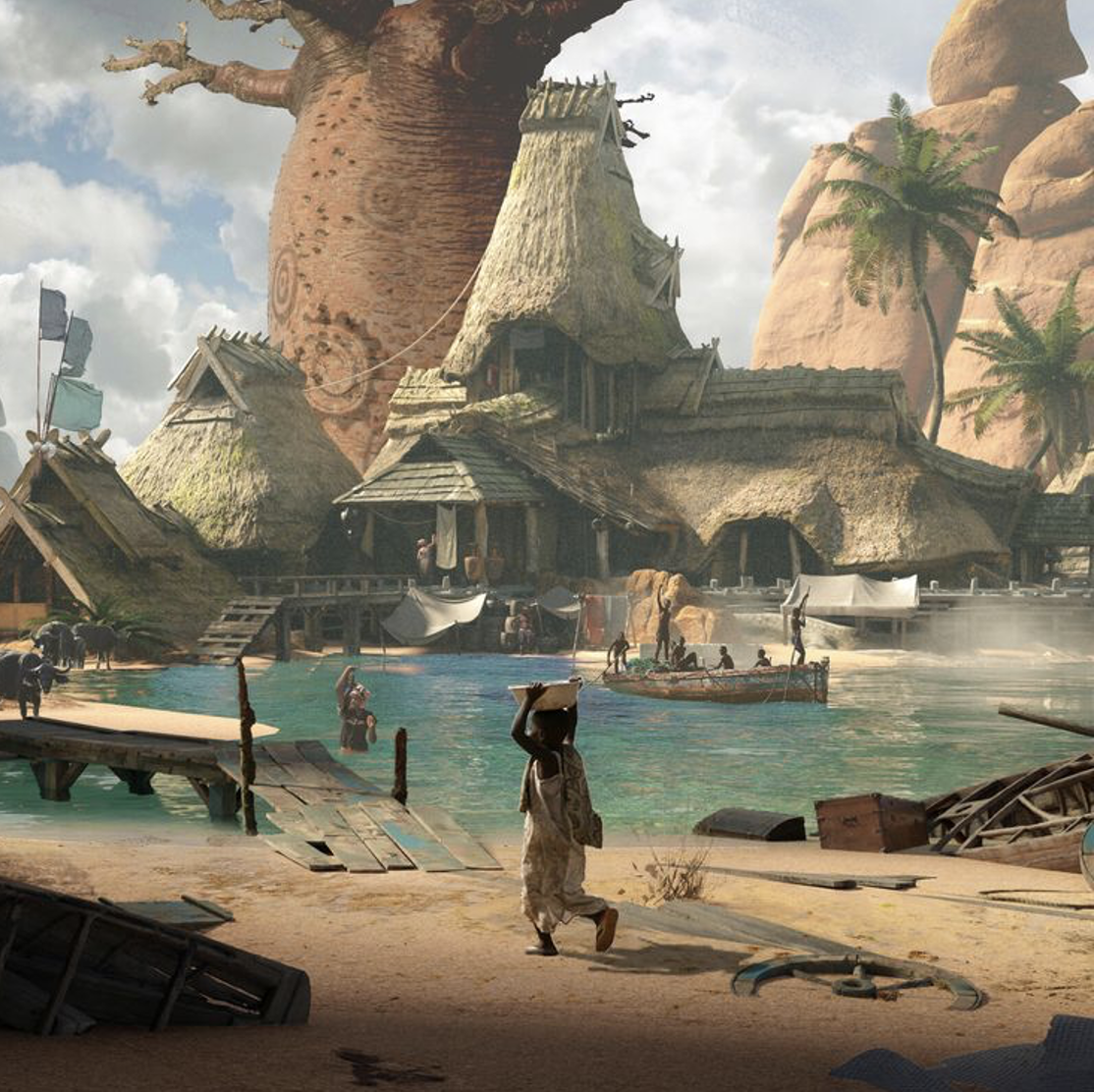
Although there were few cities across the broader Pridelands, the city of Moralis was one of the oldest cities in the world (considering both Jalasar and Dremora). In size, Moralis stood as large as the City of Fortune and the City of Ordained Order on Dremora. However, in comparison, the city of Moralis was far more sprawling with its “suburbs” stretching along the coast of the Inita Sariba Lake. Older portions of the city – including a good portion of the city’s core – were primarily designed to accommodate gnomes and halflings, the original settlers of Moralis. Newer parts of the city, however, were built to accommodate both the city’s original inhabitants and its newer arrivals, the taller tabaxi, Leonin… and Pyrus Fairmane himself.
The Founding of Moralis
While Moralis, in its prime, boasted an extensive archival collection of philosophy, law, and history… few historically grounded records survive from the time before Moralis. Thus, not even the brightest of scholars were able to deduce the exact date of Moralis’ founding nor were they able to confirm who founded it. Many believe that Moralis sprung into existence around Geryon himself, but the clergy of Moralis were very careful to subtly discourage the spread and/or teaching of that story. Rather, the Temple of Geryon supported the founding myth centered upon Inita Sariba, the creature for which the nearby lake was named. Multiple iterations of the story existed, but each contained the following core components:
- Moralis was the name of the gnomish figure who ultimately founded Moralis.
- He was on a pilgrimage to find balance within himself, pursuing this through frequent reflection and meditation across his travels.
- While sailing across the lake, Moralis was overcome by a fit of melancholy and despair, until Inita Sariba surfaced.
- The lungfish Colossi – perhaps believing Moralis to be adrift – swam his boat to shore.
- Driven by curiosity, Moralis laid a hand upon Inita Sariba’s flesh and was beset by visions of a higher order still to come.
- The Colossi placed him upon the spot where Moralis would later be built. And when he awoke, he received the balance he sought.
Thus, merely seeing a trace of Inita Sariba was a good omen of balance and clarity to come.
Exterior of the City
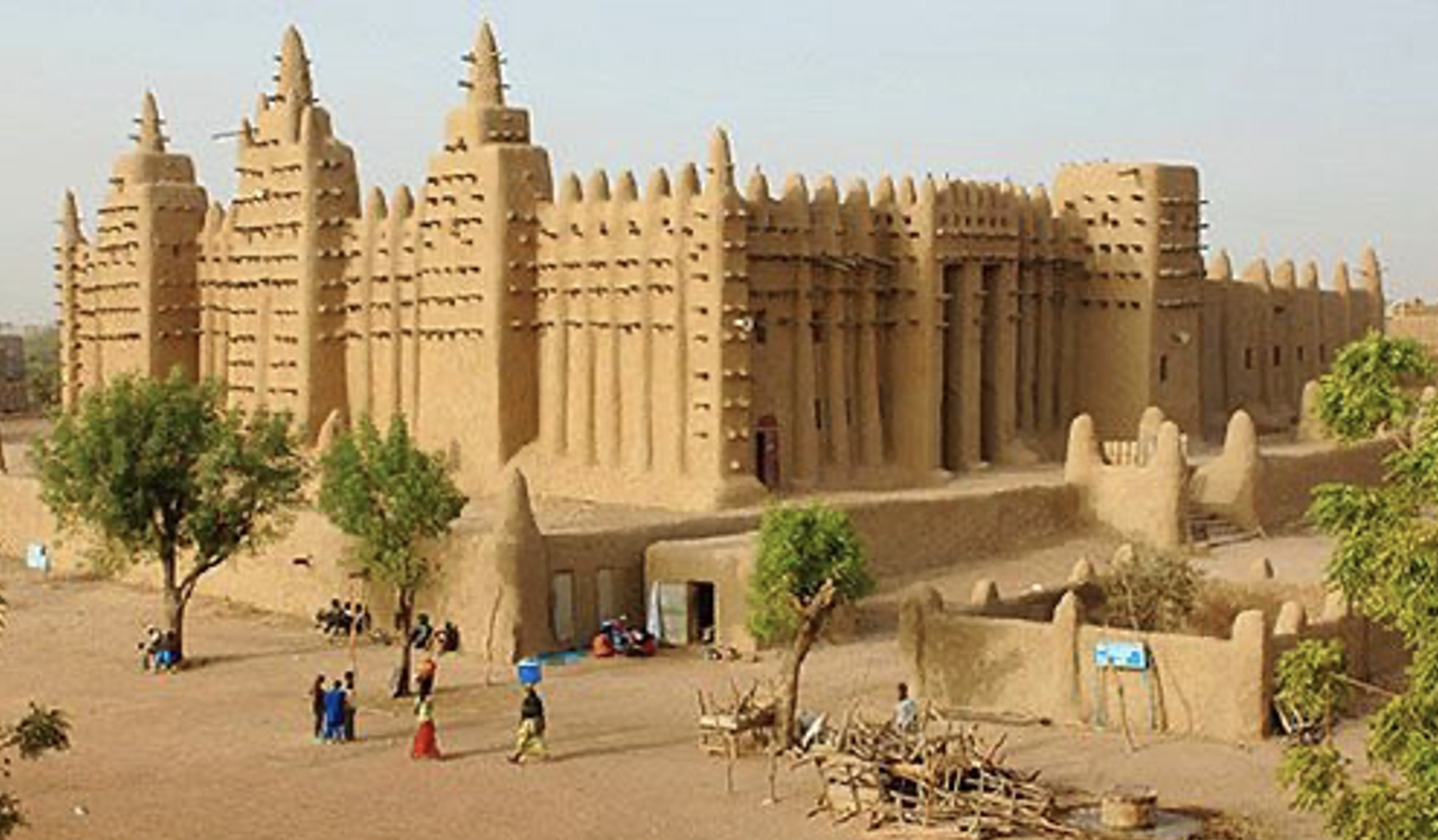
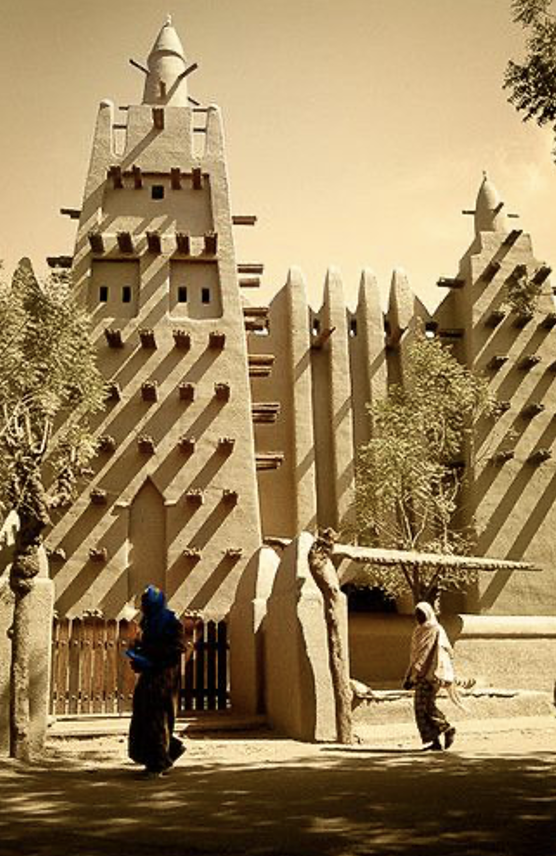
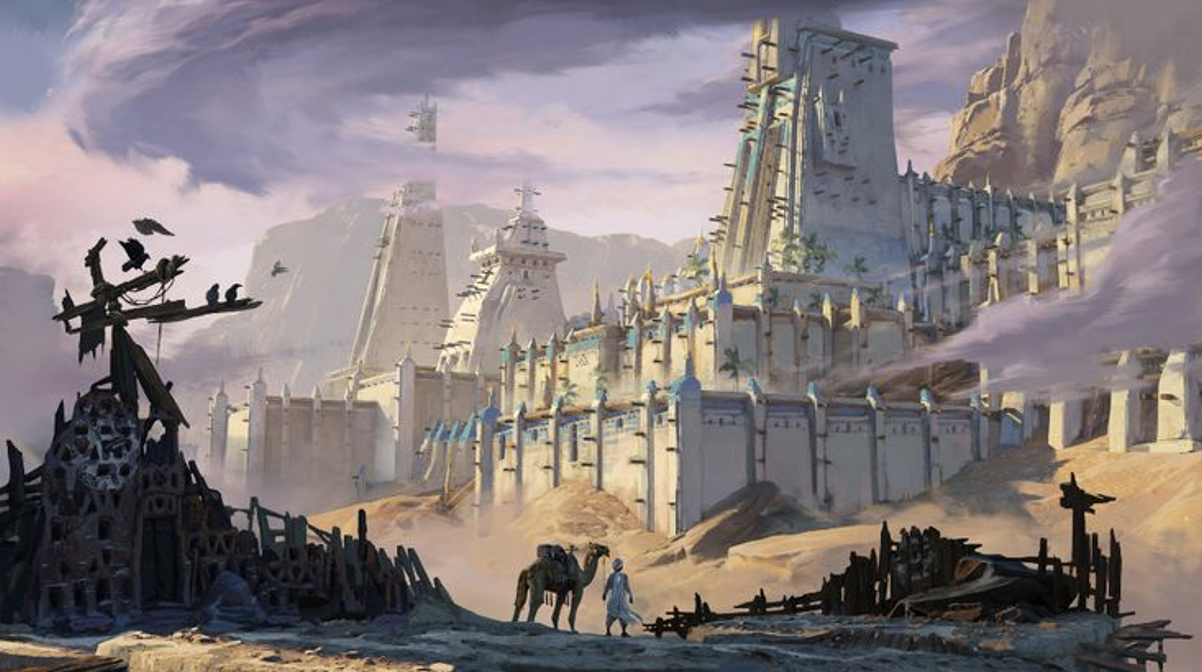
Due to its proximity to the lake, the land around Moralis was particularly lush. Larger trees grew with denser and greener canopies. Sprawling fields of various grains, fruits, and vegetables were meticulously cared for by local farmers. Fisheries lined the coast, sending their day’s catch along neatly paved roads to neat and orderly markets throughout the city. Gardens and parks were common features and people often gathered in them near dusk and dawn to socialize, eat, and partake in music and other festivities. While those who resided in the city’s core regarded the outskirts as “chaotically arranged”, the outskirts were arranged in orderly (albeit ever-changing) wards with well-paved roads and waypoint markers to allow travelers to easily find their way.The start of the formal city of Moralis was marked by the signature walls of Moralis. These stone walls, unlike others, were left unpainted. Over time, the once off-white walls acquired a faintly orange hue, particularly noticeable during sunrise and sunset. The walls, like the many road signs and markers leading up to the main city, featured equally spaced, identical cylindrical holes stretching up to 3 feet into the thick walls. A scroll, produced by the Scribe’s Order, was placed within each hole, thus granting the walls a “peg-like” appearance. These scrolls were defensive, containing abjuration or conjuration spells that could be summoned or triggered if the city was attacked. The defensive capabilities of the walls were a relic of the early years of Moralis, when the tabaxi and leonin groups of the True Pridelands were far more unruly. In its final years, however, most of the guards (beyond the gnomish mages) that patrolled the walls and managed entry into the city’s core were tabaxi.
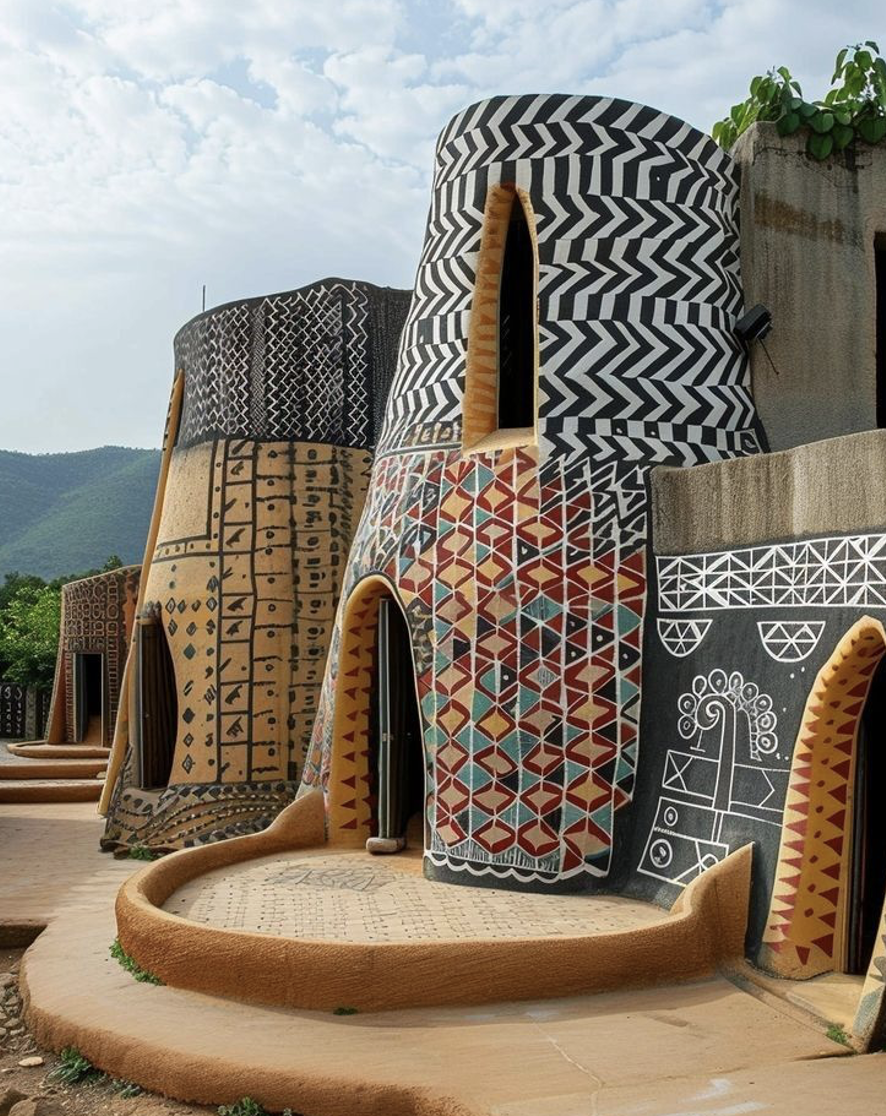
The city of Moralis was often referred to as the Balanced City of Geryon. Within the walls of Moralis, the city’s layout was orderly and meticulously planned. Clusters of buildings were balanced with parks, gardens, and open amphitheaters for debate. Pockets of vibrant color were balanced by areas of more mellow and modest tones. In the center of the city and at the heart of all its affairs was the Temple of Geryon, an orderly complex focused on philosophy, magic, meditation, reflection, and the Law. A massive amphitheater led to the Temple Entrance. The walls of the Temple mirrored the city walls, though portion of the walls were left smooth and painted with colorful patterns or murals depicting various scenes of Geryon interacting with his people – debating in the amphitheater, researching in the archives, and presiding over the Law. Some of these murals depict Geryon alongside a massive leonin figure donning orange-hued armor with a hand resting on the sword carried at his hip.
The Balanced City Now:
- Portions of the once great walls have crumbled and fallen.
- The color once painted across the city has flaked and faded, while the gardens and lush greenery have been killed by the orange haze.
- Only the rusted portions of metal that capped the scrolls remain, shattered on the ground at the wall or pillar’s base.
- The Temple of Geryon remains standing, though the paint has all but faded and only fragments of the murals remain.
The Temple of Geryon
According to records, the Temple of Geryon was the oldest building in Moralis and was originally more of a community center than a formalized temple. Originally built for gnomes and halflings, changes to the Temple structure were deemed necessary with the arrival of taller species, most notably the tabaxi from the Pridelands. New additions to the Temple were built both around and directly upon the original structure. The original Temple was repurposed to serve as catacombs, where notable clergy and many citizens of Moralis were honorably buried.
The Temple of Geryon, at its prime, was an architectural marvel with painted walls, meticulously curated and seamlessly integrated hanging gardens, and a set of 5 scroll-wall style towers that loomed over the rest of the city. Four of the towers were positioned on the corners of the main building and corresponded to a subset of Geryon’s domains. The first tower was the domain of the Scribe’s Order and contained an archive of “current history” and various workshops where mages of the Order assembled the scrolls contained in the walls of Moralis. The second tower was the domain of the Philosophical Order, which provided higher education to the locals of Moralis. The third tower, secured and heavily guarded, contained every iteration of Geryon’s Law, among other records. The fourth tower as dedicated to Asylum, those who sought protection and security in Moralis. The final tower rose directly from the center of the Temple and contained archives, chambers for the General Assembly and general debate, courtrooms, and a general balance of features from the other towers. And at the top, Geryon presided, descending to the mortals of his Temple when his name was invoked.
The Temple Now:
- Of the 5 towers, only the central tower remains standing, though its stone is weathered and all color faded.
- Most of the murals have chipped and faded, while the hanging gardens are long gone – a few bowls suspended from archways now the only indication of what once was.
- Portions of the walls and ceilings have caved in, filling the once open hallways with piles of rubble and debris.
- Various skeletons are scattered about the grounds… arranged as if reaching for freedom they will never attain.
RUINED SETTLEMENT
450 - 500 YAR
Alternative Name(s)
The Balanced City of Geryon
Type
City
Location under
Additional Rulers/Owners
Related Reports (Primary)
References

Comments