
Halfling
Halflings in Tanaria, more commonly known among themselves as Wayfoots,are a smallfolk people defined not by borders or kingdoms, but by motion, memory, and community. They are a nomadic folk, traveling in tightly knit caravans called bands that wind through valleys, forests, deserts, and even across oceans. Where others settle, Wayfoots pass through, trading stories, offering skills, and leaving the land better than they found it.
Though often underestimated due to their stature, Wayfoots are resourceful, clever, and fiercely loyal to their own. Their wagons are marvels of compact ingenuity, and their music, food, and folklore are known to linger long after their camps have vanished. Some bands are quiet and reclusive, others are boisterous and bold, but all share a reverence for the journey over the destination.
Wayfoots speak a dialect of Common that blends old phrases, quickened cadence, and slang that outsiders struggle to follow. Many have developed unique regional expressions and idioms, passed down orally through generations. Despite lacking a unified homeland, they are bound by deep traditions, communal memory, and an unwavering belief that the road always leads home,even if home is wherever the band camps next.
Basic Information
Anatomy
Tanarian halflings, possess distinct anatomical traits that reflect their nomadic and resilient lifestyle. Though they share a general humanoid form, their physical proportions are uniquely adapted for travel, stealth, and survival.
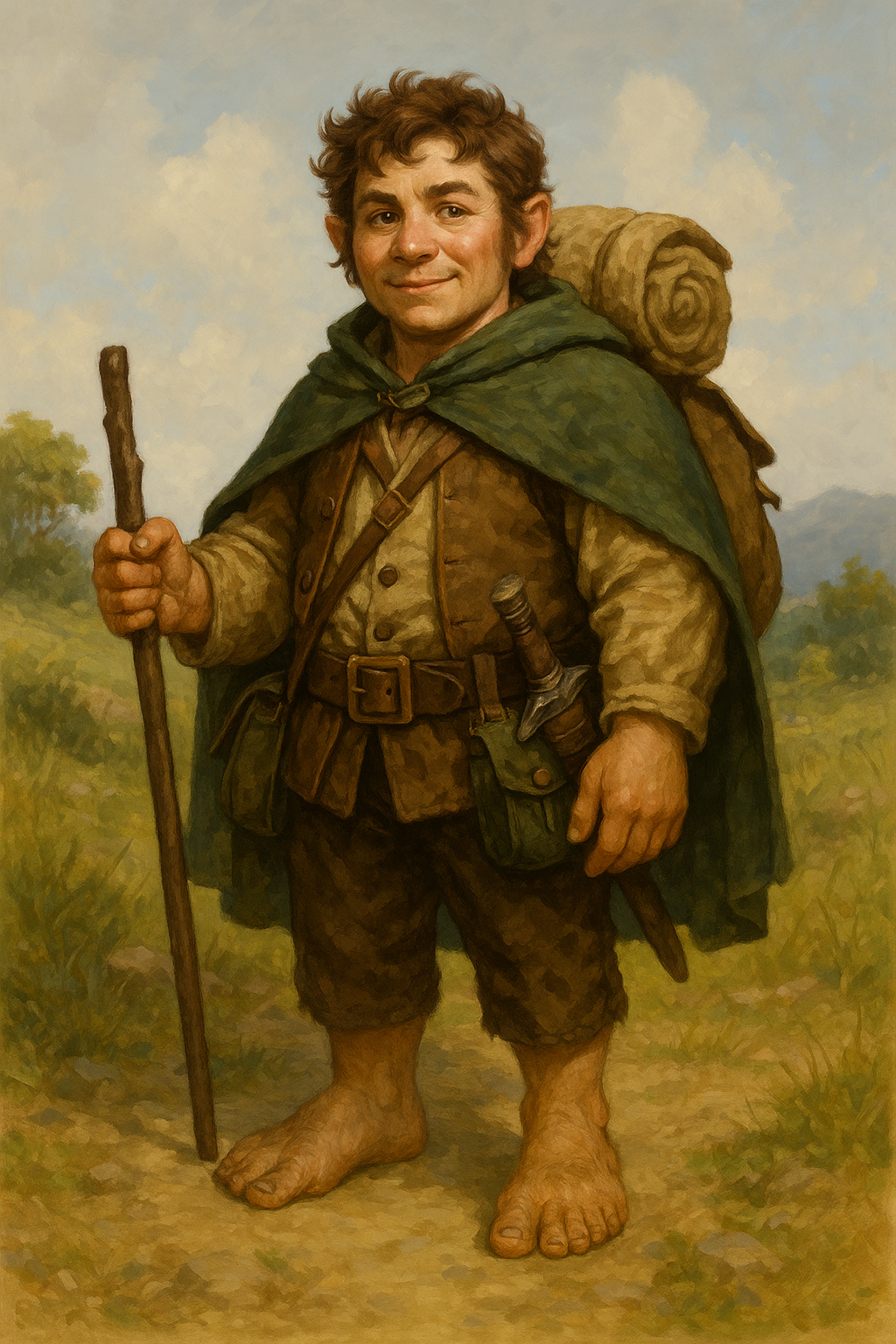
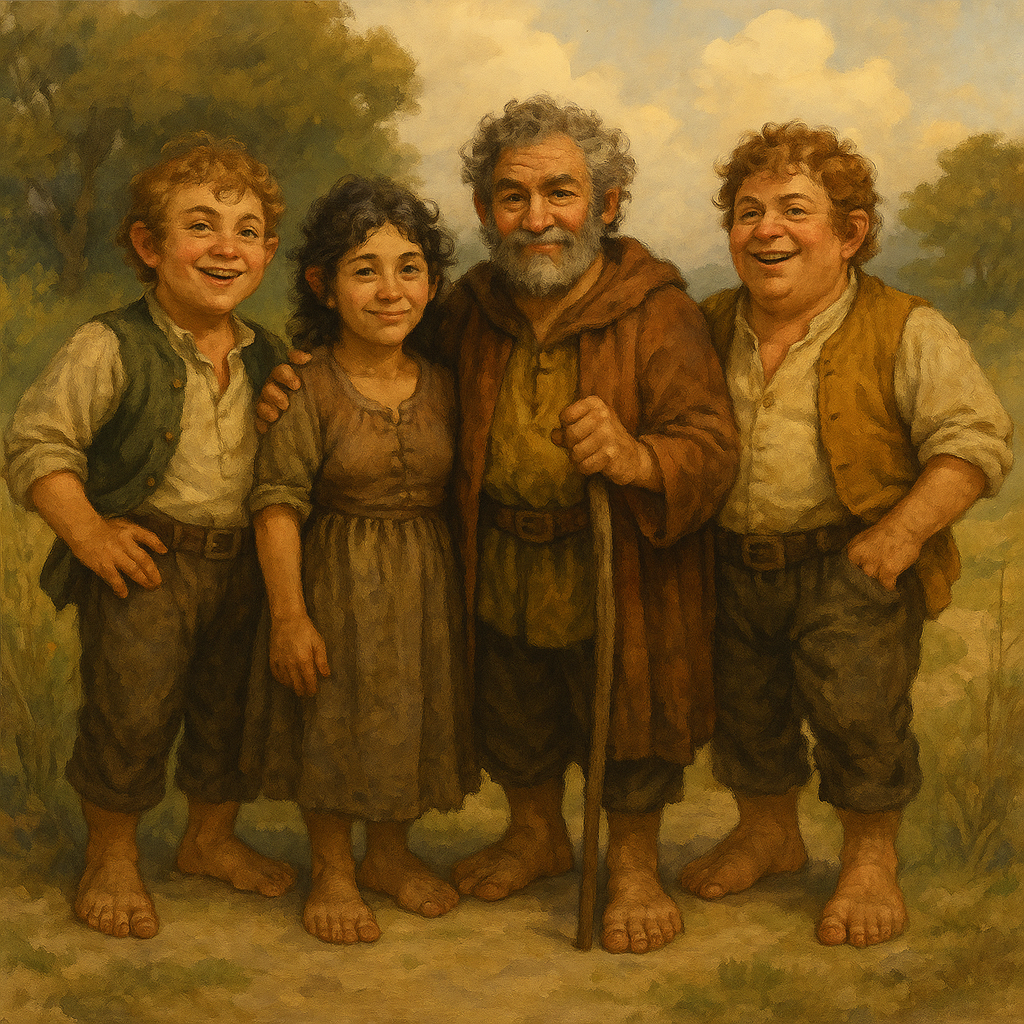
Wayfoots average between 2.5 to 3.5 feet tall and typically weigh 40 to 55 pounds, giving them a compact and agile build. Their limbs are well-muscled for their size, particularly in the calves and thighs—developed from generations of constant walking, climbing, and traversing rugged landscapes. Their hands and feet are slightly broader than human proportions, aiding with balance and grip, especially when barefoot, which many prefer.
Their feet are notably calloused and thick-skinned, often with a sparse covering of coarse hair on the tops, though this varies regionally. Wayfoots have dense, wiry hair that ranges from chestnut and coal-black to russet and sandy tones. Facial features are expressive—often slightly exaggerated—with rounded cheeks, prominent eyebrows, and eyes that reflect a wide range of earthy and vibrant hues, including moss green, river blue, and sunset amber.
Skin tone ranges from rosy beige to warm olive, often tanned by sun exposure due to their outdoor lifestyles. Their ears are rounded, not pointed like elves, but still somewhat larger than a human’s, giving them an alert, ever-listening appearance. This, paired with keen eyesight and a sharp sense of smell, makes them particularly attuned to their environment.
Unlike other smallfolk, Tanarian Wayfoots are exceptionally resilient, their physiology adapted to long travel and harsh climates. Despite their size, they possess impressive endurance and metabolic efficiency, requiring less sustenance than expected for their activity level. Their bodies heal quickly from minor injuries, and they often develop callouses and scars that serve as maps of their journeys rather than blemishes.
These anatomical details underscore their cultural identity: survivors, travelers, and quiet observers of the world’s passing wonders.
Biological Traits
Halflings are hardy despite their size, with strong constitutions and excellent reflexes. Their feet are tough and calloused from long-distance travel, often leading them to forgo footwear entirely. Their bodies are compact but sturdy, with slightly elongated torsos and short limbs built for balance and quick movements. Facial hair is rare among males, and hair color tends toward warm browns, russet reds, and sandy blondes. They have excellent night vision (though not true darkvision), sharp hearing, and a finely tuned sense of direction. Some show a natural resistance to magic, toxins, or mental manipulation—believed by some scholars to be a gift from ancient guardian spirits of the road.
Subtle biological differences also appear between wandering clans, with some Wayfoot bands adapting to cold climates, deserts, or marshes over generations—resulting in regional skin tones, builds, and endurance levels.
Genetics and Reproduction
Wayfoot genetics follow a broadly humanoid pattern, though with a few notable quirks that suggest either an ancient divergence or a now-lost magical influence. They are a distinct subspecies of mortalkin, genetically compatible with humans and gnomes, though such crossbreeding is rare and often results in unpredictable traits—particularly in stature and temperament. Wayfoot bloodlines tend to remain strongest when kept within their own kind, as their unique physiology doesn't always mix cleanly with taller or longer-lived species.
Sexual dimorphism is mild; males and females differ more in behavior and dress than in physiology. Wayfoots reproduce sexually, with gestation periods averaging six to seven months, notably shorter than most humanoids. Twins are common—possibly a genetic adaptation to their nomadic lifestyle and the occasional danger it brings. Children are born with a light dusting of hair on their feet, which thickens as they grow, and their ear shape and eye color often reflect family lines quite clearly.
Wayfoot inheritance is matrilineal in most clans, with family names and property passing through the mother. This stems from old traditions where women maintained camp, commerce, and storytelling while men ranged ahead as scouts, hunters, or traders. That said, modern Wayfoot families are generally egalitarian in structure, with roles shared freely based on skill and interest.
One of the more fascinating traits is what Wayfoots call “the pull of the path.” Young Wayfoots experience a strong biological and cultural urge to wander during adolescence, roughly between the ages of 13 and 20. This is not magical, but rather a neurological drive toward novelty, independence, and environmental change, possibly a survival mechanism to prevent overcrowding or inbreeding in isolated clans. This urge fades slightly with age but never disappears entirely.
Reproductive longevity is modest; Wayfoots remain fertile into their early 60s, though most choose to settle down and raise families long before then. While their wanderlust is strong, family bonds are stronger, and many returning Wayfoots bring tales, lovers, and cultural artifacts from distant lands to enrich their clan’s legacy.
Ecology and Habitats
Wayfoots are highly adaptable, semi-nomadic people with a lifestyle deeply entwined with the land, but rarely tied to one place for long. They thrive in temperate and subtropical regions, preferring mild climates and fertile ground, though some clans have adapted to forested highlands, coastal routes, or even the fringes of desert tradeways. What unites them is not the geography itself, but the ability to move freely within it.
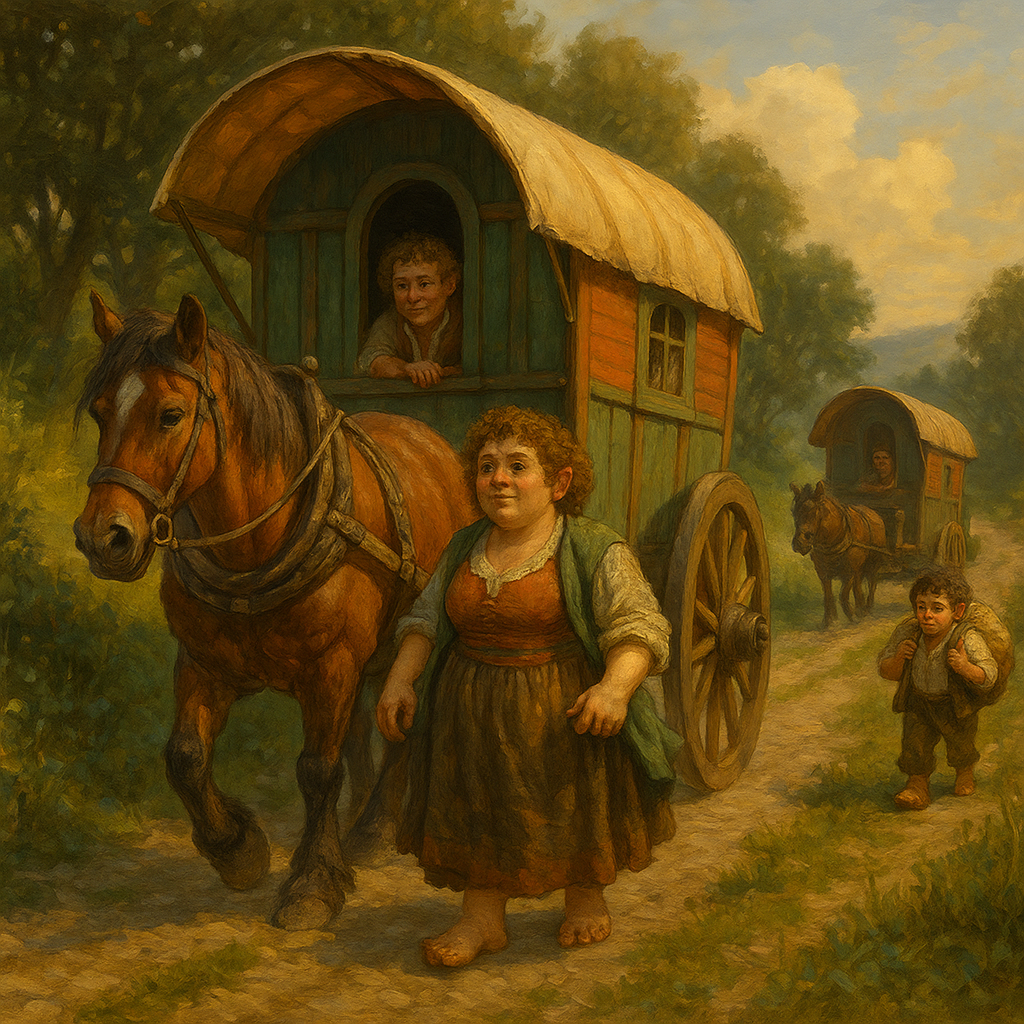 They live in mobile encampments, traveling caravans, or lightweight, collapsible structures designed for easy relocation. Some favor intricately carved wagons, others clever tents built from canvas, hide, or plant-fiber mats. In areas of long-term settlement, semi-permanent Wayfoot villages may emerge, often near rivers, trade routes, or forest edges, but even these are built with impermanence in mind. Their construction style prioritizes low environmental impact, with many Wayfoots viewing excessive alteration of the land as both foolish and disrespectful.
Wayfoot clans leave behind little more than paths, stories, and planted trees. They often engage in rotational foraging, seasonal farming, and animal herding, especially goats, shaggy hill-sheep, or hardy draft dogs. They are also known for tradecraft: tinkering, herbalism, textile work, tool-making, and storytelling are central to their identity. They rarely overhunt or overharvest, guided by traditions that emphasize balance with the land, often rooted in oral tales passed down through matriarchs and elders.
Despite their size, Wayfoots are exceptionally agile and stealthy, especially in wild terrain. Their ability to move undetected has earned them a reputation as ghosts of the grass or whispers in the woods. When under threat, they do not build fortresses, they disappear into the land or pack up before danger arrives. As a result, few outside their culture ever see more than a passing glimpse of their communities unless invited.
Wayfoot clans are often found near trade hubs or neutral meeting grounds, serving as middlefolk, entertainers, guides, or scouts for larger settlements. They are particularly fond of forest borders, open meadows, river deltas, and hill country, where they can remain close to nature while still maintaining access to other peoples and opportunities. While they avoid cities for long-term residence, many young Wayfoots spend several years wandering through them, collecting stories, lovers, or coin before returning to their kin.
They live in mobile encampments, traveling caravans, or lightweight, collapsible structures designed for easy relocation. Some favor intricately carved wagons, others clever tents built from canvas, hide, or plant-fiber mats. In areas of long-term settlement, semi-permanent Wayfoot villages may emerge, often near rivers, trade routes, or forest edges, but even these are built with impermanence in mind. Their construction style prioritizes low environmental impact, with many Wayfoots viewing excessive alteration of the land as both foolish and disrespectful.
Wayfoot clans leave behind little more than paths, stories, and planted trees. They often engage in rotational foraging, seasonal farming, and animal herding, especially goats, shaggy hill-sheep, or hardy draft dogs. They are also known for tradecraft: tinkering, herbalism, textile work, tool-making, and storytelling are central to their identity. They rarely overhunt or overharvest, guided by traditions that emphasize balance with the land, often rooted in oral tales passed down through matriarchs and elders.
Despite their size, Wayfoots are exceptionally agile and stealthy, especially in wild terrain. Their ability to move undetected has earned them a reputation as ghosts of the grass or whispers in the woods. When under threat, they do not build fortresses, they disappear into the land or pack up before danger arrives. As a result, few outside their culture ever see more than a passing glimpse of their communities unless invited.
Wayfoot clans are often found near trade hubs or neutral meeting grounds, serving as middlefolk, entertainers, guides, or scouts for larger settlements. They are particularly fond of forest borders, open meadows, river deltas, and hill country, where they can remain close to nature while still maintaining access to other peoples and opportunities. While they avoid cities for long-term residence, many young Wayfoots spend several years wandering through them, collecting stories, lovers, or coin before returning to their kin.
Dietary Needs and Habits
Tanarian halflings, or Wayfoots, are omnivorous by nature with a robust and opportunistic approach to food. Their dietary needs are modest but frequent, most Wayfoots prefer several small meals throughout the day rather than large, singular feasts. This grazing habit reflects their nomadic lifestyle, where meals are often shared communally and prepared on the go.
Their diets vary widely depending on their location and available resources, but tend to center on hearty roots, tubers, grains, fruits, nuts, and whatever game or fish they can catch. Wayfoot cooking is simple but flavorful, making heavy use of preserved herbs, smoked meats, and spice blends they've collected on their travels. Despite their size, they’re known for having iron stomachs and adventurous palates, capable of eating things that might leave others queasy.
Their caravans often include herb gardens and drying racks for meat and spices, and it's not uncommon for them to barter recipes and rare ingredients. Because of their small stature and high energy, Wayfoots need a steady supply of protein and complex carbohydrates to maintain stamina and mental clarity, especially when traveling long distances or navigating harsh terrain. Some clans have even developed specialized brews and teas believed to boost focus or endurance.
Culturally, food is a core pillar of Wayfoot identity. Meals are an excuse to tell stories, reaffirm bonds, and celebrate survival, however humble the table may be.
Behaviour
Wayfoots exhibit a behavioral blend of curiosity, practicality, and deep-rooted communal values. At their core, they are social creatures with a strong instinct for togetherness, preferring to live, travel, and work in close-knit groups where trust and loyalty are paramount. Even the most independently-minded Wayfoot rarely strays too far for too long without keeping tabs on their kin.
Psychologically, they are defined by their adaptability. Life on the move has sharpened their observational skills and honed their instincts for danger and opportunity alike. They’re cautious but not cowardly, preferring cleverness over confrontation. When faced with threats, they rely on misdirection, evasion, and improvisation more than brute strength, though more than a few Wayfoots have surprised larger foes with their sharp wits and quicker blades.
They are driven by wanderlust, a near-universal trait among their kind, and it manifests in various ways: some seek new lands, others new stories, inventions, ingredients, or songs. This nomadic spirit is not just physical, it’s emotional and intellectual too. Many Wayfoots find monotony intolerable, and thrive when facing novelty or puzzles to solve.
Humor and storytelling are essential coping tools within Wayfoot psychology. Jokes, riddles, and theatrical retellings of events (especially exaggerated misadventures) help them process hardship, preserve morale, and reinforce community values. Children are raised on these tales, instilling a sense of identity rooted in resilience and cleverness.
Though some outsiders view them as flighty or unserious, the truth is Wayfoots carry their burdens quietly. They believe laughter is lighter than bitterness, and shared memories last longer than grudges. Their strength lies not in defiance, but in endurance, and in their ability to find meaning and magic in a world that often overlooks the small.
Additional Information
Social Structure
Tanarian halflings tend to form loosely structured social networks rather than rigid hierarchies. Their caravans operate more like extended families or cooperative bands than traditional political bodies. Leadership is typically informal and fluid, based on experience, charisma, or usefulness rather than inheritance or law.
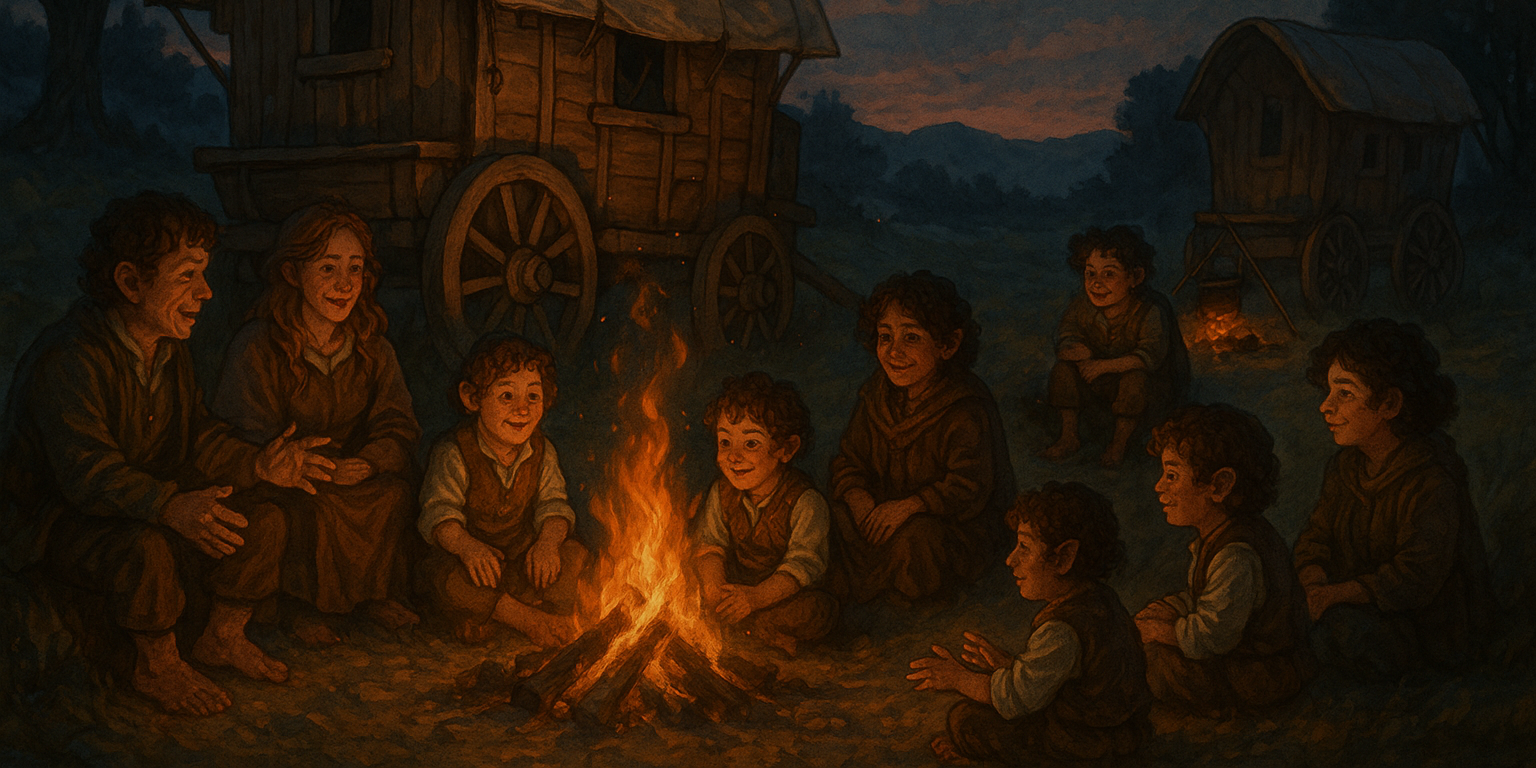
Each caravan or settlement might have a “Pathwarden”—a respected elder or seasoned traveler—who offers guidance and mediates disputes, but even this role isn’t permanent. Wayfoots value consensus, storytelling, and skill-sharing, often holding open councils around campfires where decisions are made collectively. Younglings are raised by the entire community, and mentorship, especially in crafts, lore, or survival, is part of the culture from a young age.
When multiple caravans cross paths or gather for seasonal festivities, a temporary "Treadring" forms—a circular meeting of wardens, lorekeepers, and traders to exchange news, celebrate, and reaffirm bonds. These moments foster cultural continuity while reinforcing the nomadic and egalitarian values Wayfoots prize: freedom, kinship, and adaptability.
Their social customs are tightly interwoven with their oral traditions, practical trades, and small magics, making even the most chaotic band feel like a well-rehearsed chorus rather than a scattered crowd.
Uses, Products & Exploitation
Wayfoots are rarely seen as a resource to be exploited, at least not openly. Their value lies more in what they know and what they carry than in anything biological. Traders, collectors, and even scholars often seek out Wayfoot caravans for their extensive oral histories, rare trinkets, enchanted odds and ends, and goods gathered from across Tanaria. A Wayfoot may trade a relic from the ancient North for a bolt of southern silk without ever revealing how they got it or what it truly is.
Their craftsmanship, especially in portable enchantments, cooking tools, and intricate lock mechanisms, is quietly prized, though most outsiders underestimate them due to their height and informal ways. More unscrupulous types have tried to kidnap or coerce Wayfoots into revealing hidden caches or trade routes, but such efforts rarely succeed. Their caravans are clever, elusive, and protected by fierce loyalty.
Wayfoots themselves tend to resist being “used” by broader society. When they do integrate, it’s often on their own terms, as couriers, scouts, mapmakers, entertainers, or diplomats. They may sell their knowledge or skills, but rarely do they give it away. Those who mistake their cheer for naivety often regret it.
Wayfoot magic, mostly minor charms, weather dowsing, and protection wards, is rarely commercialized but is quietly bartered between allies. Some mages have attempted to study or replicate these enchantments, but the Wayfoots guard their secrets fiercely. They believe that what is shared too easily is taken too lightly.
Geographic Origin and Distribution
Perception and Sensory Capabilities
Wayfoots possess keen natural senses, finely tuned by centuries of life on the move through forests, plains, foothills, and forgotten trade paths. Though they lack formal extrasensory abilities, their perceptive instincts border on the uncanny, often credited by outsiders to “luck” or “gut feeling.” In truth, their physiology and lifestyle give them a finely sharpened edge when it comes to survival and subtle detection.
Their vision is excellent in twilight and low-light conditions, adapted for life beneath forest canopies or navigating by starlight. While not true darkvision like the dwarves or elves possess, many Wayfoots can discern shapes and motion in dim light far better than the average human. Their eyes are wide-set and slightly upturned, granting a broader field of view and making them hard to sneak up on.
Their sense of smell is subtly refined, not animalistic, but sensitive enough to detect shifts in weather, the faint scent of a campfire long extinguished, or the musk of a nearby predator. This ability often manifests in their cuisine as well, with many Wayfoots favoring strong herbs and spices that enhance or mask certain scents.
Hearing is their most reliable sense, with Wayfoots easily picking out footsteps, distant whistles, or the creak of a trapdoor beneath conversation. Many learn to identify individuals by cadence and rhythm of movement alone, even before they see them.
While they do not possess true extrasensory perception (ESP), an intuitive sense of people and places is common. Wayfoots often “just know” when something feels off, or when someone’s lying, though they may not say so outright. This is less a magical trait and more a practiced sensitivity from generations of wandering, bartering, and dodging trouble.
In rare cases, especially among old bloodlines or wayseers, certain Wayfoots are believed to possess a form of ancestral dream-sight, where they receive guidance or warnings through symbolic visions passed down from long-lost kin. Whether this is magic, folklore, or a manifestation of subconscious pattern recognition is hotly debated, even among the Wayfoots themselves.
Civilization and Culture
Naming Traditions
Wayfoot naming traditions are as lively and practical as their culture. Names are chosen with purpose, rhythm, and often humor—carrying hints of personality, occupation, or family quirks. A typical Wayfoot name sounds simple at first blush, but rarely is. Their names are almost always nicknames that become their names, layered with meaning and story.
Most Wayfoots have:
- A given name, usually short, cheerful, and easy to shout across a camp or road. Examples: Tilly, Bramble, Hops, Nib, Corin, Bree, Fenn, Jorry.
- A surname, either inherited or earned. These often reference traits, deeds, or family trades—Puddlejump, Wagtail, Fernwhistle, Quickbarrel, Farwander, Patchbottle, Tanglehook.
- An additional byname or “road name”, earned over time and used in social circles, often sarcastic or affectionate. Think: Moss-Tongue, Bootless, Twice-Bitten, Gully Queen, Neverlost.
Common Customs, Traditions and Rituals
Wayfoot customs and traditions are rooted in mobility, merriment, and mutual care—woven through their roving lifestyle and tight-knit communities. While no two caravans are exactly alike, several customs are nearly universal among the Wayfoot people:
The First Flame
When a caravan sets camp, the first fire kindled is always a communal one. This “first flame” is a symbol of unity—no one eats, sings, or rests alone until it’s lit. Travelers share food, tales, and music around it, often exchanging stories with neighboring caravans or strangers welcomed in from the road.Songfare & Name Days
Every Wayfoot child is honored with a Name Song during their coming-of-age journey. These songs—written by family or elders—tell of their strengths, mischief, and growing place in the world. They’re meant to evolve over time and are often added to with each major life event. It’s customary to perform a friend’s Name Song at their birthday or departure.Tanglebloom Festival
Each spring, caravans gather wherever the wildflowers bloom thickest to trade goods, gossip, and courtship offers. It’s a festival of matchmaking, trick contests, and culinary duels. Most Wayfoot marriages, feuds, and business deals trace back to a Tanglebloom encounter.The Last Loop Knot
When a Wayfoot dies, their travel pack is tied with a “last loop knot” and burned or buried with them. It’s a symbolic end to their journey and an offering to guide their spirit down the Wanderer’s Trail—a spiritual path believed to lead them into the next life.Memorystones
Instead of written journals, elders often keep “memorystones”—small polished stones carved with images, marks, or symbols meaningful to their travels. These are passed to children or apprentices to be carried on, added to, or left as offerings in meaningful places. Some stones are centuries old, carried across the entire continent.Hospitality Rites
Wayfoots pride themselves on generosity. A common tradition is the Half-Table Offering: when hosting outsiders, Wayfoots will intentionally leave space on the table and food on their plate to “honor the road’s return.” Guests are expected to share a story, trade a trinket, or offer a favor in return—it’s more about the gesture than the value.History
The origins of the Wayfoots are obscured by myth, migration, and the dust of countless roads. Unlike the great civilizations with cities carved into mountains or floating above leylines, Wayfoots have no ancestral homeland written in stone. Their history lives in stories—told by firelight, sung under the stars, and passed down through generations of nomads, wanderers, and cart-pullers.
Some legends speak of an ancient exodus: a time when the small folk fled a land of plenty that turned cruel, cursed by greed or war or divine whim. Others claim they were never rooted to begin with—that they were born of the open road, the children of the wind and wheel. In either case, Wayfoots have spent much of recorded history moving, trading, and adapting. Where other peoples build kingdoms, Wayfoots build caravans. Where others wage war, they vanish into the hills.
They’ve been called “little ghosts” by soldiers, “dust peddlers” by urban merchants, and “leaf-steppers” by the Sylvaren. But none of these names have stuck quite like the one they chose for themselves: Wayfoot. A name that honors their restless feet and quiet resilience.
Throughout Tanaria’s great ages, Wayfoots have shown up at the edges of major events—witnesses, sometimes messengers, rarely participants. During the Calamity Era, some served as guides through dangerous ruins or smuggled relics out of collapsing cities. In the Harmonium Era, they mapped new roads and connected distant peoples, sometimes acting as neutral diplomats when tensions ran high.
They rarely claim credit. History remembers kings and conquerors. But beneath the noise of empires rising and falling, the Wayfoots have kept walking. Trading. Listening. Surviving.
And some say they remember far more than they let on.
"You’d think 'em soft, all smiles and stories—but don’t let the size fool you. I’ve seen a Wayfoot outpace a sandstorm, talk down a pissed-off wyrm, and cook a stew so good it made our chieftain cry. They ain’t weak. They’re just wild in a different way."
Interspecies Relations and Assumptions
Wayfoots are among the most openhearted and socially agile folk in Tanaria, and their nomadic lifestyle has fostered a deep familiarity with a wide range of peoples and customs. Unlike many societies that view outsiders with suspicion, Wayfoots tend to assume friendliness unless proven otherwise—an attitude that has earned them both deep friendships and, on occasion, harsh consequences.
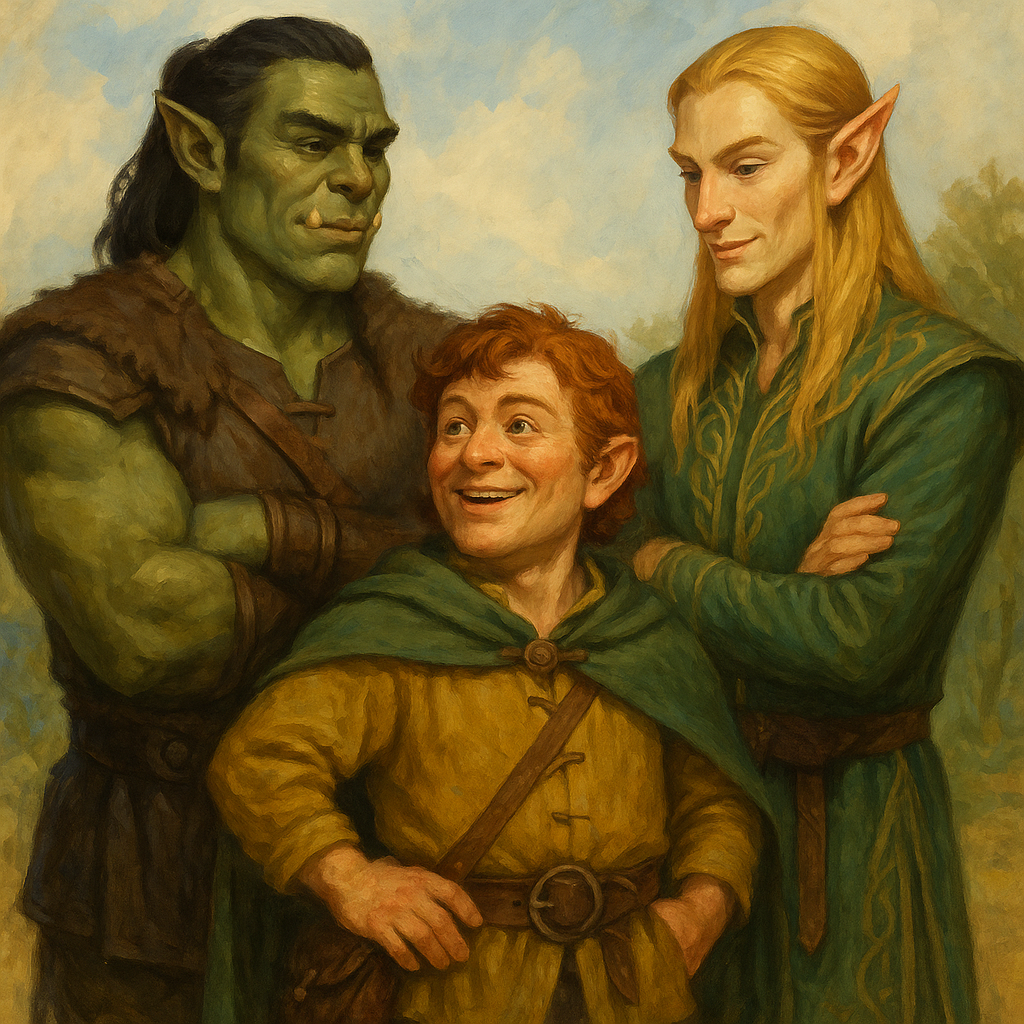 They are known for their diplomatic charm, often serving as neutral intermediaries in disputes between larger powers, especially in remote regions where caravans are often the only consistent contact between disparate cultures. It’s not uncommon for Wayfoot caravans to include members of multiple species—half-elves, beastkin, orcs, and even goblins—so long as they respect the communal ways and contribute to the good of the road.
Among elves, particularly the Sylvaren and Vaelsidhe, Wayfoots are regarded with fond curiosity. Their reverence for nature and seasonal rituals resonates with elven sensibilities, even if their irreverent humor and chaotic music festivals sometimes test elven patience. Wayfoots, in turn, view elves as mystical and slightly dramatic but deeply admirable.
With orcs, especially in places like Kalros or Dhuma, Wayfoots often form close bonds through shared respect for freedom and travel. While they lack the martial discipline many orcs value, Wayfoots earn admiration through cleverness, resilience, and their unshakable loyalty to those they trust.
Relations with dwarves can be hit or miss. Dwarves often find the Wayfoot love of improvisation and informal structure frustrating, while Wayfoots may view dwarven rigidity as stifling. That said, when a Wayfoot caravan returns regularly to a dwarven hold with good trade, relationships can blossom into decades-long friendships (often lubricated by ale).
They maintain a particularly close relationship with gnomes, especially tinkerers and illusionists, with whom they share a love of clever tricks, stories, and strange contraptions. Some mixed caravans blur the line between gnome and halfling culture entirely, producing inventions as often as they produce pranks.
Wayfoots treat beastfolk and planetouched individuals with an easy familiarity, rarely questioning origins or divine lineage. They judge on action, not appearance, and have little patience for racism or nobility-based hierarchies. This has earned them a reputation as allies to the marginalized and a thorn in the side of certain aristocratic powers.
Wayfoot tales are filled with romance, heroism, and betrayal involving a wide range of species. Their customs have naturally led to frequent intermarriage, especially with humans and other similarly-built folk. Many Wayfoot lineages include a bit of elven grace or gnomish brilliance, though bloodlines matter far less to them than bonds.
In short, Wayfoots thrive where others falter: in the in-between spaces, the forgotten paths, and the crossroads where cultures meet. They are, by nature and by choice, bridge-builders.
They are known for their diplomatic charm, often serving as neutral intermediaries in disputes between larger powers, especially in remote regions where caravans are often the only consistent contact between disparate cultures. It’s not uncommon for Wayfoot caravans to include members of multiple species—half-elves, beastkin, orcs, and even goblins—so long as they respect the communal ways and contribute to the good of the road.
Among elves, particularly the Sylvaren and Vaelsidhe, Wayfoots are regarded with fond curiosity. Their reverence for nature and seasonal rituals resonates with elven sensibilities, even if their irreverent humor and chaotic music festivals sometimes test elven patience. Wayfoots, in turn, view elves as mystical and slightly dramatic but deeply admirable.
With orcs, especially in places like Kalros or Dhuma, Wayfoots often form close bonds through shared respect for freedom and travel. While they lack the martial discipline many orcs value, Wayfoots earn admiration through cleverness, resilience, and their unshakable loyalty to those they trust.
Relations with dwarves can be hit or miss. Dwarves often find the Wayfoot love of improvisation and informal structure frustrating, while Wayfoots may view dwarven rigidity as stifling. That said, when a Wayfoot caravan returns regularly to a dwarven hold with good trade, relationships can blossom into decades-long friendships (often lubricated by ale).
They maintain a particularly close relationship with gnomes, especially tinkerers and illusionists, with whom they share a love of clever tricks, stories, and strange contraptions. Some mixed caravans blur the line between gnome and halfling culture entirely, producing inventions as often as they produce pranks.
Wayfoots treat beastfolk and planetouched individuals with an easy familiarity, rarely questioning origins or divine lineage. They judge on action, not appearance, and have little patience for racism or nobility-based hierarchies. This has earned them a reputation as allies to the marginalized and a thorn in the side of certain aristocratic powers.
Wayfoot tales are filled with romance, heroism, and betrayal involving a wide range of species. Their customs have naturally led to frequent intermarriage, especially with humans and other similarly-built folk. Many Wayfoot lineages include a bit of elven grace or gnomish brilliance, though bloodlines matter far less to them than bonds.
In short, Wayfoots thrive where others falter: in the in-between spaces, the forgotten paths, and the crossroads where cultures meet. They are, by nature and by choice, bridge-builders.
Known to Themselves As:
Wayfoots
Wayfoots
Scientific Name
Homo viatorum
Lifespan
90 to 120 years
Conservation Status
Stable.
Halflings (or Wayfoots) are a widespread and enduring people. Though they rarely form large cities or kingdoms of their own, their roaming nature and tight-knit communities ensure their survival.
Halflings (or Wayfoots) are a widespread and enduring people. Though they rarely form large cities or kingdoms of their own, their roaming nature and tight-knit communities ensure their survival.
Average Height
2'10" to 3'4" (86–102 cm), with little variation between genders.
Average Weight
35 to 50 lbs (16–23 kg), making them nimble and lightweight, suited for travel and stealth.
Related Organizations
"They walk like wind through tall grass—quiet, curious, and quick to vanish if you blink. There is a peculiar wisdom in their laughter, as though they remember truths we’ve long forgotten. I’ve never met a Wayfoot who wasn’t, in their own way, a keeper of stories."


I love the term 'Wayfoot'. What a great way for them to refer to themselves. Fascinating article about them. I love the idea of mobile herb gardens, and their naming traditions, and the tradition of the last loop knot touched me emotionally.
Explore Etrea | WorldEmber 2025
Thank you! I really wanted to honor the essence of the "Hobbit" while making these my own and I felt Tanaria really needed a lil more Whimsy lol and the Wayfoots seemed like the perfect way to do it! I really enjoyed writing this one.
"Every story is a thread, and together we weave worlds."
The Origin of Tanaria