
Gnome
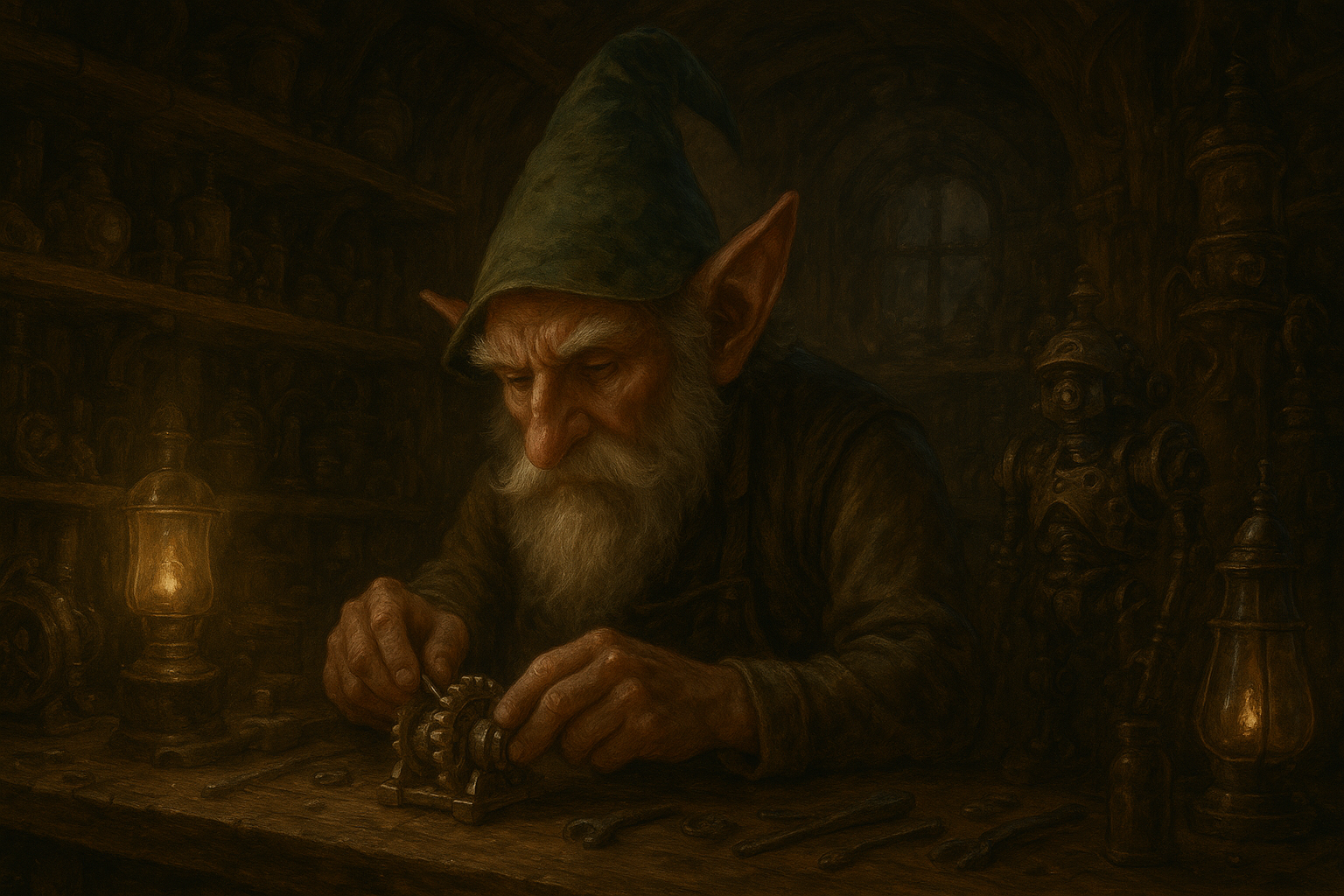
Gnomes are a lively, curious, and brilliant people known for their unyielding inventiveness, boundless imagination, and eccentric charm. Small in stature but massive in intellect, they embody the ideals of both Enkira and Molgrin, blending artistry and ingenuity in everything from architecture to arcane mechanisms. Their cities—often hidden in hills, woven into forests, or built beneath tree canopies—are feats of enchanted engineering and whimsical design, where contraptions clatter, music floats, and hats bounce with every step.
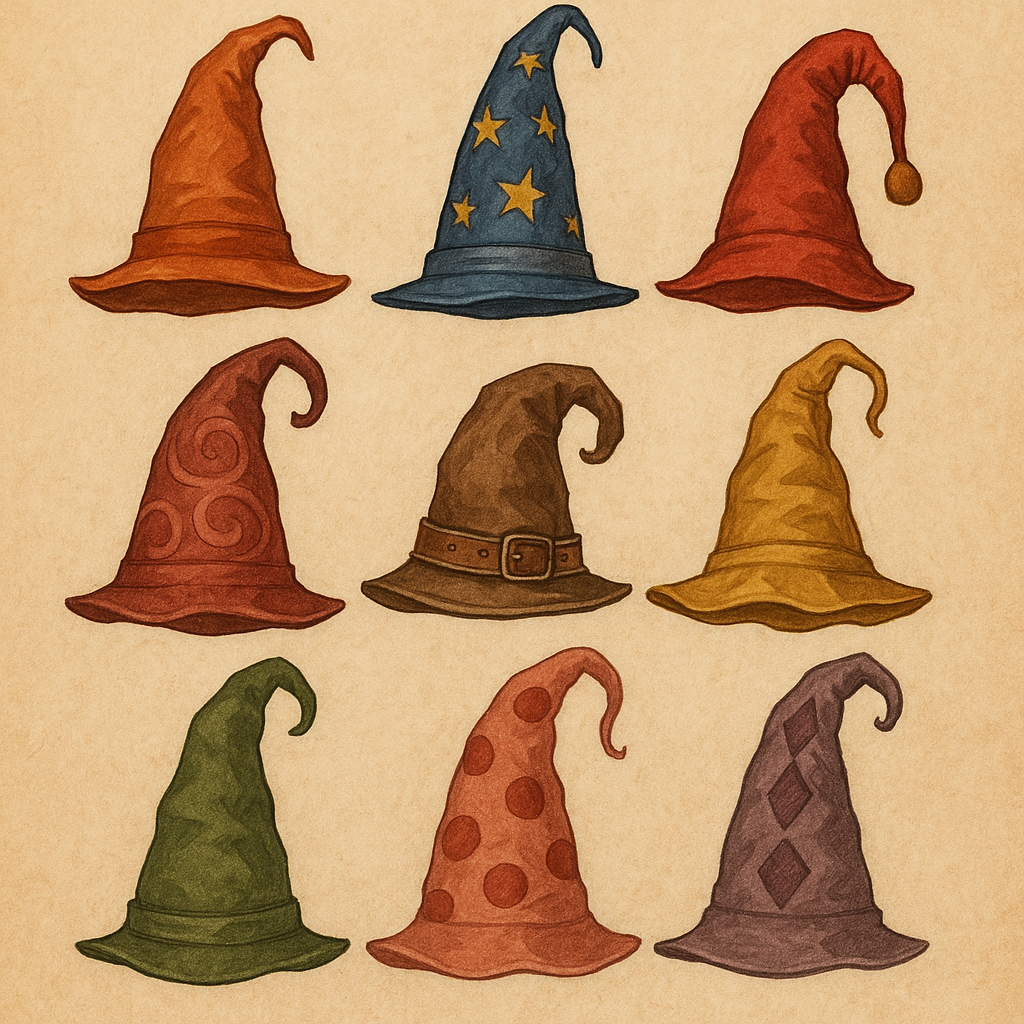
Culturally, gnomes prize individuality, and this is best seen in their iconic hats. These aren't just fashion statements; they serve as personal crests, magical conductors, social cues, and sometimes even storage or utility items. The style, material, and enchantment of a gnome’s hat can reflect profession, mood, marital status, magical alignment, or personal pride. A hatless gnome is either deep in mourning—or very, very drunk.
Gnomes are tinkerers and thinkers, endlessly curious and unafraid of failure. They consider explosions to be learning opportunities and often treat theories as jumping-off points for wild experimentation. They view other races with fondness and fascination, especially dwarves, with whom they share a strong cultural bond rooted in invention, craftsmanship, and a mutual appreciation for honest work. While gnomes often seem chaotic or scatterbrained to outsiders, their minds are as structured as their machines—they just process the world faster and with more flair.
Gnomes thrive in community but also deeply value privacy, with households protected by illusion wards, mischievous enchantments, and sometimes aggressive garden ornaments. They celebrate with wild festivals full of color, alchemy, light, and music, often hosted in honor of local inventors, new creations, or particularly glorious hat designs.
They are a people of paradox: whimsical yet wise, silly yet brilliant, humble yet proud. And above all, they are a joy to be around—so long as you don’t mind the occasional magical mishap or being dragged into a spontaneous science experiment.
Basic Information
Anatomy
Gnomes are a small-bodied humanoid species known for their compact musculature, agile builds, and expressive features. They typically stand between 3 to 4 feet tall and weigh 35 to 50 pounds, with denser bone structures than their size suggests. Despite their stature, gnomes are surprisingly durable and strong for their frame, a trait attributed to generations of burrow-dwelling and tool-heavy labor.
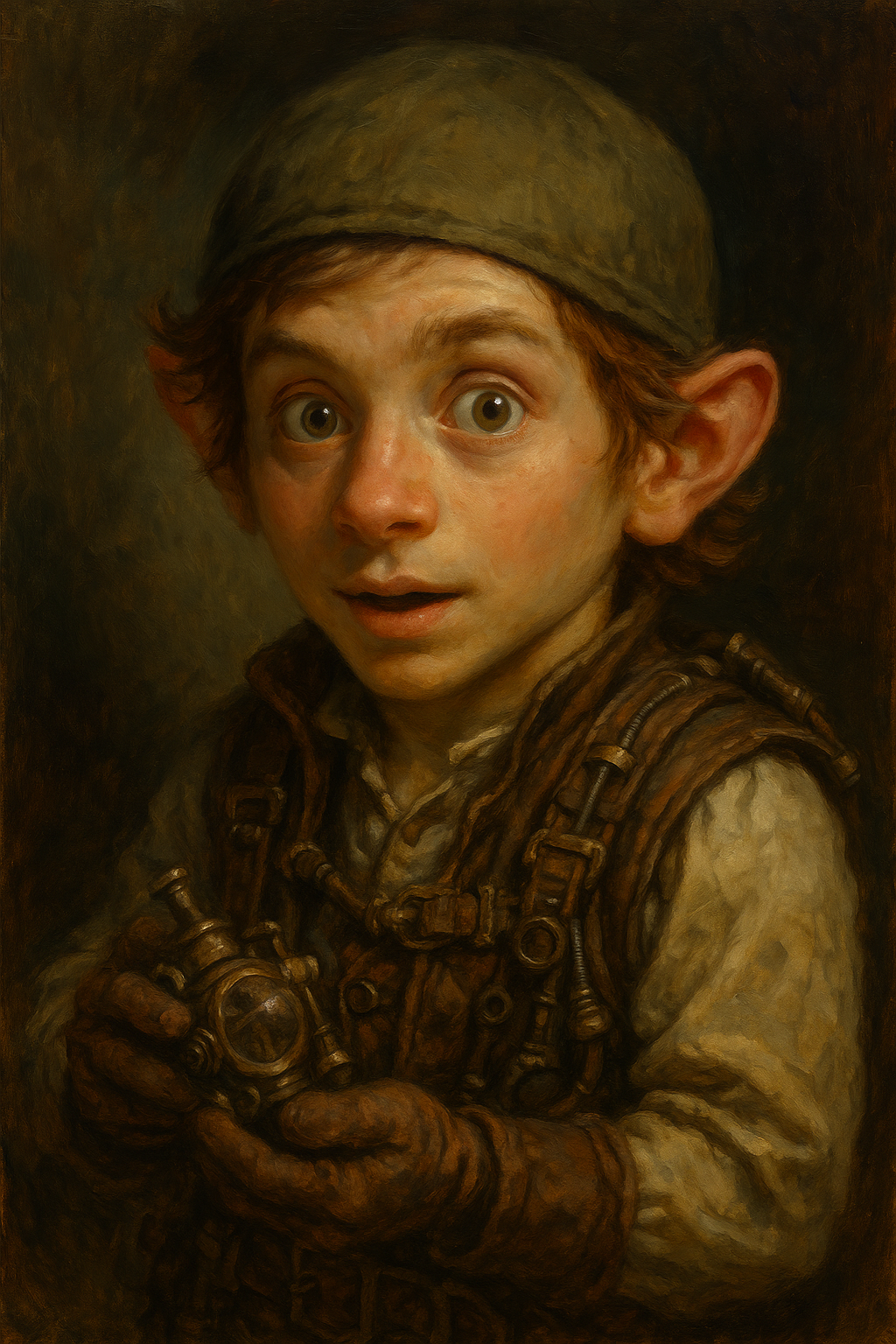 Their heads are slightly larger in proportion to their bodies, allowing room for their highly developed brains, an evolutionary trait linked to their intense cognitive processing and problem-solving abilities. Gnomes have large, forward-facing eyes adapted to low-light conditions, with excellent depth perception and color differentiation, ideal for fine work, gem cutting, and underground foraging.
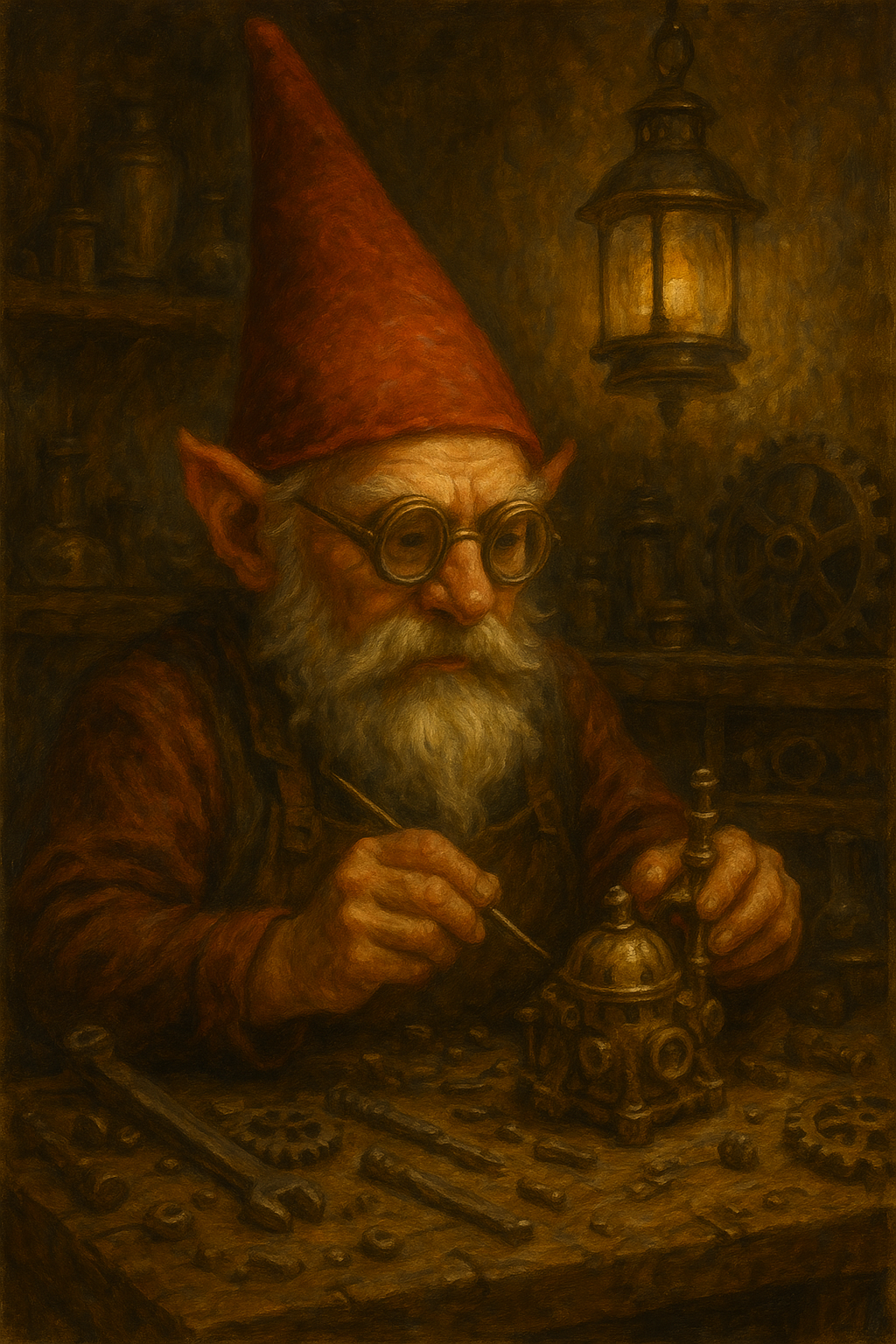
Skin tones range from pale peach to earthen browns and muted olives, with some lineages exhibiting a faint metallic or ashy sheen. Hair is thick and textured, often curly or coarse, and comes in a wide range of natural colors including browns, reds, blondes, and even slate or greenish hues in jungle or subterranean variants. Beards are common among males but not universal, and many style them with precision, often incorporating beads, braids, or tool holsters.
Their hands are small but dexterous, with short, powerful fingers and sturdy nails well-suited to tinkering, carving, and crafting. Gnomish feet are broad and strong, adapted for stability and long hours on workshop floors or rocky terrain. Despite their small size, gnomes are built for endurance, not speed, most prefer methodical, efficient movement over sprinting or acrobatics.
While not inherently magical in form, gnomes possess a latent resistance to magical influence, possibly due to long-term exposure to arcane energies in their tinkering or a natural mental fortitude that evolved alongside their inquisitive nature.
Their heads are slightly larger in proportion to their bodies, allowing room for their highly developed brains, an evolutionary trait linked to their intense cognitive processing and problem-solving abilities. Gnomes have large, forward-facing eyes adapted to low-light conditions, with excellent depth perception and color differentiation, ideal for fine work, gem cutting, and underground foraging.
Skin tones range from pale peach to earthen browns and muted olives, with some lineages exhibiting a faint metallic or ashy sheen. Hair is thick and textured, often curly or coarse, and comes in a wide range of natural colors including browns, reds, blondes, and even slate or greenish hues in jungle or subterranean variants. Beards are common among males but not universal, and many style them with precision, often incorporating beads, braids, or tool holsters.
Their hands are small but dexterous, with short, powerful fingers and sturdy nails well-suited to tinkering, carving, and crafting. Gnomish feet are broad and strong, adapted for stability and long hours on workshop floors or rocky terrain. Despite their small size, gnomes are built for endurance, not speed, most prefer methodical, efficient movement over sprinting or acrobatics.
While not inherently magical in form, gnomes possess a latent resistance to magical influence, possibly due to long-term exposure to arcane energies in their tinkering or a natural mental fortitude that evolved alongside their inquisitive nature.
Biological Traits
Gnomes are a small but hardy people with compact builds, strong constitutions, and a surprising amount of endurance for their size. Most stand between 3’2” and 4’0” tall, with adult weight typically ranging from 40 to 60 pounds. Their proportions tend toward shorter limbs and broader torsos, though this can vary slightly by region and ancestry.
They are long-lived, with an average lifespan of 220 to 280 years, though some reach beyond 300 in rare cases. Life expectancy is generally shorter in urban centers or among those who work with volatile materials—like artificers, alchemists, or miners—but longer in rural or clan-held regions with strong communal support.
Notably, gnomes possess a heightened resistance to toxins and illnesses, believed to be an evolved trait from generations of exposure to experimental chemicals, mushrooms, and deep-forest hazards. Their metabolic rate is slightly higher than humans, giving them quick reflexes and a tendency toward energy bursts rather than sustained stamina.
Their most defining biological trait, however, is their neuroplasticity—gnomes remain mentally agile well into old age, with memory, problem-solving, and language skills often peaking in their second century. It's not uncommon for a centenarian gnome to take up a completely new craft or trade just to “stay sharp.”
Genetics and Reproduction
Gnome reproduction follows standard mammalian patterns, with live births and extended gestation periods averaging 9 to 10 months. Fertility spans several centuries, though the gnomish reproductive rate is notably low by design rather than limitation—many gnomes delay or avoid childbearing entirely in favor of craft, travel, or scholarship. When gnomes do choose to have children, it is often a deeply considered event, celebrated communally and supported by extended kin networks.
Gnomes are genetically compatible with halflings and dwarves, though such unions are rare due to cultural and physiological differences. Offspring of mixed heritage typically lean toward the shorter parent’s stature, with unpredictable combinations of features. Gnome-human hybrids are exceedingly rare and almost always sterile, with lifespans drastically shorter than pure gnomes—often viewed with curiosity but also a hint of sorrow in gnomish society.
In terms of genetic traits, gnomish resilience and intellect are dominant, frequently passing on quick reflexes, acute perception, and a predisposition toward creativity or curiosity. Traits like vivid eye colors, exaggerated ears or noses, and nimble fingers are also strongly heritable.
Clans often track lineage with detailed genealogical tomes, not merely for tradition but to ensure the careful management of inherited magical gifts, inventive talents, or unusual mutations. Some clans even breed selectively—not for beauty, but for brilliance. These practices are more common among technocratic or arcane gnome societies, and are not without internal controversy.
Gnomish aging is slow and graceful, with signs of senescence appearing only in the final century of life. Children mature physically by 30–40 years of age, but emotional and social maturity is often delayed by gnomes’ long lifespans and extended adolescence, leading to what some scholars call a “second youth” that can last well into their first century.
Dietary Needs and Habits
Gnomes are omnivorous but lean heavily toward plant-based diets supplemented with nuts, seeds, fungi, and fermented products. They favor complex flavors and small, frequent meals over large feasts, and their digestive systems are adept at processing dense, fibrous materials like root vegetables and mushrooms. Many gnomes are lactose-tolerant well into adulthood, and fermented dairy products like spiced cheeses or yogurt-like curds are common staples in colder regions.
Due to their high metabolisms and small frames, gnomes require frequent caloric intake in small portions to maintain energy. Meals are often consumed “on the go” in bite-sized form, hand pies, rolls, trail mixes, and pickled roots are common traveling fare. Artisan gnomes may become so focused on their work that they forget to eat altogether, leading to the cultural norm of scheduled snack breaks and food being shared communally during crafting sessions.
Insect protein is not taboo in gnome culture, and in regions where other meat is scarce, many gnomes raise cricket or beetle farms for efficient protein. Conversely, in meat-rich areas, they prefer fowl, small game, or fish over red meat, which is often viewed as a luxury or celebratory dish.
Their cuisine is defined by bold spices, unusual pairings, and clever preparation, meals are as much art and experiment as nourishment. Food is also a frequent medium for enchantments and alchemy, with some gnomes practicing gastronomic magic that creates self-heating stews, singing tea kettles, or mood-enhancing pastries. This blending of sustenance and science reflects the core of gnomish life: invention, joy, and curiosity.
Behaviour
Gnomes are naturally inquisitive, sociable, and irrepressibly inventive. Their minds race with ideas and possibilities, often juggling multiple thoughts at once, which can make them appear distracted or chaotic to other species. In truth, gnomes possess a highly pattern-oriented cognitive structure, they thrive in environments filled with sensory input, data, and connections, and they excel at finding order in apparent disorder.
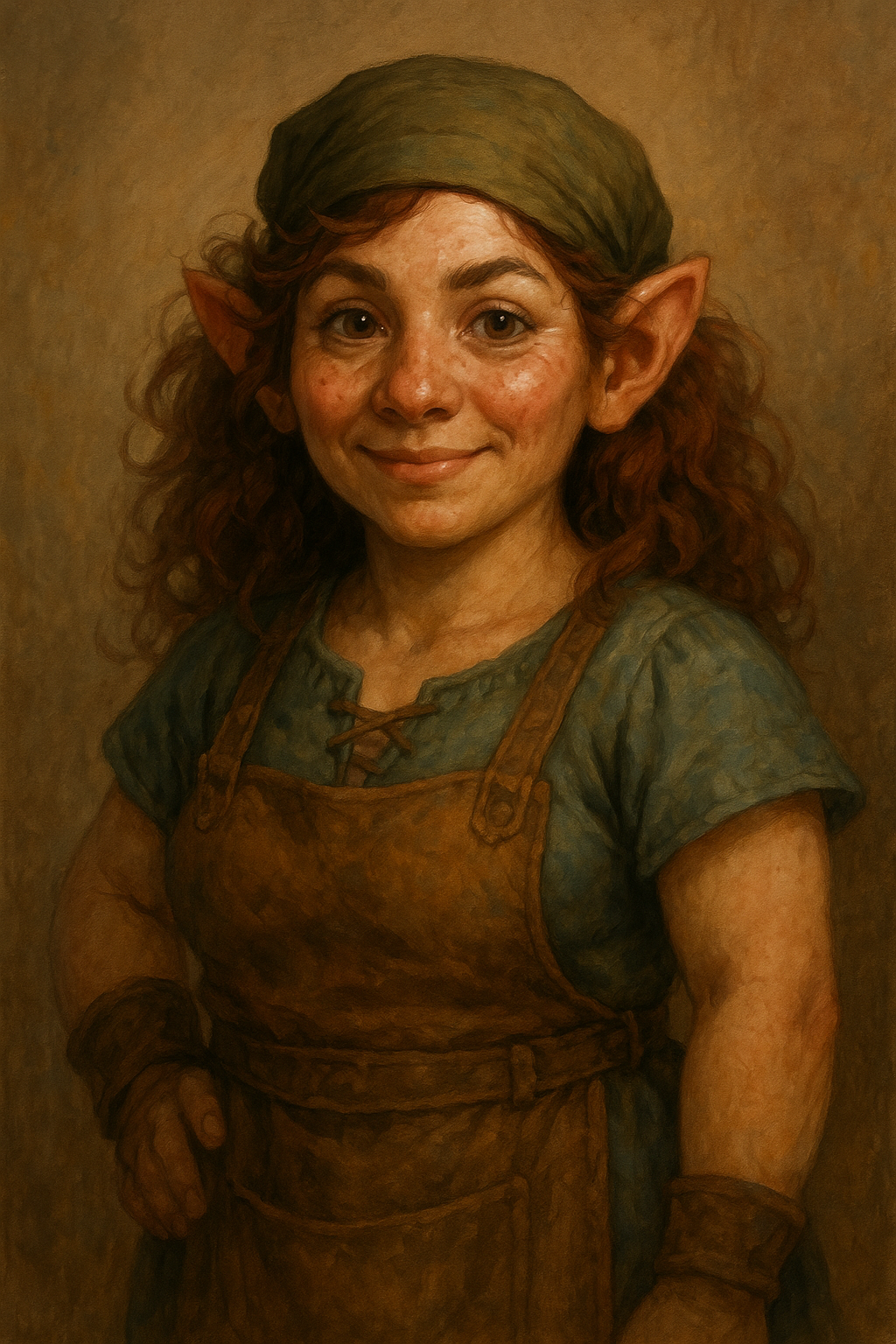 Most gnomes display pro-social behavior from a young age. They are cooperative, enthusiastic collaborators who take great joy in shared learning, problem-solving, and storytelling. Gnome culture values constructive debate, playful teasing, and shared wonder, which makes their communities feel both intellectually stimulating and emotionally safe for their kind.
Gnomes are rarely aggressive or violent. When threatened, they default to avoidance, misdirection, or clever traps, preferring strategy over confrontation. Their sense of humor can be biting, but rarely cruel, satire and irony are intellectual games rather than tools of malice. Many gnomes cope with stress or danger through humor, leading to a reputation as incorrigible jesters even in dire situations.
Psychologically, gnomes tend toward neophilia, a love of novelty. This trait drives both their creative genius and their occasional social eccentricities. They may hyperfixate on a single concept or invention for days, ignoring sleep, hygiene, or conversation, before bouncing to a new obsession with equal fervor. Despite this, they maintain strong community bonds and usually reintegrate smoothly after these “focus spirals.”
Emotionally, gnomes are highly expressive, their moods transparent and often intense, but short-lived. They process emotions quickly and are resilient in the face of disappointment or failure, which they typically treat as learning opportunities. However, they are deeply wounded by betrayal or intellectual condescension, and many gnomes hold generational grudges against those who mock or dismiss their work or culture.
Most gnomes display pro-social behavior from a young age. They are cooperative, enthusiastic collaborators who take great joy in shared learning, problem-solving, and storytelling. Gnome culture values constructive debate, playful teasing, and shared wonder, which makes their communities feel both intellectually stimulating and emotionally safe for their kind.
Gnomes are rarely aggressive or violent. When threatened, they default to avoidance, misdirection, or clever traps, preferring strategy over confrontation. Their sense of humor can be biting, but rarely cruel, satire and irony are intellectual games rather than tools of malice. Many gnomes cope with stress or danger through humor, leading to a reputation as incorrigible jesters even in dire situations.
Psychologically, gnomes tend toward neophilia, a love of novelty. This trait drives both their creative genius and their occasional social eccentricities. They may hyperfixate on a single concept or invention for days, ignoring sleep, hygiene, or conversation, before bouncing to a new obsession with equal fervor. Despite this, they maintain strong community bonds and usually reintegrate smoothly after these “focus spirals.”
Emotionally, gnomes are highly expressive, their moods transparent and often intense, but short-lived. They process emotions quickly and are resilient in the face of disappointment or failure, which they typically treat as learning opportunities. However, they are deeply wounded by betrayal or intellectual condescension, and many gnomes hold generational grudges against those who mock or dismiss their work or culture.
Additional Information
Social Structure
Gnomish society is loosely hierarchical but deeply communal, built more on respect for skill and contribution than rigid rank. Most gnomes belong to extended families or clans, some of which trace their lineages back for centuries. These clans act as both kinship networks and guild-like institutions, often specializing in a particular trade, craft, or area of knowledge—be it glassblowing, tinkering, horticulture, or storytelling. Leadership within a clan is typically held by a council of elders, elected masters, or in some regions, the individual with the most notable recent achievement.
In regions with high gnome populations, clan settlements—called "brambles" or "nests" colloquially—form self-governing communities that emphasize collaboration, innovation, and care for one another. Decision-making is often done via consensus or spirited debate, with formal voting reserved for serious disputes. Outsiders might find these debates chaotic, but to gnomes, interrupting, challenging, and rebutting are signs of intellectual engagement, not disrespect.
Individuality is valued, but isolation is not. Gnomes believe in the strength of shared purpose, and while many strike out on solo endeavors, they almost always return with gifts, stories, or new knowledge to contribute. It is common for travelers to be referred to as “Wandering Kin” and welcomed by any bramble they encounter.
Status among gnomes is earned, not inherited. A young inventor who creates something remarkable may be treated with more esteem than an elder resting on old laurels. That said, experience is still prized—particularly in mentorship. Older gnomes are expected to guide, teach, and challenge the next generation.
Though some clans are more traditionalist or reclusive, others integrate freely with other races, especially in cities and trade hubs. Gnomes are known to form cooperative networks across regions, maintained through letters, enchanted messengers, or clever courier systems, allowing them to share blueprints, recipes, stories, and gossip at a speed that puts even human guilds to shame.
“Never underestimate a gnome. Behind every wide-eyed smile is a mind calculating ten possibilities, three contingencies, and the exact angle to make it all explode beautifully.”
Geographic Origin and Distribution
Gnomes are widely distributed throughout Tanaria but are most heavily concentrated in regions that support innovation, experimentation, and community-driven industry. Notably:
Kamulos: Numerous gnomish enclaves thrive in and around Elim, where trade routes, arcane academies, and dwarven forges intersect. Their collaborative ties with dwarves, humans, and halflings are strongest here, especially among guild networks.
Drakoria (Central Hills & Borderlands): Several independent gnomish settlements have carved out hidden towns in the rolling hills and dense thickets, often warded with clever traps and illusions. These communities emphasize privacy, eccentric invention, and free thought.
Eithwyn: Coastal and Forest-dwelling gnomes here blend old-world wisdom with new-world adaptation. Known for aquatech and plantcraft, these gnomes are pioneers in hybrid technologies, often partnering with elves and sea-dwelling kin.
Necai (Urban Centers): A minority but respected presence in cities such as Dovresh and Cael’ith, Necai gnomes are known for their artistry, magical engineering, and their invention of complex urban systems, including clockwork familiars and rune-lit infrastructure.
Selmoria: Rare, but not unheard of. Some nomadic gnomish clans wander the borders of Zalhara’s harsher environments, often as scavengers, lorekeepers, or traders of forbidden tech.
While not migratory by nature, gnomes do tend to follow opportunity, intellect, and curiosity—leading to scattered individuals and families cropping up nearly anywhere in Tanaria where innovation is welcomed.
Average Intelligence
Gnomes are widely regarded as one of the most intellectually gifted mortal species in Tanaria. Their average intelligence is significantly above the humanoid norm, with most gnomes demonstrating high problem-solving capabilities, creative thinking, and rapid information retention from a young age.
This elevated cognitive baseline is likely both biological and cultural: gnomish brains are structurally adapted for complex thought and memory, while their societies place immense value on innovation, learning, and experimentation. Even a "simple" gnome craftsman tends to be proficient in engineering principles, herbal lore, or at least two languages.
While not every gnome is a genius, their species-wide average intelligence ranks among the highest of the known races, rivaled only by certain elves and ancient dragons
Perception and Sensory Capabilities
Gnomes possess exceptionally keen senses, particularly when it comes to fine detail, sound differentiation, and subtle vibrations. Their eyesight is not only sharp in daylight but 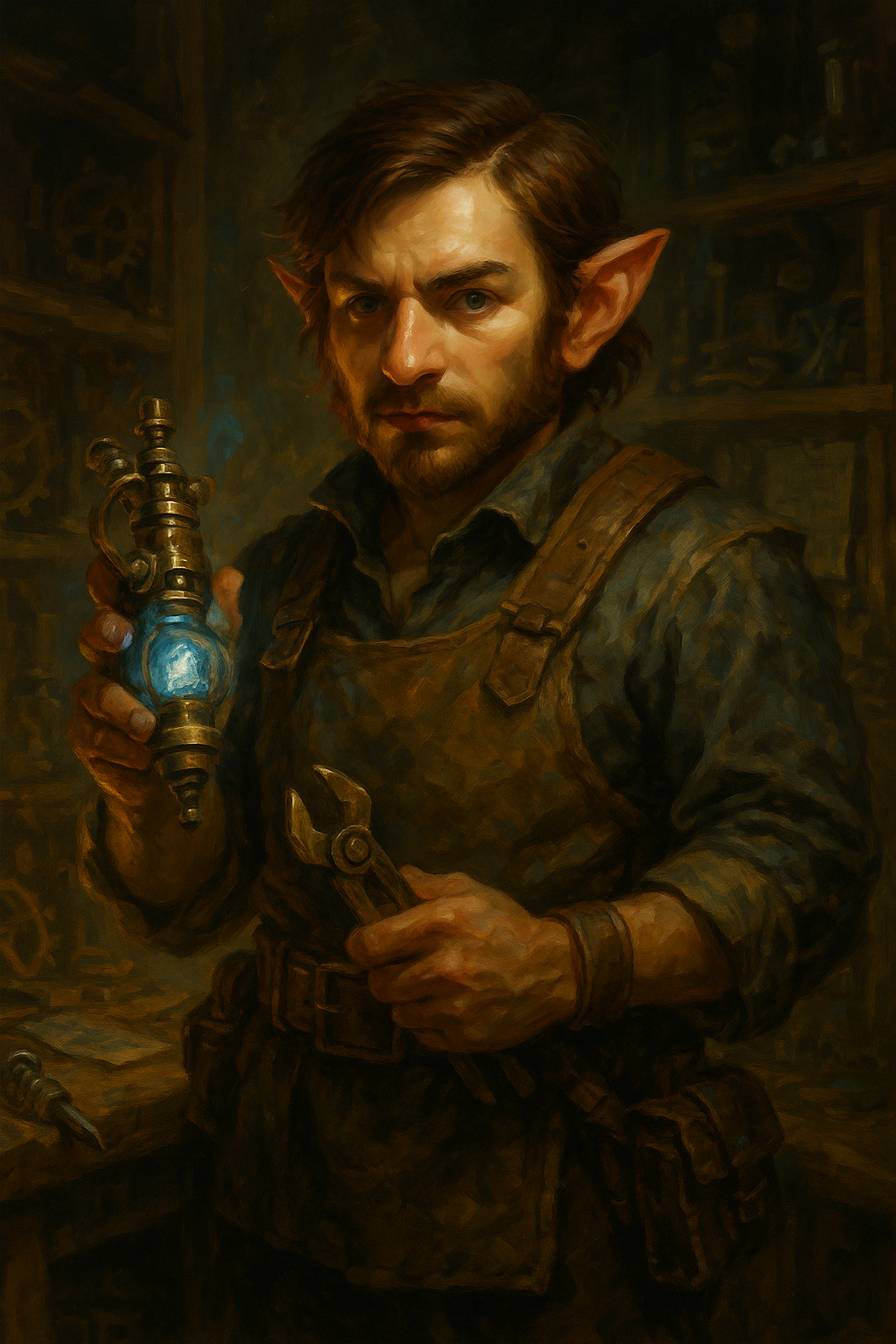 also adapted to low-light conditions—many gnomes possess natural low-light vision, allowing them to navigate dim environments such as workshops, mines, or underbrush with ease.
Their auditory processing is finely tuned; gnomes can distinguish pitch, tone, and cadence with remarkable precision, an evolutionary trait that supports their musicality, linguistic dexterity, and mechanical aptitude. Many can identify machinery faults or magical fluctuations simply by the sound they emit.
Their tactile sensitivity is also heightened, especially in the fingers—making them excellent inventors, scribes, and surgeons. Some clans, particularly those living near leyline intersections or in deep crystal caverns, claim to feel fluctuations in ambient magic. While this “extrasensory” perception has not been universally verified, there are enough recorded incidents of gnomes reacting to changes in magical fields or detecting hidden enchantments to suggest some limited innate magical sensitivity, particularly among gnome artificers or arcanists.
Despite their small size, gnomes are rarely caught unaware. Their combination of heightened perception, quick wit, and cultural obsession with "noticing what others miss" makes them excellent sentries, tinkers, and truth-seekers.
also adapted to low-light conditions—many gnomes possess natural low-light vision, allowing them to navigate dim environments such as workshops, mines, or underbrush with ease.
Their auditory processing is finely tuned; gnomes can distinguish pitch, tone, and cadence with remarkable precision, an evolutionary trait that supports their musicality, linguistic dexterity, and mechanical aptitude. Many can identify machinery faults or magical fluctuations simply by the sound they emit.
Their tactile sensitivity is also heightened, especially in the fingers—making them excellent inventors, scribes, and surgeons. Some clans, particularly those living near leyline intersections or in deep crystal caverns, claim to feel fluctuations in ambient magic. While this “extrasensory” perception has not been universally verified, there are enough recorded incidents of gnomes reacting to changes in magical fields or detecting hidden enchantments to suggest some limited innate magical sensitivity, particularly among gnome artificers or arcanists.
Despite their small size, gnomes are rarely caught unaware. Their combination of heightened perception, quick wit, and cultural obsession with "noticing what others miss" makes them excellent sentries, tinkers, and truth-seekers.
Civilization and Culture
Naming Traditions
Gnomish naming traditions are deeply personal, often whimsical, and sometimes downright confusing to outsiders — and that’s exactly how gnomes like it. A gnome’s name is
The current rumored longest name contender — written down in four separate ledgers, tattooed on a dare across a centaur’s backside, and recited only once without interruption (though allegedly with a nosebleed at the halfway mark) — is:
“Tibberwick Fizzlenog Brambletack the Third, Left-Handed Tinker of Windgleam Hollow, Dismantler of the Moon-Bound Mousetrap, Twice-Victor of the Riddlepint Ale Chug, Master of Improvised Cauldrons, Honorary Duck-Speaker of Marshlight-on-Bog, and the Sole Survivor of the Great Pudding Stampede.”
No one actually calls him that, of course. Most folks just say “Tibber” — or, if they’re annoyed, “you little menace.”
rarely just a label; it’s a statement, a joke, a riddle, or a memory encoded in syllables. Names evolve throughout a gnome’s life, and it’s not uncommon for a gnome to collect several over the decades, each reflecting a different era, profession, or mood.
Most gnomes are given a birth name by their parents, usually something melodic, multi-syllabic, and unique to the family line. This is followed by a chosen name that the gnome adopts as they come of age — often inspired by a personal discovery, achievement, or wild adventure. That chosen name may be poetic or absurd, like Whistlegear Tanglethorn or Marzipan Quickblink. Among close friends and kin, shortened nicknames or affectionate nonsense titles are common (Zippy, Fizz, Bub, Glim, etc.).
Family names tend to be compound words, frequently referencing elements of craft, nature, or personality: Copperwhistle, Glintforge, Thornwiddle, Merryshank, or Bitternib. However, not all gnomes use surnames. Some prefer a string of titles or accomplishments instead (e.g. “Zilba, Pie Queen of Three Valleys and Inventor of the Self-Baking Oven”) while others refuse surnames altogether as a form of rebellion or aesthetic minimalism.
In formal settings or when dealing with non-gnomes, gnomes may choose to simplify their names to avoid what they call “The Sigh” — the inevitable exasperated pause that follows introductions. Still, in their own communities, the more elaborate and eccentric the name, the more respect (or entertainment value) it tends to carry. Some clans even keep record-books of the longest names successfully used in a public speech without laughter. The current record holder is up for debate, as the witnesses can’t agree on whether hiccuping counts as laughter.Common Customs, Traditions and Rituals
The Gnomish Hat Tradition
History
Gnomes have long danced on the edges of other peoples' histories — present, influential even, but rarely the center of their own chronicles. This is not due to insignificance, but because gnomes themselves have often treated history as a curious backdrop to their present pursuits, not a chain binding them to the past. What records they do keep are vivid, scattered, and deeply personalized: carved into wind-chimes, embedded in song, coded into wearable jewelry, or stored in memory-encoded crystals decipherable only through specialized instruments or techniques. To outsiders, their timelines appear chaotic — to a gnome, it's a living mosaic.
Their origin myths are varied, sometimes contradictory, and often told with a wink. Some claim descent from Fey creatures who stumbled into the material world and simply never left. Others say gnomes were born from a lightning strike that hit a tree filled with curious squirrels. A few religious sects believe they were the gods’ first attempt at creating mortals — smaller, cleverer, and too fast to catch. None of these stories are considered truth, but all are treated with equal reverence and amusement.
In reality, gnomes are an ancient people with roots in multiple regions across Tanaria, with the highest concentration historically found in the low mountain valleys and leyline-rich forest belts. Their ability to adapt, innovate, and relocate has allowed them to survive wars, plagues, and colonization attempts without losing their core identity. Some gnome clans embedded themselves in the underground cities of dwarves; others traveled with nomadic caravans, trading inventions and stories; still others carved hidden sanctuaries in the roots of ancient trees.
Throughout history, they’ve been engineers, court advisors, spies, astronomers, alchemists, and sometimes, fools on purpose — believing that laughter can unlock just as many doors as logic. When other species underestimated them, gnomes leaned into it, letting their small size and eccentricities mask dangerous brilliance or long-term strategy. More than one war was tipped by a seemingly insignificant gnome who happened to be in the right place, asking all the wrong questions.
Though they rarely claim kingdoms, gnomes are everywhere — a thousand threads weaving through the histories of others, always curious, always moving, and always impossible to ignore once noticed.
Interspecies Relations and Assumptions
Gnomes maintain a generally favorable standing with most other species in Tanaria, though their hyperactivity, curiosity, and unconventional boundaries can occasionally strain those relationships. They’re seen as harmless by some, delightful by others, and deeply irritating by a few. Most gnomes mean well, but their tendency to poke at sacred relics, ask inappropriate questions, or "fix" things that aren't broken can lead to diplomatic hiccups.
They have a strong affinity for dwarves, especially those of Molgrin’s line, with whom they often collaborate on complex engineering projects. This relationship is rooted in mutual respect for craft, though dwarves often find gnomes exhausting. Elves, particularly the Aelvaren, tend to regard gnomes with a mix of fascination and condescension, occasionally treating them like children playing with dangerous toys.
Gnomes get along well with Humans, especially in bustling cities where novelty and invention are appreciated. They are welcome in most free cities, and their inventions, while unpredictable, often improve quality of life. However, in more traditionalist or conservative communities, gnomes are sometimes met with suspicion or irritation due to their disregard for protocol.
With beastfolk and Orc clans, the response varies. Some tribes see gnomes as amusing and clever allies, especially when they bring useful tools or baubles. Others see them as soft, overly cerebral, or lacking in survival sense. Still, gnomes rarely find themselves in open conflict with other species, and their disarming charm and relentless optimism tend to smooth over many bumps in the road.
Scientific Name
Gnomus ingenium
Lifespan
Average lifespan is 250–300 years, though some gnomes exceed this with arcane or alchemical assistance. They mature quickly but retain a youthful curiosity well into old age.
Conservation Status
Not threatened.
Gnomes are common across several regions of Tanaria, particularly in tech-forward societies or hidden inventor enclaves. Some clans remain isolationist, but the species as a whole thrives.
Average Height
Typically between 3’0” and 4’0” tall.
Average Weight
35 to 65 lbs
“Gnomes live like they’re racing time — not because they fear death, but because they can’t wait to see what comes next.”


Comments