
Direwolf
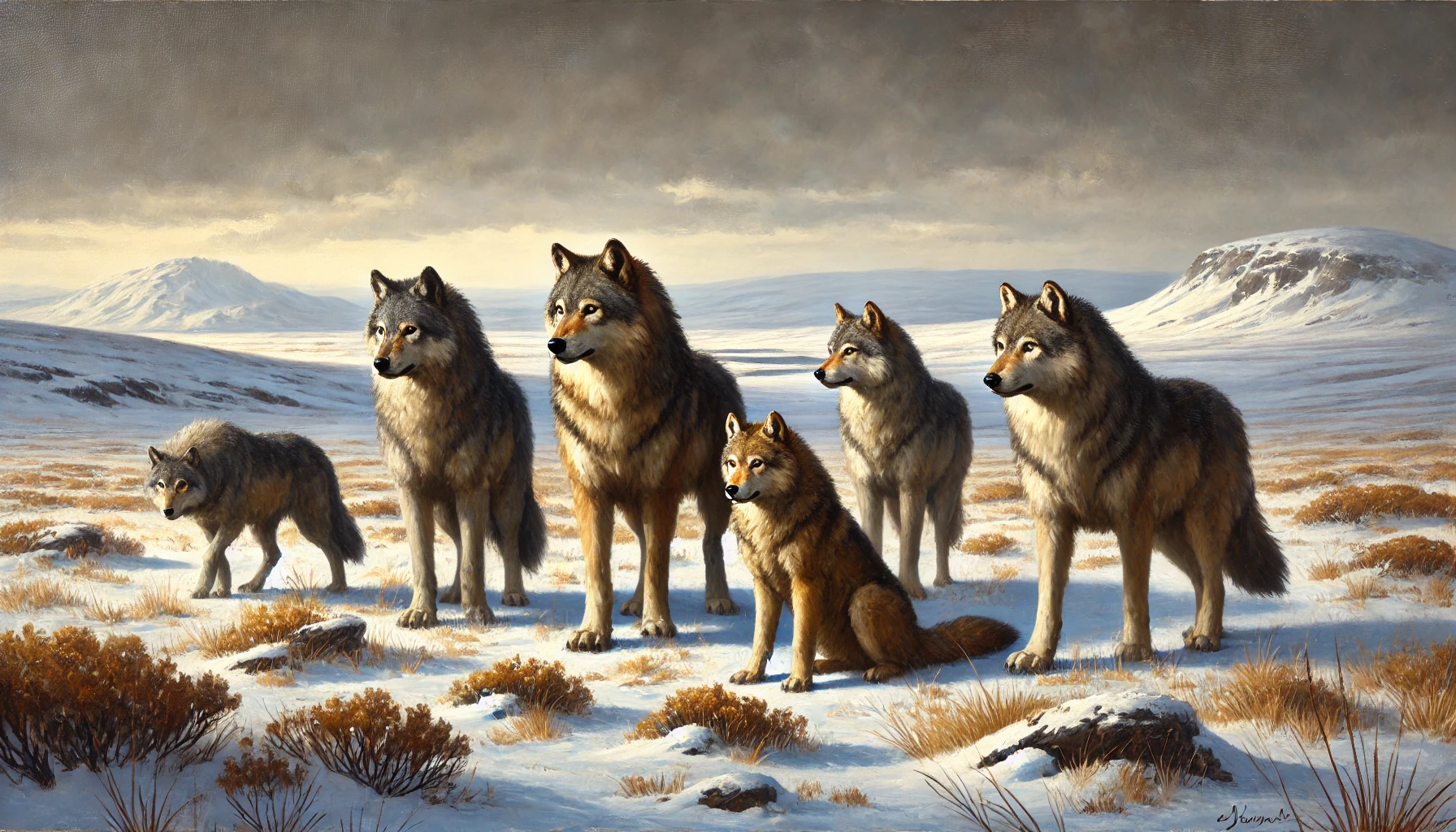
Direwolves are one of Tanaria’s most iconic apex canines: large, intelligent, and deeply tied to the untamed regions of the world. Standing nearly twice the height of a common Wolf and weighing as much as a small pony, they possess tremendous strength and a presence that commands respect. Direwolves are not simple predators, they are strategic hunters, capable of coordinated pack tactics and long-range endurance unmatched by most natural creatures.
Their thick coats, powerful shoulders, and broadened skulls give them a formidable silhouette, but it is their keen awareness and almost uncanny social intelligence that make them both feared and revered. In some regions, direwolves coexist uneasily with humanoid settlements; in others, they are mythologized as guardians of the wild or harbingers of winter. Only the hardiest hunters or magically resilient individuals dare face a direwolf alone.
Despite their reputation, direwolves are not inherently hostile. They are territorial, hierarchical, and protective of pack and land. Those who respect their boundaries often pass unchallenged, those who do not quickly learn why direwolves are considered legends of the wilderness.
Basic Information
Anatomy
Direwolves possess a physique engineered for power, endurance, and survival in unforgiving terrain. Their bodies are significantly larger than those of common wolves, with adults standing shoulder-high to an orc and weighing enough to serve as viable mounts for seasoned warriors. Their structure reflects a perfect balance between brute strength and agile predatory movement.
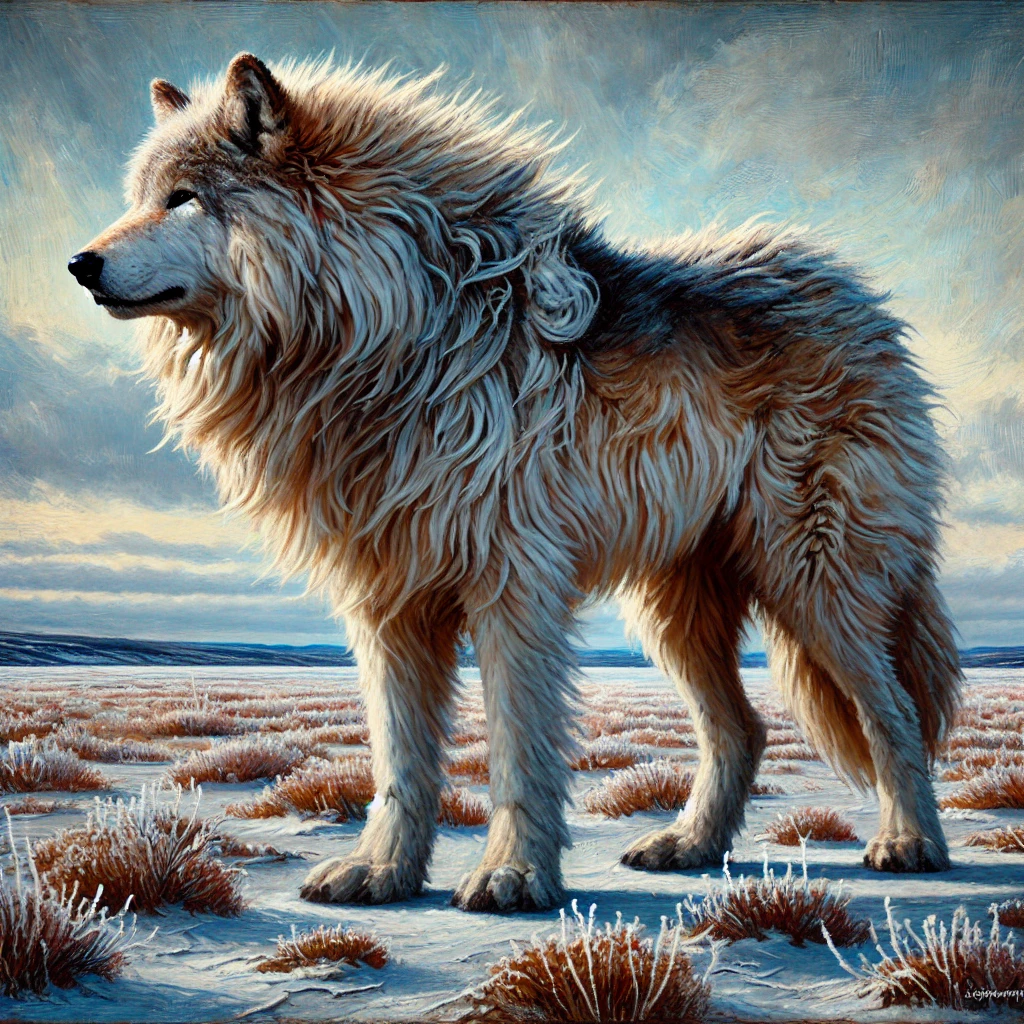
The most striking feature of a direwolf is its immense skull. Broad, heavy, and reinforced with dense bone, it supports massive jaw muscles capable of delivering crushing force. Their teeth are long and curved, optimized for puncturing thick hides and breaking bone with ease. The muzzle is slightly shorter than a typical wolf’s, giving the head a blockier, more intimidating profile.
Direwolves are covered in a dense double coat that varies in length depending on region. Northern populations grow thick, insulating fur with coarse guard hairs that repel snow and water, while southern or high-mountain packs develop shorter but still heavy coats suited to cooler nights and rugged stone environments. Coloration ranges from silvery gray and charcoal to near-white or shadow-black, providing natural camouflage in their habitats.
Their limbs are exceptionally powerful. Front legs are broad and heavily muscled, giving them explosive acceleration and the ability to wrestle large prey to the ground. Hind legs provide incredible leaping strength and long-distance stamina. Their paws are wide with tough pads, allowing silent movement and sure footing on loose shale, snowpack, or forest debris.
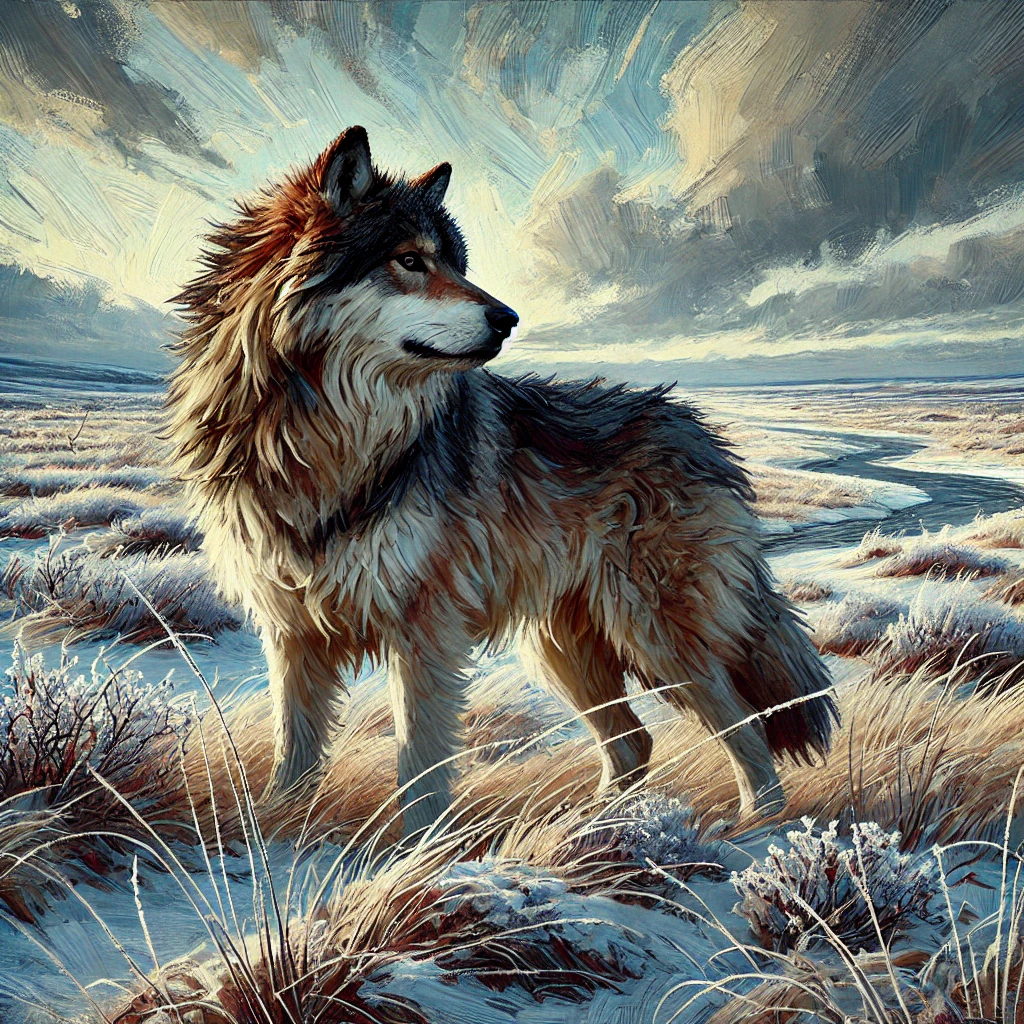 Direwolf eyes tend to be brighter and more expressive than those of common wolves. Shades of amber, ice blue, and deep gold are common, often reflecting an unnerving level of intelligence and emotional depth. Their ears are large and highly mobile, granting exceptional directional hearing even across great distances.
Despite their bulk, direwolves move with surprising grace. Their spines are flexible, allowing rapid mid-stride adjustments and tight maneuvering during pack hunts. Their tails, long and expressive, serve both as communication tools and counterbalance mechanisms during sprints, climbs, or rapid turns.
Magic rarely manifests physically, but many scholars believe a faint primal aura surrounds direwolves, especially alphas. This aura is subtle yet palpable to druids, rangers, and beastmasters, suggesting a deep ancestral tie to Thalor, Lord of Beasts, who embodies survival and the untamed wilderness.
Direwolf eyes tend to be brighter and more expressive than those of common wolves. Shades of amber, ice blue, and deep gold are common, often reflecting an unnerving level of intelligence and emotional depth. Their ears are large and highly mobile, granting exceptional directional hearing even across great distances.
Despite their bulk, direwolves move with surprising grace. Their spines are flexible, allowing rapid mid-stride adjustments and tight maneuvering during pack hunts. Their tails, long and expressive, serve both as communication tools and counterbalance mechanisms during sprints, climbs, or rapid turns.
Magic rarely manifests physically, but many scholars believe a faint primal aura surrounds direwolves, especially alphas. This aura is subtle yet palpable to druids, rangers, and beastmasters, suggesting a deep ancestral tie to Thalor, Lord of Beasts, who embodies survival and the untamed wilderness.
Biological Traits
Direwolves are built for endurance, strength, and survival in harsh environments. Their bodies are heavily muscled with reinforced bone structure, especially in the shoulders, jaws, and forelimbs. Their coats are dense and layered, providing insulation in cold climates and protection from wind, thorns, and shallow weapon strikes.
They possess heightened senses, particularly in scent and low-light vision, allowing them to track prey or threats across great distances. Direwolves have a wide stride and powerful hindquarters that enable long-distance travel without fatigue. Their metabolism is efficient at processing high-fat, high-protein diets, which fuels both their stamina and cold tolerance.
Pack communication is supported by a complex range of vocalizations and body-language cues. Their cognitive abilities exceed that of ordinary wolves; direwolves are capable of problem-solving, route planning, and recognizing individual humanoids by voice, scent, and behavior.
Ecology and Habitats
Direwolves thrive in the untamed regions of Tanaria, favoring landscapes where their size, endurance, and cooperative hunting strategies give them a natural advantage. Their presence is a hallmark of healthy wilderness, and their movements often shape the behavior of other predators and prey species throughout their territories.
Direwolves prefer cold or temperate environments, particularly dense forests, taiga, high mountain ranges, and windswept tundra. Their thick coats and powerful bodies allow them to withstand frigid winters and long periods of scarcity. Packs establish large territories, sometimes spanning dozens of miles, and migrate seasonally to follow herd animals or avoid competition with other apex predators. Because of this mobility, direwolves are seldom found near major settlements unless driven by hunger or encroachment.
Their ecological role centers on regulating large herbivore populations. Direwolf packs primarily hunt elk, aurochs, moose, and other sizable prey, culling the weak or sick and maintaining herd health. In regions where direwolves decline, herbivore overgrazing becomes a serious issue, leading to soil erosion and forest dieback. This unintended chain reaction has earned direwolves the grudging respect of even those who fear them.
Direwolves compete with other major predators, including manticores, giant bears, and wargs. Conflicts are rare but fierce, and packs often adjust territory boundaries to avoid unnecessary losses. In areas influenced by old magic, direwolves have adapted to coexist with more exotic fauna, using cooperative tactics to drive off threats too dangerous for solitary hunters.
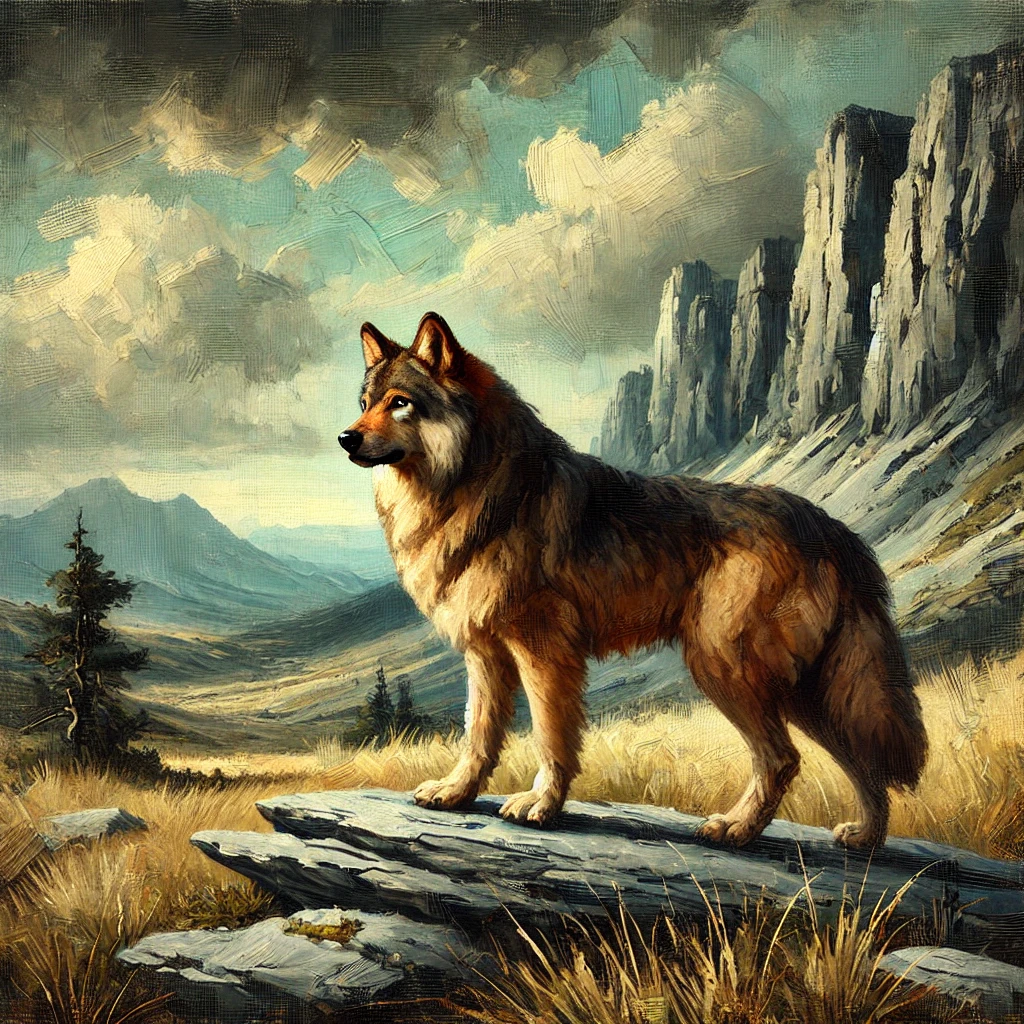 Packs establish dens in sheltered locations: caves, hollowed hillsides, and dense thickets protected by natural obstacles. These dens serve as nurseries during the pup-rearing season and as safe havens during severe weather. Direwolves maintain multiple fallback shelters across their territory, instinctively preparing for threats, storms, and migration.
Where direwolves and Orc clans coexist, a symbiotic balance forms. Orcs leave portions of their hunting grounds untouched to support direwolf packs, and in return the wolves keep rival predators at bay. Among some clans, direwolves serve as early-warning sentinels, responding to distant disturbances long before humanoids detect danger.
Though they seldom approach civilization, direwolves are remarkable adapters. Packs pushed from their native ranges may settle in less ideal terrain — scrublands, rocky badlands, or snowy lowlands — but they always remain most vigorous in broad, wild landscapes where their strength and coordination can flourish unchallenged.
Packs establish dens in sheltered locations: caves, hollowed hillsides, and dense thickets protected by natural obstacles. These dens serve as nurseries during the pup-rearing season and as safe havens during severe weather. Direwolves maintain multiple fallback shelters across their territory, instinctively preparing for threats, storms, and migration.
Where direwolves and Orc clans coexist, a symbiotic balance forms. Orcs leave portions of their hunting grounds untouched to support direwolf packs, and in return the wolves keep rival predators at bay. Among some clans, direwolves serve as early-warning sentinels, responding to distant disturbances long before humanoids detect danger.
Though they seldom approach civilization, direwolves are remarkable adapters. Packs pushed from their native ranges may settle in less ideal terrain — scrublands, rocky badlands, or snowy lowlands — but they always remain most vigorous in broad, wild landscapes where their strength and coordination can flourish unchallenged.
Dietary Needs and Habits
Direwolves are obligate carnivores with high metabolic demands, requiring large quantities of protein to sustain their immense size and stamina. In the wild, a mature direwolf consumes the equivalent of 20–35 pounds of meat per day, depending on season, territory, and activity level. Packs typically hunt large game, aurochs, mountain elk, tundra boar, and even young drakes when desperate, using coordinated tactics that rely on endurance and overwhelming strength rather than burst speed.
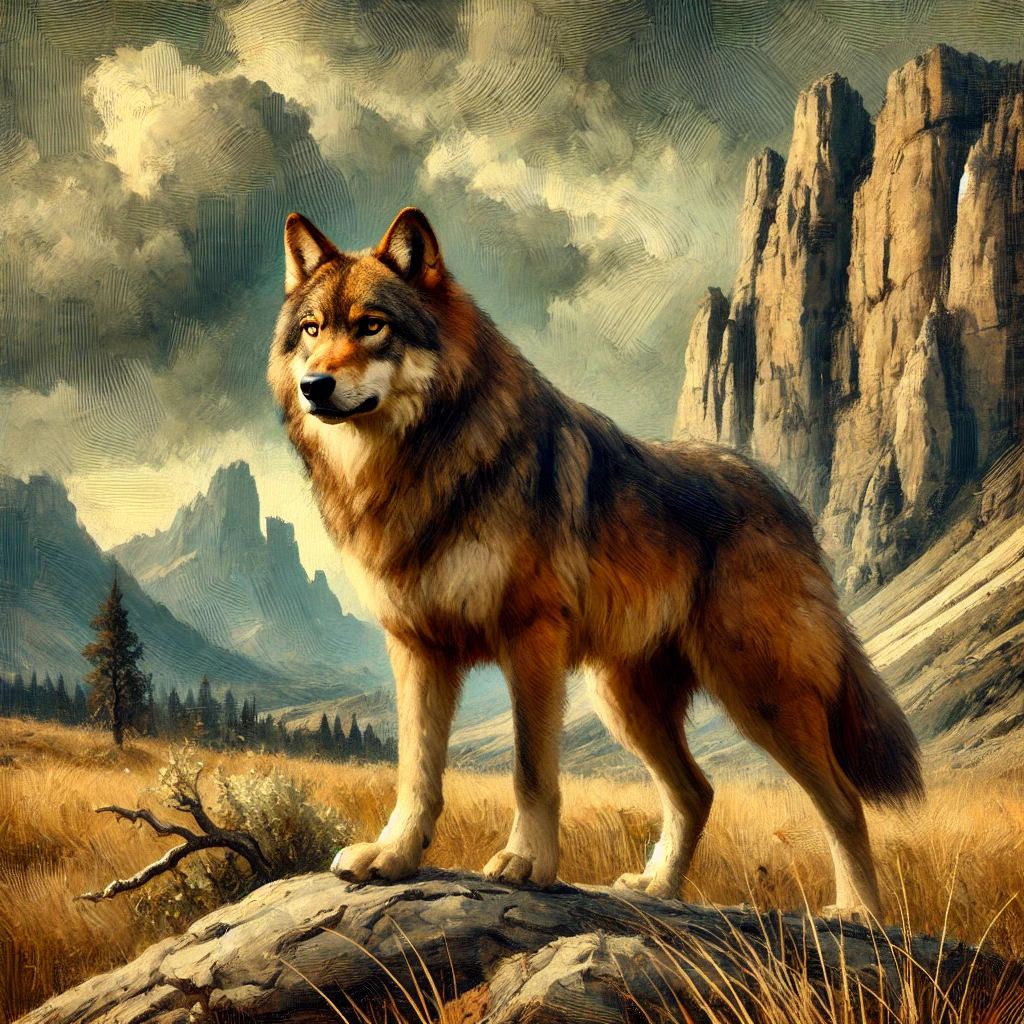 Direwolves prefer fresh kills and rarely scavenge unless resources are scarce. Their hunting cycles follow a predictable pattern: long-distance tracking, strategic encirclement, and an explosive final push. After a large kill, a pack will gorge heavily, then rest for one or two days before hunting again. Their digestive systems are efficient at processing dense muscle and fat but struggle with plant matter, which they instinctively avoid.
Tamed direwolves require similarly high-protein diets. Orc clans that work with them maintain specialized feeding routines, often providing:
Direwolves prefer fresh kills and rarely scavenge unless resources are scarce. Their hunting cycles follow a predictable pattern: long-distance tracking, strategic encirclement, and an explosive final push. After a large kill, a pack will gorge heavily, then rest for one or two days before hunting again. Their digestive systems are efficient at processing dense muscle and fat but struggle with plant matter, which they instinctively avoid.
Tamed direwolves require similarly high-protein diets. Orc clans that work with them maintain specialized feeding routines, often providing:
- raw or lightly cooked meat
- rendered fat during winter
- marrow bones for jaw strength and mental stimulation
- organ meat for nutrient balance
Behaviour
Direwolves possess a level of social intelligence and emotional depth that sets them apart from ordinary wolves. They operate within strict hierarchical pack structures built around cooperation, discipline, and mutual protection. At their core, direwolves value stability, order, and loyalty, and most of their behaviors reflect a need to maintain these internal pack dynamics.
In the wild, direwolves communicate through a wide range of behaviors: subtle ear shifts, tail angles, controlled vocalizations, and structured physical positioning. Conflict within packs is rare and typically resolved through displays of posture rather than violence. Direwolves prefer clarity and established roles, uncertainty within the hierarchy creates stress, which can lead to short tempers or heightened territoriality.
Their psychology is defined by a blend of patience and decisive action. Direwolves spend long periods observing or tracking without rushing, conserving energy until the moment they commit. Once engaged, however, their focus is absolute; they do not abandon a pursuit or a defended position unless forced.
Direwolves have strong emotional bonds both to their packs and to individuals they view as pack-adjacent. This trait is what allows certain orc clans to tame and work with them. A direwolf will not obey out of dominance alone; it requires trust, consistency, and clarity of intent. Once a handler is accepted into their social structure, direwolves show remarkable loyalty, protectiveness, and responsiveness to non-verbal cues.
Despite their intimidating size, direwolves are not naturally aggressive toward humanoids unless provoked or threatened. Their aggression is typically territorial, not impulsive. They guard dens, kill sites, and young with unwavering commitment and will not tolerate intrusion without warning displays. Those who respect these boundaries can coexist near direwolf territory with minimal conflict.
Domesticated direwolves retain their pack instincts. They thrive when given:
“They are not creatures of rage, as stories claim. A direwolf is the winter made flesh: quiet, watchful, and patient until the moment patience ends.”
- consistent routines
- clear expectations
- a stable hierarchy
- meaningful work or physical tasks
Additional Information
Geographic Origin and Distribution
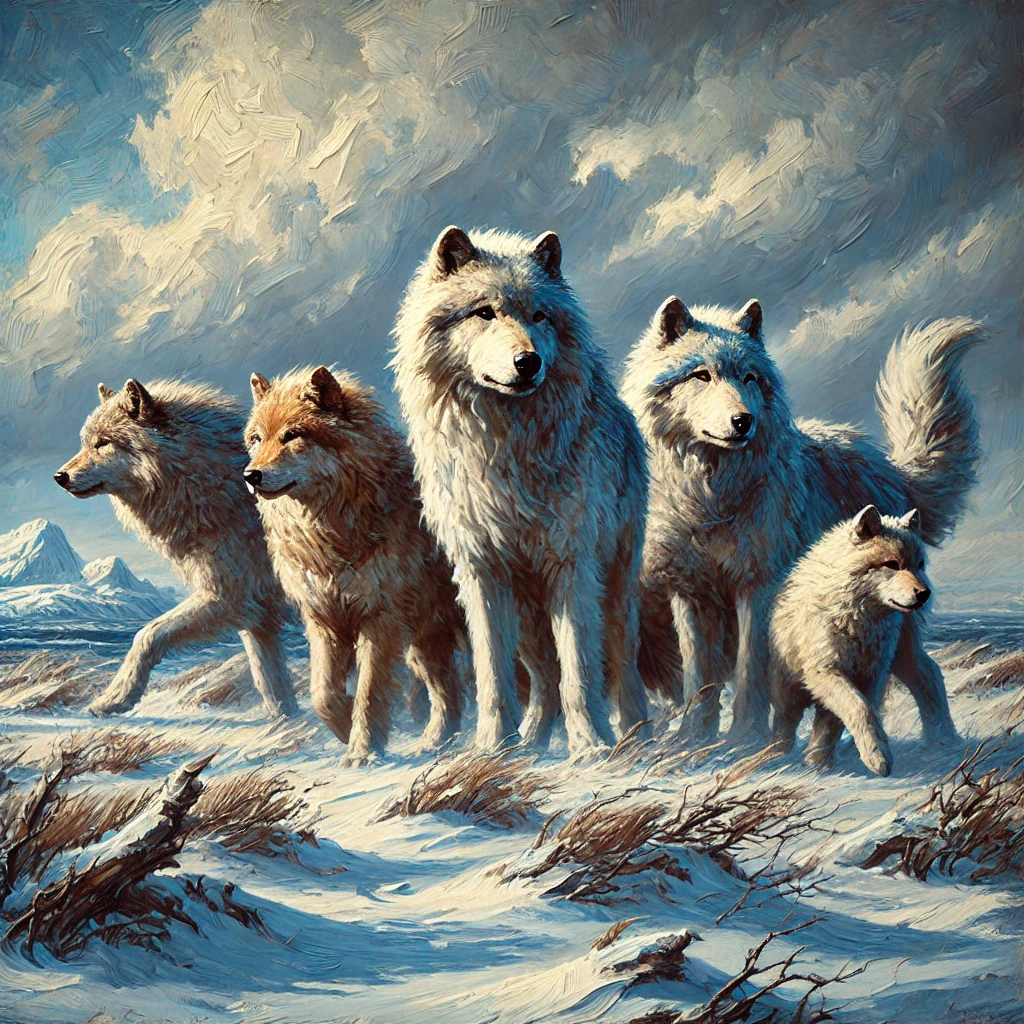
Direwolves are native to several of Tanaria’s most rugged and untamed regions, thriving in climates where endurance, strength, and thick coats provide a distinct survival advantage. Their range is broad, but populations vary in density and subspecies traits across the continent.
Kalros & the Northern Reaches
The highest concentrations of direwolves are found in Kalros, particularly throughout its snowbound forests, windswept tundra, and mountain valleys. These populations are the largest and heaviest, adapted to long winters and deep snows. Many Kalrosi orc clans have forged long-standing partnerships with these wolves, using them as mounts, companions, and scouts.The Zandari Mountains & Dhuma’s Highlands
Smaller but highly resilient populations inhabit the Zandari mountain range, roaming along crags, high passes, and alpine stretches. These direwolves are leaner and more agile than their northern counterparts. Orc clans traveling the Zandari routes often interact with these wolves, sometimes trading food or forming temporary cooperation with nearby packs.Dunmara & the Western Wilds
Direwolves exist in lower numbers across Dunmara’s rugged moorlands and dense pine forests. These wolves are medium-sized, excellent long-distance trackers, and occasionally appear in local folklore as omens or guides.Zalhara’s Highland Rim
A small, dark-coated subspecies survives along the cooler highlands that border Zalhara, though they rarely approach populated territories. These direwolves are elusive and adapted to rocky terrain, making them difficult to study and harder to tame.Perception and Sensory Capabilities
Direwolves possess exceptional sensory acuity, surpassing that of ordinary wolves and placing them among the most perceptive predators in Tanaria. Their senses are tuned for both long-range detection and split-second reaction, making them formidable hunters, guardians, and mounts.
Their sense of smell is extraordinarily refined. Direwolves can track prey across vast distances, even through shifting winds or snowfall. Old blood trails, faint territorial markings, or the subtle changes in scent that indicate fear or illness are all easily distinguished. Orcish beastmasters claim a direwolf can smell a lie — not literally, but rather sense the tension, fear, or chemical changes in a person attempting deceit.
Hearing is equally heightened. Direwolves can detect low-frequency vibrations and distant sounds beyond the range of most humanoids. The rotation and articulation of their ears allow precise triangulation of movement, making them nearly impossible to ambush. Packs use harmonic howling — layered vocalizations that blend pitch and resonance — to communicate across miles, coordinating hunts or warning of intruders.
Vision varies among regional populations but is uniformly excellent. Northern direwolves have superior night vision, allowing them to hunt in near-total darkness, while forest and mountain varieties excel at tracking motion in cluttered terrain. Their eyes pick up subtle shifts in posture and breath, enabling them to read body language with uncanny accuracy. This contributes to the deep bond they form with experienced riders or handlers.
Beyond their physical senses, many druids and scholars argue that direwolves possess a faint extrasensory awareness. While not magical in the arcane sense, direwolves often detect approaching storms, seismic instability, or shifts in natural balance before they occur. Packs may migrate early ahead of harsh winters or sudden predator influxes, suggesting an instinctual connection to environmental rhythms.
Some alphas exhibit an almost preternatural leadership presence — a subtle aura that influences pack cohesion and morale. While unverifiable by traditional study, orc shamans attribute this trait to Thalor’s touch, marking certain direwolves as embodiments of the wild’s deepest instincts.
Genetic Descendants
Scientific Name
Canis magnus ferox
Lifespan
18–25 years in the wild
Conservation Status
Direwolves occupy a complicated ecological position. Their populations fluctuate dramatically depending on seasonal migration, prey availability, and conflict with expanding settlements. Because of this, most naturalists categorize their status as:
Near Threatened
Average Height
Adult Males: 5 ft (152 cm) at the shoulder
Adult Females: 4.5 ft (137 cm) at the shoulder
Adult Females: 4.5 ft (137 cm) at the shoulder
Average Weight
Adult Males: 550–700 lbs (250–320 kg)
Adult Females: 450–600 lbs (200–270 kg)
Adult Females: 450–600 lbs (200–270 kg)
Average Length
Body Length: 7.5–9 ft (228–274 cm)
Tail Length: 2.5–3 ft (76–91 cm)
Tail Length: 2.5–3 ft (76–91 cm)
Body Tint, Colouring and Marking
Direwolves display a wide but environmentally consistent range of coat colours, each adapted to the terrain in which their lineage evolved. Their fur is thick, layered, and coarse on the outer surface, with a dense insulating undercoat. Colour patterns serve both camouflage and social signaling within the pack.
Base Coat Colours
- Ash-grey – most common; widespread across Kalros and the Northern Reaches.
- Charcoal black – prevalent in mountain packs; blends with shadowed rock.
- Frost white – rare; found in deep northern territories with persistent snow.
- Tundra brown – mottled earth tones common in Zandari and Dhuman highlands.
- Steel-blue grey – a distinctive refractive shade found in older lineages.
Markings
- Dorsal stripe – dark line running along the spine; common in mountain wolves.
- Facial masking – dark shading around eyes and muzzle, creating strong expressions.
- Shoulder barring – subtle striping or darker patches across the shoulders.
- Belly lightening – pale or white underbellies for winter camouflage.
- Tail-tipping – contrasting tail tips (black, white, silver) used in visual signalling.
Domesticated Variants
Direwolves raised by orc clans show slightly greater marking clarity due to generational handling.- Cleaner, sharper facial masks
- Brighter eye-adjacent streaks
- More distinct dorsal lines
- Rare piebald-style spotting in semi-domesticated lines
Seasonal Shifts
- Winter coats – paler, denser, heavier insulation
- Summer coats – darker, shorter, reduced density
Unique Traits
- Strong nighttime eye shine from reflective retinal layers
- Faint iridescence in guard hairs of older wolves
- Scar-striped regrowth creating lighter or darker streaks
“A direwolf doesn’t follow strength alone. It follows steadiness. Show it who you are every day, and it will walk with you until your bones turn to dust.”


I love the relationship between the direwolves and the orcs, and the fact they have some faint magic around them. Great species article.
Explore Etrea | WorldEmber 2025