
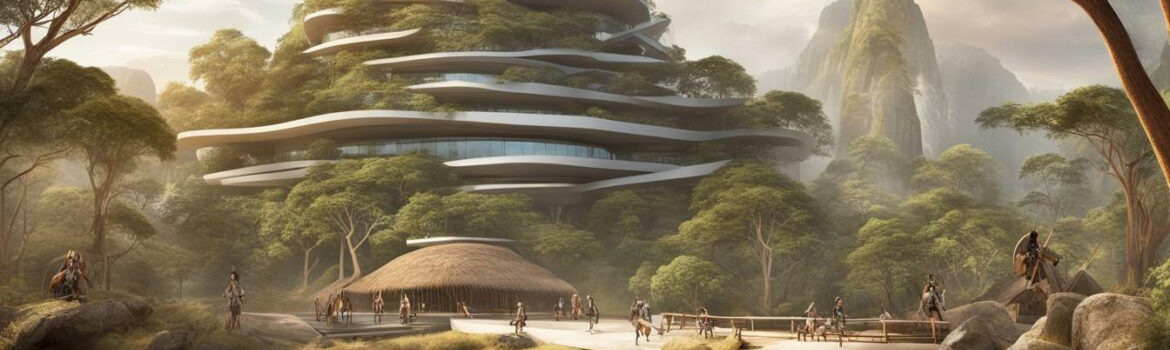
Turtle Island Enclave
Turtle Island Enclave is a small neighborhood in Outer Demeter which started as a place for First People's immigrants and visitors to Olympia to gather and settle amongst their own. Now grown to a small borough of a few thousand, the Turtle Island Enclave welcomes people from any and all First People’s tribes who wish to settle, or just may be passing through. While those who are not of First People’s descent are not forbidden per se, Armadillos who find themselves accepted into the enclave are those who show a true willingness to learn and live by First People’s ways. Those seeking to exploit the enclave’s people for gain, or appropriative hangers on, are quietly cold shouldered until they find it more convenient to move along.
With dozens of First People’s tribes represented, the culture of the Turtle Island Enclave is a polyglot mixture which primarily adheres to the tenets all the tribes hold in common. This tends to emphasize community, respect for elders, and a deep connection to the natural world. Decisions for the Enclave are consensus-driven with everyone having a say and elders of all tribes represented meeting in council.
Modern Technology and LOStech is not unheard of in the Enclave, as many of those who traveled to Olympia to settle did so from an innate curiosity and interest in the new ways of Olympia. However all such technology is subject to the tenets of the enclave and any technology that is found to harm the community or natural world tends to be rejected. Whereas technology which works in concert with the First People’s ways are readily adopted. Radios are common, and TVs are not unheard of but storytelling and oral tradition are still favored. There are cyberware and deck users, but they are generally less common and tend to follow indigenous futurism and cyber-shamanism thematics.
The Turtle Island Enclave is a modest yet self-sufficient borough. Most homes have electricity, plumbing, and running water by choice, though there are always a few who prefer to live more traditionally without those conveniences for one reason or another. Most of the food needed to support the community is grown or raised in or near the Enclave, and enough credits are earned by community members to keep everyone living comfortably. There are many artists and craftsmen, as the demand for First People’s Handicrafts is a constant throughout Olympia. Wilds guides and survivalists are also popular jobs as there are not many members of the Enclave who have not been outside the walls at least occasionally to visit their home tribes. The Enclave is also one of the best places to buy or rent animals specifically bred for the rigors of wilds travel.
Members of the Turtle Island Enclave adhere to the animism of their parent tribes, which sees spirits in all things and a unified spiritual and natural world. The Light is an accepted face of the Great Spirit, and belief in guardian spirits and totems is pervasive even for non-magic users. An important part of Enclave life is regular community ceremonies where elements from many tribes' practices for various events are included and respected as part of the whole. Solitary Vision quests and sweat lodges for both magic users and non magic users alike are employed when needed for personal focus and enlightenment. Spirits are a common sight in the Enclave, manifesting and discorporating naturally and always welcome.
The Magical Culture of the Turtle Island Enclave is heavily based in the spiritual life of the Enclave. Shamans are common, and though Mages and Chi adepts may be less prevalent the trappings of their magic tend to also fall along shamanic and animist lines. Spirits are invoked for aid with spells and the power of the earth is borrowed for strength. Anyone with Magic is considered to hold a special position of trust and responsibility to the community, and anyone abusing this is roundly rejected from the Enclave. For the most part, any Magic user is visually indistinguishable from the other citizens of the Enclave, though some may dress a bit more flamboyantly or with more personal decoration as fits their personality.
The Horrors that might manifest in and around the Enclave are pulled directly from First People’s Mythology. Windego, Horned Serpents, U'tlun'ta', and the Wampus Cat are all examples.
With dozens of First People’s tribes represented, the culture of the Turtle Island Enclave is a polyglot mixture which primarily adheres to the tenets all the tribes hold in common. This tends to emphasize community, respect for elders, and a deep connection to the natural world. Decisions for the Enclave are consensus-driven with everyone having a say and elders of all tribes represented meeting in council.
Modern Technology and LOStech is not unheard of in the Enclave, as many of those who traveled to Olympia to settle did so from an innate curiosity and interest in the new ways of Olympia. However all such technology is subject to the tenets of the enclave and any technology that is found to harm the community or natural world tends to be rejected. Whereas technology which works in concert with the First People’s ways are readily adopted. Radios are common, and TVs are not unheard of but storytelling and oral tradition are still favored. There are cyberware and deck users, but they are generally less common and tend to follow indigenous futurism and cyber-shamanism thematics.
The Turtle Island Enclave is a modest yet self-sufficient borough. Most homes have electricity, plumbing, and running water by choice, though there are always a few who prefer to live more traditionally without those conveniences for one reason or another. Most of the food needed to support the community is grown or raised in or near the Enclave, and enough credits are earned by community members to keep everyone living comfortably. There are many artists and craftsmen, as the demand for First People’s Handicrafts is a constant throughout Olympia. Wilds guides and survivalists are also popular jobs as there are not many members of the Enclave who have not been outside the walls at least occasionally to visit their home tribes. The Enclave is also one of the best places to buy or rent animals specifically bred for the rigors of wilds travel.
Members of the Turtle Island Enclave adhere to the animism of their parent tribes, which sees spirits in all things and a unified spiritual and natural world. The Light is an accepted face of the Great Spirit, and belief in guardian spirits and totems is pervasive even for non-magic users. An important part of Enclave life is regular community ceremonies where elements from many tribes' practices for various events are included and respected as part of the whole. Solitary Vision quests and sweat lodges for both magic users and non magic users alike are employed when needed for personal focus and enlightenment. Spirits are a common sight in the Enclave, manifesting and discorporating naturally and always welcome.
The Magical Culture of the Turtle Island Enclave is heavily based in the spiritual life of the Enclave. Shamans are common, and though Mages and Chi adepts may be less prevalent the trappings of their magic tend to also fall along shamanic and animist lines. Spirits are invoked for aid with spells and the power of the earth is borrowed for strength. Anyone with Magic is considered to hold a special position of trust and responsibility to the community, and anyone abusing this is roundly rejected from the Enclave. For the most part, any Magic user is visually indistinguishable from the other citizens of the Enclave, though some may dress a bit more flamboyantly or with more personal decoration as fits their personality.
The Horrors that might manifest in and around the Enclave are pulled directly from First People’s Mythology. Windego, Horned Serpents, U'tlun'ta', and the Wampus Cat are all examples.
Demographics
Any and all First People’s groups can be represented, from a variety of ancestries. The Enclave includes a healthy mix of newcomers and families who have been there for a few generations.
History
There have always been a few First People’s representatives around since the founding of Olympia. Although the First Peoples did not join as founders, there has always been the odd individual or representative about, keeping an eye on the interesting experiment which was Olympia and reporting back to their tribes. However it wasn’t until the recovery and rebuilding period that some First People’s families started setting down roots in the outskirts of Demeter. At the beginning these families were very insular, not causing trouble but also mostly keeping to themselves. But as children were born and the community grew, Enclave members became as likely to consider themselves Olympians as First People. Some of the oldest families in the Enclave are now 3 or 4 generations along and the Enclave is a fully integrated borough and part of Olympia.
Points of interest
Museum of the First Peoples
A small building on the outskirts of the Enclave which houses art and history of various First People’s Tribes, curated by the Enclave itself as both an outreach and teaching center to the rest of Olympia. It is clear that the history kept by the First People’s tribes is longer and more comprehensive than that known by Olympia, but what is shared through the museum is selective and tailored to enhance or correct Olympian knowledge, not replace it. Adjacent to the Museum is a ‘living village’ that is popularly used for school field trips and aims to convey the sense of various First Nations tribes as they live out in the wilds.
Aboha Abina Ranch and Outfitter
A multigenerational family business which breeds and rents horses, ponies, and donkeys for Wilds travel. Especially prized are their Pinto breed of horses for their beauty, constitution, and good sense. They sell all of the basic camping and survival supplies, and can also arrange for a Wilds survivalist and guide to accompany an expedition.
A small building on the outskirts of the Enclave which houses art and history of various First People’s Tribes, curated by the Enclave itself as both an outreach and teaching center to the rest of Olympia. It is clear that the history kept by the First People’s tribes is longer and more comprehensive than that known by Olympia, but what is shared through the museum is selective and tailored to enhance or correct Olympian knowledge, not replace it. Adjacent to the Museum is a ‘living village’ that is popularly used for school field trips and aims to convey the sense of various First Nations tribes as they live out in the wilds.
Aboha Abina Ranch and Outfitter
A multigenerational family business which breeds and rents horses, ponies, and donkeys for Wilds travel. Especially prized are their Pinto breed of horses for their beauty, constitution, and good sense. They sell all of the basic camping and survival supplies, and can also arrange for a Wilds survivalist and guide to accompany an expedition.
Architecture
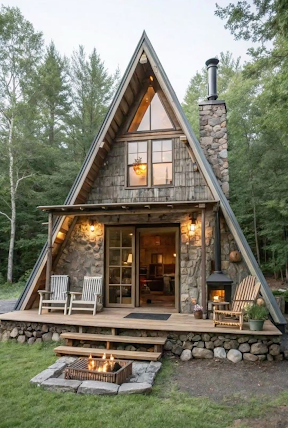
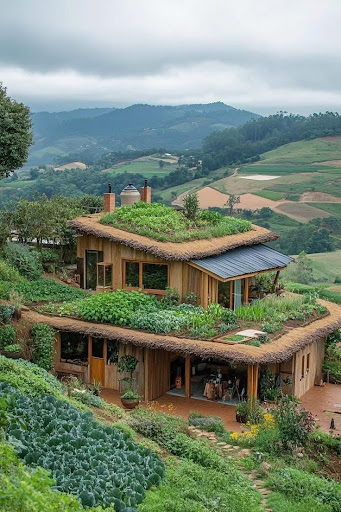
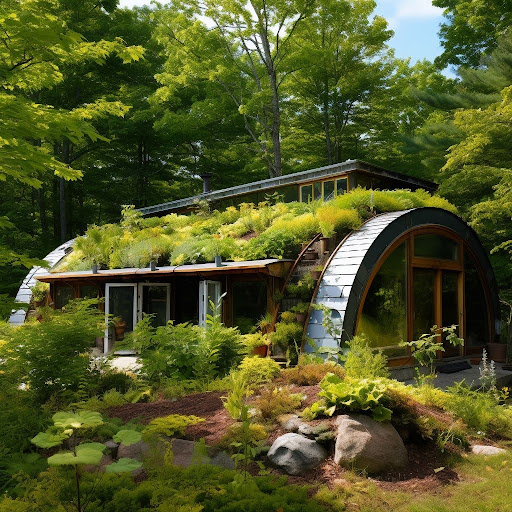
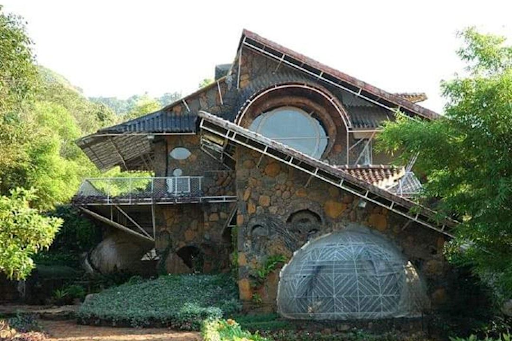
The Architecture of the Turtle Island Enclave is a mish-mash of First People’s syles, from modern versions of wooden longhouses and wigwams to more ‘earthship’ style construction with stone. Most buildings are heavily decorated and brightly painted in traditional motifs. The largest community buildings are clustered around a central open square used for community gatherings and ceremonies. Solar Panels and sculpted springs, streams and fountains are commonly seen, and there is a great deal of green space and plantlife interspersed throughout. The Enclave fades gradually to farms and ranches along its outskirts.
Population
Small
Inhabitant Demonym
The Lost, Turtles, Islanders, Savages (Extremely Rude)
Location under