
BUILD YOUR OWN WORLD Like what you see? Become the Master of your own Universe!

Remove these ads. Join the Worldbuilders Guild

Blue Kingdom

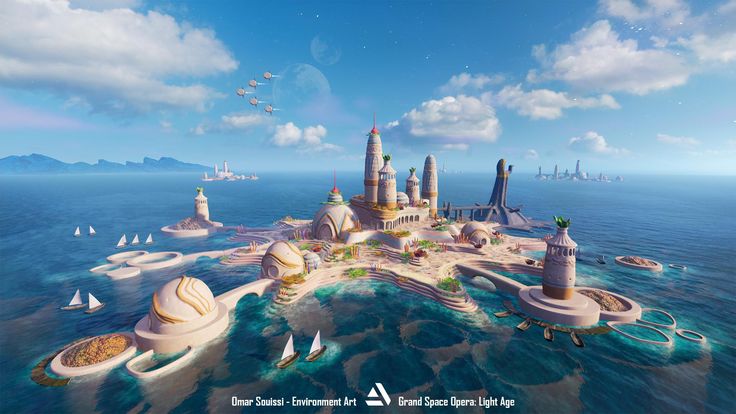
Triton City
Triton City
 

The Kingdom of the Tritons


History of the Nation

The history of the colonization of this land date back to the time of the great imperial expansion of the Phan, who arrived on the shores of this sea shortly after the beginning of its invasion. The native elves, noble and proud, soon became victims of a curious but cruel experiment: they were molded to entertain the Phan courts, educated from an early age in the arts of song, sex, games, and performance, but also subjected to magical and physical modifications to adapt them to the sea. Thus were born the Tritons: elves altered to thrive in the water, forced to fulfill their masters' every desire.   Over the centuries, the stories and tales passed down by the first bio-modified elves of the empire ensured that some of the ancestral elven traditions became part of the culture and traditions of the new people. The merfolk always remembered their elven roots and continued to consider themselves part of the same race. Their elven nature and temperament pushed them toward freedom and independence, which caused increasing friction with their masters, giving rise first to a small internal underground movement, then to the emergence of a full-fledged resistance within the new Triton people. Rebellions by individual slaves and small groups were violently repressed, further fueling the flames of rebellion.   Over time, free elven communities, far from the coastal regions and ruled by noble elves of the Kingdom of Arborea, began to hide and rescue fugitive Tritons, helping them hide in underwater settlements or coral reefs. They taught them to survive and adapt to the marine environment—cultivating seaweed, fishing, and weaving nets. Over time, they became skilled sailors, pirates when necessary, but also artisans and traders of rare marine resources. Eventually, pressure from the Phan Empire forced open conflict, which led to a definitive split: the Tritons gained their independence thanks to the military and logistical support of the elven communities who fought alongside them in battle. Thanks to their victory, the Tritons consolidated control of maritime and coastal territories, choosing some of the most capable families to govern them, and organizing themselves politically into a structure that was as effective in open water as on land.   Culture, myth, and the memory of their origins remain central: every Triton knows the history of slavery, the suffering and humiliation endured in the Phan court, but also the sacrifice of the free elves who aided them. The changes imposed by the Phan Empire—not only physical, but cultural and emotional—have left profound traces that still influence internal divisions, aspirations, faith in rituals, and the vision of the sea, freedom, and power.   This new era of freedom, which began with the formal fall of some areas of Phan rule following the failure of the Great Crusade, marks the beginning of the Kingdom of the Tritons, which proclaimed its Oral Constitution, ratified by the oldest families, which defined the triumvirate, the senate, the maritime law, and the actual borders of the kingdom. From that day on, every official celebration revives the pomp of song, fishing, navigation, and defiance against the tide of oppression.  

Government Structure

General Governance: The Kingdom of the Tritons is a complex "oligarchic" monarchy: there is not a single ruler, but a Triumvirate (three Triumvirs) periodically elected by the Senate. The Senate is composed of representatives of all the major families with influence (economic, naval, military, religious).  
  • Triumvirs: three figures who govern for a term (usually ten years), each with specific territorial and sectoral responsibilities: one oversees the North, one the East, one the West. The Southern sector is remote and dangerous due to Phan imperial domination, and is now under joint control: it involves all three, especially in defense, border, and diplomatic matters.
  • Senate of the Open Sea: deliberative and oversight body. Ratifies laws, appoints the Triumvirs, approves the appointment of the Dictator in case of war, establishes international alliances and the distribution of strategic resources (ships, arsenals, marine artifacts, deep-sea pearls, etc.).
  • Dictator: An extraordinary office, activated only in the event of large-scale war. The Dictator gains power over all Tritonid armies, strategic command, and logistics for the duration of the conflict. At the end of the war, his powers are reduced, he is accountable to the Senate, and the triumvirate returns to being the executive authority.
  • Maritime Law and Justice: The purpose of the judges is to ensure that the Senate's decisions are carried out and enforced. They may preside over trials involving environmental damage, treason, slave trafficking, and the misuse of common resources such as deep-sea pearls or Phan artifacts. Noble families exercise local magistracies within the confines of their domains: minor judges enforce codes governing the use of waters (ships, fishing, piracy), the protection of coral reefs, and underwater property rights.
  • Religion and rituals: The arbiters of not only political but also spiritual power reside in the Mist Singers (priestesses): they control rites, minor priests, influence the morale of the people, bless ships, heal allies, and predict storms. The Mist Singers have a degree of influence comparable to that of Senators: in the minor courts, certain ritual disputes require their opinion.

  • Political Parties and Organizations

    Internal political tensions stem from moral and ideological differences linked to the Phan past, and from differing views of the sea, freedom, and power:  
  • Freedmen's Party (the Warriors): composed of Tritons who consider escape from the empire, rebellion, and active resistance as sacred duties. They promote the Kingdom's absolute autonomy, the expansion of its maritime territories, the spread of Triton culture throughout the empire, and support for rebellious slaves. They are often critical of any form of compromise with the Phan.
  • The Neutral Party (the Courtesans): This group includes those who preferred or still cherish the aristocratic, cultural, and festive aspects of the Phan courts. Some of these Tritons believe it is beneficial to maintain strong diplomatic relations with the Phan Empire, cultural exchanges, and trade, and that wealth through luxury, art, theater, and entertainment can offer power and protection.
  • The Mist Singers: are not just priestesses and religious temples, but represent a powerful organization—almost a spiritual party—that mediates conflict between the most radical and the most moderate souls of the population. Keepers of the magical song, of the sacred pact with the sea, defenders of tradition, but also a source of innovation (in the arts, spells, and song).
  • The Maritime Venture Companies: groups of Triton pirates, privateer merchants, and traffickers of rare resources. Although they are not formal political parties, they have influence: they can finance Triumvirs, sponsor candidates, and create pressure groups on the Senate. Some have autonomous bases on islands, remote coral reefs, and submerged cities.
  • Hereditary Orders of Noble Families: Each ruling family has its own internal order, with its own values, patrons (marine spirits, deep-sea beasts, elements of the sea), and artifacts. Family rivalries often subvert political balances: marriages, betrayals, wavering alliances.

  • Current Status (Year 1314 New Era):

  • Conflict with the Aj'Snaga: Sea raids are now almost a norm in the waters of Triton territory. The Aj'Snaga capture Tritons during naval battles or through ambushes; the captured slaves are used as Aporoi in the Krataions, where they battle beasts or other slaves. Some Tritons are destined for the Aj'Snaga spawning pools. The slaves' offspring are used as labor or trained for spectacles, as in the courts of the Phan Empire.
  • Relations with the Geld and Sarleris: Close relationships and strategic allies. The Geld provide funding, sanctuary, and logistical support to Tritons conducting operations against Phan and the Aj'Snaga. The Kingdom of Sarleris is a trading partner and a friend in the resistance. It is also an important market for artifacts and coral.
  • Internal Tensions: The Freedmen's Party often openly criticizes the moderate Triumvirs who seek compromise, believing them too weak in the fight against the Phan Empire. The Neutral Party, on the other hand, accuses the Freedmen of economic and diplomatic sabotage, arguing that continued conflict could cause the kingdom to collapse through expense, losses, and internal conflict, or even trigger a new war with the Empire.
  • Threat of the SeaThralls: A disgraced former Triumvir (later exiled or disappeared) has made a pact with the Phan court to forge an army of mechanical soldier adapted to fight in the water, the SeaThralls, to regain power. It's not yet clear where it operates, but nighttime raids on minor sea lanes, sabotage of triton corsair fleets, and the disappearance of magical resources are growing signs that the threat is taking root.
  • Economy and Trade: The Tritons are currently experiencing a period of relative prosperity. Demand for rare corals, deep-sea pearls, and marine artifacts is high. Flying ships copied from the elves have become part of the merchant fleet. Viridyan Sails allow for faster routes, and vessels (the Celati underwater ships) operate stealthily for smuggling or resistance support. But maintaining security on routes, sunken cities, and ports is costly, especially against Aj'Snaga raiders and inland corsairs.

  • Important Figures of the Kingdom of the Tritons

    Triumvir Mariale Vir'Thal
    Triumvir of the North (House Vir'Thal), Mariale was one of the greatest leaders in the war against the Phan. Strong, fiery, and a lover of stormy waters, his face is marked by ancient scars from naval battles. He is proud, impulsive, and patriotic—he believes in liberation through force. He tends to clash with diplomats and moderates. He currently controls the northern coasts and a massive naval fleet. He wants to liberate all the enslaved communities, pursue raids against the Aj'Snaga, and request resources from the Senate for military incursions. He is a point of reference for the Freedmen's Party.
    Triumvir Selina ShadowCoral
    Triumvir of the East (House ShadowCoral), elegant, refined, and diplomatic. She grew up in a Phan court as an entertainer before fleeing. She has a dual nature: a lover of art, song, and luxury, but also skilled at espionage, court intrigue, and compromise. She loves parties, but knows when to shed tears. She controls eastern trade routes, eastern ports, and deals with Geld and Sarleris. She promotes the trade in Phan artifacts and the use of luxury as political leverage. She is close to the Neutral Party, but also maintains good relations with moderates of the Freedmen's Party. She seeks compromises to avoid bloody and costly wars.
    Triumvir Calior of the Silent Tides
    Triumvir of the West (House Silent Tides), thoughtful, scrutinizing, and a lover of underwater sealife. A scholar of currents, water magic, and the depths. A defender of environmental balance, he believes the sea holds secrets that the Kingdom of the Tritons must preserve. He often appears aloof, but is loyal and reliable. He oversees the protection of coral reefs, sacred sea forests, and responsible trade in rare resources. He seeks to mediate between expansionists and conservatives; he supports policies that safeguard the environment, but does not oppose military defense when necessary.
    Xalorin the Forgemaster
    Former Triumvir / Potential usurper Dictator. Rumored to have ties to the Phan court and Imperial techmagic. Once a respected member of the triumvirate, he flee before his arrest and now operates in the shadows, funded by Phan nobles and merfolk traitors. He has built an army of mechanical soldiers the SeaThralls and a network of corrupt agents. He is cold, calculating, and megalomaniacal; he believes that only absolute power can control the Realm, even at the cost of betraying his own principles. His influence is growing: sabotage, espionage, and nighttime attacks. Objective: To overthrow the triumvirate and impose a single, centralized government under her leadership. She uses the resources of the Phan to build her Thralls as mechanical infantry, and aims to seize the most powerful Abyssal Pearls.
    Lyraen of the Deep Songs
    High Priestess of the Mistsingers. Lyraen is one of the most powerful voices of the sea: her song can calm storms or awaken dormant abyssal currents. Born to a family of slaves in the Phan court, she lived as a child in an ornamental pool intended for aquatic dance performances. She was freed during a revolt and taken to the sanctuary of the Singers, where her voice manifested such power that it awakened the elemental magic of the sea. As High Singer, she is one of the most respected figures in the Realm. No tritonid ship sails without her blessing or that of her disciples.
    Captain Kaelor
    Corsair of the Inner Isles, Captain of the Fire Tide. Kaelor is one of the most famous (and infamous) pirates in the waters of Valenor. Once a naval officer of House Vir'Thal, he deserted after a trial for mutiny and took refuge among the coral reefs of the West. From there, he built his legend: a raider and a merchant, a protector of isolated communities, an enemy of the Phan but also a thorn in the side of the triumvirate. His ships, decorated with sails as red as blood coral, are feared as much as they are respected. His attacks often target Phan or Aj'Snaga merchants, but it is not uncommon for his raids to fall on "neutral" routes when survival requires it.
    Naeris Vel'Aquor
    Ambassador of the Kingdom of Tritons to Geld and Sarleris. Born into the wealthy Vel'Aquor family, Naeris was educated in the arts of diplomacy, magic, and maritime history. She was chosen by the triumvirate as their first official representative to Geld, where she built a network of alliances, trade treaties, and cultural exchanges. Given her success, she was assigned the task of forging alliances and coordinating efforts with the Sarlerian rebels. While this latter assignment is dangerous in itself, her charisma and strong personality allow her to face it with serenity and courage. She is an elegant figure, reserved yet extraordinarily persuasive: her words are as clear as the waters she represents. Her assignment with the Sarlerians has granted her a bodyguard chosen from among the knights of Sarleris.
     

    Locations and Resources

    Geography and Settlements:
    The major triton cities are built on shallow waters, lush coral reefs, rugged coastlines, and submerged islands. Every house or palace has both underwater and surface rooms: essential, as Tritons cannot sleep completely submerged. Canals, ports, underwater tunnels, floating bridges, and transparent underwater domes are common.  
    Main Natural Resources:
  • Deep Sea Pearls: Rare, found only in the depths or in abyssal caves. Essential for high magic, magical items, and a symbol of power.
  • Coral (red, blue, black, purple): Used as a decorative building material, forged into magical ornaments, as a catalyst, as the base of potions or crystals.
  • Fireborn Coral: Special variant that "burns everywhere, even underwater," used as an incendiary weapon, sabotage, and defense.
  • Viridyan Sails: Seaweed with magical properties, crafted into fabrics or structures that serve as engine sails in flying ships or surfaces ships .
  • Giant Sea Creatures & Eggshells: Species such as the -Coelianthus-, a gigantic sea creature that lays enormous clusters of eggs. Before solidifying, the eggs can be manipulated into craftable materials: shells used for the hulls of stealth ships, lightweight and resistant structures.
  • Technologies / Artifacts / Inventions:
  • Stealth Ships: These are special underwater ship, called also Celati ships, are crafted adding structures with harnesses to large sea creatures raised by the Tritonids, constructed from Coelianthus eggshells and equipped with floodable ballast chambers, that allow the creature to surface or submerge effortlessly. Some are owned by noble families or merchant consortia.
  • The Tempest: A tritonid weapon that fires dozens of arrows or rockets at once, generating a devastating volley. Special ammunition loaded with Fireborn Coral, can devastate an enamy ship with a single volley. Used primarily for coastal defense and naval assault.
  • Pearls of Protection: A sacred magical craft of the Mist Singers; they grant temporary invulnerability to damage; extremely powerful versions protect even airships or large structures.
  • Trade and Tourism:
    Stunning coastlines, beaches with coral reefs, surface structures with underwater vistas, singing festivals, splendid elven-inspired palaces, and casinos attract adventurers, tourists, and luxury merchants. Tritonid markets offer Phan items, Mazurian artifacts, rare corals, pearls, ancient books, sea maps, underwater breathing devices, and levitating capes made from Viridyan algae.  

    Folklore and Details

     
  • Physical and Psychological Appearance: Tritons are altered elves, with regular elven features, thanks to but also traces of magical/imposed modifications: partially scaly skin, gills, muscles adapted to swimming, and eyes capable of seeing in dim light underwater. Despite their aquatic lifestyle, they retain a strong elven identity: a love of song, art, and the beauty of forests and skies.
  • Magical Song: A central element of their culture. Not just music or entertainment, but ritual, memory, magic, and socio-political power. The Mist Singers use song to bless, heal, summon protection against storms, summon sea creatures, enchant waters, and conjure illusions.
  • Traditions and Festivals: celebrations of the sea are numerous: the Night of the Pearls (when the moon illuminates the waters and deep-sea pearls are harvested), the Festival of the Reefs (dedicated to red coral), the Day of Remembrance (commemorating the Phan slavery and the first elven liberators), the Festival of the Storm (celebrating the hidden ships and dark waters, with displays of light, song, and fire—often using Fireborn Coral).
  • Art and Architecture: elegant palaces that extend above and below the surface, transparent underwater domes, marine textiles, streets decorated with marine motifs, sea creatures, sinuous architecture that recalls the waves of the sea. Pearls and coral become ornamental elements visible on clothing and structures that are distinctive of nobility.
  • Religion and Mythology: belief in sea spirits, gentle or terrible deep-sea beings; worship of sacred waters. Some legends tell of an ancient being, "Omarhoon," often carved from coral: a protective figure, a symbol of desire, sensuality, and freedom. Statues of Omarhoon used as a personal token, even in private contexts, indicating sexual intent or the desire for companionship, are widespread, sometimes considered scandalous by more conservatives.
  • Popular legends: stories of Tritons who slept submerged for days and emerged to find their changed form; of monstrous underwater sea creatures, allies or enemies. Of Coelianthus eggs that conceal arcane powers. Of deep coral caves where marine spirits, guardians of the abyss, sleep. Of Fireborn Coral that burns for days, summoning storms of smoke that can suffocate those who breathe underwater.

  • Remove these ads. Join the Worldbuilders Guild

    Articles under Blue Kingdom


    Comments

    Please Login in order to comment!