
The Sack of Thaloris
The Conflict
Prelude
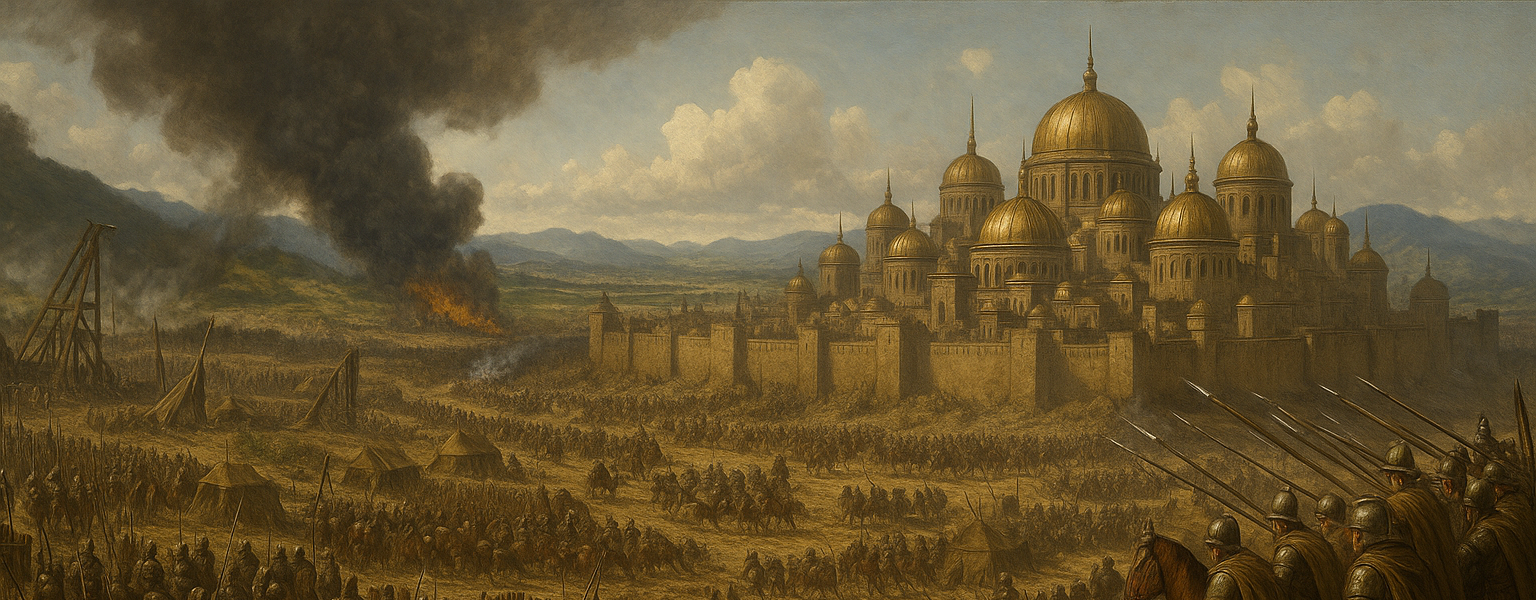
Throughout the Rebellion, the human rebels knew defeat as well as triumph. After the Storming of Halamare (Kalivgrad), Holzen rebels under the command of Artur Prager met a Halenthan host on the Novayan plains drawn largely from the cohorts of Thaloris , warriors famed for their martial prowess and their discipline. There at the Battle of Dravopol, the Holzen were broken. Their pikes shattered, their captains slain, they were driven from the field in rout with thousands killed. By the ninth year of the war, the balance had shifted. Alerio won a victory at the Battle of the Red Ford, pressing south east into the Halenthan heartland, his march aimed at the towers of Skyreach. To Prager, emerging bloodied but victorius from the hard fought Novayan Campaign (Human Rebellion), he gave the task of tying up Elven forces in the north of The Velvet Coast. As the Alerian Rebels crossed the Artis River into the Halenthan heartland, the Holzen struck from the north, marching into the mountain pass of Thaloris. Commanding a combined host of Holzen infantry, Novayan horsemen and supported by mercenary Dwarven engineers and heavy shock infantry, Prager sought to exact retribution on the Bronze Elves whom had humbled him on the field of battle.
The Engagement
The Sack
See also: The Elven Genocide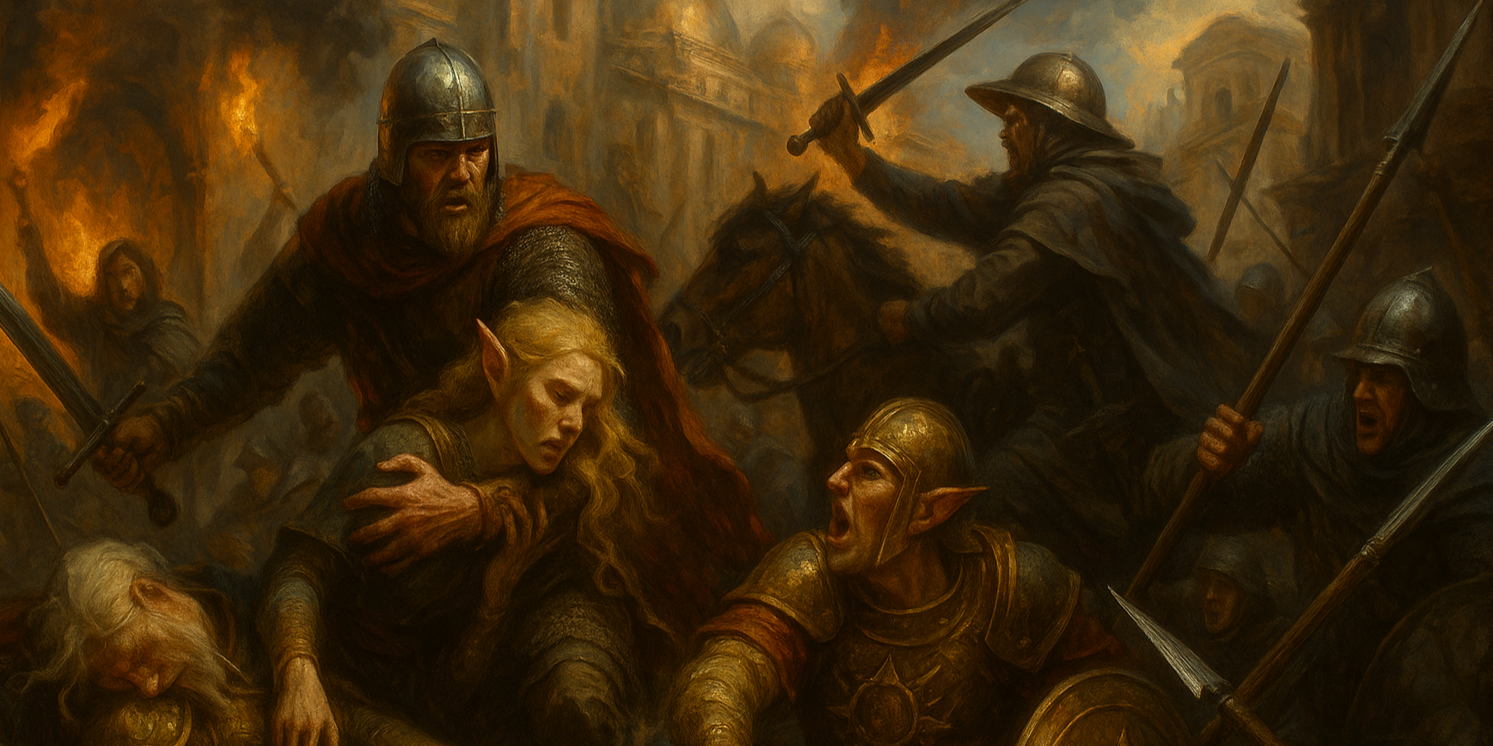
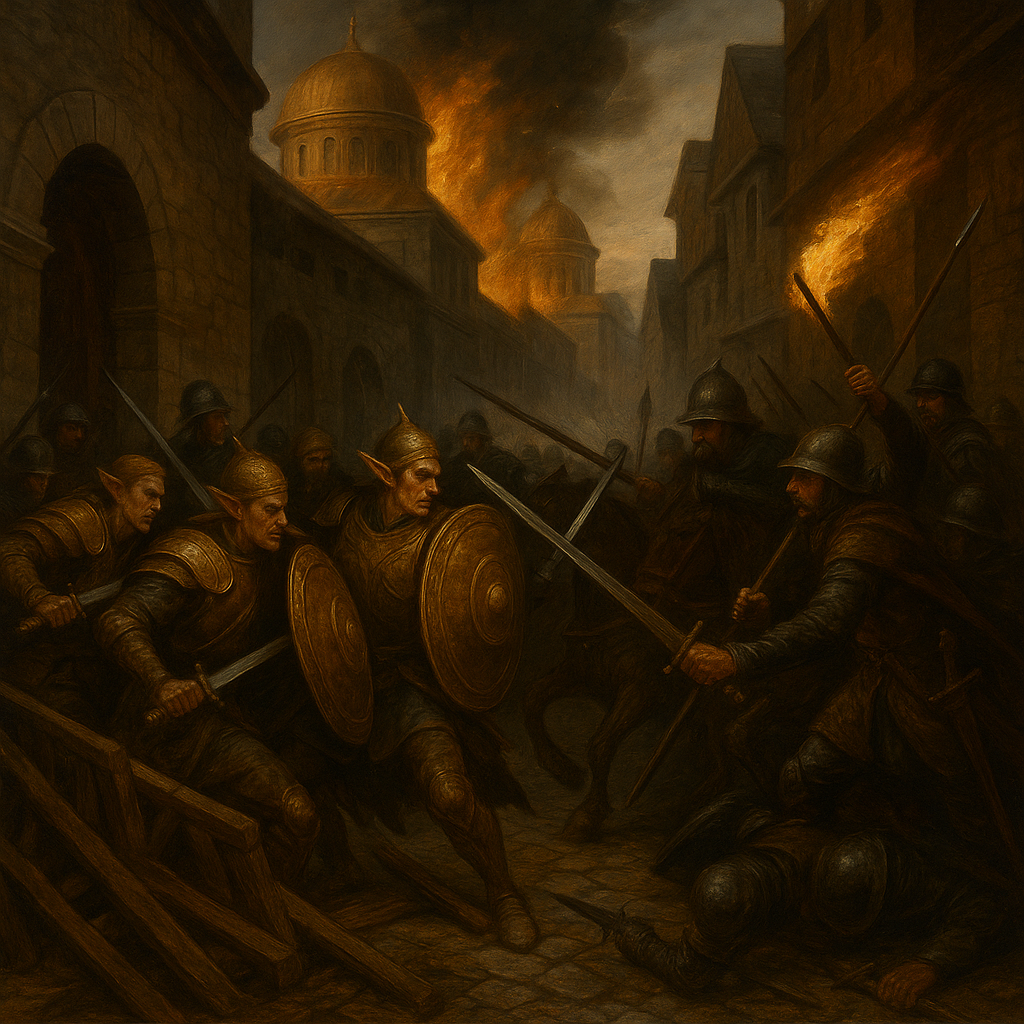
“The Temple of the Lunar Forge collapsed in on itself, and the flames leapt higher than the Crescent ever stood. The chants of the cohorts dwindled,"For six days the fighting raged without pause. The bronze-domed observatories were torn down, the Temple of the Lunar Forge was set aflame, and the great squares of Thaloris were heaped with bodies. No mercy was shown to those of Elven blood. The slaughter was merciless. Cellars where families hid were dragged open, their occupants cut down as rebels drove through the wards with torch and spear. Stragglers who surrendered found no quarter. Mercy was rare, and often overturned by captains who claimed prisoners as spoils. Arrow-slain besiegers were repaid tenfold as streets filled with the screams of the hunted. The Bronze Cohorts did not collapse but fought to the last, turning every crossing into a barricade, every threshold into a redoubt. Alleyways became killing grounds where Holzen pikes snapped against bronze shields and Novayan riders fell beneath Elven spears. The rebels sustained bitter losses in that street fighting, and the more losses they sustained, the deeper their rage burned. In the archives of the seers, centuries of work perished. Scrolls of genealogy, treatises of star-lore, and maps of the heavens were cast into pyres, their ash rising with the smoke of burning homes. Entire libraries, once tended as the pride of the Thalori, were reduced to embers in the span of a night. Treasures wrought by centuries of craftsmanship were seized in the sack. Many were melted for the material, yet others survived, carried home by soldiers as trophies. To this day, Thalorin relics linger in Holzen households as heirlooms, their original meaning long forgotten. The wards fell one by one. The northern district burned first, the flames visible across the valley like a night sun. By the third day, the defenders had been pressed into the heart of the city, their last stand fought among the temples. By the sixth, there was nothing left but corpses and captives. Those few captive elves who survived the butchery were subjected to indignities at the hands of their conquerors, were bound in chains and driven westward, condemned to the long march into Holzen bondage. The rebels herded them through the smouldering gates, past the charred husks of homes and the unburied heaps of their kin, forcing them to look once more upon the ruin of their city.Eliraine of Lorintha, Astronomer
Outcome
Aftermath
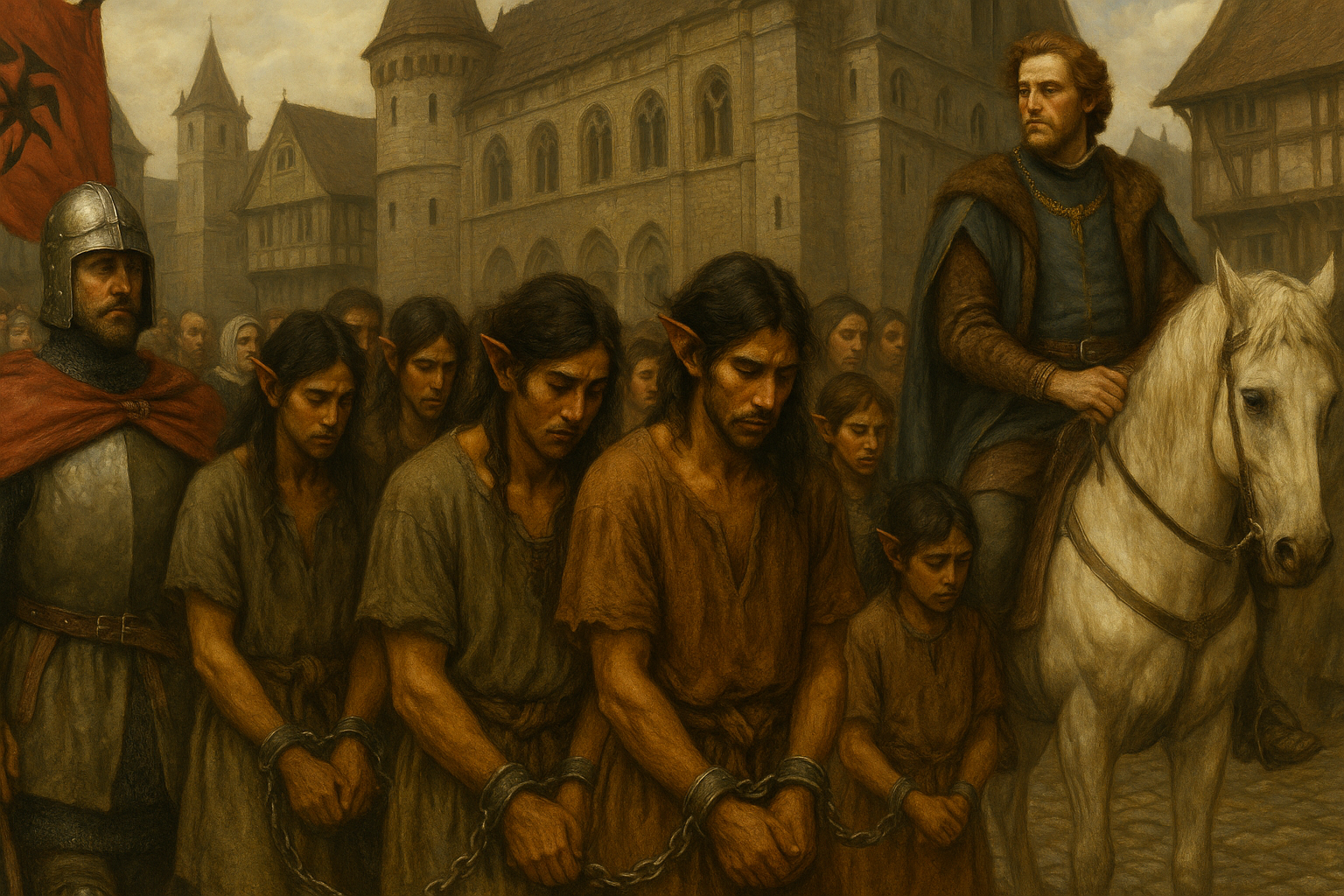
“Thaloris was to be our keystone in the north, its domes to house our councils, its forges to strike arms for our defence, its walls to guard the passes. What Prager left us was only a ruin, its knowledge turned to ash. Thus, in the very hour of triumph, a wound was cut into the foundations of the League.”The ruin of Thaloris cast a shadow far longer than the smoke that rose from its burning domes. Its seers perished with their charts, and the star-lore of the Thalori, refined across centuries of patient study, was lost forever. Those few who outlived the sack were driven west in chains. Many fell upon the march, the rest were parted out as spoils among Holzen lords, their bronze skin and dark hair paraded as living trophies of conquest. In time they dwindled, some ground down in labour, others slowly integrating into Holzen society over the centuries. In the years that followed, League chroniclers would look back upon the sack as a loss not only of life but of a powerful asset that might have steadied the foundations of Alerio's dominion. When Skyreach was destroyed and the League faltered, many would say that the fall of Thaloris had already weakened its frame. It is often claimed that the Sack of Thaloris that permanently soured Alerio and Prager's allyship and that this rift was the primary motive as to why Holz did not join The Imperial League. For Holzreich, the sack was never exalted but justified with cold certainty. In their chronicles it was written that Thaloris had resisted too fiercely, that the Cohorts had demanded annihilation by refusing to yield. In Novaya the memory was more divided. The Plainsfolk spoke of Thaloris as vengeance at last achieved, yet many verses placed the worst of the cruelty upon Holzen shoulders. At the same time, the Novayans were not blameless. Amidst the slaughter their riders carried off captives and treasures as spoils. In the centuries that followed, fragments of Thaloris lingered across the north. Torcs of crescent bronze, blades etched with stars, and helmets of the Cohorts were passed down through human families as curiosities and heirlooms."The March of the Liberator,” 9 IE
Historical Significance
Legacy
“Remember Thaloris. Do not speak of glory, for there was none. Do not speak of mercy, for there was none. Remember instead that victory without finality is no victory at all."In the centuries that followed, the sack of Thaloris came to stand as more than the fall of a city. For the Elves in exile it was the clearest proof of human barbarity, a slaughter without restraint that extinguished both people and knowledge in fire. The Halenthans pointed to it as vindication of their ancient dominion, declaring that mankind, left to its own devices, revealed itself as little more than beast, and that only the chains of Elven mastery had ever held such impulses at bay.General Albrecht Hauer of the Reichguard,150 IE

Comments