
Thalori
The Bronze Elves
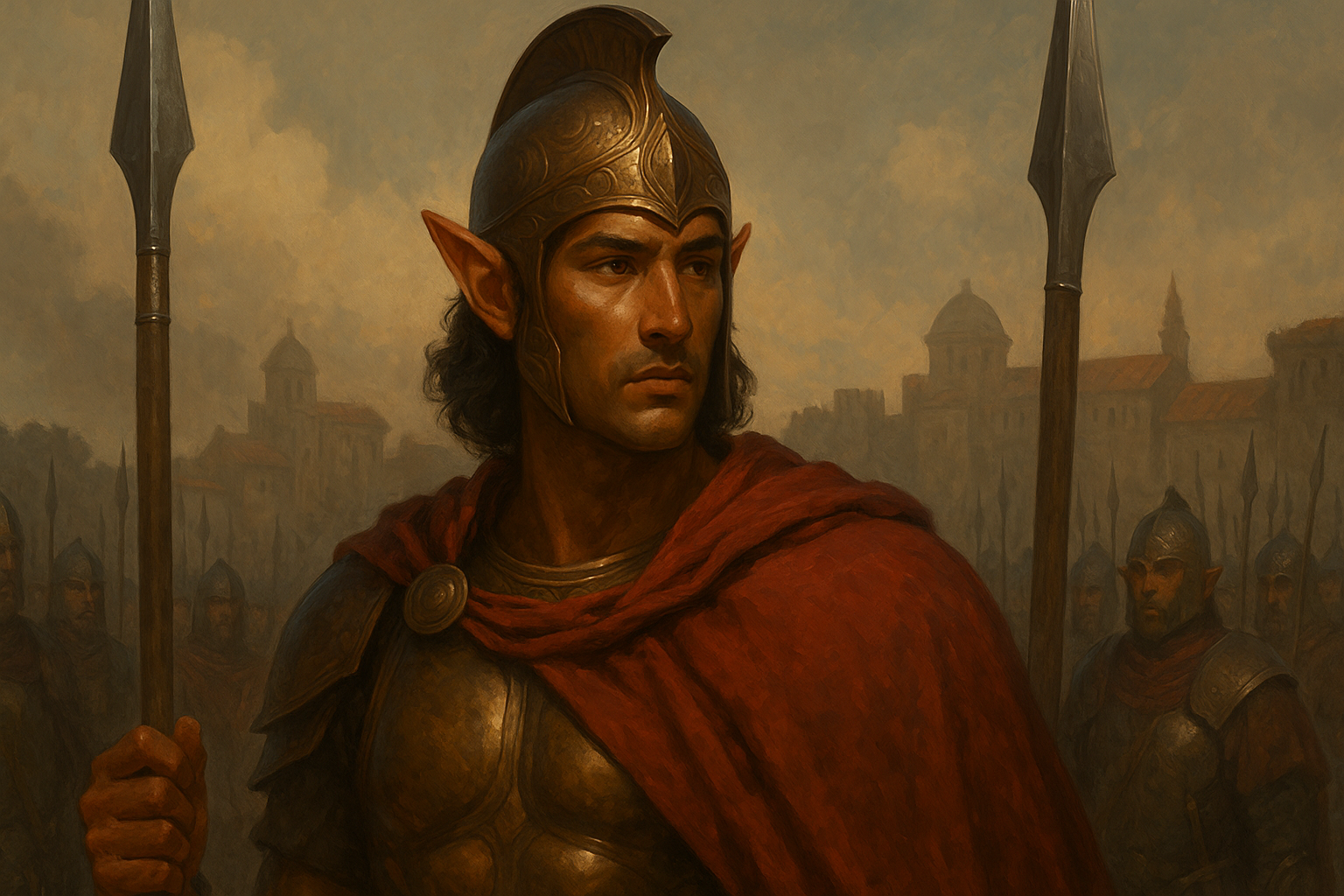
The Thalori were an Elven ethnicity native to the kingdom of Val'Thaloris in the northern Velvet Coast. They rose to power during The Mortal Interregnum, a period when bronze was the pinnacle of metallurgy, their armour clad hoplites earning them the moniker The Bronze Elves.
Physical Characteristics
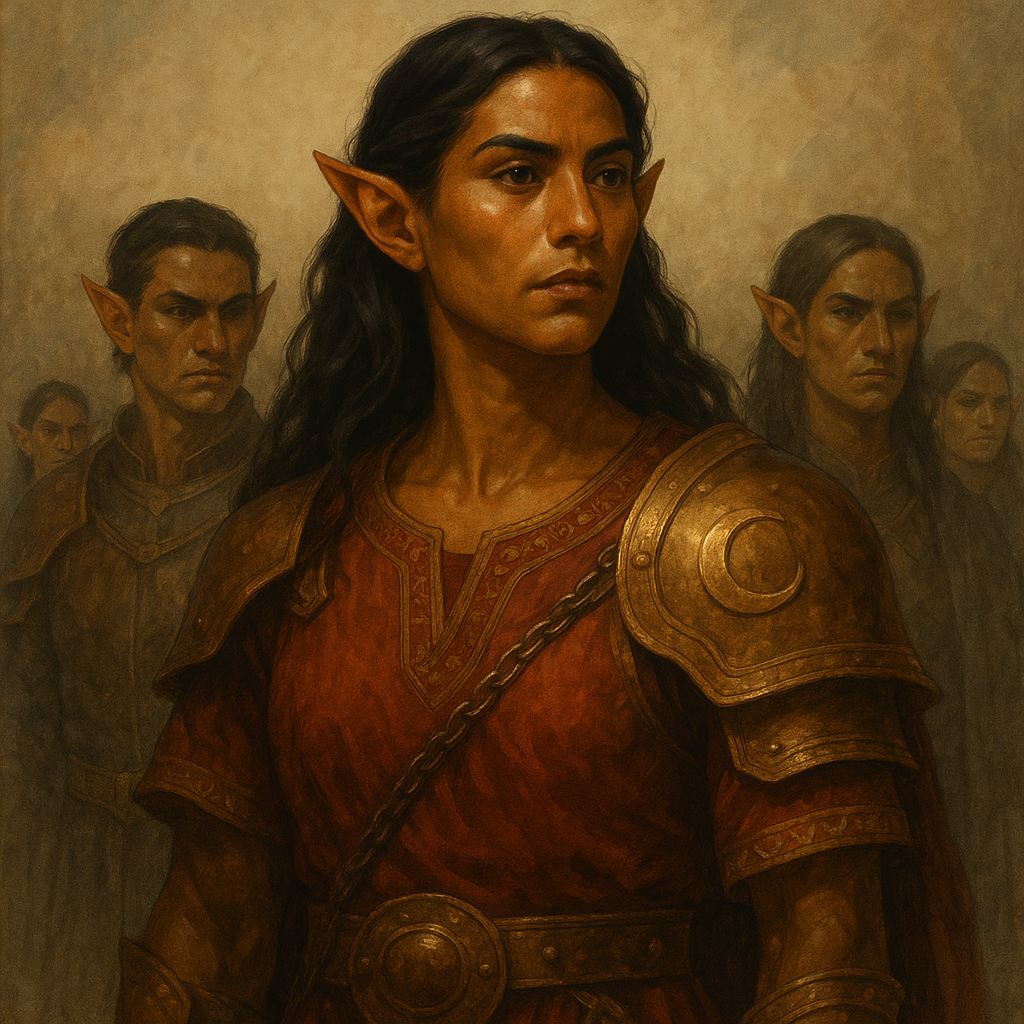
Thalori skin tones ranged from warm olive to deep copper, a tone that further lent them their enduring moniker. Dark hair, most often brown or black, though streaks of auburn were not unknown, framed angular faces and sharp features, while eyes of green, amber, or steel-grey shone with intensity. Sturdier and broader in build than the tall, slender Lorinthans, the Thalori carried themselves with a martial presence.Naming Traditions
Feminine names
Masculine names
Family names
Culture
Culture and cultural heritage
War was at the centre of Interregnum era Thalori culture. Every citizen was trained from youth in the spear and shield, drilled in the disciplined ranks of the phalanx. Service in war was considered both a civic duty and a mark of beauty. Scars were worn proudly as marks of service.
To work bronze was to draw directly upon the knowledge bestowed by Lorinth. The smith was not a craftsman but a priest in their own right, shaping bronze into forms that were both sacred and martial.
Though famed for their warriors, the Thalori also prized knowledge. The Seers of Thaloris preserved annals of history, military treatises, and philosophical debates, seeing memory itself as a weapon. Their libraries, later burned in the Sack of Thaloris, were said to contain records of the earliest migrations from the Wastes of Harlak. To the Thalori, strength without wisdom was folly, and every Archon was expected to sit at the feet of the Seers before they could rule.
Beyond war and craft, the Thalori were also a people of the night sky. Their citadel was crowned with the Bronze Crescent, a sacred emblem linking them to the moon. Thalori stargazers tracked constellations from high terraces, mapping the heavens with bronze astrolabes and marking omens in the waxing and waning of the moon.
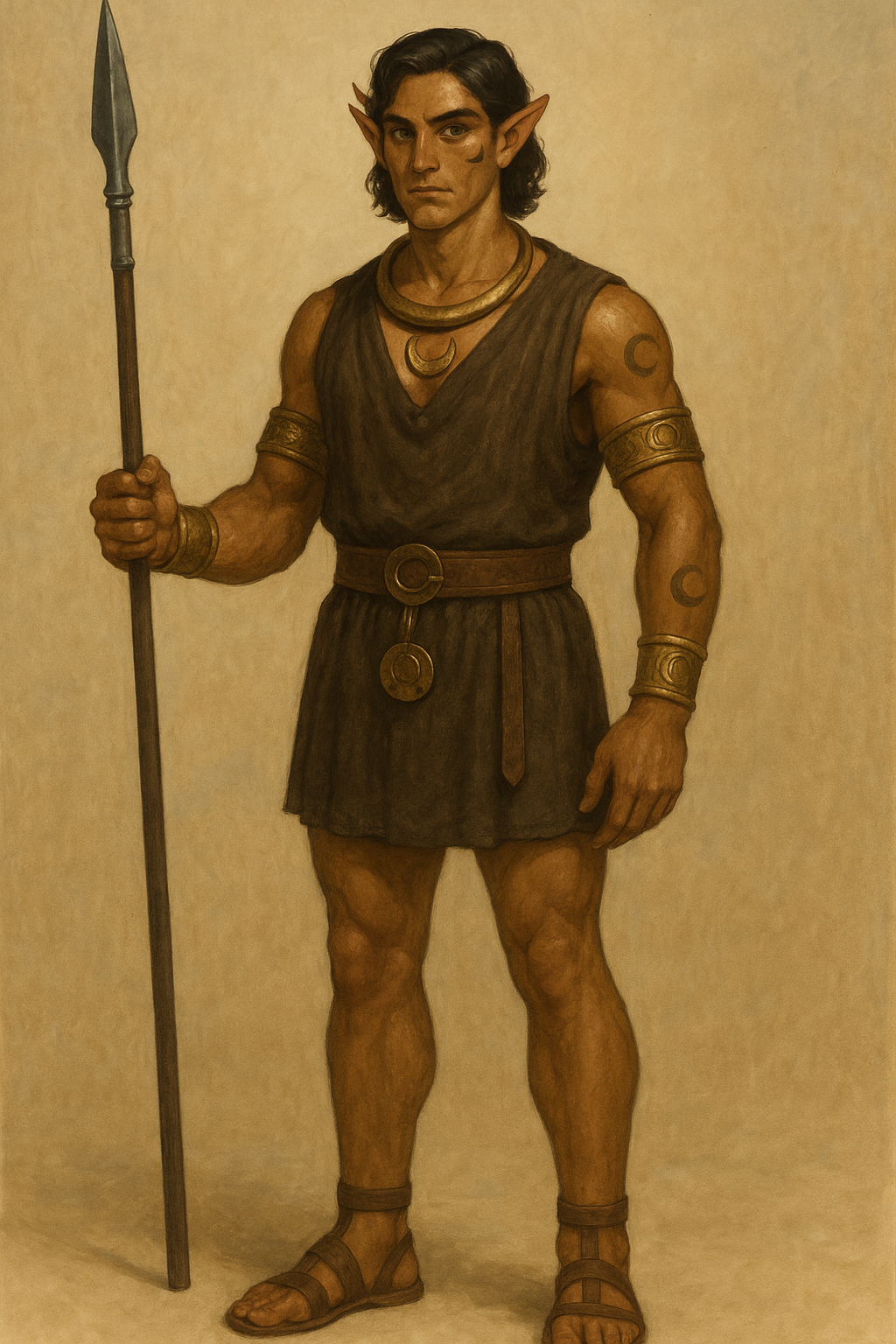
Astronomy shaped their calendars, festivals, and even military campaigns. Armies were often sent to war under auspicious alignments, and archons claimed their legitimacy from the crescent moon. The crescent tattoos borne on face and flesh were not merely decoration, but a mark of belonging to a people who measured their destiny among the stars.
The Thalori of the Interregnum possessed a notorious superiority complex, seeing themselves as the “bronze-born”, stronger, hardier, and more enduring than their kin. This arrogance coloured their politics, feeding their conquests and later their downfall. Thalori pride suffered a major blow after their defeat by the Jazareen in 800 EA, a wound that was further deepened after Thaloris became a vassal of the Kingdom of Halentha.
Despite this, the Thalori of the late elven age under Halenthan rule maintained a reputation of a fierce martial ability, confidence and a strong distinct cultural identity.
Common Dress code
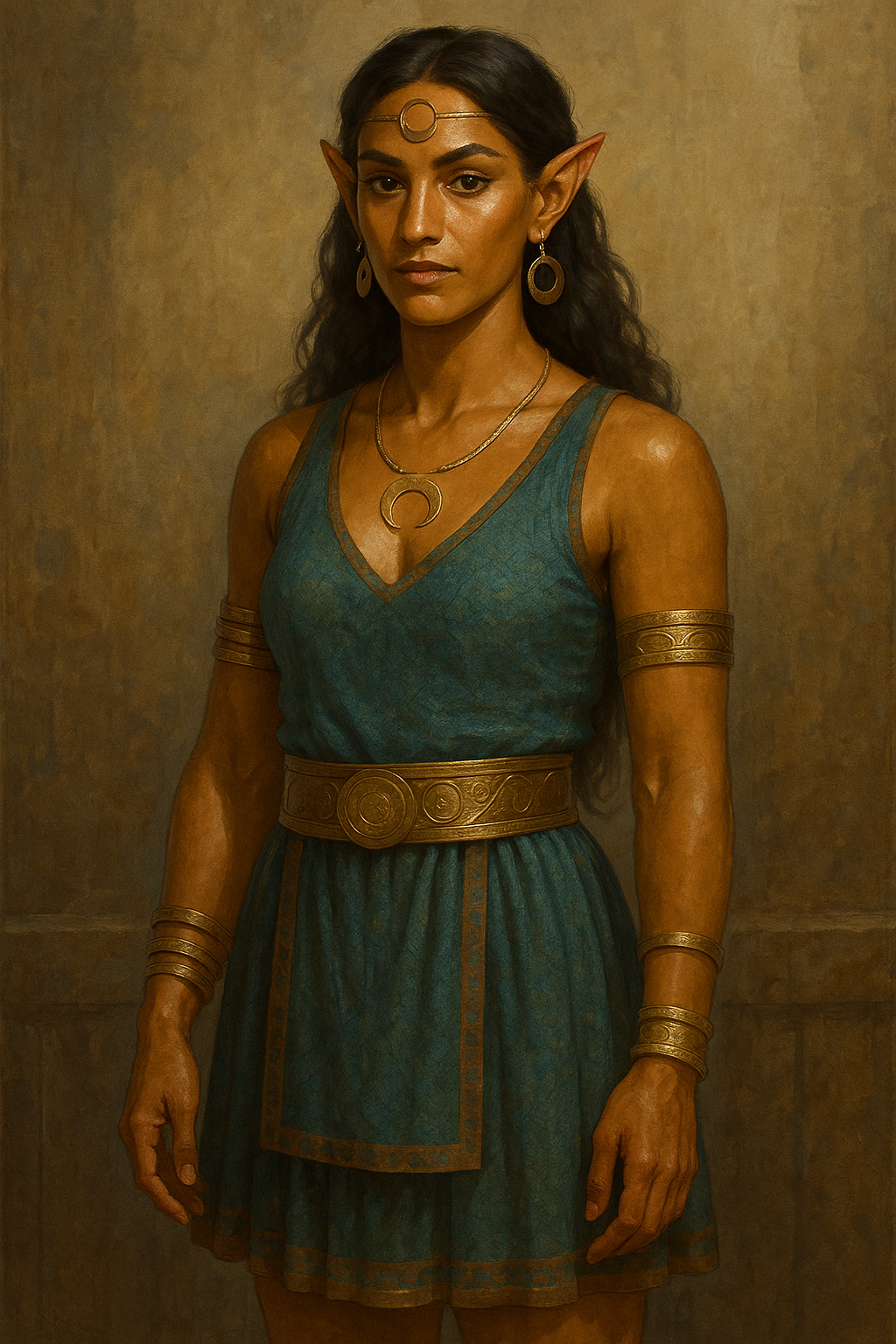
Men and women alike wore short woolen tunics or belted kilts of linen and wool, leaving arms and shoulders bare to display tattoos, scars, and bronze ornamentation. Clasps, armbands, and torcs of hammered bronze were ubiquitous. Ornaments were crescent-shaped or engraved with astronomical motifs, reinforcing their celestial culture. Even commoners wore bronze pendants as household charms. The Thalori believed dress was a statement of strength. To expose the body was to demonstrate its resilience, to cover it in bronze was to show one’s devotion to the forge, and to adorn it with crescents was to declare belonging to the Bronze People.
Ideals
Relationship Ideals
The Thalori practiced polygamy. To sustain multiple households was a sign of prosperity, whether through wealth, skill in the forge, or renown in war. Partners were chosen not only for affection but for alliance, ensuring that families were bound together by webs of kinship that strengthened the city’s unity. Households with several spouses and shared children were seen as miniature reflections of the Crescent Citadel itself. Diverse, resilient, and bound under a single banner. Responsibility was collective with each spouse expected to contribute to the survival of the family, whether through arms, craft, or lore. This practice was also sanctified by the Thalori’s astronomical worldview. Just as the moon waxed and waned through many phases, so too could a household bear many bonds.
The Thalori were broadly sexually open in practice and custom, seeing attraction as an expression of strength and vitality rather than a matter of rigid categories. Bonds were formed across genders with little stigma, and both martial brotherhoods and scholarly circles often carried a current of intimacy that blurred the line between camaraderie and romance.
Outsiders, especially Halenthans and Lorinthans, viewed Thalori relationship customs as indulgent or unrestrained. After Thaloris was vassalized by the Kingdom of Halentha, polygamy was outlawed and traditional Thalori relationship ideals were actively supressed.

Comments