
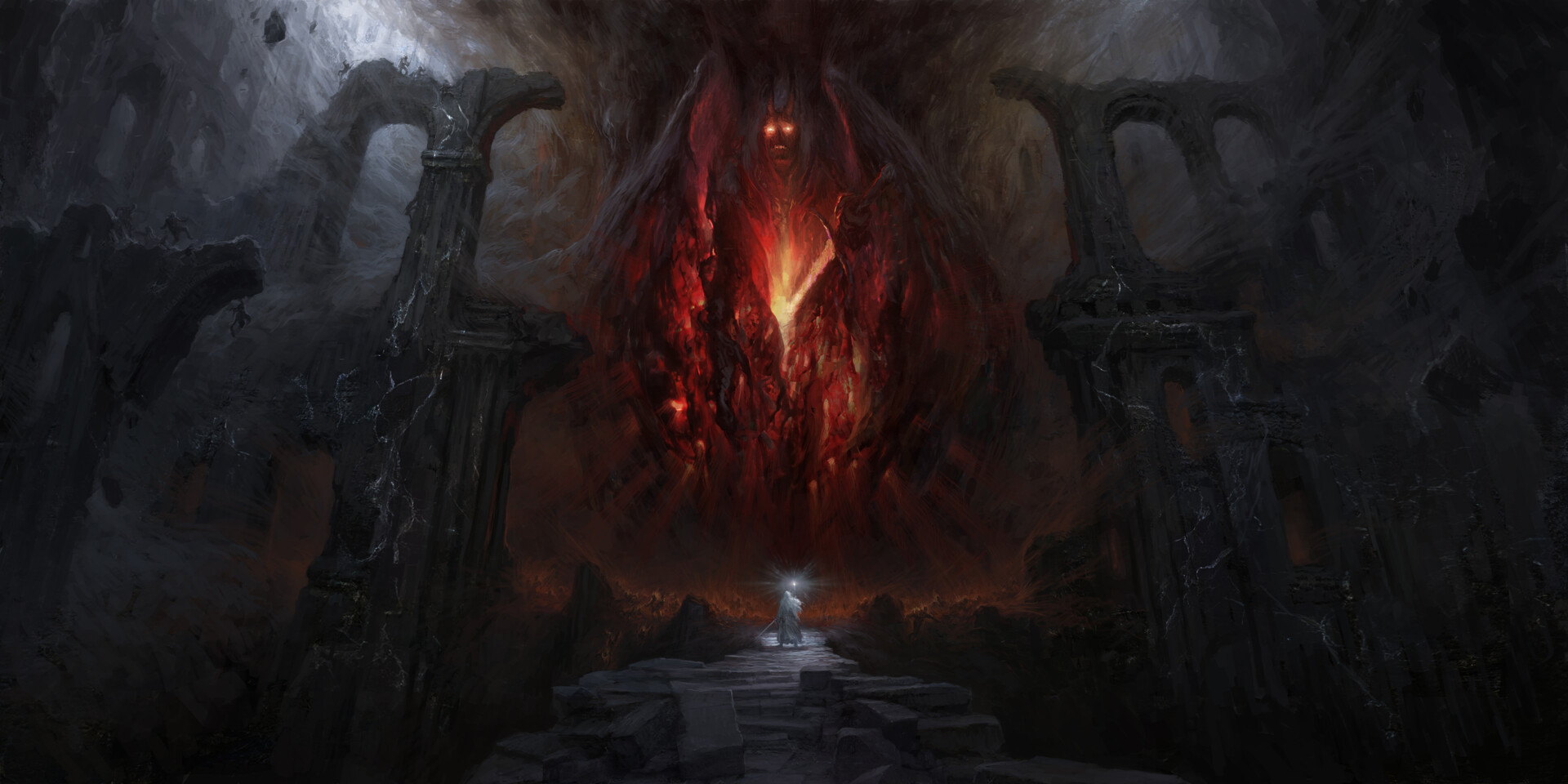
Dark Elven Rite
While many throughout Sol imagine the Dark Elves to be zealous devotees of the malevolent princes of The Infernal Order, this is a gross mischaracterization. In truth, the Dark Elven faith takes a transactional approach to the gods, viewing them as sources of power and danger to be overcome and bargained with. The Dark Elven Rite is based on the growth of the individual and bettering one's circumstances through offerings, supplication, and sacrifice. The Dark Elves do worship the Infernals, though not out of devotion or love. Rather, worship is either to gain power or prevent calamities through appeasement. The faith is organized and follows the teachings of the Red Temple. That being said, believers are also encouraged to forge and strengthen a personal relationship with the gods of their choice. The Dark Elven religion is not a passive one. A believer does not attend a service once a week to make things right with a cosmic entity, carrying on as normal otherwise. The faith gives as much as its followers choose to put in. For a Dark Elf to gain the favor of their deities, they must strive to prove themselves worthy, however that deity may judge such things. On the other hand, if a god proves unfitting to the goals of a devotee, they may well be abandoned if the person thinks they can get away with it. It is a deeply transactional faith that rewards initiative and ambition rather than solemn faithfulness.
Divine Origins
This iteration of the Dark Elven religion rose within the last four centuries. After the death of Vlaasti Belvayn, the Flame-Child, the previous Empress of Daeruin, the dragon cult she forced on her people faded with her. As the Dark Elves were free to thrive, no longer under the watchful eye of the Red Hand, they began to rediscover their ancient ties to the Infernal Order. However, after centuries of brutal oppression, they would no longer opt to merely be slaves of another power. Instead, their religious thought centered on personal growth, power, and gain. Thus, the modern iteration of the Dark Elven rite was born. As such, this religion is considered distinct from what is called the Old Daeruinic Faith, which featured a more devotional relationship to the Infernals, rather than the transactional one most Dark Elves favor today.
Tenets of Faith
Personal Growth
Above all, the Dark Elven pantheon urges all devotees to pursue growth. To grow as an individual is to hone the mind, body, and soul to its sharpest, most robust form. The Dark Elves regard some of the tendencies of other faiths to extol the virtues of meekness, weakness, and fragility to be an excuse for inadequacy. Practitioners will abandon certain deities if they feel they are no longer benefiting them. As such, Dark Elves of this faith tend to be quite fluid when it comes to devoting themselves to gods. An individual worshipper may worship one or a few gods, depending on their goals pertaining to which part of themselves they wish to hone.Family Tradition
Dark Elven culture can be quite traditional and conservative, and this is reflected in the teachings of the faith. As a religion centered around power and gain, it is in line with the belief that a family is stronger than an individual, that devotees should seek to strengthen family ties and remain loyal to their name. The Dark Elven pantheon is quite neutral on the matter of how to treat others, but it is clear that loyalty is owed to the family as well as the empire at large. In particular, mothers and grandmothers are emphasized as the keepers of tradition and the ones who pass down wisdom through the ages.Priesthood
As the center of the faith, the Red Temple priesthood serves as the primary guides for the faithful. Appointed hierarchically, the First Priestess and Matriarch of the Red Temple appoints priestly positions. Priesthood is limited somewhat by tradition to Dark Elven women. Men and devotees of other ancestries can become priests, but their ability to climb the ranks is often hampered in favor of a Dark Elven woman when available. The Red Temple priests are the keepers of relics and a guide for the faithful on how to approach and honor the Infernals. They preside over rituals and ceremonies that legitimate the crown and aim to protect the populace from the wrath of the Infernals.
Type
Religious, Organised Religion
Predecessor Organization
Leader Title
Permeated Organizations
Deities
Related Ethnicities
Comments