
Dark Elves
Road Less Travelled
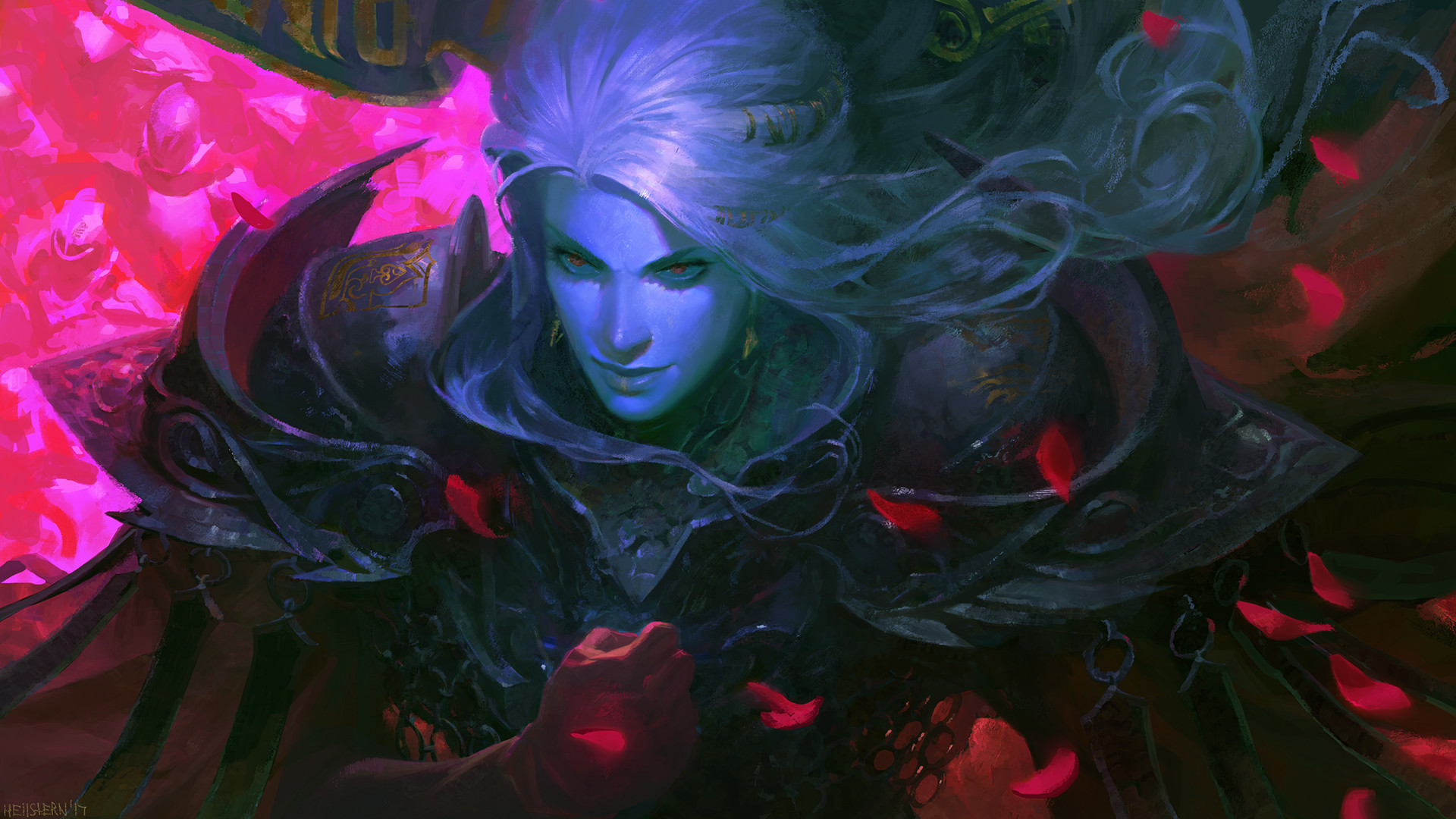
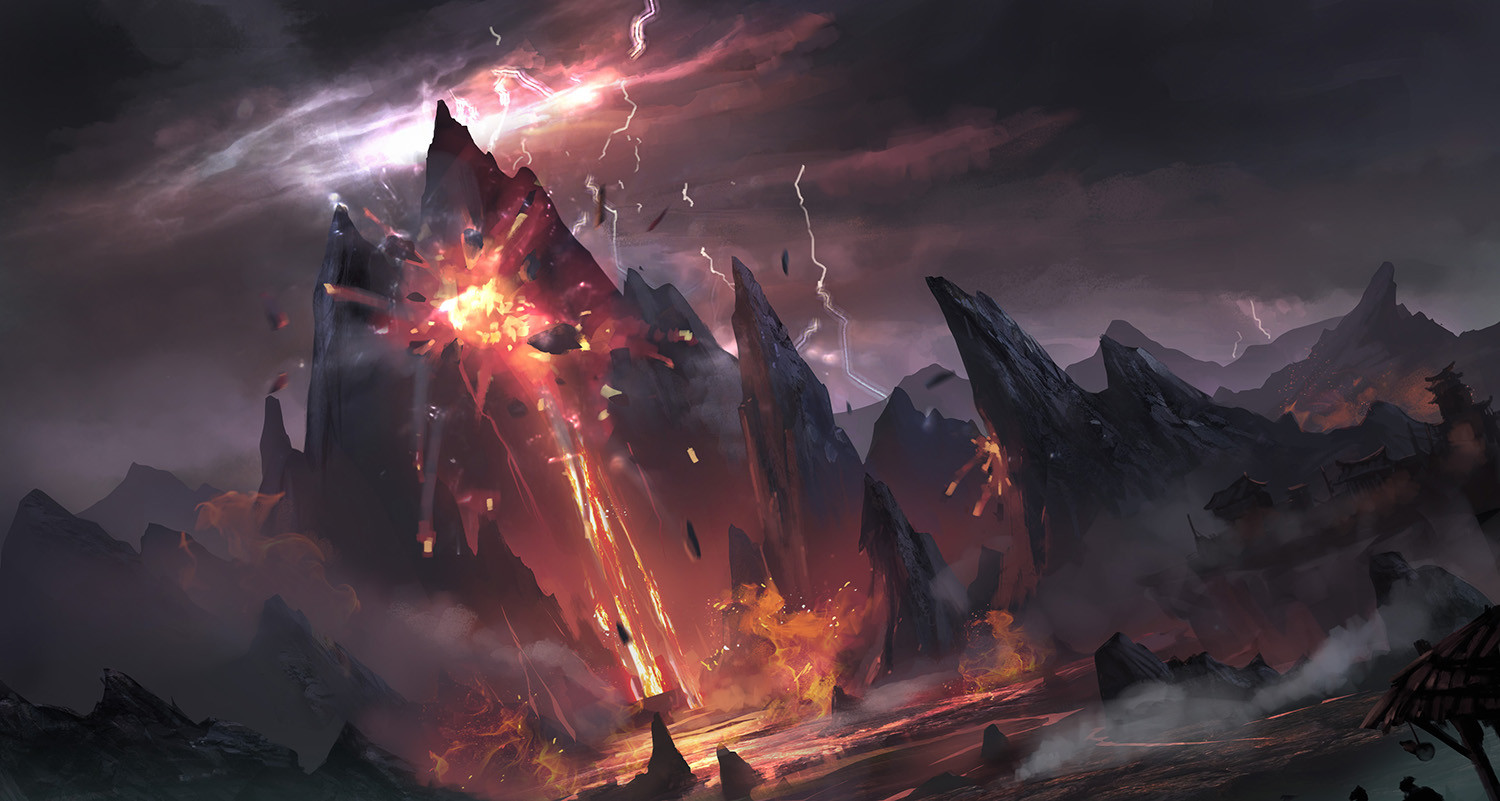
Hailing from the rocky shores of the Hseian Highlands, the Dark Elves are a people blighted by a foul reputation, some of which has surely been earned. A fiercely independent race, they have always done things their own way, regardless of how the world thought of them. In ages past, when the Ancient Elves scattered across Sol from their homeland in the Svaelyn Isles, the ancestors of the Dark Elves found themselves wandering in the north, in search of a new home. Some contended with the many people who vied for the fertile central region known as The Heartland. Others, however, wanted to go north, to the Hseian Highlands. The highlands were home to legendary beasts and untold dangers. To pave the way for their people, this splinter group of Elves took upon themselves the mark of The Infernal Order, changing their descendants for ages to come. Their eyes became piercing red, their skin gray, purple, and black. From then on, they would be known as Dark Elves. Abandoning the gods of their ancestors, the Dark Elves would forge a new path, gaining power in exchange for being outcasts. Through ritual, sacrifice, and sheer ambition, the Dark Elves carved out a home for themselves in the brutal Hseian Highlands, taming it where all others had failed, or so the stories go.
Ancient Traditions
Needless to say, the Dark Elves are widely distrusted across Sol. Their consorting with the malevolent Infernal Order and undying pride has made them outcasts in a continent where most worship other deities. Among themselves, though, the Dark Elves value family, loyalty, community, and tradition. Their society is governed by well-kept customs of respect and loyalty to one's family. Like their Snow Elven kin across the Sea of Thralls, the Dark Elves are a matriarchal culture, with wealth, family traditions, and titles flowing from mother to daughter. Men stand to inherit very little, if anything, in most cases. As such, men are considered more likely to venture on their own in seek of adventure or treasure. Beyond family and community, Dark Elves are also quite loyal to the Empire of Daeruin, which began in their homeland. Having risen to become the most powerful empire in the current age, their people tend to feel a fierce pride and loyalty to it, as well as a sense of superiority to the many others who have joined the imperial fold, willingly and otherwise. Any mention of Dark Elven pride and hierarchy would be incomplete without mentioning Slavery. While the practice is not a Dark Elven invention or peculiarity, it is a defining feature of their culture and empire. Slavery is deeply entrenched in their society. While they have traditionally discouraged trading in slaves of their own people, they have become particularly fond of Snow Elven slaves. For over a thousand years, the Dark Elves have raided the coasts of Mistvall across the Sea of Thralls, seeking treasure and slaves. This generational wound has made relations between the Dark Elves and Snow Elves extremely volatile.
No Stone Unturned
Given that the very genesis of their culture began with an act of defiance resulting in change and rewards, the Dark Elves have never shied from what others may avoid. A deeply arcane culture, their wizards and sorcerers have shattered many boundaries of spellcraft. While most cultures shun necromancy, the Dark Elves welcome it as another school of magic to be taught, understood, and harnessed. In general, power is a virtue in their culture as well as in their faith, known as the Dark Elven Rite. Those who miss the opportunity to take life by the reins and forge their own destiny through hard work and ambition are left by the wayside to be forgotten. As such, no source of knowledge or power is seen as sinful on its own. Dark Elves tend to take great pride in their family achievements as well as their individual skills, whether peerless training with a blade or mastery over the arcane arts. On the battlefield, they tend to incorporate martial skill, stealth, and many blend the practices, becoming spellswords, battlemages, and nightblades.
Naming Traditions
Feminine names
Masculine names
Family names
Culture
Major language groups and dialects
The Dark Elven language is descended from the language of the Ancient Elves, like most Elves on Sol. Their language is part of the Northern Elven family of languages, making it a sister tongue to the Snow Elven language.
Shared customary codes and values
Dark Elves traditionally adhere to the teachings of the Red Temple as well as the ancestral traditions of their family. Dark Elven tradition dictates respect for elders, filial piety, and loyalty to the empire. It is from these core values that many other aspects of life flow. The cultural respect for elders extends to those of other races. So great is the respect for old age in their culture, even Dark Elven slavemasters tend to lighten the load for older slaves, lessening intensity and length of work where possible. In everyday practice, the respect for the elderly can be seen in simple acts such as offering to pour one's drink or giving up one's seat out of politeness. Speaking over someone older is considered bad manners, as is too strongly asserting one's own opinion against the view of an elder. Dark Elves tend to only share their opinion as a possible view, rather than an opposing belief.
In line with the teachings of the Red Temple, the Dark Elven Rite advocates for personal and transactional relationships with the gods of The Infernal Order. These pacts are not necessarily devotional in nature but tend to involve bargains in exchange for power. Common folk may give offerings to avoid calamities, while the more daring may do so in exchange for power. Their religion is not a passive one, but one that rewards ambition and initiative. The Celestial Order deities are not commonly known to the Dark Elves. There are temples to some of the gods in Dark Elven cities along the Hseian Highlands, but they are rarely attended by Dark Elves. There is some tension with the tolerance of Celestial worship and traditional Red Temple authorities.
Loyalty to one's family is at the core of Dark Elven values. Individualism is seen as selfish, short-sighted, and ineffective. Dark Elves tend to believe that by working together, the whole community can accomplish far more than any individual could on their own. Everything from marriage to mediation tends to be done through loose family ties and community bonds. Property, including slaves, has traditionally belonged to families rather than individuals, though this has been overturned in the last century. Dark Elves are expected to take care of their parents closely and with a personal touch. Leaving their care to others is considered shameful.
Related to the topic of Slavery, it remains an unusually entrenched aspect of their culture. Dark Elves may hold varying attitudes towards the institution. Some see it as a fact of life, the way things have always been done, not commenting deeply on its moral value. Others view it with more contempt, lamenting it as a failing of the culture. In general, though, Dark Elves tend to see their slaves as members of their family, albeit lesser participants. Domestics, including manservants, maids, sex slaves, wet nurses, caretakers, and the like, tend to stay on with families for an extremely long time, being inherited by the children of their employers. Wealthier families may have a section of their family tomb dedicated to the slaves of the household. That being said, it would not be correct to say slaves are generally treated as equals to their owners.
Dark Elves tend to have somewhat reactionary tendencies when it comes to dealing with other races. While a feeling of superiority is not uncommon among some Elven cultures, with Dark Elves, this can sometimes manifest as outright racism, especially with groups who have joined the imperial fold, willingly or otherwise. They tend to stereotype Dwarves as being foolishly stubborn, Halflings as being lazy, Snow Elves as being untrustworthy, and so on. In the last century or so, they have come to view other groups with a more exotic lens, offering a more positive, if potentially tokenizing, view. While they have historically viewed Shan as being overly sensual and soft, they have also gained a taste for some of the finer aspects of Shan life, culture, art, and philosophy, incorporating them into their own. This synthesizing of Shan and Dark Elf philosophy has resulted in a syncretized religion known as Aresha.
Common Etiquette rules
Dark Elves tend to be respectful, diligent, and calm in their speech. They tend not to engage in boisterous behavior and prefer to couch their speech in politeness. Women have more social permission to be sharp or cat-tongued in their etiquette, but men keep their interactions quite restrained. Dark Elves tend not to consider honesty to be a universal virtue. While they appreciate telling the truth and not lying for its own sake or mere personal gain, using deception to preserve one's feelings is considered respectful, polite, and normal. In line with their hierarchical tendencies, the respect shown to older people is visible even in the way Dark Elves may be seated somewhere. Elders are seated first and, if possible, higher than others. They tend to speak first and must be listened to in silence. Gift giving in Dark Elven culture suggests a genuine closeness and isn't done lightly. If someone gives another a gift, it shouldn't be opened right away, lest the recipient come across as childishly impatient. Gifts may be sentimental or material and can be anything from a fine weapon to an ornate art piece to an exotic luxury.
Art & Architecture
Artistically, the Dark Elves are patrons of many art forms; they are known to widely enjoy shadow puppetry. Other forms of art, such as pottery, jewelry, carvings, and devotional statues, are popular as well. As of late, Shan weaving, watercolors, and especially tea ceremonies have become a part of Dark Elven noble life. Books are quite popular among the Dark Elves, including romantic and historical fiction.
Foods & Cuisine
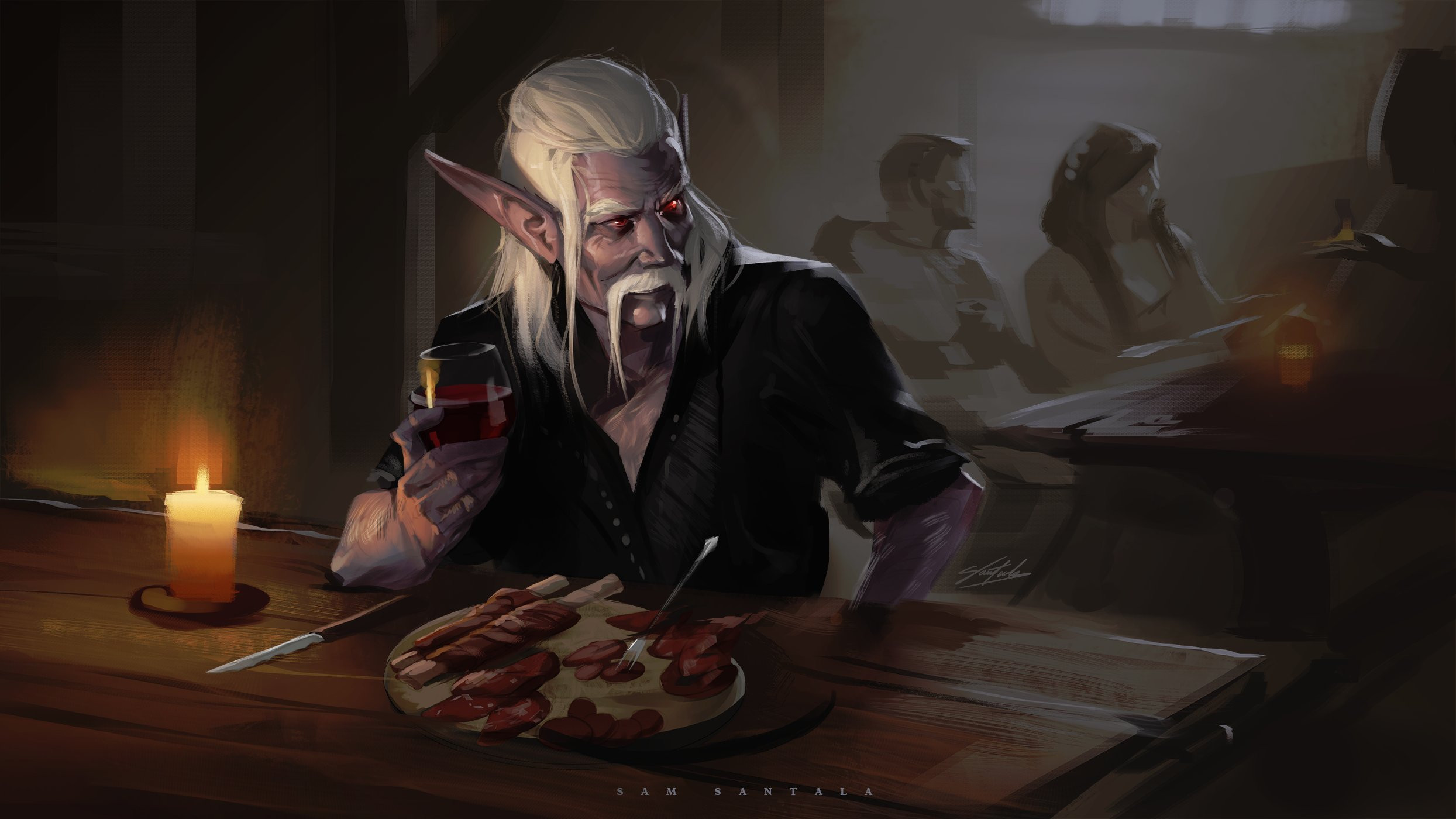
The homeland of the Dark Elves has historically been the Hseian Highlands. The rocky shores and high hills have offered less fortune in the ways of traditional agriculture. Hill orchards and farms supply the Dark Elves with wine and fruits such as plums, peaches, pears, and apricots. The bulk of their cuisine, however, is found through animal husbandry and fishing. Lamb, fish, and bread are staples of their diet. Since their conquests have greatly expanded the markets of the Dark Elves, they have also gained a taste for rice, tea, coffee, and ginger. Another luxury of the colonial lands that has made its way into the Dark Elven cuisine is chocolate. It has become particularly popular, though quite expensive, and is considered a rare treat.
Common Customs, traditions and rituals
Given the importance of family in Dark Elven culture, it should be no surprise that weddings are among the grandest of their ceremonies. Marriages bind families together, not just individuals. Family, friends, and notable people will be expected to attend. The woman's family will plan and arrange the ceremony, or the woman herself if her family is not around. Celebrations are often large and last three days, with ample time for vows, a feast, and a bedding ceremony. The vows are said in the presence of family and guests, typically officiated by a priestess of the couple's choosing. Traditionally, a promise is given to couple their souls as one and to vow to honor and love each other through trials, calamity, and hardship, though the wording may be altered. During the wedding, a band to signify the bond of the new couple will be presented, always from the feminine spouse. Traditionally, the band has taken the form of an ornate collar, though it may instead be a ring. During a wedding feast, the couple will be seated centrally. The largest table is reserved for the parents and immediate family of the couple. Friends and other guests are seated at smaller tables and are expected to present gifts to the newlyweds. In particular, three gifts for each spouse are to be presented by two members of the other's family, with the other spouse giving the third and final gift. These are not to be opened during the ceremony. The bedding ceremony is a more private affair, usually only attended by a few slaves.
Birth & Baptismal Rites
When Dark Elves have a daughter, tradition dictates the baby's first bath is done with rosewater and petals before swaddling them in a white shawl. This tradition goes back centuries and was said to be taught to them by Savaris, who did the same with her firstborn. Some have extended this tradition to newborn boys as well.
Coming of Age Rites
At the age of fifteen for women and sixteen for men, Dark Elves often take a spiritual retreat into the wilderness for a week. This retreat is said to strengthen the mind and body for the trials to come in adulthood. By separating oneself from family and the protections of settled life, they are forced to look inward to find their own strength and live by their own merits. This is also often considered a chance for a Dark Elf to find their connection to a particular deity, usually but not always the patron god of their family.
Funerary and Memorial customs
Like most Elven cultures, ancestors are of utmost spiritual importance. Dark Elves who can afford it often have ornate and refined family tombs where the dead are put to rest. During celestial events, such as the supermoon, it is not unusual for the family to descend into the tomb and burn Angel's Trumpet, a drug common in Elven spiritual traditions, to commune with their ancestors.
Common Taboos
Interracial relationships are not common and remain somewhat taboo. The hierarchical racial tendencies of Dark Elven culture tend to rank the acceptability of such unions socially. As such, a relationship with a High Elf or Desert Elf may be more accepted than one with a human. Relationships with beastfolk such as Catfolk and especially Snow Elves tend to be the most taboo. Though interestingly, such relationships have also been a frequent subject of Dark Elven romantic literature, especially of the last century.
Historical figures
Empress Vlaasti the Flame-Child ruled Daeruin before the ascent of her son, the current Emperor Derarose. Her rule saw the rise of the Red Dragon Cult, a religious, political, and social overhaul of Dark Elven culture and life for centuries. During this period, which only ended a few centuries ago, life was dictated by the increasingly tyrannical whim of the Empress and her obsession with dragons. Draconic insignia marked every seat of power, and enemies of the crown were put to death with dragon fire, according to the hushed stories. Dark Elven traditions and customs were suppressed with extreme persecution, and keepers of the old ways were driven to the periphery of society. Some zealots resented these changes and escaped to the Underdark, later being known as Night Elves. Most have celebrated her gruesome death and the end of her tyranny, though in these times of instability and chaos reigning throughout the empire, some long for the days of strength that she brought.
Ideals
Beauty Ideals
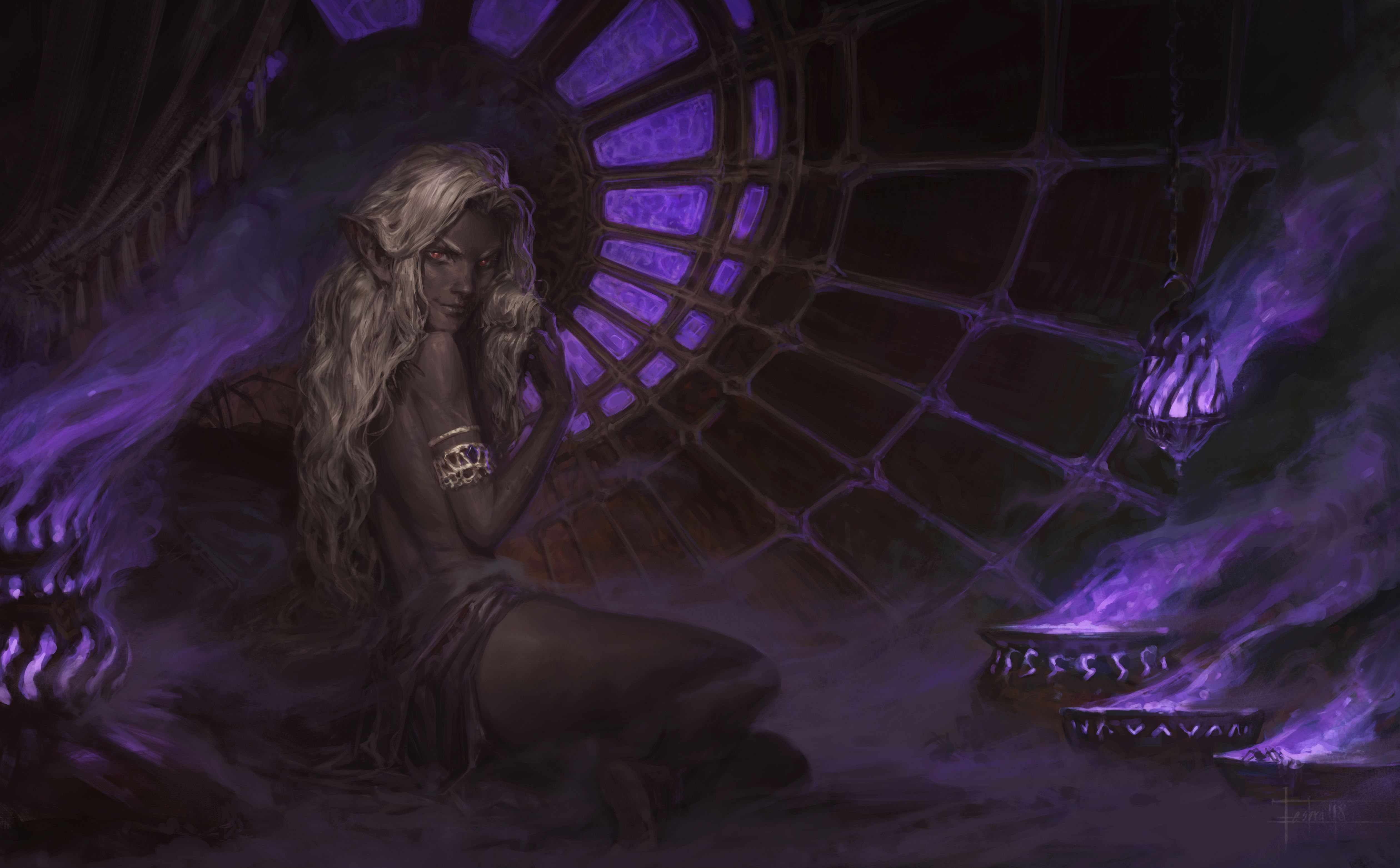
Beauty is a core aspect of Dark Elven culture. Symmetry and asymmetry are valued, though in different ways, with the former representing order and the latter representing disorder. In line with their tendency to accept chaos as an aspect of life, asymmetry is seen as beautiful in its own disorderly, chaotic way. Dark Elves have always had a fondness for jewelry, especially gold, silver, and rubies. Onyx and sapphires are also considered important, especially for religious rites. They have traditionally tended to prefer angular, sharp features and lithe physiques. Since they have ventured far from their homeland, absorbing many diverse lands into their empire, a newer trend among the Dark Elves favors more curvaceous forms, considering them exotic.
Gender Ideals
Dark Elven culture is deeply matriarchal. Women control the flow of wealth, land, and titles. As a family-oriented culture, Dark Elven families are expected to be led by a woman. Large families heed the words of their eldest woman very carefully. Grandmothers and mothers are paid tremendous respect, including people of other cultures. Women are expected to be the heads of family affairs, taking care of wealth, businesses, and the finer points of life and administration. Men are seen as more fit for work involving physical labor or menial tasks. Men are raised to be rather deferential, quiet, and timid towards women. Women are raised to take charge, speak assertively, and be intellectually well-rounded.
Courtship Ideals
Casual dating is uncommon in Dark Elven culture. Courtship is often very guided by family and tradition. When choosing a suitable mate, Dark Elves consider family, class, and wealth more than most. Marrying up or down the social ladder, while not illegal, carries social consequences. Women rarely marry someone men richer than themselves. The process of courtship is often slow, subtle, and traditional. The potential pair may meet and go on several dates with both families heavily involved, learning all they can about the other. Typically, in a heterosexual pair, women pay for any expenses and are expected to give gifts when the couple meets to show how much they care for their partner.
Relationship Ideals
Dark Elven relationships tend to prioritize stability and a good match over personal frills and whims. The involvement of the families is seen as an important counterbalance to the instability that comes with lovers and trysts. The customs and expectations of marriage differ wildly for men and women. For instance, polygamy is restricted to women. They may have a male spouse, a female spouse, or multiple spouses of multiple genders. On the other hand, men can only have one spouse of either gender. As well, divorce can only be finalized by a woman. A man may initiate a divorce, but without the woman's approval, it cannot be completed. Marriage can also happen between either a man and a woman or two women, but not two men. Though two men may be lovers outside of marriage without much social stigma or consideration at all. Where women are considered, it is considered entirely socially legitimate for them to have extramarital affairs beyond their male partners, though not a female partner. This privilege is not extended to male counterparts. Despite the fixation on stability, relationships are expected to be very pleasurable and sexually positive.
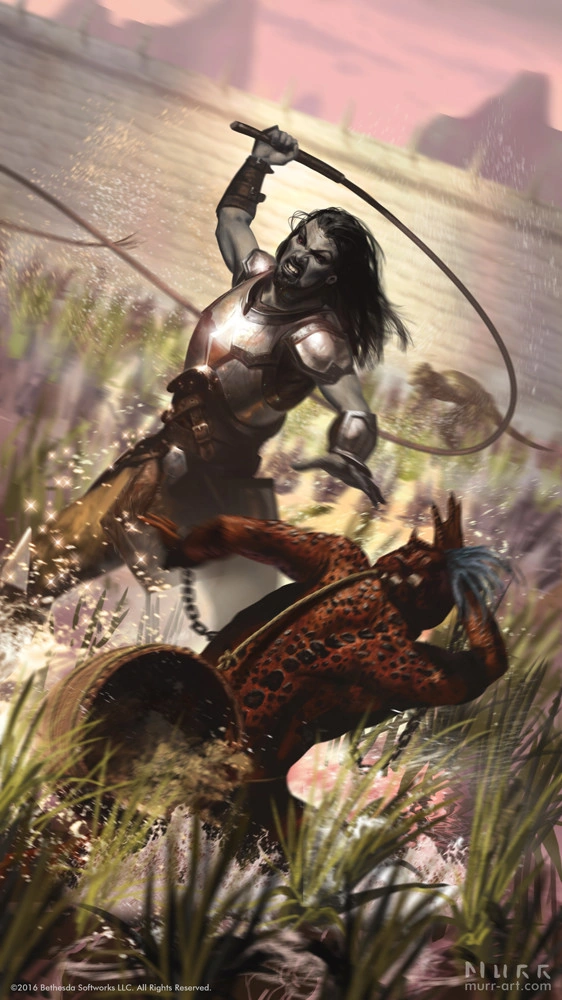
In the newly conquered southern lands, Dark Elves have enslaved Catfolk, lizardfolk, and other races more suited to the tropical climate to acquire cash crops. They are kept in line by vicious wardens and pirates.
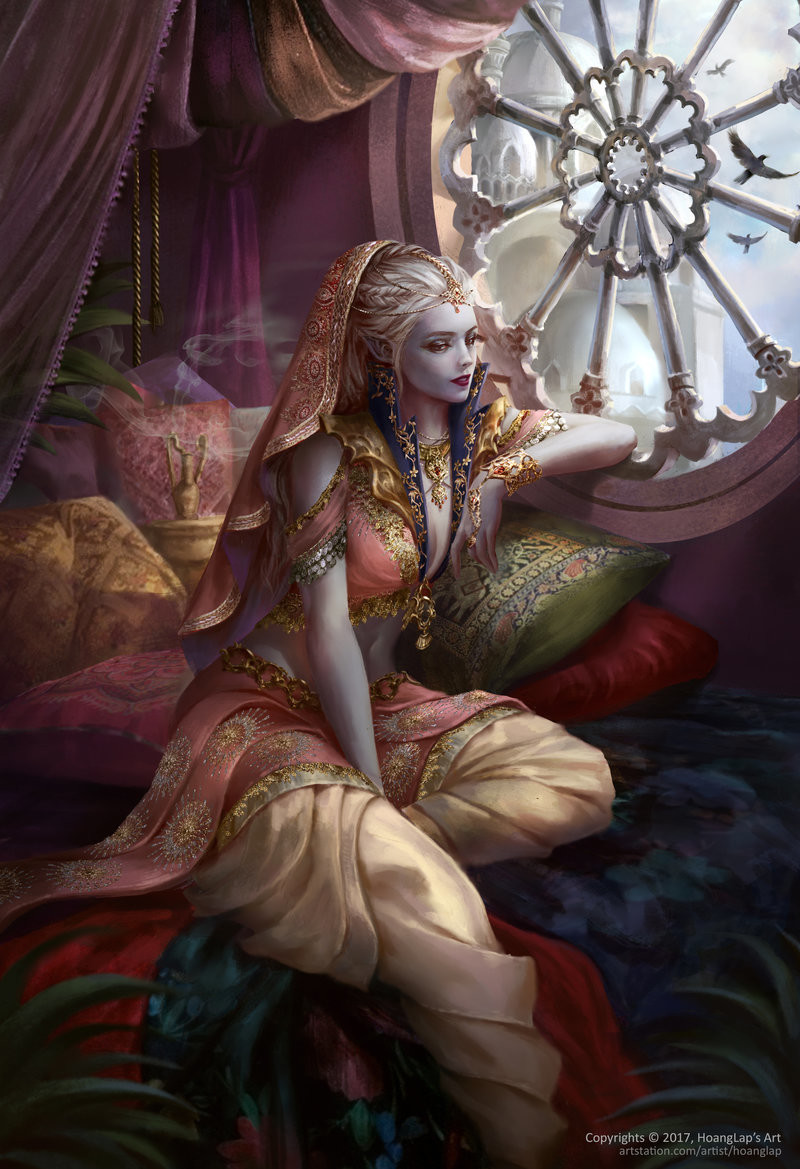
With the influx of new resources and ideas from conquered lands, new tastes and ways of thinking have taken root among the Dark Elven elite.
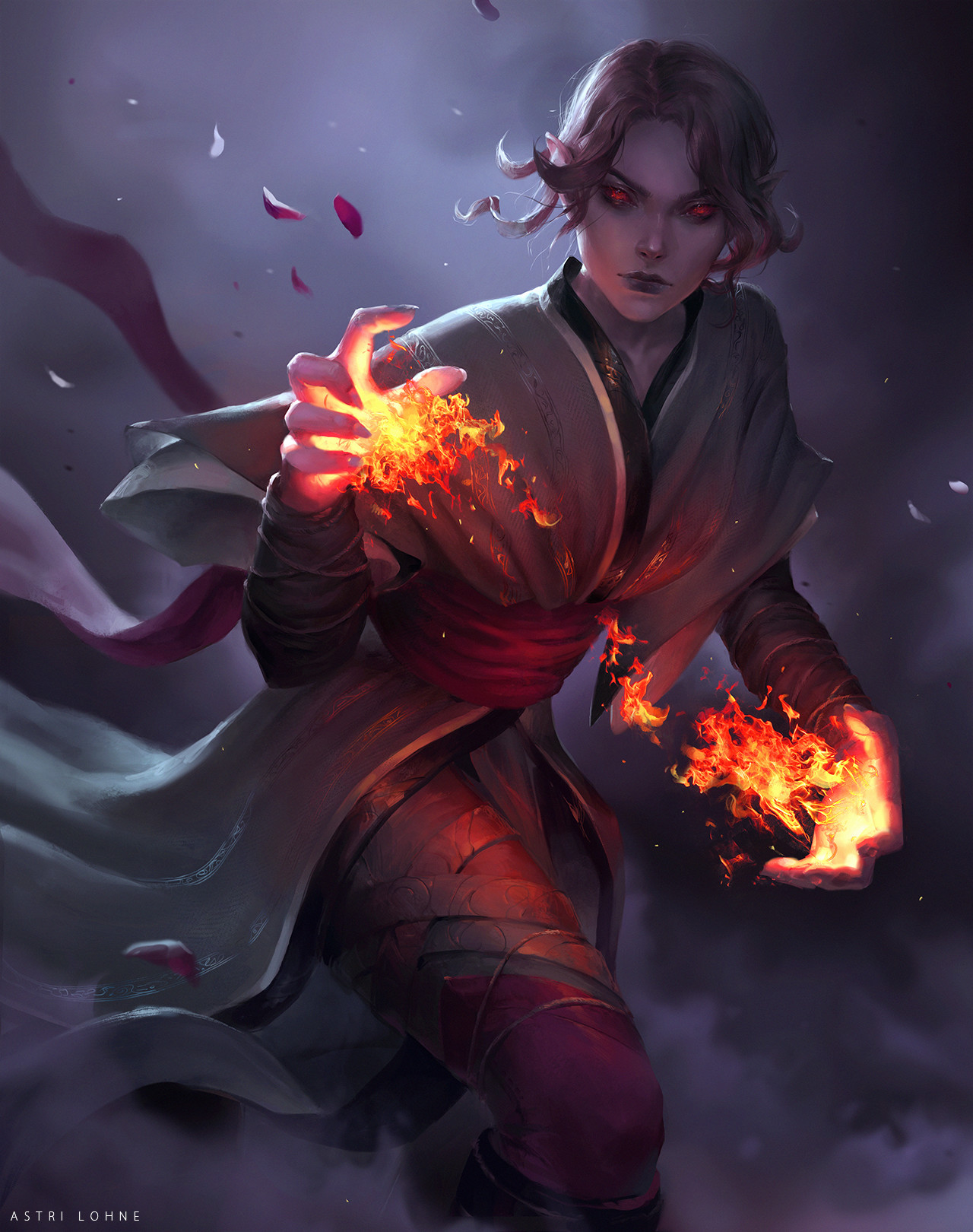
On the battlefield, Dark Elves prefer a balanced approach of sword, bow, magic, and stealth. As such, they make excellent nightblades and spellswords.
Comments