
Windsong Abbey
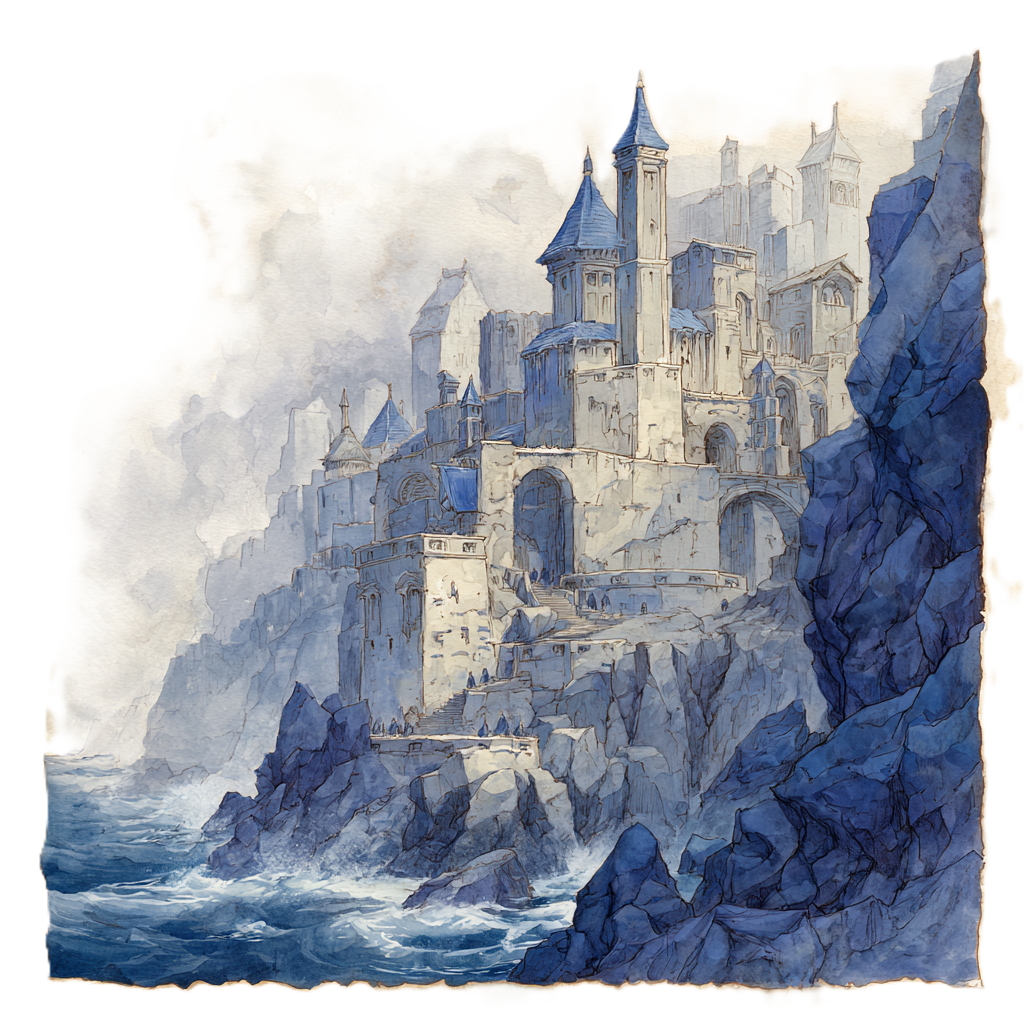
If ever you find yourself wandering the south-west coast of Varisia, follow the cry of the gulls and the taste of salt in the wind, sooner or later, the sea will lead you to Windsong Abbey.
Ah, the Abbey... Now, that is a place that stirs a memory or two!
You’ll see it long before you reach it: white towers rising from the cliffs like the bones of some ancient giant, their hollow spires singing with every passing breeze. The place lives up to its name; the wind rushing through stone until the whole cliffside hums like a choir. A lonely chorus above the waves, where the sea beats its drums and the tides keep time.
They say Windsong was raised not for worship but for conversation - a meeting ground where the faithful of every god might set aside their quarrels and listen, if only for a while. Desnan dreamers drift through its courtyards beside Abadaran judges; Sarenrae’s healers share bread with the quiet scholars of Nethys. Even the followers of darker powers are not turned away, so long as they come to speak, not to convert. Each faith keeps its voice, and yet, somehow, the song never falls to discord. That, to me, is the Abbey’s true miracle: not its walls or towers, but that it stands at all, holding so many truths beneath one roof.
And among all those voices - gods debated, prayers recited, psalms painted on glass - there was one that found its true melody there. A girl from Magnimar, born into scandal and hidden in silence. A mere child when she first arrived, a goddess' favorite when she returned: Alycia Deverin.
The Deverin Bastard

Now, Alycia was a Deverin - aye, those Deverins. If you’ve ever passed through the City of Monuments and had the good sense to order a pint, you’ve likely tasted their craft. The red label’s my favorite; smooth, with a hint of spice at the end, much like the family itself. The Deverins were known for their breweries, their open feasts, and their knack for turning strangers into friends before the night was through. Folk even called Alycia'as grandfather the People’s Lord, and let me tell you - they were right.
Yet tragedy isn't an unknown even by the brightest hearth. Once upon a time, during one of Magnimar’s trade seasons, Lady Deverin - Alycia’s mother - set out for Riddleport. Unfortunately, her carriage never made it. Orc raiders caught them on the road, and though she was found alive days later, she carried more than wounds back with her. In time, it became clear that the attack had left her with child.
The family begged her to seek magical or at least alchemical aid to undo what had been forced upon her, but she refused.
"The child is innocent,” she said. And though I’ve sung of many kinds of courage, few ever came at such a cost.
When her time came, she brought life into the world and gave up her own in the doing.

Alycia was born screaming as her mother lay silent beside her. The Deverins mourned the lady, but never truly embraced the babe. All save for one - her grandfather, the lord and heart of the house - who took the green-skinned child in his arms and whispered, "You’ll sing one day, little one.”
Still, even a noble name isn't always enough to grant you a gentle life. The Deverin halls, once bright with music and mirth, turned quieter when young Alycia was near. Servants bowed but looked away; tutors spoke softly, as if afraid the temper of her orcish blood might be contagious. And Alycia - gods bless her heart - mistook their discomfort for her due punishment. I’ve seen that look before; the kind of fury born not of hatred, but of longing. The ache of desperately wanting to be loved.
Road to the Abbey
By the age of ten, life for Alycia in the Deverin mansion had grown unbearable. There were outbursts - a cruel word here, a thrown chair there - little bursts of anger that broke from nowhere and left the house holding its breath. Some said it was inevitable; others, that guilt for her mother’s death had finally curdled into madness. I say it was just a child choking on the silence around her.
The Deverins, polished and practical as ever, made a decision which they called an act of mercy. They sent her away for "proper guidance." Truth was, Magnimar always preferred its scandals out of sight. And so a carriage rolled north along the coast, carrying a girl with a noble name, a wild temper, and no say in her own story.
Now, Windsong Abbey doesn’t take sides, but it does take strays. The priests there have a talent for seeing the note hidden in the noise, and they saw one in Alycia. At first, she hated the place - too quiet, too kind, too full of people who smiled without flinching. She would shout at the waves until her throat went raw, break brushes, stomp through the gardens like a small, furious storm.
But the Abbey doesn’t fight back. It listens.
And in time, its calmness worked its way into her.
Life in the Abbey
The Abbey had a rhythm, not a schedule. Mornings began with the whisper of brushes and quills; by noon the courtyards filled with low chants, and in the evenings the sea joined in - crashing against the cliffs like an old, impatient choir. By nightfall the whole place shimmered with color. Candlelight spilled through the stained glass, scattering rainbows across the marble floors, and the salt wind turned them into shifting curtains of light. Alycia once told me it felt like walking through a dream someone else had left half-finished.
It wasn’t all piety and incense, mind you. The Desnans painted ceilings with stars that never lined up quite right. The Nethys scholars argued with the Abadarans about whether divine law could be "properly quantified.” Once, a Pharasma priest pinned a funerary hymn to the Shelynite gallery with a note that read "Too cheerful.”
Contrary to Thaddeus’ account, Alycia did not abandon sculpting because she found some higher purpose - that came later. She stopped simply because she knew she wasn’t gifted at it.
She laughed at that - truly laughed - and said perhaps Shelyn was teaching her patience through poor craftsmanship. In time, she realized that beauty was not a matter of gift or grace, but of understanding.
To recognize one’s limits without bitterness - to see art not as conquest, but as communion - was, in its own way, an act of devotion. In failing to master her craft, Alycia finally learned what it meant to serve her goddess.
Truth be told, Windsong survived because it laughed at its own contradictions. Alycia loved that about it. She told me Windsong was the only place in the world where faiths quarreled without killing each other. "They disagree like artists,” she said, “loudly, beautifully, and never for long.”
She was drawn, of course, to the Shelynite wing. It smelled of lilacs and wet plaster, full of half-mended statues and unfinished canvases. The High Curator herself - Ardet, a Shelynite with more wrinkles than robes - took a liking to her. Said Alycia reminded her of a chisel: sharp, noisy, but capable of grace when guided well. It was Ardet who found her one morning in the courtyard, hammering at a block of marble with enough fury to wake the gods. When she asked what Alycia was trying to make, the girl muttered, "Something that isn’t ugly.” Ardet didn’t scold her, didn’t tell her to pray. She just handed her a proper chisel and said, "Then stop fighting the stone. Listen to it.”
That was her first lesson. Maybe her first prayer, too.
From then on, the Abbey changed for her. She said the wind sounded different after that day. It stopped moaning and started singing. She began to notice things: how Desna’s stars sparkled at noon; how the Pharasmins whispered blessings into every grain of sand they raked through the gardens; how even the followers of Zon-Kuthon, grim as tombs, left black lilies in the Shelynite hall once a year, bound with silver thread.
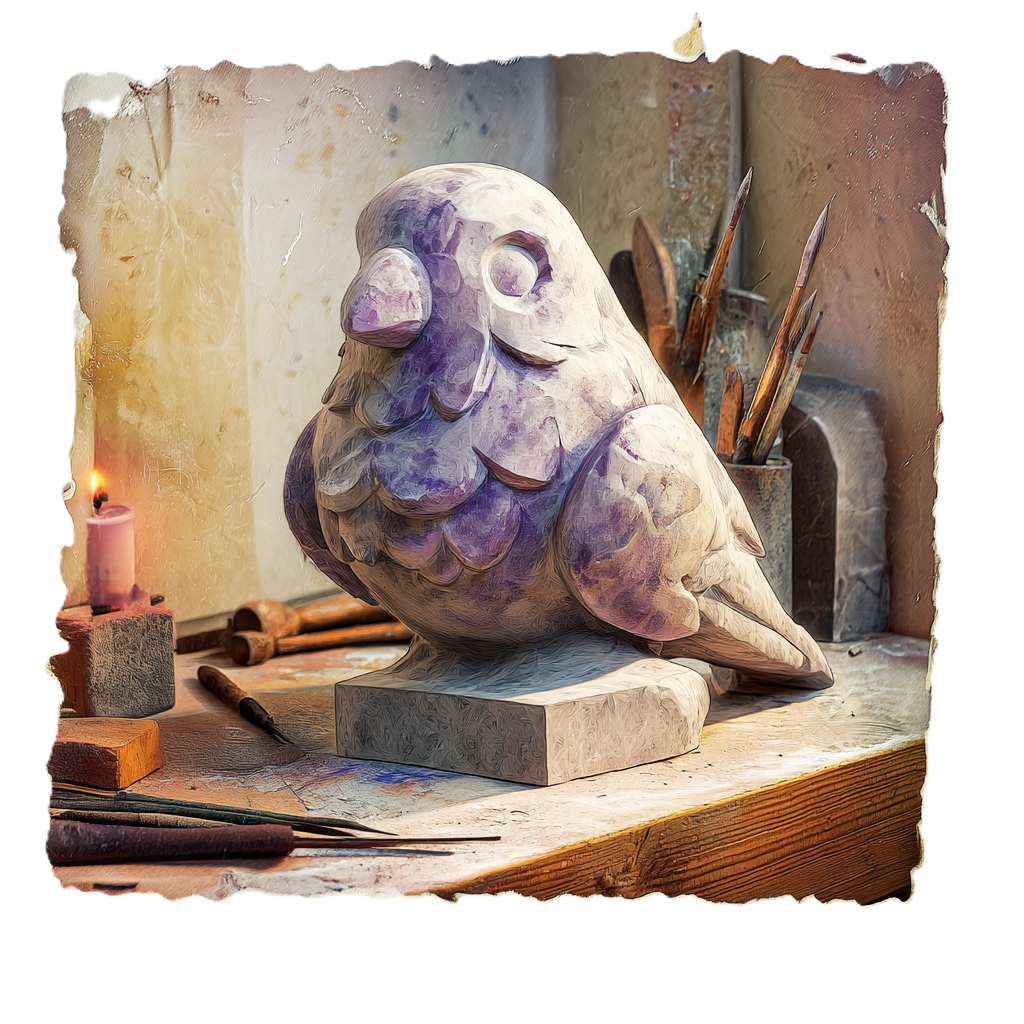
She spent her days in the sculpture hall, covered in marble dust, her hair tied back with linen strips meant for polishing stone. While others carved saints, she carved small things: birds, seashells, the shape of a hand reaching. I saw one of her early works long after she’d left the Abbey. It was… well... quite frankly, it was bad. The proportions were dreadful, the features uneven. It was supposed to be a dove; it looked more like a startled fish. She laughed when I said so and told me Shelyn forgives ugly things.
"That’s why she keeps me around,” she said. I didn’t have the heart - or the wit - to answer that.
Over the years, her touch softened. She stopped striking the marble and began coaxing it. The priests said her anger melted into her art, and her art into prayer. Shelyn’s creed isn’t about perfection, you see; it’s about creation. And Alycia - poor, self-conscious Alycia - finally learned she didn’t have to be flawless to be beautiful. When she stopped sculpting, it wasn’t from failure. It was because she no longer needed the stone to speak for her.
The last time I visited Windsong, years after she’d gone, the sea wind still sang through the spires. The marble birds she’d carved were gone but the lilacs she planted had grown wild across the courtyard.
I think Shelyn liked the trade.
Return to Magnimar
Yet, a girl can’t live forever on sea-salt and hymns. The Abbey might mend a soul, but it doesn’t teach you how to walk among people again. When Alycia finally left Windsong, she did so with little more than a pack of tools and a new holy symbol - a handmade gift of Ardet.
She returned to Magnimar a young woman - calmer, bright-eyed, but still unsure where she belonged. The city hadn’t changed much. Same grand bridges, same noisy markets, same gossiping nobles who could drink all night and still remember old scandals in the morning. To them, she was still the orc-blooded Deverin, the family’s shadow and shame. But for once, Alycia smiled through it.
She went first to her grandfather’s estate. The servants didn’t recognize her at the gate, but the old man did despite his sickness and his cloudy by age eyes. She stayed in Magnimar for a time, helping at shrines, carving trinkets, teaching children to paint. Never asked for coin, never sought attention. But I think she hoped - as we all do - that her family might one day see the beauty she carried home from the cliffs.
The Wind and the Song
When I think of Alycia Deverin, I don’t picture her with a halo or a crown. I see her as she was: sleeves rolled up, laughing at her own mistakes and always ready to help. She never chased sainthood. She just kept trying to make things better, quietly, stubbornly, one act of grace at a time.

Years later, long after she’d left the coast behind, Windsong Abbey was attacked - left broken and empty, its halls scattered with the echoes of old prayers. Many thought it lost. But Alycia came back. No banners, no heralds, no orders. Just her and a few who still believed that beauty was worth protecting. What happened there… well, that’s a story for another night. But when it was over, the Abbey still stood. And for a time, it sang again.
They say the priests offered her the title of Masked Abbess, keeper of Windsong’s faiths and protector of its peace. She refused, of course saying that the world - and her friends - still needed both her hands.
I’ve met many heroes in my travels, and most of them wanted to be remembered. Alycia never did and that's what sets her apart. Still, when the wind rushes through the cliffs of the Abbey, I swear you can hear her laughter in it; bright, soft, and defiant as ever. Maybe that’s Shelyn’s doing. Or maybe that’s just Alycia, reminding us that even the humblest song can outlast the storm.

Worlds you may also like
Do you enjoy the tales of the Misfits? If that's the case, here are some more worlds I believe you will enjoy as well!
If you pay them a visit, make sure to give them some love. They absolutely deserve it!

Ahhh Windsong Abbey, truly a wonderful and interesting locale and I like how it interacted with the story of Alycia, this portrayal is wonderful :)
Yay! First comment of this world <3 Thank you so much <3 We had a couple of adventures in the Abbey and it really is a place that stack with me. I am glad you liked Alycia's background in it :)