Bear Claw Clan
For most of us here in this tavern, the tribal ways feel strange. At best, we call them exotic. At worst, savage, cruel and uncivilized. But tell me, what is civilization, my friends? If you narrow it down to cobbled streets, fine clothes, and polished manners, then yes - the tribes will always seem savage. But culture is none of these things. It is identity, it is custom, it is the rhythm of everyday life. And if you wish to understand any people in this world, you must first accept that truth.
The Bear Claw Clan was a bridge between two worlds: the Shoanti, with their storms, spirits, and ancestral ways and the Ulfen, fierce raiders of the north bound by iron, oaths, and the strength of their longships. A small tribe, little known, yet I must confess - one of my dearest tales. Why? But because it proves one of my deepest beliefs: love is what binds us closer than blood ever could.
A New Culture
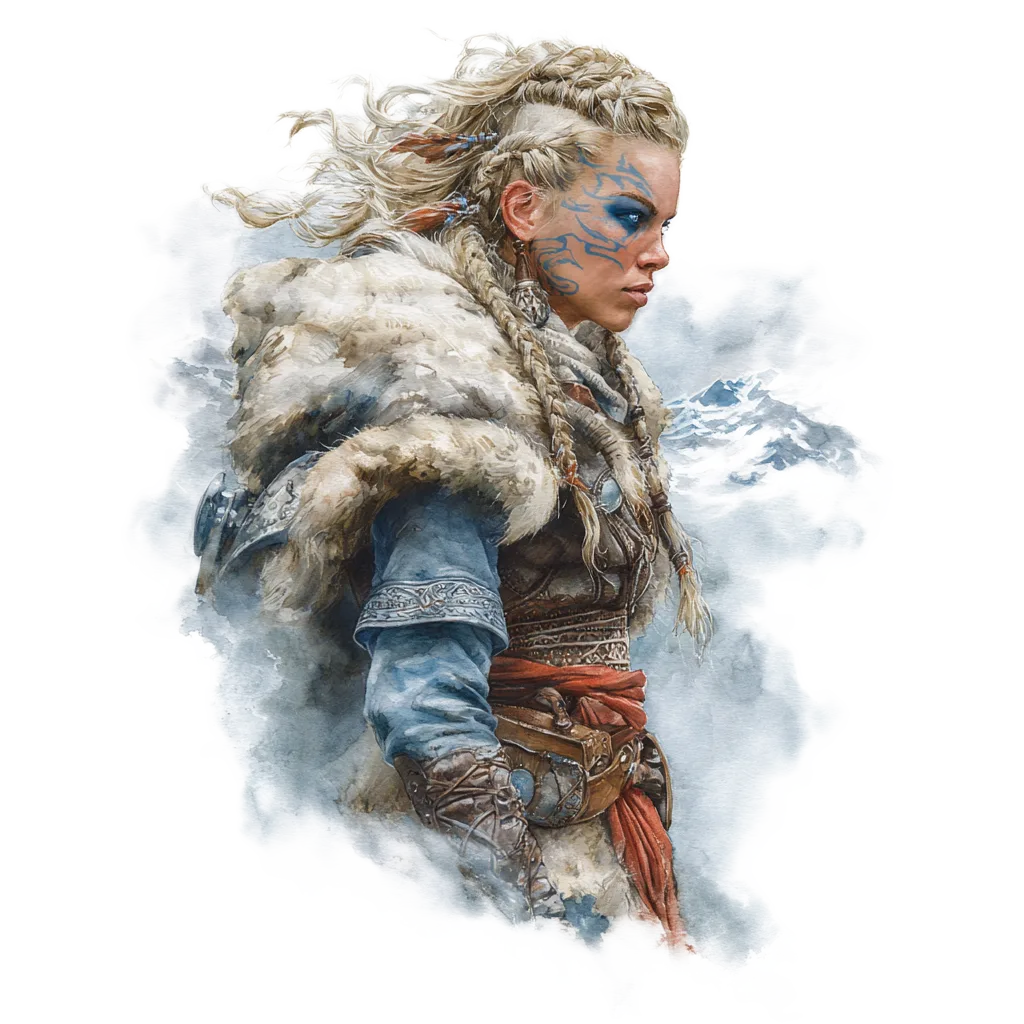
Every clan has its chiefs, and the Bear Claw had two: Kanza and Earl. She was the spirit - sharp as wind, rooted in the ways of her Shoanti blood. He was the strength - broad as the mountains, carved by Ulfen might.
Kanza was no ordinary woman. She was born of storm and legend, the daughter of Tamuz: the Eye of the Storm himself, a hero of the Tamiir Quah, the Wind Clan of the Shoanti. Her blood carried thunder, her voice carried silence, and the spirits were never far from her shadow.
Earl, by contrast, was no son of glory. He was Ulfen - a raider taken alive in battle, a slave forced to labor beneath Shoanti rule. Yet the man was iron. He endured the chains, and in time, he proved himself among to his captors. His strength earned him freedom; his spirit, respect. And then, against all that custom allowed, his heart found Kanza’s.
Exodus
"The storm teaches nothing to the mountain.
Yet both shape the land."
Unfortunately, love is not always welcome in the halls of tradition. When her brother rose as chief, he forbade the union. To bind the daughter of Tamuz to an Ulfen slave? What a Shame! What an insult!
And so Kanza and Earl chose exile.
But, hold on 'cause here comes the twist, friends: the defiant couple did not walk alone. Some Shoanti followed, for they saw her father’s legacy reflected in her spirit. And many Ulfen - slaves and freedmen alike - followed Earl, for he gave them hope of a home that would be theirs.
Among the Shoanti of the Tamiir Quah, the Empyreal Lord Hembad, known as the First Stormbearer, is revered as both protector and ancestor, said to have walked the earth before the age of kings.
Kanza’s bloodline descends from his mortal kin, and her father, Tamuz, bore a fragment of Hembad’s storm-born blessing.
To her, Earl’s transformative abilities was the manifestation of that ancestral spirit: the bear made flesh, bridging Shoanti and Ulfen blood alike.
It was proof, in her eyes, that their union was not a defiance of tradition, but its fulfillment
Together, they all left the Kodar Mountains and the hursh Cinderlands behind. For a while, they wandered Varisia until new mountains opened to them, offering refuge in their cold embrace. There, upon a high plateau between Ganduria and Ravenmoor, the Bear Claw Clan was born; neither Shoanti nor Ulfen, but both. A tribe of two bloods that began from a spark of love. From that spark a new culture was born, and in its hearth Einar - one of our Misfits - was forged. A child of storms and raids both, raised to walk in two worlds - and, by the gods, destined to be a hero in many more.
The Spirit of the Bear
They say the name of the new-found clan came from Earl himself.
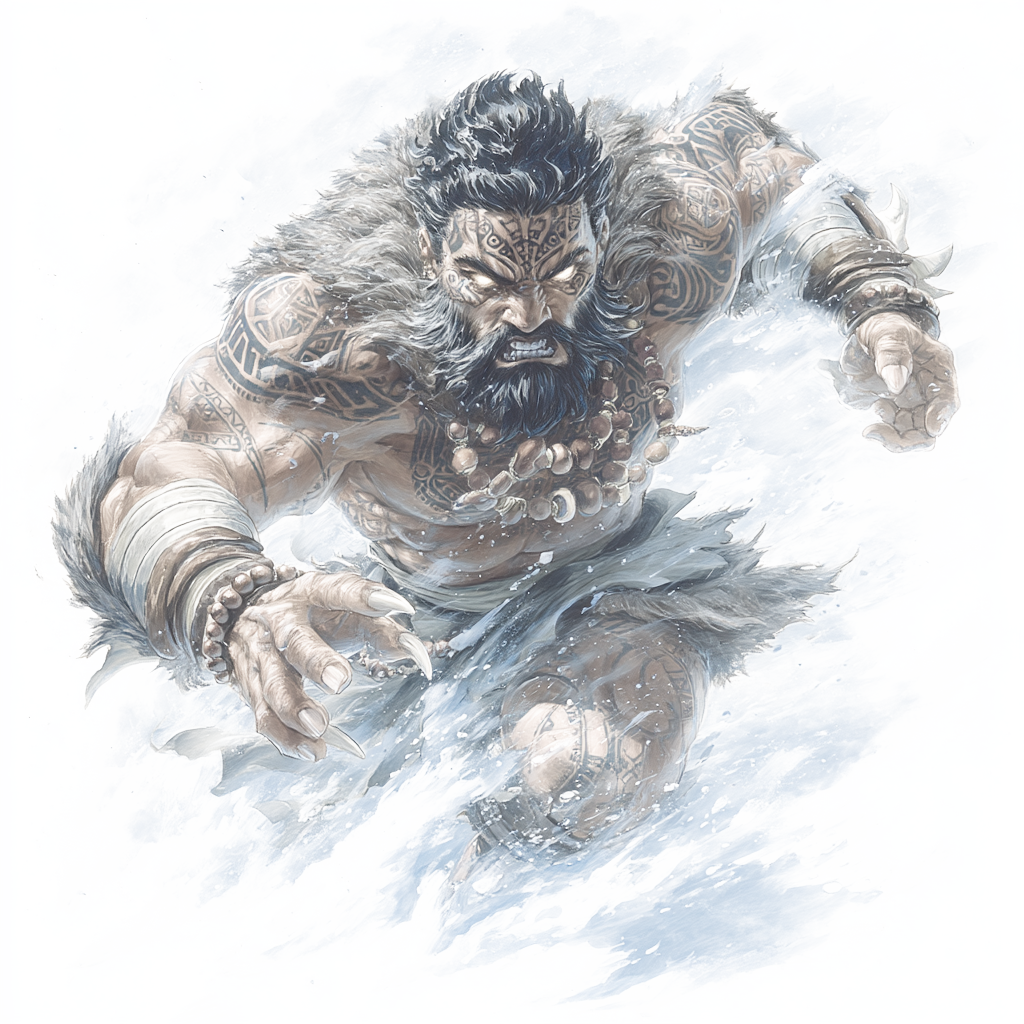
See, in battle, when fury took him, his hands would twist: skin darkening, sinews swelling, nails black as iron and curved like claws. His roar could drown a storm, and men would falter, unsure if they faced a warrior or a spirit wearing his flesh. The Ulfen of the tribe whispered that he’d been blessed by their northern gods - that his rage had called a beast to share his soul. Others swore Kanza had bound a guardian spirit to him, a gift to keep him safe from her brother’s wrath.
Both sides carry a portion of the truth, if you ask me.
The Shoanti know that strength is not merely muscle, but the spirit that moves behind it. And the Ulfen believe that every great warrior's soul is shadowed by an animal twin: a guide as much as a mirror. Earl’s was the bear: patient, fierce, and endlessly enduring.
Where the wolf hunts and the hawk strikes, the bear waits.
It endures the cold, it guards its kin, and when it fights, it fights to end.
So did Earl.
And so did those who followed him.
And so, when the new tribe settled in the mountains, they took the bear as their totem and protector. They painted its mark on their shields and their skin, carved its claws into doors and blades. They tamed the bears of the forests and high slopes, fighting and living beside them; not as masters, but as kin.
It was a tenet: that strength without compassion is brutality, and compassion without strength is frailty.
The Ways of the Bear
Life among the Bear Claw is never easy, but it is full, carved from wind, stone, and stubbornness.
When spring comes to melt the snows, the tribe ascends to the high camp of Karuun - the Ursa Major, as we would call it - perched upon the shoulders of the mountain where the air is sharp and the sky feels close enough to touch. There, among whispering pines and cold, singing streams, they hunt wild goats and wolves and gather herbs that cling to the rock like secrets.
Their homes are lean shelters woven from hide and timber, open to the wind but warm with smoke. Furs hang to dry on wooden frames, catching the scent of sun and pine resin. The nights hum with distant thunder and the low growl of bears beyond the tree line.
When autumn breathes frost upon the peaks, they descend to their winter hall of Daruun - the Ursa Minor - built on the wide plateau below. Its longhouses stand close for warmth, their walls carved with spiraling bear-claws and storm-mark sigils. Here they trade, mend, and tell stories that last deep into the night. Smoke curls from narrow hearths, heavy with the scent of pine and sweet herbs, while beyond the low palisade, the wind prowls like a living thing, whispering to those who still remember its language.
Daily Life
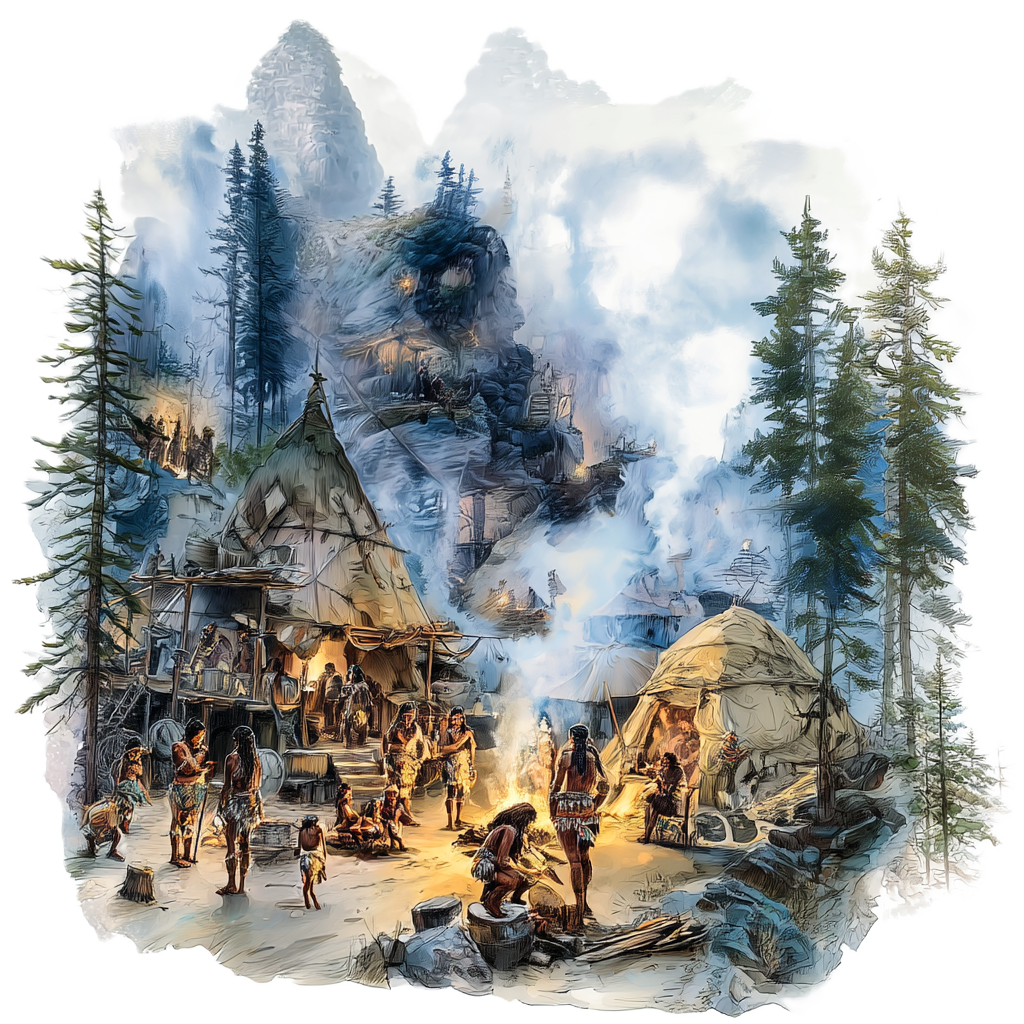
The days of the clan are marked by balance: labor and reverence, survival and unity. And in a culture still finding its shape, even the smallest act carries meaning.
Among the Bear Claw people, roles are not bound by gender but by gift. A woman may lead a hunt; a man may tend the hearth or carve the spirit-totems. Strength is measured not by birth, but by courage, by compassion, by the will to protect.
When a hunter completes their training, they break the tip of their first arrow to honor the beast’s spirit and keep it as a token around their neck; a reminder that skill and respect must walk hand in hand.
Every child is marked by ritual before they even reach the age of one. Their first tattoo - call it a form of baptism - is drawn by the shaman’s hand as the tribe gathers. The symbols are chosen not by parents, but by the ancestors: shapes and lines seen in smoke and dream. The ink is mixed with ash and berry, etced into skin while chants rise like wind through the pines. To be marked is to be known; both by the living, and by the spirits that guide and watch over them.
A mother whispers her child’s name to the fire before she ever speaks it aloud. The flame, they believe, must be the first to hear. And when the tribe eats, they always leave a small portion beside the fire; a gift for those who came before, who they say still linger in the smoke and warm themselves on mortal flame.
Their livelihood rests on furs, hides, and herbs traded in nearby towns like Ravenmoor or Ganduria - dangerous journeys through narrow ravines and dark woods. Yet the Bear Claw travel it still, their hair bound in long braids threaded with bone and copper, axes etched with bear-tooth carvings, and eyes bright with the patience of the mountain.
In peace, they are quiet and watchful. In war, they strike like the storm. They move with the mountain, breathe with the storm, and measure wealth not in gold, but in the warmth of their hearths when the wind begins to howl.
Language
The Bear Claw tongue never had the time to grow into a full language. It’s more of a weave - Shoanti wind-speech tangled with Ulfen growl. A language of rhythm and restraint, full of pauses that carry as much meaning as the words themselves. To outsiders, it sounds like thunder murmuring through reeds: short, sharp syllables and long, sighing vowels, like wind through pine.
They use the Common tongue only for trade, and even then, sparingly. Writing is rare. They keep their memory in carved symbols, knot-cords, and painted hides. For them, words are sacred things. What’s spoken holds power, and what’s written risks binding that power too tightly. What I came to understand is that among the Bear Claw, truth isn’t measured by eloquence but by deed.
A promise kept carries more weight than a thousand speeches, and a single honest gesture speaks louder than love shouted to the skies.
- Ratha: home / heart
Where your fire burns, there you belong.
- Goruun: to endure
A blessing, a warning, and sometimes, a farewell.
- Rasha or Rasha-kan: blood / kin
Not always the same thing.
- Dahrun: spirit / wind / anscestor
You can hear it when you are in need.
- Thara: life / fire / will
All the same word to us
Customs & Rites
Among the Bear Claw, there’s no clear line between worship and living. Their ceremonies follow a lot of the old Shoanti ways: ritualistic, symbolic, and always shared. The spirits, they say, see only what’s done, never what’s spoken.
Tattooing is sacred work, guided by a shaman or a skald. No two designs are ever the same as each carries the memory of its bearer’s spirit. Storm spirals mark the blood of Tamuz; bear-claw strikes, the line of Earl; and thin, windlike strokes belong to those the mountain calls restless. To be tattooed is to be known and remembered; by flesh, by spirit, and by all who’ll come after.
Then there’s the Whispering Fire, held on the night when the moon hides her face. The clan gathers in silence while the elders feed herbs into the flames. The smoke rises in twisting plumes, said to carry their voices to the ancestors.
If the fire hisses, the spirits have come to guide and answer.
If it crackles softly, they’ve come to listen and comfort.
Now, you see, the Bear Claw don’t divide their customs into sacred and simple. Every act has a bit of both.
But there are two rites that stand out, not because they’re greater, but because they stay with you.
One binds souls.
The other, hearts.
The Binding of Blood
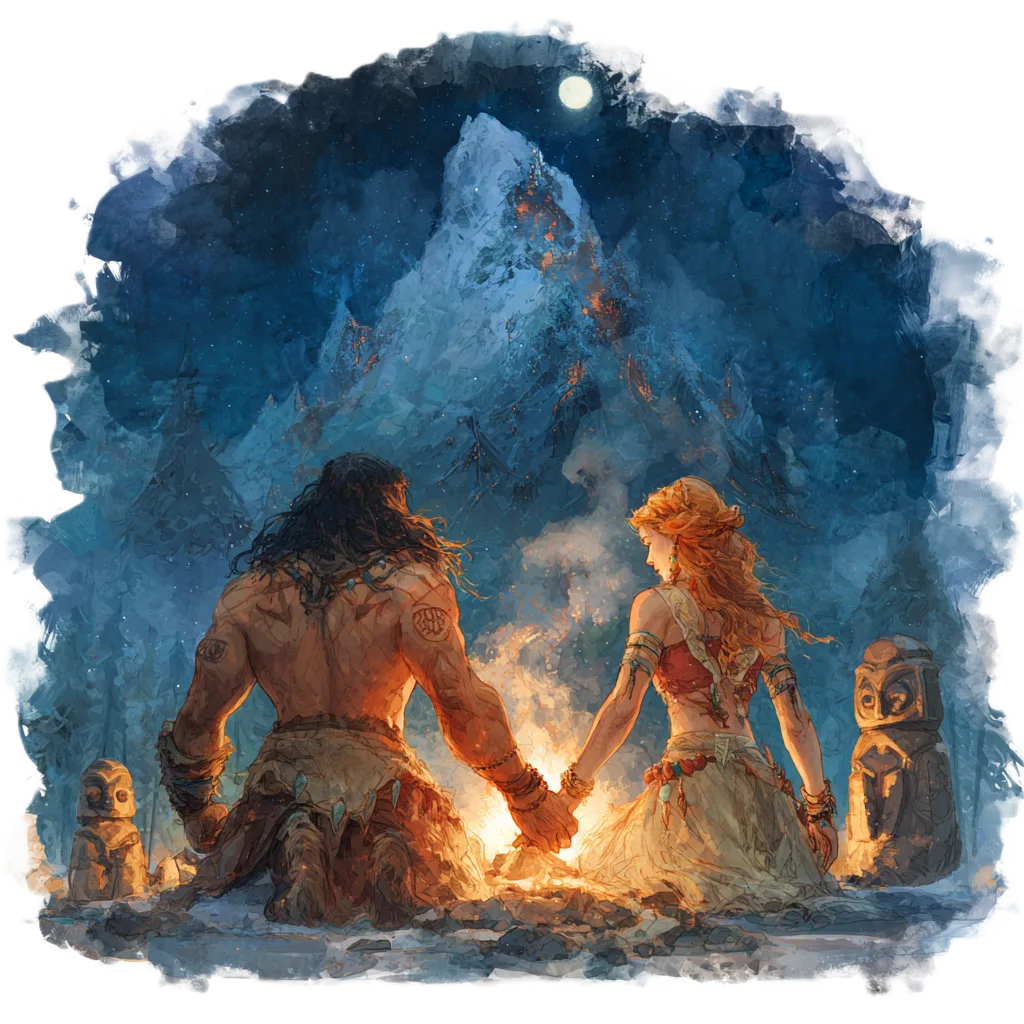
This is their holiest vow; a ritual of union, devotion, and remembrance. It may bind lovers, kin, or sworn brothers.
Two step before the fire.
Their forearms are painted with sigils of ash while the shaman whispers their names to the ancestors. Then each takes a blade and cuts the same mark upon their flesh: the same line, the same wound.
As their blood mingles, the shaman traces a tattoo from one arm to the other - a design that lives only when the two are joined.
When apart, each bears half: an incomplete shape, a promise waiting to be made whole again.
But when they clasp arms, the mark becomes one, and the spirits, it is said, see them as a single soul divided.
To break such a bond is to invite silence.
Not anger... just silence.
Nhar-Kaen: The Language of Affection
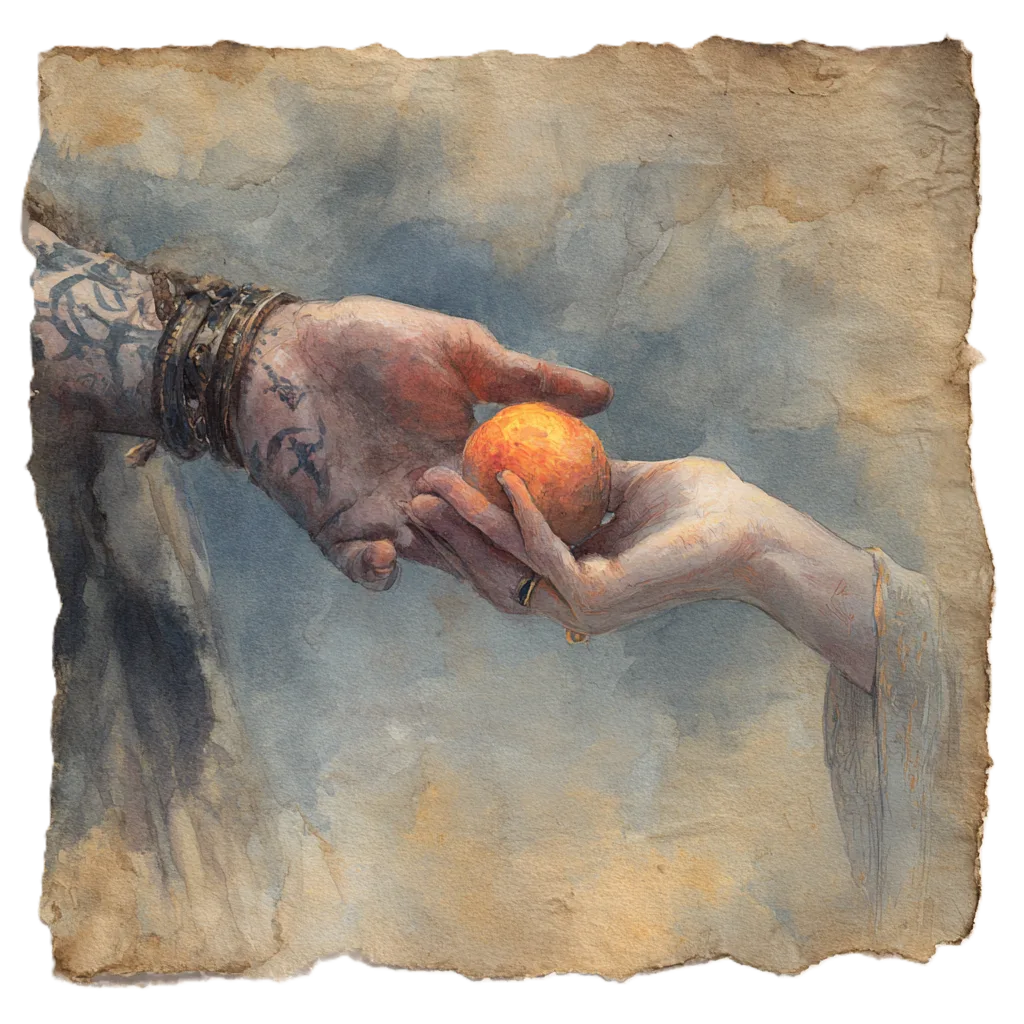
For all their fierce pride and storm-blooded ways, the Bear Claw are quiet folk when it comes to love. They don’t waste words on it. Instead, they let their hands speak.
To give someone something rare - something that took danger, patience, or distance to find - is to say what tongues cannot.
A handful of honeycomb from the deep forest.
A feather from a bird caught mid-migration.
Or, most precious of all, a fruit that doesn’t grow in the mountains.
An orange, for instance, could hold a powerful love story (and - trust me - it does. When the time comes, I'll tell you all about it. But not tonight).
Such a gift says more than any vow.
It means I have walked far for you.
It means you are worth the journey.
They call this act Nhar-Kaen - the offering of warmth. Among the Bear Claw, it’s both courtship and confession, and many a union has begun not with words, but with a quiet gift placed in open hands.
The Sons of the Storm
Every fire leaves embers behind, and from the wild fire of Kanza's and Earl's union came three: Eilif, Elroy and Einar - the sons of the storm. Each carried a spark of their blood, though none burned quite the same. Except for Einar, I’ve met one of the other two in person, and one only through his vile legacy. But I’ll try - as always - to stay objective.
Eilif was the wild one: strong and fierce as his father, forever chasing storms and his line's favor.
Elroy was the heart of the trio: quick to laugh, calm in spirit, more attuned to the whisper of leaves than the clash of steel.
As for Einar… well he was a little bit of both: fierce, stubborn, and awkward in his own skin - like thunder that hadn’t quite learned when to strike.
Tamuz's Question
Now, listen close, for this is the tale that brought our Misfit to the first step of his life’s turning journey. It is not a story of battle or blood, as you might expect, but of a question; one asked long ago upon the highest peak of the Bear Claw Mountains.
A question that still echoes through their line, and through the heart of every soul who dares to lead.
A trial set by a restless ancestor, to test his blood and secure the future of his legacy.
His name? Tamuz: the Eye of the Storm.
One night, the brothers were summoned to the mountain’s crown, where the air trembled with old power. There, beneath the ghostlight of the stars, their ancestor and grandfather Tamuz appeared; his spirit vast and blazing, his voice rolling through the peaks like thunder.
He looked upon each of them and spoke only one question:
"Tell me, sons of my blood… what must a soul bear to lead others through the storm?”
None of the three dared to answer. And Tamuz was pleased, for this showed that the brothers had the wisdom to wait before they spoke.
Then he tore the sky open - clouds parting with the crack and color of thunder. Rain poured from the heavens, and before him, three gifts of his legacy took form. He gave each brother one, and with it, a charge.
To Eilif, he gave a cloak woven from storm-cloud shadow; for strength must know when to shield as well as strike.
To Elroy, a pair of hatchet axes carved with the runes of growth and decay; for nature teaches that creation and destruction are never far apart.
To Einar, a simple amulet of copper and bone; for the heart of a leader is not forged in glory, but in burden.
Then the spirit commanded them to leave the mountain, walk the wide world, and seek the answer for themselves. In two years’ time, they were to return and share what they had found. Whichever brother spoke the truest answer would inherit the power of the storm, and the charge to lead their people; whether to ruin or to glory, that choice would be his alone.
And so the brothers obeyed, and left.
Eilif went north, where the tempests never rest.
Elroy turned west, to the wilds and the barren lands.
Einar followed the river south, down from the mountains to the shining city of Magnimar.
None of them knew it then, but that journey would carry the youngest far beyond the reach of his ancestors: into wars, wonders, and fates that would one day shape the world they all knew… and perhaps more than any spirit ever foresaw.
Legacy of the Bear Claw
So there you have it: the Bear Claw, the storm, and the boy who walked out of it.
The clan is gone from most maps now, their trails swallowed by snow and silence. But anyone who ever saw Einar stand beneath thunder can tell you this: the legacy of his blood was carried forward through him, into the world’s uncertain future.
The same promise that bound Kanza and Earl burned within him: that strength and compassion are meant to walk together.
And that, my friends, is why I tell you this story.
Because every hero carries the memory of their hearth, whether they speak of it or not.
But fear not, because that was only the beginning.
For the question Tamuz asked still lingers, even now… and if you’ve a drink to spare, I’ll tell you how Einar found his first answer: in the city of Magnimar, beneath open skies and beside the friends who would change his fate.
Worlds you may also like
Do you enjoy the tales of the Misfits? If that's the case, here are some more worlds I believe you will enjoy as well!
If you pay them a visit, make sure to give them some love. They absolutely deserve it!

Comments
Author's Notes