

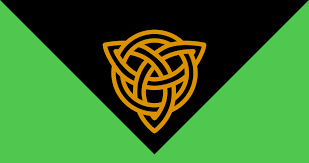
Tanarian Empire
Once an expansive elvish nation with vast cities full of magic and wonder, the empire has experienced a sudden and large decline in both power and people. In as many as a few centuries, the massive empire has dwindled to a few major cities and some scattered border outposts. The cities are hidden in the dense forested regions, and few who go looking for them ever find them unless escorted by elves. As magic has declined in the world, so too has the once awesome power of the Tanarian Empire.
Structure
Tanaria is ruled from the Verdant Throne, an imperial seat held by a reclusive elven sovereign known only by title, not by name. The Emperor is both ruler and living symbol of Tanaria’s ancient covenant with the land. Day-to-day governance falls to the Circle of Vines, a council of elder elven lords and matriarchs, each representing a noble house or ancient grove.
The empire’s politics are veiled in secrecy, its diplomacy measured in centuries. Though trade caravans are often allowed to traverse the roads of the Empire, they are always kept from the major cities. Bureaucracy is minimal—if a citizen needs something, they often speak to their House elder or commune with the forest itself.
Despite their mystique, the Tanarians are not isolationist out of weakness. Their quiet confidence comes from millennia of unbroken rule, unspoiled culture, and elemental attunement that borders on the divine.
The Wyrmguard: Elite arcane warriors who defend key cities and forest sanctums. Legend says they once rode on the wings of dragons, though no one has ever actually seen them in centuries.
The Rootwardens: Rangers and scouts who patrol the forests and borders, often with animal companions or forest allies.
The Sylvan Host: A rapid-response force, trained in ambush, illusion, and terrain manipulation. They are rarely deployed, but when they are the forest itself seems to rise in rebellion.
Borders are marked but lightly guarded. Those who cross without permission may be ignored, or silently tracked until they disappear without a sound.
The empire’s politics are veiled in secrecy, its diplomacy measured in centuries. Though trade caravans are often allowed to traverse the roads of the Empire, they are always kept from the major cities. Bureaucracy is minimal—if a citizen needs something, they often speak to their House elder or commune with the forest itself.
Despite their mystique, the Tanarians are not isolationist out of weakness. Their quiet confidence comes from millennia of unbroken rule, unspoiled culture, and elemental attunement that borders on the divine.
Defenses
The Tanarian military is decentralized and rarely seen. But it is always prepared. Defense falls to:Borders are marked but lightly guarded. Those who cross without permission may be ignored, or silently tracked until they disappear without a sound.
Culture
Assets
Most Tanarian goods are magically grown or hand-crafted. Wines that never spoil, blades that shimmer with verdant steel, fabrics woven from spider-silk. Their economy thrives on limited but highly coveted exports:
Spellbark (a magical wood)
Moonlotus petals (used in expensive and highly sought after potions)
Whisperglass (a rare form of magically reactive crystal)
Trade is heavily restricted and only conducted through regulated channels, usually via the port cities like Esirian or Syln Lari.
Trade is heavily restricted and only conducted through regulated channels, usually via the port cities like Esirian or Syln Lari.
Ruling Organization
Leader Title
Location
Related Ranks & Titles
Controlled Territories

Comments