
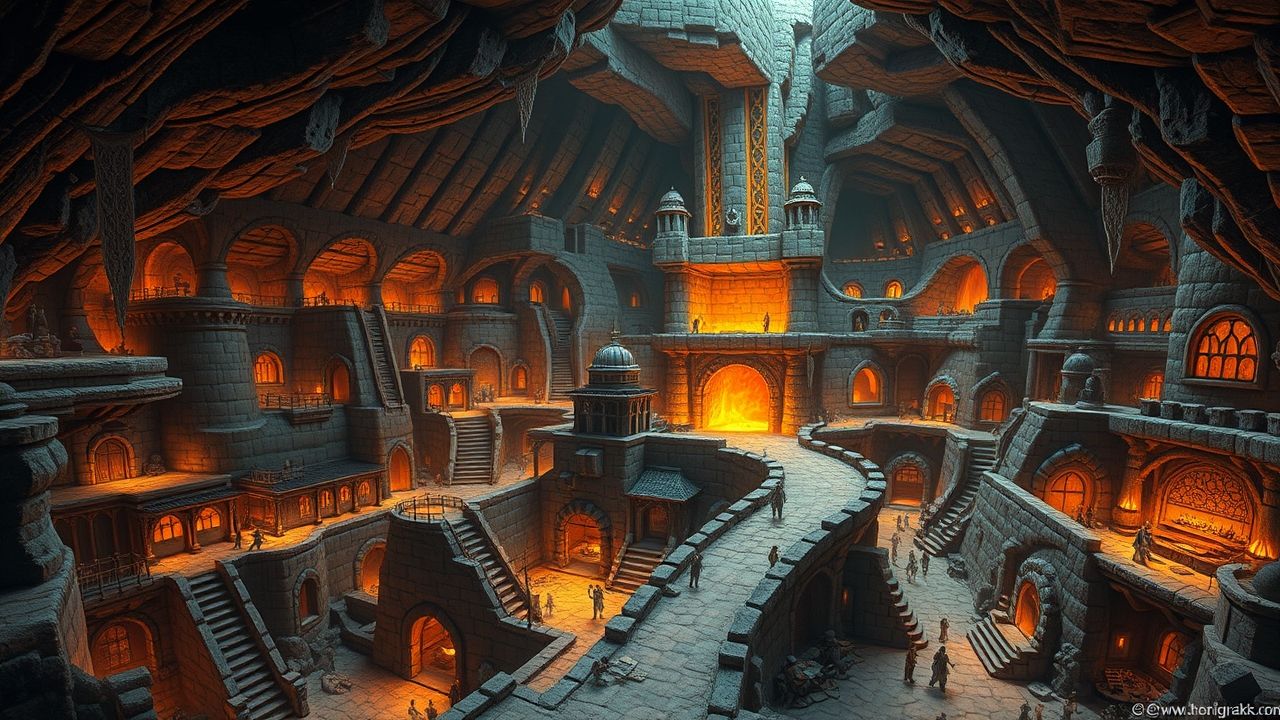
Ironhold
Legislative Body
Ironhold’s laws are almost all taken from codified dwarvish tradition. New laws are crafted by the High Moot, a council of the highest ranking military officers and the heads of the oldest noble families, who convene annually in the capital’s Hall of Stone. Each major settlement is represented, proposing and advising the monarch on new laws.The monarch has the final say on all legislation.
Judicial Body
The interpretation of laws falls to the stonewardens, a caste of elder dwarves trained in both dwarvish history and jurisprudence. Stonewardens act as judges and are respected figures within their communities.Trials are held publicly, with testimony and honor playing as much a role as evidence. Appeals can be made to the monarch in extraordinary cases, and the monarch can overturn any judgement of a stonewarden at any time.
Executive Body
Law enforcement and execution of the queen’s decrees are handled by the Ironhold Shields, a highly disciplined national military drawn from all settlements. Every dwarf must serve a term of service in the Shields.Each city leader also has a small local guard under their command for day-to-day enforcement. The Shields answer directly to Queen Karria through the Royal Marshal.
Structure
Queen Stonesong rules over the territories in and underneath the Stonesong Highlands and the Ironpeak Mountain Range. Individual settlements in Ironhold are overseen by high ranking officers in the Ironhold Shields, holding the rank of General or above. They are appointed directly by the monarch, and are each advised by a city council of military officers, guild leaders and nobility.
Culture
Ironhold’s culture is deeply rooted in the ideals of craftsmanship, self-reliance, honor, and ancestral reverence. Tradition is the bedrock of society — citizens are expected to perfect their crafts, honor their forebears, and contribute to the strength of the hold. There is a general distrust of outsiders, seen more as occasional trading partners than allies.
Music, poetry, and storytelling — particularly regarding ancestral deeds — are highly valued. Artisan guilds wield great social prestige, and smiths, masons, and jewelers are almost revered. Pride and stoicism are cultural norms, and public displays of emotion are considered undignified except during holy festivals.
The motto, "From Fire, Perfection," is not just rhetoric; it’s the heart of how the Ironholders see themselves: refined by hardship into something pure and unbreakable.
Music, poetry, and storytelling — particularly regarding ancestral deeds — are highly valued. Artisan guilds wield great social prestige, and smiths, masons, and jewelers are almost revered. Pride and stoicism are cultural norms, and public displays of emotion are considered undignified except during holy festivals.
The motto, "From Fire, Perfection," is not just rhetoric; it’s the heart of how the Ironholders see themselves: refined by hardship into something pure and unbreakable.
History
The core of the nation was originally founded some time in or around the beginning of the Age of Exploration, but the exact date and even the name of the original country has been lost to time. The borders of that country grew and shrank over time, and was eventually folded into the first and then the second Jadeheart Empire.
After the Jadeheart Empire fell in 1000, a group of dwarves exiled themselves to the highlands and foothills in and around the Ironpeak Mountain Range, and officially founded Ironhold in 1004. The population steadily grew, and from the mid 1010s through 1034, there was intense disagreement about how the kingdom should be led. The original founders of Ironhold wanted more isolation and dwarvish tradition, and were insistent on strict adherence to traditional dwarvish law. A new faction wanted the kingdom to reform its old traditions and be more open to trade and outsiders, with a new set of laws for a new era. In 1034 the two factions split, and Ironhold was solidified as a bastion of dwarvish tradition.
After the Jadeheart Empire fell in 1000, a group of dwarves exiled themselves to the highlands and foothills in and around the Ironpeak Mountain Range, and officially founded Ironhold in 1004. The population steadily grew, and from the mid 1010s through 1034, there was intense disagreement about how the kingdom should be led. The original founders of Ironhold wanted more isolation and dwarvish tradition, and were insistent on strict adherence to traditional dwarvish law. A new faction wanted the kingdom to reform its old traditions and be more open to trade and outsiders, with a new set of laws for a new era. In 1034 the two factions split, and Ironhold was solidified as a bastion of dwarvish tradition.
Demography and Population
Ironhold’s population is about 90% dwarves, with the remaining 10% a scattering of trusted gnomes, humans, and others — typically specialists or long-time traders who have proven their loyalty. The population skews slightly older due to long dwarven lifespans, and birth rates are relatively low but steady.
Death rates are equally low except in mining accidents or skirmishes with mountain creatures. Most of the population is concentrated around major underground halls and valleys with surface outposts.
Death rates are equally low except in mining accidents or skirmishes with mountain creatures. Most of the population is concentrated around major underground halls and valleys with surface outposts.
Agriculture & Industry
Ironhold’s rough terrain doesn’t lend itself easily to agriculture, but clever dwarven engineering has produced terraced farms in fertile mountain valleys for grains, root vegetables, and hardy fruits. Mushroom farming and subterranean livestock (such as cave goats and giant lizards) supplement their food supply underground.
Industry, however, is Ironhold’s true strength:Blacksmithing (legendary quality)
Metal and gemstone mining
Masonry and stonecraft
Clockworks and precision engineering
Jewelry and ornamental arts
Their forges are fueled by geothermic vents and coal mines, enabling the production of some of the finest arms, armor, and mechanical devices on the continent.
Industry, however, is Ironhold’s true strength:
Their forges are fueled by geothermic vents and coal mines, enabling the production of some of the finest arms, armor, and mechanical devices on the continent.
Education
Education in Ironhold is handled largely through apprenticeships and guild mentorships. Formal schooling is rare except for the children of nobility and wealthy crafters, who may hire private tutors.
Literacy is common among artisans and warriors but less so among simple laborers. Education focuses heavily on history, craftsmanship, mathematics (particularly geometry and metallurgy), and martial training.
Magic is rare and regarded with some suspicion, but artificing and rune-smithing are respected disciplines taught in secluded workshops.
Literacy is common among artisans and warriors but less so among simple laborers. Education focuses heavily on history, craftsmanship, mathematics (particularly geometry and metallurgy), and martial training.
Magic is rare and regarded with some suspicion, but artificing and rune-smithing are respected disciplines taught in secluded workshops.
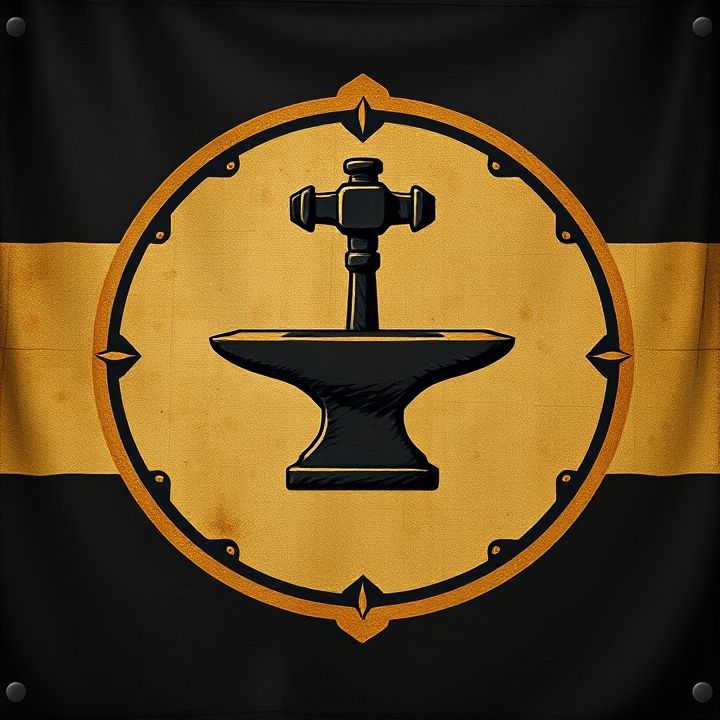
From Fire, Perfection
Founding Date
1004
Capital
Demonym
Ironholder
Leader
Leader Title
Head of State
Head of Government
Government System
Monarchy, Absolute
Power Structure
Unitary state
Economic System
Palace economy
Major Exports
Exports include weapons and armor (particularly masterwork items), jewelry and crafted art, raw and cut gemstones, fine masonry, precision tools and clocks, and more.
Major Imports
Ironhold's imports consist of grain and luxury foods (spices, fruits from southern climates), timber (for building and cartmaking), rare alchemical ingredients, and books and arcane materials (for private collectors and guilds).
Controlled Territories
Neighboring Nations

Comments