


Eco-September
Hello everyone! In September 2025, I will be trialing a challenge I plan to set myself for the entirety of 2026 - Ecology26. It's a spin-off of Galaxy24, a challenge I participated in during 2024, but sadly only achieved half of.
Next year, I will be fleshing out a single habitat's ecosystem, by writing a paragraph about a new species each day, turning one of those species into a full article each week. I believe Galaxy24 is one of the reasons as to why I had such a successful first half of 2024, and why I enjoyed worldbuilding so much then. So, I want to recapture that a bit!
This September I will be attempting to create 30 new species, with at least 4 full articles, fleshing out a habitat. I've yet to pick which habitat, but I've asked some friends what they think, and I will pick the most popular option.
If you'd like to do something similar to this, go ahead, I encourage you! Please let me know so I can cheer you on! But to be clear, this is not an unofficial challenge, just a page to document a personal project of mine.
After a couple of polls, it has been determined I will be fleshing out the coral reefs of Hothiri! This planet has recently been overhauled and I have been dying to work on it again, so it all worked out!

Day 1: Chromatic Plateau Coral
Info
Scientific Name: Gratiospinus arcumensasAverage Lifespan: 10,000 years
Average Size: Up to 5sq km
A gigantic coral species that serves as the infrastructure of these coral reefs. They shimmer in the sunlight, absorbing magical energy. Remove this species, and all coral reefs cease to exist.
Early Kannvas Oil operations involved removing large chunks of chromatic plateau coral, destroying massive ecosystems that haven't yet recovered.
Day 2: Hothirian Pompom Crab
Info
Scientific Name: Lybia hothiriiAverage Lifespan: 2 - 4 years
Average Size: 2 inches (including legs)
Hothirian pompom crabs carry tiny sea anemones in their claws. They sing and dance too, waving their arms around and snapping with their open claws.
They gather in groups to dance in large circles. A group of crabs is known as a choir. They are rainbow in colour with deep purple claws.
Day 3: Robber Damsel
Info
Scientific Name: Amblyglyphidodon diripiaAverage Lifespan: 5 years
Average Length: 10cm
Robber damsels are fierce creatures known to steal anemones from hothirian pompom crabs. These angry fish try their hardest to fight larger creatures, to no avail.
These fish mate for life. They form strong bonds with their partners, and when one dies, the other attaches itself to the other using a mucus gathered from sea anemones. They are a blue and yellow, with black spots running down their side.
Day 4: Pink Slenderworm
Info
Scientific Name: Calumarina elegantaAverage Lifespan: 5 years
Average Length: 6 metres
The pink slenderworm is part of a very small family of siphonophores. These bioluminescent colonial creatures are completely harmless, and are important in distributing plankton in the coral reef ecosystem.
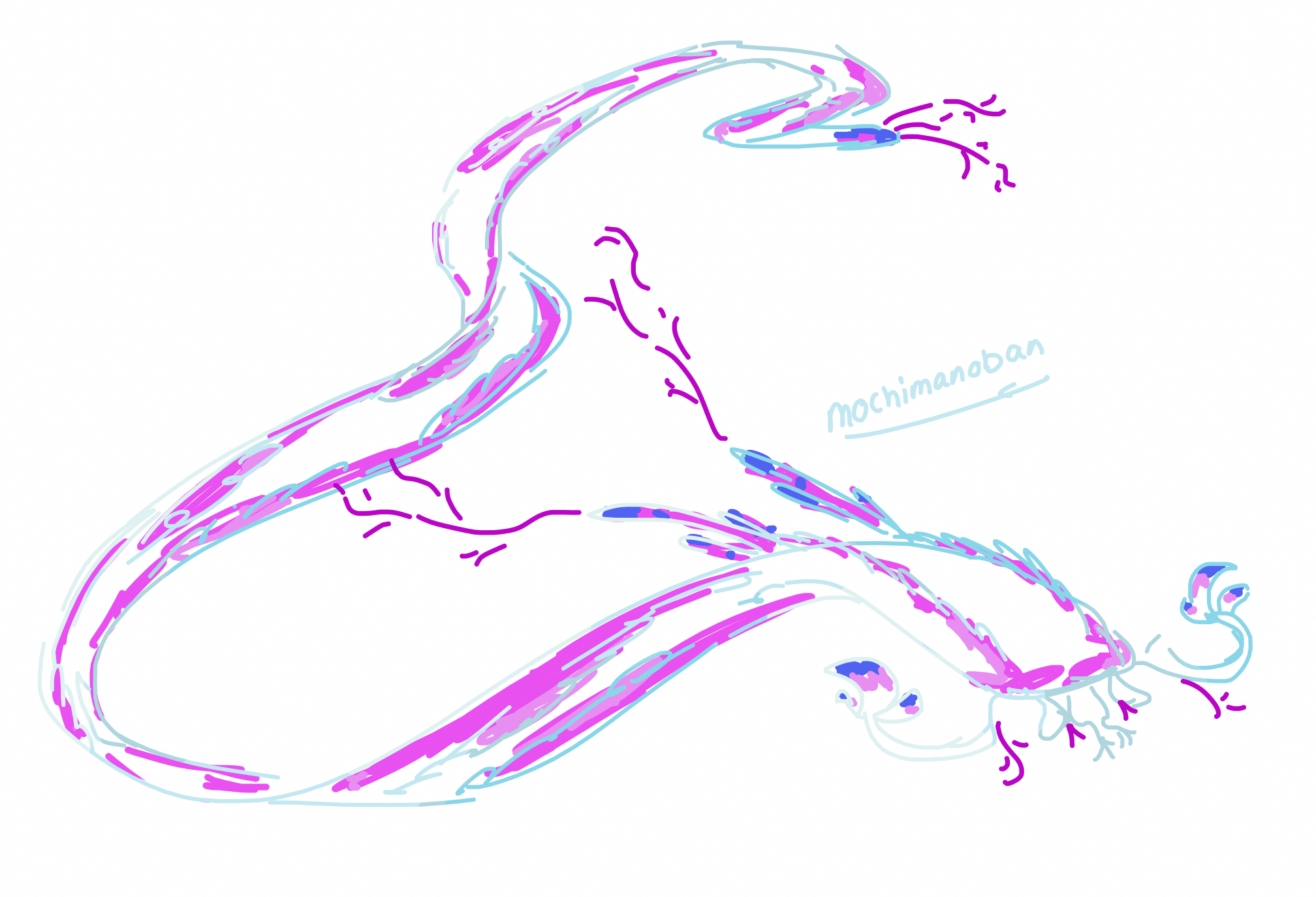
Day 5: Pistol Toad
Pistol toads are a giant marine amphibian. They stalk the reefs, firing a giant tongue at prey. The speed of this tongue creates a sonic blast and heats a surrounding pocket of water to more than 5,500 degrees Celsius.
They are one of few marine amphibian species, with an added layer of skin that filters out salt to keep the animal from dehydrating. This skin is also studded with osteoderms, to protect from even larger predators. At a glance, it is easy to mistake a pistol toad for a reptile.
Day 6: Echoveil Clam
Info
Scientific Name: Tridacna melodiaAverage Lifespan: 50 - 400 years
Average Width: 1 metre
The snaps and claps of this clam create pockets of sound that echo through the reefs. They are solitary creatures, buried in the crystalline sand. Dead clams help support these giant reefs, the husks providing small fish and crustaceans with a safe place to hide from predators.
The melodious echoes produced by these clams helps create a magical veil around these reefs. These veils haven't been studied much, but a few local sorcerers suspect these veils drive away malevolent spirits from the deep, open ocean.
Day 7: Angelinafish
Info
Scientific Name: Auracanthus tricolorAverage Lifespan: 5 - 6 years
Average Length: 40 - 45 cm
Angelinafish are cousins of marine angelfish. With their bristle teeth, angelinafish grind down and consume soft sponges and corals.
A single angelinafish lays up to a hundred million eggs in a single season. These fish are commonly kept in aquariums around the factories on Hothiri. They enjoy following people as they walk past the glass, making sharp clicking noises to attract attention.
Day 8: Acquis Eel
These giant eels are fairly passive, prowling the reefs in search of just one specific prey item - prospis turtles. Acquis eels grow to lengths of almost nine metres, with a black and white colour pattern they are hard to miss in the kaleidoscopic waters.
Despite their size they are elusive, and hard to come by. The average person on Hothiri will never see one in their entire life.
Day 9: Aranoni
Small cetaceans that inhabit shallow waters around coral reefs. They are a gregarious species, always chirping as they swim alongside family and friends.
Day 10: Gallant
Gallants are large horses designed for marine life. While they live and rest on Iroquet, they spend days around the reefs, using their fin-like front legs to power through the soft currents.
Gallants are considered pests to the organisations bound to Hothiri, for they provode quite a nuisance and can be particularly destructive.
Day 11: Waveback
Wavebacks are large friendly rays. It is against the law to hunt these precious animals. They are easy to spot, with their vibrant blue and black colouration. Wavebacks glide across the reefs, swimming up to submersibles and swimmers.
Day 12: Prospis Turtle
Vibrant purple and pink turtles. They are very flat and glide effortlessly between coral structures, dodging acquis eels.









WOO!
> Root Directory is my hub world <
Legends of the Dragonguard • /dev/null
WorldEmber 2025
WOOHOOO