


Leaping Pike
"It’s not just for vaulting. It’s used to slow descent when your feet have no slope. It’s for anchoring to turn on slick rock. It’s for knocking frost off a ledge before weight goes forward. If someone calls it a pole, they’ve never used it on real ground."
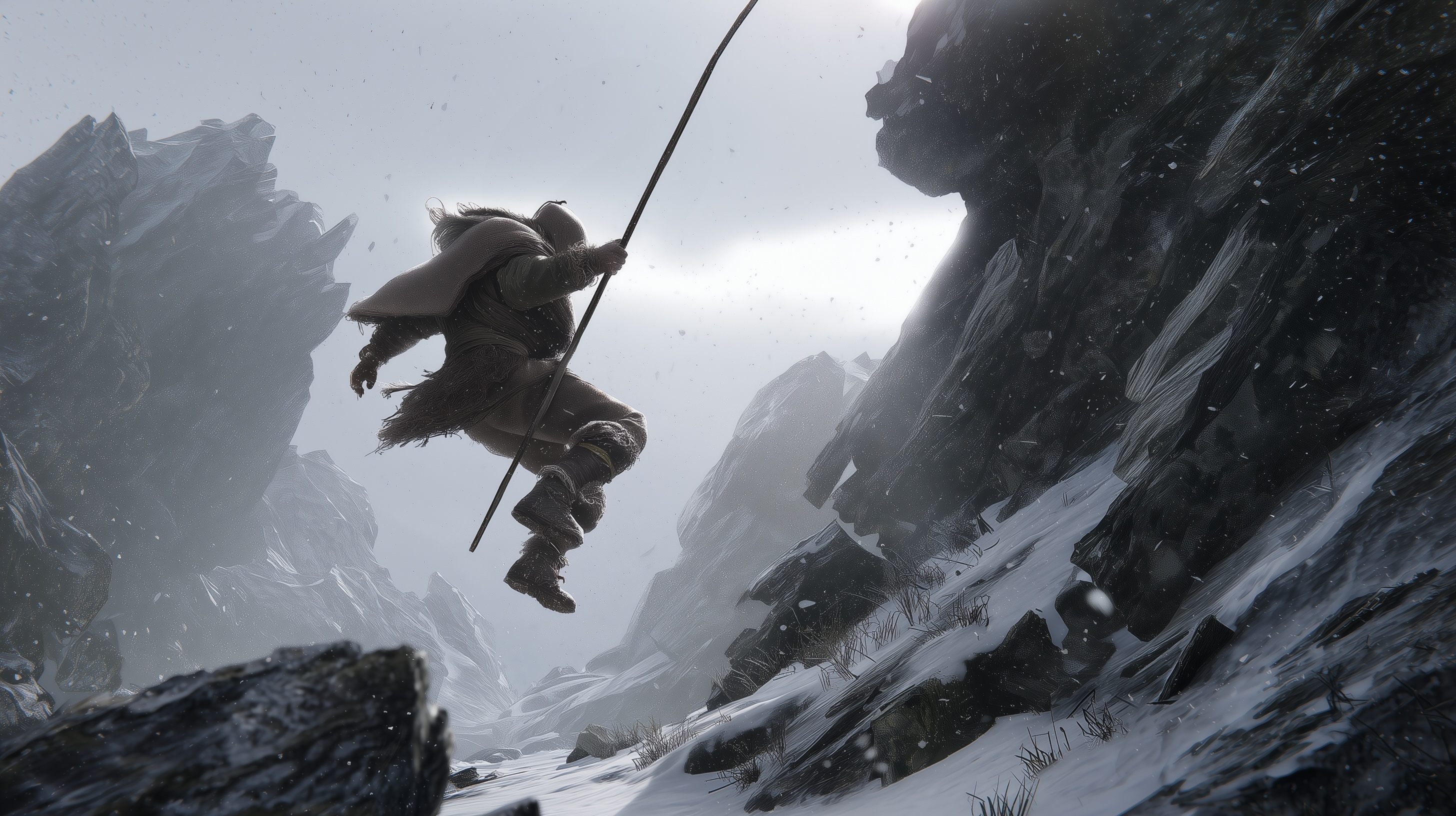
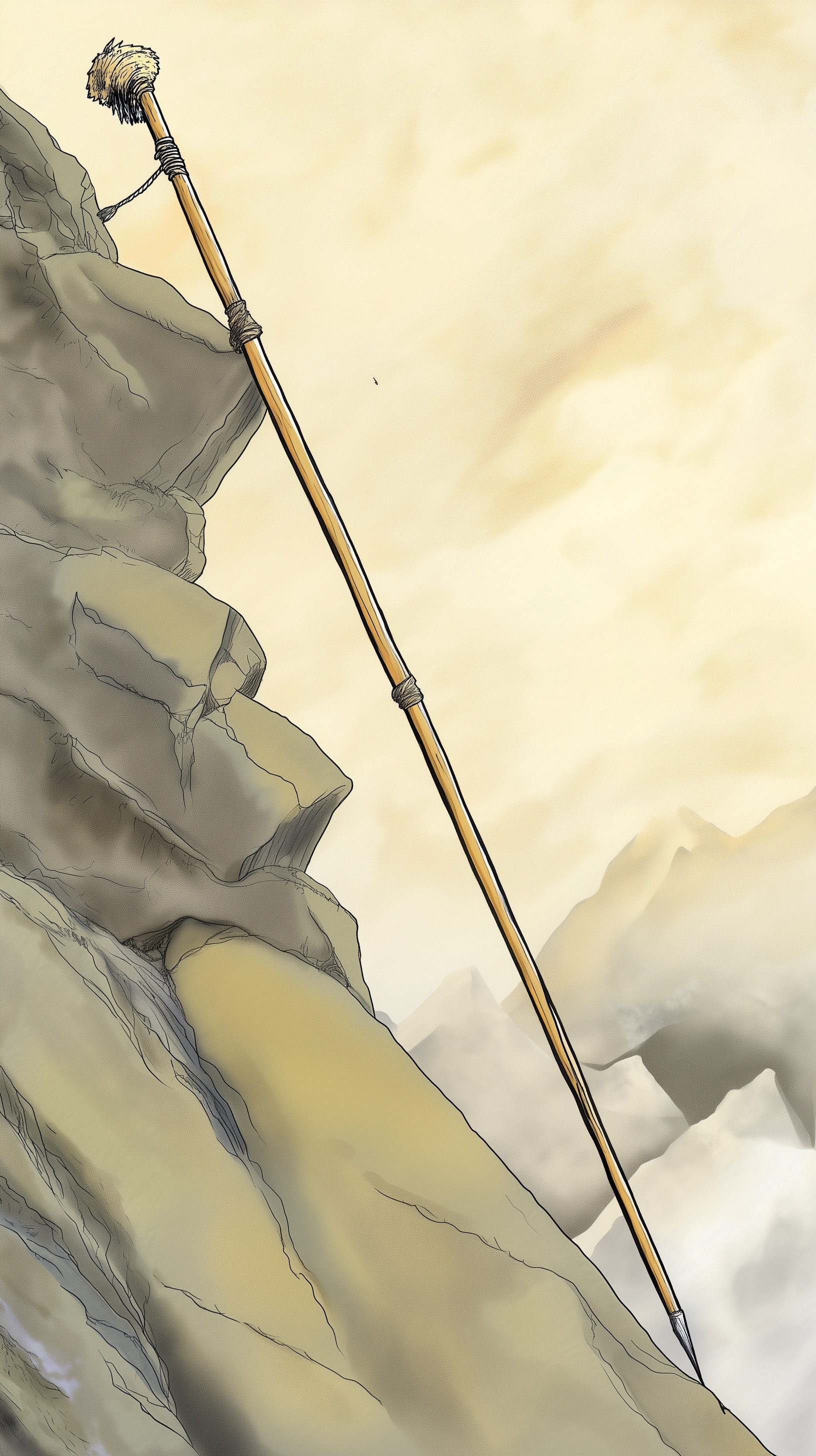
The Leaping Pike is a long staff used to move through the mountains. It is cut from mountain ash or tempered yew and stands taller than most who carry it. Though its size might suggest weight it is balanced to feel light in the hand. Each end holds a steel spike that can bite stone pack snow or find a ledge no thicker than a finger. It belongs on the harsh slopes of the Agriss Mountains where every step can turn. Shepherds lean on it while counting flocks. Scouts plant it with each stride across loose scree. Climbers drive a tip into a crack to vault a gap or swing along a face. Children learn its rhythm early. Staff forward heel forward breath steady repeat. On bare rock the spike sounds like a dull tap. On ice it turns thin and brittle. In deep snow it goes quiet. The ear learns the ground without looking. It serves first for movement and safety. A walker with a Leaping Pike can cross ground that would stop most travelers. A shepherd can keep the herd together when wind and slope push hard. A scout can keep a line through a storm when the pass is closing. It gives reach in a land that takes it away. It also keeps the dwarves of Stone Castle Glacier upright on glass hard slopes where one slip ends a life. When trouble comes it works at arm’s length. A straight thrust holds an enemy off. A backward sweep clears space around the carrier. With spikes at both ends there is no need to turn the shaft before the next move. In tight press the hands slide to the center and the jab does the rest. It is not for show. It is a long sharp stick used by people who need results. Most are plain. The shaft is smooth where hands rest and rough where grip matters through wet leather. Rings of pitch seal the wood against thaw and freeze. There is no shine to catch a watcher’s eye. Some show the marks of use. Rope has worn shallow grooves. Iron has left dents. A fast split closed with sap has turned the grain dark. These are not ornaments. They are a record of work. If one breaks the spikes are taken and the work goes on. If the shaft can be cut down it becomes a shorter staff or two ready points. If it cannot be saved it is left and a new one is made or bought. The herd still needs watching and the pass still needs crossing. The value is simple. It helps you move. It helps you live where the mountain would rather you did not.
Mechanics & Inner Workings
"There’s a moment when the Pike flexes just before you push off. That moment tells you everything. If the shaft bends smooth, you go. If it skips or shifts, you wait. It speaks faster than your head does. That’s why you listen with your arms."
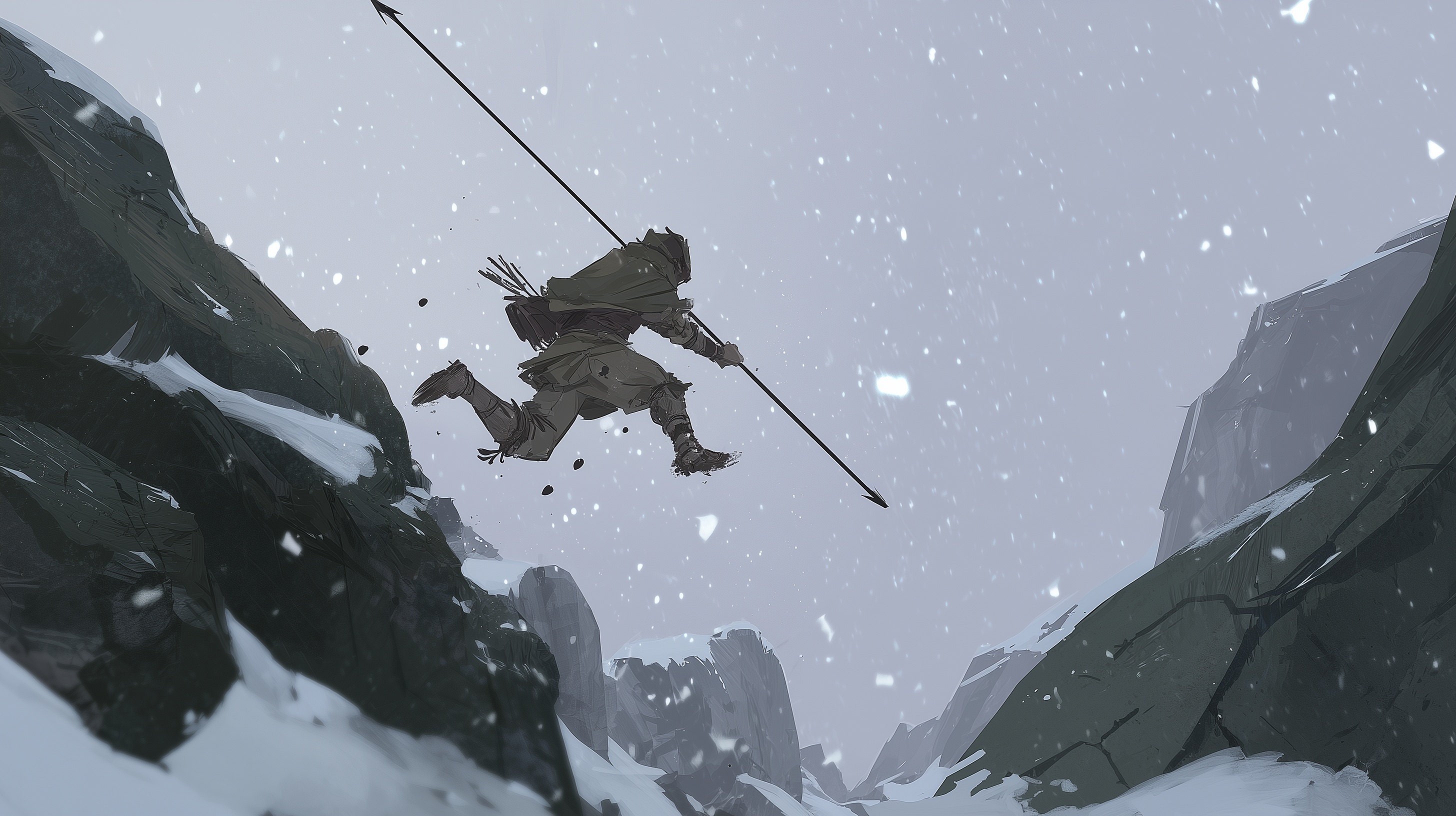
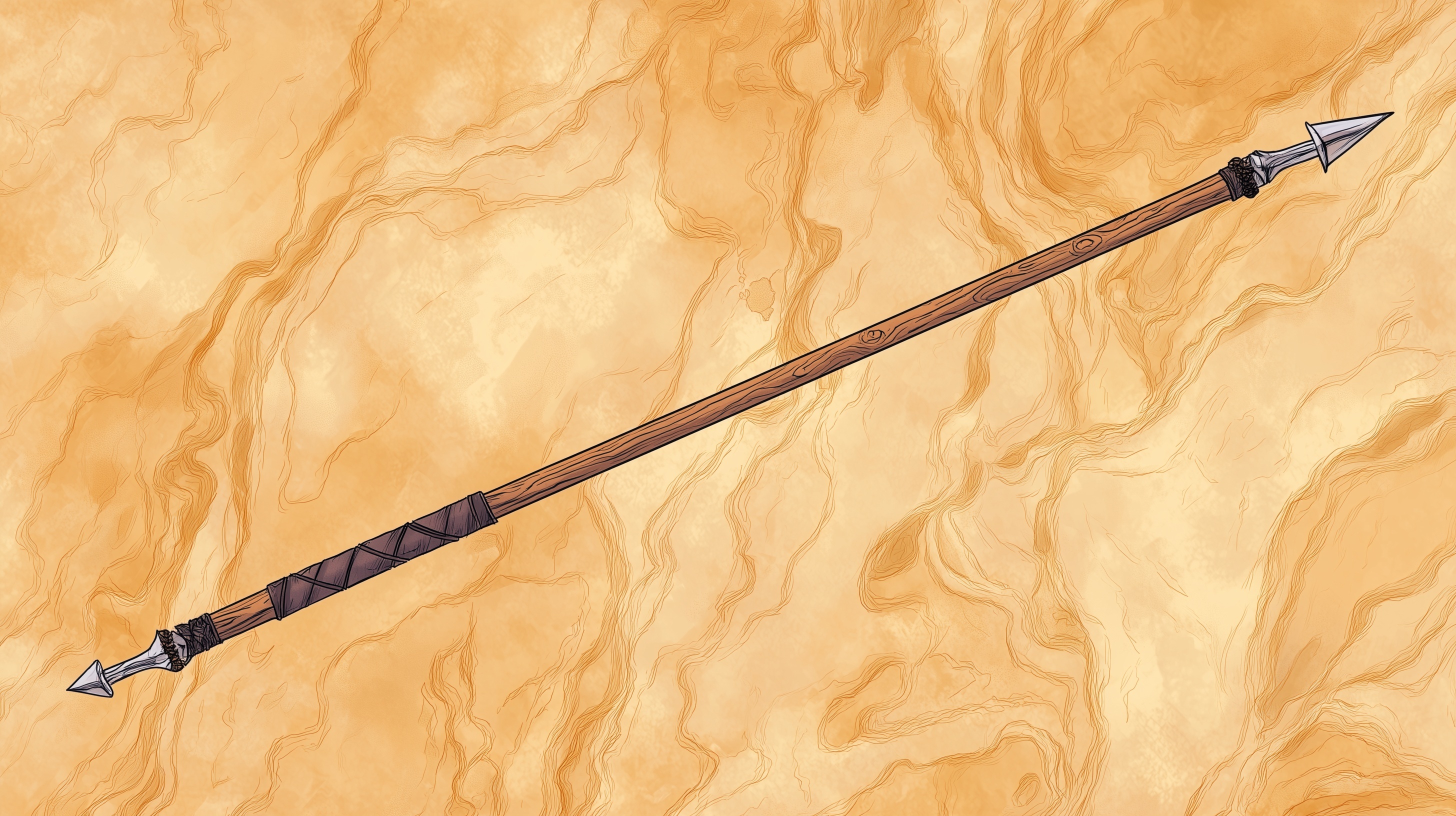
The shaft is long and straight. It is taller than the carrier. Balance matters more than weight. A good staff feels light when it is moving and solid when it plants. The wood must flex a little without bending out of true. The hands know right away if it is wrong. Each end holds a steel spike. The socket sits flush with the grain so it does not catch on rope or cloth. The spike is a narrow diamond that slips into cracks and grips ice. It is not thick like a pick. It is not thin like a needle. It is built to bite and pull free without fuss. Grip zones are shaped by use. Smooth where the hands slide and set. Rough where wet leather must hold. Some bind a thin cord below each socket so fingers never slip too close to the steel. Pitch rings seal the wood against wet and cold. There is no glossy coat to flash in the sun. Movement patterns come from the ground. Plant and step. Plant and vault. Short hops over runnels. Long swings across gaps when the tip finds a true notch. On ice the spike sets with a light jab. On rock it lands with more force. In snow it tests depth before weight goes on it. In a press the staff works because of reach and leverage. A straight line thrust holds a shape off. A quick reverse clears the space behind. Hands slide to center for close work. There is no need to spin or pose. The second spike makes the next move ready without turning the length. Breaks happen. A clean break can turn into two short points. A ragged break means you cut it down and keep going until you can fix it. The tool does not become holy when it fails. The rule stays simple. Make the next step safe and get home.
Manufacturing process
"The shaft should be taller than you by a full head. If it isn’t, you’re not going anywhere the Pike was made for. A full vault needs reach. A side brace needs leverage. A narrow pass with no floor needs all of it. Anyone carrying a half length cut is either training or lying."
People cut their own shafts or buy them. Ash and yew are common because they answer well to work and weather. The blank is seasoned in shade so it does not twist. It is shaved by hand until it runs true when rolled. The maker checks it by sight and by feel again and again. The steel spikes are forged short and strong. The smith draws out a diamond point and thickens the base. The socket fits the wood without gaps. Some smiths harden the last inch more than the rest so the edge keeps shape against stone. Every part is simple and clean. Assembly is quiet work. The maker seats the socket and pins it. The pins sit flush so nothing snags. Pitch is warmed and brushed into the grain in thin rings. Grip areas are checked with wet leather gloves. If the hand slides wrong the wood is worked again. Nothing on it should fight the way it moves. A home made staff gets what the maker can spare. A bought staff may get finer work. Neither should carry weight it does not need. If someone adds carving it stays shallow and away from the grip. If someone adds a charm it ties on with cord and comes off when it gets in the way. Fitting and trial happen on real ground. A new staff is planted on rock and ice and packed snow. The user listens and feels for bite and release. If the point sticks the edge is touched with a file. If the shaft rings wrong it is trimmed or scraped until it speaks clean. Care is simple. Dry it by the hearth and not too close. Rub oil into the wood at the change of seasons. Touch the points with a stone after hard days. Check pins and sockets when you come in. Replace what fails. Keep what works. Then set it by the door where you will reach for it in the morning.
History
"Every ridge worth crossing has bite scars from a hundred Pike tips. You know a route is good not by the maps but by the worn stone, the grip marks, the spike holds widened by years of survival. That’s your trail. That’s your map. That’s what keeps you alive."
The Leaping Pike grew out of hard ground and long winters. People needed a way to cross ice and rock without falling. A long staff with a spike at the end did the job. The second spike came later when walkers learned it saved time and kept the rhythm of travel smooth. From there the form settled into what it is now. Shepherds carried it on summer drives through the high pastures. Scouts used it to keep lines over loose scree and wind carved ridges. Dwarves on the glacier took to it fast because it answered a simple need. It gave reach where their legs did not. No guild wrote this into law. The tool proved itself and stayed. Old pikes show up in farm sheds and watch posts. You can read years in the grain. There are grooves from ropes. There are dark stains where sap sealed a crack after a bad day. None of that turns the tool into myth. It only shows that people worked and lived while carrying it. When roads opened and trade grew, smiths and carpenters started selling parts and finished staffs. This did not push out home made work. It only gave walkers another way to get what they needed. Some families bought one nice staff and kept it for years. Others cut a new one each season and set the old one by the door. The pike moved through small changes. Ash or yew. Longer or shorter by a hand or two. Thicker where a big man liked a heavier set. Thinner where a child needed something lighter. The steel tips got better as forges improved. None of this changed the simple rule. It must plant clean and pull free fast. Stories grew around people who used the tool well. A shepherd who crossed a drift that looked like open ground and never fell through. A scout who kept a line through a whiteout and found the notch again. A dwarf who stopped a slide with three hard plants. The staff did not ask for praise. It was there when it mattered.
Significance
"I asked my father once why we don’t use ropes instead. He handed me the Pike, told me to plant it, and shoved me backwards toward the ridge. I fell. The staff held. Then he said, ‘Now ask me again, and I’ll answer like a teacher instead of a parent.’ That’s when I understood that the Pike teaches first and speaks later." Deven Gorra, high mountain shepherd
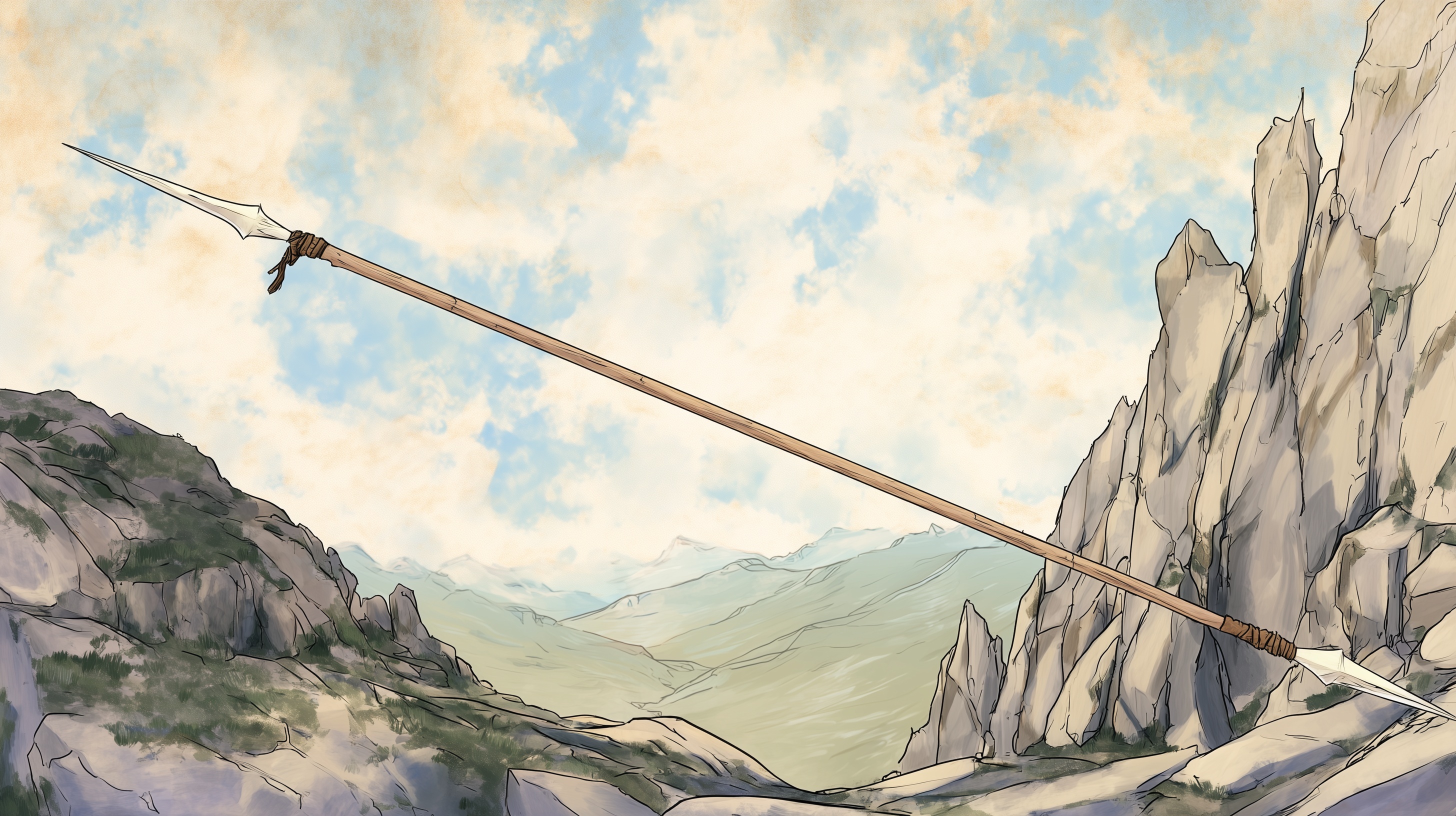
The pike shows what the land demands. It says move or the mountain will take the choice away. It hangs by doorways where guests can see it. That does not threaten. It tells you this house understands the ground and will help you cross if you need it. Children learn to hold one while they learn their own balance. They touch the steel with care and feel the wood where the hands go. They watch elders plant it on rock and on snow and hear the change in sound. It becomes part of how they see the world and part of how they measure distance. Herds follow people who carry pikes. Dogs heel when the staff tilts. A single lift can send a flock left or right without a shout. On narrow paths the point shows the next step. In a village a staff leaned by a gate means someone is up the slope and will be back by dusk. Among dwarves the staff is not a symbol of war. It is a promise to keep footing. It rests beside crampons and coils of line. When a team heads out they check spikes as they check rope. They come home and hang the staff with the same care. It is simple respect for a thing that saves lives. Travelers from the lowlands see the length and understand at once. They do not laugh or call it a cane. They watch a walker vault a runnel or fence with one smooth push and they know what it is for. The lesson is quick. This land rewards the tool that keeps you moving. The pike does not belong to one class or one order. A farmer carries one. A warden carries one. A singer who walks the ridge to the next town carries one. It crosses lines because the ground does. It sits where life sits. At the edge of fields. On the lip of stone. Next to the hearth where boots dry.
"Plant once to test and twice to live. Hear the spike speak before your foot believes it. If the sound is thin then the ground is false. If the sound is full then take the step"
Item type
Tool
Current Location
Manufacturer
Related ethnicities
Rarity
Uncommon
Weight
4 to 5.75 lb
Dimensions
9 ft 2 in to 11 ft 2 in.
Base Price
5gp
Raw materials & Components
Wood
"Carrying the Pike means you've already chosen the hard route. That’s what lowlanders never understand. They ask why we don’t cut switchbacks or chain the walls. The Pike is the answer. You carry it when the slope gives you nothing for free."



Created By: solomonjack
CSS Theme By: Imagica
Unless otherwise noted here, all art is the creation of SolomonJack through Dall-E, Midjourney & Stable Diffusion.
© Brian Laliberte 1993 - 2025. All rights reserved.
Unknown Shores is an original fantasy setting. Unauthorized reproduction, distribution, or adaptation without permission is prohibited.
This work includes material from the System Reference Document 5.2.1 (“SRD 5.2.1”) by Wizards of the Coast LLC, available at D&D Beyond
Comments