
Arra'Silana
The cliffs of the Moonlit Rise steeply climb towards clear, starry skies until the sounds of the waves crashing below can no longer be heard. To those blessed with Silver Sight, strands of silver flash, shift, wind, and weave to create a constantly changing array of silver paths the scatter across the ground, wind up into the sky, and fall to the sea below. Here, at the high altitudes, winter stretches long, and the ground is more likely to be covered with a blanket of silver snow than to be left bare. Those who reside along the steep Rise take shelter from the cold in caverns warmed by trapped gases and underground hot springs maintained by molten activity far below. While multiple hunting outposts exist along the main road up the Moonlit Rise, there is only one main settlement: Arra’Silana (“Shadow of the Moon”).
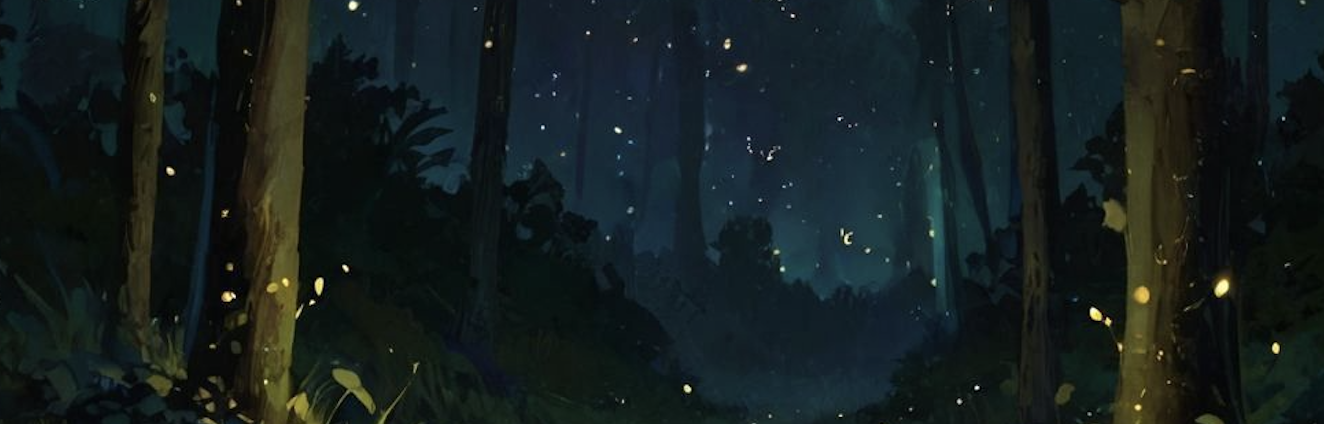
Once a semi-nomadic settlement, the locals formally put down roots millenia ago, enamored by their cavern of eternal night. When the winter storms rage, those who seek guidance need only look at the starry sky on the cavern ceiling; those who are willing to accept guidance will find their path waiting for them, illuminated by the stars. In the settlement's early years, paths were carved in the cavern walls to permit those seeking guidance to view the cavern sky from all angles. Now, various look-outs, grottos, and elevated perchas have been constructed to provide a view of the cavern sky unobstructed by the burgeoning town below.
At its height, Arra’Silana was approximately the size of a large town (equivalent to the Dremoran settlement of Ezust’Hold). Structures near the entrance were built of ice harvested from nearby frozen ponds, while structures deeper within the cavern – where it was warmer – were made of stone. The locals were community-oriented and constructed multiple community buildings for locals and visitors alike to rest, eat, and socialize. While gold and other currency was used for trade, “paying-it-forward” and exchanging favors were a common practice, particularly among locals. Animal companions – dire wolves, arctic foxes, arctic rats, and more – roamed freely throughout the space.
Although the town had a generally laidback atmosphere, there were strict rules in place about light. Save for fires required for warmth, cooking, and the forge, all other light was generally restricted or prohibited altogether. The cavern, however, was not plunged into darkness. Thousands of Moonstones hovered and drifted throughout the space, adding to the starry sky of the cavern ceiling rather than blotting it out.
At the center of Arra’Silana was the base of a massive silver stone tower. While it was commonly called the Moonlit Tower, its first and formal name was the Tower of Silvered Woe. Kesar'Arrat was believed to reside at the top of the Tower, the highest point of the Moonlit Rise and where the Silver Path was believed to originate.
Silversight & the Circle of the Silver Path
Arra’Silana was the home of the Circle of the Silver Path, the only druidic circle in the Moonlit Rise. All residents of Arra’Silana were formally a part of the Circle, initiated at birth and then re-initiated at adulthood. For newcomers wishing to settle in Arra’Silana, marriage removed the need for initiation, though lycanthropes from other circles were still often encouraged to undergo the ritual. Of the druidic circles, the lycanthropes of Arra’Silana were the most restrained, adopting their lunar forms only when deemed necessary. They often wished to ensure that any new lycanthropes were committed to this path.
The re-initiation ritual also served a secondary purpose: to assess an individual’s level of Silver Sight. While the ability to see the Silver Path of Kesar’Arrat was not unique to the Circle of the Arra'Silana, the ability was more common and stronger among its residents. There were generally 4 recognized levels of Silver Sight:
- Peripheral Silver Sight – Individuals saw flashes of the Silver Path in their dreams or in their periphery. Dreams were often cryptic, vague, and hard to decipher, but may provide valuable insight about a future choice. Peripheral sightings were typically of small threads of silver, which may often lead individuals in a physical direction.
- Lesser Silver Sight – Individuals possessed a general ability to perceive the Silver Path, but it was often restricted to the individual and/or those they were strongly connected to. Those who trained their Sight were often able to decipher the Path and offer some guidance on the outcome of future actions. Adventurous individuals with this Sight were widely sought after as navigators on ships.
- Greater Silver Sight – Individuals who possessed a strong ability to perceive the Silver Path for themselves and for others. Those who trained their Sight could uncover multiple potential paths and ascertain the best course of action in the immediate future. The strongest among those with this Sight rivaled the Oracles of Caliban.
- True Silver Sight – While all other Sights offered static glimpses into the Silver Path, only those with True Silver Sight could see the dynamic state of the Silver Path, could see the Silver Path change. It was incredibly rare for anyone besides the Silverlight and the future Silverlight to possess this Sight.
Those with Greater Silver Sight often (a) were religious leaders or spiritual guides, (b) served in the Moonlit Tower, or (c) formally became Keepers of Woe, following the Silver Path across the continent and easing the burdens of those they encountered. Those with lesser degrees of Silver Sight often used their unique ability to amplify everyday functionality. During harsh weather that obscured regular sight, it was quite common to only send hunters with Silver Sight to obtain food. Even while blinded, the Silver Path was believed to guide them home.
Moonstones & Ancestral Spirits
Moonstones were believed to be the distilled and crystalline essence of the Silver Path that bled into and formed within the Moonlit Rise long ago. Despite their cool silver glow, they also amplified heat making them important during the height of winter. Many in Arra’Silana also believed that Moonstones harbored a fraction of their ancestors’ essence. This belief was reinforced by frequent reports of a Moonstone suddenly emerging in the home of a family that had recently lost a loved one.While Moonstones were found in caverns across the Moonlit Rise, they were more frequently found at higher elevations. Arra’Silana’s cavern systems boasted multiple deposits of Moonstones and new deposits were frequently discovered as the locals ventured deeper. The process of mining Moonstones was relatively simple as they immediately began to float when freed from the stone. The Moonstones also tended to linger near areas of high population so they naturally gravitated, of their own accord, back towards Arra’Silana once freed. Thus, the only formal transportation required was for Moonstones that had been designated for trade.
Animal Companions
Almost every resident of Arra’Silana had an animal companion. In the dead of winter, it was often difficult to distinguish a lycanthrope in lunar form from an actual companion animal. Many were traditional pets, while others were hunting companions, guides, Moonstone detectors, or were trained to complete specific tasks. Common companions were domesticated wolves or wolfhounds, arctic foxes, and arctic rats.Stone Eater Snakes. These large, white and silver python-type snakes were named because they consumed multiple Moonstones during the winter, allowing them to survive extremely cold temperatures. During a small window of time in the early winter season, these snakes naturally sought out Moonstones and their handlers often found new deposits by following their snake companion. Alternatively, hunters would flush prey towards their waiting snake who would ambush and restrain prey. Of course, one had to properly train the snake to let go.
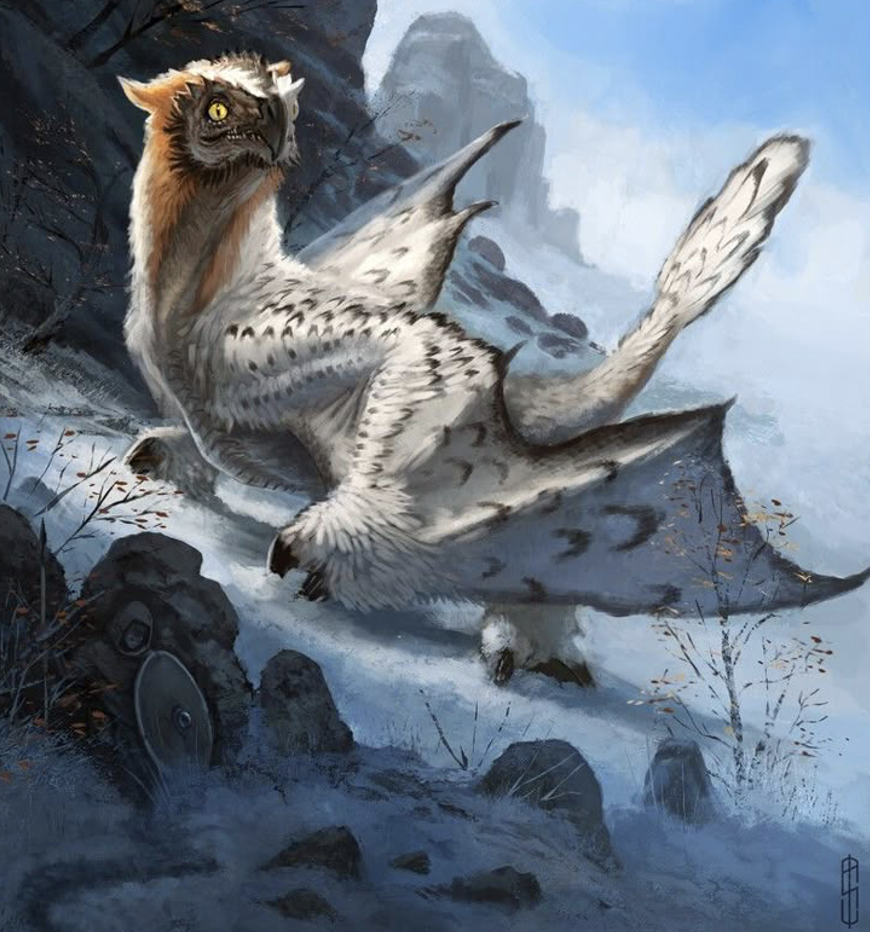
Arra'Szor. Believed to be related to the Szorm’Szor of Elios, these beaked and feathered creatures developed (or perhaps retained) the ability to glide and some could sustain active flight for short bursts. Known to be mischievous and problematic when cooped up, they were generally kept only by Keepers of Woe, traders, and hunters who frequently traveled throughout the Moonlit Rise and beyond.
Silvadahr. These creatures resembled a horse and reindeer with antlers often veined with silver and their blue or gray hide speckled with silver dots that resembled stars. Generally regarded as magical creatures, the people of Arra’Silana believed that they possessed True Silver Sight and could travel the Silver Path. That belief, however, clashed with formal accounts of Silvadahr being the preferred mounts of The Huntress, The Warden, and their higher-ranking followers.
Notable Locations
- The "Gates" of Arra'Silana
- The Silverlit Refuge
- The Full Moon
- Silanian Springs
- Base of the Moonlit Tower
RUINED SETTLEMENT
450-500 YAR
Alternative Name(s)
Shadow of the Moon
Type
Large town
Location under
Owner/Ruler
Characters in Location
Related Reports (Primary)
Related Reports (Secondary)
Cavern "Sky" Vibes
Source: Nokron, Elden Ring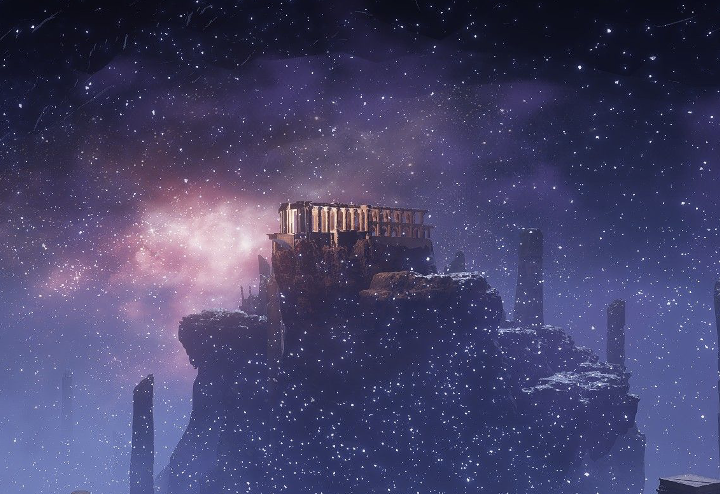
Other Deities in Arra'Silana
All of the Night domain deities were honored in Arra’Silana, with Kesar’Arrat and Otsana Daciana having the greatest representation. Hesper’Telia, Izarba Zoryon, and Caliban each had designated “shrine space” or other representation. Solva was represented as a divine counterpart to Kesar’Arrat. Most commonly, rotating statues were constructed along walls, revealing Kesar’Arrat during the night, and Solva during the day. Locals often left offerings there to guide their path when leaving town.
The Moonstone Trade
The Circle of the Silver Path was very defensive of Moonstones, especially those mined in Arra’Silana. Locations of discovered Moonstone deposits throughout the Moonlit Rise were also tightly guarded. On all but the rarest occasions, the Silverlight forbade merchants from setting foot within Arra’Silana and discouraged them from traveling the path up the Rise. Instead, Moonstones designed for trade (older Moonstones believed to be devoid of any ancestral sentience) were sent to O’Lycaon where they were collected by Prosperan merchants.
Animal Companions


Comments