
Ruby Dragon
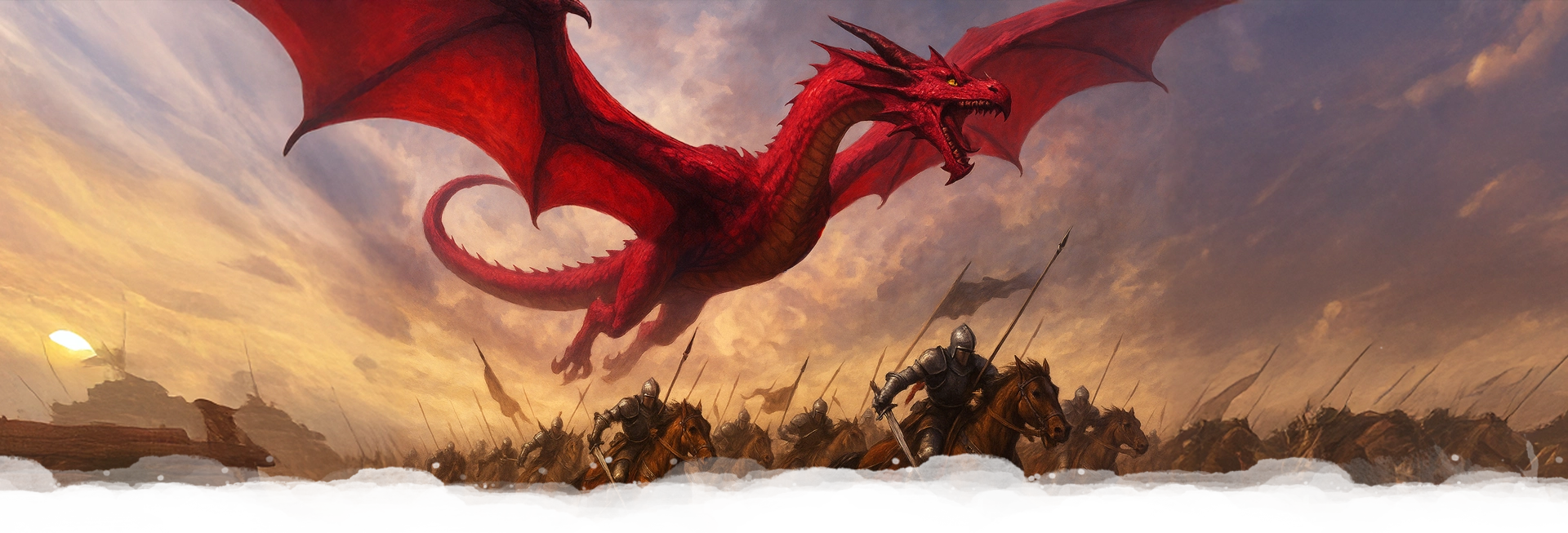
Among the prismatic flights, ruby Dragons are the strongest and most imposing. Their bodies are massive and muscular, their scales glowing like molten gemstones, and their presence radiates heat and power. They are blunt, bold, and decisive by nature, acting where others hesitate. Ruby dragons live for stories of bravery and often test their own strength against tyrants, monsters, and despots. To encounter one is to stand before living valor itself — majestic, dangerous, and awe-inspiring.
Unlike the greedy chromatic reds, ruby dragons fight not for conquest but for causes they believe just. They despise tyranny and oppression, and they often join mortal struggles against despots, lending their Fire and might to armies of the brave. Their hoards are filled with storied weapons, battle-worn armor, and relics of valor, each piece remembered with exacting detail. To mortals, they are at once terrifying destroyers of injustice and steadfast allies of courage.
Ruby dragons favor volcanic mountains, lava fields, and geologically unstable regions where molten rock flows close to the surface. Their lairs are often cavernous chambers carved from volcanic stone, sometimes opening into magma-lit halls that glow red like a forge. They deliberately choose sites that provide both natural defense and dramatic presence, places where their silhouettes can be seen against rivers of fire or storm-dark skies.
Some lairs are built near battlefields of old wars, where the bones of the fallen mingle with scorched stone. Ruby dragons see such places as sacred, believing the valor of the fallen lingers in the land itself. They often reinforce their lairs with salvaged fortifications — broken walls, melted weapons, or toppled statues — re-purposed as both decoration and reminder. Within these lairs, prized relics are arranged with reverence, each piece displayed like a chapter of history.
Biology
Ruby dragons are built for strength and endurance, their bodies resembling living fortresses of fire and stone. They are less serpentine than other prismatics, with stocky forms and wings built for thunderous power. Every stage of their growth is marked not only by size but also by a deepening glow, as if their inner flame burns brighter with age.Anatomy & Morphology
Ruby dragons are the most muscular of the prismatic flight, with bodies designed for sheer physical might. Their scales shine like faceted gemstones, usually a deep crimson streaked with purples that darken as they age. In sunlight, they gleam like molten glass; in darkness, they seem to glow faintly from within. Ancients radiate such inner fire that their scales appear lit by embers, creating the impression of a walking volcano. Their wings are vast, leathery, and heavy-boned, allowing them to strike foes with explosive gusts of wind as well as soar great distances. Horns sweep back in jagged arcs, often branching into spire-like ridges that resemble volcanic rock formations. Sharp dorsal ridges run the length of their spine, and their talons are thick and curved, black as Obsidian. Even at rest, their bodies radiate a forge-like heat, warping the Air around them into shimmering waves. This constant aura of warmth marks their territory long before their massive silhouettes appear.Perception & Sensory Capabilities
Ruby dragons have senses tailored to war and fire. Their vision pierces smoke, ash, and flame, allowing them to fight with perfect clarity in volcanic landscapes or burning battlefields. Many develop heat-sight, perceiving the body warmth of living beings as glowing auras, which makes stealth nearly impossible. With this ability, they can track prey through thick jungle, underground caverns, or even total darkness, guided by the flicker of life itself. Their hearing is equally acute, trained to isolate the sounds of war. They can distinguish the clash of blades, the rhythm of marching troops, or the groan of a siege engine from miles away. Their magical senses extend beyond the physical: older rubies develop an instinct for valor and cowardice. They are drawn toward acts of courage, as though compelled by the pulse of honor itself, and many sages claim they can sense a warrior’s resolve even before steel is drawn. This extrasensory perception makes them almost impossible to deceive in battle.Genetics & Reproduction
Courtship among ruby dragons is fiery, dramatic, and often violent by the standards of other dragons. Potential mates test one another in prolonged duels of strength, endurance, or physical contests, ensuring that both partners prove their courage as well as their might. These battles are rarely lethal but can last days, with the victor winning admiration for their resolve. Once a bond is formed, ruby dragon pairs remain loyal for centuries, often raising clutches together as a unified front. A female ruby dragon carries her eggs internally for nearly two years before laying one to three, each egg resembling a rough garnet stone shot through with glowing veins. These eggs are almost impossible to move once laid, as they grow heavy with the heat and pressure of incubation. Parents choose volcanic vents, magma pools, or geothermally active caverns as nesting sites, ensuring constant warmth to harden the shells. Hatchlings emerge muscular and aggressive, already armored in hardened scales, and immediately begin mock battles that shape their early growth.Growth & Life Stages
Ruby dragons mature more quickly in strength than most prismatic kin, though their intellectual and magical growth develops steadily over centuries.- Hatchling (0–20 years): Stocky and fiery-tempered, wyrmlings already show unusual toughness. Their scales are red tinged with purple, and their first breaths produce only sparks or small flames. Play-fighting dominates this stage, encouraged by parents as practice for survival.
- Adolescent (50–200 years): Their bodies broaden, wings strengthen, and scales deepen into glowing ruby hues. Horns lengthen, and they begin to test themselves against rivals or red dragons. Adolescents are bold, eager to prove themselves, and prone to reckless duels.
- Adult (200–500 years): Fully grown, they stand as unmatched warriors. Adults establish lairs in volcanic regions, grow immense hoards of storied arms, and sometimes ally with mortals in wars. By this stage, their inner fire burns brightly, and their mere presence can ignite dry brush or melt frost.
- Ancient (800+ years): Their scales shine like molten gems, their eyes burn like coals, and their bodies radiate unbearable heat. Ancients stride into battle as living legends, embodying valor itself. Few survive long enough to reach this stage, but those that do are remembered for centuries in mortal epics.
Biological Cycle & Longevity
Ruby dragons typically live for 800–1,000 years, their vitality enduring almost to the end. Unlike other prismatic species, they are not tied to seasonal rhythms. Their strength does not fade in winter or wax in summer — instead, it pulses in time with conflict itself. They grow restless during long periods of peace, their energy simmering beneath the surface, but thrive during times of strife, when battle sharpens their senses and purpose. With age, their scales thicken, their horns sharpen, and their inner glow intensifies until it becomes impossible to mistake them for anything but living volcanoes. Their breath grows hotter and more destructive, and their presence inspires both awe and dread. Some sages believe that ruby dragons are fueled not only by fire but by the acts of valor they witness, as though courage itself feeds their flames. The oldest ancients are said to embody centuries of bravery, their very presence igniting the courage of allies and scorching the will of tyrants.Habitat & Ecology
Ruby dragons thrive in places of fire and stone, drawn to regions where the Earth itself rumbles with heat and power. Their presence reshapes the land, leaving it marked by both destruction and guardianship. To mortals, a ruby dragon’s territory is both dangerous and sacred — a place where one must tread carefully, but also where safety might be found under the dragon’s protection if respect is shown.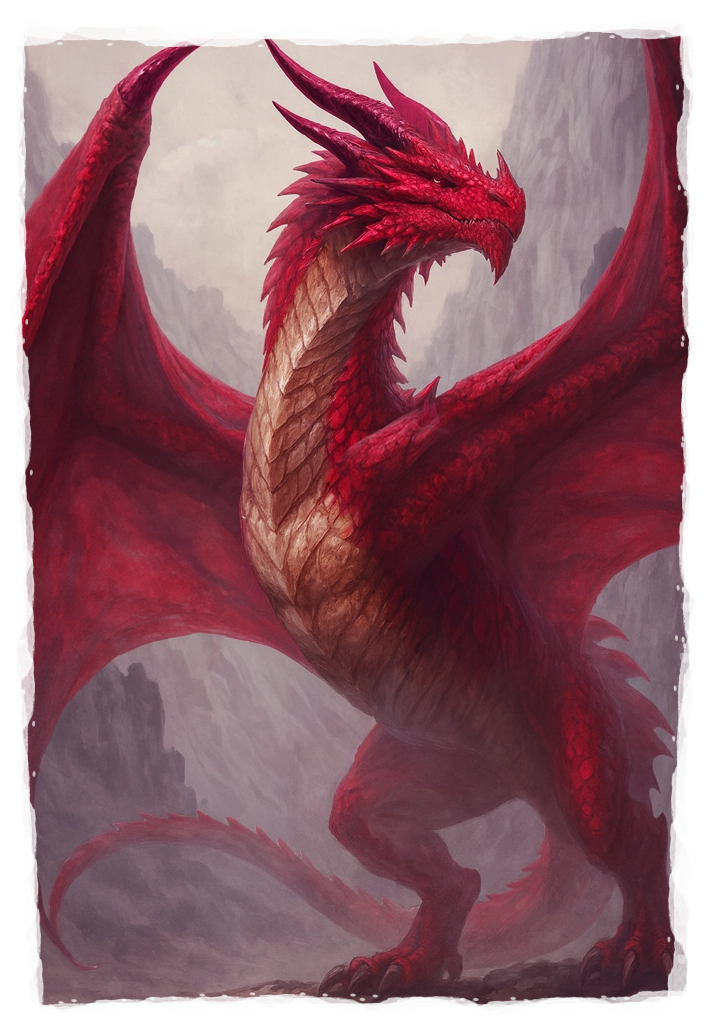 Habitats
Ruby dragons favor volcanic mountains, lava fields, and geologically unstable regions where molten rock flows close to the surface. Their lairs are often cavernous chambers carved from volcanic stone, sometimes opening into magma-lit halls that glow red like a forge. They deliberately choose sites that provide both natural defense and dramatic presence, places where their silhouettes can be seen against rivers of fire or storm-dark skies.
Some lairs are built near battlefields of old wars, where the bones of the fallen mingle with scorched stone. Ruby dragons see such places as sacred, believing the valor of the fallen lingers in the land itself. They often reinforce their lairs with salvaged fortifications — broken walls, melted weapons, or toppled statues — re-purposed as both decoration and reminder. Within these lairs, prized relics are arranged with reverence, each piece displayed like a chapter of history.
Dietary Needs & Habits
Ruby dragons are carnivorous by preference, hunting great beasts of the mountains and volcanic plains — aurochs, drakes, Giant boars, or even rival monsters that intrude on their territory. Their immense strength allows them to bring down prey others would consider impossible to kill. When hunting, they prefer open displays of force, reveling in the challenge rather than stealth. To a ruby dragon, a worthy meal is one earned in combat. Yet food alone does not satisfy them. Ruby dragons are symbolic eaters, sometimes demanding offerings of feasts prepared by mortals, or dining ceremonially with allies after battle. Such rituals are more about camaraderie and respect than sustenance, cementing bonds between dragon and mortal. When offered food as tribute, they prefer dishes that carry meaning — a feast celebrating victory, bread baked for the fallen, or wine saved for a coronation. To a ruby dragon, meals can be as much about memory and honor as survival.Environmental Impact
The presence of a ruby dragon transforms the land around it. Volcanic activity often increases in their territory, with tremors, geysers of steam, or even new lava vents forming near their lairs. These changes may seem destructive, but the dragon’s influence also strengthens the surrounding ecosystem, encouraging the growth of rare minerals and fire-adapted plants. Some regions blessed (or cursed) by a ruby’s presence are famed for unique resources found nowhere else — obsidian fields, fire blossoms, or metals hardened by volcanic heat. Their aura of valor also leaves a subtler mark. Battlefields near their lairs sometimes become places of pilgrimage, with mortals claiming they feel courage rise within them when they enter. Conversely, tyrants and cowards often feel unease in ruby dragon territory, as though the land itself rejects them. Thus, a ruby dragon’s environment reflects not just their fire, but their very spirit — a land of danger, inspiration, and defiance.Territoriality
Ruby dragons are fiercely territorial, and their ranges are large — usually spanning entire volcanic mountain chains or lava plains. They will not tolerate another dragon, especially a red, trespassing into their domain. Rivalries with red dragons are legendary, with their battles creating rivers of fire, collapsing mountains, and storms of ash. These duels are not merely territorial disputes but clashes of ideology, fought between tyranny and defiance. With mortals, ruby dragons are less hostile. They permit settlements near their domain if the people show bravery, respect, and a willingness to oppose injustice. Many villages at the edge of their territory view the dragon as a protector, offering tributes of weapons, relics, or war stories in exchange for safety. But they are quick to punish cowardice, betrayal, or tyranny within their lands. To betray a ruby dragon’s trust is to call down an inferno — swift, merciless, and absolute.Social Behaviour & Culture
Ruby dragons are creatures of action and conviction. Their lives are defined by contests of strength, tales of valor, and the pursuit of justice. While they can be blunt and intimidating, they are also loyal allies, respected as much for their principles as for their power. To mortals, their behavior can seem overwhelming — a constant blaze of intensity — but beneath that heat lies a disciplined spirit shaped by honor.Psychology & Temperament
At their core, ruby dragons are pragmatic and direct. They admire honesty, courage, and boldness in others, and have little patience for cowardice, deceit, or hesitation. To them, life is a proving ground, and every challenge is an opportunity to show resolve. Their bluntness often comes across as arrogance, but unlike chromatic reds, their pride is not rooted in domination. Instead, it springs from their sense of purpose: a belief that strength should be used to oppose tyranny and protect the worthy. Despite their fiery temperaments, ruby dragons are not mindless brawlers. They temper aggression with discipline, often pausing to weigh whether a fight is honorable before striking. Their rage is swift when provoked but always directed with intent. This balance of ferocity and restraint makes them both feared and respected, for mortals know that if a ruby dragon unleashes its fury, it is because the cause demanded nothing less.Social Structure & Rivalries
Ruby dragons are largely solitary, each ruling a wide domain, but they are not isolationists. They are more inclined than many dragons to form alliances, especially in times of conflict. When wars against tyrants erupt, ruby dragons may temporarily share their territory with others of their kind, forming loose coalitions united by a common cause. These alliances dissolve once the battle is over, as rubies value independence above hierarchy. Their most bitter and infamous rivals are red dragons. To rubies, reds are everything they despise: tyrants who use their strength to oppress. Battles between them are legendary, shaping entire mountain ranges with fire and fury. Yet these rivalries are not purely physical — they are symbolic wars of ideology, fought between tyranny and valor. Mortal bards tell stories of ruby ancients dueling red wyrms above erupting volcanoes, their clashes marking the sky with firestorms.Mating & Courtship
Courtship among ruby dragons is as bold as their natures. Mates test one another with feats of strength, duels of endurance, or displays of valorous deeds. These contests can last days, sometimes fought in volcanic caverns or on the slopes of mountains, where the roar of lava echoes their bellows. Winning a ruby dragon’s heart is not about dominance but about proving oneself equal in courage and determination. Once a pair bonds, the relationship is steadfast, often lasting centuries. Together they raise clutches, protect territory, and share hoards. Their union is less about romance and more about partnership, a merging of wills as much as bodies. It is not uncommon for bonded pairs to fight side by side in wars against tyrants, their combined strength a spectacle feared even by other dragons.Parental Care & Rearing
Ruby dragons are fiercely protective parents, among the most attentive of the prismatic flight. Both parents guard their nests vigilantly, ensuring their eggs remain safe in volcanic heat. Once wyrmlings hatch, parents actively encourage them to engage in mock battles, guiding their natural aggression into disciplined practice. To a ruby, every lesson is preparation for future battles against tyranny. As wyrmlings grow, parents teach them the value of honor and bravery alongside strength. They recount epic tales of past wars, weaving stories of valor into lessons about life. A young ruby raised well learns not just how to fight but why to fight — not for greed or pride, but to defend the weak and stand against oppression. These values shape them into warriors who embody both fire and justice.Hoarding Tendencies
Ruby dragons hoard weapons, armor, and relics of valor. Unlike other dragons who collect for wealth alone, rubies treasure the story behind each item. A blade carried by a fallen knight, a shield raised against impossible odds, or a banner that rallied soldiers to victory — these are the prizes that hold true value in their eyes. Their memory for such items is flawless, able to recount the battle, the name, and the moment tied to each relic. Many ruby dragons are also craftsmen, using their fiery breath to forge and reforge metals. Some take mortal guise as blacksmiths or jewelers, producing blades, armor, and ornaments of incredible quality. These hand-crafted treasures often sit at the heart of their hoards, cherished not for their material worth but for the labor and skill invested in them. A ruby’s collection is not merely a vault but a museum of courage.Relations with Humanoids
Ruby dragons are more approachable than many of their kin, though they demand respect. Mortals who embody bravery often find allies in rubies, especially knights, warriors, and leaders who stand against tyranny. They sometimes attend coronations, war memorials, or even battlefield funerals in humanoid guise, paying respect to valor wherever it appears. In times of great need, they may pledge themselves to mortal armies, their fiery might turning the tide of wars. That said, rubies are not gentle protectors. They are blunt and uncompromising, quick to scorn cowardice or duplicity. Mortals who betray their trust rarely live to regret it. Yet those who fight with courage often find rubies loyal beyond measure, standing as allies who will not falter once their bond is sworn. To win such loyalty is to gain a champion unlike any other.Cultural & Mythic Role
In mortal cultures, ruby dragons are revered as living symbols of courage and justice. Bards compose sagas of their duels with red wyrms, while knights tell tales of rubies who fought beside them in wars long past. Many shrines and monuments are dedicated to them, especially in lands freed from tyrants, where they are remembered not as monsters but as liberators. Legends even tell of ruby ancients appearing at pivotal moments in history — to shatter a tyrant’s army, to forge a crown for a just king, or to breathe fire that tempered a blade destined for a hero. Whether myth or truth, these stories endure because they reflect the heart of the ruby dragon: strength bound not to cruelty, but to valor.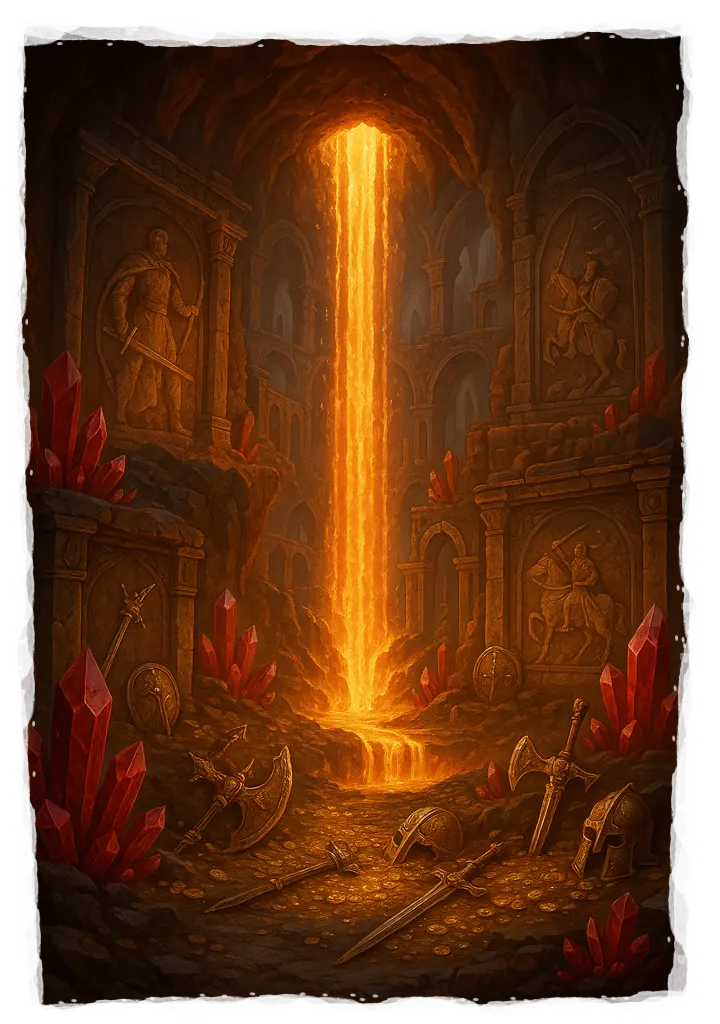
Genetic Ancestor(s)
Origin/Ancestry
Draconus Bellatori
Lifespan
800-1000 years
Geographic Distribution

Comments