
Silvan Langford
Silvan Tyler Langford
Silvan carries a different kind of presence. He is sharper, quieter, and more deliberate. He’s lean, with strong cheekbones and tousled dark hair that always seems to fall naturally into his face. His piercing, pale cerulean eyes give him a watchful intensity, the kind that makes you feel like he’s already taken you apart and mapped your inner workings before you’ve said a word. He doesn’t radiate warmth so much as focus; he’s always calculating, always observing, and when he finally does speak, his words feel weighted by that long silence beforehand. Silvan blends into the background until you realize he’s been there all along, watching, and once you notice him, it’s hard to look away. He isn’t beautiful in the traditional sense—he’s more like a knife: honed, purposeful, and a little dangerous—but there’s an undeniable pull in the way he carries himself, like gravity concentrated into one person.
Physical Description
General Physical Condition
Silvan’s body reflects a life lived on survival’s edge rather than in comfort. He is lean and wiry, shaped less by abundance and more by scarcity. His muscles are taut, built from years of scavenging, climbing, and navigating ruins, but he’s not broad or bulky—his strength is efficiency, not show. He moves with a kind of guarded agility, quick and precise, like someone who has learned to conserve energy until the exact moment it’s needed. His skin is pale compared to the sun-burnished villagers of Espera, a sign of the time he’s spent sheltered in Archive bunkers and tech stations rather than under desert skies. Despite this, his hands are calloused and scarred, marked by years of work with salvaged circuits and machinery. There’s a faint tension in him at all times, as if his body is always braced for impact, the constant posture of someone who calculates risks before they appear. Silvan is fully capable in his movement, though perhaps a little too careful, as though he’s used to hiding fragility behind calculation. He doesn’t struggle with spore lung or other common afflictions of the desert dwellers—though his paleness and wiry frame make him seem more vulnerable to illness than those hardened by life under the sun. He carries no obvious abnormalities beyond his perpetual intensity, but his body bears the quiet record of long nights bent over tech, of running lean on rations, and of living in a world where fitness is survival, not luxury.
Body Features
Silvan’s body is distinctive not because it flaunts strength, but because it looks carved by necessity. His skin is pale, almost unnaturally so against the sunbaked tones of the desert folk around him. It carries the faint translucence of someone who spends long hours under artificial light rather than sunlight, a thinness that makes veins faintly visible at his temples and along the backs of his hands when he’s tense. Silvan’s is smoother than most Saltfolk, though marked with small, sharp scars from scavenging through rusted machinery and collapsed ruins. His scars aren’t broad or dramatic—rather they’re the fine nicks and burns of a mechanic, precise little reminders of circuits, wires, and broken glass. There’s also a quality to him that feels patterned—not visibly tattooed or ornamented, but in how his sharp cheekbones, pale skin, and intense blue-grey eyes create a striking symmetry that makes him unforgettable once you’ve noticed him. His body carries a wiry definition, each tendon and muscle strand visible beneath the skin when he moves, giving him the appearance of a blade honed thin rather than a body sculpted thick. Most unusual, perhaps, is his gaze—the way those pale eyes seem to strip things down to their structure, as if he’s seeing circuitry beneath skin and stone. It gives his whole presence a kind of unnerving texture, as though he’s not just a man but a tool sharpened by years of focus, with a body that reflects the same utilitarian precision.
Facial Features
Silvan’s face carries the sharp geometry of someone who looks like they’ve been carved out of restraint rather than abundance. His bone structure is angular, with pronounced cheekbones that catch the light and cast his face into shadows, and a jawline that is narrow but defined—more the edge of a blade than the weight of a hammer. His nose is straight, slightly hawkish, lending him that air of constant watchfulness, like a profile cut from stone. He doesn’t grow much facial hair—at most, the suggestion of a shadow that never fully becomes a beard, a scatter of stubble along his chin and jaw that looks more like neglect than choice. It suits him, though, giving him a faintly rough quality that contrasts with the precision of his features. His lips are thin, not unkind but rarely relaxed; they’re the sort that seem more comfortable pressed into a line of thought than curved into a smile. What makes his face unforgettable, though, are his expressions—or rather, his lack of them. Silvan wears a mask of composure most of the time, a stillness that makes him difficult to read. But in the rare moments when something breaks through—an unguarded smirk, a sharp flare of irritation, a flash of grief—his features change suddenly, like cracks in stone revealing fire beneath. It’s that rarity that makes his expressions linger: when Silvan looks at you, really looks, it feels like being pinned to the wall by the weight of his attention.
Identifying Characteristics
Silvan’s most identifying features aren’t flamboyant but cut into memory because of their precision and intensity:
- His eyes – pale cerulean that sometimes catch green or silver in the right light. They’re arresting, too light for the desert world around him, and carry a penetrating quality that makes people feel exposed when he stares too long. They’re the kind of eyes that notice everything, and once you’ve met them, it’s impossible to forget.
- His bone structure – sharp cheekbones, a narrow, angular jaw, and a lean face that looks almost cut from stone. This gives him a severity, an intensity that makes his expressions hit harder when they finally slip past his guarded exterior.
- His build – wiry, lean, and taut rather than bulky. His body looks carved by scarcity and survival, with ropey muscles that emphasize precision and efficiency over brute strength.
- His skin – pale, smooth in some places but marked with fine scars and burns from scavenging through machinery and wreckage, tinged with oil stains. Against Espera’s sun-darkened villagers, this pallor sets him apart instantly.
- His stillness – perhaps his most subtle identifying trait. Silvan often carries himself with a tension-filled calm, a composure that makes him stand out in a world where most people are restless, loud, or broken down. When he moves, it’s purposeful; when he watches, it’s unwavering.
Together, these traits make him distinctive not in flamboyance, but in edge—he’s the kind of person you might overlook at first glance, but once you’ve really seen him, you can’t unsee him.
Physical quirks
- His hair – dark and perpetually tousled, the kind of wavy mess that falls into his eyes no matter how many times he pushes it back. It never looks intentional, but it frames his face in a way that sharpens his angular features and makes his gaze even more piercing.
- The contrast of his hands – they’re calloused, scarred, and perpetually stained with smudges of rust, machine oil, or circuitry residue, yet his fingers are long and deft, moving with the delicacy of someone accustomed to coaxing life out of fragile old tech. His hands are a dead giveaway of his life in the Archive world, even when the rest of him is composed.
- His posture – Silvan has an unusual stillness to his stance, almost rigid at times. He often looks like he’s braced for impact, shoulders slightly tense, but the moment he decides to move, he does so with sharp, fluid efficiency. It gives him an unpredictable, coiled-spring presence.
- The set of his mouth – thin lips that default to a thoughtful, faintly grim line. When he does smirk—or, rarer still, laugh—the change is striking, transforming his severe face into something almost boyish, a glimpse of warmth that’s all the more memorable because of how seldom it shows. In Silvan’s case, what makes him memorable is how all these small, restrained features add up to a singular impression of intensity and quiet sharpness.
- A faint crease at the bridge of his nose — like a permanent worry line from squinting too often at cracked screens and glaring into sunlit horizons. It isn’t obvious until you’re close—close enough to trace the line with a fingertip—but once seen, it’s unmistakable, a small mark of how much of his life has been spent calculating, scanning, and overthinking.
- The way his lower lashes are darker and thicker than expected — giving his pale eyes a shadowed intensity that feels unintentional yet strangely disarming when he looks at you for too long. It softens his severity in a way almost no one else notices, because almost no one else dares to hold his gaze that closely.
Special abilities
Silvan doesn’t carry any flashy, overtly supernatural gifts — his “extraordinary” edge is quieter, almost unsettling in its subtlety. His abilities lean toward sharpened perception and uncanny precision, born from his Archive upbringing and his own peculiar attunement:
- Heightened observational acuity – Silvan notices patterns, movements, and flaws others overlook. It can feel supernatural in its accuracy, like he’s reading beneath the surface of people and places. His pale eyes add to this impression, making his gaze seem almost too knowing.
- Instinctive calculation – he has an extraordinary ability to calculate risk, escape routes, and tactical options in the moment. While grounded in intelligence and training, it borders on preternatural foresight when seen from the outside.
- Mechanical intuition – Silvan has an unusual ability to coax life out of broken or decaying technology. It’s not just skill; it often feels like the machines respond to him in ways they don’t for others, as if he can sense their logic.
- Resistance to spore exposure – while not immunity, there’s a notable resilience in him. He doesn’t suffer the same afflictions (like Spore Lung) that plague desert dwellers, due to his Archive upbringing with filtered oxygen leading to an environmental advantage.
- Predatory stillness – not a power in itself, but his ability to hold himself in absolute control—waiting, watching, and then moving with sudden precision—gives him an other-than-human impression, like a creature honed for survival. Silvan's abilities tread the line between genius, and something slightly beyond the ordinary—making others uncertain whether his edge is purely human.
Apparel & Accessories
Silvan dresses like someone who doesn’t want to be noticed but can’t escape being remembered. His attire is functional first, stripped down to utility, but it carries the understated sharpness of someone raised inside the Archive’s walls rather than Espera's ragged caravans.
Clothing: He favours dark, muted tones—faded blacks, greys, and the washed-out navy of old military surplus—because they conceal dust and don’t catch the eye. His shirts are usually fitted but worn thin, sleeves rolled to the elbows from constant work. Over them, he often wears a patched jacket with hidden inner pockets, meant to stash tools, notes, or salvaged circuits. His pants are rugged and close-fitting, never loose enough to snag, and tucked into worn boots built for both silence and speed.
Accessories: Silvan is rarely without his tool roll, a collection of Archive-forged instruments, scavenged components, and old-world devices he repairs or retools on the go. His belt carries small compartments—knife, wire, a spool of copper thread, a compact soldering tool—things that could look like junk to most, but in his hands become survival.
Accessories: A pair of thin, scratched leather gloves, sometimes stripped off when he needs precision work but usually worn to protect against rusted metal or spore exposure. Around his wrist, he wears a braided cord of copper wire, almost like a bracelet, twisted and re-wrapped over the years. It looks insignificant, but it’s a piece he fidgets with when deep in thought, and it’s worn smooth in places from his touch. He sometimes keeps a neck scarf tucked into his coat, pulled up to shield against dust storms or spores. His attire makes him blend into ruin and shadow, but the way he wears it—lean frame, deliberate movements, tools rattling softly at his side—gives him a presence that feels unmistakable once seen.
A small, weathered compass—the old-world kind with a cracked glass face and a needle that sticks just enough to make it unreliable. He doesn’t carry it because it works (it doesn’t, not really), but because it belonged to his father. To him, it’s less a navigational tool than a reminder of direction when logic fails—a tether to the idea that even broken things can still point the way.
It slips easily into a pocket, often hidden, but he turns it over in his hands when he thinks no one’s watching, rubbing his thumb over the jagged crack in the glass. It’s the one object he never repurposes, never trades, never uses for scrap—even when he’s desperate for parts.
It complements June’s green pendant: hers alive and verdant, his fractured and mechanical, both small tokens that carry the weight of survival and memory.
Specialized Equipment
Silvan’s kit is an extension of both his Archive training and his scavenger pragmatism.
- Compact field scanner – an old Archive handheld device, jury-rigged from salvaged tech, that can detect traces of spore clusters, residual heat, or faint electrical currents. It’s glitchy and unreliable at times, but when it works, it gives him a real edge in scouting.
- Folding multitool – beyond an ordinary knife, it includes specialized tips for prying, soldering, and cutting wire. A little like a Swiss Army knife, but adapted to post-collapse needs.
- Micro torch – a thumb-sized plasma torch he keeps fueled with scavenged cartridges. It’s precise enough for repairing circuits but strong enough to burn through locks or seals in an emergency.
- Spore mask with custom filters – more effective than the cloth scarves most wanderers use. He’s modified it with extra layers of mesh and scavenged filtration material, which buys him longer survival time in contaminated zones.
- Signal beacon – a small device the Archive gave him for field ops. He’s tampered with it so he can toggle between Archive frequencies and shortwave scavenger channels, though doing so is risky if anyone triangulates his signal.
- Hollow-needle sampler – a slim syringe-like tool he uses for collecting spores, soil, or fluid samples without direct exposure. Another trace of his father’s influence, a tool born of science rather than combat.
- Notebook of schematics – battered and water-stained, filled with sketches of scavenged tech, half-finished designs, and strange notes in his meticulous handwriting. It’s equal parts field journal and survival guide.
- Archive-issued tablet — originally meant for field research and communication. When he was first assigned to scouting expeditions, it was standard issue — but Silvan, being Silvan, cracked open its code and customized it until it was essentially his own creation. The casing is scuffed and dented, edges wrapped with a strip of leather to keep it from splitting. The glass is spiderwebbed with fine cracks, but the display still works. In places, Silvan has patched it with improvised circuitry or solder, making it look like an old-world relic kept alive by sheer stubbornness. It stores maps of the salt flats and ruins, annotated with his own notes. It has fragments of Archive data libraries — science logs, schematics, and corrupted files Silvan salvaged when he had access. It can connect to shortwave frequencies with a scavenged antenna, letting him eavesdrop on both Archive patrols and Rootbound signals. It also doubles as a sketchpad/journal, since Silvan sometimes diagrams machines or makes lists on it rather than paper. The tablet is like his compass in another way — but instead of a memory of his father, it’s a reminder of his divided loyalties. It’s a piece of the Archive he never abandoned, but one he’s retooled into something of his own. A symbol of his knack for bending rigid systems into tools for survival.
These items show Silvan’s role as someone caught between scientist and survivor: his kit is about understanding and manipulating the world around him, not brute force. Even his most dangerous tools are surgical rather than destructive, a mirror of his personality.
Mental characteristics
Personal history
Early Childhood (0–3 A.V. / 2028–2031)
Silvan was born in Arlington Heights, Pennsylvania to Sylvia and Milan Langford, both renowned scientists at the University of Pennsylvania. When the Phoenix Nursery (then the Child Integration Program) was running, his parents were involved in its research — but Silvan himself didn’t live in the nursery. He lived at home, a bright child surrounded by the language of science and discovery. His earliest years were marked by stability, not warmth, since his parents’ work often overshadowed family life.
When the Phoenix Nursery collapsed in 2028, the Langfords stayed on as researchers, still believing their work might lead to humanity’s salvation from the Verdant compound, all of its mutations and negative side effects which had been brushed off by biotech companies and PR campaigns. But in 2031 (Year 3 A.V.), after the full collapse of the Phoenix program, they were forced to flee westward. Alongside Maelle and other displaced scientists, they became some of the first refugees to found Espera in the salt flats.
Childhood in Espera (3–8 A.V. / 2031–2036)
From ages five to ten, Silvan grew up in Espera. Life here was harsher and freer than in Pennsylvania — survival meant dust, scarcity, and improvisation. It was in these years that he bonded deeply with Mika, a friendship that grew into brotherhood. He also became a quiet presence around young Juniper Corvain, whose curiosity about machines and science he encouraged.
These Espera years imprinted on him: the desert sun, the clatter of scavenged tech, the makeshift sense of community. For the first time, Silvan was not just the child of scientists who neglected him — he was a boy of the salt flats.
Relocation to the Archive (8 A.V. / 2036)
In Year 8 A.V., when Silvan was ten, Archive soldiers swept through Espera to recruit those with scientific backgrounds and high intelligence. The Langfords were forcibly taken into Archive custody and relocated to the Archive’s northern station beneath Grapevine Peak.
There, Silvan was funnelled into technical and scouting training, while his parents were absorbed back into scientific work. The Archive environment was rigid and clinical, the opposite of Espera’s wild openness. Silvan excelled in his studies, quickly becoming valued for his keen observation, mechanical intuition, and tactical precision. But he never fully shed his salt-flat loyalties — especially his attachment to Mika and the world beyond the Archive’s walls.
Adulthood & Return (18 A.V. / 2046)
On his eighteenth birthday, Silvan was formally cleared for independent field work. The Archive stationed him back in Espera, officially to monitor Verdant signals and scout the salt flats.
For the Archive, he became a trusted scout, a watchful operative in a volatile region. For Silvan, it was a return to the only place that had ever felt like home — a chance to reconnect with Mika and, quietly, with Juniper Corvain. But this return was fraught: to the Saltfolk, he was a child they had once claimed as their own, now returned in Archive colours. To Silvan himself, it was proof of how deeply divided his life had become: half Archive, half Espera, belonging fully to neither.
Gender Identity
Silvan’s sense of gender is shaped less by ideology and more by the environments he’s grown up in: the sterility of scientific institutions (first in his parents’ world, later in the Archive), and the scrappy pragmatism of Espera. Both of these worlds treat survival and intellect as more defining than gender expression, which gives him a detached, almost utilitarian view of it.
- In the Archive: Gender is flattened into function. People are measured by skills, cognitive capacity, and usefulness to the system. This environment trained Silvan to see gender as incidental—a data point, not a defining trait. Emotional or cultural layers of gender are dismissed as inefficient.
- In Espera: He glimpsed a broader, more fluid humanity. In a refugee settlement where patched-together families and survival define life, roles aren’t tied to rigid gender norms. People do what they can with what they have. That practicality resonates with him: identity isn’t something imposed, it’s something lived.
- For Silvan himself: He understands himself as male, but not in a way that’s deeply tied to social performance. He doesn’t perform masculinity, nor does he care about embodying strength or dominance. His identity is quieter — a man defined by precision, restraint, and intellect, shaped by choice and experience rather than expectation. He’s is sympathetic to people who express or define gender differently, because to him, those constructs are secondary to survival and authenticity. He views rigid gender rules as yet another form of control — Archive-like — and instinctively resists them. But underneath, there’s room for nuance — he notices how people express themselves, and he respects the weight of identity even if he doesn’t verbalize it often.
Sexuality
Silvan approaches sexuality the same way he approaches most of life: with restraint, watchfulness, and an undercurrent of conflicted longing. His Archive upbringing has shaped him to be deeply private, almost clinical, in the way he compartmentalizes intimacy, but his years in Espera gave him glimpses of warmth, attraction, and connection that he’s never quite shaken.
- Archive Influence: In the Archive, sexuality isn’t repressed outright, but it’s de-emphasized. People are valued for their skills and compliance, not their desires. Emotional bonds are seen as distractions or liabilities. Silvan learned early on to hide his wants — to keep them folded up tight, expressed only in sidelong glances or private thoughts.
- Espera’s Influence: Growing up in Espera between ages 5–10, and then returning at 18, taught him that attraction is raw and human. He saw desire woven into survival — couples clinging to each other in scarcity, makeshift families forming out of need and love. From this, he understood that sexuality is both natural and fragile, something that defies control.
- His Own Orientation: Silvan is drawn to people in a way that’s intellectual and emotional first, physical second. He notices sharpness of mind, curiosity, resilience — traits that mirror his own survival. His sexuality is less about labels and more about the spark of recognition in another person. That said, his attraction to Juniper Corvain suggest that he is heterosexual, even if he doesn't consciously define it.
He represses more than he expresses. Years of Archive conditioning left him careful not to show vulnerability, and sexuality feels deeply vulnerable to him. When intimacy does surface, it overwhelms him — his controlled exterior cracks, and he becomes unexpectedly intense, like a storm breaking after years of drought. He’s wary of desire being used against him. The Archive taught him that attachments are liabilities, so every time he lets himself want, there’s guilt and fear tied up in it. Silvan experiences sexuality as a quiet ache, something he tucks away until it spills over. It’s not repressed in the sense of shame, but rather in the sense of someone who is afraid of what it might cost him if he lets it show too much.
Education
Silvan’s education has been a patchwork of two worlds — Espera’s improvisational survivalism and the Archive’s rigid intellectual training — and that duality is what makes him so sharp, but also so conflicted.
Early Learning (0–3 A.V. / 2028–2031)
As the son of Sylvia and Milan Langford, both renowned University of Pennsylvania scientists, Silvan grew up surrounded by knowledge. Even as a toddler, his parents exposed him to books, data pads, and the language of research. They didn’t “teach” him in a nurturing sense so much as treat him like an observer in their laboratory world. He learned curiosity early, but it was steeped in formality — equations before lullabies, microscopes instead of toys.
Espera Years (3–8 A.V. / 2031–2036)
When the Phoenix collapse forced the Langfords west, Silvan’s education abruptly shifted. In Espera, there were no formal schools — only survival, storytelling, and what the refugees could share. Silvan learned:
- Mechanical improvisation (patching gear from scavenged parts, learning by trial and error).
- Basic survival knowledge (weathering sandstorms, navigating salt flats, bartering).
- Community knowledge (oral histories, folklore, and Rootbound whispers that slipped into Espera despite Archive disapproval).
This gave Silvan a human, adaptive education — practical and intuitive, very different from the rigid training of his parents.
Archive Education (8 A.V. onward / 2036–)
At ten, when his family was forcibly relocated to the Archive station beneath Grapevine Peak, Silvan was formally assessed and inducted into Archive schooling. This education was intense, technical, and hierarchical. His curriculum included:
- Sciences (biology, chemistry, physics — with a strong emphasis on applications toward curing, controlling, or resisting the Verdant).
- Engineering & circuitry (repairing and salvaging old-world machines, designing field tools, handling power cores).
- Mathematics & systems modeling (training his observational skills into pattern recognition and predictive calculation).
- Survival strategy (tactics, scouting methods, efficient energy expenditure).
- Archive philosophy — indoctrination into the idea that humanity’s survival depended on the preservation of knowledge, even at great human cost.
Silvan excelled, but not from loyalty — rather because he found ways to bend knowledge into personal freedom. He learned to read between the lines, to carry away information the Archive never intended him to keep.
Adulthood & Field Work (18 A.V. onward / 2046–) Once cleared for independent scouting, Silvan’s “education” became more self-directed. He carries his tablet and a notebook of schematics, continuing to teach himself by scavenging old-world fragments, recording Verdant anomalies, and quietly compiling knowledge outside the Archive’s grasp.
Silvan has one of the most complete educations of any character in The Green Tide — but it’s not consistent. It’s a hybrid of high-level Archive science and Espera survival wisdom, which makes him versatile, but also conflicted. He knows more than most, but he never quite belongs to either world of knowledge.
Employment
Relocation to the Archive (Year 8 A.V. / 2036)
At age 10 (Year 8 A.V.), Archive soldiers forcibly relocated his family to the northern station at Grapevine Peak. Silvan was assessed and placed into training programs: tech repair, scouting methods, biological sciences, and Archive indoctrination. Silvan learned to be silent, observant, and compliant on the surface while keeping loyalty to Espera beneath.
Independent Scout (16–21 A.V. / 2044–2049)
At 18 (Year 16 A.V., 2044), Silvan became an independent scout for the Archive. He was stationed back in Espera to monitor Verdant signals and report to the Archive.
Crisis & Quarantine (21–23 A.V. / 2049–2051)
Mika died during this period, a shattering loss that left Silvan hollow but more determined than ever. June was placed in Archive quarantine for three years. Silvan lost his field placement in Espera and was pulled deeper into the Archive’s research hierarchy. This was the breaking point: he chose to embrace the Archive’s system outwardly while secretly plotting against it.
Head Researcher & Double-Agent (22 A.V. / 2052)
At 26 years old (Year 22 A.V., 2052), Silvan had risen through the ranks to become a head researcher, specializing in Verdant biology and Hollowed containment. To the Archive, he appeared ambitious, loyal, and brilliant — the model scientist. In truth, he had been using his position to sabotage, steal, and prepare, waiting for the moment to act. In 2052, he executed the plan he had been shaping for years: breaking June out of quarantine and facilitating their escape toward the Rocky Mountains, away from the Archive’s grasp.
Accomplishments & Achievements
Silvan’s life is shaped less by celebrated victories and more by the hard-edged accomplishments and life changing events of someone who survives in the margins and refuses to be broken by them. His “achievements” are quiet but profound—things that forged his character into the knife-edge:
Accomplishments
- Mastery of Archive Tech & Records: Silvan distinguished himself in the Archive not by brute force but through his meticulous mind. He became adept at navigating redline files, finding truths buried under classified layers, and pulling patterns from fragments others discarded. His ability to see what isn’t meant to be seen is one of his defining strengths.
- Scouting Prowess: He proved himself as one of the Archive’s most reliable scouts—lean, fast, and precise. His knowledge of routes, blind spots, and safe houses makes him invaluable in the field. Surviving dozens of missions others would not return from is an achievement in itself.
- The Frost Veins Incident: Staying alive after watching his scouting partner die to frost veins is an accomplishment not in glory, but in endurance. Most would’ve broken under the guilt or the fear of the same fate. Silvan carried on, maintaining his friend’s cabin as both memorial and survival shelter—a testament to his resilience and loyalty.
- Rescuing June: Pulling June out of quarantine was not just daring, it was almost suicidal given Archive control. That moment, uncalculated and raw, is perhaps his greatest act of rebellion—choosing a person over the system that shaped him.
Life Changing Events
- Growing Up in the Archive: Silvan’s childhood was steeped in the sterility of the Archive—raised in a world of facts, control, and mistrust. This formed his calculating, stoic exterior, but also planted the seeds of doubt.
- Discovering Phoenix Nursery Records: Coming across fragments of files linking to the Mika-born experiments left him haunted. Whether or not he admits his parents’ role, finding evidence of what the Archive did to children shaped his obsession with Mika—and his fear of what legacy he might carry himself.
- The Loss of His Partner to Frost Veins: This event carved the deepest scar into him. It taught him about mortality, guilt, and loneliness, but also left him with a ritual: caring for the cabin. It made him more solitary, more controlled, and more unwilling to form bonds he could lose.
- Meeting June: She unsettles him, forces him to slip out of his calculation. Her very presence fractures his mask, making him feel raw and vulnerable in ways he both fears and craves. This is one of the first times Silvan’s choices veer from the Archive’s script, reshaping his trajectory entirely. ---
Resolutions
- Control Above All: Silvan resolves that he will never be at the mercy of chaos. He will calculate, prepare, and survive where others fail. This resolution has kept him alive, but also keeps him closed off.
- Silence as Armor: He believes some truths are more dangerous than lies—so he keeps them buried. His silence about his parents, about Phoenix, about the cabin, is a resolution to protect himself (and maybe June) from knowledge that could destroy them.
- A Reluctant Rebellion: Though he never planned to be a rebel, rescuing June and aligning (however uneasily) with Mika’s path marks a breaking point. Deep down, Silvan resolves that he will no longer blindly serve the Archive’s narrative. His rebellion is quieter, sharper, and more personal—but no less real.
- Carry the Dead With Him: Silvan’s unspoken vow is to never let the memory of those he’s lost (his partner, his brother) fade. Maintenance of the cabin, the scars on his body, his silence—they’re all acts of carrying ghosts forward.
Silvan’s life is less about shining achievements and more about the choices he makes when everything is stacked against him. His accomplishments are endurance, precision, loyalty kept alive in secret, and the rare moments when he lets love or grief override his ironclad restraint.
Failures & Embarrassments
Silvan is the kind of character who looks flawless on the surface—sharp, controlled, unshakable. But it’s his failures and humiliations that make his edges jagged, and those are the memories he buries deepest.
Biggest Failures & Embarrassments
- The Frost Veins Failure (his partner/brother's death):
His scouting partner’s slow death from frost veins is the wound Silvan never speaks of. For someone so obsessed with control and preparedness, this was the ultimate humiliation: he couldn’t save him. Silvan kept his brother's cabin alive as penance, but inside he carries it as failure—that when it mattered most, all his precision and calculation weren’t enough. - Failing the Archive’s Ideals:
Silvan was raised under the Archive’s doctrine of loyalty, utility, and perfection. Somewhere in his youth, he broke under pressure by misfiling critical data. Not enough to exile him from the Faction, but enough to mark him with a subtle shame. In the Archive, even small cracks are remembered. That early failure taught him to mask everything, and to never again give them a weakness to use against him. - His Parents’ Shadow (if tied to Phoenix Nursery):
Silvan has reason to suspect that his parents were involved in the Phoenix nursery experiments, and his very blood feels like a stain. To Silvan, this isn’t just history—it’s a shameful inheritance. A failure not of action, but of identity: that he comes from a legacy of harm. He hides it because to admit it would be to confess that his control is tainted at its core and his family caused permanent trauma not just for Mika, but hundreds of other Mika-born children. - Emotional Loss of Control:
Moments like when he rescues June from quarantine are both raw and embarrassing for him. He prides himself on being stoic, unflappable, but that kiss—that uncalculated, reckless, consuming moment—it haunts him afterward. Not because it wasn’t real, but because he lost the mask. To Silvan, losing composure is humiliation, even if to June it feels human and beautiful. - Loneliness as Failure:
Though he would never phrase it aloud, Silvan knows that he has failed to hold onto people. His brother. His family. Even colleagues in the Archive who distanced themselves. For all his survival skills, he has not managed to keep personal connections alive. His solitude is both armour and the clearest evidence of his inability to nurture lasting bonds.
Life-Shaping Negative Events
- Watching someone die and doing nothing but survive it (the frost veins incident).
- Being judged unworthy in youth by the Archive, which left him perfectionistic and distrustful of authority.
- Living with a poisonous legacy (his parents’ role in the Phoenix nursery), which gnaws at him in silence.
- Moments of exposure and vulnerability that clash with his identity as controlled and sharp, leaving him ashamed of his own humanity.
Silvan’s life is shaped as much by what he hides as what he’s done. His greatest embarrassments aren’t failures of skill—they’re failures of control. Every time he couldn’t save, couldn’t hide, couldn’t master his own humanity, it cut him deeper than any wound. That’s why he clings so fiercely to stoicism—it’s not just who he is, it’s his shield against reliving those moments.
Mental Trauma
The Frost Veins Incident
Silvan and his brother (scouting partner) had been scouting high in the cold mountains, the air thin, and their rations low. His brother struck flint, coaxing a small fire to life. Silvan had gone a little distance away to gather more firewood—because he always thought ahead, always prepared. That’s when he heard it: the crack, the sudden rush of roots bursting from ice, the bloom of strangling vines in the firelight. By the time he dropped everything and sprinted back, his brother was already tangled, gasping, eyes wide in shock as the frost veins closed around his chest and throat. The vines pulsed with his body’s heat until his movements stopped. Silvan, powerless, stood in the wreckage of his mistake—alive because he had stepped away.
The Trauma’s Impact
- Survivor’s Guilt (Amplified):
It wasn’t sickness or inevitability. His brother died because Silvan wasn’t there in that moment. He was the one who insisted they make camp, the one who left to fetch wood. That single choice haunts him: if I had stayed, maybe I could’ve stopped it. - Fear of Fire/Heat in the Cold:
Though he still uses fire for survival, Silvan can never strike flint in snow without remembering the vines bursting through. He does it with clinical precision, never comfort, and his hands tense at the first crackle of flame. - Distrust of Stillness in Nature:
Snow, ice, silence—it looks safe, but he knows it hides death waiting for warmth to trigger it. That’s why Silvan is hyper-vigilant, scanning landscapes with a kind of paranoia. He doesn’t trust beauty or calm. Underneath, he believes, there’s always a trap. - The Cabin as Memorial:
After his brother’s death, Silvan kept returning to his brother's cabin they’d used as an outpost as scouts. Maintaining it isn’t about nostalgia—it’s about guilt. Every mended beam, every cleared path is penance: I couldn’t keep you alive, but I can keep this place from dying. - His Mask of Control:
That single violent loss hardened him. He built his stoic, calculating persona because he knows how quickly everything can rupture. It’s not just about survival—it’s about never again being caught off guard, never again watching someone he loves die because he wasn’t ready.
How It Shapes Him With June
When Silvan rescues June from quarantine, the rawness that leaks through isn’t just attraction—it’s the ghost of that moment in the snow. Another person almost lost before his eyes. Another life that could’ve ended while he wasn’t there. Touching her, holding her, is an unconscious vow: not again. That’s why it’s unfiltered, almost desperate. He can’t bear to repeat the same failure.
And if June ever learns the truth about the frost veins and his brother, she’ll understand why Silvan never lets himself rest, never lets his guard drop, why even in safety he looks like he’s bracing for impact. He’s still in that snowfield, running back with firewood too late.
The Silence of Family:
Silvan's parents were involved with the Phoenix nursery, so he carries a double wound: parents who created monsters and a brother he couldn’t save. He is, in his own mind, the last shard of a broken family line—cutting himself off from love because he believes everyone close to him is doomed.
How It Shapes His Mental State
- Hyper-Control:
The trauma hardened him into someone who clings obsessively to control. He calculates, plans, observes—because he once lived through the horror of not being able to do anything. Every decision he makes now is an attempt to keep that helplessness from repeating. - Isolation as Protection:
Silvan keeps others at arm’s length, because closeness means risk. If he couldn’t save his brother—the one person he should’ve been able to protect—then how could he dare to be close to anyone else? It’s safer, cleaner, to stay alone. - Flashbacks & Haunting Images:
Certain triggers pull him right back to the snow with his dying brother. He tries to never speak of it, but his jaw tightens and his breathing shallows, when something stirs that memory. - Fear of Intimacy:
Love and loyalty feel dangerous to him. When he lets himself feel desire for June, it’s raw, uncalculated, almost violent—not because he wants to hurt her, but because it terrifies him to let the walls fall. His trauma makes intimacy feel like standing on the edge of another loss.
Since his scouting partner was his brother, then Silvan isn’t just stoic by temperament—he’s stoic by necessity. His entire persona is built on surviving the aftermath of that loss without falling apart. And the truth is, he never really did survive it; he just wears survival as a mask.
Intellectual Characteristics
Silvan's intellect is inseparable from his survival instinct—razor-sharp, deliberate, but shaped by trauma into something colder than one might expect. He’s not the Archive’s typical zealot nor Espera’s reckless survivor; his intelligence is a hybrid of being pragmatic and deeply human underneath his armour.
- Analytical & Observant: Silvan notices details others miss—small shifts in body language, traces of old tracks, the faint hum of faulty circuits. He’s the kind of person who maps a room the moment he enters it. His mind doesn’t stop calculating.
- Strategic Thinker: He doesn’t move without considering consequences. Every choice is weighed, not just for himself, but for how it will ripple outward. That’s why his actions feel heavy and deliberate.
- Adaptive: Because he has been displaced so often, he can quickly read new environments and integrate. He learns systems from the inside out, then uses them. That’s what makes him effective as a “double agent.”
- Skeptical / Critical: He doesn’t accept things at face value. Authority, religion, ideology—he questions them all, often quietly. His skepticism is what keeps him from being swallowed by Archive dogma.
- Introspective: Silvan reflects more than he admits. He keeps his conclusions hidden, but he does wrestle with morality, mortality, and meaning. He is haunted because he thinks deeply, even if he buries those thoughts.
- Empathy: Silva's empathy is suppressed, but still present. He feels deeply—loss, fear, connection—but he locks it down. When it breaks through, it’s powerful and raw, like after rescuing June. His empathy is often expressed in acts (protecting, maintaining the cabin, rescuing June) rather than words.
- Courage: He has pragmatic courage. He isn’t reckless, but he will risk himself if the stakes demand it. His courage comes not from bravado but from endurance and calculation: he knows exactly how much it costs, and he does it anyway.
- Humility: He has inward humility, but outward confidence. He doesn’t crave recognition—his shame and guilt keep him from seeing himself as exceptional. Outwardly, though, he carries himself with composed certainty, because in the Archive hesitation gets you killed. Around June, his humility peeks through in the way that he sometimes struggles to believe he’s worthy of her trust.
- Strengths: Sharp memory, strategic foresight, precision under pressure, loyalty to individuals (not institutions).
Silvan is a man who hides tenderness behind intellect, courage behind caution, humility behind poise, ,though his stoic presence can be mistaken for pride. He is a thinker first, a survivor second, but beneath both lies someone who desperately doesn’t want to fail the people he loves again.
Morality & Philosophy
Silvan’s values and ethics are not dictated by the Archive he was raised in, nor by Espera’s community. They’re a patchwork he forged from loss, displacement, and survival—quiet but unshakable principles that explain why he acts the way he does.
Core Values
- Loyalty to Individuals, Not Institutions:
Silvan doesn’t believe in “the greater good” as preached by the Archive. He believes in people. His loyalty is specific, earned, and fiercely kept—his brother, and later June. To him, faceless causes are hollow, but protecting someone he loves is absolute. - Control & Preparedness:
He values vigilance, precision, and readiness. To him, control equals survival. Chaos killed his brother; neglect erased his childhood. He believes that only by controlling himself—and his environment, when he can—can he keep people safe. - Truth in Silence:
Silvan values truth, but he also values the power of silence. He knows not every truth should be spoken; some truths destroy more than they heal. His ethic is one of restraint—saying less, showing less, but holding fiercely to who and what matters most. - Endurance Over Glory:
He doesn’t care about honour, recognition, or being remembered. To Silvan, survival is the highest ethic. If you endure, you resist. If you resist, you preserve. That’s his compass.
Ethical/Moral Views
- Ends vs. Means:
Silvan is pragmatic. He will do questionable things—lie, manipulate, play double agent—if the outcome protects the people he loves. He doesn’t believe morality is clean. In his world, survival requires compromise, and the moral thing is the choice that keeps the fewest people hurt. - Value of Life:
He doesn’t devalue human life like the Archive, but he doesn’t idealize it either. He knows anyone can be lost at any moment. This gives him a hard, unsentimental edge: he won’t risk everything for strangers, but for the one or two people he’s tethered to, he’ll risk it all. - Justice & Responsibility:
Silvan doesn’t believe in systemic justice. He knows the Archive will never hold itself accountable. His moral world is small-scale: I couldn’t save my brother. I won’t fail again. Responsibility, to him, is personal and inescapable, not institutional. - Religion / Spirituality:
He’s skeptical of Rootbound ideology, not because he hates it, but because he can’t allow himself to trust in something so intangible. His ethic is rooted in action, not faith. But—he respects that others believe. His silence in those moments isn’t scorn, it’s distance.
Shaping Principle
Silvan’s guiding ethic could be summed up as:
"You don't get to choose the world. You only get to choose who you'll bleed for.
That’s why he comes off so cold—because he won’t pretend to have a cause beyond the few he loves. But it’s also why June and Mika pull him apart: they force him to expand his circle, to reckon with whether his ethic of personal loyalty is enough in a world unraveling.
Taboos
Silvan definitely carries a handful of views that rub both the Archive and Espera the wrong way. His trauma, skepticism, and pragmatism make him harbor ideals that others would find troubling, maybe even taboo.
- Life Isn’t Sacred, It’s Conditional:
In both Espera and the Archive, there are strong ideals—Espera reveres survival as sacred, while the Archive sees human life as an asset to be catalogued and preserved for the greater goal. Silvan doesn’t fully believe in either. To him, life isn’t sacred by default—it only has meaning if you’re tethered to someone or something. This quiet, utilitarian view would horrify Espera and unsettle even Archive officials. - Distrust of Communal Loyalty:
Espera values kinship and collectivity, while the Archive values loyalty to the system. Silvan rejects both. He doesn’t believe you owe loyalty to a community or a system—only to the few individuals who’ve truly earned it. This makes him dangerous in both settings: a man who doesn’t buy into collective obedience. - Sympathy for the Enemy:
Silvan is too sharp not to see the humanity in the Mika-born, or even in some Hollowed. He won’t admit it openly, but his eyes linger, his questions cut too deep. The Archive would see this as weakness, Espera as betrayal. To Silvan, though, morality isn’t clean—and he can’t condemn those who were created, altered, or broken without choice, especially since his family may have created them in the first place. - Silence as Truth:
In Espera, openness and shared memory are cultural values. In the Archive, confession and record-keeping are demanded. Silvan’s ethic—that silence is sometimes more honest than truth—is viewed as deceitful, even dangerous. Both factions frown upon his refusal to share certain information. - Pragmatism Over Ritual:
He doesn’t see the point of most rituals (Rootbinding, rain promises, communal rites). To him, their meaning is symbolic, not functional. He respects them for others, but deep down he considers them distractions. That quiet skepticism, especially of sacred Rootbound traditions, could be seen as blasphemy to others who uphold those ideals.
Silvan’s views undermine the glue of belonging. Espera survives by collective loyalty and ritual. The Archive survives by order, obedience, and ideology. Silvan—untethered, skeptical, loyal only to individuals—embodies a kind of rootlessness that both societies quietly fear.
It makes him valuable as a scout and double agent—but it also makes him dangerous. He is, essentially, a man who doesn’t belong anywhere, and in a fractured world, that’s considered taboo.
Personality Characteristics
Motivation
Silvan’s motivations run deep, layered by grief, neglect, and a lifelong lack of belonging. He isn’t the kind of character who chases glory or ideology—his compass is intensely personal, and it makes him both compelling and conflicted.
Core Motivations
- To Never Fail Someone He Loves Again: His brother’s death by frost veins is the defining fracture of his life. He was away fetching firewood when it happened, and that split-second absence became a lifelong scar. This results in his over-protectiveness. He clings to June because he cannot bear the idea of being too late again. This is the fire under his stoicism—the reason he risks breaking Archive rules, the reason he claws his way back into power as a “double agent.” His priority is to always be present, always be ready, and always act before loss repeats itself.
- To Control What He Can in a Chaotic World: Having been displaced so frequently, Silvan’s world has been one long series of collapses. He learned young that nothing stays, nothing is safe, nothing is permanent. This fuels his need for control, his obsession with detail, and his intense planning. When he is silent, it's his way of building an armour against the chaos around him. His priority it to maintain control over himself and his surroundings so that the world can't rip away any more of what little he still has left.
- To Carve Out an Identity Beyond the Archive and His Parents: His parents’ neglect—and their likely involvement in Phoenix’s experiments—left him with an inherited shame. He’s haunted by the thought that he’s nothing more than their cold legacy. Silvan seeks autonomy and wants to prove to himself more than anyone that he is not just a Langford son or an Archive machine, or a shadow of what his brother once was. He prioritizes actions that define himself, even if they are silent or go unseen. Rescuing June is one such defining act—it's his rebellion, and his proof to himself that he can choose his own tether.
- To Endure: Silvan doesn’t dream of building a better world—he just dreams of making it through this one. His ethic is endurance, not utopia. He is motivated to survive, but with meaning. To live isn't enough—he wants to live in a way that honours the people he has lost (his brother, Mika). His priority is to stay alive, keep June alive, carry his brother and Mika's memory and honour. That trinity is his moral compass.
Desires & Priorities
- Desire for Connection (Hidden): He longs for intimacy and belonging but fears it—because closeness means vulnerability, and vulnerability means loss. June forces this desire to the surface for him, and it terrifies him.
- Desire for Justice (Personal, Not Institutional): He doesn’t care about “saving the world.” He cares about balancing the scales for the people he’s lost. Small-scale justice, not grand ideology.
- Desire for Truth: He digs into hidden records, suppressed histories, Mika’s biology—not only for knowledge but to unearth what the Archive has buried. Yet he only reveals truth to others selectively, because he knows its weight can crush others he cares about.
Savvies & Ineptitudes
Silvan's sharpness makes him dangerously capable in some areas, but his gaps—emotional, cultural, practical—are just as important in making him human.
Silvan’s Savvies (Proficiencies & Strengths)
- Scouting & Survival: Exceptional at navigation, terrain assessment, and route memory. Moves quietly, efficiently, and reads landscapes like maps. Can spot signs of ambush, old trails, or hidden structures most would miss.
- Observation & Analysis: Hyper-attentive to detail: body language, shifts in tone, environmental cues. Skilled at piecing together fragments of information—records, broken tech, suppressed history—into coherent truths.
- Stealth & Infiltration: A natural shadow. His lean frame and reserved nature make him skilled at slipping unnoticed into places and conversations. This made him invaluable as a scout and later as a “double agent.”
- Mechanical/Technical Knowledge: Proficient with Archive tech: circuits, power systems, scanners. Knows how to jury-rig or salvage machinery in the field, though not on the same level as a full engineer.
- Mental Fortitude: Stoic under pressure, almost unnervingly calm when others panic. Trauma-hardened—he endures without breaking (though at cost to his inner life).
Silvan’s Ineptitudes (Weaknesses & Gaps)
- Social/Emotional Expression: Terrible at small talk, warmth, or easing tension. Struggles to articulate feelings—defaults to silence or sharp deflection. His bluntness can come off as cold or arrogant, even when he doesn’t intend it.
- Leadership in Groups: Strong one-on-one (protecting June, working with his brother), but falters in larger group dynamics. Doesn’t inspire collective trust—too secretive, too aloof.
- Empathy in Words: While his empathy shows in action (rescue, protection, maintenance of the cabin), he lacks the language for comfort. If others need verbal reassurance, Silvan falters.
- Faith & Ideology: Skeptical of spiritual or collective beliefs, leaving him disconnected in Rootbound-dominant spaces. Seen as irreverent or even blasphemous by those who find strength in ritual.
- Physical Limitations: Lean and wiry, but not built for brute strength. Mika could overpower him in a raw contest of force. His endurance is mental more than physical—he tires but pushes through.
- Domestic/Everyday Skills: Inept at cooking, child-rearing, and communal living. He knows how to survive—ration, hunt, salvage—but not how to build comfort. He often burns food or is baffled by simple repairs outside his narrow expertise.
- Cooking: Silvan can ration food and start a fire, but give him a kitchen and he'll just about burn the house down, which needles his pride.
- Sewing: He knows how to patch gear poorly based on what Maelle has shown him, but it looks ugly. He has a book on basic stitches tucked away in his pack with certain pages dog-eared when he needs to reference them in a pinch.
- Gardening/Foraging: While others in Espera know what's edible based on instinct, Silvan relies on field notes and field guides, always second-guessing himself.
- Social Skills: Silvan doesn't quite know how to participate in communal games, stories, or rituals. He hangs back awkwardly, sharp-eyed but detached.
- Restlessness: Silvan has never really known how to rest. Rocking in a chair, tending a garden, cloud or stargazing are all foreign to him. He has never been shown how to have a hobby of his own that wasn't related to honing his skills and knowledge.
Silvan’s savvies make him a precision tool: scout, infiltrator, analyst, survivor.
His ineptitudes make him ill-suited for belonging: too closed off, too skeptical, too awkward in human warmth.
That imbalance lets him move unseen through Archive ruins and read danger in the land, but when June laughs or touches his hand, he looks almost startled, like he’s facing something he’s untrained for. The control freak inside of him makes all of his ineptitudes and gaps worse because he tries to study his. way out of them instead of admitting ignorance, because he already feels like he is worthless to the Archive and Espera. He pores over old handbooks about cooking, sewing, gardening and carpentry, all skills that children would have learned from their parents or the community growing up in Espera. The duality is both endearing and tragic, wanting so badly to master the ordinary because deep down, he knows the life he was denied of and ripped away from. For others it might come across as sweet or endearing when he is hunched over some salvaged books about desert edibles or is practicing crooked stitches. But for Silvan, it's shameful. The gaps his parents' negligence left him with make him feel like a child in a man's body who is always behind and always compensating.
Silvan can infiltrate an Archive data vault, but he can't boil water without burning it. He can recite schematics of old circuitry by heart, but he struggles to tie a fishing knot.
Likes & Dislikes
Silvan’s likes and dislikes are subtle—they’re not flamboyant or loud, but they reveal what anchors him, what grates on him, and where his fractures show through. These preferences are almost like fingerprints: small, telling details that reveal the shape of his inner world.
Silvan’s Likes
- Quiet, Ordered Spaces: He thrives in silence and neatness. A room with things arranged just so, tools in their places, and no one clamouring around him puts him at ease. Chaos makes him coil up; order calms him.
- Books & Records: He genuinely likes reading—manuals, histories, old Archive logs. Not just because he’s hungry for knowledge, but because written words feel stable in a world that constantly shifts under him. He enjoys “silly” instructional guides too (sewing, gardening, herbal remedies) because they give him access to life skills he was never taught.
- Small Rituals of Control: Sharpening a knife, oiling a squeaky hinge, sorting tools—these aren’t just tasks, they’re meditations. They soothe him.
- Mountains & Cold Air: Despite the frost vein trauma, he likes the austerity of mountains—the clarity of cold air, the isolation. It mirrors his own internal landscape: severe, sharp, but honest and immoveable.
- Rain: Rare, cleansing, and grounding. He wouldn’t admit it, but he feels something loosen in his chest when it rains. For someone raised in sterile Archive halls, rain feels alive in a natural way, unlike the Verdancy, even if he doesn’t turn it into ritual the way Espera’s people do.
- June’s Laughter (Though He’d Never Say It): He likes the sound of her laughter even when he pretends to scowl. It’s one of the few things that can draw him out of himself.
Silvan’s Dislikes
- Loud, Crowded Environments: Espera markets, communal feasts, festivals—he can’t stand them. Too many bodies, too much noise. It frays his nerves.
- Unpredictability: He hates surprises—whether it’s weather, people, or plans. Anything he can’t anticipate feels like a threat, even if he's always prepared for the worst.
- Flippant Optimism: He dislikes people who treat survival like a game, who joke too freely about danger, who act as though loss is light. To him, that feels naive, even insulting to the dead.
- Authority Figures / Empty Orders: He despises Archive officials who issue commands from sterile rooms without knowing what it costs in the field. His bitterness seeps out when he talks about them.
- Being Cared For: Oddly enough, he dislikes being mothered or fussed over. It makes him uncomfortable—both because he doesn’t know how to receive it, and because it reminds him of what he didn’t get from his parents.
- Heat & Still Snowfields (Trauma Triggers): Snow lying still over frost veins unsettles him; fire in that environment is worse. He also dislikes heat for its own reasons—sweat, suffocation, the way it strips control from the body.
In Essence
- His likes centre around silence, order, stability, and knowledge—things that feel scarce and safe.
- His dislikes centre around chaos, noise, authority, and vulnerability—things that make him feel small, out of control, or exposed.
Virtues & Personality perks
Silvan’s virtues are the kind that don’t shine loudly—they’re quieter, almost hidden, but they’re exactly what make him magnetic despite his edges. His positive aspects aren’t “heroic” in the traditional sense; they’re the result of enduring trauma and shaping himself into someone reliable, deliberate, and deeply human underneath his stoicism.
Silvan’s Virtues & Perks
- Loyalty (Fierce, Personal, Unshakable): Once Silvan commits himself to someone, he doesn’t waver. His loyalty isn’t abstract—it’s intimate. He won’t sacrifice the people he loves for an ideology, but for them, he’ll risk everything. This is what makes his devotion to June feel so raw; it’s not casual, it’s absolute.
- Reliability (Steadfast Under Pressure): Silvan is the one who will hold steady when everyone else breaks. He doesn’t panic, doesn’t abandon, doesn’t falter. This makes him a backbone in crises—others can lean on him even when he himself is cracking inside.
- Precision & Intelligence: His sharp eye for detail, his ability to analyze, and his strategic thinking make him invaluable. He sees dangers, truths, and patterns long before others do. He’s not just smart—he’s exact, able to cut through noise to what matters most.
- Endurance (Resilience in Body & Mind): Life has tested him relentlessly—displacement, neglect, loss—and he’s still standing. His resilience isn’t loud or glamorous; it’s quiet, steady, rooted in sheer willpower. He can take pain, exhaustion, humiliation, and keep moving.
- Integrity in His Own Way: While he can lie, manipulate, and deceive if necessary, his personal compass never wavers: he does what he believes is right for the people who matter. He doesn’t sell himself out for power or comfort. Even as a “double agent,” his motives are clean at their core.
- Protectiveness: His instinct to protect isn’t just reactive—it’s thoughtful and deliberate. He anticipates danger before it arrives, shields quietly without making it obvious, and often risks himself without asking for or needing credit.
- Humility (Quiet Strength): Silvan doesn’t boast, doesn’t crave recognition. His humility is almost painful—he downplays his worth, often to his own detriment. But this also makes his presence grounding. He doesn’t compete for attention; he simply is, steady and constant.
- Emotional Depth (Hidden but Powerful): When his feelings slip through—rare laughter, raw protectiveness, quiet grief—they hit hard. His emotions are genuine, unfiltered, because he doesn’t waste them casually. This gives his rare expressions of affection tremendous weight.
Vices & Personality flaws
Silvan’s vices and flaws are as defining as his virtues, because they’re the cracks in his armour; the places where his trauma has twisted into something self-destructive. He’s not a “villain,” but he absolutely carries defects that complicate his reliability and relationships.
Silvan’s Vices & Flaws
- Emotional Repression (His Biggest Flaw): He bottles everything—grief, desire, fear—until it calcifies inside him. This makes him unreadable to others, even June, and creates distance where intimacy should be. When those emotions do break through (like after rescuing June), they come out raw, unfiltered, almost violent in intensity.
- Control Obsession: Silvan doesn’t just like control—he craves it. He micromanages his environment, his body, even others’ safety. This can make him overbearing and rigid, suffocating the very people he’s trying to protect.
- Deep-Seated Anger: He keeps it buried, but it leaks out in sharp words, cold dismissals, and rare bursts of temper. His anger is often directed at himself, but it lashes outward when his control is shaken.
- Secret Shame About His Parents: Whether or not he knows for sure, he suspects his parents were tied to Phoenix nursery experiments. He carries this as a private, festering shame that his family caused Mika so much personal trauma. It poisons his sense of identity—he fears he’s tainted by association and if June finds out she will hate him, or worse, he fears that he might be destined to repeat the mistakes his parents made if he continues as a cog in the system of the Archive Collective.
- Cynicism Toward Ideals: He secretly believes that causes, religions, and “greater good” movements are lies people tell themselves. This cynicism isolates him, because Espera sees him as faithless, even arrogant.
- Addictive Patterns (Control Substitutes): Not addicted to substances (the Archive would stomp that out quickly), but to rituals of control. He sharpens blades compulsively, he rereads old manuals late into the night, chasing certainty. He paces and checks gear obsessively. These habits soothe him but also trap him—they’re a loop he can’t break.
- Fear of Vulnerability (Defect in Relationships): He struggles to let anyone truly see him. Even when he loves June, he withholds truths, avoids eye contact when she pushes too close, retreats behind stoicism. This makes intimacy brittle: she feels his devotion, but not his openness.
- Self-Destructive Guilt: Silvan carries his brother's and Mika's deaths like a stone around his neck. He secretly believes he doesn’t deserve peace, happiness, or even survival. This can make him reckless in dangerous moments—not out of bravery, but because part of him doesn’t care if he makes it out alive.
This makes him tragic: he’s dependable, precise, loyal—but he’s also a man haunted by the fear that he’s broken, that he’s unworthy of love, and that letting anyone close is just setting them up to die.
Personality Quirks
Silvan is a character whose trauma leaks in sideways, not in big confessions. It shows up in the way he moves, what he avoids, and how he looks at people.
- Avoidance of Nostalgia: He rarely talks about childhood—if he does, it’s factual, sterile, never warm.
- Discomfort with Care: When June tries to tend to his wounds or cook for him, he stiffens. It’s not rejection—it’s foreign. Being cared for makes him uneasy because it’s something he never learned how to accept.
- Low Self-Worth in Intimacy: He sometimes deflects affection with sarcasm or silence, not because he doesn’t want it, but because deep down he doesn’t believe he deserves it.
- Restlessness: Even in safety, he can’t sit still long. He paces, sharpens knives that don’t need sharpening, checks and rechecks his supplies. He’s always braced for the next move.
- Pack Ready: His gear is always half-packed, as though he expects to leave at a moment’s notice. To others, they might find this maddening because he never “unpacks,” and never settles.
- Distrust of Comfort: He almost looks suspicious when something is too peaceful (like rain falling, or a quiet meal). He doesn’t believe peace lasts, so he doesn’t let himself sink into it.
- Protective Over Attachment: He watches June the way he once watched his brother—always taking stock of where she is, whether she’s safe. It comes across as controlling sometimes, but it’s protective compulsion.
- Unspoken Loneliness: Around others, he’s sharp, reserved, even cold. Around June, in rare moments, the loneliness cracks through: a softness in his eyes, an unguarded half-smile, the kind of look he doesn’t realize he’s giving.
- Shutting Down Conversations About Family: If anyone ever asks about his parents, he closes up. A flash of irritation, then silence. He doesn’t want to admit they weren’t there for him.
- Triggers in Cold / Firelight: His body stiffens whenever he has to make camp in snowy places. He always insists he handles fire-starting because he won’t let someone else risk the same fate as his brother on his watch.
- Protective Guilt with June: When she’s in danger, his reactions are sharp and unfiltered. He can’t stand the thought of being “away fetching firewood” again when someone he loves dies. That’s why he holds her so fiercely after pulling her from quarantine.
- Nightmares: Rare, but violent. He doesn’t cry out—instead he wakes suddenly, breath shallow, eyes wide, then shuts it down quickly if anyone notices. He never explains.
- Mask-Wearing: He’s skilled at wearing the right face for the right people. His entire demeanour shifts when Archive officials are around—his voice flattens, his body goes rigid, his eyes dull. It’s a survival mask he can’t take off easily.
- Sharp Tongue About Authority: He hides it carefully, but little barbs slip out—bitterness toward Archive officials, disdain for “command decisions.” There is an acid spitfire under his calm.
- Tension in Loyalty: He struggles with guilt about lying to both sides—pretending to serve the Archive, pretending to be fully aligned with Espera. He’s trapped in masks, and sometimes others can see the exhaustion in his face when he thinks no one is looking.
- He always sleeps light—knife near, hand twitching at the slightest sound.
- His gaze lingers too long on families in Espera, though he pretends to be disinterested. The gears in his mind turn as he sees what he wishes he always had.
- He flinches, almost imperceptibly, at affectionate touches on his shoulder or back—areas where his brother once clapped him in camaraderie.
- He sometimes repeats instructions twice, quietly, under his breath—compulsive reassurance that he won’t miss a detail again.
- After the death of his brother, his rare moments of humour are dry and sardonic—but when June actually makes him laugh, it feels like sunlight breaking through storm clouds.
Silvan’s trauma doesn’t manifest physically as a scream—it whispers, seeps, hides in cracks. People often don't realize they have been learning him by these tells until much later, when the pieces start forming in the shape of a ghost: a neglected boy, a displaced son, a brother who was too late, a man pretending control is the same as safety.
Hygiene
YSilvan’s time in the Archive has shaped his standards for hygiene, and it sets him apart from the people of Espera in a subtle but telling way.
Silvan’s Relationship with Hygiene
- Archive Upbringing: Growing up in sterile halls, monitored environments, and under the constant hum of filtration systems, Silvan internalized the Archive’s clinical cleanliness. To the Archive, hygiene isn’t just comfort—it’s control. Contamination means weakness. So he would have absorbed the belief that keeping himself clean was part of discipline and survival.
- In Espera (Contrast): Espera’s people live with dust in their hair, grime on their clothes, scars and sunburns worn openly. For them, survival trumps appearances. Good grooming isn’t just inaccessible—it’s unnecessary and wasteful. To Silvan, this often feels both alien and a little disorienting. He doesn't look down on it outright (he’s too controlled for open disdain), but he would feel the difference in his body and how others see him.
Silvan’s Preferences:
- Bathing: He prefers to be clean and will use whatever means he can—rivers, snow, even rationed water—to scrub off. He doesn’t do it vainly, but because he hates the feeling of grime, sweat, and stickiness.
- Clothing: He keeps his gear neat, patched carefully, never letting it fall apart if he can help it. His boots are cleaned when possible, his knives always polished.
- Hair/Face: He doesn’t fuss with style, but he trims when he can. He carries a small razor blade for shaving, because facial hair feels “messy” to him. He never grows a full beard like many in Espera.
- Hands: His one point of pride. His hands are calloused and scarred, but he keeps his nails trimmed and clean. He notices filth under nails the way some notice a pebble in a shoe.
The Psychological Root:
Hygiene, for Silvan, ties back to control. A clean body and organized gear means a mind that isn’t unraveling. Dirt, grime, mess—they remind him of chaos, of collapse, of the world spinning beyond his grasp.
How Others See Him:
- In Espera, people find his tidiness odd, even a little uptight. Mika teases him for fussing over washing his hands after skinning a rabbit.
- June, though, notices the why—that his grooming rituals are really small anchors, his way of keeping his ghosts at bay. She once catches him scrubbing at his hands after a fight, as though trying to clean off something more than blood.
Silvan values hygiene highly, not out of vanity, but because it’s tied to his Archive conditioning and his obsession with control. It makes him stand out in Espera, where dust and grit are simply part of life.
Social
Contacts & Relations
Silvan is not a “lone wolf” despite all his stoicism; his story is defined by who he allows close and who he walls himself off from.
Family Ties
- Sylvia Langford (Mother): A brilliant Archive scientist, emotionally distant and consumed by her research. Silvan sees her as cold, absent, and someone who chose data over family. Her neglect shaped his hunger for control and his inability to accept affection. Deep down, though, there’s still a buried longing for her approval he’ll never admit. He resents her detachment but fears he’s inherited it.
- Milan Langford (Father): Also tied to Archive science, though more pragmatic than Sylvia. Not cruel, but neglectful through absence. Silvan sees him as a ghost—always working, never parenting. There’s less anger than with Sylvia, but more disappointment. Milan represents apathy, and Silvan fears becoming apathetic himself.
- Ashton Langford (Brother / Scouting Partner): Silvan’s only true family bond, his anchor during their youth. Ashton was protective, lively, more social—he filled the gaps their parents left. Ashton’s death is Silvan’s deepest trauma. He still measures himself against Ashton’s memory. Everything he does—his protectiveness toward June, his obsession with control—stems from this loss. Ashton is both Silvan’s guiding ghost and his greatest guilt.
Friendships & Allies
- Mika (Best Friend): A Rootbound-aligned wanderer, magnetic and earthy, the opposite of Silvan’s cold precision. Mika likely taught him practical survival skills (hunting, foraging) that his parents never did since Ashton was the same age as Mika and they immediately hit it off when the Langford family arrived in Espera. Silvan is not typically one that is easy to make friends with, but Mika didn't mind having both of the boys around since their personalities were contrasting. To Silvan, Mika is both grounding and frustrating. Silvan envies his instinctual ease with the world and people, but he trusts him more than anyone. Their friendship is a tether—Silvan needs Mika’s balance, Mika needs Silvan’s calculation. Their bond is brotherly, sometimes strained by ideology (Mika’s faith vs. Silvan’s skepticism), but unbreakable.
- Maelle (Mentor): An elder, seasoned survivor, and disillusioned to the Archive's antics after experiencing the Covid-19 pandemic as a child. She sees through Silvan’s walls. He respects her deeply—her bluntness, her strength. She’s one of the few who can challenge him without pushing him away. Mentor-student, though Silvan is reluctant to admit it. She taught him lessons about endurance and practical survival skills that he still carries.
Love Interest
- June (Love Interest / Best Friend): His closest living bond, and the one person who unsettles his control. She’s his best friend, his equal, and the one who cracks his stoicism open. He is both terrified and compelled by her. Terrified of losing her the way he lost Ashton and Mika, but compelled by the way she sees him—the man beneath the Archive mask. Their bond is raw, charged, built on trust and friction. She’s the only one who makes him lose control in ways both frightening and liberating.
Complicated Figures
- Dr. Elan Thorne: A leading Archive scientist, brilliant but calloused, pragmatic to the point of cruelty. He finds her unnerving, almost monstrous in her detachment—but he admires her intellect, her command of knowledge, her status in the Archive hierarchy. She represents both what he despises in his parents and what part of him secretly craves: certainty, control, prestige. She’s a mirror of the Archive’s temptation for him.
Enemies
- The Archive (as an Institution): His faction of origin, but also his cage. Not a clear-cut “enemy,” but a system he distrusts, resents, and ultimately works against. He knows it shaped him, used him, and will discard him if he falters. He plays the double agent—wearing their mask while carving his own path.
- Hollowed / Verdant Network (Indirectly): More of an existential threat than a personal enemy. He doesn’t dehumanize them as much as the Archive does—if anything, his analytical mind finds them tragic. But he also knows they are lethal, and he doesn’t hesitate when survival demands action.
Religious Views
Silvan's religious views are shaped by absence—by what he wasn’t given, what he lost, and what he distrusts. He’s not openly hostile to spirituality the way some Archive loyalists might be, but his inner compass is pragmatic, skeptical, and haunted rather than rooted in faith.
Silvan’s Religious Beliefs & Views
- Skeptical of Rootbound Ideology: He respects the rituals (rain promises, root-binding, communal oaths), but he doesn’t believe in them. To him, they’re cultural glue, not divine truth. Watching Mika lean into Rootbound faith stirs something complicated in him: envy that he can find meaning, but also frustration that it feels naïve to him.
- Conditioned by Archive Rationalism: The Archive treats faith as superstition, replacing it with data, order, and sterile ideals. Silvan absorbed that outlook—belief in systems, not gods. But because he was neglected, the Archive never gave him the comfort it promised. It gave him precision without purpose. So he’s left with a hole where belief should be.
- Haunted by Guilt (His “Religion”): Instead of gods or rituals, Silvan has Ashton’s ghost. His brother’s death is the moral axis he orbits. Every choice he makes is filtered through that haunting: don’t fail again, don’t look away, don’t be too late. This guilt functions like a form of faith—it’s what governs him, what disciplines him, what punishes him when he falters.
- Believes in Tangible Promises, Not Mystical Ones: A rain promise might hold weight for him—not because he believes the sky listens, but because he believes people remember rare moments. For Silvan, oaths matter only when they’re tethered to action. He doesn’t pray, he doesn’t bind roots, but he will sharpen a knife, maintain a cabin, keep watch all night. Those are his spiritual practices: rituals of control and remembrance.
Spiritual Practices (Personal, Secular Rituals)
- Maintenance as Devotion: Keeping Ashton’s cabin intact is Silvan’s shrine, his altar. Every nail hammered, every board mended is an act of reverence.
- Knife-Sharpening & Gear Checks: These are almost meditative for him. He repeats them compulsively, but they also function as his prayer: the promise that he won’t be unprepared next time.
- Silence as Practice: Where others sing, chant, or gather, Silvan practices stillness. Silence is his way of listening—not to gods, but to danger, to memory, to himself.
- Private Reading: He reads obsessively—not scripture, but manuals, journals, fragments of lost records. Knowledge is his substitute for scripture, the thing he returns to for guidance.
Social Aptitude
Silvan’s social aptitude is intriguing—because he’s not socially inept, but he’s also not someone who flourishes in groups. His presence is sharp, calculated, and magnetic in its restraint, rather than in charm or warmth.
Charisma
- Low-key, magnetic charisma: Silvan doesn’t draw attention with charm or humour. His charisma is quieter, more dangerous—he has that “knife’s edge” presence, where people notice him because of his intensity, not his friendliness. He’s captivating when he speaks rarely, because his silences give his words weight. People lean in to hear him, even if he’s saying little.
Confidence
- Situational confidence: In the field, with scouting, survival, or analysis, he’s unflappable—his confidence comes from competence. In personal, emotional, or communal spaces, his confidence wavers. He often avoids vulnerability because he feels unsure of himself. He projects steadiness to others, but others tend to notice the cracks when the situation shifts out of his control.
Ego
- Very low ego outwardly, but perfectionistic inwardly: He doesn’t boast, doesn’t seek praise, doesn’t need recognition. But internally, his standards for himself are brutal. Every failure cuts deep, and his inner critic is harsher than any external judgment. His ego isn’t inflated—it’s fragile, constantly under siege by guilt and shame.
Extroversion
- Introverted to the core: Silvan prefers silence, solitude, and small one-on-one interactions. Large groups drain him. He only speaks when necessary, and when he does, it’s usually precise, clipped, and purposeful. His “social stamina” is low—he’ll slip out of gatherings early or keep to the edges of a crowd.
Etiquette
- Controlled, formal, and reserved: His Archive upbringing taught him precision in posture, speech, and interaction. He knows how to behave “properly” in hierarchical settings, though his disdain for authority sometimes leaks through in his tone. In Espera, his Archive-born formality makes him feel like an outsider. He’s too stiff, too precise, too clipped in contrast with Espera’s dust-worn warmth. Around June, his etiquette slips—his guard drops, his sharp words sometimes cut too close, because he forgets to filter himself.
Silvan is the kind of person who doesn’t thrive in a crowd but leaves an impression anyway. He isn’t the loudest voice in the room—he’s the sharpest shadow at the edge of it. His appeal lies in his steadiness, his intensity, and the sense that when he finally does speak, it’s something worth listening to
Mannerisms
Silvan’s mannerisms are small, precise, and deeply tied to his trauma and personality—habits of control, restraint, and observation. They’re the little cracks that reveal who he is beneath the stoicism.
Physical Mannerisms
- Knife/Tool Sharpening: He sharpens his blade or checks gear compulsively, even when unnecessary. It’s less about the tool and more about calming his mind through repetition.
- Hand Tension: His hands often flex or twitch when he’s holding back emotion—anger, desire, or grief. He’ll curl his fists tight, then release them slowly, as if disciplining his body into calm.
- Pacing / Stillness: He’s usually still, unnervingly so. But when agitated or lost in thought, he paces with clipped precision, back and forth like a caged wolf.
- Scanning Rooms: He always maps a space when he enters, his gaze flicking across exits, weak points, and people’s movements before he relaxes. It’s instinctive.
- Touch Avoidance: He flinches ever so slightly at unexpected contact (a hand on his shoulder, a brush of fingers). Not rejection—just conditioning. When he chooses to touch, it’s deliberate and weighted.
- Awkward Domesticity: Struggles with simple tasks—his stitches are crooked, his cooking burnt. His jaw tightens with quiet frustration when he fails at “ordinary” skills.
Vocal/Speech Mannerisms
- Clipped, Precise Speech: He speaks in short sentences, rarely wasting words. His tone is steady and controlled, even when emotions run high.
- Weighted Silences: He uses silence as part of his speech. Often, the pause before he speaks carries more intensity than the words themselves.
- Flat Humour: When he does make jokes, they’re dry, cutting, often sardonic. He won’t laugh at his own wit—his humour is for disarming or deflecting, not play.
- Sharp Questions: Instead of explaining himself, he often responds with probing questions, turning the focus outward. It’s his way of keeping control.
- Understated Endearment: He doesn’t gush; instead, his care slips through in clipped phrases: “Eat.” “Don’t wander.” “Stay close.” They sound like orders, but they’re protectiveness in disguise.
Behavioural Habits
- Ritual Maintenance: He polishes his gear, straightens his clothes, checks supplies repeatedly. These rituals are his “prayers,” his way of staying sane.
- Avoids Eye Contact in Vulnerability: He’ll stare someone down in conflict, but when he feels exposed, his gaze flicks away. He can’t hold it.
- Sleeps Lightly: He rests with a knife within reach, body tense even in slumber. He wakes quickly, alert.
- Anchoring Gestures: When emotions overwhelm him, he grounds himself with touch—pressing his thumb against his palm, pinching the bridge of his nose, or bracing against a wall.
- Protective Proximity: He often positions himself near exits or between others and perceived danger without even thinking about it.
Hobbies & Pets
Silvan is so defined by control and survival that his “hobbies” aren’t always obvious—but they do exist, and they reveal the softer, quieter parts of him that he doesn’t show easily. They’re the things that tether him to humanity when the Archive and his own trauma strip everything else away.
Silvan’s Hobbies & Interests
- Reading (His Anchor): He reads obsessively—Archive manuals, scavenged field guides, fragments of old journals. Practical topics (survival, gardening, sewing, engineering) appeal to him because they fill in the gaps his parents never taught him. He also secretly enjoys personal writings—memos, diaries, letters—because they’re glimpses of the intimacy and warmth he never had.
- Maintenance & Crafting: He finds calm in sharpening knives, oiling hinges, patching boots, and keeping things in order. It looks like obsession, but for him it’s meditative—a way to impose clarity on chaos. His stitches are uneven, but he keeps trying. His woodworking is crude, but he likes the tactile rhythm of it.
- Quiet Exploration: He doesn’t “wander” aimlessly, but he enjoys moving through abandoned Archive outposts, mountain paths, or ruined settlements. He’s not hunting treasures—he’s piecing together fragments of the world’s story. He’s drawn to forgotten places because he feels like one himself.
- Maps & Cartography: Silvan sketches maps, marking routes, hidden shelters, frost vein fields, and safe terrain. It’s partly practical, partly compulsion—an attempt to chart what can’t be controlled. His maps are neat, almost artistic in their precision.
- Gardening (Secret Aspiration): He has a fascination with plants and cultivation—ironic, given his Archive roots. He collects notes on desert flora, water-conserving growth, even experiments with seedlings when possible. It’s his quiet dream: not just survival, but nurturing something living like his parents were unable to do for him.
- Music / Sound (Passive, Not Performative): He doesn’t play, but he likes listening—scavenged recordings, a humming generator, even June’s voice. He wouldn’t call it “enjoyment,” but sound (especially natural ones like rain or wind through trees) calms him, reminding him of a world bigger than himself.
- Astronomy (Watching the Sky): When alone, he studies the stars. He doesn’t mythologize them like Rootbound folk do—he reads patterns, tracks movement, sometimes sketches constellations. It’s another way of mapping, of trying to find permanence in a shifting world.
Activities He Enjoys
- One-on-One Talks: He doesn’t like crowds, but he quietly values deep, late-night conversations with someone he trusts.
- Tactile Work: Carving wood, stitching fabric, sketching maps, fiddling with circuits—things that let him use his hands to impose order.
- Collecting Stories: Though he won’t admit it, he listens closely when others tell old myths or histories, filing them away even if he doesn’t believe in them.
Speech
Silvan’s tone is sharp and deliberate, shaped by his Archive upbringing, his trauma, and his restraint.
Tone & Pitch
- Tone: Measured, low, deliberate. He rarely raises his voice; when he does, it’s clipped and cutting, not loud.
- Pitch: Mid to low range—steady and even, almost monotone at times, but with weight behind every word.
- Cadence: He speaks like someone who has thought through every sentence before saying it. His pauses are longer than normal, his words economical.
Accent & Dialect
- Accent: Archive-born—clean, precise enunciation, lacking the roughened slang and grit of Espera. His words have a clipped, efficient quality that sets him apart.
- Dialect: He doesn’t use Espera’s colloquialisms or Rootbound sayings. When he picks them up, they sound slightly awkward in his mouth, like he’s translating.
Speech Particularities
- Catch Phrases / Habits:
- “Stay close.” (Protectiveness disguised as command.)
- “Don’t.” (Sharp, when someone’s about to risk something stupid.)
- “It won’t last.” (His cynicism about peace, good luck, or safety.)
- “Enough.” (Cutting off arguments or spirals.)
- Compliments:
- Rare, understated, pragmatic. Instead of flattery, he’ll say: “You handled that well.” or “You were right.”
- Sometimes slips into disguised affection: “You’re stubborn. It keeps you alive.”
- Insults:
- Dry, understated, often pointed observations: “You don’t think—you just move.” or “Naïve.”
- He doesn’t waste time on creative insults—his words sting because they’re true.
- Greetings / Farewells:
- Greeting: A nod, a steady “You’re late” or “You came.”
- Farewell: Short, clipped: “Watch yourself.” or “Don’t die.” (His way of saying “take care.”)
- Swearing:
- Doesn’t curse often—Archive upbringing taught restraint—but when he does, it’s sharp and deliberate: “Shit.” or “Damn it.” Rare enough to have impact.
- Might occasionally echo Espera slang (like “For Bloom’s sake”) when irritated, though it sounds unnatural on his tongue.
Metaphors / Style of Speaking
- He doesn’t use flowery metaphors. His speech is concrete, literal, and sparse.
- If he does use metaphor, it’s mechanical or survival-based: “That’ll snap like a weak hinge.” or “You’re burning through yourself like dry wood.”
- He rarely talks in abstractions—prefers precision.
Wealth & Financial state
Silvan’s relationship with wealth is complicated, because in the world of The Green Tide the very idea of “class” and “income” looks different—it’s about resources, access, and what you can barter or secure within your faction.
Class & Social Standing
- Archive-Born Middle Class (Technocrat): Growing up in the Archive, Silvan belonged to a functional, educated tier of society—not elite leaders, but not labourers either. His parents’ roles as scientists gave him access to stability, sterile housing, and education. He wasn’t wealthy in a luxurious sense, but compared to Espera’s scarcity, his upbringing was privileged. He had access to clean water, food rations, and tools, even if affection and freedom were absent.
Dependencies & Debts
- Emotional Dependency: His truest dependency was on his brother, Ashton. After Ashton’s death, Silvan’s “dependence” shifted into his obsession with control.
- Faction Debt: By serving as a scout, then later as a “double agent” researcher, he owes the Archive not in coin but in loyalty. His demotion after June’s quarantine also left him indebted to them socially—forced to earn back status.
Funds & Disposable Income
- The Archive doesn’t operate with money in the conventional sense—it’s ration-based and role-based. Silvan had allowances of supplies, credits, and tools tied to his position.
- As a scout, his income was modest but practical—gear maintenance, rations, survival supplies.
- After his demotion, he would have been stripped of those allowances and placed on lower-tier rations until he clawed his way back up as a researcher.
Assets
- Knowledge: His sharpest asset isn’t material, it’s intellectual. He knows how to read systems, records, terrain—things others can’t. That knowledge is currency.
- Cabin (Inherited Through Ashton): The mountain cabin he maintains is his one true physical asset outside Archive control. It’s not wealth in the classic sense, but it’s his sanctuary—an untouchable space of safety.
- Gear: He keeps his survival gear in meticulous order. His knives, maps, journals, and scavenged books are his prized possessions. They hold more value to him than rations.
Investments
- Silvan doesn’t “invest” in material wealth—he invests in survival. His time, energy, and intellect go into preparing routes, studying lost knowledge, and stockpiling safehouses.
- His greatest “investment” is in people—first Ashton, later June, and to some extent Mika. They are what he stakes himself on, even more than supplies or shelter.
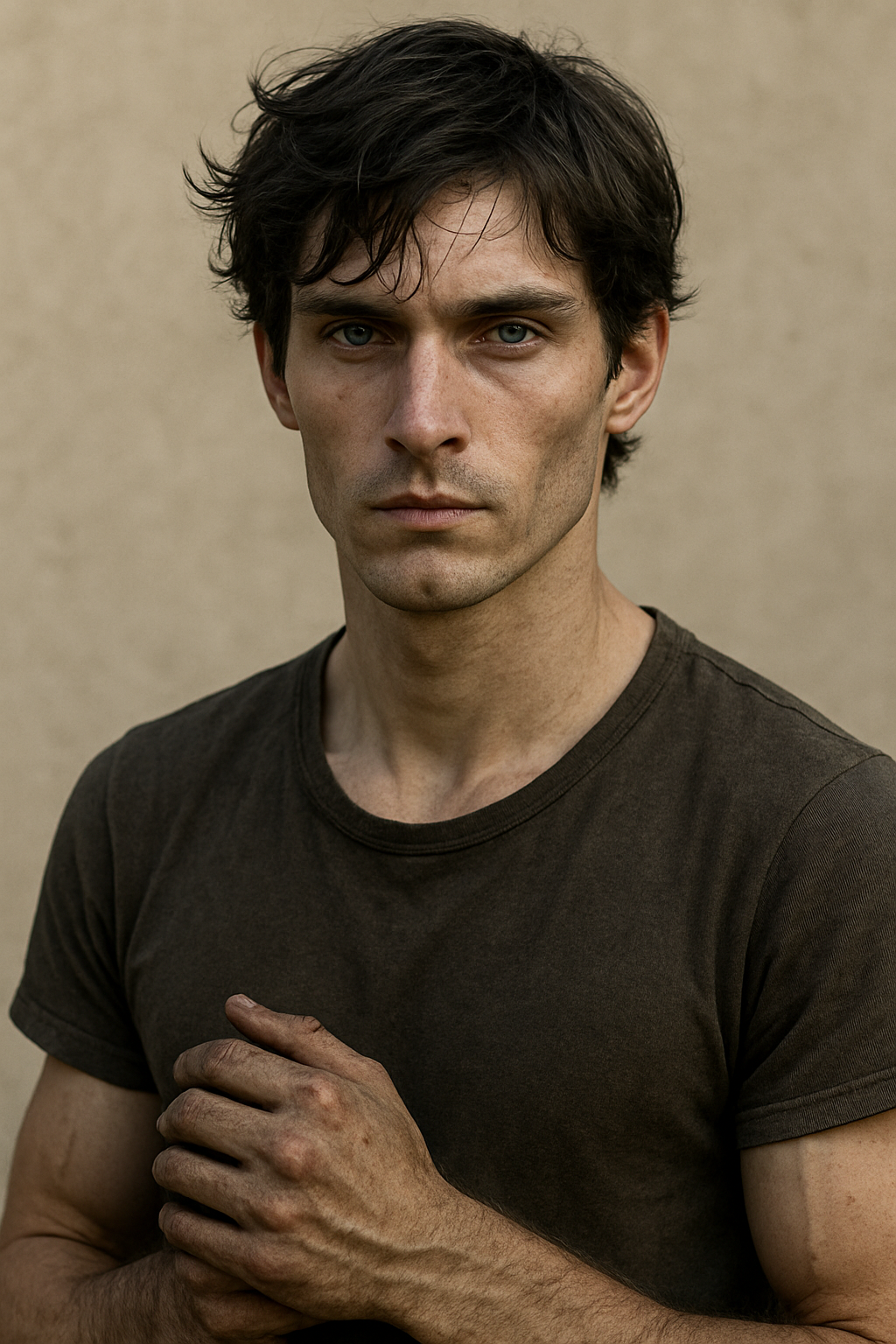
English

Comments