
Mika
Jaxon Zachary Webb (a.k.a. Mika)
Mika is the kind of person who feels inseparable from the desert itself. He’s tall and sun-toughened, with skin weathered by wind and salt, shoulders broad from years of survival work, and hair bleached into sandy waves by the relentless Mojave sun. But what makes him unforgettable isn’t just how he looks—it’s the way he carries himself. Mika moves with a quiet certainty, as if he’s listening to things the rest of us can’t hear: shifts in the wind, whispers from plants, the warnings of storms before they arrive. There’s a gravity to him, a natural pull that makes people trust him without needing words. His emerald-green eyes hold the kind of life and abundance the salt flats deny, and when he looks at you, it feels like being seen by something both human and older than human. Mika is a protector, guide, and mystery all in one—a man both deeply grounded and just out of reach.
Physical Description
General Physical Condition
Mika’s body is shaped by necessity, not luxury. He’s lean and muscled in the way only someone raised on scarcity and survival can be—no excess, no softness, just wiry strength from years of hauling salt, foraging, and outrunning storms. His frame is tall and broad-shouldered, but never bulky; his muscle is functional, built for endurance and agility more than brute force. He moves with a fluid precision, like the desert itself taught him where to place his feet, and that gives him an almost uncanny agility. He can scale rock faces, slip silently across shifting sand, and weave through bloom zones without stumbling where others would. He doesn’t rely on aids or tools beyond what any scavenger might carry—bows, knives, brine sprays. His body itself is his greatest survival instrument.
As for abnormalities—his most striking difference is internal. The Mika-born physiology runs through him: heightened sensory connection to plants, storms, and shifts in the natural world. His eyes, impossibly green in a world stripped of colour, hint at that connection. His hands are calloused from survival work but capable of startling gentleness. There’s a faint scar near his temple, and his skin shows the usual desert wear—burns, cuts, old healed wounds. Illness and affliction are trickier.
Body Features
Mika’s body carries the story of the desert carved into it. His skin is sun-browned and weather-worn, the kind that never fully loses the dust and salt embedded into his pores. When the light hits him at an angle, faint lines and scars catch the sun like pale etchings across a canvas of copper—old cuts from scavenging, a thin white scar tracing his temple, and calluses thick across his palms and fingers from years of handling stone, bowstrings, and plants. But what makes him distinctive are the subtler, almost unnatural details. His skin sometimes carries a faint undertone of green—so slight you might dismiss it as reflected light, but lingering long enough to unsettle those who notice. When he’s close to the Verdancy, that hue can deepen, like chlorophyll rising beneath the surface. Around his veins, especially at his wrists and the hollow of his throat, there’s an odd vibrancy to the colour, as if the blood running through him carries more than iron and oxygen. The texture of his skin shifts too—though mostly it’s roughened by the desert, there are patches near his forearms and shoulders where the surface feels almost too smooth, as if growth had healed over injuries with an unnatural perfection. His eyes, more than anything, are a physical marker: an impossible green, like light shining through leaves, flecked with brighter gold tones that shimmer when he’s “listening” to the plants. Sometimes, when the call of the Verdancy is strongest, his pupils dilate so wide the irises nearly glow. Even in stillness, Mika feels alive in a way that borders on otherworldly, like the desert shaped him from sand and sap both—human, but threaded with something that doesn’t quite belong to people anymore.
Facial Features
Mika’s face is built from angles softened by sun and sand. His bone structure is strong, almost classical—high cheekbones that catch light, a straight, well-defined nose, and a jawline cut sharp enough that it looks like it was shaped by erosion rather than inheritance. There’s a faint scar running through his left temple into the start of his eyebrow, the kind that’s easy to miss unless you’re close to him. His skin is tanned and textured by desert living, sun-creased at the corners of his eyes from years of squinting against the horizon. Facial hair comes and goes with practicality. Most days, he wears the shadow of stubble—uneven and dust-streaked, the beginnings of a beard that he never quite lets grow in full. When he does let it grow during long foraging runs, it’s a rugged scruff that frames his mouth and jaw, softening the severity of his bone structure. What makes his face striking, though, is how his expressions shift. His default is calm—eyes steady, mouth set in a line that suggests thoughtfulness rather than neutrality. But when he smiles, the change is startling. His whole face warms, the seriousness giving way to a younger version of himself, his eyes lighting like leaves struck through with sunlight. When he’s listening to the Verdancy, though, his expression becomes distant, almost haunted—eyes dilated, jaw slightly tense, like he’s holding back a truth too heavy for human words. He’s beautiful, but not in a polished way—more like the desert itself: raw, weathered, full of hidden depths, with a stillness that conceals sudden storms.
Identifying Characteristics
The things that set Mika apart—the features that would make someone recognize him even in a crowd—are all woven from both his humanity and the strange pull of the nature in him.
- His eyes are an impossible, verdant emerald, flecked with gold. In a world bleached by salt and dust, that green is otherworldly. They seem to shimmer when he’s attuned to the plants, giving the unsettling impression of light filtering through leaves.
- His hair is an effortless sweep of sandy-brown curls that have been sun-bleached into streaks of blond and copper, always dust-streaked and wind-tossed, like the desert itself is constantly running its fingers through it.
- His skin tone and undertone are naturally olive-tanned from years under the Mojave sun, weathered and scarred, but with that faint chlorophyll-green undertone around his veins and in certain lights—something no one can quite explain away.
- His scar is a thin white line at his left temple cutting through the start of his eyebrow. Subtle, but once noticed, unforgettable.
- His physical presence is notable: tall, broad-shouldered, leanly muscled from survival, with a quiet physicality that makes him seem rooted even when he's standing still.
- His expression is most often calm, controlled, and steady—as if listening to something just out of reach. But when he smiles, it transforms him, peeling away the weight of secrecy and making him appear far younger, almost boyish. But when the Verdancy calls, his gaze goes unfocused and his pupils swallow his eyes, leaving only that eerie green glow.
Special abilities
Survival resilience – While not outright supernatural, his physiology grants him heightened stamina, endurance, and resistance compared to most humans. He can survive longer without food or water, heal a little cleaner, and withstand the desert’s extremes in ways others can’t.
Apparel & Accessories
Mika dresses like someone who expects the desert to test him every day. His clothing is practical, scavenged, and sun-worn, stitched together from whatever fabrics last longest against salt, wind, and sand.
He usually wears loose desert trousers—dyed earth-tones or sun-faded to pale tans—tied at the waist with braided cord or a salvaged belt. His shirts are lightweight, often sleeveless or with torn-off sleeves, allowing freedom of movement and relief from the heat. Layered over that is a patched, weather-beaten cloak, its fabric stiff with dust but useful for shielding against windstorms. He wears sturdy, scavenged boots reinforced with leather and scrap metal where possible, laced with mismatched cord. They’re cracked and salt-stained, but reliable enough for trekking across sharp flats and rocky climbs.
Mika’s most telling accessory is the emerald pendant that hangs loosely around his neck, but he also keeps his own keepsakes: pieces of bone and smooth stones tied on cords around his wrists. His belt often carries small pouches for seeds, herbs, and tools. He’s rarely without a knife strapped to his thigh and a bow with a quiver slung across his back—weapons made more from necessity than ceremony. A sand-stained scarf often hangs loosely around his neck, ready to pull over his mouth during storms. Occasionally, he wears scavenged goggles with cracked lenses, though he prefers to rely on his natural senses.
Everything Mika wears looks patched, frayed, and hand-mended a dozen times over. Nothing is ornamental without also being functional. His attire blends seamlessly into the desert—earth tones, sun-bleached fabric, and textures that make him seem part of the landscape. Mika’s “fashion” isn’t fashion at all—it’s survival. But the way he wears it—calm, grounded, almost regal in his stillness—gives his rough attire a gravity that feels more like armour than rags.
Specialized Equipment
Recurve Bow & Arrows – His primary weapon, crafted from scavenged wood, bone, and sinew. The arrows are often tipped with stone, scrap metal, or even barbed glass. He maintains them meticulously, sometimes fletched with desert bird feathers. Silent, reusable, and effective—perfect for someone who values subtlety over noise.
Bone-handled Knife – Always strapped to his thigh or hip, this is both a tool and a weapon. The blade is utilitarian, used for cutting plant matter, carving, preparing food, or defence. The handle, carved from bone, has faint patterns etched into it—functional but with hints of personal significance.
Brine Spray – A small hand-pumped sprayer filled with highly concentrated saltwater. It’s used to burn back invasive growth, kill spores on contact, and keep the Verdancy at bay. It’s not infinite—salt brine is precious—but Mika keeps one at the ready.
Seed & Herb Pouches – Tied to his belt, these contain scavenged desert seeds, medicinal herbs, and dried roots. He knows how to apply them for healing, food, or, in some cases, as protective wards against spores.
Scavenged Water Flask – A dented metal flask or canteen, sometimes wrapped in cloth to keep the liquid cool. In a world where water is never guaranteed, it’s as precious as any weapon.
Firestarter Kit – Flint, steel, or improvised sparking stones, tucked away in a pouch. Fire is a shield against both cold desert nights and invasive Verdant growth.
Bone & Stone Charms – Small carved pieces he carries, not for superstition but connection. Some are keepsakes of those he’s lost, others are offerings to the desert or reminders of his roots. One of these is the a piece of his green pendant.
Simple Sling Pack – A scavenged, patched-up bag slung across his back, holding salvage, dried rations, and whatever tools are needed for his journeys.
Cloth Scarf – More than just clothing, this doubles as face protection in storms, rope when twisted tight, or padding when binding wounds.
Unlike the Archive, Mika has no advanced tech—his “specialized gear” is entirely adapted to the world he moves in: desert-born, hand-built, or repurposed, always practical, and always multipurpose.
Mental characteristics
Personal history
Jaxon Webb was born different—and everyone around him knew it before he did. His life was marked from the start by both reverence and fear. He grew up briefly in the Phoenix nursery, an experiment of the Archive meant to nurture and study children like him, until it collapsed when he was only four. His parents were urged to bring him there for controlled observation after he started showing symptoms of Verdant symbiosis. Hopeful that the researchers could find a cure or keep the symptoms at bay, they left him in the Archive's care.
The collapse of the nursery scattered him into the wasteland, too young to fully understand what had happened, but old enough to be scarred by it. For nearly three years, he survived alone—half-feral, half-guided by the Verdancy’s whispers, until desert traders stumbled upon him and brought him to Espera. By then, survival was already etched into his bones. With no human contact for years, he had lost the ability to speak. The traders had heard rumours of children from a collapsed Phoenix nursery who were "Mika-born," humans with special abilities who had been Hollowed by exposure to the Verdant compound and able to survive for years on their own in the wastelands, but he didn't appear Hollowed like the others. Unsure what else to call him paired with his speechlessness, they named him Mika.
In Espera, Mika was never fully trusted. The settlement needed what he could offer—his ability to sense storms, blooms, and plant behaviour kept people alive—but his nature also unsettled them. He was “too close to the Hollowed,” as people muttered, and so he lived on the margins: protector, scout, forager, but never fully one of them. Maelle always fought for him, claiming that if the salt lines kept the Verdancy out of the village, it might contain it within him too. That distance shaped him into someone deeply self-reliant. He grew up training his body to endure, honing survival tools, and learning to fight—not for sport or power, but because the desert demanded it.
Despite his youth, Mika carried himself with a steadiness that made him seem older than his years. He took responsibility when others faltered, often shouldering danger himself so the settlement wouldn’t have to. But beneath that composure, he bore a constant tension: the Verdant network called to him in ways no one else could feel. It tugged at his blood and marrow, tempting him toward Hollowing, and resisting it became a silent, lifelong battle. His scar at the temple, the faint green undertones of his skin, and his piercing eyes are reminders of that pull.
His life is one of in-betweenness: too human to surrender to the Verdancy, too Verdant to ever be just another boy of Espera. That tension made him both a guardian and an outsider, someone whose value is undeniable, yet whose presence always reminds the settlement of what they fear becoming. And so Mika has lived in paradox—cherished and resented, trusted with lives yet doubted in his humanity, shaped by the desert and haunted by the green that will not leave him.
Gender Identity
Mika’s relationship to gender would be inseparable from how he relates to the Verdancy and the desert. Mika didn’t grow up in a society with rigid gender roles. His formative years were shaped by the collapse of the Phoenix nursery, followed by three years of survival on his own, and then life in Espera where survival mattered more than categories.
For Mika, worth was always measured in what you could do—could you read the weather, forage food, fight off Hollowed, protect others? In that sense, gender for him isn’t a box but a current, something that shifts and finds balance, much like ecosystems do.
When it comes to himself, Mika understands his body as marked: tall, broad-shouldered, built from long hours in the sun. Those traits place him in a masculine role by Espera’s standards. Yet, his identity has always been tinged with a strangeness—his chlorophyll undertones, the greenness in his eyes, the Verdancy’s call. This duality might make him feel that gender is just one part of him, not the defining one. He believes that he is not only a man, but something the desert made—part human, part Verdant. Mika moves through the world as a man because that’s how people see him, but inside, he doesn’t anchor himself in rigid masculinity. His nurturing side—his patience with plants, the tenderness with which he treats Juniper Corvain, the gentleness hidden in those calloused hands—flows just as strongly as his ability to fight or endure. To Mika, these aren’t contradictions; they’re balances, like sun and soil, water and salt. So his understanding of gender is fluid but unspoken. He wouldn’t use words like “nonbinary,” or “gender-fluid”, but he embodies the idea that identity isn’t fixed—it’s adaptive, like life in the desert. He might see himself as male in a cultural sense, but internally, he understands gender as just another spectrum of existence, something that grows and shifts depending on context, connection, and the season of life he’s in.
Sexuality
Mika approaches sexuality much the same way he approaches identity and survival: with a sense of fluid acceptance, grounded in the natural world around him. To him, sexuality isn’t something to be labeled or defended—it simply is, like the wind shifting direction or plants bending toward the sun.
Growing up, Mika never had the luxury of thinking about sexuality in abstract terms. His childhood was survival: hunger, storms, Hollowed, mistrust from Espera. Desire wasn’t something he could indulge, but something that flickered beneath all of that like an ember—felt more in quiet moments of connection than in categories. He learned early that attraction wasn’t about fitting into “straight” or “gay” roles; it was about resonance, about someone drawing something out of him that felt alive.
When it comes to himself, Mika is guided less by gender than by connection. He’s drawn to those who make him feel seen beyond the fear and suspicion that’s always followed him. With Juniper Corvain, it’s that rare combination of trust, curiosity, and defiance that awakens his desire. But if someone else, regardless of gender, carried that same gravity and recognition, Mika wouldn’t deny it. For him, sexuality is fluid, instinctual, and relational—an extension of his nature, where boundaries blur and rigid definitions mean less than lived feeling.
That said, Mika’s relationship with sexuality is layered with caution. He knows he’s different, that intimacy carries the risk of rejection or fear if his Verdant nature is too visible. So while he feels deeply, he often hides that depth until trust is absolute. His sexuality, then, is both expansive and restrained—he allows himself to feel, but only shares it with those who prove they can hold the truth of him.
Education
Mika’s education has been more survival and instinct than classrooms or books. His early years in the Phoenix nursery gave him only the barest traces of structured learning before its collapse—fragments of language, numbers, maybe stories and songs meant to calm or guide the children. But by the time he was four, that foundation was shattered, and what came after was all wilderness.
Those three years he survived alone before the traders found him were their own brutal education. The desert was his teacher: how to find brine crusts and chip them for water, which plants could be chewed to keep hunger at bay, how to read the wind by the sting of salt on his skin. It taught him that silence can save you, that storms speak before they break, that every sound has a meaning if you learn to listen.
Once in Espera, his learning became practical and collective. He picked up survival skills from scavengers and hunters, plant lore from healers, and defense from guards. He learned to mend clothes, patch boots, and shape a bow from scavenged wood and sinew. The elders may have taught him fragments of old world knowledge—letters, scraps of history—but Mika’s bond with the natural world quickly outpaced anything they could give him. His true education was the whispering connection of the Verdancy: plants teaching him in ways no human could, the Verdancy itself pressing lessons into his marrow.
Because of this, Mika’s education is uneven but rich. He might stumble over written words or lack formal arithmetic, but he carries an encyclopedic knowledge of the desert—weather patterns, spore growth, migration routes, bloom cycles. His “school” has been the land, his “textbooks” the scars on his hands, his “teachers” storms, plants, and survival itself.
Employment
By the time the traders brought him to Espera, Mika already carried the desert in his bones. As he grew older, his work naturally centred on tasks that few others could do. He became a scout and forager, who was trusted to walk further from the settlement’s borders because he could sense dangers before they arrived. He learned to repair tools, track game, and guide others through bloom zones. Espera relied on him in emergencies, but rarely celebrated him—his skills were seen as useful but uncanny, something odd about his nature.
By his twenties, Mika was Espera's unofficial Warden of the Wilds. He did not hold a council seat or formal rank, but people knew to call him when storms were near, when the Verdancy pressed too close, when scavenger parties vanished. He also took on healing tasks no one else could manage—like identifying spore infections early, gathering herbs others overlooked, or calming bloom-afflicted plants. His work blurred the line between practical necessity and something almost spiritual.
Throughout his work, he has always been paradoxical: he’s the settlement’s lifeline to survival, yet also its reminder of what they fear. He works for Espera's safety, but is not fully embraced by Espera itself. So Mika’s work history is one of scout, forager, healer, protector, and guide—roles earned through necessity, not chosen. His labour is both his survival and his exile: the very skills that make him invaluable also keep him apart from the community.
Accomplishments & Achievements
Collapse of the Phoenix Nursery (age 4):
This was the first defining trauma for Mika. Suddenly untethered from safety, he was cast into a hostile world and was too young to comprehend it. This moment seeded his lifelong sense of mistrust toward institutions like the Archive. He learned to believe that only himself and the land could be trusted to keep him alive.
Years Alone in the Wasteland (ages 4–7):
Three feral years where the desert became his teacher. He learned silence, caution, and how to read the world’s subtle signals. He also learned what it meant to be profoundly alone. He resolved to endure, even when he was abandoned.
Rescue by Traders and Arrival in Espera (age 7):
Here Mika found community—but never belonging. Espera gave him food and shelter but branded him “other,” too close to the Hollowed. This duality of being needed but mistrusted, etched a tension into his identity permanently. He is determined to serve even those who fear him, because survival depends on it.
First Time Guiding a Scouting Party (Age 16):
When others ignored his warnings, a Bloom Front nearly wiped out a group he was guiding. Though most survived, the guilt was formative. He realized others’ lives would always hang on whether people trusted him. He resolved to speak less and prove more, because trust needs to be earned, not argued.
First Kill (defending Espera, Age 19):
Facing a Hollowed, Mika killed to protect others. The horror of that moment wasn’t in the act itself, but the recognition that his instincts were sharper, almost too natural. It reminded him how close he stood to the edge. He promised himself that if he ever had to take lives, it would only ever be out of protection, rather than power.
The Verdancy’s Call (ongoing):
Throughout his life, the network has tugged at Mika—sometimes with whispers, sometimes with overwhelming force. Each time he resists, it costs him. Each time he resists, he defines himself against what he might become. He is determined to choose to remain human, even if it tears him in two. He is determined to prove to everyone that he is not Hollowed.
Mika’s life has been one long negotiation with in-betweenness—between human and Verdant, insider and outsider, protector and pariah. Every accomplishment is shadowed by mistrust; every failure threatens to confirm people’s fears of him. What shapes him most is not just what he’s endured, but the quiet vows he’s made in response: to endure, to protect, to resist, to live for others even when he doesn’t fully belong among them.
Failures & Embarrassments
Mika’s story is laced with failures—moments where his body, his instincts, or his humanity weren’t enough—and those wounds shape him as much as his triumphs.
The Phoenix Nursery Collapse (age 4): Too young to understand, too small to save anyone. Mika’s earliest memory of failure is pure helplessness—watching the only world he knew crumble, unable to do anything but survive. From an early age, he becomes seeded with a core wound of powerlessness, fuelling his compulsion to protect others later.
Survival Alone in the Wasteland (ages 4–7):
Though he lived, Mika carries guilt for what he didn’t do—people he stumbled upon but avoided out of fear, children he heard crying but didn’t dare to help. His survival sometimes feels to him like cowardice. As a result, he carries a quiet shame; the sense that living when others didn’t makes him complicit.
Distrust in Espera:
The settlement gave him shelter but also suspicion. No matter how many times he proved his worth, whispers followed him: too close to Hollowed, too strange, too connected to the green. His “failure” here is social—he never broke that wall of mistrust. He internalized this distance, learning to live half-withdrawn, and never fully belonging.
The Lost Scouting Party (Age 17): On one of his first times leading alone, a bloom storm overtook the group. People survived but were badly injured, and some blamed him for not warning them sooner, for not being clearer about the danger. This event taught him the crushing weight of responsibility, and deepened his mistrust of his own voice. He vowed to let actions—not warnings—prove his instincts.
The First Hollowed Kill (Age 19): In defending Espera, Mika struck down someone who had been Hollowed—someone who still wore their human face. Even though it saved lives, the moment seared him with horror. What terrified him wasn’t the killing, but how natural it felt in his body. He was overcome with a fear that part of him already belongs to the Verdancy.
The Verdancy’s Pull:
Mika’s greatest personal failure, in his own eyes, is every time he feels the network tugging at him—every time his pupils widen, his veins darken, and he almost surrenders. Even if no one else sees it, he knows how close he comes to slipping. This leaves him with a constant inner war, leaving him feeling unworthy of trust, companionship, or love.
Relationships Strained or Lost:
Because of who he is, Mika has failed at intimacy over and over. Friendships soured into suspicion, people pulled away after seeing glimpses of what he carried. Each time, it reinforced his belief that closeness leads to betrayal or fear. This leads to his emotional isolation, and a tendency to keep his deepest truths hidden even from those who love him.
Mika’s failures all circle back to being in-between—too small to save, too strange to trust, too close to Verdant to belong, too human to give in. His negative events shape him into someone who carries guilt like a second skin. He believes he can never fail again without losing everyone, which is both his strength and his deepest wound.
Mental Trauma
Mika carries deep mental trauma, and much of who he is now has been shaped by the wounds he’s never been able to leave behind. His scars are mostly invisible, buried under his calm and competence, but they drive nearly every choice he makes.
After the Phoenix nursery collapsed, he now associates safety with impermanence and blames himself for surviving when others didn’t. He is riddled with survivor’s guilt—a subconscious belief that he doesn’t deserve life unless he spends it protecting others.
Three years in the wasteland alone at a formative age left him feral in ways he never fully shed. He learned silence, hypervigilance, and mistrust of strangers. Even after being taken into Espera, that deep loneliness never left him. He has chronic hyperawareness, difficulty forming secure attachments, and a lingering fear of abandonment.
Growing up “too close to Hollowed” meant Mika was never fully embraced by the settlement. He was useful, but always marked as dangerous. That constant double-bind of being needed but unwanted, bred a fractured sense of identity. It resulted in self-alienation, internalized stigma, the constant pressure to “prove” his humanity. *
When his instincts about the bloom storm weren’t heeded andpeople were injured, he internalized this as his failure to protect them, even though he had warned them. This resulted in a self-doubt in his leadership skills, guilt, and a pattern of taking on blame even when it isn’t his.
The first time he killed a Hollowed who still bore their human face left him rattled—not just from the act, but because his body reacted too naturally. He recognized a piece of himself in them. This caused him to fear his own nature, and develop intrusive thoughts about whether he’s destined to lose himself.
Every time he resists Hollowing or the Verdancy, he feels himself fray a little more. It’s like living beside a siren’s song you can’t shut out. He becomes riddled with chronic stress, dissociation, nightmares, insomnia, and the terror of eventual surrender.
Overall, Mika suffers from a mix of PTSD, survivor’s guilt, and chronic hypervigilance, overlaid with the unique existential trauma of being in-between. He’s someone who: rarely sleeps soundly (haunted by Verdancy dreams), keeps emotional distance to protect others from his truth, carries guilt like a second heartbeat, and lives with the constant anxiety of becoming what he most fears. Despite this, he functions because survival taught him discipline. His trauma doesn’t render him helpless—it makes him controlled, deliberate, and capable in crisis. But underneath the surface, he’s a young man always holding his breath, afraid that if he relaxes, the Verdancy will take him.
Intellectual Characteristics
Mika’s intellect isn’t about book knowledge or formal reasoning—it’s about how he reads the world and how his inner compass guides him. His traits lean into a blend of survival instinct, deep emotional intelligence, and an unusual humility for someone carrying so much weight.
Empathetic: Mika feels the world around him with startling depth. He doesn’t just listen to people’s words—he notices their silences, their shifts in body language, the way their breath catches before they speak. His empathy extends beyond humans; he feels plants, storms, and landscapes almost like living presences. This makes him a natural protector but also leaves him carrying the pain of others as if it were his own.
Quietly Courageous: Mika’s courage isn’t reckless bravado—it’s the steady kind, the willingness to walk into danger knowing full well what it costs. He doesn’t seek glory, and rarely talks about bravery as a virtue. For him, courage is necessity: if he doesn’t step forward, others will die. That kind of acceptance gives him a calm bravery others find unnerving.
Humble: For someone extraordinary, Mika refuses to see himself as more than another survivor. He downplays his talents, often framing them as luck or necessity. He carries himself with humility not because he’s unaware of his power, but because he fears what pride could turn him into. Humility is his safeguard against the Verdancy’s call, a way of anchoring himself in humanity.
Observant & Adaptive: His mind is tuned to patterns—winds before a storm, spores in the air, people’s moods shifting in tense moments. He notices details most miss, not because he’s analytical like a scholar, but because noticing is survival.
Self-Sacrificing: Intellectually, Mika always weighs choices with others in mind. He will put himself at risk before allowing someone else to be exposed. Some see this as noble, but it’s also driven by guilt—if someone dies because of him, he won’t forgive himself.
Guarded Introspection: Mika spends a lot of time in his own head, reflecting, questioning, wrestling with his identity. But he doesn’t share this openly. He’s cautious with his thoughts, fearing that revealing too much will alienate others or make them fear him.
Mika’s intellectual traits paint him as a deeply empathetic and courageous soul, tempered by humility and shaped by trauma. He understands people and the world through observation and feeling rather than theory, and he grounds his intelligence in service to others. His greatest strength lies in his quiet ability to sense, adapt, and endure.
Morality & Philosophy
Mika’s values are carved from hardship, exile, and his precarious place between humanity and the Verdancy. They’re not the polished ethics of a scholar or elder—they’re lived, bone-deep convictions shaped by survival and by the fear of becoming what he dreads.
Protection of Others: His strongest value: no one should die the way his nursery family did. He carries a near-sacred duty to shield others, even at his own expense. His morality leans toward self-sacrifice; he’d rather bleed than watch someone else suffer because of him.
Responsibility Over Power: Mika distrusts authority and institutions (after the nursery collapse and Espera’s mistrust). For him, power is dangerous if untethered to responsibility. He believes strength means little unless it’s used to protect, not dominate.
Truth in Actions, Not Words: Because so few in Espera trusted what he has said, Mika learned to value deeds over promises. His ethic is: prove it in the doing. He doesn’t lie easily, but when he does, it’s usually to protect someone else from fear or danger.
Balance with Nature: Unlike the Archive (who seek to dominate) or the Rootbound (who surrender wholly), Mika sees morality in balance. He doesn’t believe humans are separate from the land, but neither should they dissolve into it. His ethic is coexistence without conquest.
Humility & Caution: He fears pride—because pride feels like the first step toward being swallowed by the Verdancy. His moral compass pushes him to stay humble, grounded, never assuming he’s untouchable.
Value of Human Connection: Though he often feels alienated, he cherishes small human bonds—laughter around a fire, a hand brushing against his. These connections anchor him. His ethics lean toward loyalty, honesty, and tenderness, though he struggles to express them openly.
Moral Views On Violence: Violence is a last resort, but if it protects others, it’s justified. He doesn’t glorify killing, and every Hollowed he puts down weighs on him. He differentiates between necessary violence (protection) and destructive violence (domination).
Moral Views On Life & Death: Every survival choice is sacred. Wasting resources, taking unnecessary risks, or treating life as disposable feels morally wrong to him. He treats the fallen—human or otherwise—with respect.
Moral Views On Humanity & the Verdancy: Morally, Mika refuses extremes. He sees humans who exploit nature as corrupt, but also sees the Hollowed’s surrender as a kind of death. His ethic is to resist becoming either oppressor or consumed.
Moral Views On Love & Trust: For Mika, love is holy—an act of courage in a world where bonds are fragile. Trust, once given, is fiercely protected. Betrayal, to him, is almost unforgivable.
Mika’s moral world is one of balance, protection, humility, and responsibility. He doesn’t live by rigid codes, but by the gut knowledge of what survival and loss have taught him: that life is fragile, strength must serve others, and pride can be fatal.
Taboos
Mika carries certain views and instincts that make people in Espera (and beyond) uneasy, and even frightened of him. These taboos don’t come from malice, but from the way his nature places him between worlds.
Sympathy for the Verdancy: Though he resists it fiercely, Mika feels the Verdant network as alive, almost conscious. At times, he even respects it as a force of nature rather than only a monster. To say aloud that the Verdancy isn’t purely evil would be heresy in Espera—yet in his heart, he knows it isn’t that simple.
Humanity Is Not Supreme: Unlike the Archive, who cling to the idea of saving or restoring humanity at all costs, Mika doesn’t see humans as inherently above other life. To him, people are just one part of the ecosystem. In a survival-driven community like Espera, this humility can sound dangerously close to disloyalty.
Killing the Hollowed Is a Mercy: For Mika, striking down the Hollowed is not just duty but release. He feels it spares them from eternal half-life in the Verdancy’s grasp. This pragmatic mercy, though, unnerves others, because it blurs the line between execution and compassion.
Distrust of Authority / Institutions: Mika doesn’t trust councils, leaders, or the Archive. He sees centralized power as a breeding ground for corruption and cruelty. In Espera, where order and hierarchy are vital for survival, such views can mark him as dangerous.
Fluid Identity & Roles: Mika doesn’t bind himself to strict ideas of gender, strength, or roles. He moves between nurturer and warrior, tenderness and ferocity, without apology. To more rigid minds in Espera, this fluidity feels unnatural or suspect.
Death as Part of Balance: Mika doesn’t fear death the way others do. He sees it as part of the natural cycle, not an enemy to be conquered. This unsettles those around him, especially when paired with his lack of desperation to preserve “human dominance.”
Affinity for Silence & Secrets: Mika often chooses silence when others demand explanations. He believes not everything should be spoken, especially when words cannot carry the truth. In a small community where secrecy can be seen as betrayal, this habit makes him suspect.
Mika’s ideals are rooted in his in-betweenness. He views the Verdancy with complexity, questions humanity’s supremacy, resists rigid roles, and distrusts authority—all things that set him apart in a world where survival depends on shared dogma. To Espera, these views can look like disloyalty. To Mika, they’re simply the truths he’s lived.
Personality Characteristics
Motivation
Mika’s motivations are the quiet engine of his character—the things that keep him moving through distrust, danger, and the Verdancy’s constant pull. They’re not about glory or power but about survival, connection, and a need to resolve the contradictions inside himself.
Protecting Others (Especially June): Mika’s deepest drive is to keep others safe, rooted in the nursery collapse that left him powerless as a child. He carries survivor’s guilt like a brand, and his every instinct pushes him to shield others from suffering—even if it means putting himself at risk. June embodies this motivation most fully: protecting her is both duty and desire, a way of redeeming his past failures.
Resisting the Verdancy’s Pull: Every day is a battle of identity. He wants to remain human, to resist the call that whispers he belongs to the network. His motivation isn’t just survival—it’s defiance. To stay himself in spite of the Verdancy is his quiet rebellion.
Belonging (Without Losing Himself): Mika has never felt truly at home—too human for the Verdancy, too Verdant for Espera. His heart longs for connection, trust, and a place where he is not merely tolerated but seen. This desire drives his bond with June, his friendship with Silvan, and his hesitant hope for community.
Balancing Humanity and Nature: Unlike the Archive (who want to conquer) or the Rootbound (who want to surrender), Mika dreams of a middle way. He wants to prove coexistence is possible—that humans can live with the land without destroying or being consumed by it. This is both a personal and moral mission.
Atonement: Every loss, every failure, every Hollowed he’s killed feeds into a sense that he owes the world a debt. His motivation often feels like redemption—though he’d never name it. Protecting Espera, guiding June, saving lives: each is a way to balance the scales of guilt he carries.
Personal Desires: Intimacy and trust—he craves closeness but fears it will shatter if people see all of him. His relationship with June is both his greatest desire and greatest risk.
Practical Priority: Survival of Espera’s people, even if they don’t trust him. He cannot abandon them, no matter how they treat him.
Spiritual Drive: To remain whole. To choose his humanity again and again, even when the Verdancy tempts him with surrender.
Emotional Longing: To no longer be alone in his in-betweenness—to find someone who understands and accepts both his human and Verdant sides.
Mika is driven by protection, resistance, belonging, balance, and atonement. His motivations come from trauma, but they also carry hope: that he can remain human, that he can find love and connection, and that his existence—half-human, half-verdant—might prove a new way forward.
Savvies & Ineptitudes
Mika is a study in contrasts: extraordinary in some ways, but painfully limited in others. His savvies and ineptitudes are what make him feel both larger-than-life and achingly human.
Knowledge and Skills
Survival Skills: Mika is unmatched in the desert. He knows how to find water, forage edible roots, track animals, read the sky before storms, and move silently across hostile terrain. These skills aren’t intellectual—they’re instinctive, bone-deep, honed by necessity.
Plant & Ecosystem Knowledge: Through both training and his Mika-born bond, he understands plant behaviour at an intuitive level. He knows which spores are lethal, which herbs heal, which sprouts indicate coming bloom storms. He can sense patterns others miss.
Practical Combat: He’s proficient with a bow, knife, and improvisational weapons. His fighting style is not polished or ornamental—he’s a survivor, not a soldier—but he’s efficient, quick, and lethal when cornered.
Empathy & Observation: Mika reads people and environments with uncanny accuracy. He notices the things others suppress—hesitations, subtle shifts in expression, the way someone breathes when they’re hiding fear. This makes him a natural protector and guide.
Endurance & Stamina: Physically, Mika is a powerhouse of survival. He can push through hunger, dehydration, sleeplessness, and pain longer than most. He’s learned to pace himself, to adapt his energy to the rhythm of the land.
Adaptability: The desert taught him not to cling to one way of doing things. He can improvise tools, adjust plans on the fly, and adapt to shifting dangers.
Ineptitudes & Weaknesses
Lack of Formal Education: He has little to no academic foundation. Reading, writing, and mathematics are clumsy for him; he knows enough to get by but not with fluency. Scientific or technical knowledge from the Archive is mostly foreign to him.
Social Navigation: Mika struggles with politics, manipulation, or charm. He is too blunt and too quiet to sway groups. In councils or debates, his silence is read as evasiveness, and his words often fail to carry the weight of his deeds.
Trust & Intimacy: He’s emotionally reserved to the point of dysfunction. Even when he deeply cares, he struggles to articulate it, often leaving others uncertain of his feelings. This can strain relationships, especially with June.
Over-Responsibility: Mika internalizes blame to a fault. This makes him ineffective in delegation or leadership—he tries to shoulder everything alone rather than trust others to share the burden.
Technological Knowledge: He knows scavenged tools and weapons, but Archive tech, machines, or bioreactors are beyond him. He doesn’t understand their mechanics and is suspicious of them by instinct.
Imagination of Ease: Because survival shaped him, Mika has trouble imagining or accepting ease, abundance, or joy without suspicion. He struggles to relax, to play, to believe in safety.
Mika is proficient in survival, empathy, and endurance, but lacking in formal education, social maneuvering, and emotional openness. He’s a man of the wilderness, not the classroom; a guide and protector, not a politician or scholar. His savvies make him indispensable in the desert, but his ineptitudes isolate him in human communities.
Likes & Dislikes
His likes and dislikes aren’t flashy, but they reveal the quiet heart beneath his survivalist exterior.
Likes
The Desert’s Stillness: He finds comfort in the silence of salt flats at dusk, when the wind dies and the world feels suspended. Where others hear emptiness, he hears peace.
Plant Life & Growth: Sprouts breaking through salt crusts, the smell of crushed sage, the resilience of desert blooms—he cherishes signs of life. They feel like hope, small rebellions against the wasteland.
Hand-Carved Things: Bone pendants, smooth stones, wooden tools—he values objects made with patience, especially those passed between hands. The pendant he gives to June is an extension of this love.
Acts of Quiet Intimacy: A hand brushing his arm, someone sharing water with him, laughter by a fire. He treasures small, wordless gestures of care more than grand declarations.
Watching the Sky: He reads clouds, stars, and storm patterns, but he also just loves it—the endless expanse feels like freedom, a balance to the Verdancy’s pull underground.
Stories Told Aloud: He’s drawn to oral tradition—campfire tales, memories spoken, songs hummed. Reading is difficult, but stories told through voice connect him to community.
Dislikes
The Archive’s Cold Logic: Institutions that treat people as experiments or numbers strike at his deepest wounds. He despises their sterile detachment from human cost.
Wastefulness: Throwing away food, water, or tools is unthinkable to him. Even a broken shard of glass has use. Waste feels like spitting in the face of survival.
Idle Boasting / Pride: He mistrusts arrogance. Loud talk and empty promises remind him of leaders who never endure the risks they put others through.
Crowded Spaces: Packed rooms, council gatherings, Archive halls—he feels claustrophobic in human clusters, as if they press him closer to the Verdancy’s pull.
Unnecessary Violence: Killing for dominance or cruelty disgusts him. Violence is only justified for defense or survival; anything else feels like desecration.
Being Touched Without Consent: Because of both trauma and the Verdancy’s pull, unexpected touch unsettles him. He needs closeness, but on his own terms, with trust first.
Mika’s preferences reveal a man who values simplicity, survival, and authenticity. He likes what feels alive, handmade, or connective, and dislikes anything that reeks of waste, arrogance, or cruelty. His world is pared down to essentials, but the things he cherishes—plants, silence, small gestures—hint at the tenderness he rarely lets others see.
Virtues & Personality perks
Mika's virtues are the traits that shine through once you look past his scars and silence as a hardened survivor, the qualities that draw people toward him even if they don’t trust him fully.
Steadfastness: When Mika gives his word, it’s immovable. He may not talk much, but if he commits to something—or someone—he follows through no matter the cost. People sense this reliability even when they can’t name it.
Patience: He doesn’t rush the world. Whether it’s waiting out a storm, tending a plant to sprout, or listening for someone to find their words, Mika gives things time. His patience is steadying to those around him.
Gentleness with the Vulnerable: Though scarred and strong, Mika is remarkably tender with children, injured animals, and plants. He has a natural gentleness that contrasts with his imposing presence. It reassures those who expect only hardness from him.
Resilience of Spirit: Mika endures—not just physically but emotionally. He bends under weight, but does not break. His very survival is proof of an inner resilience that inspires those who notice.
Wordless Leadership: Without seeking authority, he naturally draws people to follow him. His quiet confidence, perceptiveness, and readiness to put himself first in danger make him a leader in action if not in title.
Creativity in Survival: He can craft, improvise, and adapt from whatever materials the desert offers. This ingenuity is both practical and inspiring: where others see ruin, he sees possibility.
Respect for Boundaries: Mika rarely imposes himself. He gives people space, listens more than he speaks, and doesn’t force intimacy. In a world where fear and scarcity make people grabby, his restraint is a rare gift.
Moral Integrity: Even when no one is watching, Mika does what he believes is right. He doesn’t cut corners or exploit others for gain, even if survival would excuse it. His ethics are consistent, even in solitude.
Capacity for Wonder: Despite all he’s endured, Mika still marvels at beauty—at a desert flower blooming, the sound of rain, the sight of stars. This wonder is childlike, untouched by cynicism, and it keeps him human.
Mika’s greatest virtues are steadfastness, patience, gentleness, resilience, and integrity. These are quieter strengths than courage or survival skills, but they make him magnetic in ways people can’t quite explain. He’s someone you trust at your back, someone who brings calm when the world is chaos.
Vices & Personality flaws
Mika's flaws go beyond trauma into the small, stubborn, sometimes self-sabotaging traits that make him hard to live with despite his virtues.
Secrecy as Habit: Mika hides truths instinctively, even when honesty would help. He carries things alone because he’s convinced others can’t handle his reality. This secrecy often breeds mistrust, even when he intends no harm.
Pride in Endurance: Though humble in many ways, he takes a private pride in how much he can suffer and survive. He sometimes refuses help out of stubbornness, seeing dependence as weakness. This can endanger him and frustrate those who care for him.
Emotionally Reserved: His restraint keeps him safe but also prevents intimacy. Even when he loves deeply, he withholds words, gestures, and confessions until it’s almost too late. Others can feel shut out by his silence.
Fatalism: Deep down, Mika believes he’s doomed to lose to the Verdancy eventually. This fatalistic streak makes him reckless at times—throwing himself into danger because he sees his own survival as borrowed time.
Jealousy: Though he rarely shows it, Mika feels sharp pangs of jealousy when he sees others form bonds that come more easily than his own. He doesn’t act on it openly, but it gnaws at him.
Asceticism: He denies himself joy, rest, and comfort more than necessary. To Mika, indulging in pleasure feels dangerous, like it makes him weak or unguarded. This self-denial keeps him hard, but also starves him of the things that make life worth living.
Harsh Self-Judgment: He holds himself to impossible standards, harsher than he holds anyone else. When he fails (even in small ways), he berates himself internally, which feeds cycles of guilt and withdrawal.
Over-Identification with Role as Protector: Mika often reduces himself to utility: scout, warrior, shield. He struggles to see his own worth outside of what he can do for others. This makes his sense of identity fragile and dependent on service.
Defensiveness in Conflict: When challenged, Mika’s first instinct is withdrawal or sharp, clipped retorts. He hates arguing, but when cornered, his defensiveness makes him seem cold or unyielding.
Mika’s flaws aren’t the dramatic kind—they’re subtle, lived-in, and often invisible until you’re close to him: secrecy, pride in suffering, fatalism, emotional reserve, and self-denial. They make him magnetic yet frustrating, admirable but humanly flawed.
Personality Quirks
- Hypervigilence: Mika always positions himself with his back to a wall or facing an exit. His eyes scan constantly, even when others relax. His body stiffens a second before danger arrives—as if he feels it before it’s visible.
- Restless Sleeper: He rarely sleeps deeply, and often has trouble sleeeping at all. He is often awake before dawn, sitting outside with his bow across his lap. When he does dream, it’s often troubled with nightmares—murmured fragments about green light, collapsing walls, or voices in the wind.
- Controlled Breathing: In moments of fear or anger, Mika closes his eyes and focuses on his breath, grounding himself. It’s a learned ritual to fight back the Verdancy’s pull.
- Food Habits: He eats quickly, efficiently, often setting aside portions for others first. He learned hunger young, and it lingers in the way he never quite trusts abundance.
- Emotional Distance: Even when he’s close with people, there’s always a sliver of restraint—like he’s holding back the deepest parts of himself. He rarely speaks of his past unless pressed, and even then, his answers are clipped.
- Guilt Spirals: When people are hurt under his watch, he internalizes it as his personal failure. He may withdraw, avoid eye contact, or punish himself with long, dangerous scouting trips.
- Loss of Control: In moments where the Verdancy’s call overwhelms him, his pupils dilate, veins darken faintly green, and his breath comes ragged—as if he’s caught between two selves. He fights it fiercely, but the fear of surrender sometimes paralyzes him at the worst moments.
- Anger as Defense: Though normally calm, he has rare flashes of sharp, startling anger when people dismiss warnings or endanger others. It comes less from temper and more from panic—born of too many times he’s seen carelessness cost lives.
- Nightmares Bleeding Into Day: The line between dream and waking occasionally blurs. He “hears” the Verdancy whispering when no one else does. Sometimes he zones out, caught between worlds until someone grounds him back.
- Fear of Intimacy: In love or closeness, his trauma whispers that anyone who gets too close will be hurt by what he is. This makes him falter in moments of vulnerability—hesitating, pulling back, or shutting down emotionally when he most wants to lean in.
In daily life, Mika’s trauma makes him quiet, steady, and self-disciplined—a survivor who seems reliable because he has to be. But under pressure, that control is fragile. When it cracks, what comes out is fear, guilt, or a glimpse of the Verdancy’s pull—the very thing he’s terrified of showing anyone.
Hygiene
For Mika, hygiene isn’t about vanity or appearances; it’s about survival, respect, and balance with the land.
He values being functionally-clean. He washes dust and spores off his skin whenever water or brine allows, not because he’s chasing comfort, but because filth attracts sickness. Hygiene, to him, is protection against infection. He doesn’t fuss with grooming—hair is often wild, stubble lines his face, nails broken or dirty—but he doesn’t let himself rot, either. He trims when necessary, keeps wounds clean, and brushes sand or spores from his clothes. His body is his tool; he maintains it like gear, with care but no excess. There’s almost a spiritual note to it: washing dirt from his hands after tending plants, or rinsing before eating feels like a gesture of gratitude. He doesn’t articulate this, but it’s there in his habits.
He doesn’t mind being coated in sweat, salt, or dust for days if the situation demands it. He doesn’t consider “smelling bad” a problem—it’s natural, part of desert living. To him, discomfort is not a crisis.
However, Mika dislikes being sticky with blood or overrun with spores. He’ll strip out of contaminated clothing quickly, and he treats fungal residue almost like poison. He knows that he is already half-Verdant, and doesn't want to risk exposing himself more than he already has been. That urgency about keeping spores away makes him appear meticulous in some cases. ---
Mika values hygiene as survival and respect, not vanity. He keeps himself clean enough to stay healthy and functional, but he doesn’t waste water or time on unnecessary grooming. Dust, sweat, and scars don’t bother him; infection, spores, and contamination do.
Representation & Legacy
After his death, the world would not remember Mika as just a man, but as a symbol, one whose life embodied balance, sacrifice, and the possibility of coexistence. ---
The Verdant Shard Pendant: The carved green stone and bone pendant he gave June becomes his most direct symbol—a reminder of connection, protection, and the fragile possibility of reversing the Verdant compound. It’s passed forward as both a keepsake and a rallying emblem.
Green Eyes in the Dust: His striking eyes become mythic—stories say his spirit lingers in the desert, watching through flashes of green in storm-light or plants sprouting unexpectedly in salt flats. To many, his eyes symbolize resistance and the thin thread of humanity that endures even under Verdancy’s call.
Plants Growing from Barren Ground: Mika is remembered as the one who could coax life from the wasteland. Any time a sprout breaks through cracked earth or bloom appears after storm rains, people see it as “Mika’s touch.” He becomes linked to regeneration.
The Bow and Knife: His simple, hand-made weapons become iconic. To carry a bow or a bone-handled knife in Espera is to claim his spirit of silent protection and steadfastness. They symbolize survival without cruelty, strength without arrogance.
The Desert Wind: Mika was always attuned to the whispers of the land. After his death, people speak of sudden calming breezes or salt winds shifting just before danger as “Mika’s warning.” The wind becomes his unseen voice.
The Balance Between Green and Salt: More than anything, Mika becomes a symbol of balance—not surrendering to the Verdancy, not conquering it, but holding a fragile line between human and wild. His legacy is the belief that coexistence is possible, and that humanity doesn’t need to dominate or vanish to survive.
For Espera: He becomes a folk-hero figure—half-feared, half-revered. His story warns against mistrusting those who are different, while also carrying the lesson that protection often comes from outsiders.
For June & Silvan: His influence is intimate, not mythic. He shapes their choices, their courage, and their view of humanity’s future. He is the quiet anchor that continues guiding them even after he’s gone.
For Future Generations: Mika stands as proof that a bridge can exist between the Hollowed and the human, that survival isn’t just about walls and war but about listening, adapting, and enduring.
After Mika’s death, he lives on as a symbol of balance, endurance, and quiet sacrifice. The shard, his eyes, his bow, the sprouting of life in barren places—all become shorthand for what he represented: the belief that even in a broken, poisoned world, humanity can still choose to protect, nurture, and endure.
Social
Contacts & Relations
Zachary & Rory Webb (Parents)
They surrendered Mika to the Phoenix Nursery when his symptoms began to manifest, believing the scientists might help him. Though done out of fear and misguided hope, Mika interprets this as abandonment. It leaves him with a lifelong wound around trust, belonging, and love. He remembers them dimly—faces, tones, fragments of touch—but the absence is louder than the memory. This abandonment fuels his survivor’s guilt and his drive to protect others. He never wants anyone else to feel left behind the way he was.
The Phoenix Nursery (Early Family)
The other Mika-born children and caretakers became a kind of surrogate family until the collapse. Their sudden loss was his first deep trauma and instilled in him the belief that any sense of family is temporary, fragile.
Espera (Community, but distant)
Espera took him in, but never wholly accepted him. They are both his allies and his burden—he protects them even though they keep him at arm’s length. His bond to the community is duty-driven, not rooted in love, though a few individuals treat him with cautious respect. Espera represents both belonging and rejection, a paradox he can never resolve.
Silvan (Friendship in Tension)
Despite hating the Archive, Mika and Silvan form an uneasy but deep bond. What binds them is recognition: both are marked by forces larger than themselves, both are outsiders in their own way. Mika respects Silvan’s courage and loyalty, even when he disagrees with his methods or heritage. Silvan is proof to Mika that individuals can transcend institutions—that humanity can still shine even in systems Mika despises.
June (Love, Trust, Hope)
June is the deepest bond of his life. She represents not just love, but a chance at belonging and being seen for who he is, Verdant shadows and all. With her, Mika allows cracks in his walls; she’s the one person he doesn’t want to hide from, even when he still does. Their relationship is equal parts sanctuary and risk—because loving her makes him vulnerable in ways that terrify him. She becomes his anchor, his hope for a future where he doesn’t have to choose between human and Verdant.
Maelle (Trusted Friend, Mentor)
Mika respects Maelle’s sharpness and loyalty. Though their bond isn’t as deep as his with June or Silvan, he trusts her judgment and values her as an ally who isn’t afraid to challenge him.
The Archive (Institutional Enemy)
Though they gave him life through the nursery, Mika despises the Archive’s cold utilitarianism. To him, they are both the architects of his trauma and the embodiment of everything wrong with humanity’s attempts to dominate the world. He doesn’t trust their motives, their cures, or their promises.
The Verdancy (Existential Enemy)
The greatest enemy is also inside him. It tempts, calls, whispers, and sometimes comforts. He hates and fears it, but also understands it in ways no one else can. The Verdancy is his shadow: enemy, inheritance, and mirror.
Hollowed (Personal Enemy)
Mika pities them even as he kills them. They are a reflection of what he could become. Each battle against them is a battle against himself.
Dr. Elan Thorne
Mika's link runs through the Phoenix Nursery and the Archive’s interest in the Mika-born. Dr. Thorne, as one of the Archive’s top researchers, had direct involvement in the Phoenix Nursery. Mika, showing early symptoms of his physiology, wasamong the children studied. She interacted with him not as a caregiver, but as a subject—running tests, observing his reactions, monitoring his blood, spores, or neurological responses. Even after the nursery’s fall, Thorne tracked survivors from the nursery. The Archive never lets go of an experiment. Word finally reached her that one of the children had been found (Mika in Espera), and she sought him out covertly through Silvan for a secret meeting to test his resistance, gather data, and give him the Verdant Shard. Dr. Thorne needed the shard to reach June as a fail safe for her work on a cure, but couldn’t do it herself. Mika, both resilient and uniquely able to navigate the Verdant wilds, was her best vessel. She sought him out specifically for this purpose, coldly pragmatic in her choice. For Thorne, Mika was an asset—a survivor whose physiology made him ideal to carry the pendant through hostile territory. For Mika, the meeting was haunting: the woman who embodied the Archive’s power recognized him, but not for who he is. Her clinical detachment reminded him of his own parents’ surrender. It wasn't a warm reunion or an allyship. It was a transaction. She gave him the shard not because she trusted Mika the boy, but because she trusted Mika the experiment to survive long enough to deliver it.
Mika’s relationships are all about paradox: abandoned yet loyal, mistrusted yet indispensable, hating institutions but trusting individuals. His parents’ surrender defines his fear of abandonment. Espera is the home that doesn’t want him but that he still protects. Silvan is the friend who proves that trust can cross impossible divides. June is the love he can't have that makes life more than survival. The Archive and Verdancy are twin enemies: one external, one internal.
Religious Views
Mika isn’t religious in a dogmatic, institutional sense (he distrusts organized systems too much for that), but his beliefs are lived, visceral, and tied to the land and his in-between nature.
The Desert as Sacred: Mika doesn’t follow a formal religion, but he treats the land itself as sacred. The silence of salt flats, the resilience of desert blooms, the rhythm of storms—these are his scripture. He sees survival as communion with something larger than himself.
Balance over Domination: Unlike the Archive (control/conquest) or the Hollowed (surrender), Mika’s spiritual compass points toward balance. He believes life is healthiest when things grow in tension and harmony, not when one side devours the other.
Rootbound Curiosity: Mika has begun to resonate with Rootbound ideals: the idea that humanity can find strength and even transcendence by binding themselves more directly to the Verdancy. Though he resists full surrender, he finds spiritual sense in the Rootbound’s view that humans are not apart from the green but woven into it.
Distrust of Authority: He rejects top-down control and the Archive’s belief that humanity must dominate the natural world. His ideology leans communal and survival-driven: people must live with the land, not over it.
Sympathy for Transformation: He quietly believes the Verdancy is not just a plague, but also a kind of evolution. While most of Espera sees only horror, Mika sees complexity: destruction and rebirth. This is taboo, and he rarely admits it aloud.
Protector’s Ethic: He frames his ideology around protection: if something preserves life, it is good; if it consumes or corrupts, it must be resisted. This pragmatic ethic informs everything he does.
Root Binding: Recently, Mika has begun practicing Root Binding—rituals where one literally binds roots or vines around the skin, sometimes cutting or scarifying to allow the plant to intertwine. For Rootbound, it symbolizes unity with the Verdancy; for Mika, it’s more ambivalent. It’s a practice of listening rather than full surrender—he uses it to deepen his understanding of the green’s voice without letting it consume him.
Offerings to the Land: He leaves small tokens (carved bone, seeds, bits of scavenged food) at the base of plants or where new sprouts emerge. It’s less worship than acknowledgment—an ethic of reciprocity.
Meditation with the Wind: Mika sometimes sits in stillness, listening to wind currents across the flats. He treats these moments as both prayer and grounding, a way to quiet the Verdancy’s call.
Binding Rituals as Anchor: For him, Root Binding is paradoxical—both spiritual and defiant. It lets him walk the line: bound enough to listen, but not enough to lose himself.
Mika’s spirituality is animistic, balance-oriented, and rooted in lived experience. He aligns with some Rootbound ideologies (humans as part of the green, not separate), but he practices them cautiously, as both exploration and rebellion. His faith isn’t in gods or institutions—it’s in the fragile balance between survival and surrender, human and Verdant, self and world.
Social Aptitude
Mika’s social presence is shaped by being half-outcast, half-guardian. He’s not the sort to command a room with words, but people remember him all the same—quiet intensity, the weight of someone who has survived what others can’t. His aptitude is uneven: sharp in some ways, clumsy in others.
Situational Confidence: Mika is self-assured in survival, scouting, and combat—he trusts his instincts absolutely in the wild. But in conversations, especially public ones, he often second-guesses himself, remembering the times his warnings went unheeded or mocked.
Inner Steadiness: His confidence isn’t loud; it’s grounded, calm, a certainty in his body and choices. People often mistake his silence for shyness when it’s actually quiet confidence in what he knows.
Low Ego, High Burden: Mika doesn’t have much ego in the usual sense. He doesn’t need recognition, glory, or control. In fact, he avoids it. But he does carry a strong internal pride in endurance: the ability to take on suffering, keep going, and survive where others can’t. This pride can make him stubborn, even self-destructive.
Quiet Charisma: Mika is not charismatic in the classic, extroverted way. He doesn’t win crowds or sway debates. His charisma is the gravity of presence—the way he listens, the way his eyes lock on you, the steadiness in his voice. It draws people one-on-one, not in groups.
Unintentional Allure: His mystery and silence often make others lean closer, filling the gaps with their own imagination. This creates a magnetism he doesn’t consciously cultivate.
Strong Introvert: Mika prefers solitude, silence, or small company. Crowds overwhelm him. He avoids chatter and small talk, speaking only when he has something to say. But when he opens up—especially with June—it feels rare, precious, and intense.
Practical, Not Polished: He isn’t rude so much as unrefined. He doesn’t always follow social niceties or rituals, especially those rooted in hierarchy. He tends to listen more than talk, to nod rather than answer at length.
Respectful in Deed: Mika shows etiquette through action—sharing food, protecting others, giving space—not through words. In Espera, this makes him seem blunt or strange, but those close to him recognize it as his form of respect.
Mika’s social aptitude is quiet, grounded, and understated. He’s confident in survival, humble in ego, magnetic in silence, introverted by nature, and respectful in deed more than words. To strangers, he’s an enigma; to those close to him, he’s steady, trustworthy, and deeply compelling.
Mannerisms
Mika’s body carries his history, and his habits reveal both his survival instincts and his inner restraint.
Scanning the Horizon: Mika’s eyes are rarely still. Even in calm moments, his gaze flicks to exits, wind shifts, or the edges of gatherings. It’s a survival tic he can’t switch off.
Hands to Earth: When he kneels or crouches, he often presses his palm to the ground—listening, grounding, as if feeling vibrations. It’s both habit and instinct.
Tension in Stillness: He stands very still while waiting or listening, but it’s a ready stillness, like a bowstring drawn but not released. His body is never slouched or careless.
Running Thumb Along Scars or Calluses: When thinking, he rubs the calluses of his palm or traces old scars absentmindedly. A tactile habit, part memory, part grounding.
Protective Gestures: He positions himself between others and danger without remark—whether it’s standing closer to a doorway, taking the outer edge of a path, or subtly angling his body in front of June.
Measured, Sparse Words: He doesn’t waste language. His sentences are short, deliberate, carrying weight. Silence often lingers between his words, which can make people uneasy or attentive.
Low, Even Voice: His tone is calm, steady, rarely raised. Even in anger, his voice sharpens rather than grows louder.
Pauses Before Answering: He often takes a beat before responding, as if testing his words for truth before releasing them.
Repetition of Key Phrases: When something matters to him, he’ll say it more than once, sometimes in slightly different ways, ensuring it’s understood.
Protective Self-Denial: He’s the one who quietly pushes food or water toward others before taking any himself. A habit so ingrained he doesn’t think about it.
Avoiding Direct Boasts: If complimented, he deflects or shrugs, never lingering on praise. He sees acknowledgment of worth in actions, not words.
Night-Watch Habit: He often takes the late-night or early-morning watch, whether assigned or not. Sleeping less feels safer.
Wariness with Touch: He’s careful about physical contact—he rarely initiates it, except in protection or intimacy. When touched unexpectedly, his body tenses first, relaxes second.
Mika’s mannerisms reveal him as a man of restraint, vigilance, and deliberate action. His body language is protective, his speech sparse but weighted, his habits born of hunger, loss, and survival. Where others fidget or boast, Mika listens, waits, and acts quietly.
Hobbies & Pets
Mika’s hobbies aren’t flashy or indulgent; they’re quiet rituals—things that keep him tethered to life when the Verdancy’s pull feels strongest. They show the gentleness beneath his survivalist exterior.
Carving & Crafting: He whittles small objects from bone, wood, or stone—pendants, charms, tools. It’s meditative, something he can do with his hands while his mind listens to the land. The pendant he made for June out of the Verdant shard is the most important of these.
Herbalism & Plant Lore: He takes a quiet joy in learning plant uses beyond survival. Brewing a bitter tea, chewing leaves to ease breath, or pressing herbs into cloth for healing. It’s half necessity, half fascination—an intimacy with green life that isn’t all fear.
Listening to Wind & Silence: Not exactly a “hobby” in the traditional sense, but Mika loves to sit still and simply listen. To the wind skimming salt flats, the stirrings of tumbleweed, the faint shift in air before storms. It’s grounding, like prayer.
Star-Watching: He memorizes constellations, not just for navigation but for wonder. He likes the vastness of the sky, the way it reminds him there’s more beyond the desert.
Story-Listening: Mika isn’t a talker, but he’s a rapt audience for others’ stories. Around firelight, he’ll sit silently and take in legends, songs, or personal tales, storing them like treasures.
Affinity for Animals: He has a quiet bond with desert creatures—small lizards, scavenger dogs, hawks. He doesn’t “keep” pets (resources are too scarce), but he offers scraps of food, lets a bird perch, or strokes the head of a half-wild dog that lingers near camp.
Companion Animals as Kin: Mika treats animals not as property but as equals in survival. He respects their instincts—listens to where birds roost, how insects scatter, how dogs growl at spores. In his view, they’re teachers as much as companions.
Gentle Care: If an animal is wounded, Mika will tend it with surprising tenderness—wrapping a paw, feeding it herbs, watching over it until it’s strong enough to return to the wild.
Mika’s “hobbies” are carving, herbalism, stargazing, listening, and caring for small creatures. They’re quiet, simple, almost meditative practices—rituals that connect him to life and beauty in a world that so often feels hostile. His bond with animals is not ownership, but kinship: a recognition that survival is shared.
Speech
Mika’s way of speaking is as distinctive as his presence. His words are shaped by the desert, his mistrust of institutions, and his habit of speaking only when necessary.
Tone, Pitch & Accent
Tone of Voice: Calm, steady, low. He doesn’t raise his voice unless absolutely forced. Anger sharpens his tone rather than makes it louder.
Pitch: Naturally deep, resonant—though he often softens it in conversation, as if not to startle.
Accent / Dialect: Desert-born cadence: clipped, direct, practical. He’s not polished in Archive-standard speech and sometimes uses Espera slang. Words often feel weighted, like he chews them before releasing.
Particularities of Speech
Sparse Language: He doesn’t waste words. His sentences are often short, pared down to essentials. Silence is part of his communication style.
Deliberate Pauses: He often waits before answering, measuring if what he says is necessary or true.
Literal Over Figurative (Usually): He prefers straightforward language, but when he does use metaphors, they’re drawn from the land—storms, roots, drought, salt.
Catchphrases / Common Phrases
- “The land remembers.” Used when warning about consequences or when speaking about balance with nature.
- “Quiet tells more than noise.” A phrase he uses when urging patience or observation.
- “Endure.” His core ethic, often spoken as advice or encouragement.
- “Nothing wasted.” Said when scavenging, repairing, or teaching others to value resources.
Compliments
Mika’s compliments are understated and practical, not flowery.
- “You move quiet.” (praise for stealth, presence)
- “You see what others don’t.” (acknowledging insight)
- “You kept going.” (his highest compliment, survival as strength)
- For June specifically, he sometimes slips in softer metaphors: “Your eyes catch the sky,” or “You make the silence feel different.”
Insults / Dismissals
Mika doesn’t insult often, but when he does, it’s sharp and clipped:
- “Loud.” (his dismissal of arrogance or foolishness)
- “Blind.” (for those who ignore warnings or truths)
- “Empty.” (for cowardice or betrayal)
- “Waste.” (the harshest insult—someone who squanders life or resources)
Greetings & Farewells
Greeting: Usually nods or a simple, “You made it,” “Still breathing,” or “The wind’s quiet today.” Never elaborate.
Farewell: “Keep your footing,” “Watch the horizon,” or a simple, “Endure.” He often frames goodbyes as survival advice.
Metaphors & Imagery
When Mika does lean into metaphor, it’s deeply tied to the desert and Verdancy:
- “Storm’s close” = tension building between people.
- “Roots find cracks” = persistence or inevitability.
- “Salt keeps rot away” = harsh truth cleansing lies.
- “The green whispers” = danger pressing near, or temptation of the Verdancy.
Mika’s speech is low, calm, and sparce, carried by silence as much as words. He speaks in desert metaphors when pressed, uses survival as compliment or insult, and grounds every greeting or farewell in endurance. His particularity is not what he says, but what he withholds—his voice feels like something you earn rather than something freely given.
Wealth & Financial state
Mika’s “wealth” can’t be measured in coin or currency the way it once was. In Espera and the wastelands, wealth is survival: water, tools, skills, trust. Mika lives closer to the bottom of material class structure, but paradoxically, per usual, he’s “rich” in things no one else can replace.
Low Material Class: Mika isn’t wealthy in goods, trade, or standing. His clothes are patched, his gear hand-made, his belongings few. In Espera’s hierarchy, he stands on the fringe—respected for his usefulness, distrusted for his strangeness.
Social Outsider: He isn’t embedded in trade or politics, which makes him wealth-poor in terms of connections and power.
Dependency on the Land: He depends on his skills and his bond with the desert more than on trade networks. He needs little from others beyond salt, water, and occasional supplies.
Debts of Loyalty, Not Coin: Mika feels bound by invisible debts: to Espera for taking him in (even if grudgingly), to June for giving him belonging. These weigh heavier than any material debt.
No Currency: Mika doesn’t keep or use “money” in the conventional sense. He barters when necessary, but he’s not part of consistent trade.
Disposable Wealth: Practically none. Anything he gains is consumed quickly—supplies, food, brine. He doesn’t hoard.
Tools & Weapons: His bow, knife, brine sprayer, and survival kit are his most tangible assets. They’re worth much in Espera, though they’d be worthless without his skill.
Knowledge & Skills: His greatest wealth is intangible: survival knowledge, plant lore, weather-reading, and his connection to the Verdancy. These make him invaluable, even if unacknowledged.
The Pendant (when carrying it): Though not his own, the shard pendant he carried for June is one of the most symbolically and materially valuable items in the world—though Mika himself doesn’t view it in terms of worth, only duty.
Investment In People, Not Goods: Mika invests in trust, protection, and bonds. He’ll give resources or effort freely if he believes it will keep someone alive. His “returns” are measured in survival and belonging, not profit.
Long-Term View: His only “investment” philosophy is endurance: do the work, plant the seeds, carve the tools, and they’ll keep others alive tomorrow.
Mika has no financial wealth—no funds, disposable income, or class standing. His true assets are survival skills, resilience, and trust earned by action. His “investments” are in people and endurance, not profit. He lives in scarcity, but he’s rich in things the Archive could never manufacture: intuition, balance, and belonging to the land.
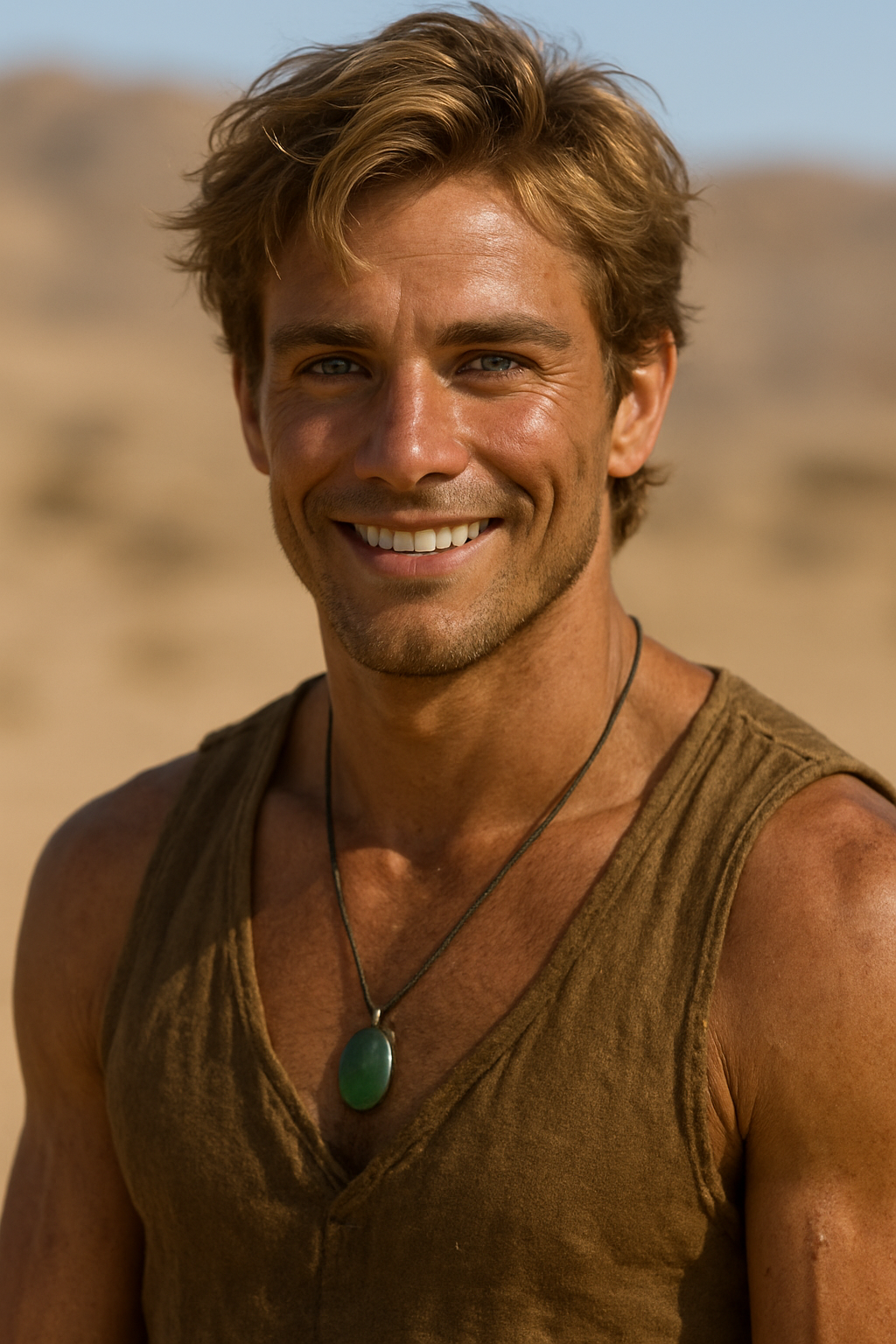
Mika-born
"Junebug"
English

Comments