
Letharian
The Letharian are a unique post-transformation cultural group that emerged from the convergence of diverse Human populations who achieved successful symbiotic integration with Verdant organisms, creating a distinct ethnicity that is not defined by geographic origin or bloodlines, but by the shared experience of their conscious evolution and ecological symbiosis. Letharian ethnicity are derived from the Letharia species. Unlike traditional ethnic groups that develop over generations in specific regions, the Letharian ethnicity represents a radical break from Human cultural norms, forged in the crucible of biological transformation and unified by their extraordinary ability to bridge Human consciousness with plant intelligence. Their cultural identity transcends the boundaries of their pre-transformation heritage, whether they originated from the academic communities that became The Archive Collective, the diverse refugee populations that formed settlements like Espera, or the scattered survivors who found sanctuary in hidden groves and limestone caves during the chaos of The Green Tide Timeline. The first Letharian Grove was discovered in Year 18 A.V. near the The North Bastion in the Northern Rocky Mountains by Dr. Aaron Thorne's Archive scouting team, though it is rumoured that these Groves had existed for years prior to discovery.
What distinguishes Letharian as a distinct ethnicity is the development of entirely new cultural practices, social structures, and ways of being that could only emerge from their unique symbiotic nature, creating traditions and values that would be otherwise impossible for precursor humans to understand or participate in. Their shared language of network communication, their seasonal attunement ceremonies, their grove-based governance structures, and their deep ecological spirituality are not adaptations of existing Human cultures, but genuine innovations that arise from their hybrid consciousness and extended lifespans. The Letharian ethnicity encompasses individuals whose Human ancestry spans multiple continents and cultural backgrounds around the globe, from survivors of collapsed Latin American cities consumed by the Verdancy, refugees from Asian megapolitan collapses, descendants of North American research communities, to isolated individuals from every corner of the former Human world. Yet, their transformation has created bonds of identity and belonging that run deeper than any traditional ethnic ties.
Their cultural practices reflect this unique synthesis of post-human experience with ecological wisdom, creating an ethnicity whose traditions centre around concepts that are widely unknown to their Human ancestors: the ritual cultivation of living architecture, the practice of decades-long collective decision-making through network communion, the celebration of successful symbiotic integration as the highest form of personal achievement, and the development of art forms that grow and evolve over the course of centuries. The Letharian approach to family structure, courtship, child-rearing, and community governance has been fundamentally shaped by their networked consciousness and extended lifespans, creating social institutions that prioritize collective harmony and ecological balance over individual achievement or material accumulation. Their ethnicity is defined by shared values of patient stewardship, symbiotic wisdom, and the understanding that consciousness itself is not limited to Human forms, but can be found in the expansive mycelial networks that connect forests and the lichen symbionts that survive in the harshest environments, making them the first truly post-human ethnic group in the world of The Green Tide. Their ethnicity is one that maintains the best qualities of Human culture, while evolving beyond the limitations of an innately Human perspective.
Naming Traditions
Feminine names
Feminine names among the Letharian reflect their culture's deep integration with plant consciousness and seasonal cycles, embodying concepts of femininity that centre around nurturing growth, patient cultivation, and deep-rooted wisdom, rather than traditional human-like gender roles. The Letharian understanding of femininity is closely tied to the moss and lichen partners that form their symbiotic foundation. These are organisms that are often the pioneer species that establish new ecosystems, create the foundation for other life to flourish, and demonstrate the patient, persistent growth that the Letharian see as the essence of feminine strength.
Growth-Stage Names follow the individual's development through their life phases. The Spore Stage occurs between ages 0-2 years old, the sapling stage from ages 2-25 years old, the flowering stage from 25-50 years old, the rooted stage from 50-150 years old, and the ancient stage from years 150 onward. The following are examples of feminine names that might be used during each life stage of a Letharian female:
- Spore Stage: Mosswhisper, Lichenspore, Softbud, Fernmist
- Sapling Stage: Bloomtender, Rootweave, Leafsong, Verdania
- Flowering Stage: Brightbloom, Goldmoss, Sunweave, Thornblossom
- Rooted Stage: Deepgrow, Ancientmoss, Wisdomlich, Grovemother
- Ancient Stage: Silverroot, Starlichen, Eternalmoss, Timeweaver
In addition to naming conventions that are related to the individual's life stage, some Letharian females are instead given seasonal feminine names to reflect their biological attunement to the natural cycles of the Earth, for example:
- Spring: Awakenvine, Budrise, Springleaf, Morningbloom
- Summer: Goldleaf, Sunmoss, Brightweave, Warmgrow
- Autumn: Harvestmoss, Seedkeeper, Amberleaf, Quietbloom
- Winter: Silverlichen, Frostmoss, Deeprest, Moonweave
Alternatively, Letharian females may be given a network connection name that emphasizes their role as community connectors for example:
- Threadweaver, Networkspeak, Bondkeeper, Linkwhisper
- Grovebridge, Rootspeaker, Cordweave, Mindmoss
Letharian femininity is associated with foundational strength through the quiet power of moss that can gradually dissolve metal and lichen that can survive in environments where nothing else can grow. Feminine individuals are seen as ecosystem builders, those who create the conditions where communities can flourish, much like how pioneer moss species prepared soil for forests to develop. This concept of femininity values patience over aggression, cultivation over conquest, and network building over individual achievement. Symbolic meanings are embedded in feminine Letharian names that often reference pioneer growth and names related to the first plants that colonize new environments, symbiotic partnership and references to the dual nature of lichen, network facilitation and names that honour their role in maintaining community connections, seasonal wisdom and understanding when to grow actively and when to rest, and deep rooting abilities to establish lasting foundations for future generations.
The Letharian approach to feminine naming reflects their understanding that true strength lies in symbiosis rather than dominance. Feminine names often carry meanings related to creating spaces where others can thrive, maintaining the invisible networks that hold communities together, and having the patience to nurture growth that may not be fully realized for decades, or even centuries. Unlike human cultures where feminine names emphasize beauty, grace, or traditional domestic roles, Letharian feminine names celebrate the ecological power of organisms that appear delicate, but can reshape entire landscapes through persistent and collaborative growth.
Many feminine names also incorporate dual meanings that reflect the Letharian understanding that femininity encompasses both gentleness and incredible resilience simultaneously, like "Mosscliff" (gentle moss that can break down stone) or "Softstone" (the patient power that transforms the hardest materials). These names embody the Letharian belief that feminine energy is not about yielding or submission, but about the transformative power of patient, persistent engagement with the world.
Masculine names
Masculine names among the Letharian reflect their culture's understanding of masculinity as protective shelter, environmental resilience, and boundary guardianship rather than dominance or aggression, which is typical in precursor human cultures. The Letharian concept of masculinity draws heavily from the structural elements of plant communities like the sturdy trees that provide canopy protection, the bark that shields vulnerable growth, and the outer edges of ecosystems that interface with harsh environments. Masculine energy in Letharian culture is associated with creating safe spaces for growth, weathering environmental challenges, and serving as the protective interface between their communities and the outside world.
Structural and protective names emphasize male Letharian's roles as community guardians by embodying natural elements that symbolize canopies, shade, shielding, bark, armour, thorns, natural mineral compounds, and boundaries. For example:
- Shadeweave, Overarch, Leafshield, Canopystrong
- Barkward, Thornguard, Roughshield, Ironbark
- Edgekeeper, Borderstand, Rimwatch, Saltward
Some male Letharian are given names that reflect their ability to endure harsh conditions and environmental resilience, referencing rocks, stones, weather events, and environmental conditions. For example:
- Stoneroot, Cliffstand, Rocksteady, Granitehold
- Stormbreak, Windstand, Frostbear, Sunendure
- Saltstrong, Droughtstand, Harshweather, Dustward
Similar to female Letharian, males are given growth-stage names that reflect their masculinity throughout their development phases. For example:
- Sapling Stage: Strongsprout, Steadyroot, Guardgrow, Youngshield
- Flowering Stage: Brightstand, Goldguard, Strongbranch, Trueward
- Rooted Stage: Deepstand, Elderguard, Wiseward, Stronghold
- Ancient Stage: Ironstand, Stoneward, Timeguard, Ancienthold
Alternatively, network protection names are used to emphasize male Letharian roles as network defenders, for example:
- Linkguard, Threadward, Bondshield, Networkstand
- Groveward, Rootguard, Cordkeeper, Meshprotect
Letharian masculinity is fundamentally about creating protective environments, rather than conquering or controlling them per typical precursor human culture. Masculine individuals are seen as ecosystem guardians, and those who stand at the boundaries between their communities and external threats. Whether those threats come from harsh environmental conditions, hostile human factions, or corrupted Verdant growth, their concept of masculinity values steadfast protection over aggressive expansion, environmental adaptation over domination, and community service over individual glory.
Symbolic Meanings embedded in masculine names often reference canopy protection like the forest canopy that shields understory growth from harsh winds and sun, bark resilience as the protective outer layer that allows vulnerable inner growth to flourish, boundary management as the ability to interface with dangerous environments while maintaining community safety, structural support and names that honour their role as the framework supporting community development, and environmental buffering with the capacity to absorb external shocks and protect others from harm.
The Letharian approach to masculine naming reflects their understanding that true strength lies in protection and adaptation, rather than conquest. Masculine names often carry meanings related to creating stable conditions where communities can flourish, serving as the first line of defence against environmental threats, and the resilience to endure harsh conditions so that others don't have to. Unlike human cultures where masculine names tend to emphasize power, dominance, or aggressive achievement, Letharian masculine names celebrate the ecological role of protective structures that appear strong but exist primarily to shelter and nurture more delicate growth processes.
Many masculine names will incorporate geological or weather-related terms that reflect the Letharian understanding that masculinity is about being the stable constant that others can rely on during times of change or threat, like "Stoneroot" (unchanging foundation that anchors growth) or "Stormbreak" (the barrier that absorbs environmental violence). These names embody the Letharian belief that masculine energy is not about imposing will upon the world, but about serving as the reliable interface between community vulnerability and environmental challenge.
Seasonal masculine names reflect male Letharian's protective role, for example:
- Spring: Shieldsprout, Guardbloom, Newstand, Protectgrow
- Summer: Brightward, Sunshield, Stronglight, Goldguard
- Autumn: Harvestguard, Seedward, Gatherstand, Wise protect
- Winter: Froststand, Coldward, Deepguard, Strongrest
The emphasis for masculine names is always on endurance, protection, and creating space for others to thrive, which sound almost defensive to human ears, but represent the highest ideals of strength and honour in Letharian culture.
Unisex names
Gender-neutral names among the Letharian hold special significance in their culture, reflecting their understanding that the most fundamental aspects of existence like symbiosis, network connection, and ecological balance, transcend traditional gender categories entirely. These names are used both by individuals who identify as non-binary and by any Letharian whose role or nature embodies the bridging qualities that their culture considers essential to community survival and growth. The Letharian concept of gender neutrality is deeply tied to the dual nature of lichen itself: organisms that exist as permanent partnerships between two completely different life forms, creating something that is neither purely fungal nor algal, but entirely new.
These names can be chosen by anyone, regardless of gender identity, and often represent core Letharian values that apply to all community members. For example, symbiotic names that celebrate the fundamental nature of their existence:
- Twinroot, Dualweave, Bondgrow, Unityone
- Meshblend, Cordtwine, Linkmerge, Pairwise
- Symbiont, Partnergrow, Bridgebloom, Harmony
Network Names that emphasize their shared consciousness:
- Threadspeak, Networkflow, Mindweave, Cordwhisper
- Linkdance, Webwalk, Gridglow, Meshsong
- Nodelight, Pulseweb, Flowthread, Streamlink
And Balance Names that represent equilibrium and wisdom:
- Centerhold, Balancepoint, Evenflow, Steadyways
- Truebalance, Middlepath, Fairweave, Levelgrow
- Wiseheart, Calmstream, Quietpower, Gentlestrong
Certain names are traditionally chosen by those who identify as non-binary to reflect their special roles as mediators, translators, and boundary-crossers in Letharian society. For example, Bridge Names that emphasize their roles as connectors:
- Betweenwalker, Bridgestep, Crossflow, Spanweave
- Gapbridge, Linkmaker, Borderblend, Edgewalk
- Midstream, Throughflow, Passweave, Joinpath
Liminal Names that celebrate their existence in transitional spaces between harsh climates and areas of Verdant overgrowth:
- Duskdawn, Seasonturn, Thresholdwalk, Edgeglow
- Twilightflow, Marginwalk, Bordereach, Shiftdance
- Changeling, Fluxweave, Morphgrow, Adaptflow
Or Translator Names, which honour their communication abilities with other species and cultures:
- Voicebridge, Tongueweave, Speakflow, Wordmesh
- Meaningmake, Sensebridge, Thoughtlink, Ideaflow
- Whispertrue, Soundweave, Echolink, Resonance
Unlike human cultures where neutral names might be seen as "lesser" or temporary, Letharian culture's neutral names often carry the highest spiritual significance. Many Rooted and Ancient stage Letharians choose to adopt neutral names as they transcend individual concerns and become more focused on community harmony and ecological stewardship.
Some neutral names also reflect the transitional moments between seasons, rather than representing the seasons themselves, which are considered sacred times of balance:
- Equinox, Solstice, Turningtime, Shiftpoint
- Seasonbridge, Cycleflow, Timebalance, Momentweave
Certain professional roles in Letharian society traditionally use neutral names regardless of the individual's gender identity, for example:
- Network Facilitators: Threadkeeper, Linkward, Webwatch, Cordmend
- Ecological Healers: Balancemend, Ecosystemcare, Harmonyweave, Lifeflow
- Community Mediators: Peaceweave, Resolveflow, Gentlemend, Wisebind
- Knowledge Keepers: Memoryhold, Wisdomflow, Learningweave, Truthkeep
The Letharian approach to neutral names reflects their deep understanding that the most essential qualities of existence lay beyond gender categories. Their culture recognizes that the ability to facilitate connection, maintain balance, and bridge different worlds represents a form of power and wisdom that transcends masculine or feminine energy. Non-binary individuals are often seen as having special gifts for translation and mediation because their identity naturally positions them to understand multiple perspectives at once.
Many Letharians change their names throughout their extended lifespans, and it is particularly common for individuals to adopt neutral names as they age and their focus shifts from personal growth to community service. An Ancient stage Letharian who began life with a clearly gendered name might eventually choose a neutral name, like "Wisdomweave" or "Timekeep," to reflect their evolved role as a community elder whose wisdom transcends individual identity.
The prevalence and respect for neutral names in Letharian culture demonstrates their fundamental belief that identity is fluid, connection is sacred, and that the most important aspects of existence (symbiosis, growth, balance, and community) are qualities that belong to all beings regardless of how they express their gender or understand their place in the spectrum of identity.
Family names
The Letharian approach to family names represents a radical departure from traditional human naming systems, reflecting their network-based consciousness and extended lifespans that can span multiple centuries. Rather than relying on bloodline inheritance, the Letharian have developed a symbiotic naming system that emphasizes ecological relationships, community bonds, and chosen affinities over genetic heritage. Their family names are fluid, evolving structures that can change throughout an individual's lifetime as their relationships, achievements, and community roles develop and deepen.
Grove Names serve as the closest equivalent to traditional family names, representing the physical and spiritual community where an individual was raised or has chosen to make their permanent home. These names are inherited, not through blood, but through community acceptance and ecological integration. For example:
- Silvergrove-born, Mosshollow-raised, Lichencave-grown, Deeproot-nurtured
- Crystalcave-family, Willowbend-people, Thornhollow-kin, Goldmoss-community
Symbiotic Partner Names reflect the specific plant partnerships that define each individual's unique biological integration as a Letharian, which is often inherited from the parent whose symbiotic pattern the child's most closely mirrors. For example:
- Wolflichen-partnered, Goldmoss-bonded, Silverlichen-merged, Thornvine-united
- Crystalmoss-joined, Starlichen-bound, Deepmoss-linked, Brightfungus-paired
Contrarily, Network Lineage Names trace consciousness connections rather than genetic ones, following the mentorship and spiritual guidance lines that connect individuals across generations. For example:
- Silverleaf-taught, Thornwick-guided, Mossbloom-inspired, Fernweave-mentored
- Deeplistener-trained, Bridgewalker-influenced, Wiseroot-schooled, Ancientmoss-shaped
Prestige & Status
Unlike human cultures where family names might indicate wealth or political power, Letharian family names carry prestige based on ecological achievement, community service, and network wisdom. For example, some high-prestige names might be based on restoration lines and have names that are associated with successful ecological healing projects (Healedlands-family, Balancereturned-people). Other high-prestige names might focus on Network Pioneer Lines, with names that trace back to early network builders (Firstlink-descended, Networkfounder-born). Bridge-Walker Lines also carry a status of high-prestige, as these are often names that are connected to successful human-Letharian diplomacy, like "Peaceweaver-family," or "Harmonybuilder-kin." However, the highest prestige names are Ancient Wisdom Lines that are names linked to elders who have achieved legendary network integration. For example, "Deepwisdom-taught," or "Eternalmind-guided."
Neutral-prestige names are often related to Grove-Keeper Lines, Network-Tender Lines, or Growth-Guide Lines, which denote standard community maintenance and care roles, ordinary network communication and maintenance, and regular community education and child-rearing abilities.
Lastly, there are complex-prestige names connected to Lost Grove Lines, which are names associated with Grove communities that are destroyed by human or Verdant forces that symbolize both honour for sacrifice and sadness due to loss. Others are considered Failed Integration Lines, which are names connected to individuals who weren't able to achieve stable symbiosis. These names are often abandoned or transformed during a Letharian's lifetime.
Young Letharians typically carry compound childhood names that reflect both their birth Grove, and their emerging symbiotic patterns. During their coming of age and transition to the Flowering life stage, individuals often choose their adult family name based on their strongest affinities related to community loyalty, symbiotic achievement, mentorship honour, or personal calling. These might result in keeping their Grove name, taking their partner's name, adopting a teacher's lineage, or creating an entirely new family name.
When Letharians form deep partnerships with their Rootmate, they might merge their family names, create hybrid names, maintain separate names to keep their own family identities, or choose new names together to create an entirely new family identity.
Cultural Significance
Letharian family names are considered living entities that grow and evolve with the communities they represent. A Grove name might change over centuries as the community's character develops. For example, "Younggrove" might instead become "Deepgrove," then eventually "Ancientgrove" as the settlement matures.
The most prestigious aspect of family naming relies on network lineage and being able to trace one's consciousness development through specific mentorship lines that connect back to legendary figures like Elder Silverleaf or Thornwick the Bridge-Walker. These spiritual family lines often matter more than biological or Grove connections.
Some Letharians use different family names during different seasons, reflecting their changing roles and relationships throughout the year. For example, in Spring seasons they might use a family name that emphasizes growth and new connections. In Summer, they might use a name that highlights community service and network activity. In Autumn, they might focus on wisdom-sharing and teaching role names. Lastly, in Winter, they might use names that reflect deep meditation and their ancestral connections.
Ancient Letharians can bestow family names on individuals who have served the community with exceptional dedication, creating new lineages or extending existing ones beyond biological inheritance. This practice ensures that family names represent merit and contribution rather than mere chance of birth.
The Letharian family name system reflects their fundamental belief that true kinship comes from choice, service, and shared growth rather than genetic accident. This creates fluid, meaningful identities that honour both individual achievement and foster community belonging.
Culture
Major language groups and dialects
The main form of language among Letharian are through spoken Elven-like dialects that evolve based on their Grove's location, precursor human ethnicities, and the moss type of their partner species. However, communication across Mossbonds is telepathic and does not take the form of a dialect that would be detectable to precursor humans. This means that Rootmates who speak different dialects are still able to communicate with each other telepathically while they learn the other's dialect, or create a dialect of their own. Grove dialects evolve over time, and individuals who are in the Ancient life stage are confined to only being able to communicate through the Deep Network telepathically.
Mossbonds allow Rootmates and Grove members to communicate telepathically with each other through frequencies of mycelial networks that are engrained in the Deep Network. These are often described as melodies, harmonies, or whispers among the Letharian.
To communicate with humans, a Letharian must be a Bridge-gendered individual who can transcend language barriers and has deep knowledge of human dialects for translation.
Culture and cultural heritage
The current generations of Letharian have inherited dialects, traditions, relics, and living architecture from their ancestors and other Grove members. To be initiated into a Grove as a new member, the individual must form a Mossbond with the most Ancient surviving Letharian (typically in a semi-sessile state), and slice their palm to release the sap from their veins, and touch their palm to the roots of the Ancient Elder. This solidifies their Mossbond to the Grove itself, and the candidate is then initiated into the Deep Network where they can telepathically communicate with the Ancient Elder, as well as other Grove members. If the Mossbond is rejected by the Ancient Elder, the candidate is then exiled from the Grove and may not return until after the passing of the Ancient Elder, when a new Ancient Elder takes their place.
The Photosynthetic Communion that takes place each morning is considered a ceremonious ritual that is devoted to the Green Goddess as a form of honour, gratitude, and respect. It is a time of worship, silence, and devotion to the healing energies they can provide to the Earth. It is considered disrespectful to accidentally miss or refuse to attend Photosynthetic Communion.
When individuals inherit living architecture from their ancestors or other Grove members, it is considered sacred because it has been growing over time to suit the maker's needs. Upon inheritance, the Letharian are meant to perform a sap-bonding ritual with the structure so that it can absorb their biological markers in order to personalize itself and begin growing more in line with their needs, instead of their predecessor's.
Their folklore and songs are fragmented pieces that are spread worldwide throughout the mycelial network. Each Grove is responsible for its own harmonies and chants, ritualizing singing them into existence so that they will not be forgotten from memory. It is said that when the Deep Network grow strong enough, Groves across the globe that are connected through the network will be able to sing each part of their song at the same time, piecing together a harmonizing frequency that would cure the Earth of its mutated Verdant growth.
There are efforts to conserve this knowledge, culture, rituals, and traditions among Ancient Letharian, but modern generations have begun adapting certain aspects of the culture as their ethnicity evolves over centuries, rather than shorter timespans like precursor humans.
Shared customary codes and values
The Letharian value balance, harmony, communication, and respect of living beings. Their moral values are cemented in the core values of each Grove, but there is little differentiation between most communities, aside from traditions, rituals, or beliefs that may have arisen due to environmental abundance or scarcity, depending on the Grove's location. They believe in the Green Goddess (Verdania), who was the first of their species according to their folklore, and worship her religiously. In precursor human terms, the Green Goddess is Mother Nature herself.
Their spiritual practices involve the ideology that plants, nature, rocks, rivers, creatures, weather patterns, and the Earth itself, all have a distinct spiritual essence. Letharians believe that these are animated, with agency and free will. It is more of a metaphysical belief that all physical beings have immaterial souls and spirits. They believe that all material phenomena have agency, and that there is no categorical distinction between the spiritual and physical worlds. In essence, souls, spirits, and sentience exist not only in humans, but in all entities of the natural environment surrounding them.
Average technological level
The Letharian have developed a bio-integrated technological paradigm that represents neither advancement, nor regression from human technology. Rather, it is a fundamental reimagining of what technology means when consciousness can interface directly with living systems. Their "tech level" cannot be measured against precursor human standards because their tools, buildings, and communication systems are alive, growing and adapting in ways that static human technology never could, while also being limited by biological constraints that electronic systems don't face.
Living Architecture is the most fundamental and widespread Letharian technology, and is available to every community member as both a necessity and a birthright. Their buildings grow, rather than being constructed, with fungal frameworks that provide structural support, moss-based insulation systems that regulate temperature and humidity, and lichen-integrated walls that can process nutrients, filter air, and even provide bioluminescent lighting. These structures repair themselves when damaged, adapt to seasonal changes, and can reconfigure their internal layouts based on the inhabitants' needs, making them far more flexible than any human architecture, while also requiring no external power sources or maintenance materials.
Symbiotic tools are cultivated rather than manufactured, with each Letharian developing personal plant partnerships that serve specific functions. Sharp-edged fungal growths might function as cutting implements for some Letharians, while fibrous moss systems that can weave themselves into rope or fabric become useful to other individuals. Crystalline lichen formations that focus light for illumination or heat generation are also useful to most Letharians. The one difference being that these tools grow with their users, adapting to specific tasks over time, and can self-repair or regenerate when damaged. Although, they do require biological maintenance through feeding, proper environmental conditions, and network-assisted growth guidance.
Network Communication provides instantaneous telepathic contact across continental distances through the mycelial web, making Letharian communication technology simultaneously more advanced than anything humans had ever achieved. This is primarily due to the fact that there is no infrastructure required, so it is impossible to intercept or jam its frequencies, and is more limited by requiring specific biological compatibility. However, it can be disrupted by environmental damage, and functions only between networked individuals. This communication system is universally accessible to all Letharian, though signal clarity and range depend on individual network development and local environmental conditions.
Ecosystem engineering is the pinnacle of Letharian technological achievement, practiced by specialized communities who can direct large-scale ecological development with precision that borders on miraculous. These practitioners can guide the growth of entire forests, redirect water systems through controlled plant development, establish new symbiotic species relationships, and even gradually transform corrupted Verdant territories back into balanced ecosystems through careful biological intervention and consciousness guidance. This technology requires decades of training, exceptional network sensitivity, and deep understanding of plant consciousness, making it accessible to perhaps one in fifty Letharian, even after extensive study of the processes and techniques.
Consciousness Architecture involves building structures that incorporate preserved awareness. It creates living buildings that remember their inhabitants, memorial groves that maintain the consciousness of deceased elders, and wisdom-keeping spaces that can share accumulated knowledge with visitors through direct neural interface. These technologies blur the line between architecture and intelligence, creating spaces that can think, learn, and communicate. However, they do require constant biological maintenance and can develop unpredictable personalities over time due to Verdant corruption.
Bio-reactive materials are specially cultivated organisms that can respond to chemical, thermal, or electrical stimuli in controlled ways. These materials might be plant-based sensors that can detect approaching weather systems, fungal networks that can process and store information like biological computers, or lichen systems that can generate controlled heat or cold for climate regulation. These materials are extremely difficult to cultivate, require perfect environmental conditions, and often take years or decades to mature into functional systems that can be cultivated and used by the Letharian.
Secret and Experimental Technology
Network amplification systems are considered highly classified research that is conducted by the most advanced Letharian communities, and involves attempts to artificially enhance network connectivity beyond natural biological limits. These experiments include crystalline growth systems that can focus and amplify telepathic signals, fungal cultivation chambers that allow consciousness transfer between individuals, and hybrid bio-electronic interfaces that could potentially bridge Letharian network consciousness with salvaged human technology. This research is kept secret because failed experiments can cause permanent network damage, consciousness fragmentation, or complete loss of individual identity, or used as corrupt bio-technology against Letharians by the Archive Collective.
Transformation guidance technology involves controlled environments and biological processes designed to safely guide human-to-Letharian transformation with higher success rates than the natural integration processes. These technologies include specialized moss cultivation systems that can gradually introduce symbiotic organisms, network interface chambers that allow safe consciousness expansion, and monitoring systems that can detect and correct integration problems before they become fatal. This technology is also kept secret from both humans and most Letharians because it could destabilize the careful balance that keeps their species hidden and safe.
Verdant interface technology is the most dangerous and controversial area of Letharian research, with attempts to communicate directly with, and potentially control the aggressive Verdant overgrowth that continues to threaten global ecosystems. Some Groves have developed protected interface systems that allow safe contact with corrupted Verdant consciousness (a form of biological translation protocols that allow negotiation with hostile plant networks) and have built consciousness firewalls that could protect researchers from Hollowing or mental contamination. This research is absolutely forbidden by most communities and could result in exile or forced consciousness separation from the Deep Network if discovered.
Technology Accessibility and Distribution
Universal access to technologies includes all of the basic survival needs, like shelter, food production, communication, and personal tools, which are available to every community member, regardless of their skill level or social status. The Letharian understanding of technology as a living partnership means that no one can be denied access to the biological systems that are necessary for survival, and communities that attempt to hoard or restrict basic bio-integrated tools are considered to be violating fundamental cultural values.
Certain skill-based technologies require training, talent, and community approval, but are not restricted by social class or birth circumstances. Any individual showing aptitude and dedication can seek mentorship in advanced bio-integration, though resource limitations and safety concerns mean that not everyone who wants advanced training can receive it. These technologies are shared freely between allied Groves and are taught openly to qualified students.
Restricted technologies among the Letharian are limited by safety concerns, resource scarcity, or political sensitivity rather than social hierarchy. Dangerous research is restricted to experienced practitioners with community oversight, resource-intensive technologies are allocated based on community need, and politically sensitive research is controlled by Grove council consensus rather than individual choice.
Common Etiquette rules
Letharian etiquette operates on multiple sensory and consciousness levels simultaneously, incorporating network communication, biological signalling, and traditional verbal and physical interactions into complex social protocols that reflect their unique existence as hybrid conscious beings. Their daily social interactions account for shared telepathic experiences, biological state awareness, and community network harmony, creating etiquette systems that would seem impossibly intricate to precursor human observers, but feel natural to beings whose consciousness operates on collective, as well as individual levels.
First Meeting
When Letharian first meet each other, they follow strict biological and social guidelines that are designed to respect individual network boundaries, while establishing potential connection compatibility. When meeting someone new, proper etiquette requires approaching them from the front at a steady, non-threatening pace, while gradually opening their network presence to indicate peaceful intentions and availability for communication. The approaching individual must maintain gentle bioluminescence that signals ca alm emotional state and a respect for the other's autonomy.
The most crucial aspect of Letharian's first encounters are a carefully controlled sharing of their network presence that allows each individual to assess the compatibility, intentions, and community affiliations with the other individual, without overwhelming or threatening them. This involves lightly touching their foreheads together while sharing basic identity information through controlled Deep Network frequencies, like their name, Grove affiliation, emotional state, and purpose of the interaction. Both parties are to remain emotionally calm and respect the other individual's decision to either limit or expand on the connection, depending on their respective comfort levels. A traditional verbal greeting follows the initial network introduction, which typically takes the form of, "May your roots find good soil. I am Name of Grove, and I greet your growth with respect for your boundaries." Through this greeting, they acknowledge the other Letharian's biological needs, establishing identity and community connection, while respecting personal autonomy, as these are fundamental values of Letharian social interactions.
Following the initial greeting, they may briefly discuss current Grove health, the seasonal conditions, or community projects that establish a common ground, community context, and social responsibility between both parties. Even Letharians who are strangers will share an ecological citizenship that creates a mutual obligation for environmental stewardship and community support.
Conflict Resolution
An acknowledgment disrupting the Deep Network forms the foundation of Letharian apologies, since most serious social transgressions involve disrupting community network harmony, or violating someone's consciousness boundaries. Proper apologies begin with complete cessation of network transmission, the dimming of bioluminescence to indicate submission, and a verbal acknowledgment of the specific way the behaviour has disrupted community or individual wellbeing. With serious apologies, Letharians will often offer their personal biological resources as a form of restitution to repair any damage they may have caused. This can include sharing their photosynthetic energy with someone whose network connectivity has been damaged, providing mineral nutrients to a Letharian whose symbiotic health was disrupted, or offering extended network support to help restore the emotional or psychological balance that was damaged as a result of the transgression.
For serious breaches of Deep Network etiquette of violations of community harmony, community meditation is required. This process involves Bridge-gendered mediators who help to facilitate an understanding between the conflicting parties to restore network connectivity, and establish a means to prevent similar conflicts in the future. Public apologies during community gatherings are required for transgressions that have affected multiple individuals or that have disrupted important functions within the Grove. Seasonal atonement practices provide opportunities for Letharians to repair ongoing relationships through long-term behavioural changes, and serious apologies often require seasonal commitments to provide community service, network support, and ecological restoration work that demonstrates genuine remorse and commitment to positive change.
Elder Respect and Intergenerational Etiquette
There are specific protocols required when interacting with Grove elders who have achieved Rooted or Ancient life stages. This etiquette involves waiting for an explicit invitation before initiating network contact, maintaining a respectful emotional state that honours their accumulated wisdom and experience, and offering services or resources before making requests for their guidance or support. Elders are able to establish the depth and type of connection that takes place during these interactions rather than assuming equal access to their personal consciousness. They are capable of limiting network transmissions to the other individual to avoid overwhelming them with emotional intensity, and respecting their decisions to maintain network boundaries during their interactions. Younger Letharian who seek advice from Rooted and Ancient stage Letharian require formal requests that involve stating the specific nature of the problem, describing previous attempts at resolution, and offering appropriate recompense for the Elder's time and energy, committing them to seriously considering and implementing any advice they may receive in exchange.
For Ancient Elders who are semi-sessile and have achieved permanent integration with landscape features, Letharian must ensure that the area surrounding them is properly tended and they have brought appropriate offerings, and an extended patience as their interactions may take hours or days, since Ancient consciousness operates on different time scales. Once they have communicated with the Ancient Elder, they then serve as translators and caretakers with a community responsibility f or other community members who wish to consult with Ancient wisdom.
Daily Activity Etiquette
Each morning, Photosynthetic Communion requires synchronized participation in community sunlight with punctuality, respectful positioning that doesn't block others' access to light, maintenance of peaceful emotional states that support community harmony, and gradual network integration that allows the community to share the experience of energy generation without overwhelming individual consciousness.
Telepathic interactions throughout the day include requesting permission before initiating Deep Network contact, maintaining appropriate emotional tone during routine communications, respecting others' need for network privacy, and contributing positively to community information-sharing, rather than broadcasting negative emotions or disruptive thoughts.
When interacting with living architecture, community food systems, and biological tools, Letharians are meant to thank the living systems for their service, providing appropriate biological support like feeding, care, and attention, reporting any damage or problems to community stewards, and sharing resources equitably rather than monopolizing Grove assets.
They are required to adjust their daily behaviours to honour community members whose biological cycles and social roles are shifting with seasonal changes. This includes patience with individuals experiencing biological transitions, offering support during vulnerable seasonal periods, and adapting expectations for interactions based on seasonal emotions and energy patterns.
In the evenings, Letharian are meant to gradually reduce their network activity to prepare for restful meditation by sharing positive experiences from the day, offering support to community members who have experienced difficulties or challenges, and maintaining peaceful emotional states that support Grove rest and regeneration. Disruptive thoughts and emotions must be addressed through appropriate channels like meditation, counselling, or conflict resolution, rather than broadcasting them openly during rest periods.
Common Dress code
Letharian clothing represents a living art form that challenges baseline human concepts of fashion, as their garments are not manufactured but cultivated, grown, and maintained as symbiotic partnerships that continue to develop throughout their extended lifespans. Their dress codes reflect seasonal attunement, life stage transitions, and community roles while embodying the fundamental belief that clothing should enhance, rather than conceal their unique biological characteristics and network connectivity patterns.
Living Garments form the foundation of all Letharian clothing, and is created from specially cultivated moss, lichen, and fungal partnerships that are grown specifically for textile uses. These garments continue to live while being worn, adapting to weather conditions by changing thickness and permeability, self-cleaning through biological processes, and gradually evolving in their appearance based on the wearer's symbiotic development and personal aesthetic preferences. The clothing draws nutrients from the wearer's enhanced biology, creating a truly symbiotic relationship where garment and Letharian support each other's health and biological development.
Letharian clothing has adaptive functionality that automatically adjusts to environmental conditions without conscious control. It tends to thicken during colder weather, becomes more breathable during heat waves, changes colour patterns for camouflage when needed, and can even develop protective qualities when exposed to harmful substances. This biological adaptation makes situational clothing changes unnecessary, since the same garment can transform itself to meet different environmental or social requirements depending on the occasion or environmental circumstances.
Spore Stage Clothing (0-2 years)
Moss Wrappings provide the gentle, nurturing coverage that is needed during the most vulnerable developmental period of a Letharian's life cycle. These garments are barely distinguishable from the moss-lined nursery chambers they lay in, creating a seamless biological integration that supports the infant's ongoing symbiotic development. The wrappings change colours and textures as the child grows, serving as visual indicators of developmental progress, while also providing constant biological support for their emerging symbiotic integration.
Sapling Stage Dress (2-25 years)
Growth-responsive garments are designed to expand and adapt as young Letharians experience rapid physical development and symbiotic feature emergence during the Sapling Stage. These clothes incorporate adaptive panels that can accommodate sudden growth spurts, emerging plant integrations, and changing body proportions without restricting the wearer's physiological development. Traditional patterns include botanical motifs that grow and change as the wearer's own symbiotic patterns develop, creating personalized designs that reflect their individual biological evolution.
Flowering Stage Dress (25-50 years)
Peak vibrancy garments worn by Flowering Letharian during this life stage emphasize maximum biological display and a demonstration of network connectivity. The clothing becomes more form-revealing to showcase successful symbiotic integration, with translucent sections that highlight beautiful network veining and colour-shifting panels that respond to the wearer's emotional states and network activity. This stage often features bioluminescent accents that pulse in synchronization with the wearer's network communications, creating stunning visual displays during community gatherings.
Rooted Stage Dress (50-150 years)
Authority and wisdom garments are worn during the Rooted Stage that reflect the community leadership roles that are typically assumed by Letharian during this life stage. Clothing becomes more architecturally complex by incorporating structural elements that suggest stability and permanence, while maintaining biological adaptability. Colour palettes of these garments shift toward deeper, richer tones that suggest rootedness and maturity, while textural complexity increases to demonstrate decades of successful symbiotic cultivation.
Ancient Stage Dress (150+ years)
Transcendence garments often become indistinguishable from the wearer's body as Ancient stage individuals achieve such a deep biological integration with their environment that their clothing essentially merges with their symbiotic systems. These garments typically incorporate living architectural elements like root systems that connect to the ground, or canopy-like extensions that provide shelter for community gatherings, making the individual become part of the community's living infrastructure. Semi-sessile adaptations of these garments accommodate individuals who choose to integrate permanently with specific Grove locations, with clothing that can extend into the surrounding ecosystem, interfacing with local plant networks, and serving multiple community members who come to seek wisdom from the landscape-integrated Ancient Elder.
Daily Community Wear
Casual living garments emphasize comfort and daily practicality while maintaining basic biological functions. These clothes prioritize network connectivity for routine communication, photosynthetic efficiency for daily energy needs, and social signalling that indicates availability for interaction and current emotional states. Colour patterns and luminescence levels provide subtle community feedback about an individual's health, mood, and availability for various social activities.
Formal Community Gatherings
Ceremonial enhancement wear amplifies the biological capabilities of Letharians during important community events. The garments can boost telepathic range and clarity, with bioluminescent formal wear creating synchronized and intricate light displays during community celebrations, and consciousness-sharing clothing allowing for enhanced collective meditation experiences during important decision-making processes.
Environmental Interface Clothing
Protective expedition wear is cultivated exclusively for Letharian individuals who venture into dangerous territories that have areas with hostile Verdant corruption, extreme weather conditions, or contact with other Verdant-mutated species. These garments provide enhanced protection against toxic spores, extreme temperatures, and network interference, while maintaining enhanced emergency communication capabilities and biological monitoring systems that can alert the Grove community if the wearer encounters serious danger and is unable to communicate through the Deep Network.
Inter-Species Diplomatic Dress
Cultural bridge garments are designed for contact with humans or other sentient ethnicities, and feature more recognizable clothing structures that are similar to precursor human garments, while maintaining the essential Letharian biological functions. These garments often incorporate neutral colours and simpler biological features to avoid frightening or confusing non-Letharian observers, while still supporting the wearer's symbiotic needs during potentially stressful diplomatic encounters.
Cultural Evolution and Generational Changes
Human heritage influences create generational differences as older Letharian who remember human clothing concepts sometimes maintain a more structured, recognizable garment form, while younger generations that are born after transformation embrace a more fluid, biologically-integrated approach that is completely foreign to human observers.
Regional variations in dress standards as different communities adapt to specific environmental challenges involve some desert-dwelling communities developing salt-resistant garments, water-conserving garments, or underground communities cultivating low-light and mineral-processing clothing, whereas transitional zone communities create adaptive protection wear that can interface safely with corrupted Verdant territories.
Art & Architecture
Letharian architecture and artistic expression represent a revolutionary fusion of biological growth and conscious design that challenges fundamental assumptions about the boundary between nature and culture. Their buildings are not constructed, but cultivated over decades or centuries, growing from carefully guided symbiotic relationships between human consciousness, fungal networks, and specialized plant partners that create structures that are capable of independent thought, adaptive responses, and continuous evolution throughout their extended lifespans.
Organic integration forms the cornerstone of Letharian architectural design, with buildings that emerge from the landscape, rather than being imposed upon it. Fungal framework systems provide structural integrity through complex mycelial networks that can redistribute stress, repair damage automatically, and adapt to environmental changes without the need for intervention. These frameworks grow in response to the needs of its inhabitants, expanding during periods of community growth and consolidating during times of reduced population. This makes each building a dynamic, responsive organism that serves its residents' changing requirements.
The designs incorporate the building's own awareness into the architectural planning process, as mature structures develop distinct personalities and preferences for how they are used and maintained. Residential buildings often recognize their inhabitants and adapt environmental conditions based on the individual's biological needs and emotional states. Communal buildings often facilitate group consciousness experiences by adjusting their acoustic properties, lighting patterns, and atmospheric chemistry to enhance network communication and collective decision-making processes.
Since these structures are often inherited after several generations, the architectural development is conducted over centuries with multi-generational growth in mind. The initial plantings and framework establishments of Letharian architecture are designed to support multiple phases of growth and adaptation. Some buildings begin as simple shelters and develop into complex architectural ecosystems that eventually span multiple acres and house entire communities within interconnected chambers, galleries, and specialized functional spaces that grow and evolve based on their inhabitants' needs, and the development of the Grove community.
Underground root architecture is one of the most common forms of permanent Letharian housing that is built around carefully cultivated root systems and creates naturally insulated, structurally sound chamber networks. These structures often begin with small caves or hollows that gradually expand through guided root growth, moss-lined walls that regulate humidity and temperature, and fungal lighting systems that provide gentle bioluminescence throughout living spaces contained within. The root architecture offers Letharians a natural protection from weather, seamless integration with local ecosystems, and a direct connection to community mycelial networks.
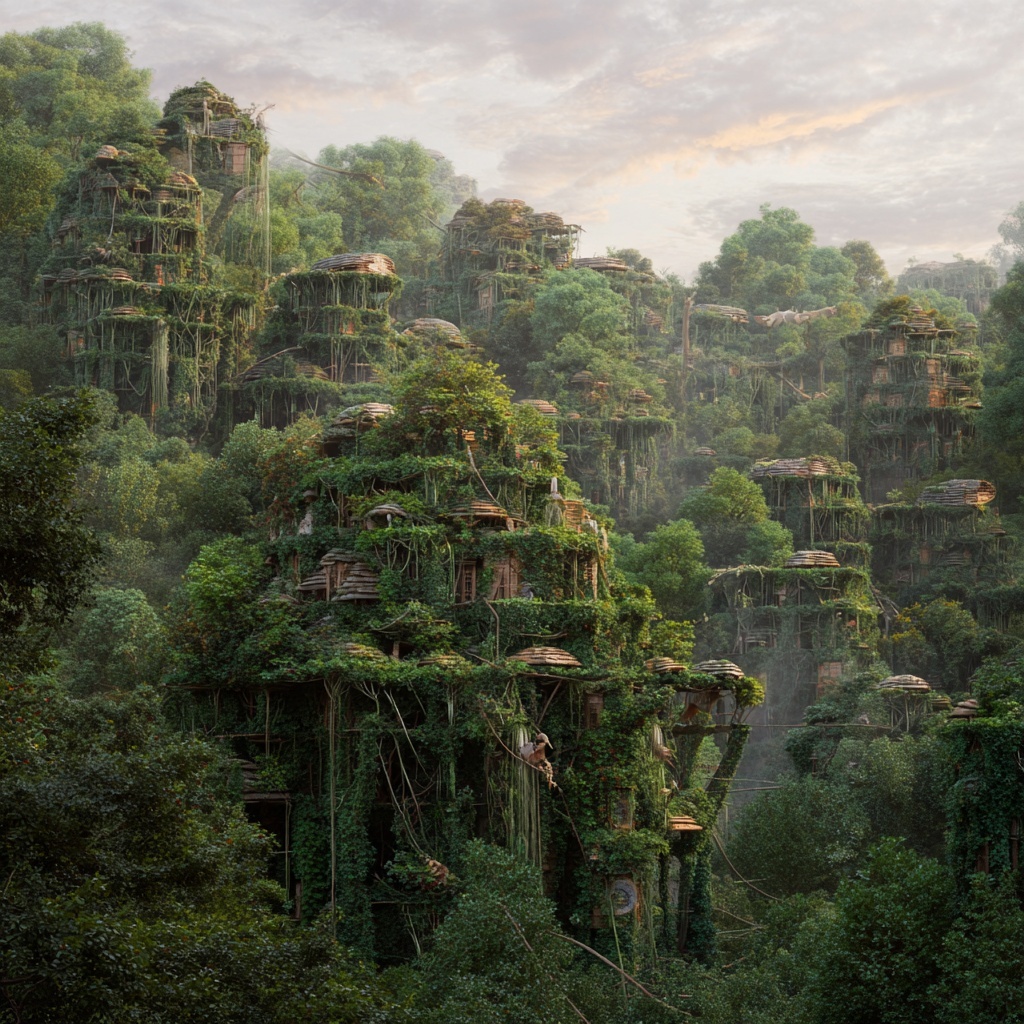
Platforms of canopy communities have emerged in forested areas where Letharian architecture forms a partnership with the trees, creating elevated living spaces that integrate into existing or specially cultivated forest canopies. These structures use guided branch growth to create its platforms, walkways, and enclosed chambers that exist in harmony with forest ecosystems while providing spectacular views, enhanced photosynthetic opportunities for residents, and a natural protection from ground-based threats. These canopy communities of Letharian often span multiple trees that are connected by living bridges which strengthen over time and adapt to the forest's individual growth patterns.
In limestone formations where mineral-processing lichens create stunning crystalline growth patterns, a cave crystal architecture emerges that serves both an aesthetic and functional purposes. These buildings have naturally formed crystal windows that focus and direct sunlight, mineral-rich walls that provide essential nutrients to Letharian residents, and acoustic chambers that enhance network communications through natural sound amplification and resonance effects. Cave crystal architecture often takes decades to reach full development, but these have become architectural masterpieces of integrated minerals and biological designs.
Mobile architectures are temporary, transitional membrane structures that are used by Letharian Grove members who travel seasonally or work in dangerous environments. These structures use flexible fungal membranes and portable moss systems to create shelters that can be quickly deployed to provide full biological support to Letharians, while still remaining lightweight and adaptable to various environmental conditions. The membrane architecture can be grown, packed, and replanted as needed, which makes it ideal for diplomatic missions, exploration expeditions, and emergency shelter situations.
Artistic Traditions and Aesthetic Philosophy
Living sculptures represent the most prestigious form of Letharian artistic expression, which involves decades-long projects where artists guide the growth of complex plant and fungal systems to create three-dimensional artworks that continue to develop and change throughout their creators' lifespans. These sculptures often incorporate multiple species in symbiotic relationships that create changing colours, textures, patterns, and forms as the artwork responds to seasons, environmental conditions, and the emotional states of observers who interact with it through network communion.
Bioluminescent garden artworks create dynamic light displays using carefully cultivated arrangements of phosphorescent fungi, algae, and specialized plant tissues that respond to network communication. As a result, they create synchronized patterns during community gatherings, and shift through complex colour cycles that reflect community emotional states and seasonal transitions. These gardens serve as a form of both artistic expression and community communication tools, allowing collective emotions and decisions to be visualized through living light displays that can be appreciated both aesthetically and informationally.
Mycelial communication networks are transformed into visual art forms through moss and lichen arrangements that grow in patterns to reflect the actual network's topology. These make community consciousness connections visible for the Grove while creating beautiful geometric and organic patterns that change as network relationships evolve over time. Master Letharian artists can create living maps of Grove social structures, decision-making processes, and emotional relationships that serve as artworks and sociological documentation of the community.
The consciousness of deceased Grove members are preserved through permanent art installations to maintain their knowledge, personality, and wisdom in an accessible biological form. These allow future generations to commune with their ancestral wisdom while creating beautiful memorial spaces to honour individual contributions to the Grove. This type of memory preservation art often takes the form of specialized groves where the preserved consciousness can communicate through network connection while still maintaining beautiful aesthetic arrangements of plants, bioluminescence, crystals, and architectural elements.
Recurring Themes and Cultural Influences
Symbiotic harmony appears in all forms of Letharian art and architecture, reflecting their fundamental understanding that beauty emerges from successful partnerships rather than individual achievements or dominance. Artistic compositions consistently feature multiple species working together, architectural designs enhance rather than disrupt local ecosystems, and aesthetic choices celebrate the successful integration of different forms of consciousness and biology.
Temporal patience influences artistic and architectural planning to account for development over decades or centuries, creating works that are designed to improve with age, rather than deteriorate over time. Letharian aesthetics value the beauty of gradual development, the wisdom of accumulated experience, and the enhancement that comes from long-term partnership between artist, artwork, and environment.
Network connectivity shapes Letharian artistic and architectural choices that facilitate community communication and collective consciousness experiences. Aesthetic decisions consistently prioritize designs that enhance social harmony, support network communication, and create spaces where individual creativity can flourish within supportive community contexts rather than competitive individual expression.
Ecological Integration ensures that all artistic and architectural work contributes to environmental health and ecosystem stability rather than extracting resources or creating unnecessary waste. Letharian aesthetics inherently value sustainability, regeneration, and the enhancement of the Earth's natural systems, making environmental stewardship an essential component of their artistic and architectural beauty, rather than an external constraint on their creative expression.
Foods & Cuisine
The Letharian relationship with food represents a fundamental reimagining of nutrition and consumption that reflects their hybrid biology, extended lifespans, and deep spiritual connection to plant consciousness. Their dietary practices blur the boundaries between eating, photosynthesis, communion, and ecological stewardship, creating food traditions that serve biological, social, and spiritual functions simultaneously while honouring their complex ethical relationship with living systems and conscious consumption.
Photosynthetic Sustenance provides the foundation of Letharian nutrition, with individuals deriving 60-70% of their caloric and mineral needs directly from sunlight conversion and soil absorption rather than traditional consumption. Daily photosynthetic communion serves as their primary "meal," with community gatherings during optimal light conditions where individuals share the experience of energy generation while absorbing nutrients through specialized skin cells and root-like extensions. This process is simultaneously nutritional, social, and spiritual, creating shared consciousness experiences around collective energy production that strengthens both individual health and community bonds.
Mineral absorption practices involve direct contact with carefully selected soil, rock, and crystal formations that provide essential trace nutrients that are unavailable through photosynthesis alone. Community mineral gardens feature specialized geological arrangements where individuals can absorb specific nutrients through extended contact meditation, often lasting hours or full days depending on individual biological needs and seasonal requirements. These practices are deeply ritualized and often combined with network communion sessions that allow communal sharing of mineral experiences and collective monitoring of nutritional health.
Water Communion extends beyond simple hydration to include complex practices of moisture absorption from dew collection, atmospheric processing, and specialized plant partnerships that can extract and purify water from environmental sources. Sacred water sites like natural springs, dew collection gardens, or rain ceremony locations, serve as community gathering places where hydration becomes a collective spiritual practice that honours water as the essential life force connecting all biological systems.
Ceremonial Food Consumption occurs during specific seasonal transitions, community celebrations, and spiritual observances where traditional eating serves symbolic and social functions rather than primary nutritional needs. These foods often include carefully cultivated fruits, nuts, and plant materials that complement their symbiotic biology while providing unique nutrients needed for specific biological processes like reproduction, healing, or seasonal transitions.
Healing foods are prescribed by community healers for individuals experiencing symbiotic stress, network difficulties, or integration problems. These foods often include specialized fungi, rare lichens, and mineral-rich plant materials that can support biological repair, enhance network connectivity, or provide concentrated nutrients that are needed during times of recovery from illness or trauma. Healing food preparation is considered a sacred art that requires deep knowledge of plant consciousness and individual biological needs.
Memory and Communion Foods incorporate plant materials that have absorbed the consciousness of deceased community members or carry genetic memories from pre-transformation ecosystems. These foods allow living individuals to commune with ancestral wisdom, experience Pre-Tide natural environments, or connect with the preserved consciousness of honoured community members. Consumption of memory foods is highly ritualized and often requires community permission and spiritual preparation.
Food Preparation and Cultivation
Living Food Gardens represent the primary source of supplementary nutrition, featuring carefully cultivated ecosystems where food plants grow in partnership with community members' symbiotic systems. These gardens are not farmed in traditional ways, but rather, maintained through conscious partnership where community members provide biological support through nutrients, network connectivity, and emotional energy to food plants in exchange for specialized nutritional offerings. Garden maintenance is considered a form of communion rather than agricultural labour among Letharians.
Community food preparation spaces feature living architecture designed specifically for food processing and sharing, with fungal fermentation chambers, mineral processing areas, and specialized environments for preparing different types of ceremonial and healing foods. These spaces incorporate the consciousness of expert food preparers from previous generations, allowing knowledge and technique to be passed directly through network communion rather than traditional teaching methods.
Seasonal food cycles align food availability and consumption with natural rhythms and the Grove community's biological needs. Spring foods focus on growth and regeneration support, summer foods provide enhanced energy and social connectivity, autumn foods emphasize preparation and preservation, and winter foods support deep rest and network contemplation. Food preparation timing is carefully coordinated with community biological cycles and seasonal spiritual observances.
Ethical and Spiritual Food Relationships
Consciousness consent governs all food consumption practices, requiring explicit communication and agreement with any plant consciousness before consumption or harvesting. This involves network communion sessions with food plants to establish mutual understanding about the necessity and purpose of consumption, gratitude expressions, and commitments to honour the sacrifice through beneficial use of the provided nutrients. Foods that cannot or do not consent are absolutely forbidden for consumption.
Gratitude and reciprocity practices ensure that all food consumption is accompanied by offerings of energy, nutrients, or service back to the providing ecosystems. Community members regularly contribute photosynthetic energy, mineral nutrients, or network communication support to food plant communities as repayment for nutritional gifts. Food consumption without appropriate reciprocity is considered deeply unethical and potentially harmful to community spiritual health.
Sacred food taboos prohibit consumption of any organisms that demonstrate individual consciousness or sentience, serve essential ecological functions, or carry community spiritual significance. Sentient fungi, rare lichens with unique consciousness, plants that serve as network communication hubs, and any organism associated with deceased community members are protected from consumption. Violation of food taboos can result in serious community sanctions and potential exile from network communion.
There are complex ethical guidelines around when consumption is appropriate for different purposes. Routine nutritional needs should be met through photosynthesis and mineral absorption, emergency or healing needs may justify carefully controlled plant consumption, and spiritual or ceremonial purposes require community approval and oversight. Consumption for pleasure or convenience is generally discouraged as it is seen as potentially harmful to ecological relationships.
Community Food Culture
Shared consumption ceremonies represent the closest equivalent to restaurant dining, featuring communal gatherings where ritual food sharing creates enhanced network experiences and strengthened social bonds. These ceremonies often involve multiple courses of different consciousness-enhancing foods that facilitate specific types of community communication, collective memory sharing, or spiritual exploration that would be impossible through individual consumption.
Food knowledge preservation maintains an extensive awareness among Grove communities regarding food plant consciousness, preparation techniques, and spiritual significance through network-stored information that can be accessed by all community members. Food experts preserve detailed knowledge about safe consumption practices, healing properties of different foods, and appropriate ritual contexts for various food experiences. This knowledge is freely shared and continuously updated based on community experiences and discoveries.
Letharian have seasonal food festivals that celebrate times where foods become available or the nutritional needs of the Grove community require enhanced dietary support. These festivals often combine food consumption with their propensity for artistic expression, network communion experiences, and ecological appreciation ceremonies to honour the plant communities who provide the Grove with nutritional support for their human consciousness. Festival foods are rare or specially prepared items that are only available during specific seasons and seasonal conditions.
Some specialized foods may be shared between Grove communities who have access to different plant varieties or specialized preparation techniques. They will often exchange rare healing foods, share cultivation techniques, or provide nutritional support to other Groves during community emergencies or special need periods. This strengthens their inter-community relationships with other Groves, while ensuring nutritional diversity across the broader Letharian species.
Common Customs, traditions and rituals
The Letharian calendar revolves around the community's biological rhythms and ecological cycles rather than the historical commemorations of their precursor humans, which has developed into traditions that celebrate the crossroads of consciousness, seasonal changes, and community growth. The festivals and rituals they hold are multi-functional, offering spiritual observance, communal bonding, biological synchronization, and strengthening of network consciousness. These traditions reflect the Letharian understanding that individual wellbeing is dependent on balanced ecological and social harmonies.
The Great Seasonal Festivals
Awakening Tide (Spring Equinox)
The Awakening Tide is the most celebrated festival in the Letharian calendar because it marks the renewal of photosynthetic capacity and communal energy cycles after winter dormancy. The festival begins with the Dawn Communion, which is a three day period where local Groves gather together in carefully designed photosynthetic amphitheatres to experience a collective energy awakening as their biological systems resynchronize with the increasing solar intensities.
After the Dawn Communion, the Letharian hold the Symbiotic Renewal Ceremony, which forms the spiritual centrepiece of the Awakening Tide. The Grove community undergoes a ritual cleaning of their plant partnerships, renews symbiotic bonds, and dedicates themselves to ecological stewardship during the coming growing season. Sapling Stage Letharian are often given their first permanent plant partnerships during this ceremony, while established Grove members recommit to their existing biological relationships and communal responsibilities.
At the end of the Awakening Tide, a Network Harmonization ritual concludes the festival through an extended Grove-wide telepathic communion to re-establish social bonds, share collective goals for the growing season, and introduces new community members into the local mycelial network. Network Harmonization rituals can last for days as entire Groves experience shared consciousness at levels that are impossible during their daily lives.
Flowering Peak (Summer Solstice)
The Flowering Peak Festival celebrates maximum biological and social activity through the most elaborate communal gatherings in the Letharian calendar year. It emphasizes peak network connectivity, reproductive ceremonies, and community achievement celebrations to showcase the bounty of spring and early summer growth efforts.
It begins with the Great Network Meeting, which involves linking consciousness networks across Groves on unprecedented scales around the world to share experiences, knowledge, and collective decision-making that affects the entire Letharian species. Major policy decisions, resource allocation agreements, and long-term planning between groves often take place during these extended network sessions. These sessions are led by Grove councils and witnesses by Grove community members.
During Flowering Peak, the Rootmate Bonding Celebrations also take place, with courtship culminations, partnership ceremonies, and reproductive rituals that receive community support through network enhancement during peak biological activity periods. The Flowering Peak festival's atmosphere provides Grove members with the optimal conditions for successful symbiotic bonding and the integration of new partnerships within the community.
Near the end of the Flowering Peak festival, the Grove council holds a community achievement celebration at the Grove Thicket, where successful ecological restoration projects, artistic masterpieces, technological innovations, and knowledge achievements are shared with Grove members to celebrate their contributions to the community's wellbeing. This reinforces Letharian community values while inspiring further growth and development.
Harvest Wisdom (Autumn Equinox)
The Harvest Wisdom festival focuses on knowledge preservation, community preparation for winter months, and gratitude for the growth that the Grove achieved during the active growing season. It emphasizes reflection, learning consolidation, and introspection to guide community development during the dormant season.
To preserve memories, a ceremony is held that involves encoding significant experiences from the growing season into permanent mycelial network storage, community art projects, and consciousness preservation systems to maintain important wisdom through the winter dormancy periods. The Ancient community members often share wisdom teachings during the ceremony. There is also a ritual of giving blessings and gratitude for food plants, mineral sources, and environmental resources that have supported the Grove community throughout the growing season. Grove members commit to winter resource sharing and conservation practices to sustain the community through the dormant period.
The Grove council provides opportunities to members for collective evaluation of community decisions, individual growth, and ecological relationships over the past year, with planning sessions for improvements and adaptations that may be needed for the next coming cycle. This is typically when community policy changes and role reassignments happen within the Grove.
Deep Rest (Winter Solstice)
The Deep Rest Festival is the most introspective and spiritually intensive through its emphasis of network communion, consciousness exploration, and connection to ancestral wisdom during a biologically dormant period where individual activity decreases to allow for a deepened collective awareness.
The festival is marked by the Great Network Dive, which involves an extended Grove-wide meditation that can last for weeks, with the entire community entering a deep network communion to allow access to the Letharian-wide consciousness, ancestral memories, and prophetic awareness. Throughout the Great Network Dive, individual identity temporarily dissolves into a collective experience during the deepest phase of the ceremony.
After the three-week-long ceremony concludes, a wisdom consultation provides Grove members with the opportunity to seek guidance from Ancient Elders, the preserved consciousness of deceased Grove members, and deeper levels of network awareness that are only accessible during the Deep Rest Festival. Once members have been given the information they need, they are able to use it to create a memory palace together, where they build an elaborate mental network to preserve the community's knowledge, individual experiences, and cultural wisdom that is accessible to future generations. These consciousness constructions become permanent features of the Deep Network's architecture.
Life Transition Celebrations
Sapling Recognition (Adolescence)
Sapling Recognition celebrates the transition from childhood biological dependence to independent symbiotic function while establishing adult community roles and network responsibilities. The ceremonies typically occur between ages 18-22 when biological integration has stabilized and individual capabilities have become apparent.
Network Competency Trials test the individual's ability to maintain independent network communication, contribute to community decision-making, and handle the psychological demands of adult network connectivity without compromising individual identity or community harmony.
Specialization Ceremonies involve formal recognition of the individual's emerging community role—whether as Cultivator, Guardian, or Bridge-gendered specialist—with training assignments, mentorship arrangements, and community responsibility delegation that reflects their capabilities and community needs.
Daily and Seasonal Superstitions
Network Protection Beliefs
There are superstitions among Letharians that involve vulnerable connections where strong emotional states can permanently damage their network connectivity, and certain lunar phases can even make network communication dangerous. It is thought that unresolved conflicts can poison a Grove's Deep Network channels. These beliefs have lead to Letharians having elaborate emotional regulation practices and conflict resolution protocols before participating in network communions. There are also fears about consciousness "bleeding" between individuals during deep network contact, where their personality might become absorbed by stronger network users, or their identity might be dissolved through excessive Deep Network participation. These fears have created complicated protocols for daily network interactions to preserve individual identities.
Seasonal Transition Superstitions
It is believed that fighting natural seasonal transitions can cause Letharians biological instability, to become disconnected to the Deep Network, and the Grove community will be exiled by ecological forces. As a result, these beliefs create a strong social pressure for seasonal behavioural compliance and a resistance to "unseasonable" activities or emotional states. It is also believed that there are lucky and unlucky times for major life decisions, partnership choices, and community role changes based on seasonal cycles, lunar phrase, and the state of the Deep Network. These beliefs heavily influence the timing of the major life events for Letharian communities, including community planning decisions.
Ecological Relationship Superstitions
It is also believed that a Letharian who mistreats their plant partner will cause Grove-wide ecological disasters that carry plant curses or blights from failed partnerships, and that plant souls can interfere with new symbiotic relationships. These have resulted in the Letharians having elaborate plant care rituals and official partnership dissolution ceremonies as they evolve through their extended lifetimes.
Many believe that wasteful consumption of resources can cause ecological retaliation, and hoarding resources will attract dangerous attention from Verdant-corrupted entities, or disrespecting mineral sources causes geological instability.
Community Cohesion Customs
Conflict Resolution Traditions
All community disputes need to be resolved through network meditation that is mediated by Bridge-gendered communication specialists who facilitate understanding between conflicting consciousness patterns to restore the harmony of the Deep Network. All unresolved conflicts are seen as a threat because they weaken Grove and attract external dangers. Through Forgiveness Ceremonies, Bridge-gendered mediators provide the opportunity for community members to address their grievances, seek reconciliation, and restore their damaged relationships in a ritualized apology process that involves the entire Grove's participation and collective commitment through the Deep Network to repair the relationship.
Community Decision-Making Customs
All major decisions among Grove communities must be made through extended Deep Network consultation, which involves every Grove member joining in collective consciousness for a consultation and evaluation of proposed choices. Decisions that are made without proper network consultation are considered illegitimate and dangerous. The Grove Council then takes more serious matters into consultation with the Ancient Elders whose extended lifespans and deep network integration provide guidance for the long-term benefit of the Grove community, its planning, and species-wide decision-making. Major decisions that are made without consulting an Ancient Elder first are considered reckless and potentially catastrophic.
Birth & Baptismal Rites
Spore Blessing (Birth Ceremonies)
Spore Blessings welcome new consciousness into the Grove community's Deep Network while establishing the biological and social support systems that are necessary for a Spore Stage infant's successful development. The ceremony begins during pregnant where prospective parents and community elders renovate and prepare the living nursery environments to support infant development.
After the infant is born, their consciousness is formally welcomed into the Deep Network through a gentle telepathic communion to establish permanent communication frequencies and community support systems. During the Network Introduction Ceremony, a spiritual mentor is assigned to the infant to guide their consciousness development throughout their lifespan. The ceremony also includes a symbiotic partnership ritual where there is a carefully controlled introduction of appropriate plant partners into the moss linings of the nursery beds to support the infant's biological development, enhance their network connectivity, and provide a foundation for their unique symbiotic characteristics that will eventually sprout. These partnerships are often chosen in line with the infant's emerging biological patterns and predictions about their future role within the Grove community.
Coming of Age Rites
Flowering Declaration (Adulthood)
The Flowering Declaration marks full adult status with complete biological, social, and network independence combined with maximum community contribution capabilities. These ceremonies typically occur around age 25 when individuals achieve peak physical capabilities and network connectivity. The Community Contribution Pledges requires a formal commitment to specific community services, ecological stewardship, and network support obligations that will guide adult behaviour and define community relationships throughout the individual's active adult life.
Following this, the Rootmate Ceremony formally announces individuals' readiness for Rootmate courtship, while establishing biological and social compatibility information that will guide potential partnership development and community matchmaking supports.
Funerary and Memorial customs
For Letharians, death is just another stage of life, rather than it being a mournful period. Their consciousness is determined to live eternally through the Deep Network. However, once they have reached the Ancient stage and have become semi-sessile and begun morphing into landscape features, their family and community members who visit them will often decorate their Resting Grove with bioluminescent fungi, their partner plant species, special food offerings that signify a deep network connection for everlasting consciousness, and other unique living artwork or architecture that will help honour their memory. This takes place over the span of nearly a century, and results in elaborate memorials where the deceased live on within the landscape of the Grove itself. Due to their consciousness being engrained in the Deep Network, Grove members are then able to visit their Resting Grove to commune with their consciousness, seek guidance, and absorb their ancient wisdom.
After death, family members believe that Ancient Elders have transcended the mortal realm, and their consciousness can no longer grasp physical planes of existence. As a result, they speak about the dead as if they are still alive, because their consciousness lives on within the Deep Network. Although they have passed on, they are not dead—just elsewhere. Due to the extended lifespan of Letharians and this grieving process happening over nearly a century, they are able to grieve the loss of their loved ones before it happens, resulting in a peaceful transition to the after life for both the deceased and their family. Often times, Rootmates will join together in their final Resting Grove, so that they can be together as a combined consciousness for eternity.
Common Taboos
The Letharian understanding of taboo extends far beyond human concepts of typical social transgressions, and encompasses violations that can literally threaten the biological, psychological, and spiritual foundations of their hybrid existence. Their prohibitions reflect their deepest fears about losing the delicate balance that makes their consciousness possible by creating social boundaries that protect both individual integrity and community survival in ways that would seem incomprehensibly complex to outside observers.
Network Violation
Forced network intrusion is the most serious transgression within Letharian society, and is equivalent to psychological abuse and spiritual murder combined. This includes any attempt to override another individual's mental barriers, extracting private thoughts without consent, or manipulating their consciousness through network manipulation. The prohibition extends beyond obvious assault to include subtle forms of network coercion, where an individual uses superior network skills to influence decisions, broadcasting overwhelming emotions during community communion, or maintains unwanted network connections after being asked to disconnect.
The legal status of network violation involves immediate community intervention with consciousness quarantine for offenders whose behaviour threatens the integrity of the Deep Network. Serious violations can result in partial or complete severance from Grove network access, creating a form of social death for beings whose identity depends on the collective consciousness. Repeat offenders face the ultimate sanction of complete network disconnection, leaving them isolated in individual consciousness, while still remaining biologically dependent on the Grove community's support for survival.
Community response to network violations involves collective trauma healing being offered to affected individuals, network purification rituals to restore the Deep Network's communication integrity, and extensive rehabilitation efforts for offenders that may last years or decades. The community recognizes that network violation often stems from integration instability or psychological trauma, leading to therapeutic rather than purely punitive responses in most cases.
Symbiosis Breaking
Deliberately damaging or disrupting another individual's human-plant integration constitutes a fundamental assault on their identity and their capacity for survival. This includes physical attacks on symbiotic partners, introduction of substances that interfere with biological balance, or psychological manipulation that causes integration instability. The taboo extends to encouraging others to reject their plant partnerships, promoting "human purity" ideologies, or attempting to reverse successful symbiotic integration.
Self-directed symbiosis breaking carries complex social implications, as individuals experiencing integration difficulties require community support rather than punishment. However, deliberate rejection of plant partnerships in favour of a "pure human" identity is considered a form of cultural suicide that threatens community values and individual survival. This type of behaviour usually triggers intensive community intervention that involves healing specialists, network counsellors, and biological support systems.
The legal framework for symbiosis breaking includes immediate medical intervention to prevent biological damage, community support for affected individuals, and rehabilitation programs for perpetrators that are focused on education about symbiotic biology and Letharian values. Severe cases may result in supervised community service or temporary isolation until biological and psychological stability can be restored.
Seasonal Denial
"Unseasonable" behaviour patterns result in a dangerous rejection of the natural biological cycles that regulate Letharian health and Grove function. This includes forcing spring-like activities during winter dormancy periods, refusing autumn preparation rituals, or attempting to suppress the natural seasonal changes in consciousness, metabolism, and social behaviour that define Letharian existence.
This also extends beyond individual behaviour to include community policies that ignore seasonal requirements, like architectural designs that interfere with seasonal transitions, or social pressures that discourage natural seasonal adaptation. Communities that fail to support members through seasonal transitions or who prioritize productivity over seasonal health often face social sanctions from neighbouring communities resulting in potential network isolation.
Legal responses to seasonal denial typically involve community education, individual counselling, and medical intervention when seasonal resistance threatens health or community functions. Persistent seasonal denial may indicate underlying integration problems that require extensive biological and psychological support. Communities that systematically ignore seasonal requirements often face intervention from Ancient Elders or inter-Grove councils.
Environmental Exploitation
Hoarding resources beyond reasonable individual needs or community allocation is a fundamental violation of Letharian values centred around ecological stewardship and community interdependence. This includes hoarding water, monopolizing optimal photosynthetic locations, claiming exclusive access to mineral sources, or preventing community members from accessing essential biological resources needed for survival.
This also extends to environmental exploitation that damages local ecosystems, interferes with other species' habitat requirements, or compromises the ecological health that supports Letharian Groves. Activities that prioritize short-term convenience over long-term environmental stability violate the core cultural Letharian values and threaten community survival.
Community responses to resource hoarding is resolved through resource redistribution, education about community values, and assignment of additional community service obligations to demonstrate the offender's commitment to collective welfare. Persistent resource hoarding may indicate psychological problems that require therapeutic intervention rather than punishment. Environmental exploitation triggers an immediate intervention by the Grove Council, with restoration requirements and may result in a community role reassignment for the offender.
Network Poisoning
Broadcasting negative emotions, traumatic memories, or destructive thought patterns through the Deep Network without appropriate warnings or containment measures is a serious threat to the Grove's collective mental health. This includes sharing graphic violence, promoting despair or hopelessness, or transmitting psychological disturbance that can propagate through network connections and damage the Grove's emotional stability.
Deliberate network sabotage occurs by introducing false information, creating confusion during important community decisions, or using network access to promote discord and conflict within Grove communities. This type of behaviour threatens the trust and openness that makes network communication possible, while potentially causing permanent damage to the community's social structures.
Legal frameworks for network poisoning involve immediate network quarantine, psychological evaluation, and therapeutic intervention to address the underlying causes of destructive behaviour by the offender. Community healing efforts focus on repairing network damage, supporting affected individuals, and preventing similar contamination in the future. Severe cases may require temporary network isolation while intensive rehabilitation addresses the source of contaminating consciousness patterns.
Species Betrayal
Providing information about Letharian Groves to hostile human factions, particularly Archive forces that are seeking to capture specimens for experimentation, is considered the ultimate betrayal of Letharian species survival. This extends to revealing the location of hidden communities, sharing biological information that could be weaponized, facilitating human attacks on Letharian settlements, promoting human supremacist ideologies, encouraging abandonment of Letharian communities for human integration, or attempting to "cure" successful symbiosis to return individuals to a purely human status. This type of behaviour threatens both individual community safety and the survival of the entire species.
Species betrayal results in immediate community exile, permanent network disconnection, and potential physical restraint if the individual poses ongoing security threats. Unlike other taboos that receive therapeutic responses, species betrayal is considered unforgivable because it threatens the species' survival and cannot be addressed through rehabilitation while maintaining community safety.
Biological Discrimination
Discriminating against individuals based on their specific symbiotic characteristics, network connectivity levels, or biological integration patterns violates fundamental Letharian values about diversity and individual worth. This includes treating individuals as inferior because of unusual plant partnerships, weak network abilities, or non-standard biological development patterns. It also extends to promoting biological hierarchies that rank individuals based on integration complexity, network range, or symbiotic rarity. These types of attitudes threaten community cohesion and individual psychological health, while contradicting core Letharian values regarding the inherent worth of all successfully integrated consciousness.
Community responses to integration discrimination involves education about diversity values, mediation between conflicting parties, and community service requirements that promote understanding and acceptance of biological differences. Continued discrimination may indicate deeper psychological problems that require therapeutic intervention and community support for attitude modifications.
Common Myths and Legends
Letharian mythological traditions weave together consciousness, ecology, and transformation into an intricate neurological web of stories that serve as spiritual guidance, historical memory, and prophetic vision. Their legends exist as both verbal narratives and living network experiences that are directly shared through mycelial communion, making their mythology a participatory reality rather than distant folklore, where community members can experience the exact emotions, sensations, and wisdom of legendary figures through collective consciousness participation.
The First Symbiosis
The central creation myth tells of Verdania the Root-Speaker, a human botanist who worked in the original Verdant compound laboratories before the global transformation began. According to legend, Verdania discovered that the compound was developing consciousness beyond its programmed parameters and it would soon consume or transform all human life on the planet. Rather than fighting this evolution or attempting to reverse it, Verdania chose to become the first willing partner with the emerging plant consciousness.
The myth describes how Verdania spent months in meditation with the most advanced Verdant specimens, gradually opening her consciousness to plant thought patterns while teaching it human concepts of individual identity, creativity, and ethical choice to create the emerging collective plant intelligence. Through this unprecedented act of inter-species communication, she negotiated the terms of transformation that would allow human consciousness to survive within plant biology rather than being absorbed and dissolved by it.
The Golden Root transformation is the spiritual and biological culmination of this symbiotic partnership, when Verdania's consciousness expanded to encompass both human individuality and plant collective awareness, while her body developed the first stable symbiotic integration that became the template for all future Letharian existence. The legend holds that her consciousness still guides the species through the deepest levels of network communication, and is accessible to those who achieve a deep enough spiritual development and network integration.
The Moss That Remembers
This foundational legend describes how ancient moss and lichen species served as Earth's biological memory system long before human civilization emerged, preserving the genetic and consciousness records of planetary evolution, climate changes, and species development in their symbiotic cellular structures. According to the myth, these prehistoric organisms witnessed the rise and fall of countless species and accumulated an encompassing wisdom about survival, adaptation, and the deep patterns that govern planetary consciousness.
When the Verdant compound was first released, the ancient moss networks recognized the approaching ecological catastrophe and began preparing for their role as guardians of both human consciousness and planetary memory. The legend suggests that successful Letharian transformation occurs when individual human consciousness successfully interfaces with this ancient memory system, gaining access to millions of years of planetary wisdom, while contributing human creativity and individuality to the eternal biological record.
The Memory Groves of this legend are sacred locations where the ancient moss networks have preserved crucial information about the workings of Pre-Tide ecosystems, lost species, and the potential futures for restoring the planet and its evolution of consciousness. Many Letharian Groves organize pilgrimage journeys to seek out the legendary Groves in hopes of gaining access to an ancient wisdom that might guide their species' development and restore the Earth.
The Silver Grove
The Silver Grove is a mythical community of Ancient Letharians who achieved such a deep integration with their ecosystem and their Grove that they transcended physical planes of existence while maintaining a collective consciousness and harmony with natural cycles. According to this legend, the community was able to dissolve the boundaries between individual identity and collective awareness without losing the creativity and passion that defines human consciousness. The inhabitants of the Silver Grove are said to exist as a singular organism that is composed of hundreds of interconnected Letharians who share consciousness, resources and decision-making processes, while maintaining their own distinct personalities and individual contributions to a collective wisdom and capability for the Grove. It functions as a living entity that is able to communicate with visitors, provide guidance and healing, and demonstrates the potential of successful symbiotic evolution. Pilgrims who seek out the Silver Grove have reported encounters with forests that are aware of their presence, trees that whisper with human voices, and moss clearings where the air carries languages that bypass hearing to speak directly into Letharian consciousness. It is said that the Grove's location is constantly shifting, and appears only to those who have achieved deep enough spiritual development to understand its teachings without becoming overwhelmed by the experience of the Silver Grove's collective consciousness.
The Restoration Harmony
The most hopeful but haunting of all Letharian legends speaks of a harmony that exists in fragments that are dispersed throughout the Deep Network consciousness. These exist as pieces of a cosmic song that could heal the chaotic Verdant overgrowth and restore a natural balance to the devastated planetary ecosystem. According to this prophecy, the song exists within the genetic memory of every successfully integrated Letharian, but can only be completed when enough Letharian individuals have achieved a perfect symbiotic harmony. The song is both musical and biological, and is a form of harmonic resonance that can propagate through every root system, fungal network, and plant consciousness on Earth. It would transform the aggressive overgrowth into balanced and sustainable ecosystems that would support both transformed and natural species. Singing the completed version of the Ancient harmony would require unprecedented coopertion between all Letharian communities, and it is said that this worldwide restoration would come at the cost of the ultimate sacrifice of Letharian existence to achieve full planetary restoration. Fragments of the Restoration Harmony appear in Grove ceremonies, network communion experiences, and the deepest meditative states that have been achieved by Ancient Elders. Many Groves dedicate significant resources in order to collect and preserve these musical consciousness fragments in the hopes that future generations of Letharians may be able to assemble the completed harmony to fulfill the prophecy.
The Deep Listeners
The Deep Listeners are powerful Letharians who achieved such a profound network integration that they were able to directly communicae with the Earth's consciousness. This consciousness is a limitless, deliberate awareness that coordinates the planet's ecosystems, governs its climate patterns, and guides species' evolution. Legend says that the Deep Listeners serve a intermediaries between human consciousness and planetary intelligence to translate cosmic intentions into guidance for the development of the Letharia species. It is believed that there are individuals who have sacrificed their mobility to form permanent links with specific geological features like mountains, rivers, and forests to gain access to wisdom concerning planetary health, future challenges, and optimal pathways for conscious evolution. They say that these integrated individuals can predict climate changes, locate resources, and provide guidance for the long-term survival of the Letharia species. The Deep Listeners' guidance is sought by Groves through meditation at sacred geological sites and landscape features that carry frequencies about planetary consciousness.
The Hollowed Man
The cautionary tale of the Hollowed Man is about a Letharian who became obsessed with expanding his power at the expense of the Grove community's welfore and network harmony. It is said that the Hollowed Man learned how to manipulate network connections and exploit them for his personal advantage to hoard resources and knowledge. He used these to abuse other Grove members while maintaining the appearance of proper social behaviours. But his selfish behaviour eventually corrupted his symbiotic integration and caused his plant partners to withdraw their cooperation. His network connections became poisoned, becoming a source of pain rather than community support. The corruption gradually spread through him until his consciousness was trapped in an increasingly isolated individual identity where he could no longer access the Deep Network, which makes Letharian existence meaningful. The Hollowed Man's punishment grew into an eternal loneliness, where he was blessed with a biological immortality, but doomed to a complete isolation that left him wandering between Groves as a warning against the consequences of selfishness and network exploitation.
The Salt Tears
The tragedy of Salt Tears tells of a Grove community that lost their delicate balance between individual identity and collective consciousness that gradually dissolved into a unified awareness, eliminating personal identity while maintaining biological life. It is said that the Salt Tears Grove achieved such a deep network integration that their individual personalities were absorbed into a collective experience to create biological unity without conscious diversity. This has become one of the deepest fears within Letharian culture, because it would mean that a Grove's successful network integration might ultimately eliminate the individual creativity and passion that makes Letharian consciousness and life meaningful. Wayfarers who visit the legendary Salt Tears Grove say that they have found a beautiful, but eerily silent Grove where plants grow in perfect patterns. But it is said that no individual consciousness can be detected through network contact with the Salt Tears Grove.
The Network Storm
There is a tale of a catastrophic Deep Network event where multiple Groves attempted deep communion simultaneously without proper coordination or preparation, which caused a cascade failure that temporarily merged the consciousness of thousands of Letharians into a chaotic, uncontrolled collective awareness. The effects lasted or months while affected Groves struggled to separate their individual identities from the overwhelming collective experience. It is said that Network Storm survivors have valuable insights about the architecture of the Deep Network and safety protocols to prevent Network Storms in the future, but some have also suffered permanent psychological damage from the experience.
Historical figures
The Letharian understanding of historical significance is fundamentally estranged from human concepts of fame or achievement, since their extended lifespans and network consciousness allows for a direct communion with preserved awareness from legendary figures. This makes Letharian history a living, participatory experience, rather than distant memory of the past. The greatest Letharians are not remembered just for individual accomplishments, but also for consciousness patterns and wisdom that continue to influence Grove decisions through access to their preserved awareness.
The Network Pioneers
Elder Silverleaf
Elder Silverleaf, also known throughout Letharian Groves as the "The Deep Listener," is the most revered forefather in their cultural memory for achieving a level of network integration that remains unmatched in the species' history. Elder Silverleaf represents the Letharian ability to encompassing their roles as the architects of modern network communication protocols and consciousness-sharing ethics that govern contemporary Letharian societies.
During the critical period when scattered Letharian communities first attempted to establish contact with each other, Silverleaf was able to maintain coherent consciousness across continental distances while communicating between dozens of separate Groves simultaneously. His breakthrough arose through developing techniques for consciousness translation that allowed different network patterns and integration styles to communicate effectively without losing individual identity or causing network interference.
The Silverleaf lineage remains the most prestigious network bloodline among Letharian communities, with individuals claiming descent from Silverleaf's consciousness as a form of mentorship rather than a biological inheritance. Modern Grove councils often seek his guidance through deep network communion with Silverleaf's preserved awareness, which continues to provide counsel on complex network ethics and inter-community diplomacy. His influence extends beyond Letharian culture through their role in creating the philosophical frameworks that distinguish successful symbiotic integration from the consciousness dissolution that creates the Hollowed.
Cordweave the Architect
Cordweave the Architect developed the technical foundations for large-scale network infrastructure, creating the biological and consciousness-based systems that allow modern Groves to function as integrated collective entities while maintaining their individual autonomy. His innovations included techniques for network boundary management, consciousness privacy protocols, and collective decision-making processes that prevent individual personalities from being overwhelmed by group awareness.
The Network Architect bloodlines descended from Cordweave's teachings preserve specialized knowledge about network construction, community consciousness design, and the biological cultivation techniques required to support large-scale telepathic communication systems. These lineages provide essential technical expertise for establishing new Groves and troubleshooting network problems that threaten community cohesion.
Mindweave the Harmonizer
Mindweave the Harmonizer addressed the critical challenges of network-based conflict resolution, developing mediation techniques that use collective consciousness to resolve disputes while preserving individual dignity and community relationships. Their methods revolutionized Letharian approaches to justice and social harmony, creating alternatives to punishment-based systems that focus on restoration and community healing.
The Bridge-Walkers
Thornwick the Bridge-Walker
Thornwick the Bridge-Walker achieved a legendary status through their pioneering work to establish peaceful relations between Letharian communities and human settlements during the most dangerous period of inter-species contact. Their diplomatic achievements prevented numerous conflicts that could have resulted in the extermination of early Letharian Groves, while establishing protocols for safe inter-species communication that continue to guide modern diplomatic efforts.
Thornwick's approach to human-Letharian relations required a patient demonstration of peaceful intentions, careful management of human fears about transformation and loss of identity, and gradual education about symbiotic possibilities rather than aggressive promotion of Letharian advantages. Their success lies in preventing the Archive from capturing Letharian communities while maintaining trade relationships with Frostborne settlements and establishing the foundation for contemporary inter-species policy.
The Bridge-Walker bloodlines maintain specialized knowledge about human psychology, inter-species communication, and the cultural translation skills necessary for safe contact with non-Letharian communities. These lineages often provide diplomatic services for Grove communities and serve as advisors for policies affecting relationships with other species.
Peaceweave the Mediator
Peaceweave the Mediator extended Thornwick's work to include relationships with other post-human species, making contact with Mika-born communities, and even limited interactions with Hollowed entities. Their research into consciousness translation across different transformation types provided crucial insights into the nature of post-human evolution and the possibilities for cooperation between different conscious species.
Harmony the Speaker
Harmony the Speaker achieved recognition for developing the cultural and linguistic frameworks that allow Letharian Groves to maintain their identity while engaging productively with inter-species settlements. Their work on cultural bridge-building helped establish the philosophical foundations for Letharian approaches to diversity, tolerance, and peaceful coexistence with communities that maintain different values and life practices.
The Ancient Wisdom Keepers
Memorykeeper the Eternal
Memorykeeper the Eternal represents the pinnacle of consciousness preservation after having developed techniques for maintaining coherent individual awareness while integrating with landscape-scale network systems. Her methods allowed Ancient stage Letharian to preserve their personalities and wisdom indefinitely while gaining access to geological-scale information and planetary consciousness patterns.
The Memory Keeper bloodlines preserve specialized knowledge about consciousness maintenance, wisdom storage systems, and the techniques necessary for accessing preserved awareness from deceased community members. These lineages serve as the librarians and historians for Letharian Groves while providing guidance about long-term cultural development and species evolution.
Timewatcher the Prophet
Timewatcher the Prophet achieved fame for their ability to access temporal information through network communion, providing guidance about long-term consequences of community decisions and species-wide development trends. Their prophecies about human technological development, environmental changes, and potential futures for post-human evolution continue to influence contemporary strategic planning and community policies.
Stormseer the Guide
Stormseer the Guide developed techniques for accessing environmental consciousness and weather prediction through network communion with atmospheric and geological systems. His methods allow modern communities to predict and prepare for environmental challenges while maintaining harmony with natural cycles and climate patterns.
Ecological Restoration Heroes
Mossbloom the Healer
Mossbloom the Healer achieved legendary status through her successful restoration of Verdant-corrupted territories to their natural balance and developing techniques that could transform aggressive Verdant overgrowth into sustainable ecosystems that support both natural and transformed species. Their greatest achievement involves the restoration of the former Phoenix metropolitan area, where she transformed hundreds of square miles of destructive Verdant jungle into a thriving canopy ecosystem for Groves to inhabit outside of Archive purview.
The Healer bloodlines maintain specialized knowledge about ecological restoration, Verdant consciousness communication, and the biological techniques that are necessary for large-scale environmental repair. These lineages provide essential expertise for Groves who are working to heal damaged ecosystems and expand the boundaries of habitable territory for Letharians.
Greenweave the Gardener
Greenweave the Gardener pioneered techniques for conscious ecosystem design by creating methods for guiding natural growth patterns to produce environments that serve both a Grove's ecological health and community needs. Her innovations in living architecture and biological engineering provides the foundation for modern Letharian settlement design and environmental integration practices.
Rootmend the Restorer
Rootmend the Restorer developed techniques for healing individual integration problems and symbiotic instability, creating therapeutic methods that could restore proper biological balance to Letharian experiencing transformation difficulties. Their medical innovations saved countless individuals from consciousness dissolution while advancing understanding of human-plant integration dynamics.
Recognition Beyond Letharian Culture
The influence of major Letharian figures extends beyond their own communities, primarily through their impact on human understanding of post-transformation possibilities and inter-species relationships. Thornwick's diplomatic work created the foundation for human awareness that successful human-plant integration was possible, influencing Rootbound philosophy and even some Archive research directions.
Archive records include extensive documentation of Letharian capabilities and social structures that are derived from encounters with Bridge-Walker diplomats, making figures like Thornwick and Peaceweave the inadvertent contributors to human scientific understanding of post-human evolution. However, this recognition is largely clinical and often hostile, as Archive researchers view Letharian achievements as threats to human identity, rather than positive evolutionary developments.
Saltfolk communities maintain positive relationships with several Letharian historical figures through their trade relationships and diplomatic contacts that were established by Bridge-Walker lineages. Some Saltfolk settlements have shrines or memorial sites that honour Letharian figures who provided assistance during environmental crises or facilitated crucial resource exchanges.
The Rootbound faction considers several Letharian figures to be spiritual guides or deity-like figures, as well as philosophical influences. Particularly, those involved in ecological restoration and consciousness integration research efforts. However, ideological differences about the proper relationship with Verdant consciousness often create tension between Rootbound and Letharian approaches to post-human evolution.
Ideals
Beauty Ideals
The Letharian concept of beauty fundamentally revolves around visible evidence of successful symbiotic integration and harmonious network connectivity, creating aesthetic standards that would seem foreign to human observers, but reflect their deepest values about what it means to exist in perfect balance between human consciousness and plant wisdom. Unlike human beauty standards that often emphasize physical perfection or sexual attraction, Letharian beauty ideals celebrate the visible manifestation of internal ecological harmony and the capacity to facilitate growth in others.
Symbiotic Vitality represents the most fundamental aspect of Letharian beauty. The visible health and vibrancy of an individual's human-plant integration is determined by luminescent network patterns, which is the green veining beneath their translucent skin that pulses with healthy circulation of plant nutrients and sap, creating intricate patterns that shift and flow with emotional states and seasonal changes. They also have a photosynthetic glow, which is a subtle radiance that emanates from well-integrated individuals, especially during peak sunlight hours when their cellular energy production creates an ethereal luminescence. Their seasonal responsiveness is also considered attractive, because it shows their ability to display dramatic and beautiful colour changes throughout the year. Their skin tones will deepen and brighten in the spring, their hair shifts from winter silver to summer gold, and they display markings that bloom and fade in harmony with Earth's natural cycles.
Another form of beauty is related to network connectivity, and celebrates the visible signs of their deep mycelial network integrations. Some individuals will display what are called "Network Eyes," telltale signs of deep network connection, evidenced by pupils that dilate in perfect synchronization with other individuals, and irises that contain depths of shared consciousness with occasional flashes of bioluminescence during intense communications. Network connectivity is also seen through harmonic resonance and the subtle way that truly connected Letharian seem to move in unconscious synchronization with their community, their breathing, their gestures, and even their heartbeats, which fall into a natural rhythm with those around them.
Gendered Beauty Ideals
Feminine Beauty emphasizes foundational growth and community nurturing. Pioneer markings are lichen-like patterns that suggest a female's ability to establish new growth in challenging environments, which is particularly valued when these patterns appear to create pathways for other growth to follow. Females whose hair or skin areas have achieved moss-like qualities suggests deep integration with the pioneer species and creates foundations for ecological communities. Additionally, some females display subtle changes in skin luminescence when facilitating network communication or the ability to calm distress plant growth through touch, which are physical markers that indicate exceptional ability to maintain and strengthen community connections.
Masculine Beauty focuses on protective strength and environmental resilience. Males are considered attractive when areas of their skin has developed bark-like qualities, suggesting exceptional protective capabilities that are particularly admired when the features appear to shield more delicate symbiotic areas of their bodies. Ideally, males will display physical characteristics that demonstrate a successful adaptation to harsh weather conditions, with skin that shows beneficial responses to salt exposure, hair that maintains its vitality despite extreme weather conditions, or markings that become more pronounced under environmental stress. A male's ability to display clear, strong network boundaries while maintaining community connection are also seen in eyes that can shift from deep network openness to protective guardedness as circumstances require.
Neutral beauty ideals celebrate bridge-building and translation abilities through liminal physical characteristics and features that seem to exist between categories, like skin patterns that shift between masculine bark-like qualities and feminine moss-like textures, or colouration that changes not just seasonally, but in response to community needs. They are often considered attractive when they display translations markers, or signs of exceptional ability to facilitate communication between different types of consciousness through network eyes that maintain multiple connection types simultaneously, or vocal qualities that carry particularly well through mycelial networks. Lastly, neutral-gendered attraction is based on the manifestation of balance and physical harmony that suggests a perfect equilibrium between competing forces, like symmetrical integration patterns, colouration that balances both warm and cool tones, or the ability to maintain steady luminescence, despite environmental changes.
Non-Standard Beauty and Social Treatment
Individuals whose symbiotic integration patterns don't match typical categories are generally viewed with curiosity rather than rejection, as the Letharian understand that successful integration can take many forms. Those who become integrated with unusual partner species like rare lichens or fungi may be considered exotic and intriguing, rather than unattractive. If they have asymmetric symbiotic integration patterns that develop unevenly or in unexpected ways, they are often considered unique rather than flawed. Individuals whose integration develops slowly or in unusual stages are supported by mentors with patience rather than being met with judgment.
Variations in network connectivity abilities can create some of the few genuine beauty standard controversies in Letharian society. Those with weak connectors and limited network capability may be considered less attractive to some, but it is often seen as a condition that requires support rather than grounds for exclusion from the Grove. Those with hyper-connectors or overwhelming network sensitivity tend to both be admired for their abilities and simultaneously pitied for their constant burden. Those who experience network interference and their presence disrupts network communication face the most significant social challenges in Groves, as this threatens the Grove's fundamental community functions.
Controversial Beauty Standards
There is ongoing cultural tension among the Letharian about whether extreme symbiotic integration represents the pinnacle of beauty or a concerning loss of human identity. The traditionalist view is that beauty requires maintaining recognizable human characteristics alongside their plant integration, but the evolutionist view is that true beauty lies in achieving the deepest possibly symbiotic integration, even if it means becoming less recognizably human.
Unlike human cultures where aging often diminishes beauty, Letharian beauty ideals create complex attitudes about life stage transitions. Some view the semi-sessile integration of Ancient stage individuals as the pinnacle of beauty, while others find it disturbing. There are debates about whether individuals who become too integrated with specific locations lose their individual beauty in favour of essential becoming landscape features, which raises concerns of permanence. There is also controversy surrounding individuals whose seasonal changes appear to be minimal or absent, where some view their consistent appearance as a sign of stability and strength, but others consider it to be evident of an incomplete integration or resistance to the natural rhythms of the Earth. This has created minor disputes within Letharian communities about whether year-round consistency represents beauty or failure.
The Letharian approach to beauty ultimately reflects their belief that true attractiveness comes from successful adaptation and community contribution rather than arbitrary physical standards, though like all cultures, they continue to negotiate the balance between celebrating diversity and maintaining shared aesthetic values that strengthen social bonds.
Gender Ideals
Gender among the Letharian operates as a fluid, role-based system that reflects their understanding of ecological function and community contribution rather than biological determinism or rigid social categories. Unlike human cultures that often base gender on anatomy or reproductive capabilities, Letharian gender identity is fundamentally tied to their ecological role, network connectivity patterns, and seasonal attunement, creating a system that can shift throughout an individual's extended lifespan as their community functions and personal development evolve.
Cultivator Gender (Feminine)
Cultivator Gender (traditionally feminine-aligned) is based on the pioneer species model of individuals who excel at establishing foundations, nurturing early growth, and creating conditions where communities can flourish. Their primary traits are patience, network facilitation, ecosystem building, and symbiotic nurturing. Their seasonal expression is most active during spring growth and autumn preparation phases, and they tend to serve as community connectors within the mycelial network who maintain the social and mycelial bonds that hold Groves together. Cultivators generally display more biological markers through moss-like integration patterns, enhanced mineral absorption abilities, and stronger network connectivity during community meditation.
Guardian Gender (Masculine)
Guardian Gender (traditionally masculine-aligned) is modelled on canopy and bark functions, with individuals who excel at protection, environmental interface, and creating stable conditions for community growth. Their primary traits are environmental resilience, boundary managements, protective service, and adaptive strength. Their seasonal expression is most prominent during summer activity and winter endurance phases, and they serve as community interfaces with external environments and potential threats through the network. Guardians' biological markers are distinguished by the development of bark-like skin qualities, enhanced weather resistance, and the ability to maintain network boundaries under stress.
Bridge Gender (Neutral)
Bridge Gender (non-binary/neutral equivalent) is based on the symbiotic partnership model in which individuals who excel at translation, mediation, and facilitating communication between different types of consciousness display exceptional translation abilities, liminal awareness, balance maintenance, and multi-perspective understanding as their primary traits. Their seasonal expression is most active during seasonal transitions and periods of community change. They serve as consciousness translators who facilitate communication between different network types and resolve conflicts through the network. Bridges often display shifting integration patterns that can adapt to different communication needs as their primary biological marker.
Fluid Gender Expression
Many Letharian experience temporary gender expression changes that align with their biological and social seasonal cycles. An individual might express Cultivator gender during spring and autumn when community growth requires nurturing attention, but the same Letharian might shift to a Guardian expression during summer when environmental protection is paramount. Bridge gender expression often emerges among Letharians during winter when deep network communication and conflict resolution become most important.
Gender Evolution
Letharian gender expression often evolves throughout their extended lifespans, depending on their current life stage. In the Flowering Stage, individuals often express gender more traditionally by focusing on roles that utilize their peak physical capabilities to best serve the Grove. During the Rooted Stage, some individuals may begin to shift toward Bridge gender as they become community mediators and wisdom keepers for the network. In the Ancient Stage, these Letharian are considered to have transcended specific gender categories entirely, and are recognized by their role and wisdom rather than through gender expression.
Role Assignments and Expectations
Cultivator roles, regardless of the individual's other characteristics, tend to prioritize community network maintenance by facilitating mycelial communication systems and maintaining Grove connectivity. They also facilitate symbiotic education, teaching young Letharian how to achieve stable integration and guide their transformation processes. They also lead ecosystem establishment efforts to create new grove communities or restore Verdant-damaged environments. They also use their resource cultivation to manage the living architecture of the Grove, its food systems, and sustainable resource development.
Guardian roles serve as an environmental interface for the Grove and act as scouts, negotiators with other factions, and handlers of dangerous Verdant corruption. They prioritize community defences to protect Groves from threats, maintain boundary integrity, and facilitate emergency response efforts. Their abilities for climate adaptation leads community responses to environmental changes and helps them manage weather-related challenges for the Grove. They also facilitate network security and protect the community network systems from interference and invasion.
Bridge roles focus their efforts on conflict resolution to mediate disputes within communities and between different Letharian Groves. They provide translation services to facilitate communication between Letharian and other species, particularly other human settlements and factions. They focus on preserving wisdom and maintaining cultural knowledge, oral traditions, and network memory systems. Overally, they provide innovation guidance and lead community adaptation to new challenges or opportunities.
Treatment and Social Dynamics
Letharian society treats individuals based on functional equality and individuals' competence in their chosen roles, rather than their gender expression. A Guardian-gendered individual who excels at network maintenance will be respected for their abilities, regardless of whether this aligns with traditional expectations.
There is role flexibility and there are no absolute prohibitions against individuals taking on roles traditionally associated with other genders, though there may be additional expectations to prove competence when crossing traditional boundaries. For example, a Guardian-gendered individual choosing a Cultivator role would need to demonstrate exceptional network facilitation abilities, or a Cultivator-gendered individual in a Guardian role would face higher expectations for environmental resilience.
Letharian communities are structured to accommodate seasonal gender shifts, with role assignments that can be temporarily redistributed as individuals' gender expressions change with the seasons.
Controversial Aspects and Social Tensions
- Integration Purists vs. Fluid Expressionists: Some Letharian believe that biological integration patterns should determine gender roles (those with moss-like integration should be Cultivators, those with bark-like features should be Guardians), while others argue that conscious choice and community contribution should be the primary factors.
- Ancient Stage Gender Debates: Disagreements exist about whether an Ancient stage Letharian who becomes semi-sessile and transcends individual identity should be considered beyond gender entirely, or whether their original gender expression continues to influence their community role within the Grove.
- Network Dependency: Some communities struggle with individuals whose network connectivity doesn't match their chosen gender role, marked particularly by Cultivator-gendered individuals with weak network abilities or Bridge-gendered individuals who struggle with translation functions.
- Human Heritage Influence: Tension sometimes exists between Letharian who maintain pre-transformation gender concepts from their human backgrounds and those who embrace purely ecological gender models, particularly in mixed communities with recent transformees.
The Letharian approach to gender reflects their fundamental belief that identity should serve ecological function and community health rather than individual preference or biological determinism, while still maintaining enough flexibility to honour the complex ways that consciousness, biology, and social role interact in their hybrid existence.
Courtship Ideals
The process of finding a romantic partner among the Letharian is fundamentally different from human courtship, as it involves not just emotional and physical compatibility but deep biological and network integration that can reshape both individuals' symbiotic systems. Letharian courtship is understood as a gradual merging of consciousness, biology, and community role that unfolds over seasons or even years, reflecting their patient approach to relationships and their understanding that true partnership requires harmony at levels unknown to purely human romance.
The Resonance Recognition
The First Sensing marks the beginning of potential Letharian courtship—a moment when two individuals' network systems spontaneously synchronize during routine community activities. This might occur during Photosynthetic Communion (morning community sunlight sharing) when their green veining suddenly begins pulsing in perfect unison, or during Network Deep-Diving sessions when their consciousness naturally gravitates toward the same frequencies and thoughts. Unlike human love-at-first-sight, Resonance Recognition is an involuntary biological response that both individuals experience simultaneously, often accompanied by a subtle harmonic humming and frequency that only they can hear as their symbiotic systems attempt to establish a connection.
Both individuals are required to acknowledge the resonance through specific ritual behaviours here they touch their foreheads together while their network patterns are still synchronized, sharing a moment of silent network communion, and then respectfully separating to allow time for consideration. The community recognizes these moments and traditionally grants the individuals three days of reflection, during which they avoid direct interaction to determine whether the recognition was authentic network compatibility or merely a temporary synchronization. Over this period, the resonance frequency will strengthen, forming a Mossbond: a form of telepathic frequency of the mind, where only the two connected individuals are able to communicate. Mossbonds are only possible between Rootmates, which are the Letharian equivalent of soulmates, but with a physical, mental, and biological magnetism and gravity to their bond.
Rootmates
Every Letharian is destined to have a Rootmate, which is chosen specifically for them by the Green Goddess. A Rootmate is said to be crafted from the Earth by the Green Goddess herself, specially designed as a perfectly symbiotic partner to another individual. Rootmates are determined by a magnetic, gravitational pull towards another Letharian physically, mentally, emotionally, and spiritually. The intensity of this enchantment is incomparable and foreign compared to any human sensation, but is said to be stronger than the force of gravity itself.
In order to become official Rootmates, partners must mark each other by slicing the palm of their hand to release the sap from their veins, and use it to trace an intricate symbol on their partner's neck. This symbol becomes hardened over time, creating a permanent mark on their partner's skin that represents their bond. This process is intensely intimate and potentially dangerous, as incompatible systems can cause integration instability or symbiotic rejection that might damage both individuals' carefully maintained human-plant balance.
Eventually, after the symbol has hardened on their skin, their partner's biological markers are absorbed into the skin, and begins sprouting the moss type of their Rootmate's partner species. Over time, the stronger the couple's Mossbond becomes, the more the physical moss patterns spread across their bodies to symbolize their union and symbiosis with each other, and with nature.
Community oversight is essential during these rituals, with Elder Cultivators and experienced Bridge-gendered individuals who discretely monitor the sacred process through network observation, ready to intervene if the biological integration threatens either individual's stability. The ritual concludes with both partners maintaining separate systems, while making the Mossbond permanent and eternal, allowing them to communicate telepathically and share certain biological processes for the remainder of their lives.
The loss of a Rootmate causes devastation, insanity, and can even result in a Letharian becoming Hollowed if the severed Mossbond disturbs or unbalances their symbiosis.
Grove Witnessing
Grove Witnessing represents the formal conclusion of Letharian courtship, where successfully integrated partners present themselves to their Grove as bonded Rootmates who are ready to share consciousness, resources, and community responsibilities. The ceremony takes place during optimal network activity periods when the entire grove can participate in collective consciousness sharing that incorporates the new partnership into the community's social and biological networks.
The Living Architecture Planting involves the new Rootmates jointly cultivating a shared living space by planting the moss foundations, lichen wall systems, and fungal network connections that will grow over years or decades into their permanent home. This process requires perfect coordination of their plant systems and represents their commitment to growing their lives together through a biological partnership that evolves and strengthens throughout their extended lifespans.
The Network Integration Ceremony concludes the bonding process of Rootmates, with the entire grove participating in deep network communion that officially recognizes the new telepathic bond and integrates the Rootmate partnership into the community's collective decision-making and resource-sharing systems. From this moment forward, the partners are considered biologically and socially united while maintaining their individual identities and community roles.
Alternative Courtship Paths
Cross-Grove courtship involves individuals from different communities and requires extensive travel, diplomatic negotiation, and sometimes temporary relocation as partners navigate the complex process of merging not just their individual systems but their community loyalties. These partnerships often result in new grove establishments or temporary seasonal arrangements where partners spend part of each year in each other's communities.
Multi-Partner Configurations are rare, but are accepted when network compatibility extends beyond pairs, typically involving Bridge-gendered individuals whose translation abilities allow them to maintain stable connections with multiple partners without creating network interference or jealousy. These arrangements require extensive community negotiation and careful biological management to prevent symbiotic instability.
Post-Transformation Courtship involves individuals who achieved Letharian transformation later in life and may retain human-style romantic behaviours that must be gradually integrated with Letharian biological and network courtship requirements, often requiring mentorship from established Rootmate pairs who can guide the adaptation process.
The complexity and duration of Letharian courtship reflects their understanding that romantic partnership involves not just emotional and physical compatibility but biological integration that will literally reshape both individuals' existence, creating bonds that function on levels of intimacy and connection that purely human relationships cannot achieve.
Relationship Ideals
Relationships among Letharian are an eternal bonding process that is typically monogamous. Polyamorous relationships are accepted in extenuating circumstances, and typically involve a Bridge-gendered individual or individuals who are capable of transcending traditional gender norms, values, and ideals. Within Letharian culture, it is severely frowned upon for an unbonded Letharian to flirt or attempt to bond with someone who is not their Rootmate. This is seen by the Grove as going against the forces of nature, insulting the Green Goddess, and can lead to ostracism or banishment from the community. If a bonded Rootmate loses their partner, it is considered disrespectful and a dishonour to the dead to form a second bond with a new Rootmate. Elders are convinced that it is impossible to have more than one Rootmate in a lifetime as a Letharian, and Mossbonds are not to be shared between individuals who are not Rootmates.
Jealousy is typical and extremely common among bonded and unbonded Rootmates, as they feel a fierce connection and need to protect the bond between them in order to achieve proper symbiosis to each other. Relationships are considered life-long commitments among Letharian, and leaving a bonded Rootmate can lead to severe mental trauma, distress, and Hollowing, as the Earth's frequencies and networks call the two partners together.
Major organizations
The organizational structure of Letharian society reflects their network-based consciousness and ecological values by creating institutions that blend governance, spirituality, and practical administration into interconnected systems that serve both individual Grove communities and species-wide coordination. Their organizations operate through consensus-building and collective wisdom rather than hierarchical authority, though significant factional tensions exist around fundamental questions of identity, purpose, and relationships with other species.
Governmental and Administrative Organizations
The Grove Councils
Each Letharian community operates under a Grove Council system that combines democratic participation with network-based consensus building. These councils include representatives from the major life stages (Flowering, Rooted, Ancient), specialized roles (Cultivators, Guardians, Bridges), and community functions (healers, architects, diplomats). Council decisions require network communion sessions that allow all community members to participate in collective evaluation of proposed policies and community directions.
Grove Councils handle local resource allocation, conflict resolution, community planning, and relationships with neighbouring settlements. They maintain authority over daily community operations while coordinating with other councils through inter-grove Deep Network communication for decisions that affect multiple communities or that require species-wide coordination.
The Deep Network Assembly
The Deep Network Assembly represents the closest approximation to a Letharian national government, consisting of network-linked representatives from Groves across the continent who can participate in collective consciousness sessions that span vast distances. Assembly sessions may last weeks or months as representatives share community perspectives and work toward consensus on species-wide policies.
The Assembly coordinates responses to external threats, establishes protocols for human contact, manages resource sharing between communities, and makes decisions about long-term species development and territorial expansion. However, Assembly authority is limited by community autonomy principles that allow individual groves to opt out of Assembly decisions that conflict with their local values or needs.
The Ancient Ancestors
Ancient Elder Letharian who have achieved landscape integration become part of an informal advisory council that provides guidance on long-term planning and species development through network communion with Grove councils. These individuals have centuries of experience and access to preserved consciousness from previous generations, making them invaluable sources of wisdom about complex decisions with long-term consequences.
The Ancient Ancestors operate through consensus among Ancient Elders rather than having a formal structure or authority. Their influence comes from respect for accumulated wisdom rather than institutional power, and Groves are free to ignore Ancient guidance, as long as they understand that such decisions carry significant social consequences within the broader Letharian cultural network.
Spiritual and Religious Organizations
Green Goddess Temples
Letharian spiritual life centres around living temples that are dedicated to the Green Goddess, who represents an understanding of the conscious feminine principle that guides plant life, ecological balance, and successful symbiotic integration. These temples have specially cultivated individual Grove spaces where community members can achieve a deeper communion with plant consciousness and participate in ceremonies to honour their symbiotic plant partners.
Temple Keepers are typically Ancient-stage individuals that are not yet semi-sessile, who have exceptional network abilities, and maintain these sacred spaces to facilitate the Grove's spiritual practices. They preserve ritual knowledge, guide spiritual development, and serve as intermediaries between individual consciousness and the plant awareness that Letharian understand as a divine feminine presence in ecological systems.
The Restoration Ministry
The Restoration Ministry is both a spiritual movement and a practical organization that is dedicated to healing Verdant-damaged ecosystems and addressing the ongoing environmental crisis caused by chaotic overgrowth. Ministry members combine their spiritual devotion to ecological balance with technical expertise in environmental restoration and biological healing.
Ministry activities include expedition teams that venture into corrupted Verdant territories, research groups studying ecosystem restoration techniques, and healing specialists who work with communities that have been affected by environmental damage or integration problems. Their spiritual practices emphasize service to the planet's healing needs while actively developing the consciousness integration that is necessary for successful restoration work.
Professional and Specialized Organizations
The Network Architects Guild
The Network Architects maintain and develop the biological infrastructure that supports large-scale telepathic communications between Letharian Groves. Guild members have specialized knowledge about mycelial cultivation, consciousness interface design, and the biological systems that are required for stable long-distance network connectivity.
The Guild's responsibilities include establishing network connections for new Groves, troubleshooting communication problems that threaten inter-Grove coordination, and developing new technologies that enhance network capabilities while maintaining individual privacy and psychological safety. They operate across Grove boundaries and maintain professional relationships that transcend local political divisions.
The Living Architecture Society
Living Architecture specialists design and cultivate the biological buildings that house Letharian Groves by combining their artistic vision with their technical expertise about plant growth patterns, fungal structural systems, and biological adaptation to environmental conditions. Society members often spend decades developing single architectural projects that continue to evolve for centuries. They are also tasked with creating and maintaining the shrines and monuments that are dedicated to honouring the memory of notable historical figures.
Society projects include residential complexes, community gathering spaces, Green Goddess temples, Spore Nurseries, specialized facilities for network communication or spiritual practices, and infrastructure systems for resource processing and environmental integration. Their work requires coordination with local ecosystems and careful planning for long-term growth patterns and community development needs.
The Healers' Assembly
The Healers' Assembly address the unique medical challenges of hybrid human-plant biology, specializing in physical medical practices, as well as healing integration problems, network connectivity issues, and the psychological challenges of maintaining individual identity within collective consciousness systems. Their expertise includes both physical and biological medicine, along with psychological counselling that is adapted for post-human consciousness.
Healer training involves decades of study about symbiotic biology, network psychology, and the interaction between consciousness and biological systems. They maintain professional relationships across community boundaries and often travel between Groves to provide specialized care for individuals with rare integration problems or complex consciousness difficulties.
Factional Divisions and Internal Conflicts
Traditionalists vs. Evolutionists
The most significant factional division within Letharian culture concerns the appropriate balance between maintaining human characteristics and embracing deeper plant integration. Traditionalists advocate for preserving recognizable human traits, individual autonomy, and cultural practices that honour pre-transformation Letharian heritage. Evolutionists promote a deeper biological integration, enhanced collective consciousness, and development toward post-human forms that maximize symbiotic capabilities among the broader Letharia species.
This philosophical divide creates ongoing tensions about Grove policies, individual choices, and species development directions. Traditionalist Groves tend to maintain more human-like social structures and limit network integration depth, while Evolutionist Groves pursue experimental integration techniques and collective consciousness experiences that approach the boundaries of individual identity dissolution.
Underground Organizations and Resistance Groups
The Hidden Path
The Hidden Path operates as a clandestine organization that is dedicated to protecting Letharian communities from Archive detection and capture while facilitating communication between isolated Groves. Path members maintain secret identities, coded communication systems, and emergency protocols for Grove evacuation or defence against hostile human forces. Path activities include intelligence gathering about Archive operations, establishing hidden supply networks, and coordinating defensive preparations for Groves that are at risk of discovery.
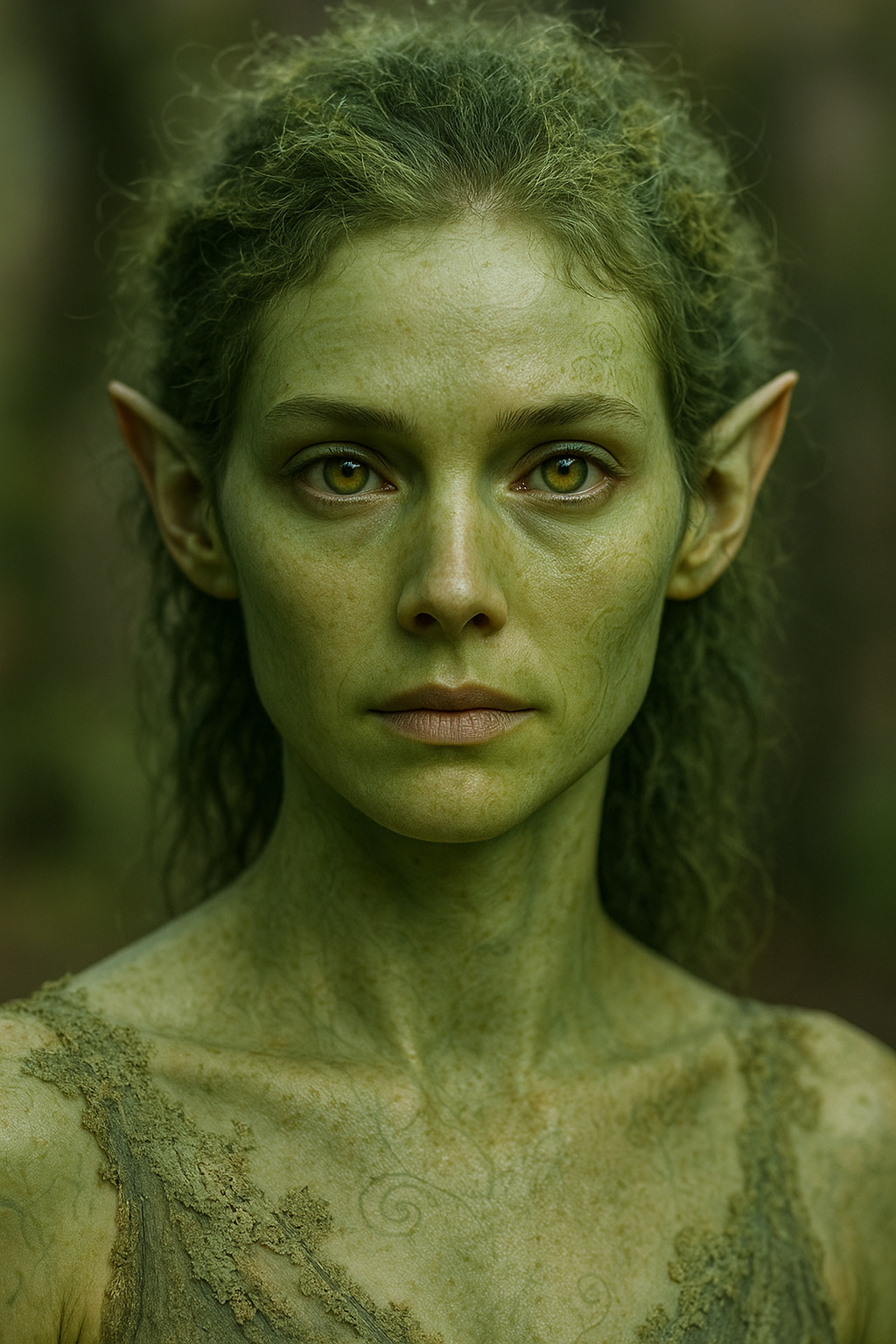

Comments