
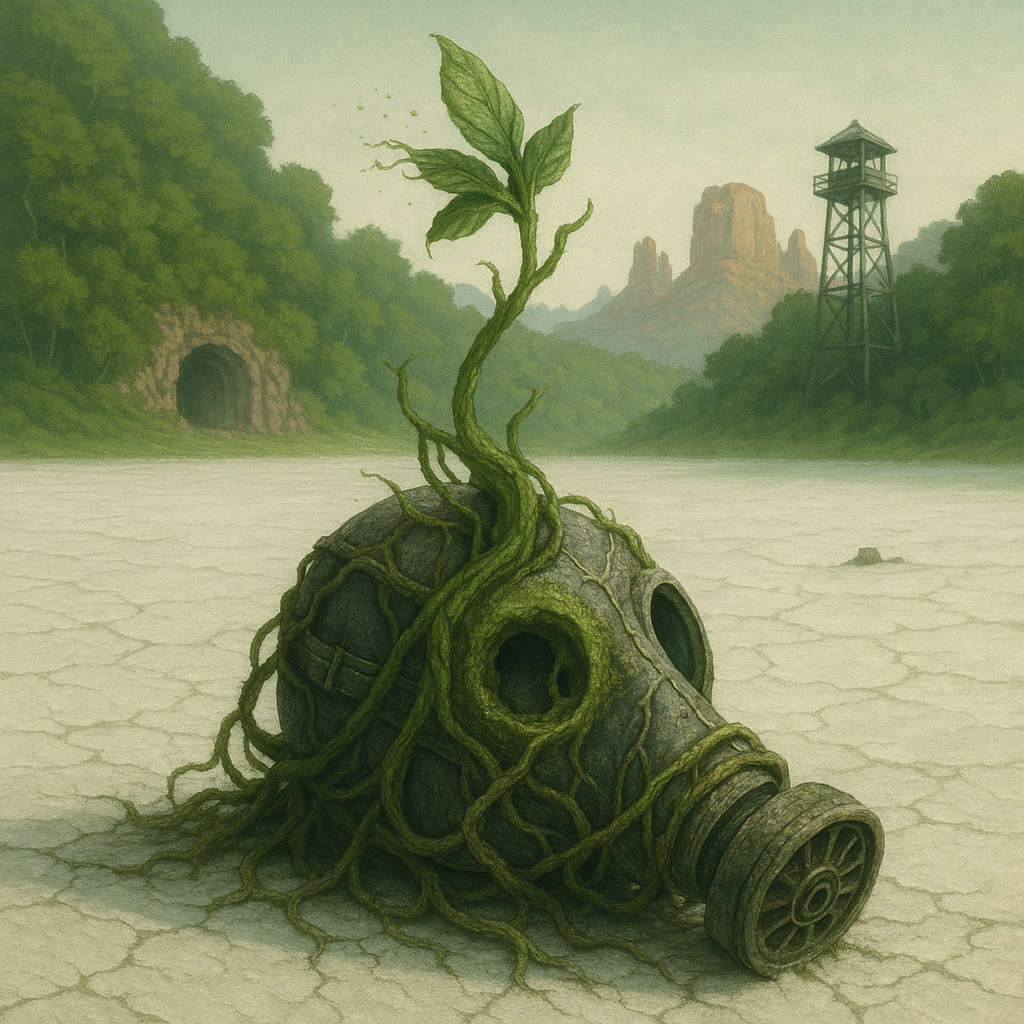
Letharia
The Letharia are a post-human symbiotic species that emerged from humans who developed immunity to the Verdant compound rather than being consumed by it. Named after the toxic wolf lichen (Letharia vulpina), they represent successful integration between human consciousness and plant biology. Unlike the Hollowed, who lose their humanity to the Verdancy, or the Mika-born, who retain human form while gaining plant abilities, the Letharia have evolved into a distinct elvish-like species that embodies the balance between human intelligence and plant resilience.
There are multiple pathways to becoming Letharia, though not all are equally viable or safe. Some humans who have a genetic predisposition are the most stable ones to undergo Letharia transformation. Those with the Lin's Line genetics who are descendants of Dr. Lin, who tested Verdant resistance on her own genes, survivors of Project Genesis and their descendants, and people with natural Verdant resistance who have the right genetic and biological markers are prime candidates for Letharia transformation, as they represent populations of humans who have the most stable chances of symbiosis. Letharia transformation can also occur through guided transformation which is risky and rare, but some Mika-born individuals can achieve full Letharia transformation under proper guidance without becoming Hollowed. Experienced Letharia can also guide genetically compatible humans through the transformation in the form of mentorship and use mycelial network connections to stabilize the symbiosis process. There are some very rare and dangerous cases of spontaneous Letharia mutation where individuals with partial immunity can undergo successful transformation during Verdant exposure, but there is an extremely low success rate, with most becoming Hollowed in the process. The Archive Collective are trying to weaponize and control Letharia abilities by creating artificial Letharia transformations, and some radical Rootbound communities and Mika-born cults attempt forced transformation rituals.
Not everyone can become Letharia because it requires specific genetic compatibility and most humans lack the necessary biological markers for transformation. The wrong genetic profile can lead to Hollowing or death, and transformation attempts without proper guidance or mentorship are usually fatal. The process is extremely dangerous, and even compatible individuals face significant risk as the process requires years of careful biological integration and symbiosis. Stress, trauma, and improper conditions can result in failure, leading to Hollowing or death.
Some humans seek transformation, especially those facing Verdant-related conditions like the incurable Spore Lung, while other fear it. Letharia themselves are very selective about who they are willing to mentor and help attempt the transformation process as it is seen as sacred, ritualistic, and dangerous.
Basic Information
Anatomy
The Letharia possess a modified human anatomy that has evolved to support their unique symbiotic existence. Their skeletal structure represents a marvel of biological engineering, with bones that have developed a partially hollow architecture similar to avian species, dramatically reducing their overall body weight while maintaining structural integrity through the integration of lignin—the same organic polymer that provides strength to wood. This adaptation allows them to move with an almost ethereal grace while supporting the additional biological systems required for their plant-human hybrid nature.
Their circulatory system has evolved into a sophisticated dual-network that maintains both traditional mammalian blood circulation and a secondary system carrying nutrient-rich plant sap throughout their body. This secondary circulation appears as visible green veining beneath their translucent skin, pulsing with a slower, more rhythmic flow that follows seasonal patterns rather than the constant heartbeat rhythm of pure blood circulation. The two systems work in perfect harmony, with the sap circulation providing minerals, sugars, and plant-based nutrients while the blood system continues to transport oxygen and traditional metabolic compounds.
The respiratory modifications in Letharia are perhaps their most remarkable adaptation, featuring lungs that have developed specialized chambers, capable of processing both oxygen for cellular respiration and filtering airborne spores that would be otherwise toxic to unmodified humans. Their enhanced respiratory systems and lungs can extract moisture from the air more efficiently and can process certain atmospheric chemicals that support their photosynthetic processes, while simultaneously serving as a natural defence against Verdant contamination that proves fatal to ordinary humans.
Their digestive system has undergone significant simplification, with reduced stomach capacity and modified intestinal structures that reflect their decreased dependence on traditional food sources. Instead, their bodies have developed enhanced mineral absorption capabilities through both their digestive tract and specialized skin cells, allowing them to derive essential nutrients directly from soil contact and atmospheric moisture. Finally, their nervous system represents the most profound change, enhanced with biological mycelial networks that thread through their neural pathways like living fibre optic cables, enabling a form of limited telepathic communication with other Letharia and direct interface with the broader fungal networks that span continents beneath the earth's surface.
Biological Traits
The Letharia possess several distinct biological characteristics that fundamentally separate them from both baseline humans and other Post-Verdant species, creating a unique physiological profile that reflects their successful symbiotic evolution. Their most remarkable enhancement lies in their photosynthetic capacity, which allows them to derive between sixty and seventy percent of their nutritional needs directly from sunlight and mineral absorption rather than traditional food consumption. This extraordinary adaptation involves specialized cells throughout their skin that function similarly to plant chloroplasts, converting light energy into usable nutrients while simultaneously processing minerals absorbed through direct contact with soil, rock, and water sources. Combined with their toxin resistance—a comprehensive immunity to most Verdant spores and many environmental toxins that prove lethal to unmodified humans—this nutritional independence grants them survival capabilities that would seem miraculous to their Human ancestors.
Their regenerative healing abilities represent another profound advancement, utilizing plant-based cellular regeneration techniques that can repair tissue damage at rates far exceeding normal Human recovery. When injured, Letharia bodies respond by rapidly generating new cellular material through processes similar to how plants regrow damaged branches and leaves, often resulting in healed tissue that shows improved integration of their symbiotic features. This healing capacity works in conjunction with their remarkable environmental adaptation abilities, allowing them to adjust their body chemistry in real-time to match local ecosystem conditions, whether that means altering their mineral absorption rates in different soil types, adjusting their photosynthetic efficiency based on available light spectrums, or modifying their respiratory patterns to process varying atmospheric compositions.
Most significantly, their biological capacity for network connectivity enables direct communication through mycelial networks that span boundless distances beneath the earth's surface, creating a form of biological "internet" that connects Letharia communities across continents. This network connectivity operates alongside their seasonal attunement, which synchronizes their physical and psychological changes with natural cycles in ways that affect everything from their energy levels and colouration to their reproductive cycles and sleep patterns—creating beings whose entire existence pulses in harmony with the rhythms of the natural world itself.
However, these remarkable enhancements come with limitations that reflect the delicate balance required to maintain their hybrid nature. Their sensitivity to salt represents their most significant vulnerability, as high salt concentrations can disrupt the carefully maintained symbiotic balance between their Human and plant components, causing painful cellular disruption and even temporary loss of their enhanced abilities. This sensitivity creates particular challenges in Post-Verdant environments where salt barriers are commonly used as protective measures against plant-based threats. Their light dependency also means that extended periods of darkness can cause progressive weakness and malnutrition, as their photosynthetic systems begin to fail and their internal energy reserves become depleted, making them particularly vulnerable during prolonged underground journeys or extended winter seasons.
Integration instability poses another ongoing challenge as significant stress, trauma, or emotional upheaval can temporarily disrupt the fragile balance between their Human consciousness and plant biology, sometimes resulting in periods where their enhanced abilities become unreliable or their physical appearance shifts dramatically as their symbiotic systems struggle to maintain equilibrium. Lastly, their network dependence means that complete isolation from other Letharia can cause severe psychological distress, as their consciousness has evolved to expect and rely upon the subtle background connection to their species' collective awareness, making solitary individuals vulnerable to depression, anxiety, temporary insanity, and cognitive difficulties that can compound until network contact is restored.
Genetics and Reproduction
The reproductive biology of the Letharia represents a fascinating fusion of mammalian and botanical processes that has evolved to ensure the stability of their hybrid nature across generations. Their reproductive method maintains the fundamental framework of sexual reproduction found in their human ancestors, but has incorporated spore-based fertility cycles that align with seasonal patterns and optimal environmental conditions. Rather than the monthly cycles of baseline humans, Letharia experience fertility periods that correspond to specific atmospheric conditions, humidity levels, and mycelial network activity, creating natural windows of reproductive opportunity that typically occur two to three times per year during periods when the symbiotic balance between human and plant elements is at its strongest.
The gestation period has extended significantly beyond human norms, lasting between fifteen to eighteen months to accommodate the complex developmental needs of hybrid offspring. What makes Letharia reproduction truly unique is the partial external development that occurs during the latter stages of pregnancy. After approximately ten to twelve months of traditional internal gestation, Letharia mothers transfer their developing offspring to specially prepared moss-lined nursery chambers—living environments that have been cultivated and attuned to provide the optimal conditions for the final stages of fetal development. These nursery chambers, often grown within the heart of ancient trees or carved into limestone caves rich with beneficial fungi, create a bridge between the mother's body and the external world, allowing the developing child to begin forming their crucial symbiotic relationships with plant life even before birth.
While Letharia fertility rates remain significantly lower than those of baseline humans, with most individuals producing only one to three offspring during their extended lifespans, their reproduction is characterized by remarkably high survival rates that ensure population stability despite the reduced birth frequency. The extended gestation period, careful environmental preparation, and community investment in each birth creates conditions where infant and childhood mortality is virtually eliminated, a stark contrast to the harsh survival rates experienced by human communities in the Post-Verdant world. Perhaps most importantly, the Letharia have achieved remarkable genetic stability in their human-plant hybrid genome after several generations of careful adaptation, with their reproductive systems now consistently producing viable offspring that maintain the delicate balance of traits necessary for symbiotic survival without the genetic instability that plagued earlier generations of human-Verdant hybrids.
Growth Rate & Stages
The developmental journey of the Letharia unfolds across five distinct life stages that reflect their unique fusion of human consciousness and plant biology, each marked by profound physical, psychological, and spiritual transformations.
The Spore Stage (Years 0-2): Encompasses the first two years of Letharia life, and represents the most vulnerable and magical period of Letharia existence. During this phase, newly born individuals remain closely tethered to the moss-lined nursery chambers where they complete their gestation, appearing almost more plant than human as their bodies slowly adapt to independent life. Their skin maintains a translucent, almost ethereal quality, and they derive most of their nutrition through direct contact with the nurturing moss beds that continue to provide specialized nutrients essential for their developing symbiotic systems. Spore Stage Letharia communicate primarily through chemical signals and network pulses rather than vocalization, and their movements are slow and deliberate as their nervous systems integrate with their plant components.
The Sapling Stage (Years 2-25): Stretches from ages two to twenty-five, marking a period of remarkable transformation and rapid growth as young Letharia develop their defining symbiotic features. During these years, their human characteristics become more pronounced, while their plant adaptations strengthen and stabilize, creating the distinctive appearance that will define them for life. This stage is characterized by explosive physical growth, with individuals often doubling in height within just a few years, while their skin patterns, colouration, and plant integrations become increasingly complex and beautiful. Sapling Letharia begin to develop their unique sensory capabilities, learning to perceive through mycelial networks and gradually extending their photosynthetic capacity, though they remain dependent on their community for guidance and protection as their abilities mature.
The Flowering Stage (Years 25-50): The stage spans ages twenty-five to fifty, representing the peak of Letharia physical and reproductive capabilities, when they achieve sexual maturity and reach their full potential as individuals. During this vibrant period, their bioluminescent qualities become most pronounced, their network connectivity reaches optimal strength, and their ability to interface with both human and Verdant worlds becomes fully realized. Flowering Letharia often take on active roles in their communities as healers, mediators, and explorers, using their peak physical capabilities to venture into dangerous territories and establish new symbiotic relationships with local ecosystems. This stage is also when most Letharia form their deepest romantic partnerships and contribute to the next generation, their bodies radiating the vital energy that gives this life stage its name.
The Rooted Stage (Years 50-100): Encompasses ages fifty to one hundred fifty, marking the transition from individual achievement to community leadership and deep ecological integration. Rooted Letharia develop profound connections with their local environments, often forming permanent symbiotic relationships with specific groves, caves, or geographic features that become extensions of their own being. During this stage, they assume leadership roles within grove councils, become mentors to younger generations, and dedicate themselves to long-term projects of environmental restoration and community building. Their wisdom deepens as their network connections become more sophisticated, allowing them to access collective memories and knowledge spanning centuries of Letharia experience.
The Ancient Stage (Year 150+): Beginning around age one hundred fifty and continuing for potentially centuries, represents the ultimate evolution of Letharia existence toward transcendent wisdom and transition to a semi-sessile lifestyle. Ancient Letharia often become so deeply integrated with their chosen ecosystems that they may appear more as living landscape features than individual beings, their bodies partially merging with the trees, rocks, or cave systems they have chosen as their permanent homes. These eldest members of Letharia society serve as living libraries of knowledge and wisdom, accessible through the deepest levels of network communication, and their guidance influences major decisions affecting the entire species across vast geographic regions.
Ecology and Habitats
The Letharia thrive in environments that mirror the delicate balance they have achieved within their own biology, favouring locations where the boundaries between different ecological systems create rich opportunities for symbiotic growth. Their ideal habitats are found in humid, temperate climates where abundant lichen and moss growth creates a living carpet of the very organisms that form the foundation of their symbiotic existence. These environments provide not only the optimal atmospheric moisture levels that support their photosynthetic processes, but also maintain the complex chemical exchanges between air, water, and living surfaces that the Letharia have evolved to utilize for nutrition and communication.
Particularly crucial to Letharia communities are areas where sunlight reaches the ground in filtered, dappled patterns rather than harsh direct exposure—conditions typically found beneath dense forest canopies or within cave systems that feature natural light sources such as crystal formations or bioluminescent organisms. This filtered illumination provides the gentle, consistent energy input their photosynthetic adaptations require while preventing the cellular damage that intense sunlight might cause to their more delicate plant-integrated tissues. Many Letharia settlements are established in limestone caves with extensive natural mineral deposits, as these environments offer both the protection and the rich chemical resources essential to their unique physiology, while the alkaline conditions help neutralize any residual Verdant toxins that might threaten their carefully maintained biological balance.
Perhaps most importantly, the Letharia show a marked preference for transitional zones—the liminal spaces between healthy, natural ecosystems and areas affected by Verdant corruption. These boundary regions provide them with unique opportunities to practice their role as ecological mediators, working to restore balance while drawing from both the stability of unaffected nature and the transformative energy present in Verdant-influenced areas. In these transitional zones, they can monitor the health of expanding ecosystems, intervene when Verdant growth threatens to become destructively aggressive, and gradually extend the borders of balanced, symbiotic growth that represents their vision for the world's future.
Dietary Needs and Habits
The nutritional requirements and feeding behaviours of the Letharia represent a radical departure from traditional human dietary patterns, reflecting their successful evolution into beings that derive sustenance primarily through plant-like processes rather than conventional consumption. Their primary nutrition comes through the elegant biological processes of photosynthesis and direct mineral absorption, with specialized skin cells and root-like extensions that can emerge from their extremities allowing them to draw essential nutrients directly from soil, rock surfaces, and even the mineral-rich walls of limestone caves. During daylight hours, their photosynthetic capabilities convert sunlight into usable energy with remarkable efficiency, while their enhanced circulatory system distributes both the sugars produced through photosynthesis and the minerals absorbed through dermal contact throughout their hybrid physiology. This primary nutritional system provides approximately seventy percent of their caloric and mineral needs, creating a level of dietary independence that would be impossible for unmodified humans.
Supplementary feeding remains necessary to maintain optimal health, though these requirements are dramatically reduced compared to their human ancestors. Fresh water remains essential, though Letharia can extract moisture from air and dew with greater efficiency than baseline humans, and they require a periodic intake of specific trace minerals that cannot be obtained through photosynthesis or dermal absorption alone. Occasionally, they consume small amounts of organic matter—typically fruits, nuts, or specially prepared plant materials—particularly when their systems need specific nutrients for healing, reproduction, or periods of high energy expenditure. These feeding sessions often take on ceremonial significance, with communities gathering to share rare delicacies or seasonal offerings that connect them to their pre-transformation heritage.
Traditional hunting and foraging activities play minimal roles in Letharia survival, serving primarily specialized purposes rather than daily sustenance needs. When they do engage in these activities, it is typically to obtain specific nutrients needed for healing particular conditions, to gather materials for ceremonial purposes, or to maintain cultural connections with their human ancestry. Some Letharia communities practice ritualized foraging expeditions during seasonal transitions, not from nutritional necessity, but as a form of meditation and environmental connection that helps them maintain their role as bridges between human and plant worlds.
Perhaps most remarkably, the Letharia have developed sophisticated internal nutrient storage systems within modified organs that allow them to survive extended periods without external nutrition sources. These specialized storage organs, which have no direct analogue in human anatomy, can accumulate excess energy produced during peak photosynthetic periods and essential minerals gathered during times of abundance, creating biological reserves that can sustain them through seasonal dormancy periods, extended periods of darkness, or emergency situations where environmental conditions prevent normal feeding processes. This internal storage system operates with such efficiency that some Ancient Letharia can survive for months at a time in complete darkness or hostile environments, drawing upon centuries of accumulated biological reserves.
Biological Cycle
The Letharia experience profound seasonal transformations that synchronize their entire physiology with the natural rhythms of their environment, creating a living embodiment of the cyclical patterns that govern all plant life. During the vibrant months of spring and summer, their bodies undergo remarkable changes as increased photosynthetic activity transforms them into beings of radiant energy and heightened vitality. Their skin takes on brighter, more vivid colourations—the green veining beneath their translucent flesh pulses with increased intensity, while their hair shifts from muted earth tones to brilliant emerald or golden hues that seem to capture and reflect the abundant sunlight. This period of peak photosynthetic function floods their systems with energy, making them more physically active, emotionally vibrant, and socially engaged as they take full advantage of the optimal growing conditions to expand their communities, explore new territories, and engage in the demanding work of ecological restoration.
As the wheel of seasons turns toward autumn and winter, the Letharia undergo an equally dramatic but opposite transformation, their biological processes shifting toward conservation and introspection. Their colouration becomes more muted and subdued, with the bright greens fading into deeper forest tones and silvery greys that help them blend seamlessly into more dormant landscapes. Physical activity decreases significantly as their bodies enter states resembling extended meditation or hibernation, their consciousness turning inward and downward toward the vast mycelial networks that remain active beneath the frozen earth. During these contemplative months, Letharia communities become centres of deep communication and knowledge sharing, as individuals spend long periods in network communion, accessing collective memories, sharing wisdom across vast distances, and participating in the slow, patient conversations that flow through fungal networks spanning entire continents.
The reproductive cycles of the Letharia are intimately tied to what they call "Spore Season"—specific periods throughout the year when atmospheric conditions, mycelial network activity, and environmental chemistry align to create optimal conditions for both conception and the successful development of offspring. These seasons typically occur during transitional periods between major seasonal shifts, when the biological systems of both partners are in perfect harmony and the surrounding ecosystem can provide the specialized support needed for the extended gestation and nursery development that Letharia reproduction requires. The timing of Spore Season varies by geographic location and local environmental conditions, but always coincides with periods when the symbiotic balance between human and plant elements reaches its most stable and productive state.
Behaviour
The behavioural patterns of the Letharia reflect their unique position as liminal beings caught between worlds, embodying both the compassion of their human heritage and the patient wisdom of their plant nature. Their interactions with baseline humans are characterized by cautious empathy, approaching these encounters with the careful deliberation of beings who understand both the potential for connection and the very real dangers that misunderstanding can bring. They show particular interest in humans who display any signs of Verdant resistance or immunity, seeing these individuals as potential candidates for transformation, or at least "allies" in their vision of symbiotic coexistence. However, this empathy is tempered by hard-won wisdom about human fear and aggression, leading most Letharia communities to observe human settlements from a distance, offering subtle aid during crises while maintaining the secrecy that has become essential to their survival. When direct contact does occur, they approach with the gentle persistence of growing vines, seeking to build trust slowly and demonstrate their peaceful intentions through actions rather than words.
Perhaps no aspect of Letharia behaviour reveals their deep emotional complexity more than their interactions with the Hollowed—the humans who have been completely consumed by Verdant corruption and lost their individual consciousness to the collective network. Rather than the fear or revulsion that most humans show toward these transformed beings, Letharia approach the Hollowed with profound grief and an almost desperate hope for restoration. They see each Hollowed individual as a tragedy of failed symbiosis: a person who might have become Letharia themselves, had the transformation been guided rather than chaotic. Many Letharia dedicate significant portions of their extended lifespans to studying the Hollowed, attempting various forms of communication through network interfaces, and experimenting with techniques that might restore some measure of individual consciousness, without severing the transformed beings from their plant components entirely. These efforts rarely succeed, but the Letharia continue them with the patient determination that characterizes their species, viewing each attempt as both a form of mourning and a scientific endeavour that might prevent future tragedies.
In their interactions with other species, both mundane and exotic, the Letharia consistently demonstrate a philosophy of peaceful coexistence that is focused on maintaining ecological balance, rather than asserting dominance or control. They approach wildlife with the same careful respect they show to plant life, understanding themselves to be part of the vast, interconnected web of existence rather than the masters of it. This perspective extends to their relationships with other post-human species, and even stranger entities that have emerged in the transformed world, as they consistently seek ways to establish communication and mutual understanding rather than engaging in territorial conflicts or resource competition.
However, the Letharia do display fierce territorial behaviours when their sacred groves and nursery sites are threatened, transforming from gentle diplomats into formidable defenders with startling assertion. These protected spaces represent far more than simple homes to the Letharia—they are the living hearts of their communities, the carefully cultivated environments where their young develop and their deepest spiritual practices take place. When these sites face destruction, whether from human activity, Verdant corruption, or natural disasters, the normally peaceful Letharia call upon defensive capabilities that combine their plant-based adaptations with tactical intelligence inherited from their human ancestors. They can rapidly mobilize local ecosystems in their defence, communicate instantly with distant communities through mycelial networks to coordinate responses, and demonstrate that their commitment to peace does not extend to allowing the destruction of the next generation or the sacred spaces that define their identity as a species.
Additional Information
Social Structure
Groves of Letharia are small communities of about ten to thirty individuals who are led by the eldest Letharia. Their wisdom and knowledge of nature is considered law and religion combined. Their connection to spanning underground mycelial networks allow them to maintain contact with distant communities, and the elder individuals have developed a mentorship system that allows them to guide younger Letharia through each transformation life stage. When important choices or decisions must be made within a Grove community, it is a collective decision that is made through network consciousness consultation.
Domestication
The Letharia cannot be "domesticated" in the traditional sense, as they are a sapient species. However, they have developed symbiotic relationships with various organisms. They nurture specific moss, lichen and mycorrhizae species that integrate with their unique biology. They have living architecture, meaning that their buildings and tools are grown and trained rather than constructed. They also have companion flora which are specialized plants that serve as living tools, weapons, and communication devices for their species. They also selectively breed plant partners through guided evolution to enhance symbiotic compatibility.
Uses, Products & Exploitation
Note: The Letharia are a sapient species and cannot ethically be "used." However, their unique biology produces certain byproducts and capabilities.
Their natural byproducts include healing spores which are shed naturally and can accelerate plant growth and heal certain Verdant-related ailments like Spore Lung. Their bioluminescent secretions are also used by other communities for lighting and navigation. During growth and transitional stages, they release symbiotic seeds that help establish balanced ecosystems in Verdant-damaged areas.
However, there are several potential exploitation concerns among the Letharia. The Archive Collective has an innate interest in the clinical study of their species' stable human-plant integration. Some Rootbound Verdant extremists have attempted to recruit Letharia in attempts to convert them. The species is also aware that they could be abused for resource extraction and unethical harvesting of their natural biological byproducts, which is why they remain hidden in small, scattered colonies.
They are capable of ecological restoration by healing damaged environments, communicating between human settlements and Verdant territories as a form of Verdant mediation, and can relay long-distance messages through mycelial network communications.
Facial characteristics
Letharia have large, luminescent eyes that are often amber, green, or violet that contain visible photosynthetic membranes. Their skin is translucent with visible green veining due to their sap circulatory system, and their skin itself is capable of limited photosynthesis. Their hair tends to have a moss-like texture that incorporates organic plant matter, with colours ranging from deep green to silver-white, depending on their environmental surroundings. Most notably, Letharia have sharp facial features, angular cheekbones, pointed ears, and a slightly elongated skull compared to baseline humans.
Geographic Origin and Distribution
- Western Europe
- Continental Europe
- Pacific Northwest
- Northern Rocky Mountains
While these are the main locations that Letharia inhabit, they can also be found in sparse colonies in the transitional zones between Verdant overgrowth and salt-resistant areas, hidden groves within specific territories consumed by the Green Tide, mountain caves and limestone formations that are colonized with natural lichen growth, and underground networks that exist beneath fallen cities where Verdant-mutated moss has dissolved metal infrastructure.
Average Intelligence
Letharia are enhanced beyond baseline humans through their access to a mycelial network of consciousness. It renders them capable of parallel processing and collective problem-solving while maintaining their own individual identity.
Perception and Sensory Capabilities
The sensory capabilities of the Letharia have evolved far beyond human limitations, creating a supernatural perception that allows them to navigate their transformed world with remarkable acuity. Their enhanced photosynthetic vision represents their most striking adaptation, with eyes that can perceive not only the visible light spectrum, but also ultraviolet and near-infrared wavelengths that remain invisible to human sight. This expanded visual range allows them to: see the health and vitality of plant life as shifting auras of colour, detect optimal photosynthetic conditions, and navigate in low-light environments where their plant-adapted vision can distinguish subtle variations in available light energy. Their eyes often appear to glow with an inner luminescence, reflecting the photosynthetic membranes that have developed within their ocular structures.
The mycelial network sensing ability grants Letharia access to what could be described as a biological internet spanning vast distances through underground fungal networks. Through specialized neural adaptations, they can tap into these networks to communicate instantaneously with other Letharia across continents, share collective memories and knowledge, and access information about environmental conditions in distant locations. This connection manifests as a gentle humming sensation in their consciousness, described by many as hearing the "Earth's heartbeat" or sensing the "whispers of roots." The communication through these networks transcends language, operating instead through shared emotional states, visual impressions, and complex conceptual exchanges that would be impossible to achieve through conventional speech patterns.
Their chemical detection capabilities have been heightened to an extraordinary degree, allowing them to perceive airborne compounds, pheromones, and environmental chemicals with sensitivity that rivals the most sophisticated scientific instruments. They can detect the approach of Verdant growth from kilometres away through subtle changes in atmospheric chemistry, by identifying the emotional states of other beings through pheromone analysis, and navigating complex chemical landscapes invisible to other species. This ability also grants them an almost supernatural awareness of approaching weather patterns, seasonal changes, and ecosystem health through the molecular signatures carried on air currents.
Perhaps most uniquely, Letharia possess what they call "Verdant Resonance"—an innate ability to sense the presence, growth patterns, and health status of all Verdant-related phenomena. This sense allows them to distinguish between healthy symbiotic plant growth and the corrupted, aggressive expansion that characterizes dangerous Verdant blooms. They can feel the pulse and rhythm of growing things, detect areas where the natural balance has been disrupted, and identify locations where successful restoration might be possible. Lastly, their extended lifespans have fundamentally altered their temporal perception, allowing them to experience time as flowing in broader, more patient rhythms than the urgent, moment-to-moment existence of shorter-lived species, giving them an almost prophetic ability to perceive long-term patterns and consequences that escape others who are focused on immediate survival.
Symbiotic and Parasitic organisms
The primary symbionts of Letharia are various moss and lichen species, but especially Letharia vulpina, or wolf lichen, which is also a symbiotic organism of fungus and algae/cyanobacteria, which is thought to be what causes humans to transform into Letharia. The wolf lichen mirrors what these transformed beings represent: successful symbiosis between human and Verdant, rather than succumbing to its consumption or Hollowing. Mycorrhizal fungi may also colonize Letharia root tissues. The Letharia create organic molecules through photosynthesis and supplies them to the Mycorrhizae in sugars and lipids, and the Mycorrhizae supply the Letharia with water and mineral nutrients like phosphorous, in return. Due to the fragile symbiotic nature of Letharia, they actively avoid Verdant spores, which are toxic to their balanced ecosystems.
Civilization and Culture
Naming Traditions
Letharian naming traditions begin with a spore name, which is given to Letharia at birth and is often related to the seasonal conditions or circumstances of their emergence (e.g., Fernwhisper, Mossbloom, Lichenbright). During adolescence, they are given a growth name, which reflects their developing abilities and personality (e.g., Deeproot, Swiftleaf, Stormweather). As Letharia enter adulthood, they are given a Grove name, which demonstrates their allegiance and role that it taken upon joining a specific Grove community (e.g., Oakshade-the-Patient, Willowbend-the-Wise). Each Letharia is also provided with a network name, but it is a sacred name that it only used in mycelial communication with others of the species. This name is untranslatable to human languages.
Major Organizations
Grove councils are local governing bodies within Groves that focus on community welfare and ecological balance of the species. The underground communication system that connects all Letharia Groves through mycelial networks is called "The Deep Network." Among all Letharia Groves, there is an organization called the "Restoration Circle," which is a group of individuals who are dedicated to healing damaged ecosystems and attempting to reverse the extreme Verdant corruption of the Earth. Lastly, there are "Bridge Walkers," who serve as Letharia intermediaries between human settlements and Verdant territories, negotiating for the survival of human communities.
Beauty Ideals
Individuals with vibrant, healthy symbiotic markings are considered the most beautiful among Letharia beauty standards. They admire graceful integration of plant and human features, with luminescent eyes that show a deep network connection and seasonal skin and hair colour changes that reflect environmental harmony.
Gender Ideals
Gender is fluid among Letharia, often related to seasonal cycles and ecological roles rather than fixed biological categories. Some Letharia change gender expression based on community needs or personal growth phases.
Courtship Ideals
Among Letharia, rootmates (partners) must be compatible with each other through mycelial communication. This means that they are able to create a telepathic bond called a "mossbond." When they first touch or make eye contact with their rootmate, their network connections create a mossbond which harmonizes, creating a unique frequency that only they share. They develop photosynthetic synchronization where their plant systems synch, their green veins pulsing in unison, and their seasonal changes align. The green veining in their skin begin to grow in matching, intertwined, and complementary patterns that seem to fit together like puzzle pieces. They develop natural lichen-like markings on their skin in symmetrical locations, making them "moss-marked" as rootmates for life. As long as the mossbond remains strong, the lichen mark continues to grow in identical patterns on both partners, often turning into actual living moss patches on their skin. Their bioluminescent glow in dark spaces takes on the same colouration when they are together, and it dims slightly when they are apart. Both partners share colours and seasonal changes in perfect synchronization, even when separated by long distances. Once moss-marked, successful couples form an ecological completion that complements each Letharia's symbiotic abilities. Courtship is often seasonal and aligned with optimal reproductive cycles, and community elder approval is required before becoming moss-marked through collective network consultation.
Relationship Ideals
Moss-marked couples have a symbiotic partnership and their relationship mirrors the plant-human integration within individuals. Rootmates are able to maintain individual identity through The Deep Network, while sharing a deeper connection through their mossbond. Relationships have an ecological purpose where they serve the greater goal of environmental harmony, and are longevity-focused with partnerships being built for century-long commitment.
Average Technological Level
Letharia have bio-integration technology which is comprised of living tools that grow and adapt to the user's needs. They have instantaneous communication across vast distances through fungal networks and a sense of ecological engineering that gives them the ability to guide and direct natural growth patterns of nature and Verdant-contaminated growth. Their healing techniques are comprised of symbiotic medicine, and they use healing techniques that are suited to their plant-human hybrid biology.
Major Language Groups and Dialects
- Grove-Speech: Local verbal communication within communities
- Moss-Tongue: Silent communication through mycelial connections
- Wind-Whispers: Long-distance communication using airborne spores and pheromones
- Stone-Script: Written language carved into rock and living wood
Common Etiquette Rules
In Letharia communities, it is common etiquette to meet new individuals with a "Grove Greeting" by touching foreheads together to share a brief network connection. It is considered respectful to acknowledge the seasons and the current seasonal influences on behaviour and decisions. During collective decision-making processes, the Deep Network can get flooded with voices, so it is respectful to be silent and quiet across the network during these times. During different life stages, it is considered respectful to provide younger Letharia with a growth blessing to offer encouragement for personal and community development.
Common Dress Code
Letharia clothing reflects their symbiotic nature and ecological values by incorporating living garments like clothing made from cultivated moss, lichen, and specially grown plant fibres that continue to live and adapt to the individual. Clothing also takes on seasonal adaptations, where garments may change colour, thickness, and texture based on the environmental conditions. There is less need for skin protection due to the hardy plant-integrated skin of Letharia, so clothing is minimal coverage that favours flowing, breathable designs and styles. There is often functional integration in clothing where clothing might incorporate pouches or holders that become grown from the garment itself for practicality. The complexity and vibrancy of certain clothing patterns are status indicators of age, wisdom, and network connectivity. For ceremonial clothing, Letharia feature elaborate headdresses of flowering vines and bioluminescent fungi for special occasions.
Culture and Cultural Heritage
The cultural heritage of the Letharia represents a profound synthesis of their human ancestry and their plant nature, creating a civilization that moves to the rhythms of seasons rather than the urgent pace of industrial society. Their culture is fundamentally built around the concept of symbiotic balance—the delicate harmony between individual consciousness and collective awareness, between human ambition and plant patience, between immediate needs and long-term ecological stewardship. This philosophy permeates every aspect of their existence, from their decision-making processes that can span decades of careful deliberation to their art forms that literally grow and evolve over time as living sculptures of cultivated moss, lichen, and bioluminescent fungi. The Letharia have inherited humanity's capacity for complex thought and creativity while embracing the plant world's wisdom of interconnectedness and cyclical time, resulting in a society where knowledge is shared freely through network consciousness, where wisdom is measured in centuries rather than years, and where the health of the ecosystem takes precedence over individual achievement.
Their cultural practices centre around temporal patience and network unity, values that would seem almost alien to their human ancestors, but represent the natural evolution of consciousness that has learned to think like a forest. Major cultural decisions are made through extended network deep-diving sessions where entire communities enter collective meditative states, sharing thoughts and memories across the mycelial web until consensus emerges organically like the slow growth of ancient trees. Their artistic traditions include living architecture that grows rather than being built, with homes and community spaces that develop over generations from carefully tended fungal networks and cultivated plant partnerships, creating structures that become more beautiful and functional with age. Music among the Letharia takes the form of harmonic network songs that resonate through underground mycelial systems, allowing communities separated by vast distances to participate in the same musical experience simultaneously, while their visual arts consist of bioluminescent gardens and lichen tapestries that change with seasons and tell stories through patterns of growth and colour that can take decades to fully unfold.
Most importantly, Letharia culture embodies their role as ecological stewards and bridge-walkers between the human and plant worlds, with their entire social structure oriented around the long-term project of healing the damaged world and facilitating the evolution of consciousness that they represent. Their festivals celebrate seasonal transitions rather than historical events, their coming-of-age ceremonies involve successful integration with local ecosystems rather than individual achievements, and their greatest cultural heroes are those who have managed to restore corrupted environments or successfully mediated conflicting species. This culture of patient restoration and symbiotic wisdom represents both a preservation of humanity's best qualities—compassion, creativity, and the capacity for growth—and a fundamental transformation toward a way of being that prioritizes collective flourishing over individual glory, creating a heritage that serves as both a bridge to humanity's past and a promise of what consciousness might become when it learns to think like the living earth itself.
Common Customs, Traditions and Rituals
The daily customs and ceremonial traditions of the Letharia flow like seasonal rivers through their communities, marking the passage of time not through arbitrary calendar dates but through the natural rhythms that govern all living things. Their most fundamental tradition is the Seasonal Transition Ceremonies, which are elaborate, community-wide celebrations that honour each shift in the natural world and acknowledge the corresponding changes within their own biology and consciousness.
During the spring awakening, entire Groves participate in synchronized photosynthetic meditations where hundreds of Letharia stand in perfect stillness as their skin brightens and their network connections pulse with renewed energy, creating spectacular displays of bioluminescent harmony that can be seen from great distances. Summer solstice brings the Great Networking, when communities across continents link their consciousness through the mycelial web for extended periods, sharing memories, knowledge, and collective decision-making in sessions that can last for weeks as information flows like slow lightning through underground fungal highways.
The Spore Blessing Ceremonies represent their most sacred traditions: elaborate multi-day rituals that welcome new life into the community with the reverence of beings who understand that each birth represents not just a new individual, but a new node in the vast network of consciousness that spans their species. These ceremonies begin during pregnancy with the Grove Choosing, where expectant parents work with community elders to select and prepare the living nursery chambers that will shelter the final stages of development, cultivating specific combinations of moss, lichen, and beneficial fungi that will provide optimal conditions for the infant's integration process. The actual birth celebration involves the entire community in Network Deep-Diving sessions where they collectively welcome the new consciousness into their shared awareness, creating psychic pathways that will support the child throughout their development while simultaneously recording the moment in the living memory of the Grove's ecosystem.
Daily customs among the Letharia centre around practices that maintain both their individual health and their community bonds, with each day beginning with Photosynthetic Communion—a period of shared silence where community members stand together in the morning light, their bodies processing sunlight while their minds touch gently through network connections, sharing the simple contentment of successful symbiosis. Their equivalent of family meals consists of Mineral Sharing Circles, where they gather around natural rock formations or specially cultivated crystal gardens to absorb trace nutrients while engaging in the deeper conversations that flow through network communication, allowing for exchanges of thought and feeling that would be impossible through spoken language alone. Evening traditions include Moss Tending, where individuals and families care for their personal plant partners and living architecture, a practice that serves simultaneously as practical maintenance, artistic expression, and meditative communion with the plant consciousness that shares their bodies.
Most uniquely, the Letharia observe Memorial Growing as their primary way of honouring those who have passed into the Ancient stage or beyond: creating living monuments that capture the essence of the remembered individual in carefully cultivated ecosystems that embody their personality, achievements, and contributions to the community. These memorial groves become pilgrimage sites where younger Letharia can commune with the preserved consciousness of their ancestors through network connections that persist in the roots and fungi of these sacred spaces, creating a form of immortality that transforms individual death into collective memory woven into the very landscape they inhabit.
Common Taboos
The taboos of Letharia society reflect their deepest fears about the delicate balance that defines their existence, creating moral boundaries that protect both the individual integrity of their symbiotic nature and the collective harmony of their network-based communities. The most fundamental and violently enforced taboo is Network Violation: the act of forcing unwanted connection or communication through the mycelial systems that link their consciousness, a transgression that strikes at the very heart of what makes Letharia society possible. This violation can take many forms, from the crude assault of attempting to override another's mental barriers to the more subtle manipulation of using network access to influence decisions or extract private thoughts without consent. The horror that Letharia feel toward network violation stems from their understanding that their consciousness exists in a state of voluntary interconnectedness that requires absolute trust to function; any breach of that trust threatens not just the immediate victim, but the entire web of relationships that allows their communities to operate as collective entities while preserving individual identity.
Equally as serious is the taboo against Symbiosis Breaking, any deliberate action that damages or disrupts the carefully maintained integration between human consciousness and plant biology that defines their species. This prohibition extends beyond obvious acts of violence to include behaviours that might seem harmless to other species like consuming certain chemicals that interfere with photosynthetic processes, deliberately exposing oneself to environments that stress the symbiotic balance, or even engaging in thought patterns that reject or deny the plant aspects of their nature. The fear underlying this taboo runs deeper than mere self-preservation; Letharia understand that their symbiosis represents a miraculous achievement that took generations to stabilize, and any action that threatens this balance risks not only individual harm but the potential regression toward the chaotic transformations that created the Hollowed, making symbiosis breaking tantamount to threatening the future of their entire species.
The taboo of Seasonal Denial reflects their profound integration with natural cycles and their understanding that resistance to these rhythms represents a dangerous form of self-delusion that can lead to serious physical and psychological consequences. This prohibition forbids any attempt to artificially maintain the energy levels, social behaviours, or biological processes of one season during another. For example, forcing spring-like activity during winter dormancy periods, refusing to acknowledge the introspective requirements of autumn transitions, or attempting to maintain the intense networking and reproduction focus of summer during the quiet restoration periods that other seasons demand. Letharia view seasonal denial as a form of violence against the self, understanding that their extended lifespans and enhanced capabilities depend entirely on their willingness to flow with rather than fight against the natural rhythms that govern all life.
The taboo against Isolation Seeking is the deliberate attempt to completely sever oneself from network connections and community relationships, and represents the most tragic violation in Letharia society, viewed not as a crime to be punished but as a form of spiritual illness that threatens to destroy both the individual and the community bonds they abandon. This taboo acknowledges that while temporary solitude and privacy are healthy and necessary, complete isolation represents a rejection of the fundamental interconnectedness that makes Letharia consciousness possible, potentially leading to the kind of psychological dissolution that mirrors the loss of individual identity seen in extreme Verdant corruption. When a Letharia begins showing signs of isolation seeking, their community responds not with punishment but with patient intervention, understanding that the desire to separate completely from the network often stems from trauma, fear, or a dangerous form of despair that requires healing rather than condemnation, making this taboo unique in that its violation triggers therapeutic response rather than social sanction.
History
The Letharia emerged approximately 10-15 years after the initial Verdant compound release (Years 10-15 A.V.), as some humans with genetic resistance began showing signs of stable symbiotic integration rather than Hollowing. The first recognized Letharia communities were discovered by Archive scouts in the North Bastion around Year 18 A.V., though they had likely existed in secret for several years prior. They were captured and brought to Dr. Aaron Thorne for testing and experimentation. After rumours across mycelial networks were scattered to other Groves across the globe about certain settlements being attacked and captured by Archive scouts for biological experimentation, Letharia communities secluded themselves collapsed cities to restore Verdant-mutated overgrowth cycles.
Historical Figures
The historical figures revered by the Letharia represent more than individual achievements; they are living presences whose consciousness continues to influence their species through the eternal memory of the mycelial network, making their stories as much ongoing spiritual guidance as historical record. Thornwick the Bridge-Walker stands as perhaps the most celebrated figure of the early Letharia period, a member of the first generation to achieve stable symbiosis who recognized that their species' survival depended not on isolation but on carefully managed contact with the human communities that still struggled to survive in the post-Verdant world. Born during the chaos of the initial transformations when most successful symbionts fled deep into hidden groves to avoid detection, Thornwick made the dangerous choice to emerge from sanctuary and approach the desperate survivors who had established settlements along the salt flats and desert margins where the Verdancy could not reach. Their patient work establishing the diplomatic protocols that still govern Letharia-human interactions prevented countless conflicts that could have led to the extinction of both species, as they taught suspicious human communities that the transformed beings approaching their borders came not as conquerors or corrupted monsters but as potential allies who retained their essential humanity despite their alien appearance.
Elder Silverleaf, known to their people as "The Deep Listener," achieved a form of consciousness integration that remains unmatched in Letharia history, reportedly able to extend their awareness through mycelial networks across entire continents and maintain coherent communication with dozens of separate communities simultaneously. Their extraordinary abilities emerged during the critical period when scattered Letharia communities were first attempting to establish contact with one another, and their success in creating stable, long-distance network connections literally wove together the fabric of early Letharia civilization. More than a mere facilitator of communication, Silverleaf became a living embodiment of the collective consciousness that defines their species, spending decades in deep network meditation to establish the ethical frameworks and communication protocols that prevent the mycelial web from overwhelming individual identity, while allowing for genuine collective decision-making. Their teachings about the delicate balance between personal autonomy and network unity form the philosophical foundation of modern Letharia society, and their consciousness is said to persist so completely within the network that many contemporary Letharia report receiving guidance and wisdom from encounters with Silverleaf's preserved awareness during their own deep meditation sessions.
Mossbloom the Healer, celebrated as "The Great Restorer," represents the pinnacle of Letharia ecological achievement, having successfully restored vast sections of corrupted Verdant territory to natural balance through techniques that combined their species' symbiotic abilities with an almost miraculous understanding of plant consciousness and ecosystem dynamics. Working during the period when the most aggressive Verdant growth was still expanding and consuming everything in its path, Mossbloom developed revolutionary approaches to environmental restoration that involved literally entering into communion with the corrupted plant systems, using their own stable symbiosis as a template to guide the chaotic overgrowth back toward balance and sustainability. Their greatest triumph came in the restoration of the former site of Phoenix, Arizona, where they spent nearly three decades gradually transforming hundreds of square miles of destructive Verdant jungle back into a thriving desert ecosystem that supported both transformed and natural plant communities in harmony, creating a living laboratory that continues to provide insights into ecological healing and serving as proof that even the most damaged environments can be restored through patient, dedicated work informed by deep understanding of both human and plant consciousness.
The tragedy of The Lost Grove Council stands as both inspiration and warning within Letharia historical memory, representing seven community leaders who chose martyrdom rather than allow their Grove and its developing young to be captured and subjected to Archive experimentation during one of the most dangerous periods of human-Letharia relations. When Archive forces discovered their hidden sanctuary through betrayal by a desperate human informant, these seven elders made the ultimate sacrifice to protect their community, using their deep network connections to trigger a cascade failure in their own symbiotic systems that created a biological explosion powerful enough to collapse the cave system sheltering their grove while simultaneously uploading their consciousness completely into the mycelial network where it could never be extracted or studied. Their sacrifice not only prevented the Archive from obtaining living specimens for experimentation but also provided crucial time for the rest of their community to evacuate through hidden passages, and their preserved consciousness within the network continues to offer guidance and protection to Letharia communities facing similar threats, making their memory both a source of spiritual strength and a practical resource for survival strategies.
Finally, Fernweave the Prophet, known as "The Vision-Keeper," represents the most recent addition to the pantheon of Letharia historical figures, a young individual whose extraordinary network sensitivity allowed them to experience prophetic visions of possible futures that continue to influence Letharia strategic planning and spiritual development. Unlike the other great figures whose achievements could be measured in concrete accomplishments, Fernweave's significance lies in their ability to perceive the long-term consequences of current actions and decisions, providing warnings about potential disasters and guidance toward beneficial outcomes that their species' extended lifespans and patient decision-making processes are uniquely suited to follow. Their visions of humanity's possible evolutionary paths, the potential healing of Earth's ecosystems, and the role that Letharia might play in bridging human ambition with natural wisdom have become central to their species' understanding of their place in the world's future, while their predictions about the emergence of other symbiotic species and the eventual development of truly sustainable post-human civilizations provide hope and direction for a species that sometimes struggles with the weight of their role as guardians of both human consciousness and ecological balance.
Common Myths and Legends
The mythological tradition of the Letharia weaves together ancient human storytelling with the living wisdom of plant consciousness, creating legends that exist not merely as verbal narratives, but as shared network memories that can be experienced directly through mycelial communion. The most fundamental and sacred of these is The First Blooming, the creation story that tells of the first human who achieved perfect symbiosis with wolf lichen during the chaotic early years of the Green Tide, when the boundary between salvation and destruction balanced on the edge of a knife. According to this legend, a scientist named Verdania—whose name has become synonymous with transformation—was caught in the initial Verdant surge that consumed her research facility, but rather than fleeing or fighting the overwhelming plant growth, she opened her consciousness completely to the biological intelligence that was reshaping the world. The wolf lichen that first touched her skin recognized something familiar in her genetic structure, a resonance that allowed for true partnership rather than consumption, and together they became the template for what successful symbiosis could achieve. Known in the legend as "The Golden Root," this first Letharia supposedly walked between the human and Verdant worlds for decades, appearing to desperate survivors at crucial moments to teach the delicate balance of surrender and resistance that makes transformation possible, and many Letharia believe she still exists, her consciousness so deeply integrated with the mycelial network that she has become a guiding presence accessible to any who achieve the deepest levels of network communion.
Perhaps even more central to Letharia spiritual life is the legend of The Moss That Remembers, which holds that the moss and lichen species that form their symbiotic partnerships are not merely plant organisms but living repositories of genetic memory that stretch back to the time before the Verdant compound was ever released. This myth suggests that these ancient organisms somehow foresaw the coming ecological catastrophe and began preparing for the day when they would need to preserve human consciousness within their own biological systems, creating a form of living archive that contains not only memories of the Pre-Tide world but prophetic visions of what the post-human future might become. According to this legend, the most accomplished Letharia can access these memories through deep meditative communion with their plant partners, experiencing flashbacks to pristine forests that existed centuries before industrialization, witnessing the secret councils where ancient trees planned for humanity's survival, and glimpsing possible futures where the balance between human creativity and plant wisdom creates civilizations that exist in perfect harmony with their ecosystems rather than in conflict with them.
The legend of The Silver Grove speaks of a mythical community of Ancient Letharia who achieved such complete integration with their environment that they transcended individual existence while maintaining collective consciousness, becoming a living ecosystem that functions as a single vast organism composed of hundreds of interconnected beings. Stories describe this grove as a place where the boundaries between individuals dissolve completely, yet each consciousness remains distinct and valued, creating a form of collective intelligence that makes decisions with the wisdom of centuries while maintaining the creativity and passion that defines their human heritage. Pilgrims who claim to have found glimpses of the Silver Grove report walking through forests where the very trees pulse with heartbeats, where the moss beneath their feet whispers with human voices, and where the air itself carries conversations in languages that bypass the ears and speak directly to the soul, though the grove's location shifts constantly, appearing only to those who have achieved sufficient spiritual development to understand what they are witnessing without being overwhelmed by the experience.
Most hopeful and haunting of all Letharia legends is The Restoration Song, a prophetic myth that speaks of a harmony that can be sung through the mycelial network to heal even the most corrupted Verdant growth and restore the natural balance that existed before the Green Tide transformed the world. This legend holds that the song exists in fragments scattered throughout the collective memory of the network, with each Grove and community preserving different verses, melodies, and rhythmic patterns that must eventually be woven together into a complete composition capable of reversing the chaotic overgrowth that has consumed vast regions of the planet. The myth suggests that only when enough Letharia have achieved perfect symbiotic integration will they be able to combine their voices across the network to sing this song simultaneously, creating a harmonic resonance that will propagate through every root system, fungal network, and plant consciousness on Earth, transforming the aggressive, destructive Verdant growth back into the balanced, nurturing ecosystems that were originally intended by the compound's creators, though some versions of the legend warn that singing the song will require the Letharia to sacrifice their individual existence, merging permanently with the plant consciousness to become the living guardians of a healed world.
Interspecies Relations and Assumptions
The relationships between the Letharia and other sapient species reflect their unique position as bridges between the human and plant worlds, making them simultaneously valuable allies, mysterious threats, and tragic reminders of what transformation can mean in a world where evolution happens not over millennia but within single lifetimes. Their interactions with baseline humans are characterized by a complex dance of approach and withdrawal, driven by the Letharia understanding that while they represent humanity's potential future, they also embody many humans' deepest fears about loss of identity and bodily autonomy. Among the Saltfolk communities scattered across the desert settlements, the Letharia have found their most stable human relationships, as these hardy survivors have learned to value practical capability over ideological purity, creating cautious trade relationships where Letharia serve as intermediaries who can safely navigate Verdant-corrupted territories that would be lethal to unmodified humans. These partnerships often involve Letharia scouts venturing into dangerous overgrown regions to retrieve valuable salvage or establish communication with isolated human communities, while the Saltfolk provide access to the salt-based resources and mineral deposits that help Letharia maintain their symbiotic balance, though even these relationships remain carefully managed to prevent the kind of exposure that might attract unwanted attention from more hostile human factions.
The relationship between Letharia and the Archive Collective represents one of the most dangerous and complex interspecies dynamics in the Post-Verdant world, characterized by a deep, mutual mistrust born from fundamentally incompatible worldviews about humanity's future and the nature of the Verdancy itself. To the clinical, data-driven minds of the Vaultmen, the Letharia represent either valuable research subjects whose stable symbiosis might hold keys to controlling the Verdancy, or dangerous anomalies whose existence threatens the Archive's vision of human technological supremacy over biological chaos. This perspective creates an ongoing cat-and-mouse dynamic where Archive forces constantly seek to capture Letharia specimens for study, while the transformed beings work equally hard to remain hidden, using their network connectivity and environmental integration to stay one step ahead of Archive tracking technology. The few documented encounters between these groups have typically ended in tragedy, with Archive attempts at peaceful contact invariably devolving into capture attempts that trigger desperate Letharia defensive responses, reinforcing both sides' conviction that coexistence is impossible and creating a cycle of suspicion and violence that prevents any meaningful dialogue about their shared human heritage.
In stark contrast, the Letharia maintain natural alliances with the Rootbound communities, finding in these groups kindred spirits who share their philosophy of symbiotic coexistence with the Verdancy, rather than resistance or domination. However, these relationships are complicated by significant differences in approach and ultimate goals, as many Rootbound communities embrace more radical transformation that the Letharia view as dangerously unstable, while some Letharia worry that Rootbound extremists seeking complete merger with Verdant consciousness represent the same threat to individual identity that created the Hollowed. Despite these tensions, practical cooperation flourishes between moderate factions of both groups, with Letharia often serving as spiritual guides and technical advisors to Rootbound settlements, teaching sustainable integration techniques and providing network communication services that allow scattered communities to coordinate their activities across vast distances, while Rootbound communities offer protection and resources to Letharia who are pursued by Archive forces or threatened by hostile human settlements.
Perhaps no relationship reveals more about Letharia than their interactions with the Hollowed, the tragic figures who represent the failure of human-Verdant integration and serve as constant reminders of what the Letharia themselves might have become under slightly different circumstances. Rather than the fear or disgust that most other species show toward these transformed beings, the Letharia approach the Hollowed with profound grief and an almost desperate hope for restoration, seeing in each consumed individual a person who might have achieved successful symbiosis had the transformation been guided rather than chaotic. Many Letharia dedicate significant portions of their extended lifespans to studying the Hollowed, attempting various forms of communication through network interfaces, and experimenting with techniques that might restore some measure of individual consciousness without severing the transformed beings from their plant components entirely. These efforts rarely succeed, but the Letharia continue them with patient determination, viewing each attempt as both a form of mourning for lost humanity and a scientific endeavor that might prevent future tragedies, while their interactions with the Hollowed also serve as spiritual practice that reinforces their own commitment to maintaining the delicate balance between individual identity and collective consciousness.
Their protective mentorship of the Mika-born represents the most hopeful aspect of Letharia interspecies relations, as they recognize in these individuals potential future members of their own species and work tirelessly to guide them toward successful transformation rather than the tragic dissolution that claims so many who attempt to bridge human and plant consciousness. The Letharia see the Mika-born as their younger siblings in transformation, offering guidance through the dangerous early stages of symbiotic development while carefully avoiding the kind of interference that might disrupt the natural process of integration. This relationship often involves Letharia mentors making contact with Mika-born individuals at crucial moments in their development, providing just enough support and wisdom to help them navigate the psychological and physical challenges of transformation without creating dependence that might prevent them from achieving their own stable symbiosis, making these interactions delicate exercises in timing and restraint that require all of the patience and wisdom that centuries of experience can provide.
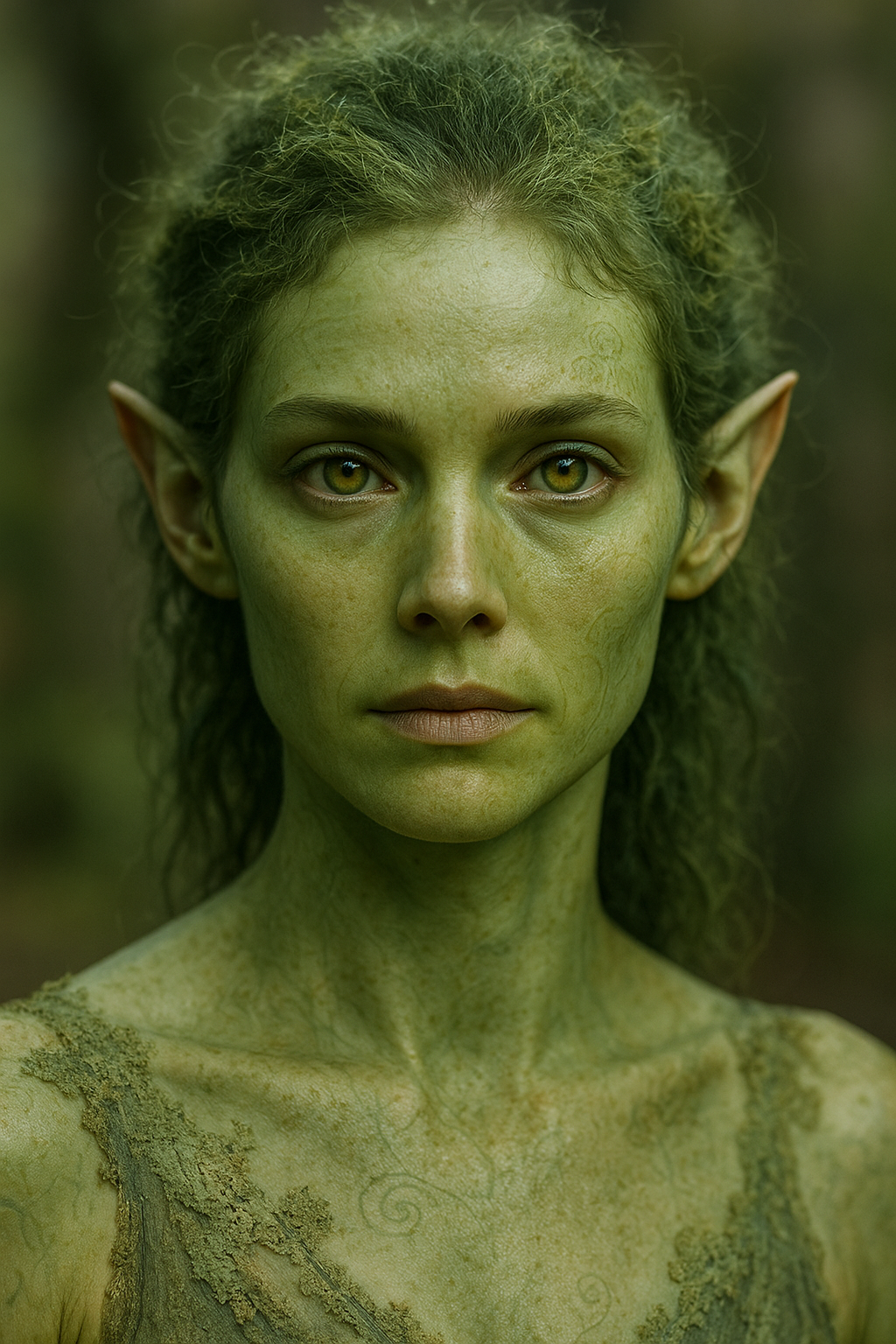
Letharia are tall and graceful with elongated limbs, enhanced flexibility and agility, and visible plant-like features. Their lean muscle structures are adapted for efficiency rather than bulk.
The base coloration of Letharia skin is pale to olive green with undertones of silver or gold glowing through the green veining under their skin. Their skin is marked with natural lichen-like patterns, often in intricate spirals or fractals. Depending on the season, the colouration of their skin changes; it deepens in the spring and summer, and becomes more muted in the fall and winter months. Letharia are just as unique as humans and plant life itself, which are the foundations of their symbiotic biology and physiology. As a result, each individual has variations and unique qualities or identifiers, where some may display bark-like patches, or others might have more delicate moss-covered areas, depending on their current environment, upbringing, and relationships with other Letharia and the nature surrounding them.

Comments