
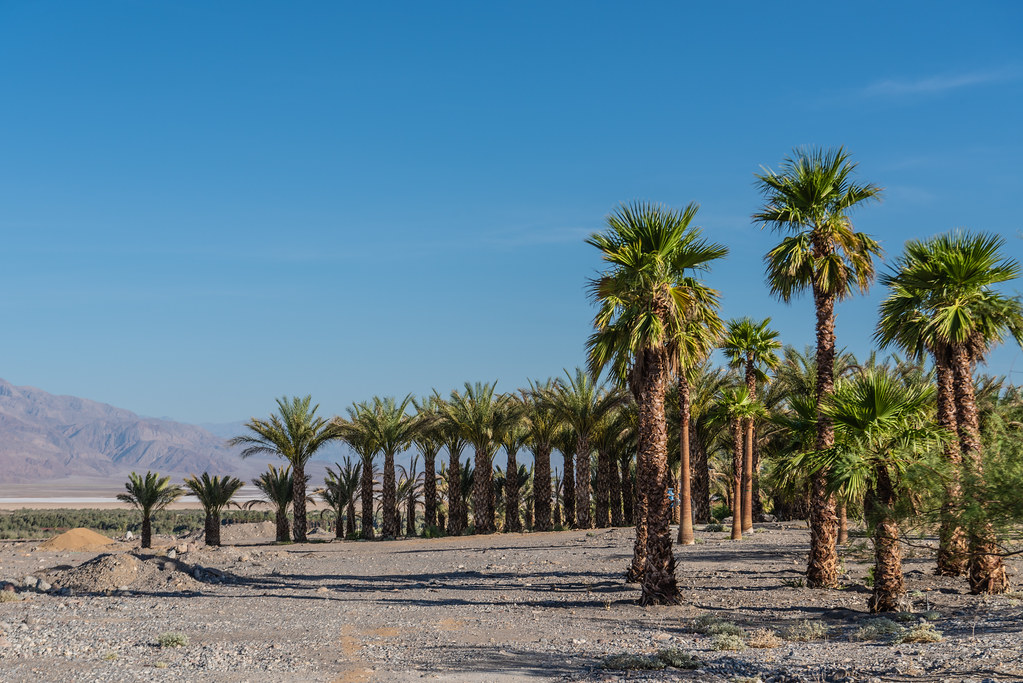
Date Palm
The non-native Date Palms (Phoenix dactylifera) are treated as a miraculous resource by the Saltfolk. Unlike the wild, hardy native plants, date palms are a relict of the Old World, a ghost of past agriculture concentrated in specific, highly-prized locations like the Furnace Creek. For the Espera settlement in The Badwater Basin, controlling or having access to these groves provides massive survival advantages.
The very presence of these palms signifies reliable water near the ground's surface, making the area a strategic hub. The harvest is in full swing during mid-September.
Food Source
The date fruit of the date palm is the ultimate prize. While Pinyon Nuts provide fat and the Honey Mesquite Tree provides protein and complex carbs, dates offer a massive, concentrated source of sugar and quick-burning calories—a post-apocalyptic desert version of an Old World "energy bar."
The harvest of dates is a dangerous but essential annual task for the Saltfolk. Skilled climbers scale the tall, rough trunks to reach the crowns and use knives to cut down the heavy, hanging bunches of ripe dates, lowering them to the ground with ropes.
Eaten fresh off the tree, the dates provide an immediate and potent boost of energy, vital for refuelling after the arduous work of harvesting. But the true value of these dates is their capacity for long-term storage. The high sugar content of dates makes them incredibly easy to preserve. The majority of the harvest is laid out on mats in the sun to dry. These dried dates are a lightweight, calorie-dense, and virtually non-perishable food source. They are the primary "sweet" in Espera's diet, a staple ration for winter survival, and the perfect portable food for hunting trips and long-range scavenging expeditions.
Dates are also pitted and mashed into a thick, long-lasting paste or boiled down to create a sweet syrup (Date Honey or dibs), which is stored in pottery and used for months.
Fronds and Leaflets
The large, tough palm fronds are the best and most versatile building material in Death Valley, far superior to anything offered by the native plants.
Shelter
The fronds are perfect for thatching. Layered on a wooden frame, they create waterproof roofs for permanent dwellings, providing unparalleled shade from the brutal sun and protection from the desert's rare rainstorms. Woven together, they also form walls, windbreaks, and sun shades.
Weaving
The individual leaflets are stripped from the frond's spine and used to weave countless essential items:
- Baskets: For gathering and storing food.
- Mats: For sleeping, sitting, and working surfaces.
- Hats & Sandals: Crucial personal gear for sun protection and navigating the hot, rocky ground.
- Cordage: Strong fibres from the frond are twisted into rope and cordage for binding and construction.
Secondary Uses
While less critical than the fruit and fronds, no part of the palm is wasted.
Trunk
The fibrous trunks of dead or felled palms aren't traditional timber, but they are used as sturdy posts for simple structures, fences, and corrals. While they are considered a poor fuel source compared to the wood of the Honey Mesquite Tree, the dry wood is saved and burned for fuel if necessary.
Fruit Stalks
The woody, branched stalks that hold the dates are used as simple tools or for crafts. For Espera, the date palm groves at Furnace Creek is the equivalent of a city. Controlling this oasis would mean controlling a reliable source of sugar, superior building materials, and a guaranteed water source, making it the most valuable and fought-over piece of real estate in the entire region that is susceptible to Verdant overgrowth.
Additional Information
Geographic Origin and Distribution
Furnace Creek

Comments