
Weather in the Arctic Zone
General
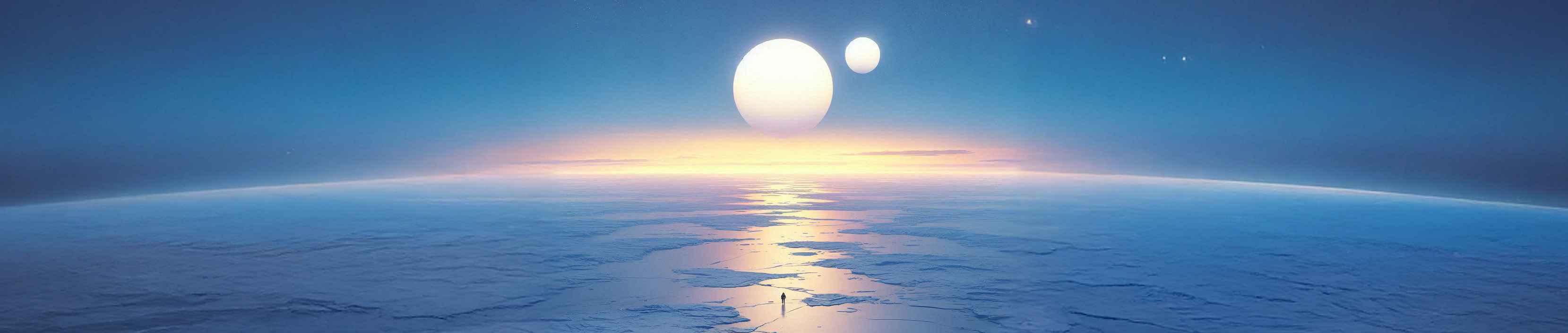
The Arctic island zone of Thaldris, together with the Nyrian Plain, stretches to the edge of the tundra island region and is among the coldest and quietest areas on the entire planet. Temperatures remain between –30 °C and –15 °C throughout the year. Due to the great distance from the suns and the low light intensity, the cold remains constant, and even during the warmer seasons, only minimal changes are noticeable. The atmosphere of Thaldris is unusually dense and lies closer to the ground than on comparable worlds. As a result, the weather feels compressed and heavy. Wind usually moves in broad, steady currents just above the surface. These air movements arise when cold air slowly flows from the central ice fields toward the coasts. They are strong but not stormy, and can blow evenly across many kilometers. Snowfall is rare and usually light, as the cold air can absorb very little moisture. Instead, a fine, silvery mist of frozen particles often forms, which severely limits visibility and settles over the landscape like a veil. This mist arises when ice slowly dissolves in the air and re-crystallizes — a silent but constant phenomenon. The tides, influenced by the planet’s two moons, regularly reshape the coastlines of the island groups. Some smaller islands disappear completely beneath the surface during high tide, making settlement difficult and navigation dangerous. Due to the planet’s high gravity, these movements feel especially powerful and direct, even though they occur slowly. Overall, the weather in Thaldris’s Arctic island zone is calm, consistent, and hostile to life. Sudden changes are rare, but the constant cold, dense air, and drifting mists make the region a place of silence and survival — a landscape that changes little over centuries, yet is full of motion.Mist Wall
The Mist Wall is a weather phenomenon that slowly spreads across the land. Its arrival is heralded by increasing silence. Ambient sounds fade, the wind dies down, and even animals retreat. At the far edge of vision, a bright line appears, rising and widening until it forms a dense wall of gray-white. This wall does not move quickly, but it occupies space and swallows visibility. Inside the wall, intense cold prevails. The air becomes heavy and frosty, breathing becomes harder, and clothing stiffens as if coated in fine frost. Bare skin feels an unpleasant pull, especially on uncovered areas. It’s not painful, but a deep chill sets in, making limbs stiffen. The world falls silent, and only one’s own breath remains audible. Sometimes a faint crackling can be heard, seemingly coming from the air itself. It’s not loud, but steady and alien. Some feel a slight tingling on their skin, as if the air itself were moving — a sign that the wall has reached its full state. Visibility drops to barely an arm’s length. The ground loses its color and shape, and orientation becomes impossible. Paths vanish, and even familiar terrain turns unfamiliar. Those moving within the wall can easily stray from their route. People may step into unseen crevices or lose their sense of direction. Even groups can be torn apart if they don’t stay close enough. The cold penetrates deeply, and those who linger too long within the wall may lose their footing. The Mist Wall rarely lasts longer than two hours. Its retreat is slow. Visibility returns, the sounds of the world awaken again, and the air becomes lighter. Only once the wall has fully withdrawn is it advisable to continue onward. Those who see the wall approaching stop in place. Seeking shelter is unwise, as no location offers more safety than remaining still. In a group, one places a hand on the shoulder of the next to ensure no one is lost. Alone, one sits down, covers the face, and waits. No words are spoken, as speech carries poorly. One watches for the returning light and listens for the sounds that re-emerge. Only then is it time to move on.Weather Extremes
Cold Snap
A cold snap is a sudden and prolonged drop in temperature. It occurs under clear skies and calm air. Within hours, the temperature falls well below the usual range. There is no wind, and no precipitation. The air becomes denser and drier. Visibility and sound remain unchanged, but the cold is penetrating. Stone and horn become brittle, clothing loses its flexibility. Water freezes completely, even in sheltered areas. The duration spans several days. During this time, the temperature remains consistently low. There are no external signs of beginning or end, apart from measurable temperature changes. Afterward, the temperature slowly returns to normal. The air lightens, and materials regain their flexibility. During a cold snap, all unnecessary movement is avoided. Time spent outside protected spaces is limited to what is essential. Food and tools are prepared early, as handling becomes difficult in the cold. Groups stay close together to maintain orientation. Speech is kept to a minimum, as the cold air irritates the mucous membranes and energy must be conserved.Polar Storm
A polar storm is a raging tempest of icy air that sweeps across the landscape with extreme speed. It carries snow, ice crystals, and frozen particles that shoot through the air like projectiles. Snowdrifts pile up, freezing precipitation coats every surface. Visibility drops to just a few meters, and even sheltered places quickly lose warmth. The wind is so strong it can carry away objects, equipment, and even people. Sounds are swallowed by the storm, and orientation becomes nearly impossible. During a polar storm, all movement ceases. Groups immediately seek shelter in wind-protected structures or, if necessary, dig into the snow. Communication is limited to signals or touch, as the wind drowns out every word. Tools are secured, clothing is double-checked. No one strays from the group. Eyes remain closed or covered to protect against ice crystals. Body posture is stabilized to offer the wind as little surface as possible.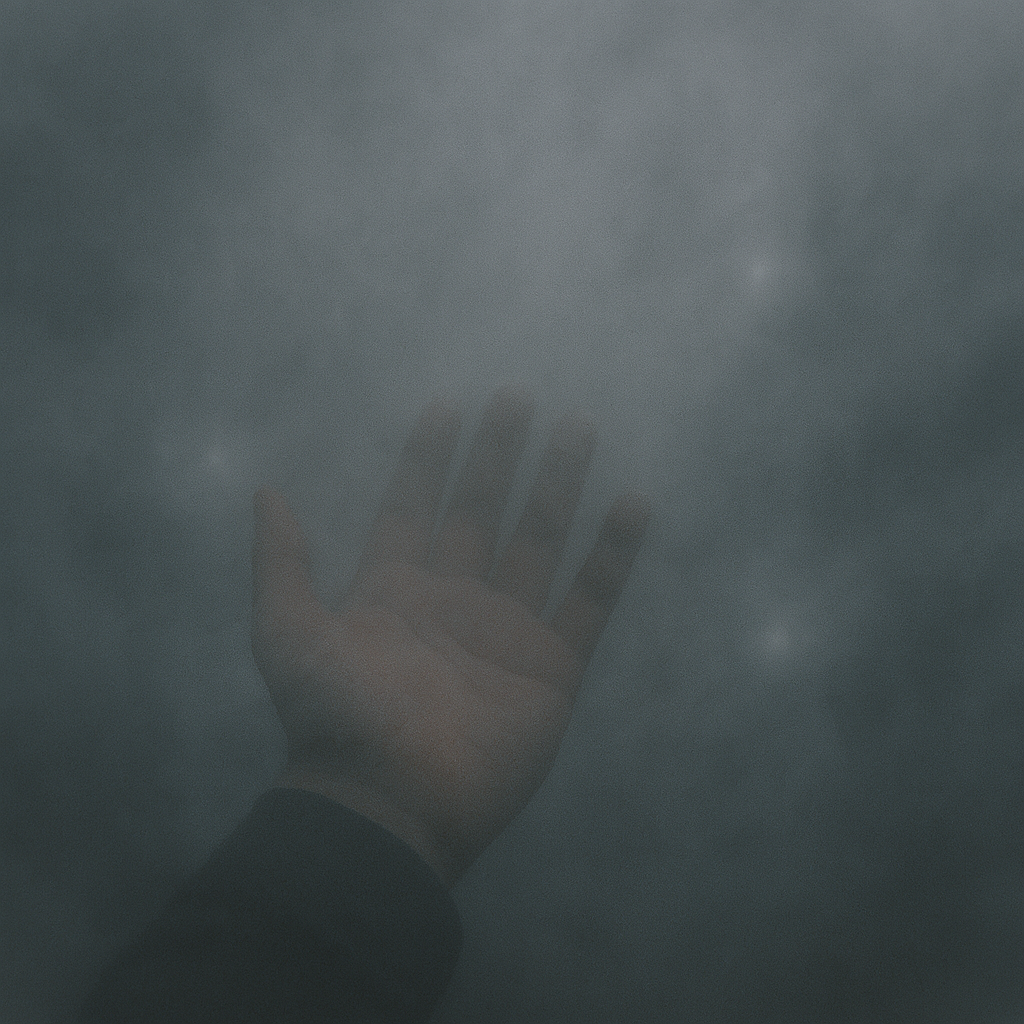
by Microsoft Copilot
Created by Selibaque 2025

Kommentare