

Crafts of Paper and Parchment
Algae Gatherer
In the icy waters around Nyrian, where the open sea is sometimes broken by rocky islets and jagged reefs, work the algae gatherers – those responsible for harvesting and initially processing the algae fibers. They travel in small, sturdy boats to the outer islands, whose reef structures are especially rich in resilient algae species. There, they cut the fibers directly from the stone, often in rough seas and under challenging conditions. Some algae grow only below the waterline, requiring experienced gatherers to perform short dives to harvest them. The freshly cut algae, used for papermaking and not for food, are spread out on flat sieves aboard the boat to allow excess water to drain. Coarse impurities are removed on site before the fibers are transported back to shore in ventilated baskets. In the workshops – usually simple, wind-protected structures made of stone and animal hide near the landing sites – the drying process begins. The algae are laid out on perforated frames made of bone or antler, turned regularly, and pressed between heavy stone slabs. During particularly cold periods, gatherers use natural freezing: the algae freeze, and the ice slowly draws out the remaining moisture. This process is lengthy but effective and preserves the fibers from becoming brittle.Parchment Maker
The parchment maker works with large fish skins obtained from local fishermen. These skins must be as intact as possible; small damages are acceptable as long as the structure remains stable. Processing begins with careful scraping to remove flesh and scales, typically using curved tools made of bone or horn. The skins are then stretched onto frames, secured with tension hooks, and dried in well-ventilated, cool rooms. Drying takes up to two days depending on weather and skin type. After drying, the skins are smoothed and cut into standardized formats. In Vintergard, quality remains consistently high due to strict selection, while in Föndir, whale skin is also processed, resulting in broader but more variable quality. The work is physically demanding, especially due to the stiff posture required for scraping and the manual tensioning of the skins. Hands are often cracked and permanently rough. The profession is highly respected, particularly due to the rarity and high demand for quality parchment.Paper Former
Once the fibers are fully dried, the paper formers and cutters take over. They process the algae into a pulpy mass, which is scooped into flat frames and evenly distributed. Through pressing and air drying, stable sheets are formed, which are then smoothed, trimmed, or folded depending on their intended use. Paper formers work with simple tools: blades made of fishbone or hardened stone, measuring strips made of horn, and smoothing stones from river pebbles. Their work requires patience and precision, as the quality of the paper depends on the uniform layering of fibers and the care taken during drying.Paper and Parchment Binder
The finished sheets eventually reach the paper binders. They specialize in turning them into rolls, folded works, or bound books. Using horn needles, sinew cords, and covers made of fish skin or tanned hide, they give the paper form and protection. Binding is done manually, often in quiet workshops where focus and care are essential. Some parchment makers also offer full book bindings, which require sewing techniques, knot knowledge, and a good sense of structure.Ink and Pigment Maker
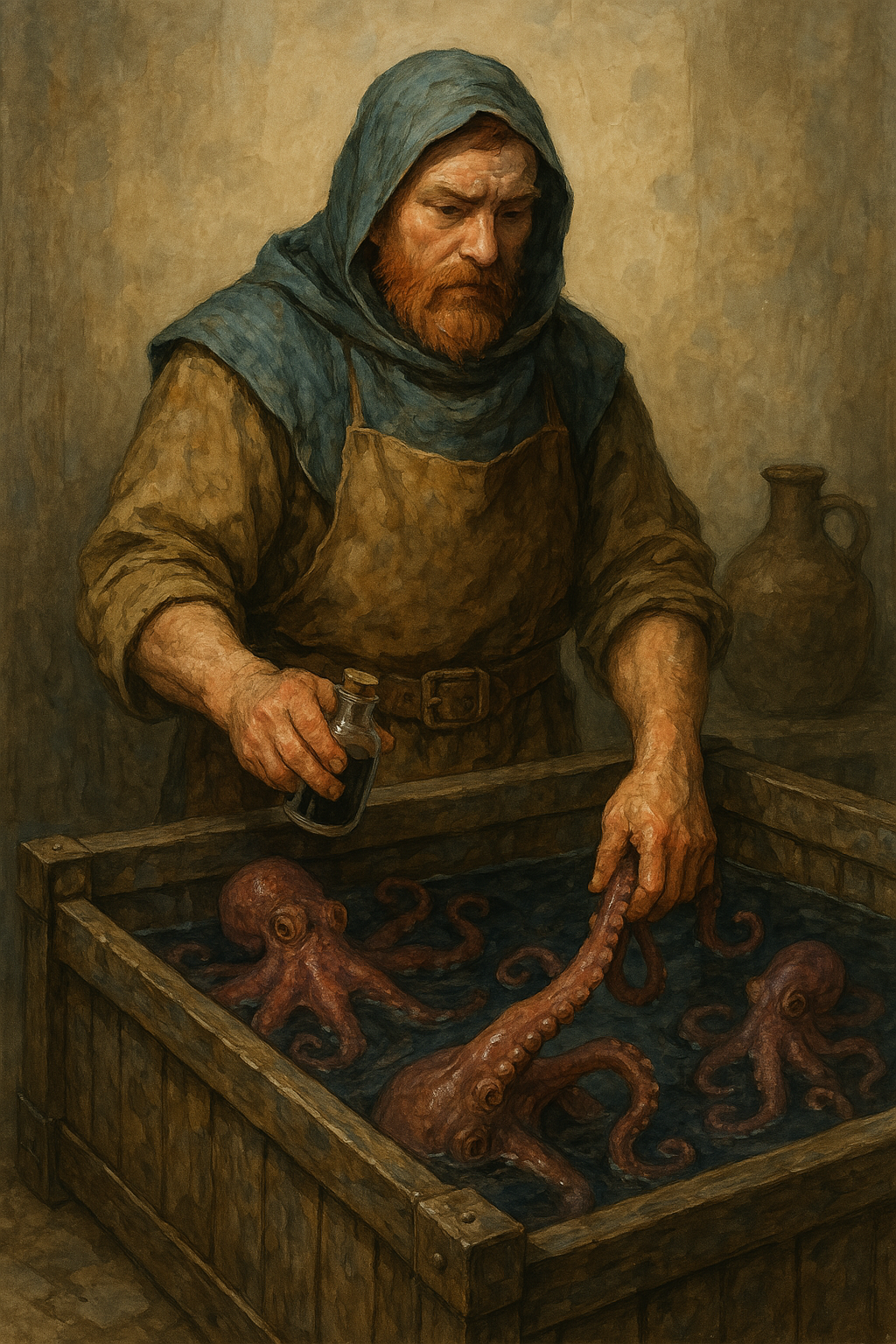
The ink and pigment maker is both animal caretaker and chemist. They breed squid, coldworms, algae, and mussels in large water basins that must be well-ventilated, cool, and regularly cleaned. Ink extraction is done with minimal harm to the animal, requiring experience and a calm hand. For pigments, crushed mussel shells, algae juice, berry extracts, or the pigment glands of worms are used. Processing can take days to weeks, as the dyes must be stabilized and bound, often with oils or ice-water emulsions. Ink vials are quicker to produce, taking about three to four days, while pigment pastes may require up to two weeks. The work is odor-intensive, and many pigments cause lasting skin discoloration – especially violet, green, and dark brown. Gloves offer limited protection. The profession is highly esteemed, as quality inks and pigments are expensive and sought after, especially in the cities of Galdra and Skipti. In other regions, simpler inks are used, with blood and animal fluids sometimes serving as substitutes.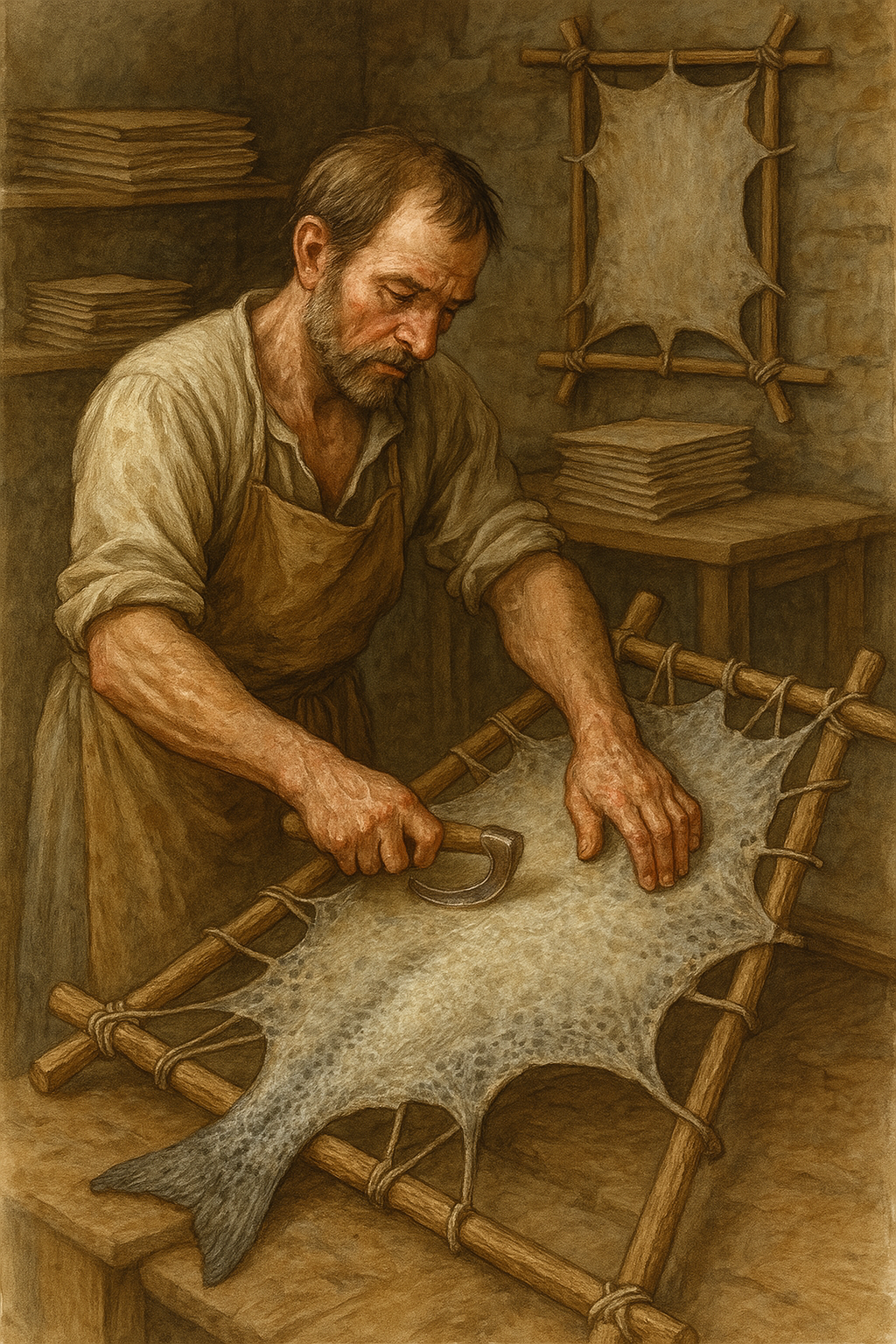
by Microsoft Copilot
by Microsoft Copilot
Created by Selibaque 2025

Kommentare