
Tale of the Forest Keeper
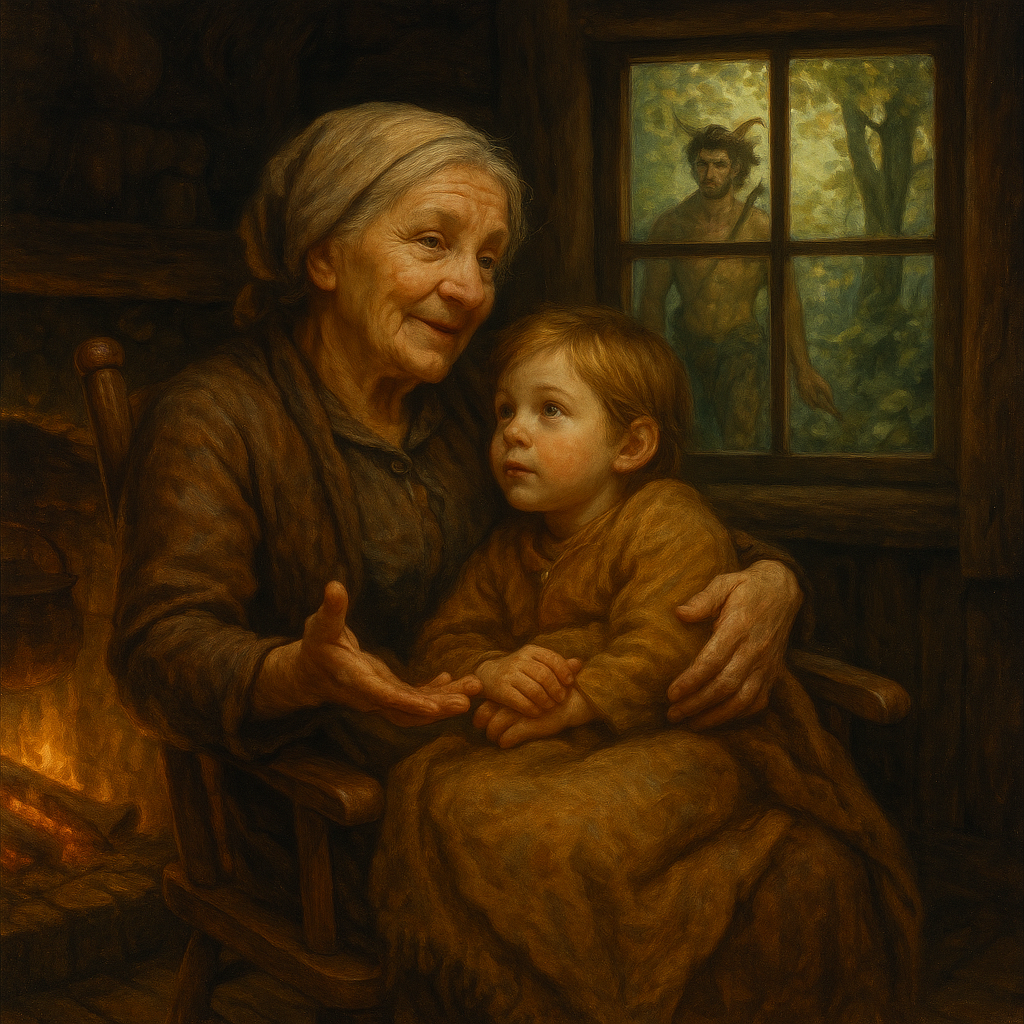
“Come closer, little one,” the elders say as they pull a child into their lap, “and listen well. This is the story my grandmother told me, and her grandmother told her, back when the forest was wilder than it is today.”
They speak of a young man who lives deep among the trees, a quiet soul named Wren, though he is known simply as the Forest Keeper. He was not chosen by kings or councils, they say, but by the forest itself. When he was small, the woods watched him gently step around beetles and fallen nests. When he grew older, they watched him put out careless fires and mend broken branches. And so the forest gave him a gift, the strength to hear its needs and the heart to guard its peace.
In the tale, Wren walks barefoot so he can feel the roots beneath the soil. Animals do not flee from him, because they know he means no harm. Even the wind seems kinder where he goes, carrying seeds from his hair. The spear he carries is not a weapon meant for war, but a promise: to protect what grows, to shelter what lives, and to defend what cannot defend itself.
Children are told that if they wander through the woods with kindness, if they tread lightly, leave no trash, and thank the trees for their shelter, they may glimpse Pine, the little marten who rides Wren’s shoulder. Pine is curious and playful, quick to peek from behind branches, but he only shows himself to gentle-hearted children. “If Pine likes you,” grandparents whisper, “it means the Keeper trusts you too.”
But the heart of the lesson is simple:
“If you treat the forest with respect, the Keeper walks with you. If you harm it, you walk alone.”
Grandparents say this not to frighten their little ones, but to help them understand that every tree, every bird, every leaf has value. Wren is just the reminder, a figure to show that humans and nature must take care of one another.
And at the end of the story, the grandmother always adds:
“So leave the forest better than you found it.
Pick up what others drop.
Help creatures in need.
And the Keeper will smile upon you, even if you never see him.”
They speak of a young man who lives deep among the trees, a quiet soul named Wren, though he is known simply as the Forest Keeper. He was not chosen by kings or councils, they say, but by the forest itself. When he was small, the woods watched him gently step around beetles and fallen nests. When he grew older, they watched him put out careless fires and mend broken branches. And so the forest gave him a gift, the strength to hear its needs and the heart to guard its peace.
In the tale, Wren walks barefoot so he can feel the roots beneath the soil. Animals do not flee from him, because they know he means no harm. Even the wind seems kinder where he goes, carrying seeds from his hair. The spear he carries is not a weapon meant for war, but a promise: to protect what grows, to shelter what lives, and to defend what cannot defend itself.
Children are told that if they wander through the woods with kindness, if they tread lightly, leave no trash, and thank the trees for their shelter, they may glimpse Pine, the little marten who rides Wren’s shoulder. Pine is curious and playful, quick to peek from behind branches, but he only shows himself to gentle-hearted children. “If Pine likes you,” grandparents whisper, “it means the Keeper trusts you too.”
But the heart of the lesson is simple:
“If you treat the forest with respect, the Keeper walks with you. If you harm it, you walk alone.”
Grandparents say this not to frighten their little ones, but to help them understand that every tree, every bird, every leaf has value. Wren is just the reminder, a figure to show that humans and nature must take care of one another.
And at the end of the story, the grandmother always adds:
“So leave the forest better than you found it.
Pick up what others drop.
Help creatures in need.
And the Keeper will smile upon you, even if you never see him.”
Summary
Among human villages bordering Wren’s forest, elders tell the tale of The Forest's Keeper or The Green Warden. According to this story, the forest has a guardian spirit who appears as a horned, wild-haired man with ivy on his skin and eyes that reflect the canopy. They say he walks the woods at dawn and dusk, ensuring every creature is fed, every sapling grows straight, and every stream runs clean. Children are taught that if they show respect, leaving fallen nests where they lie, picking berries without stripping the bush, speaking softly beneath the branches—the Watcher will guide them safely home. But those who break branches for sport, leave trash, or harm animals may find themselves lost, gently turned around by shifting paths until they learn better.
Grandparents describe him not as a threat, but as a reminder that the forest remembers how you treat it. A soft knock on a window branch during a storm, a pine marten chittering at a child who wandered too far, or a sudden patch of sunlight revealing the right path, these are all seen as signs that Wren is watching, nudging mortals toward kindness.
Historical Basis
The myth likely arose from generations of woodcutters, herbalists, and travelers glimpsing Wren himself. His frequent interactions with animals, his habit of stepping silently between trees, and the near-supernatural health of the forest he inhabits all fed into the belief that he was a benevolent guardian rather than a mortal demigod.
Sightings of Pine, his pine marten companion, further reinforced stories of a “forest helper” guiding children. Over centuries, these encounters blended with rural superstition and lunar folklore—especially in regions influenced by Callista’s protective associations and the winter storytelling traditions of Mirithan, when families gather to share myths around the hearth .
Thus, the legend of Wren became less a tale of a nature spirit and more a moral fable: care for the forest, and it will care for you.
Variations & Mutation
The myth of Wren, the Forest Keeper, shifts subtly across the human communities that border his woodland. Though the core remains the same — a guardian who watches over the forest and guides those who respect it — each region shapes the tale according to its own fears, values, and relationship with the wilds. In peaceful farming villages, he appears as a gentle caretaker who blesses crops and guides lost children home. Among hunting communities, he becomes a silent arbiter of balance, rewarding clean kills and punishing waste. Further north, the story takes on a more cautionary tone, casting him as a horned shadow who misleads those who mistreat the woods.
Druidic or spiritually attuned settlements emphasize his divine heritage, describing him as a champion of Thalor or a living embodiment of the wild itself. In contrast, more skeptical or practical communities treat the myth as a moral lesson for children, with Pine — his ever-present marten companion — becoming the playful enforcer of good behavior.
Despite these differences, all versions of the story serve a single purpose: to teach respect for the natural world. Whether he is a benevolent guide, a stern hunter, a gentle protector, or a shadowed warning, Wren’s myth encourages humans to tread lightly, take only what they need, and remember that the forest is alive — and watching.


Comments