
Deirun (DAY-roon)
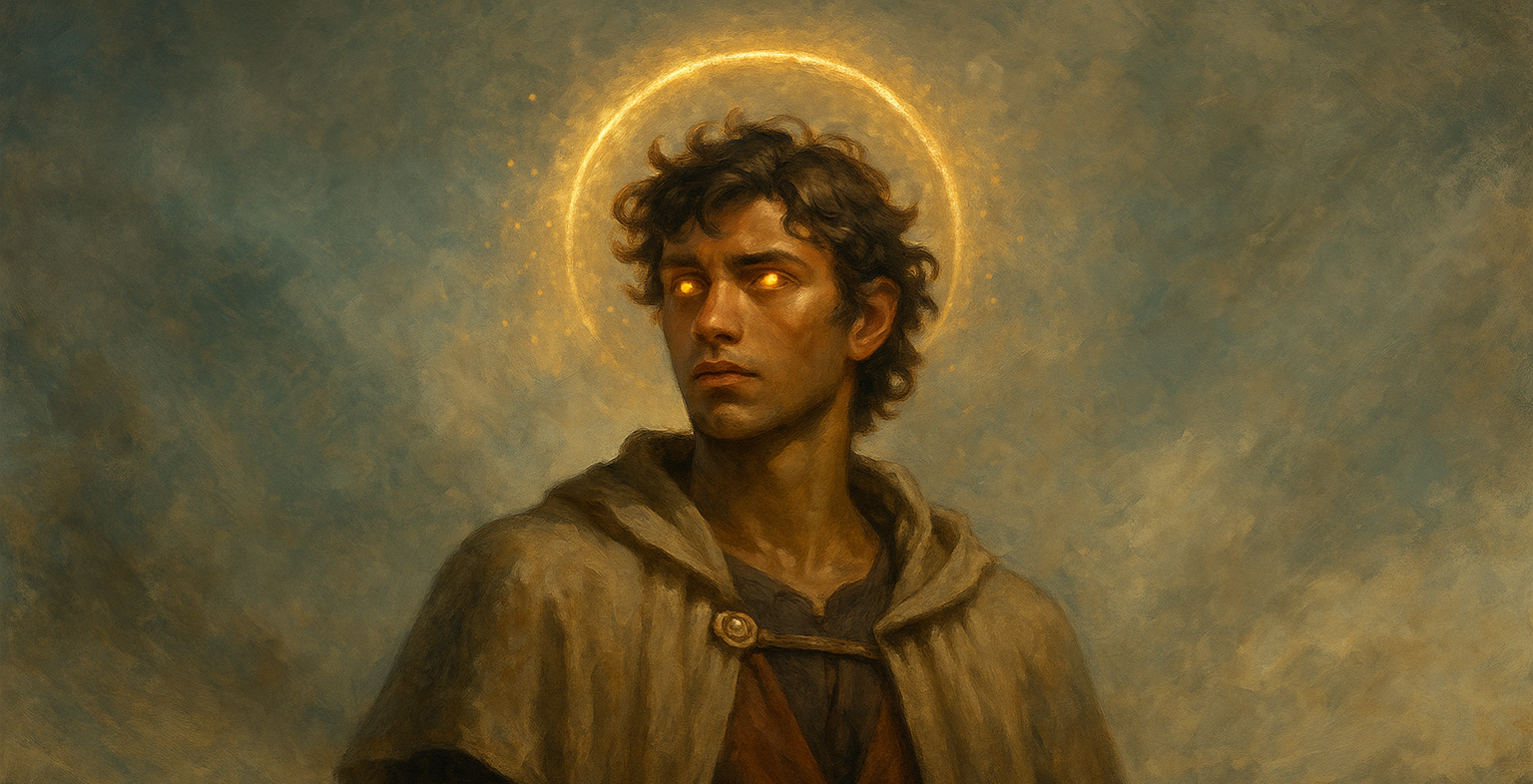
The Deirun are the half-divine progeny of gods and mortals, beings whose very existence tests the limits of creation. They embody the paradox of godhood bound in flesh: powerful, radiant, and deeply flawed. To mortals, they are living miracles or omens of upheaval; to gods, they are reminders that even divinity cannot fully tame the mortal heart. Every Deirun bears a unique mark of their divine heritage, a flicker of radiance, a shadow that moves independently, eyes that shimmer with otherworldly light , and each walks a path shaped by the domain of their celestial parent. Though their lifespans stretch for centuries, few Deirun die quietly; fate itself seems to chase them, weaving triumph and tragedy around their lives with cruel precision.
They are not born often, for the union of mortal and divine is both forbidden and unstable, yet their presence has altered the course of nations. Some rise as champions of light and virtue; others fall to hubris and corruption, consumed by the spark they were never meant to contain. The Deirun are as varied as their parentage, heroes, tyrants, prophets, and monsters, all driven by the same relentless truth: a god’s blood cannot be silenced.
The Deirun are not a species in the conventional sense but an anomaly of divine interference. Each birth is unpredictable and often heralded by celestial or elemental phenomena. Because their existence can destabilize local faiths and political orders, most kingdoms and religious institutions either conceal or control known Deirun.
Some temples — particularly those devoted to Umbra, Sylvanna, and Callen — protect them as sacred wards or divine emissaries. Others, especially within Valoria and Dhuma, classify Deirun as potential existential threats, marking them for observation or eradication if their powers become volatile.
Scholars of the Church of Enkira maintain the Deirunic Registry, an unofficial census of recorded births and sightings across Tanaria. Many entries end abruptly with the notation: “Presumed deceased — divine manifestation.”
Basic Information
Anatomy
Though mortal in form, the Deirun’s physiology is a delicate fusion of flesh and divinity, a constant negotiation between the finite and the eternal. Their mortal structures are reinforced by subtle divine weaves that make them stronger, faster, or more resilient than ordinary humanoids, yet also vulnerable to instability when their divine spark is overdrawn
Instead of pure blood, the Deirun possess Aetheric Vitae, a fusion of mortal blood and divine energy that glows faintly in darkness, usually gold, silver, or violet depending on lineage. This vitae carries traces of raw divine resonance, which can be fatal to those who ingest or transfuse it improperly.
Because the Deirun inherit their physical framework from their mortal lineage, they appear in a staggering variety of forms, from halfling-sized beings touched by sunlight to towering, goliath-like figures with veins that shimmer faintly under the skin. Common markers include:
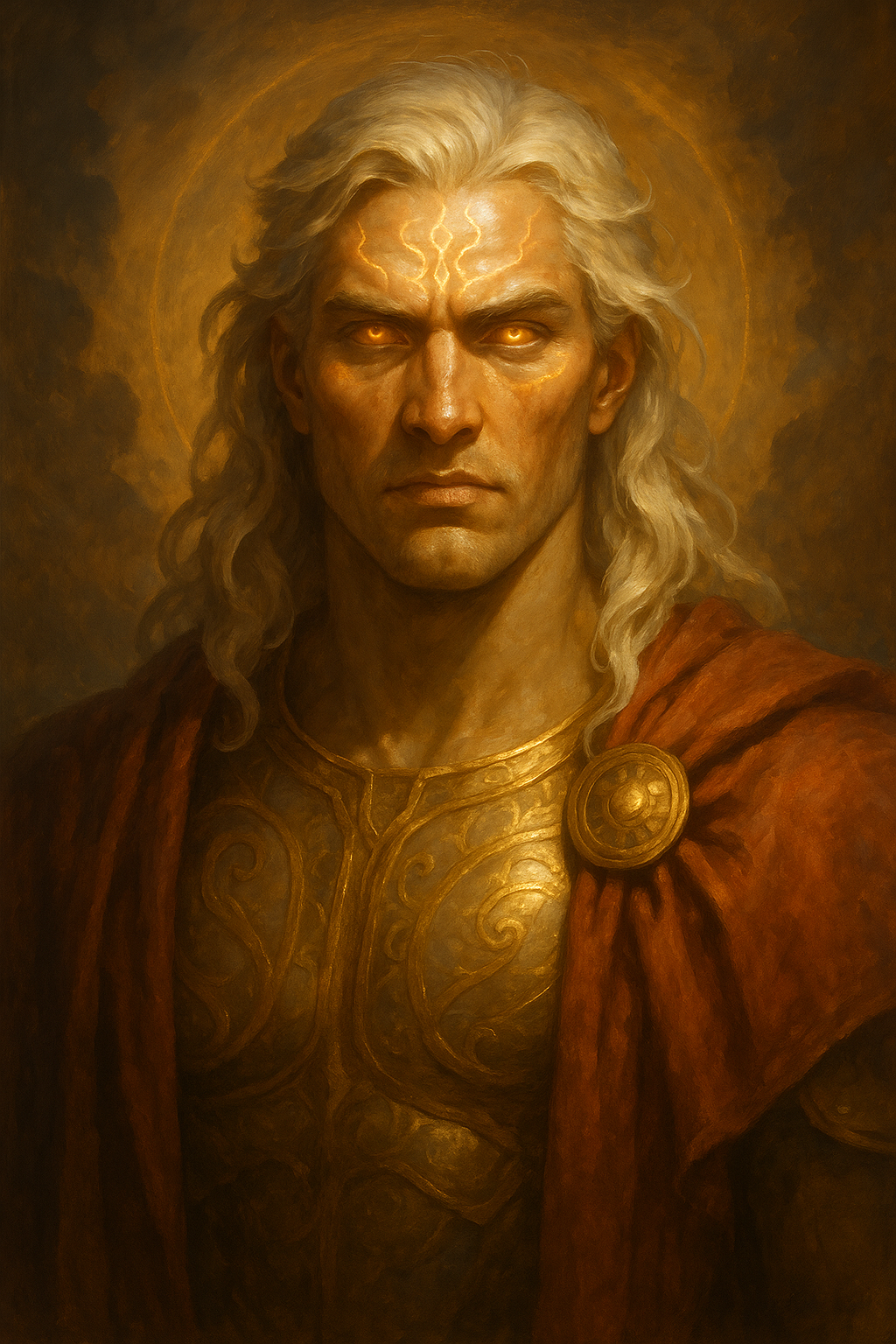
- Iridescent or metallic eyes that shift color with emotion or divine exertion.
- Faint luminescent sigils or patterns beneath the skin, often visible along the temples, neck, and chest.
- Unnatural grace or presence, as though gravity itself struggles to fully claim them.
- Shadows that move slightly out of sync with their bodies or glow faintly in divine light.
Genetics and Reproduction
The genetics of the Deirun blur the boundary between mortal inheritance and divine influence. Their creation is as unpredictable as it is extraordinary , sometimes born of direct union between god and mortal, other times through divine blessing, prophecy, or exposure to immense celestial energy. In most cases, a Deirun’s birth is seen as an omen rather than an accident, their arrival accompanied by signs or subtle disturbances in nature or the Weave.
Physically, Deirun take after their mortal lineage in structure and biology, though divine influence reshapes their traits , skin faintly marked with sigils, eyes that reflect starlight, or a presence that stirs emotion even when silent. No two Deirun appear alike, and their divine attributes rarely breed true even among siblings.
When a Deirun reproduces with a mortal, offspring are almost always mortal but may inherit slight traces of divine resonance: heightened intuition, unusual charisma, or natural resistance to illness. Two Deirun may bear a child, though such pairings are uncommon and unpredictable; the resulting offspring often show a more subdued spark rather than amplified power. Over generations, the divine spark tends to fade, leaving behind only the legends of those touched by godhood.
Additional Information
Geographic Origin and Distribution
Scattered across all of Tanaria, though sightings are more frequent near holy sites, ancient ruins, or regions of divine interference.
Perception and Sensory Capabilities
The senses of a Deirun extend beyond the mortal spectrum, shaped by the resonance of their divine essence. Their perception is a fusion of physical awareness and metaphysical intuition, an ongoing dialogue between body and soul, sight and revelation. To a Deirun, the world is not simply seen or heard; it is felt, as though reality itself hums in recognition of their presence.
Visual Acuity:
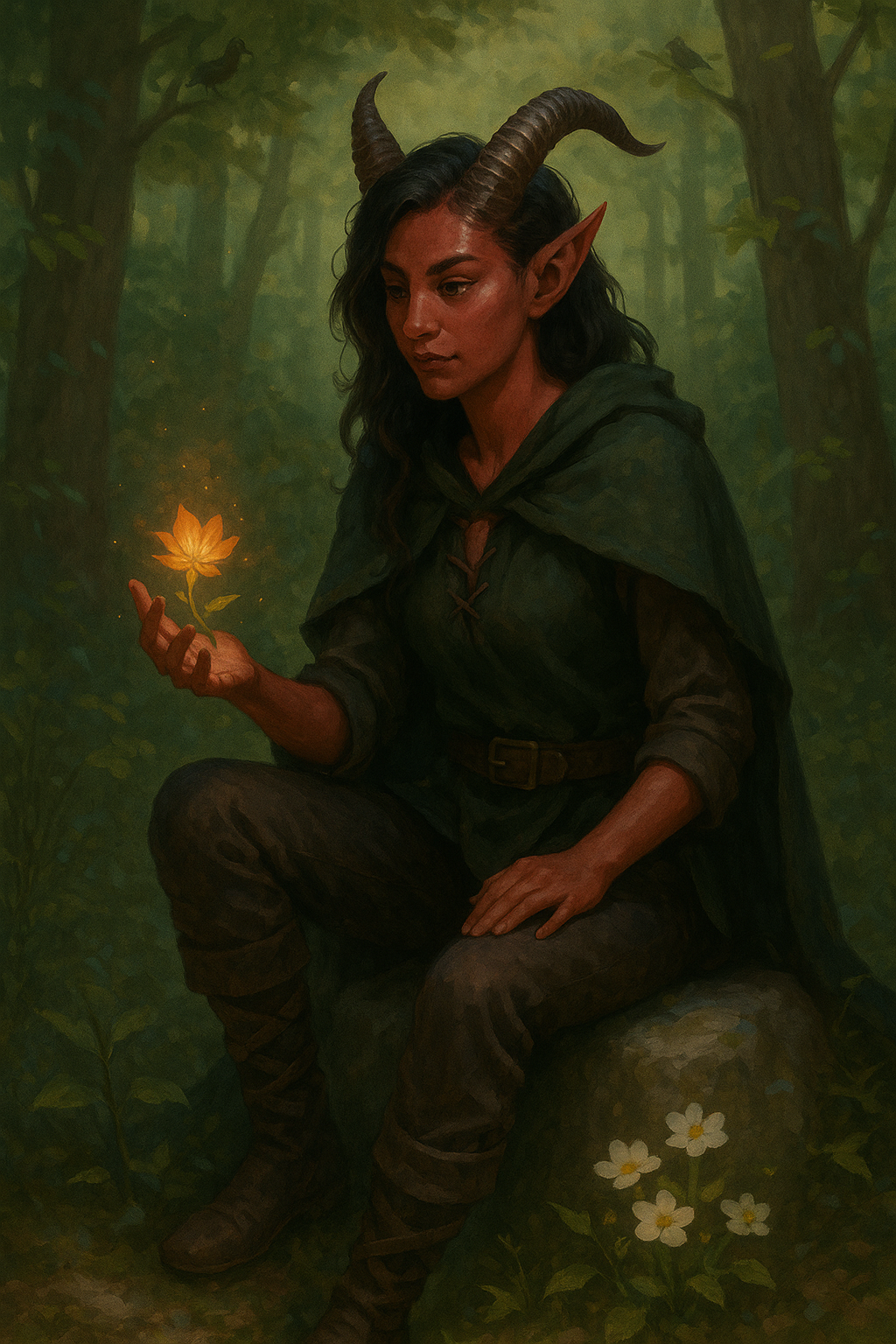
Most Deirun exhibit superior low-light vision, able to perceive subtle motion and light variations far beyond mortal capability. Their eyes register not only the visible spectrum but traces of aetheric radiation, flickers of divine energy, residual enchantments, or emotional auras lingering in the air. Under divine exertion, their pupils often glow or take on a prismatic sheen that reflects the color of their lineage’s domain (gold for light, violet for arcana, blue for tides, silver for shadow, etc.).Auditory and Olfactory Sensitivity:
Their hearing captures tones just beyond mortal range, including the resonance of enchanted materials, the faint hum of divine wards, or even the rhythm of a living being’s heartbeat from several paces away. Their sense of smell, while subtle, often detects divine or corrupted essence, many describe it as metallic, floral, or ozone-like depending on the source.Tactile Awareness:
Their skin is slightly reactive to energy flux; divine surges, magical currents, and shifts in leyline proximity can cause a tingling sensation along the spine or fingertips. Experienced Deirun learn to interpret this as a kind of “sixth sense,” using it to navigate magical environments or detect distortions invisible to the eye.Aetheric Perception (Extrasensory):
Every Deirun unconsciously perceives the Aetheric Field, the divine layer overlaying the material plane. This sense is not precise enough to replace magic like detect magic or see invisibility, but it manifests as intuition or emotion: a sudden weight of dread near undead, serenity near sacred sites, or the unmistakable pressure of being watched by a god. When their spark is overdrawn, this awareness can overwhelm them, causing migraines, dissociation, or sensory collapse.Dream and Vision Sensitivity:
Deirun are particularly susceptible to divine dreams and symbolic visions. During sleep or deep meditation, they often experience vivid, hyperreal landscapes that echo their patron’s realm. These visions may carry cryptic warnings, fragments of prophecy, or emotional imprints from celestial minds. For some, the boundary between dream and waking becomes porous, a blessing and a curse that has driven many Deirun prophets to madness.Limitations:
While their divine senses elevate them above most mortals, they also render them hypersensitive. Prolonged exposure to strong magical fields, divine relics, or planar rifts can induce vertigo, migraines, or hallucinations. Many Deirun train to dull their perception through ritual focus or meditation, learning to ignore the constant chorus of the divine world pressing against their consciousness.Civilization and Culture
History
The history of the Deirun is as fragmented and elusive as their nature. They are not a civilization but a pattern — rare sparks of divinity appearing throughout Tanaria’s recorded ages, each leaving an outsized mark upon the world before fading into legend. Every culture has its own name for them: Godspawn in Kamulos, The Half-Blessed in Kharadorn, and Echoes of Creation among the scholars of Dhuma. Whatever the term, all agree that where a Deirun walks, history tends to follow.
The earliest known Deirun are recorded in the Calamity Era, when divine interference in mortal affairs was rampant. Many of these firstborn were revered as saints or cursed as demigods of ruin. Some helped rebuild the shattered world after the Divine Sundering, acting as mediators between gods and mortals when neither trusted the other. Others became tyrants, consumed by the imbalance between mortal will and divine instinct.
During the Harmonium Era, their appearances grew rarer but no less significant. Nations rose around their influence — prophets who founded temples that would become city-states, warriors whose heroics shaped dynasties, and healers whose bloodlines persisted in noble houses claiming divine right. Most Deirun vanished mysteriously, some ascending to the celestial planes, others undone by the weight of their power or the fear they inspired.
In the present day, Deirun births are exceedingly uncommon, and each one draws immediate attention from temples, scholars, and rulers alike. Most are hidden, raised in secrecy, or sheltered by religious orders who view them as living relics. Despite their rarity, the mere idea of the Deirun continues to shape Tanarian myth and faith — a reminder that the line between mortal and divine remains dangerously thin, and that the will of the gods still touches the world in ways mortals cannot fully comprehend.
Genetic Ancestor(s)
Scientific Name
Homo Divinascendii
Lifespan
300–500 years (variable by lineage)
Conservation Status
Rare — Monitored
Population Estimate: Unknown; believed to number fewer than several hundred across all of Tanaria.
Population Estimate: Unknown; believed to number fewer than several hundred across all of Tanaria.
Average Height
Varies by mortal heritage — typically 3 to 9 feet.
Average Weight
The weight of a Deirun varies widely depending on their mortal heritage and the influence of their divine parent.
Related Myths


Comments