
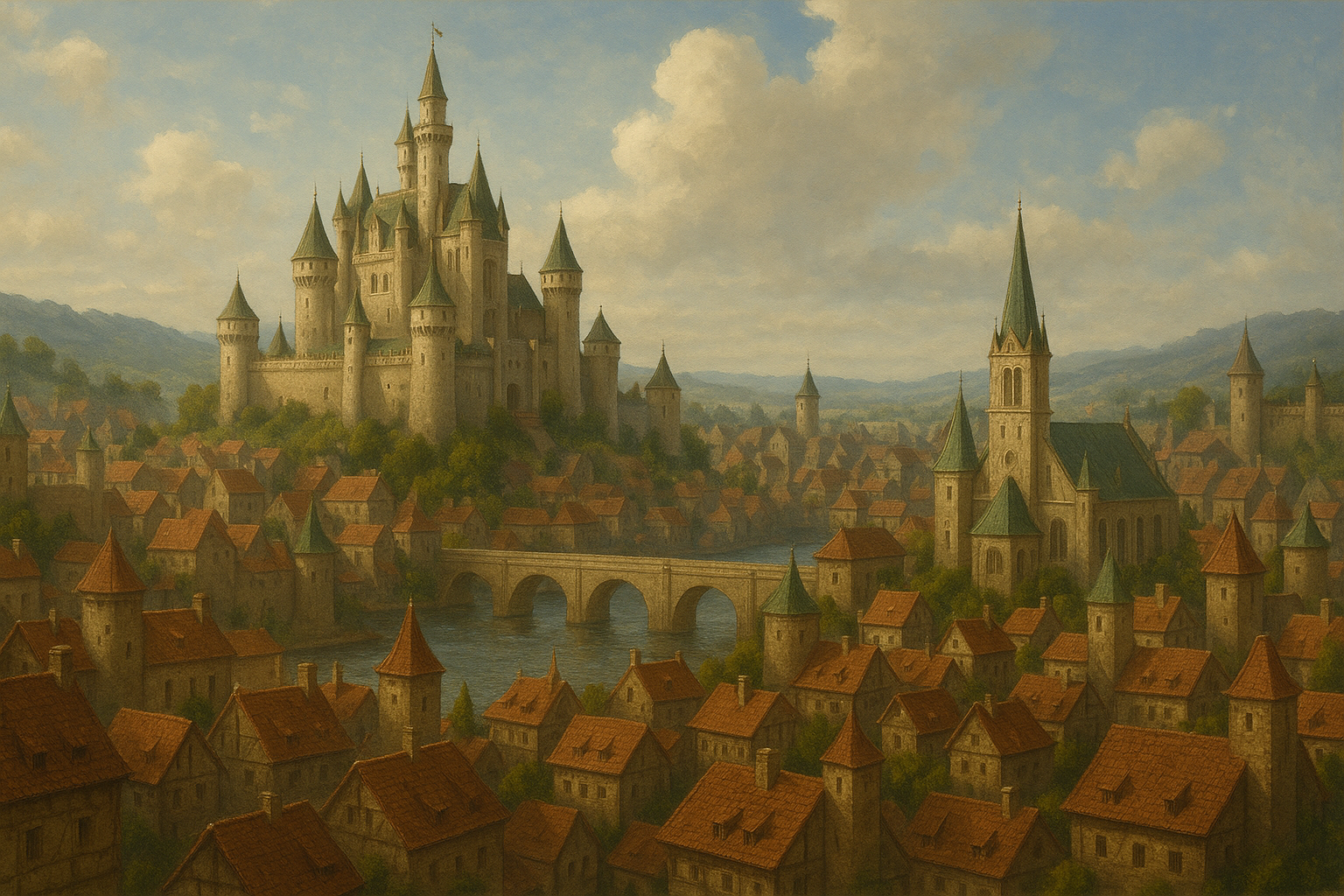
King Thandor
King of Kamulos Thandor Elenvar Rithalen
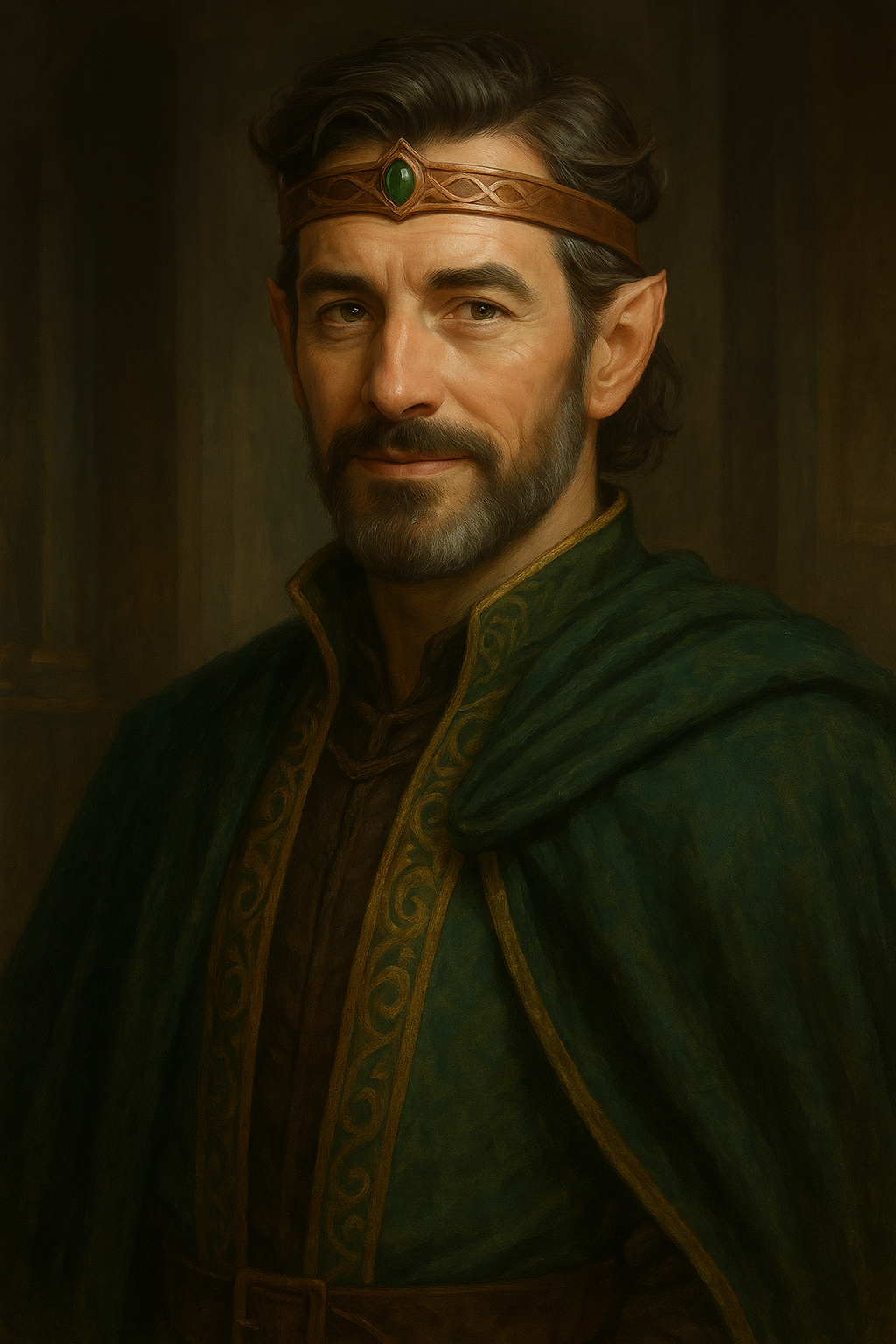
King Thandor of Kamulos is a proud and principled ruler, born of mixed heritage and raised in the heart of Tanaria’s most storied kingdom. A quarter-elf with the bearing of a seasoned warrior and the mind of a careful statesman, Thandor embodies the balance between tradition and progress. He ascended to the throne not through ceremony alone, but by earning the loyalty of his people and the respect of his enemies. Known for his unwavering sense of honor, deep devotion to Seraphis, and tireless dedication to his realm, Thandor rules with a steady hand and a soldier’s vigilance. Though Kamulos is a land of abundance and order, its strength has always come from its resilience, and Thandor is its living symbol.
Mental characteristics
Personal history
King Thandor was never meant to wear the crown.
Born the second son to Prince Alden of Kamulos and a half-elven enchantress named Seralya, Thandor’s mixed heritage and position in the royal lineage left him largely overlooked in his early years. While his older brother basked in the spotlight of succession, Thandor was raised on the fringes of courtly life—educated in the arcane arts, foreign tongues, and histories of both elven and human realms, yet kept far from the seats of power.
His mother, though never wed to Alden, held high station in the royal court due to her magical prowess and Aelvaren lineage. She instilled in Thandor a strong sense of restraint, dignity, and the value of listening before speaking—traits that would one day set him apart from his peers.
When plague swept through the capital in his early twenties, it claimed both his elder brother and father within a single season. Thandor, then barely known to the nobility, was thrust into prominence as the only living heir with any legitimate claim. The coronation was rushed, the crown heavy, and the realm reeling. Many in court whispered that the gods had cursed Kamulos by seating a "half-blood mage" on its throne.
But Thandor would not be dismissed.
Over the next thirty years, he consolidated his power not through violence or marriage pacts, but through competence. He restored the crippled infrastructure of the realm, strengthened trade routes with Dhuma and Skölna, and brought order to the squabbling noble houses that had nearly fractured the kingdom during the interregnum. Thandor's elven blood showed in his long memory, patience, and refusal to be goaded. His human blood burned in moments of clarity, when he acted decisively and without apology.
Today, King Thandor is known as a contemplative ruler, wise and unshakable, but not unapproachable. His reign is marked by quiet strength, enduring reforms, and a deep reverence for Kamulos’s natural and magical heritage. Though he lacks the charisma of his father or the martial fame of his brother, Thandor commands loyalty through sheer will, sound governance, and a legacy of survival against all odds.
Accomplishments & Achievements
King Thandor’s reign is not defined by conquest or spectacle, but by quiet mastery and relentless progress. Rising to the throne in the aftermath of tragedy, he inherited a kingdom on the brink of collapse—its coffers drained, its noble houses fractious, and its people grieving the loss of an entire royal line. Under his leadership, Kamulos not only endured but flourished.
The Restoration Decrees: Thandor’s first major initiative saw the repair of critical infrastructure—bridges, aqueducts, and farmlands ravaged by disease, disuse, and neglect. His policies favored local artisans and laborers, putting thousands to work and restoring dignity to the common class.
The Codex of Courts: Frustrated by the inconsistency of justice between noble jurisdictions, Thandor enacted the Codex of Courts, a sweeping legal reform that standardized law across the realm. This effort curbed noble corruption and empowered regional magistrates bound to the crown rather than to local lords.
Trade Pact of the Verdant Crescent: Thandor orchestrated a rare trilateral agreement between Kamulos, the nomadic clans of Eouma, and the eastern trade guilds of Dhuma. The pact ensured seasonal access to rare resources, eliminated border skirmishes, and cemented Kamulos as the central hub of overland commerce in central Arandor.
The Silent Accord: In an act of diplomacy almost forgotten by history, Thandor quietly negotiated the relocation of a reclusive order of ancient druids who had long opposed expansion into sacred groves. By granting them custodianship of protected lands, he ended generations of bloodshed and gained their loyalty as stewards and magical advisors.
The Arcane Registry: With growing concerns over rogue mages and magical accidents, Thandor established the Arcane Registry—a neutral body to track, license, and support practitioners of magic within the kingdom. While controversial at first, the registry helped avoid several catastrophic arcane incidents and positioned Kamulos as a safe haven for responsible mages.
Thirty Years of Peace: Above all, King Thandor is credited with maintaining an unbroken era of peace. While other kingdoms fell to infighting, incursion, or divine catastrophe, Kamulos remained stable, prosperous, and unified. His rule is a model of restraint—one that favors endurance over glory, and wisdom over war.
Intellectual Characteristics
King Thandor is a man of quiet brilliance, not prone to grand speeches or philosophical indulgence, but possessed of a sharp, calculating mind that sees patterns in chaos and clarity in conflict. He is methodical, patient, and deeply observant—traits that served him well during his early years navigating court politics and later solidified his reign as one of stability and reform.
Though not a scholar in the traditional sense, Thandor has a deep respect for knowledge and surrounds himself with advisors, sages, and archivists. He values practicality over theory, but will often consult historical precedent, legal doctrine, and arcane research before making policy decisions. He has a gift for synthesis—taking information from many sources and distilling it into actionable strategy.
His intellect leans toward political science, economics, and legal structure, with an especially keen interest in land management, logistical systems, and the mechanics of governance. He is fluent in at least two languages beyond the common tongue and has studied the regional dialects of Kamulos to better connect with his people.
Thandor is also known for a subtle wit and dry humor. While not one for jest or games, he has a way of disarming tension with a single comment that cuts to the heart of a matter. Many nobles have found themselves ensnared not by aggression, but by the king’s mastery of implication and inference.
Perhaps most notably, Thandor does not fear changing his mind. When presented with new evidence or compelling argument, he is capable of shifting course without ego. To him, consistency is not stubbornness—it is adaptability with purpose.
Morality & Philosophy
King Thandor walks the narrow line between justice and necessity with unflinching resolve. His morality is rooted not in idealism, but in utilitarian pragmatism—he does what must be done to preserve the stability, prosperity, and unity of Kamulos, even if the means are not always clean. He is a king who understands that peace often requires hard choices and that mercy, while noble, can be a costly indulgence in the wrong hands.
Thandor believes deeply in duty over desire, a value instilled in him from a young age as a quarter-elf navigating human courts that often questioned his bloodline. To him, leadership is a burden, not a privilege. He does not seek power for its own sake, but views it as a tool to safeguard the kingdom he inherited—a kingdom that has survived war, famine, and political instability due to the strength of its institutions and the will of its rulers.
He upholds law and tradition, but not blindly. When tradition fails the people or the law becomes unjust, he is not above reform. His guiding philosophy is that rulership is a living thing, and stagnation is as dangerous as tyranny. Still, he is careful and deliberate with change, preferring gradual adaptation to radical upheaval.
Morally, Thandor is not above moral compromise—he has ordered assassinations, negotiated with known slavers to protect border towns, and looked the other way when allies committed questionable acts for the sake of regional security. These choices weigh on him, but he accepts them as part of his crown. He does not see himself as a good man—only as a necessary one.
When it comes to personal values, loyalty, resilience, and wisdom stand above all. Betrayal is the one sin he cannot forgive. He expects his court, his allies, and his family to act with honor, but he no longer assumes they will. This has made him cautious, and in some ways, lonely.
His relationship with the divine reflects his philosophy: respect without reverence. Thandor honors the gods, particularly those of order, knowledge, and guardianship, but he does not believe in fate. He believes in choice, and that mortals must shape the world, not wait for the divine to do so.
Social
Family Ties
Queen Elenari Valessar of Kamulos
High Elven Consort to King Thandor Velmire Elenari hails from the Aelvaren House Valessar, one of the oldest arcane lineages in eastern Tanaria—known for their scholarship, mastery of the arcane, and unshakable pride. The marriage between Elenari and Thandor was initially forged as a political alliance meant to legitimize the young king’s rule in the wake of a succession crisis. Many believed the proud elven house would never agree to such a match. Fewer still believed it would last. Yet Elenari defied expectations. Though her expression is cold and unreadable to most, she is fiercely intelligent, unwaveringly poised, and deeply loyal to her husband. Her public persona is one of serene detachment—a pillar of grace who speaks little but commands attention whenever she does. Behind the scenes, she is Thandor’s most trusted advisor and confidante. She does not interfere directly in policy, but her counsel shapes the intellectual and philosophical undercurrents of the Kamulosi court. Elenari maintains her own chambers and a small circle of elven attendants within the palace, preserving her cultural customs with quiet dignity. She occasionally returns to Valessar lands to renew ancient pacts or participate in rituals, but she is widely respected among the people of Kamulos, particularly among the mageborn and noble scholars. Her presence solidifies Thandor’s rule as something timeless—blending mortal resilience with arcane legacy. And while some whisper that she may outlive her husband by centuries, Elenari never speaks of such things. Only her eyes betray the weight of that truth.Religious Views
Though Kamulos is home to shrines of many gods, the royal family has long upheld Seraphis as their divine patron. Thandor prays at dawn before every campaign, invokes Seraphis's name in oaths of fealty, and keeps a ceremonial blade consecrated in the Deity’s temple beneath the castle. His armor bears the insignia of Seraphis: a sunburst behind a raised shield.
Despite this, Thandor is not dogmatic. He respects the other Prime Deities and often calls upon Callen for wisdom in diplomacy or Umbra when passing judgment. His faith is devout but practical—meant to guide and serve, not dominate.
His quarter-elven blood also gives him a quiet reverence for nature, though he has never formally worshipped Sylvanna. He simply considers the land sacred and ruled with stewardship in mind.
Current Location
Species
Ethnicity
Other Ethnicities/Cultures
Age
58 — though he appears closer to his mid-40s. His quarter-elf blood extends his prime and adds to his mystique as a long-lived ruler.
Children
Pronouns
He/Him
Sex
Male
Gender
Man
Presentation
Masculine
Eyes
Deep emerald green
Hair
Thick, wavy dark brown streaked with silver at the temples.
Skin Tone/Pigmentation
Olive-toned with a smooth, youthful texture despite his age
Height
6’2” (188 cm)
Weight
205 lbs (93 kg)
Belief/Deity
Seraphis and Solarius
Aligned Organization


Comments