
Harrowpine
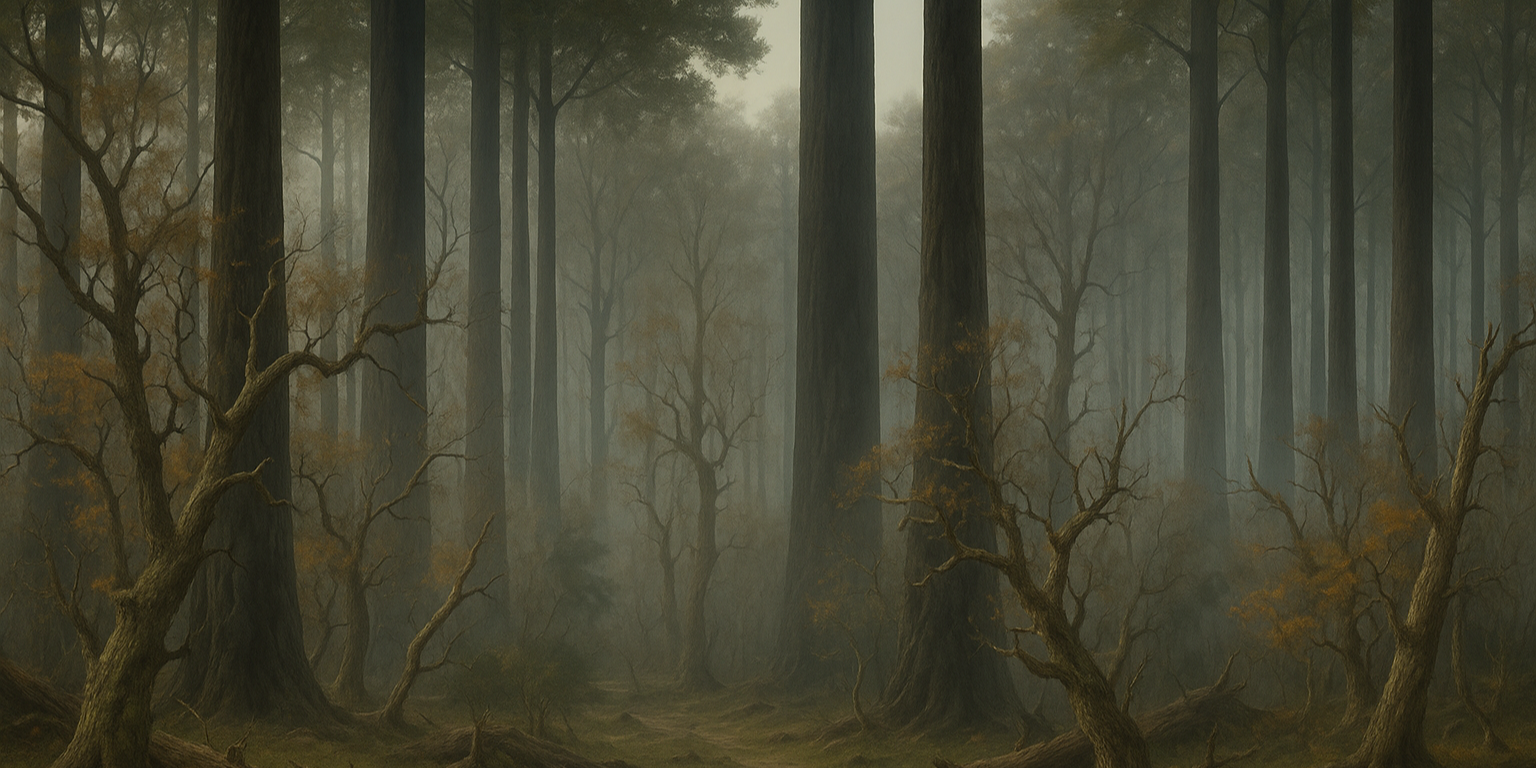
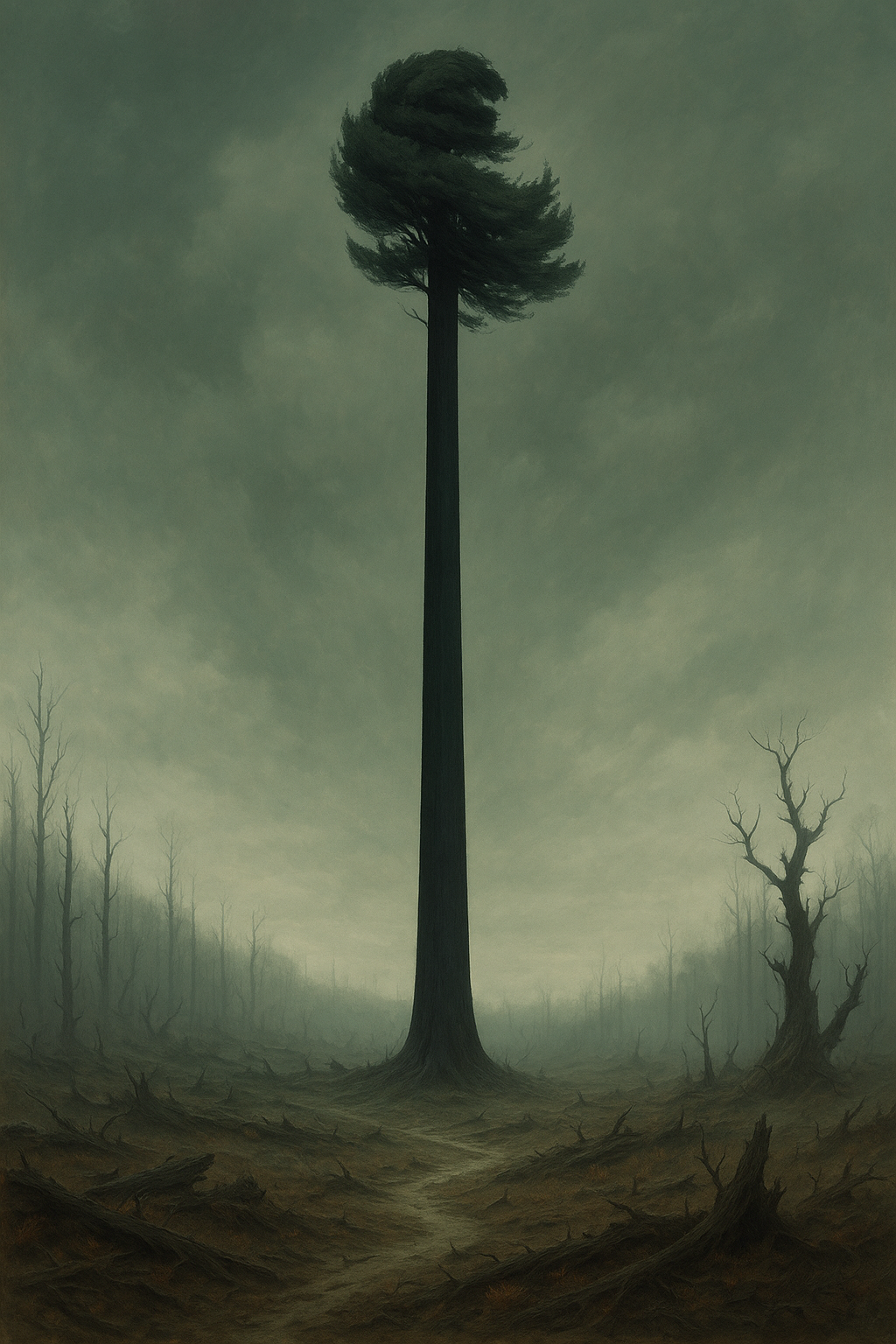
The Harrowpine is one of the strangest and most unsettling plant species in all of Tanaria, a tree born not of natural evolution but of the Calamity’s divine fallout. Found only in regions scarred by ancient cataclysmic magic, Harrowpines rise like black pillars from the earth—perfectly straight, branchless for nearly their entire height, and crowned only at the very top with a dense, vortex-shaped canopy of dark needles. Their presence marks land that was once reshaped by violent divine energy, and many cultures consider a Harrowpine grove to be both a historical scar and a sacred warning.
Unlike normal trees, Harrowpines grow in eerie silence. Wind barely stirs their crowns, their trunks do not creak, and animals instinctively avoid nesting in them. The bark is matte black and absorbs light, giving the tree an unnatural void-like appearance even at midday. Beneath this bark lies a dense, uniform wood that contains no knots, rings, or natural imperfections—only perfectly linear grain that appears more crafted than grown. This flawless structure is believed to be the result of lingering Calamity magic, which forces the tree into a rigid, unnatural growth pattern.
Harrowpines thrive only in unstable geomantic zones where divine energy once fractured the land. Their roots dig deep into soil that would kill ordinary vegetation, drawing sustenance from minerals and magic rather than from rich earth. As a result, Harrowpine groves are sparsely distributed and often surrounded by barren ground, cracked terrain, or other mutated flora. The trees grow slowly for decades before abruptly surging in height during an unpredictable “growth spike,” a trait that confounds botanists and fascinates arcanists.
Despite their ominous presence, Harrowpines play a unique ecological role. Their roots stabilize volatile magical residue underground, preventing further eruptions of Calamity-born anomalies. Some scholars believe Harrowpines are not merely trees but natural regulators—living anchors that prevent old scars from reopening. This has led to debates about whether harvesting them does more harm than good, and many regions enforce strict protection laws because removing a Harrowpine may destabilize the land around it.
Legends claim the trees “listen,” responding subtly to emotion, magic, or divine presence, though such stories remain unproven. What is certain is that the Harrowpine stands as a testament to Tanaria’s past: a living monument to destruction, resilience, and the strange beauty that grows in the shadow of catastrophe.
Basic Information
Anatomy
The Harrowpine’s anatomy is unlike any natural tree in Tanaria, its form shaped by the lingering echoes of the Calamity rather than evolutionary pressure. The most striking feature is its perfectly straight trunk, which rises like a monolith from the ground with no lateral branching for the majority of its height. This trunk maintains a constant diameter for many meters before tapering sharply near the crown, a geometry so mathematically precise that many scholars believe its growth is guided as much by magical forces as by biology.
Scientific Name
Picea harrowensis
Lifespan
Most specimens are estimated to be 1,500–3,000 years old
Conservation Status
Restricted / Geomantically Endangered
(Not endangered biologically — endangered because its habitat is unstable and irreplaceable.) Harrowpine trees are not dying out due to natural decline; rather, their existence is limited by the rarity of the conditions required for their growth. Because the species can emerge only in zones permanently altered by the Calamity, Harrowpine habitats are neither expandable nor reproducible. These geomantic scars are finite, and their stability can collapse if disturbed by mining, excessive magic use, or unauthorized harvesting.
(Not endangered biologically — endangered because its habitat is unstable and irreplaceable.) Harrowpine trees are not dying out due to natural decline; rather, their existence is limited by the rarity of the conditions required for their growth. Because the species can emerge only in zones permanently altered by the Calamity, Harrowpine habitats are neither expandable nor reproducible. These geomantic scars are finite, and their stability can collapse if disturbed by mining, excessive magic use, or unauthorized harvesting.
Average Height
40–60 meters (130–200 feet)
Related Materials
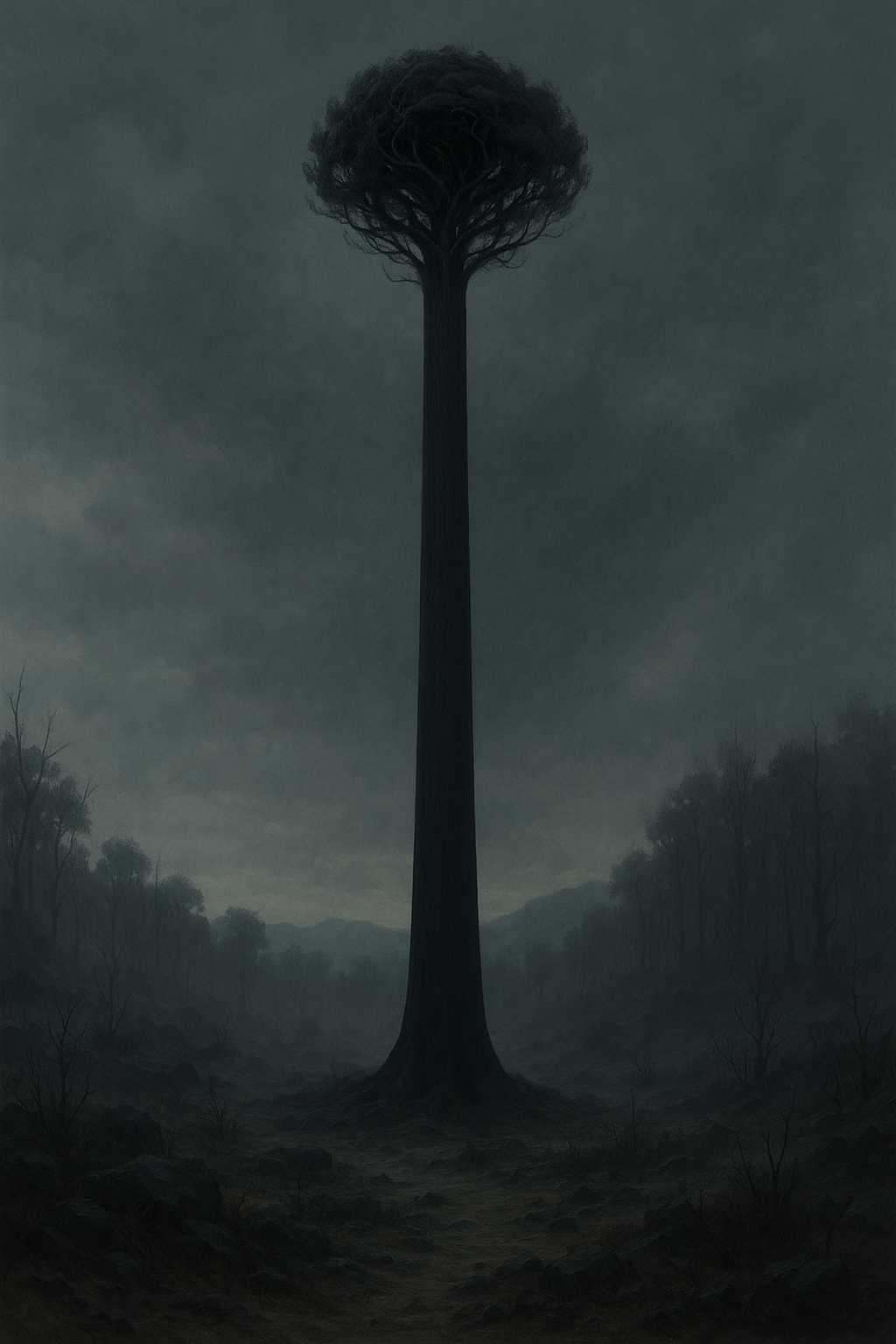


It would be so unsettling if you were on a walk and came across one of these trees.
Explore Etrea | WorldEmber 2025