
Harrowpine Wood
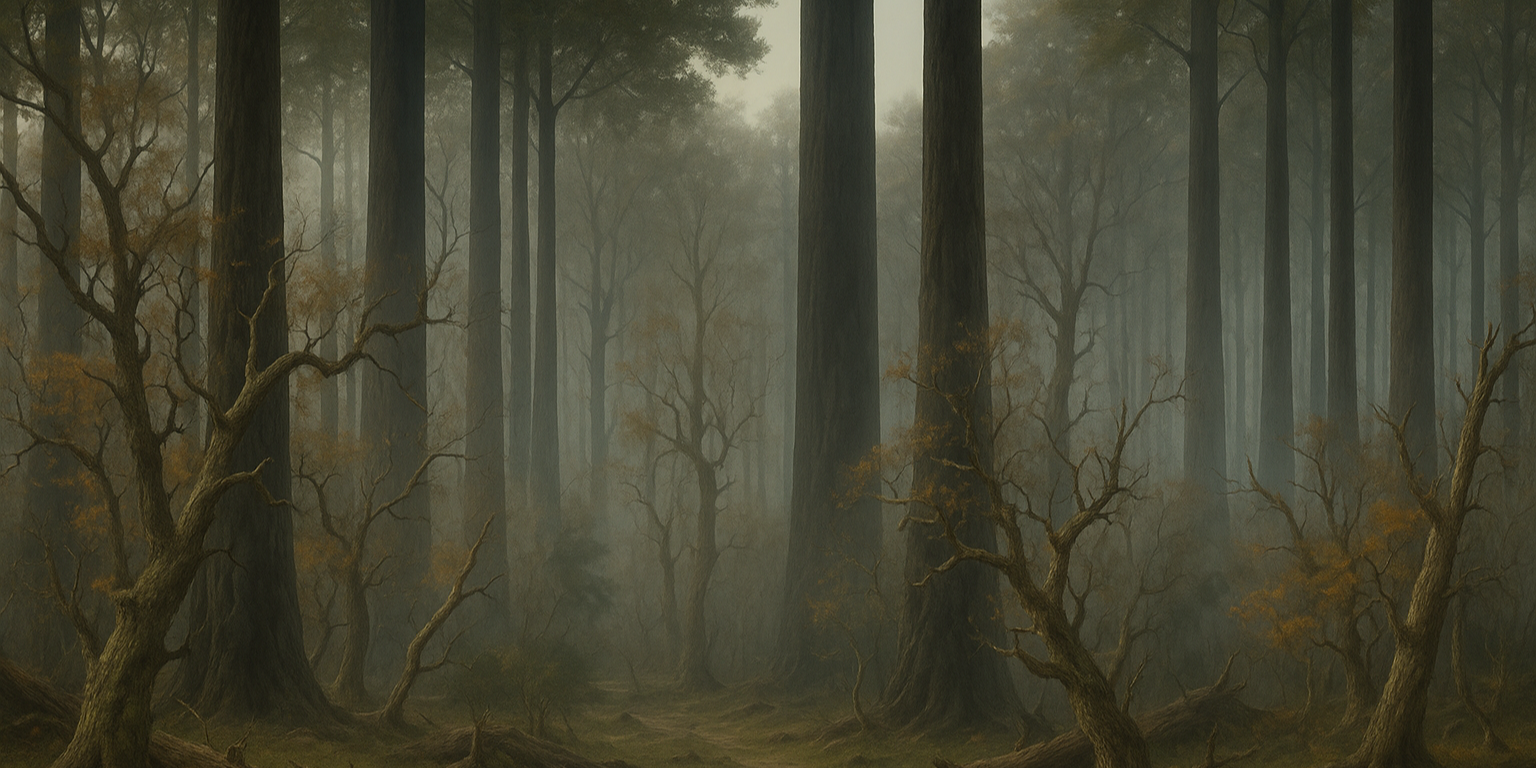
Harrowpine wood is a rare and highly coveted material harvested from the strange, sound-absorbing Harrowpine trees that grow exclusively in regions scarred by the Calamity Era. Unlike any mundane timber, Harrowpine wood possesses an uncanny stillness: it absorbs vibration, dampens footsteps, and seems to drink in ambient sound rather than reflect it. Even handling a raw plank can feel unsettling, as every tap, scrape, or breath becomes muffled the instant it touches the wood. This acoustic void makes Harrowpine one of the most valuable materials for stealthwork, arcane containment, and certain divine rituals.
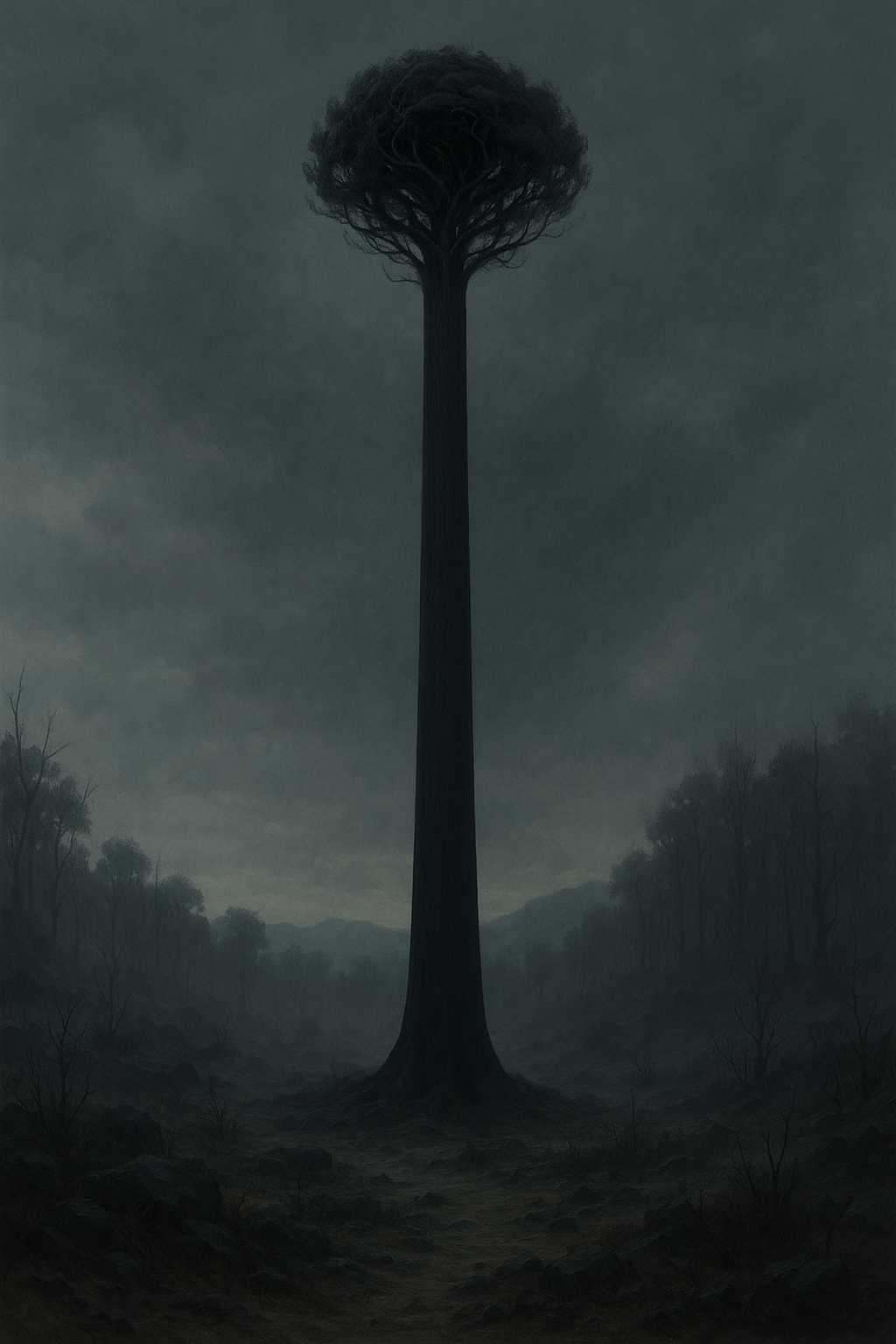
The wood itself is matte black with an almost shadow-soaked quality. Its grain runs in impossibly straight lines, unbroken by knots or twists, as if carved from a single block of night. When worked, the lumber produces little sawdust and offers unexpected resistance—craftsmen often describe the sensation as “cutting silence itself.” Once shaped, Harrowpine retains its rigidity and weight, but gains a strange warmth when touched, as though quietly responding to the presence of living beings. This responsiveness is subtle yet unmistakable: tools hafted in Harrowpine feel perfectly balanced, and weapons strike without audible impact.
Its most remarkable property is its ability to nullify noise, both mechanical and magical. Even faint metallic clinks, spellcasting whispers, or the rustle of cloth can be dampened by Harrowpine sheaths, flooring, or reinforcement. This made the wood historically prized by assassins, scouts, spies, and monks of silent orders during the later Harmonium Era. In arcane circles, Harrowpine is used to construct containment boxes for unstable relics, masking their magical signatures and preventing sympathetic resonance with leylines. Temples dedicated to death, shadows, or silence often incorporate Harrowpine in ceilings or sanctum walls to create a profound stillness.
Harvesting Harrowpine wood is dangerous and tightly regulated. Harrowpine groves occur only in post-Calamity soil where divine fallout once burned the land, and these regions are often unstable, haunted, or magically toxic. Even when found, the trees must be cut with specialized tools, as ordinary axes rebound uselessly off the bark. Folklore claims the trees “choose” whether to yield their trunks; while likely superstition, many woodcutters refuse to approach Harrowpines without ritual preparation.
Because of the risk and rarity involved, Harrowpine lumber is expensive and typically reserved for elite tools, ceremonial weapons, or specialized equipment for guilds and military operatives. Despite its value, the tree is never cultivated, every Harrowpine in existence is wild-grown, shaped by a disaster that can never be safely replicated. As a result, every crafted piece of Harrowpine is a relic of Tanaria’s wounded history: a silent reminder of the world that was, and the shadows that remain.
Properties
Material Characteristics

Life & Expiration
Harrowpine wood is effectively non-perishable. Unlike ordinary timber, it undergoes no natural decay, rot, warping, or softening even after centuries of exposure. The Calamity-born magic that shaped the tree altered its cellular structure so thoroughly that microbial life cannot break it down, insects will not burrow into it, and moisture cannot penetrate its fibers. As a result, Harrowpine maintains its shape, density, and acoustic-absorbing qualities indefinitely.
In recorded history, no known sample of Harrowpine has ever decomposed on its own. Even artifacts dating back to the early Harmonium Era remain perfectly intact, showing no signs of cracking or aging save for superficial wear from use. Scholars studying Calamity materials estimate its functional half-life to be in excess of ten thousand years, though this is theoretical; the wood has shown no measurable degradation since its discovery.
The only known forces capable of damaging or destroying Harrowpine are:
- Direct divine influence
(particularly from gods aligned with rot, entropy, or cleansing) - Extremely high magical temperatures
which cause the wood to sublimate silently into ash-grey vapor - Prolonged exposure to unstable leyline storms
which can fracture the grain through magical stress rather than physical weakness
History & Usage
Everyday use
Harrowpine wood is one of the most valued specialty materials in Tanaria, reserved almost exclusively for work requiring silence, precision, or containment. Its unique acoustic-absorbing properties make it indispensable for the construction of stealth equipment, including the hafts of silent weapons, and sheaths designed to muffle metal-on-metal contact.
Beyond warfare and espionage, the wood’s vibration-deadening qualities lend themselves to arcane containment. Mages use Harrowpine to craft boxes, vaults, and reliquary frames capable of muting unstable magical artifacts or preventing their sympathetic resonance with nearby leylines. Spellcasters working with volatile enchantments often line their workshops with Harrowpine panels to reduce magical feedback and dampen errant spell echoes.
In religious contexts, Harrowpine is favored by temples dedicated to gods of silence, death, or introspection. Shrines constructed with Harrowpine flooring or pillars create a profound, almost sacred stillness that amplifies prayer and meditation. Some monasteries craft their meditation tools, staffs, and benches entirely from the wood, believing the absence of sound allows the soul to settle more clearly.
Everyday uses of Harrowpine wood are nonexistent; the material’s rarity, danger of harvest, and reverence across multiple cultures prevent it from being used casually. Whether in the hands of a master assassin, a scholar guarding an unstable relic, or a priest seeking perfect quiet, Harrowpine serves a singular purpose: to silence the world around it.
Distribution
Trade & Market
Harrowpine wood is one of the most expensive natural materials in Tanaria, surpassed only by starforged metals and certain living fae-grown reagents. Its value stems not from ornamentation or beauty, but from its singular, irreplaceable function: perfect, absolute silence. Because no mundane or magical substance replicates this trait, even small pieces command extraordinary prices.
A hand-sized plank of Harrowpine can sell for as much as a full caravan’s worth of supplies. Full logs are considered national resources—carefully catalogued, rarely exported, and often purchased directly by governments, arcane circles, or religious orders. Criminal organizations, covert guilds, and intelligence networks pay exorbitant sums for even scraps of the wood, driving a small but dangerous black market.
Among nobles and wealthy collectors, Harrowpine serves as a symbol of power and exclusivity. Some noble houses display a single polished stave in their reception hall as a mark of status; others commission silent doors, cabinets, or meditation chambers. In every culture that knows of it, Harrowpine is understood: if someone owns it, they have influence. If someone can afford it, they are dangerous.
Because no method exists to cultivate or grow Harrowpine artificially, and all attempts have failed or resulted in lethal magical backlash, the material retains a near mythic value. A single trunk can fund a militia. A grove can shift the balance of a kingdom’s intelligence apparatus.
In short: Harrowpine is priceless to the people who need it—and terrifying to those who understand why.
Law & Regulation
Because of its rarity, political significance, and potential for misuse, Harrowpine wood is one of the most tightly regulated natural materials in Tanaria. Most nations treat it not as lumber but as a strategic resource, placing its trade on the same level as military-grade weapons, relic components, or restricted magical reagents.
Harvesting Harrowpine trees is illegal in nearly every kingdom without explicit authorization. Permits are issued rarely and only to:
- government-sanctioned expeditionary teams,
- licensed arcane institutions,
- clan councils maintaining ancestral groves,
- or conservation groups that monitor Calamity Zones.
Transport & Trade Laws
Transporting raw Harrowpine lumber requires documented chain-of-custody papers. Caravans carrying the wood must report their routes to local magistrates, and unregistered cargo is automatically considered contraband.
Type
Wood
Value
A single 2x4 can run upwards 2,000+ gp
Rarity
Extremely Rare
Odor
The scent of Harrowpine is subtle and eerie, present only when the wood is freshly cut or heated. Once worked and sanded, Harrowpine becomes nearly odorless, which many craftspeople find unsettling.
Taste
Harrowpine wood has an unexpectedly sharp, metallic bitterness when touched to the tongue. Rangers and woodcutters sometimes use this taste as a quick authenticity test; counterfeit woods never produce the same chilling bite.
Color
Harrowpine wood is naturally matte black, with undertones shifting between charcoal grey and deep, muted indigo depending on ambient light.
Boiling / Condensation Point
Harrowpine wood does not truly boil. When exposed to extreme heat, it blackens without bubbling, releasing thin, soundless wisps of smoke that dissipate instantly.
Melting / Freezing Point
None; Harrowpine retains structural integrity in extreme cold.
None; Harrowpine does not enter a liquid phase.
None; Harrowpine does not enter a liquid phase.
Density
~0.80 g/cm³
Common State
Solid matte-black timber
Related Species


This is so interesting. Immediately I was thinking about its use in temples, so I am glad you included that here.
Explore Etrea | WorldEmber 2025