
Caravan Hounds
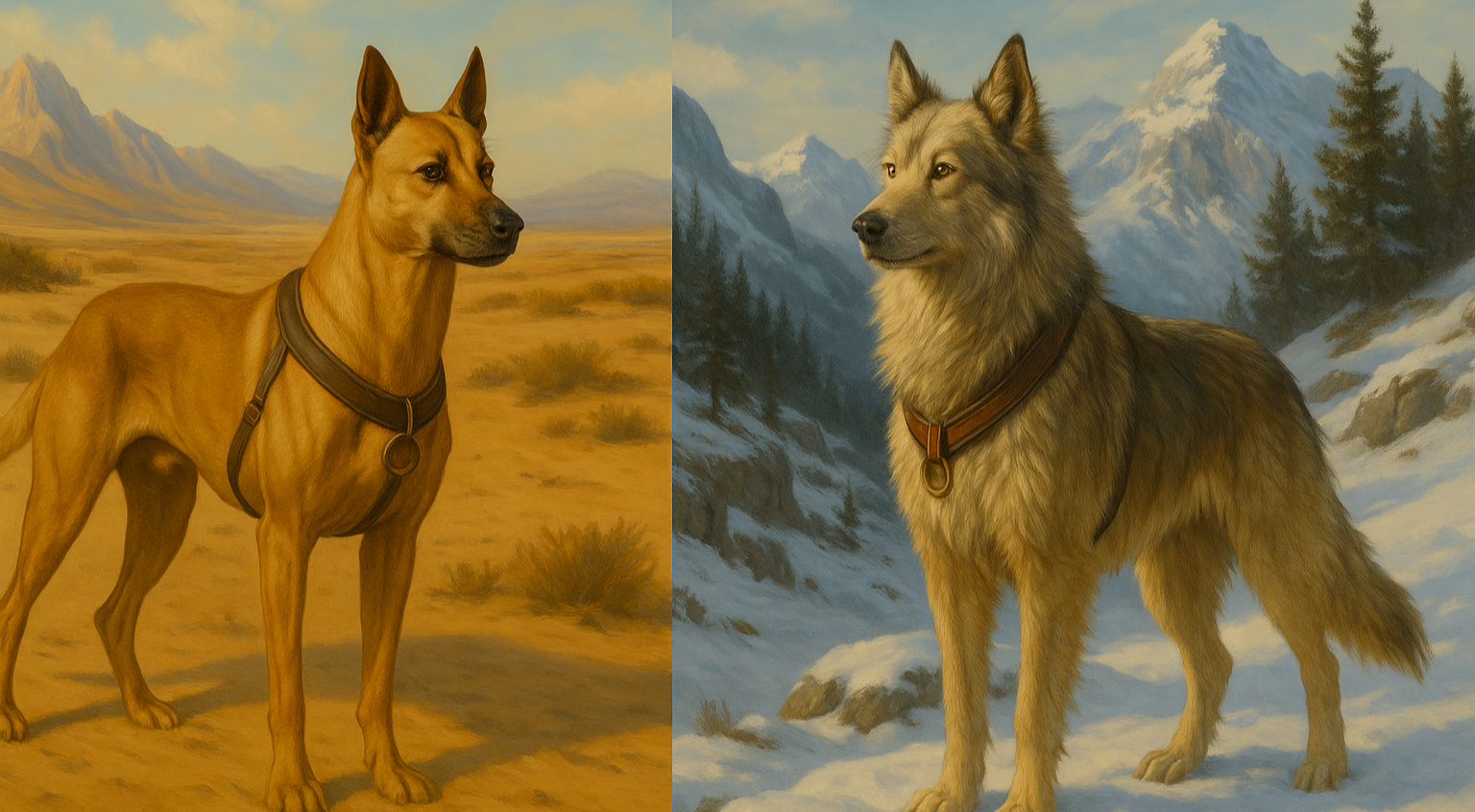
Caravan hounds are a specialized breed developed by nomadic peoples who rely on long-distance travel across harsh terrain. These dogs are known for their exceptional stamina rather than raw speed, capable of maintaining a steady ground-eating lope for days at a time. Their physiology is built for endurance: deep chests for greater lung capacity, long limbs for efficient travel, and lean, wiry musculature that resists overheating. Most caravan hounds possess double coats adapted for shifting climates — insulating during cold nights and reflective under the relentless heat of day.
Unlike war hounds or guard breeds, caravan hounds are valued first for their reliability and companionship. They act as early-warning sentinels, scavengers, and morale boosters during long journeys. Their temperaments skew toward calm confidence, independence, and loyalty to a small family unit rather than territorial aggression. This makes them ideal animals for nomads who cannot afford breeds that waste energy on unnecessary conflict or require constant containment.
Caravan hounds imprint strongly on the caravan structure itself, learning routes, routines, and sleeping rotations. They are capable of memorizing paths across dunes, plains, or forest tracks, often guiding travelers during sandstorms, fog, or blizzards when visibility fails. Many nomads claim their hounds can sense weather shifts long before the first winds arrive, making them invaluable for survival on open roads.
Breeds vary by region, but all share core traits shaped by centuries of selective breeding: incredible endurance, heat tolerance, intelligent problem-solving, and an almost uncanny sense of direction. In some cultures, caravan hounds are considered family members and are granted small ornaments, scarves, or beadwork marking their caravan affiliation. In others, they serve a dual role as hunting companions when caravans stop to resupply.
Caravan hounds are more than simple beasts of burden — they are living symbols of perseverance, loyalty, and the nomadic spirit. Wherever caravans cross open land, these dogs run beside them, steady and tireless, guiding travelers safely to their next horizon.
Basic Information
Anatomy
Caravan hounds are built for endurance above all else, displaying anatomical traits finely tuned for long-distance travel across open terrain. Their bodies are lean and streamlined, with long, efficient limbs and a flexible spine that allows for a smooth, ground-covering gait. The ribcage is deep and prominent, providing ample room for powerful lungs and a high-capacity cardiovascular system capable of sustaining steady movement for hours without strain.
Their coats vary by region but generally fall into two functional categories. Northern or high-altitude breeds possess a dense double coat, insulating them against frigid nights while protecting them from daytime wind exposure. Desert or plains variants have shorter, reflective coats that help manage heat and prevent sun stress. Regardless of climate, all caravan hounds shed water and dust easily and rarely mat during travel.
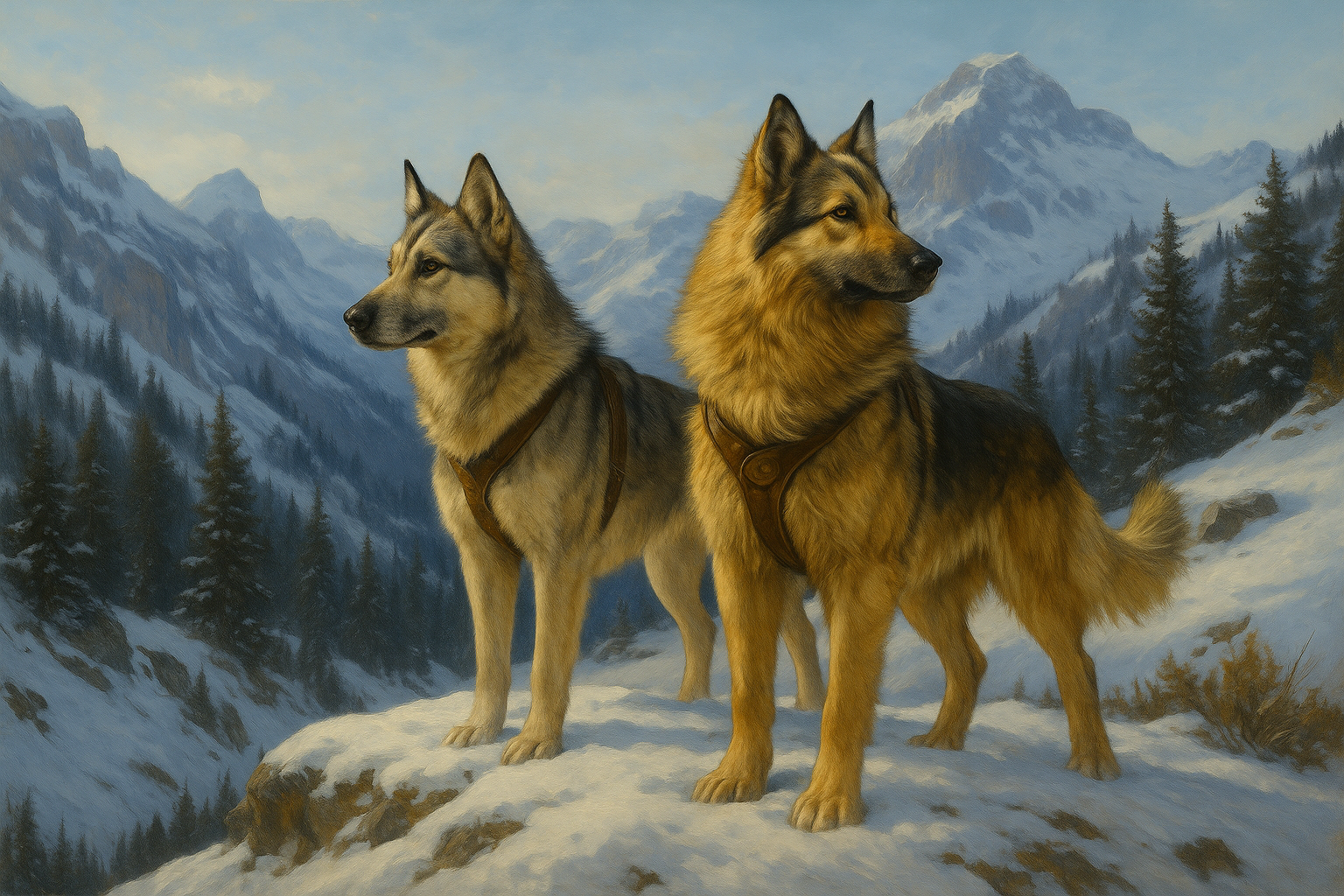 The head is narrow and angular, with long muzzles optimized for increased airflow and heat dissipation. Their ears are upright and all maintain high auditory sensitivity to detect distant threats or shifting weather patterns. Caravan hounds have sharp eyes with a characteristic long-focus gaze, able to track movement far ahead of the caravan and anticipate obstacles or predators.
Musculature is wiry rather than bulky, with elongated thigh muscles and strong tendon groups contributing to exceptional stamina. Their paws are toughened by selective breeding, featuring hardy pads that resist heat, abrasion, and rocky terrain. Many nomadic breeders trim fur between the toes to reduce sand buildup or snow clumping during long journeys.
Internally, caravan hounds maintain a slower resting metabolism than typical canines, conserving energy during periods of inactivity while enabling them to draw deep reserves when running. Their digestive systems are adaptable, capable of extracting nutrition from lean travel rations or scavenged offerings when necessary. This combination of anatomical efficiency and physiological resilience is what allows caravan hounds to keep pace with migrating caravans for days on end, making them indispensable companions to nomadic cultures.
The head is narrow and angular, with long muzzles optimized for increased airflow and heat dissipation. Their ears are upright and all maintain high auditory sensitivity to detect distant threats or shifting weather patterns. Caravan hounds have sharp eyes with a characteristic long-focus gaze, able to track movement far ahead of the caravan and anticipate obstacles or predators.
Musculature is wiry rather than bulky, with elongated thigh muscles and strong tendon groups contributing to exceptional stamina. Their paws are toughened by selective breeding, featuring hardy pads that resist heat, abrasion, and rocky terrain. Many nomadic breeders trim fur between the toes to reduce sand buildup or snow clumping during long journeys.
Internally, caravan hounds maintain a slower resting metabolism than typical canines, conserving energy during periods of inactivity while enabling them to draw deep reserves when running. Their digestive systems are adaptable, capable of extracting nutrition from lean travel rations or scavenged offerings when necessary. This combination of anatomical efficiency and physiological resilience is what allows caravan hounds to keep pace with migrating caravans for days on end, making them indispensable companions to nomadic cultures.
Biological Traits
Caravan hounds display a suite of biological traits shaped by generations of selective breeding among nomadic cultures. Their lifespans exceed those of most working dogs, with healthy individuals living on average between fourteen and sixteen years. Some lines reach eighteen or even nineteen years when given proper care. Their working years generally span the first decade of life, after which they transition into lighter duties such as scouting camp boundaries or serving as guardians during rest periods. Separation from the caravan is rare, as lifelong companionship and routine are deeply tied to their emotional well-being.
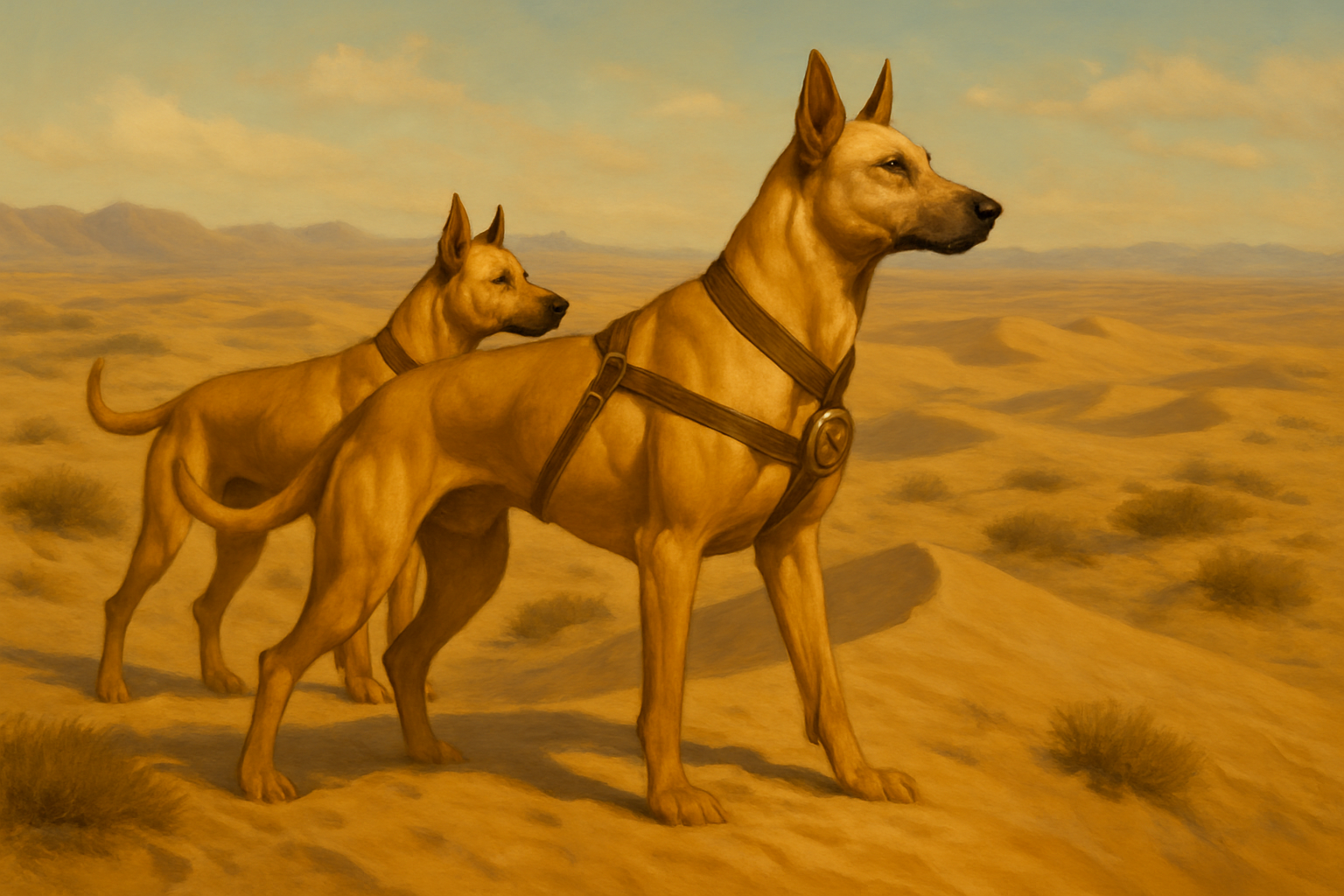 In terms of size, caravan hounds maintain a lean, athletic build across all regional lines. They typically stand between twenty-six and thirty inches at the shoulder. Desert-bred hounds tend to be taller and narrower, built for maximum heat dissipation and long-distance efficiency, while mountain or high-altitude lines develop slightly broader chests and denser musculature to support cold-weather endurance. Despite these variations, the breed’s silhouette remains consistent—long-limbed, streamlined, and unmistakably engineered for sustained travel.
Adult males usually weigh between sixty-five and eighty pounds, with females slightly lighter at fifty-five to seventy pounds. Their bodies resist excess fat, and even retired hounds tend to remain trim due to their naturally high baseline metabolism. Sexual dimorphism is present but understated; males carry slightly more muscle mass along the shoulders and hindquarters, while females often exhibit superior heat tolerance and steadier pacing over long journeys. In difficult conditions, it is not uncommon for female hounds to take the lead role, guiding the caravan with an instinctive sense of rhythm and energy conservation.
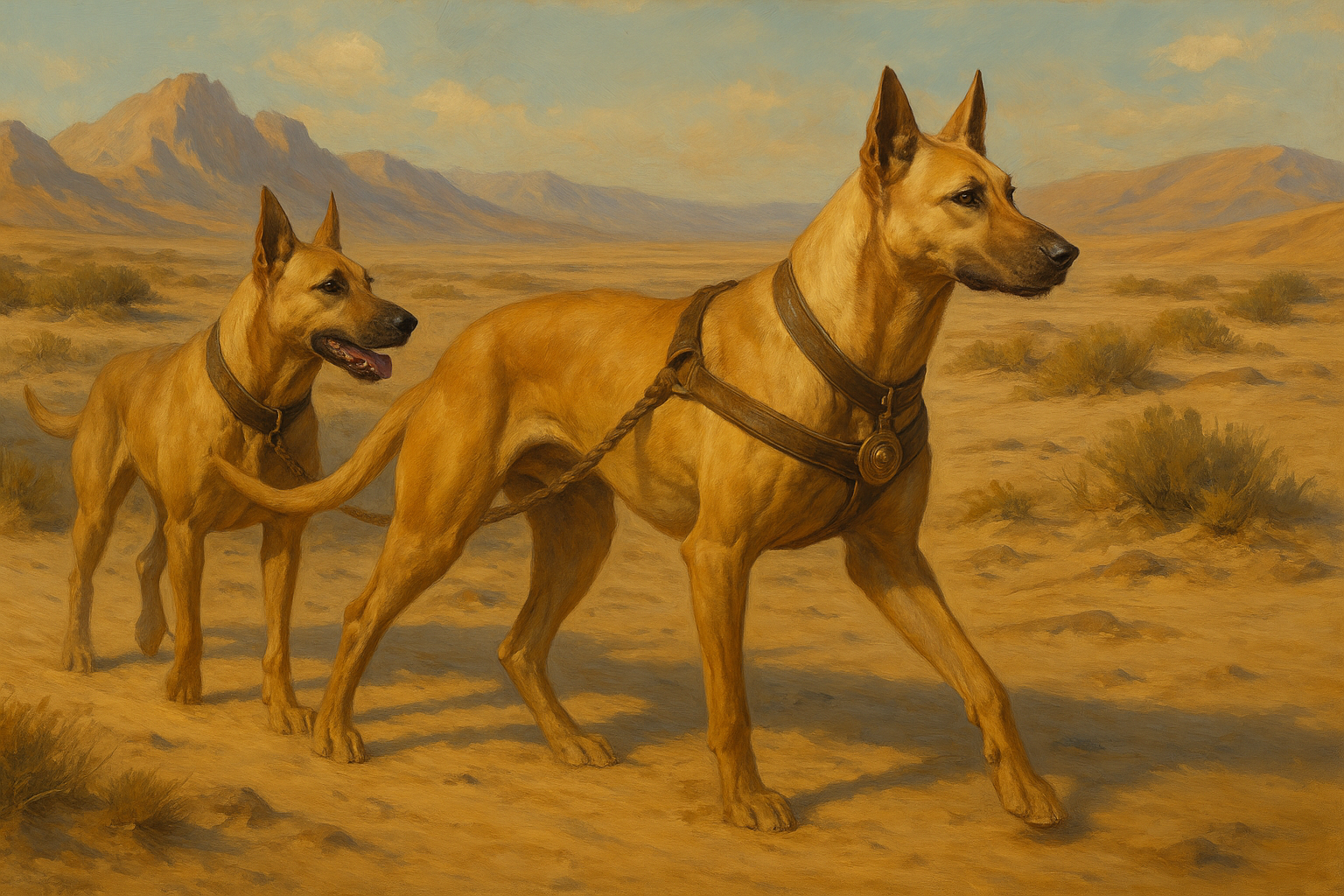
Within a caravan, hounds often adopt specialized roles shaped by subtle anatomical and behavioral differences. Taller, sharper-sighted individuals naturally become lead runners who set the pace and read the terrain ahead. Medium-built hounds with quick reflexes excel as flankers, watching the sides of the caravan for predators or hazards. Heavier-pawed, deep-scenting dogs often take up the rear as trail hounds, monitoring the group’s back and ensuring no member is left behind. Older hounds frequently assume the duty of camp guardians, relying on experience rather than speed to maintain security during night hours.
Caravan hounds reach physical maturity later than most dogs, typically between two and three years of age. Their litters are small, with two to four pups being typical, but survival rates are high thanks to the communal care offered by nomadic families. Breeding is conducted with precision and intention—endurance, temperament, and skeletal soundness are prioritized above appearance. Over centuries, this has created a breed uniquely adapted to both environmental extremes and the demands of constant travel.
Their environmental adaptability is one of their strongest traits. Desert-line hounds withstand intense heat with remarkable ease, maintaining pace under direct sunlight that would cripple other breeds. Northern lines possess thicker double coats that insulate them from cold winds and freezing nights. All caravan hounds are efficient in hydration and capable of operating longer than average canines during periods of limited water or harsh terrain. Whether crossing dunes, scrubland, frostfields, or mountain passes, these dogs thrive where others falter, making them indispensable to the nomadic lifestyles that shaped them.
In terms of size, caravan hounds maintain a lean, athletic build across all regional lines. They typically stand between twenty-six and thirty inches at the shoulder. Desert-bred hounds tend to be taller and narrower, built for maximum heat dissipation and long-distance efficiency, while mountain or high-altitude lines develop slightly broader chests and denser musculature to support cold-weather endurance. Despite these variations, the breed’s silhouette remains consistent—long-limbed, streamlined, and unmistakably engineered for sustained travel.
Adult males usually weigh between sixty-five and eighty pounds, with females slightly lighter at fifty-five to seventy pounds. Their bodies resist excess fat, and even retired hounds tend to remain trim due to their naturally high baseline metabolism. Sexual dimorphism is present but understated; males carry slightly more muscle mass along the shoulders and hindquarters, while females often exhibit superior heat tolerance and steadier pacing over long journeys. In difficult conditions, it is not uncommon for female hounds to take the lead role, guiding the caravan with an instinctive sense of rhythm and energy conservation.
Within a caravan, hounds often adopt specialized roles shaped by subtle anatomical and behavioral differences. Taller, sharper-sighted individuals naturally become lead runners who set the pace and read the terrain ahead. Medium-built hounds with quick reflexes excel as flankers, watching the sides of the caravan for predators or hazards. Heavier-pawed, deep-scenting dogs often take up the rear as trail hounds, monitoring the group’s back and ensuring no member is left behind. Older hounds frequently assume the duty of camp guardians, relying on experience rather than speed to maintain security during night hours.
Caravan hounds reach physical maturity later than most dogs, typically between two and three years of age. Their litters are small, with two to four pups being typical, but survival rates are high thanks to the communal care offered by nomadic families. Breeding is conducted with precision and intention—endurance, temperament, and skeletal soundness are prioritized above appearance. Over centuries, this has created a breed uniquely adapted to both environmental extremes and the demands of constant travel.
Their environmental adaptability is one of their strongest traits. Desert-line hounds withstand intense heat with remarkable ease, maintaining pace under direct sunlight that would cripple other breeds. Northern lines possess thicker double coats that insulate them from cold winds and freezing nights. All caravan hounds are efficient in hydration and capable of operating longer than average canines during periods of limited water or harsh terrain. Whether crossing dunes, scrubland, frostfields, or mountain passes, these dogs thrive where others falter, making them indispensable to the nomadic lifestyles that shaped them.
Behaviour
Caravan hounds possess temperaments shaped by generations of nomadic life, where calm endurance is valued far more than raw aggression. As a result, they display a distinct blend of independence, awareness, and focused loyalty uncommon in other working breeds.
Caravan hounds are naturally observant animals. They remain vigilant without being anxious, constantly scanning the horizon for movement, changes in weather, or unfamiliar scents. This quiet attentiveness makes them reliable early-warning companions during long journeys. Their senses are finely tuned to the rhythm of travel; they notice disruptions long before humans do, and often react to danger or shifts in the environment as a coordinated group rather than as individuals.
Socially, caravan hounds form strong bonds with their caravan, treating the entire moving group—people, animals, and wagons—as their pack structure. They do not fixate on a single handler the way some breeds do. Instead, they adopt a flexible loyalty that allows them to work fluidly with multiple people and adapt to changes in leadership. This prevents hierarchy conflict and helps maintain stability during stressful travel conditions.
Psychologically, caravan hounds exhibit remarkable stamina not only in body but in temperament. They are patient animals that thrive on routine and long stretches of focused movement. Sudden confinement or inactivity can cause restlessness or mild depression, as the breed is instinctually motivated by forward momentum and open space. Even when resting, they prefer to remain near the edges of camp, watching the dark for threats.
Despite their independence, caravan hounds are deeply empathetic creatures. They are known to stay beside injured travelers, refuse to abandon stragglers, and match their pace instinctively to struggling caravan members—human or animal. Their strong emotional attunement makes them excellent at reading tension, fear, or uncertainty among their people.
Aggression is rare and typically reserved for genuine threats. Caravan hounds do not waste energy on unnecessary conflict, and even when defending their group, they prefer coordinated intimidation, over reckless attacks. When forced into combat, they are precise and quick, aiming to disable rather than kill.
Above all, caravan hounds are defined by their unwavering commitment to the journey itself. Travel is not merely an activity but an anchoring instinct. Their psychology is built around movement, vigilance, and the quiet companionship of shared distance, making them one of the most emotionally stable and dependable breeds kept by nomads.
Additional Information
Domestication
The domestication of caravan hounds predates written history and is believed to have begun when early nomadic tribes first traversed the open plains and desert routes of Tanaria. Rather than descending from specialized war dogs or hunting breeds, caravan hounds evolved from rangy, opportunistic wild canines that followed migrating peoples for scraps, shelter, and eventually companionship. Over generations, these tribes selectively nurtured the individuals that could keep pace with long journeys, tolerate extreme climates, and bond with an entire moving community rather than a single handler.
Unlike many domesticated species shaped through rigid breeding programs, caravan hounds were refined through continuous cultural partnership. Nomadic families did not breed dogs for show traits or uniform appearance; they bred for survival, endurance, and temperament. A pup that could run beside wagons for a full day, sense storms before they broke, or alert the group to distant predators was treasured and encouraged to pass on its lineage. As caravans expanded and routes grew more perilous, this slow, naturalistic shaping produced a breed uniquely suited to the rhythm of constant travel.
Caravan hounds are not domesticated in the traditional sedentary sense. They do not adapt well to urban life or confined environments, and their sense of loyalty is tied not to a physical territory but to the caravan as a living, moving entity. Their domestication is therefore deeply situational and communal. A caravan hound raised outside nomadic life often becomes restless or despondent, while a hound raised within it displays an almost intuitive understanding of paths, routines, dangers, and the emotional undercurrents of travel.
Despite their independence, caravan hounds demonstrate a high responsiveness to human communication. They respond to subtle gestures, shifts in gait, tone changes, and even the emotional atmosphere of the caravan. Puppies are raised within the group rather than isolated to breeders, learning by imitation and exposure rather than formal instruction. Because of this, domestication is as much socialization as it is breeding; a caravan hound understands its role through lived experience and inherited instinct.
Today, caravan hounds remain closely tied to the people who shaped them. Attempts by outsiders to export or replicate the breed have historically failed, as the dogs’ defining traits emerge not from genetics alone but from generations of cultural symbiosis. Domestication, for caravan hounds, is not a static state but a lifelong collaboration — one that continues to evolve as long as people journey across the open world.
Genetic Ancestor(s)
Lifespan
14–16 years
Conservation Status
Caravan hounds are not considered endangered, but their population is classified as Stable with Regional Vulnerability. Because they are a working breed maintained almost exclusively by nomadic cultures, their numbers fluctuate based on caravan activity, migration routes, and the safety of long-distance trade roads. In regions where nomadic life is still strong and caravan trade remains profitable, caravan hounds thrive and continue to be bred in healthy, sustainable numbers.
Average Height
26–30 in (66–76 cm) at the shoulder
Average Weight
Adult males: 65–80 lbs (29–36 kg)
Adult females: 55–70 lbs (25–32 kg)
Adult females: 55–70 lbs (25–32 kg)
Body Tint, Colouring and Marking
Caravan hounds exhibit a wide range of natural coat colours shaped by their environment and centuries of selective breeding. Each regional lineage has developed colouring that blends seamlessly with the terrain they travel, serving both as camouflage and as protection from harsh climate conditions. Their coats are typically matte rather than glossy, reducing glare in the sun or snow and helping the dogs remain visually unobtrusive during scouting.
Desert-line caravan hounds possess warm, sandy colouring that mirrors the dunes, foothills, and ochre stone of arid landscapes. Their coats commonly fall between golden tan, fawn, light tawny, and pale rust. Some individuals develop faint striping across the shoulders or flanks, subtle brindle patterns that resemble wind-rippled sand. Their skin pigmentation tends toward deeper tones to protect against sun exposure, and their coats remain short and sleek to aid cooling. Darkened muzzles and eye masks are not uncommon and help reduce glare during midday travel.
Mountain-line caravan hounds, by contrast, have thicker, longer coats designed for insulation and concealment among alpine forests and snowfields. Their colouring often includes muted greys, charcoal, frost-tipped sable, and pale cream undercoats that soften their silhouette in snowy terrain. These hounds frequently show two-tone layering, with darker guard hairs over a lighter insulating base, creating a natural countershading effect. Many develop faint dorsal stripes, throat ruffs, or darker “mantle” markings along the back, inherited from early cold-weather ancestors.
Across all varieties, caravan hounds display functional markings rather than ornamental ones. Their eyes are typically dark amber or brown, though pale gold appears occasionally among mountain lines. Paw pads range from slate grey to deep brown, thickened by generations of travel over abrasive terrain. Some nomadic groups add simple decorative elements, dyed tassels, beads, or small bronze discs, to help identify caravan affiliation, but the dogs themselves possess few naturally showy patterns. Their colouring remains practical, understated, and finely tuned to their environment.
The breed’s overall palette reflects their purpose: endurance, subtlety, and the ability to disappear against the landscape during long journeys. Whether moving through rippling heat or wind-scoured peaks, their coats allow them to blend effortlessly into the world that shaped them.
Geographic Distribution


I love them! They sound like such good companions, and I really like how they are adapted for their different environments. There is a slight mismatch between the social structure headline and the content of that section (the really fascinating discussion of coat colouring/pigmentation).
Explore Etrea | WorldEmber 2025
Thanks! Also thanks for the heads up. I usually write my info elsewhere and then put it together in WA so sometimes I mix things up. Appreciate the catch
"Every story is a thread, and together we weave worlds."
The Origin of Tanaria