
Solova
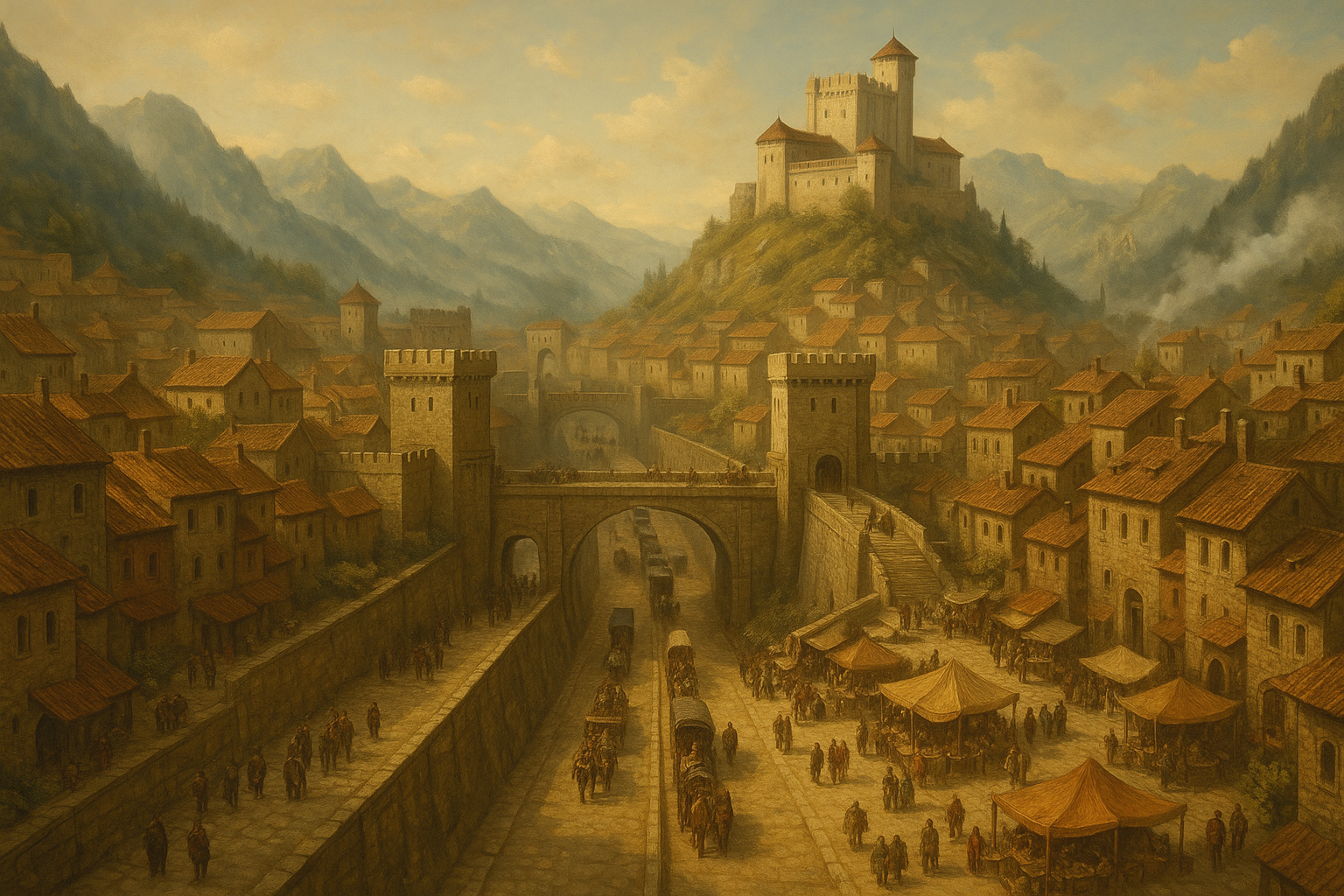
The city of Solova, located on The Velvet Coast, is an independent city-state that guards the primary overland pass between the Coast and Novaya. Built near the ruins of the Elven city of Thaloris, Solova serves both as a border bastion and a trading post. Its reputation is one of hybrid Novayan-Coaster culture, and whispered indulgence in occult practice.
Demographics
Solova’s population reflects its location between Novaya and the Coast. Roughly three-quarters are Human, split between Novayan plainsfolk migrants and native Coaster families. The remainder includes a sizeable minority of Half-Elves, many tracing their lineage to refugees of Thaloris or to mercenaries who settled after the Human Rebellion.
Elves are rare, but not unknow. A handful pass through as disguised relic-seekers or as agents of the Siar Conclave. Dwarves appear seasonally as caravan guards and metalworkers, though few remain permanently. Halfling traders, often attached to caravan trains, are tolerated but seldom welcomed.
Government
Solova is ruled by the Council of Captains, a body composed of the commanders of its garrison regiments. Each captain derives legitimacy from military command rather than blood, though family dynasties have formed around control of key cohorts. In theory, the Council governs by consensus; in practice, whichever captain controls the tollhouses and the Pass Gates often dominates policy.
Unlike the wealth-driven politics of Mevania or the senatorial traditions of Floria, Solova’s governance is plain, harsh, and practical. Authority stems from the ability to hold the walls, pay the troops, and secure the road. Yet despite their martial posture, the Captains allow broad tolerance in civil life so long as taxes are paid and order is kept.
Defences
Solova’s defences are formidable by necessity. The city is ringed by switchback walls that climb the surrounding hills, their bastions dominating the narrow valley below. The Pass Gates, a pair of massive stone fortifications, control the road between Novaya and the Coast; every caravan must pass beneath their iron portcullises.
The White Citadel, Solova’s central fortress-library, doubles as both council chamber and last redoubt, its archives rumored to contain relics of Thaloris. Watchtowers dot the ridgelines, their beacon fires relayed to warn of invasion or bandit raids.
Militarily, Solova fields the Pass Guard, 1,500 professional soldiers drilled for mountain warfare, supported by a levy militia of archers and skirmishers drawn from the populace. In siege or skirmish, Solova is notoriously difficult to dislodge.
Industry & Trade
Solova’s economy rests on its strategic tolls: every caravan between Novaya and the Coast must pay tribute to pass safely. Livestock, wool, barley, and rye dominate its countryside, while iron quarries and forges produce simple but reliable tools and weapons.
More clandestinely, Solova profits from its proximity to the Ruins of Thaloris. Relic-hunters, treasure-seekers, and occultists sell what they find to shadow markets within the city, enriching a quiet but thriving black economy. This occult trade is tolerated so long as it remains discreet, giving Solova a reputation as a haven for forbidden lore.
Infrastructure
The city is compact and rugged, with narrow, winding streets built for defense rather than beauty. Terraced farms cling to the hills, and aqueduct channels carved in the Imperial age still feed water into the city.
Solova is bisected by the High Road, a deep-cut artery carved directly into the mountain pass during the Imperial League’s height. The road runs in a trench down the city’s middle, with sheer stone embankments on either side. The two halves of the city rise above it, linked by arched stone bridges that cross the gap at intervals, crowded with shops, guardhouses, and shrines.
At either end of the trench stand the Pass Gates — massive fortifications that control all overland traffic. Traders who wish to enter the city itself must ascend a ramped gate leading from the road into the Market Square, where tolls are collected and contracts are struck. For most caravans, this square is their only destination, a bustling hub of stalls and counting-houses overshadowed by the White Citadel looming above.
This dual-level design makes Solova both defensible and unique. Attackers trapped on the road find themselves under constant arrow fire from the terraces above, while defenders can collapse bridges to isolate districts during siege.
The Catacombs, once old Imperial supply tunnels, now form an undercity of smuggler paths and cult hideouts. Above ground, the Market Square bustles with caravans, hawkers, and mercenaries, while the central White Citadel dominates the skyline.
Lighting and sanitation are sparse beyond the main districts. Inns and taverns proliferate, serving as hubs for both caravan traffic and clandestine dealings. Among them, none is more infamous than Harlak’s Mark, a tavern-tavern said to double as a gathering place for occultists and heretics.
Districts
The Pass Gates
Fortified choke points where caravans are taxed and inspected.The Market Square
Center of trade, filled with stalls, coin-houses, and mercenary contracts.The White Citadel
Fortress and seat of the Council of Captains.The Catacombs
Subterranean network beneath the city, home to smugglers and rumored cult rites.Outer Wards
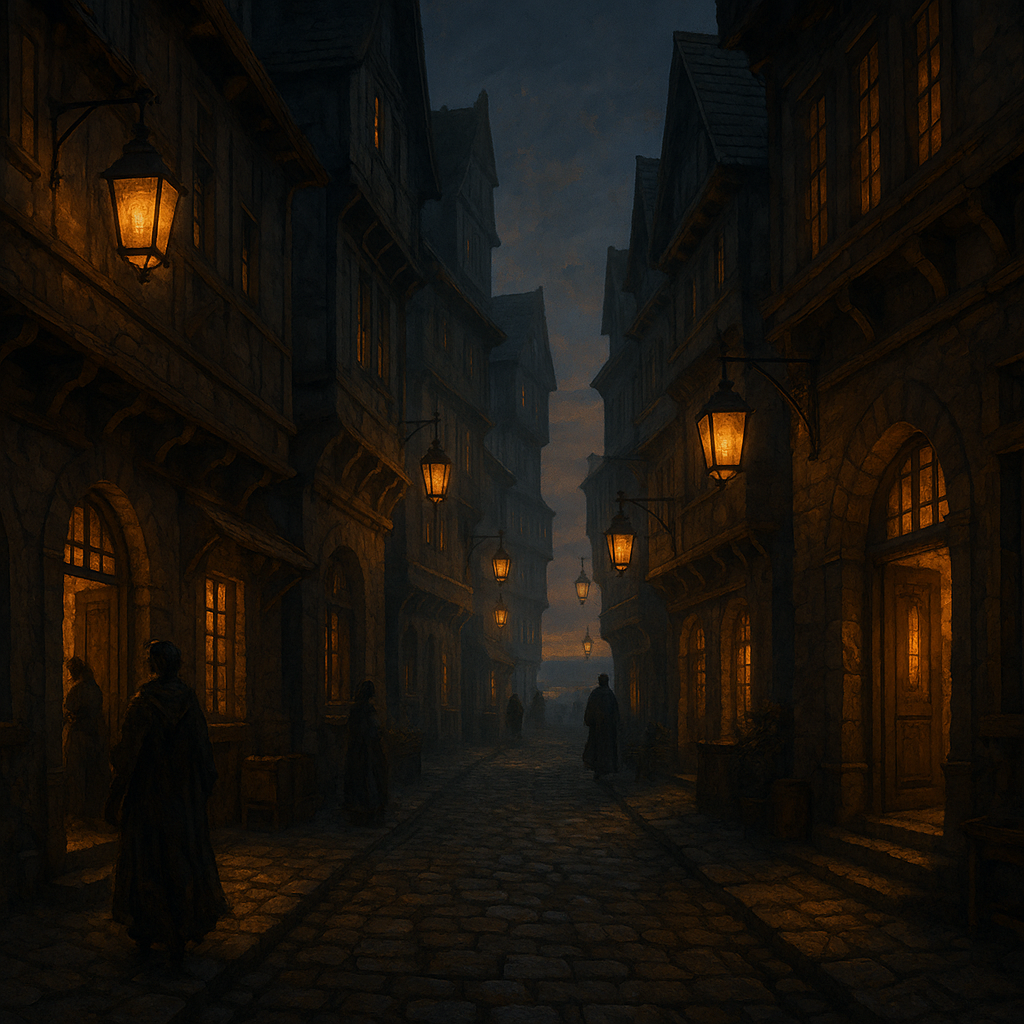
Poorer districts where migrants and exiles from Novaya mingle with locals.The Lantern Walk
Guilds and Factions
The Caravan League: A consortium of merchants and drovers who regulate caravan contracts. Their coin underwrites much of Solova’s stability.
The Forge Brotherhood: Ironworkers and smiths, supplying both the Pass Guard and passing merchants.
The Keepers of Thaloris: An esoteric cabal of scholars, treasure-hunters, and alleged cultists who traffic in relics and lore from the ruins. Their influence is tolerated but distrusted.
The Pass Guard Captains: Military families who dominate the Council and rule the city outright.
History
Solova’s roots lie in the ruins of Thaloris, once a jewel of Elven rule, sacked and burnt to the ground during the Human Rebellion. Survivors and refugees built Solova as a watchtown to guard the caravan routes through the pass. With the fall of the Imperial League, Solova declared independence, carving out survival as a fortress city.
For centuries, it has resisted absorption by both Novaya and the more powerful Velvet Coast city states. Its role as tollkeeper of the pass has ensured its autonomy and drawn suspicion for its tolerance of heretical beliefs and occult practices.
Architecture
Solova’s architecture reflects military necessity: high stone walls, terraced homes of timber and stone, and narrow alleys designed to bottleneck invaders. The White Citadel’s stark white stone contrasts with the patched roofs and utilitarian structures of the common wards.
By the gates, reliefs of human and elven figures carved in the Imperial era remain: defaced, repaired, and defaced again.
Climate
Solova endures a harsh continental climate shaped by its mountain valley. Winters are bitter and snowbound, cutting off passes; summers are hot and dry. Fog is frequent in spring and autumn, cloaking the ruins of Thaloris and feeding the city’s occult reputation.
Population
25,000 (including satellite villages)
Inhabitant Demonym
Solovan
Location under
Included Locations
Owning Organization
Characters in Location
Related Plots

Comments