
The Saltwood Grove
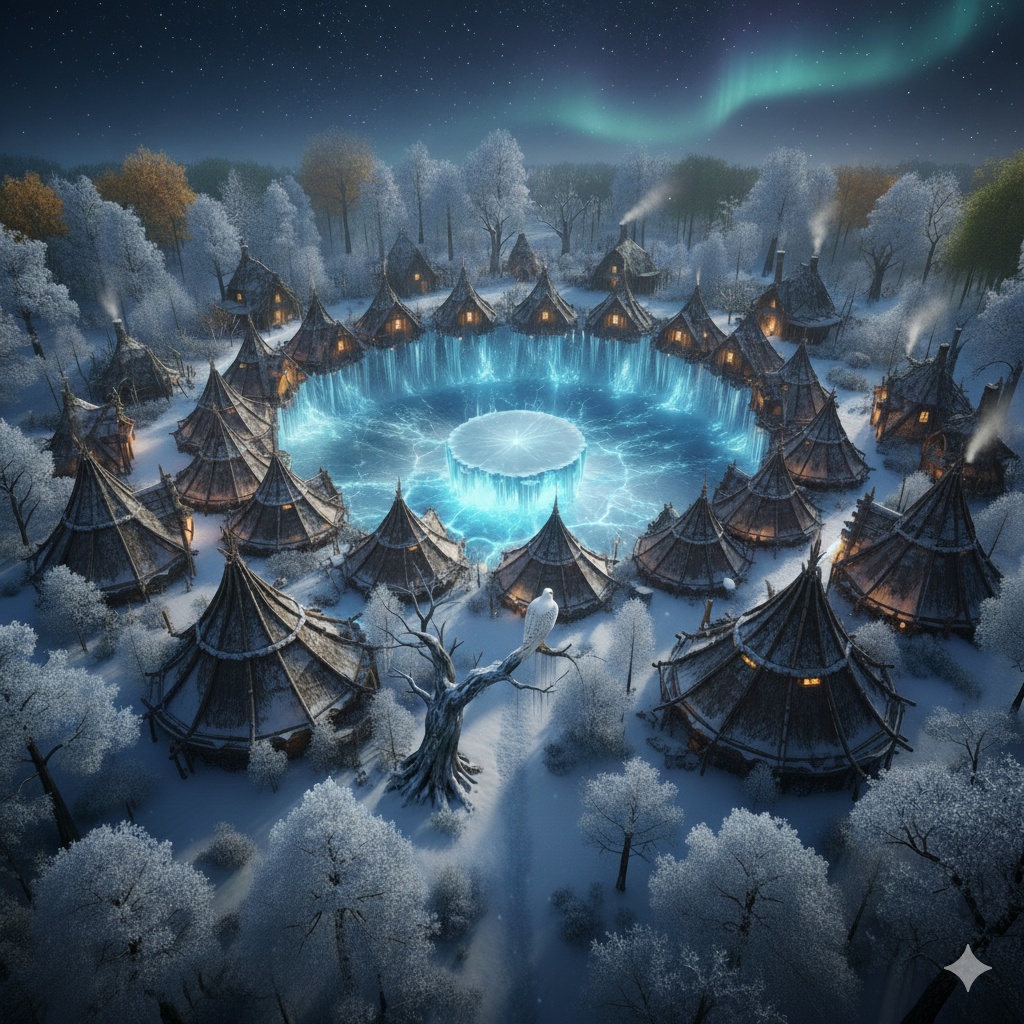
To many mortals, nature is but a part of the world that some may use to build their home, grow their crops, and domesticate beneficial wildlife. To a few factions throughout the world, nature is the breath of all creation. Its importance is so critical that its cycle must be maintained no matter the sacrifice. For the Saltwood Grove, life is but a flower among thousands in a garden. Some may seek to grow the tallest or brightest, but they all eventually wither and return to the earth. The druids of this grove do not seek to be the highest or most beautiful flowers, but to remain in the garden till their time comes to return to the dirt. Before that time comes, they choose to be the flowers that bond with nature itself, so that all the gardens around them may flourish. Thus did the garden they decided was the Saltwood Forrest, a sap-enriched landscape with half of its flora cursed by a self-immolating draconic power. This negative application of world-shaping magic, the Scorchwood Curse, has plagued the forest since the rise of the Fuxenarian Empire, which attempted to claim it. The later arrival of the Kingdom of Owenar brought with them a famous druid, Jane Gainevere, a pure soul who protected the forest of Forodren from the demon armies in the War of Nightmares. She arrived at the Saltwood Forest looking to start a grove of her own. In so doing, she partnered with the kingdom to develop a cure for the Scorchwood Curse. A long and strenuous task that is still in progress to this day. For the centuries since then, the Saltwood Grove has held restrictive measures against any unnecessary disruption of nature or the magical barrier that shields the curse from the rest of the forest. A coven of druids, worshippers of both nature and the 4 Gods that govern it, that have stood the test of time like the against predators, violent storms, deadly curses, and the invasions of the sea-borne invaders.
Structure
The grove consists entirely of druids and nature-born clerics, with the former being the most common. As nature holds no mortal conception of hierarchy, neither does the Saltwood Grove. They are so attuned with nature that they make no distinction between other beings, neither mortal, animal, nor plant. Seeing that all life is precious and bound to the flow of nature itself. As such, all of its members are equal in status, whether they be human, elf, harengon, or dwarf. Only the Archdruid is granted the power of representation, but that power only extends from the grove's alliance with the Kingdom of Owenar.
Structurally, they divide their work between caring for the Saltwood Forest, watching over the mystic wall that borders the Scorchwood Forest, or aiding the Owenarians' researchers of Janetown. Neither status has an advantage over the other. Their tasks are held with equal importance under the precedent of their druidic code. The title of Archdruid is granted to a member with the highest reputation or skill within the grove. The title commands only by those factors which invoke respect. Apart from that, the bearer of that title must hold that same respect for other members equally. The Archdruid's only true power lies in their representation to the Kingdom og Owenar's government. As a representative, they speak out for or against any laws that affect the Saltwood Forest and work in tandem with the policies of Janetown.
Included with the grove is the faith of the 4 Gods of Nature. Their incarnation of the seasons made them an effective part of the grove's beliefs. Within that faith are the clerics who master the divine magic that stems from the natural order of things. Those rare few who become clerics are sought for advice by many of their members. Their ritualistic communication with the four gods serves as a form of influence on their decisions, promoting the good of nature.
Culture
The grove's practices and techniques descend from the elvish druids of the Avenios Forest in the continent of Forodren. Passed down through generations into the practice of its first Archdruid who came from those lands. Under the druidic code, the grove thrives under a culture of servitude to the natural order and the four gods of nature that dominate its seasonal aspects. Their reverence and deep connection to nature lead them to believe they are its guardians. Forming their circle deep in the forest away from civilization. Even when interacting with the Owenarians in Janetown, they maintain their roles and observations at a reasonably distant level. They do not take kindly to carelessness from outsiders and take great lengths to act alone against those who violate the balance of nature or disturb the mystical shield that protects the forest from a damning enchantment known as the Scorchwood Curse.
Ritualistically, the druid and clerics of the grove practice the faith of the 4 Gods of Nature, Ikbium of Summer, Halvos of Spring, Otuna of Fall, and Cadur of Winter. Every change in the season, they pray and dance to the god specific to it. These dances vary by season but are said to evoke a seasonal aura with such beauty that they have been described as mesmerizing to witnesses. In addition, members of the circle carry special bracelets made of runed stones that glow at the approach of each season, so that all know when to travel to their hidden grove to participate in the seasonal ritual. When members pass away, they're buried in a secret gravesite specific to the season and its god. Symbolizing their passing as being ordained by said god. Thus do they find moments in the seasons as part of their divine interventions. Whether to challenge the grove or give them hope is not for mortals to decide, but the guardians of nature face it regardless.
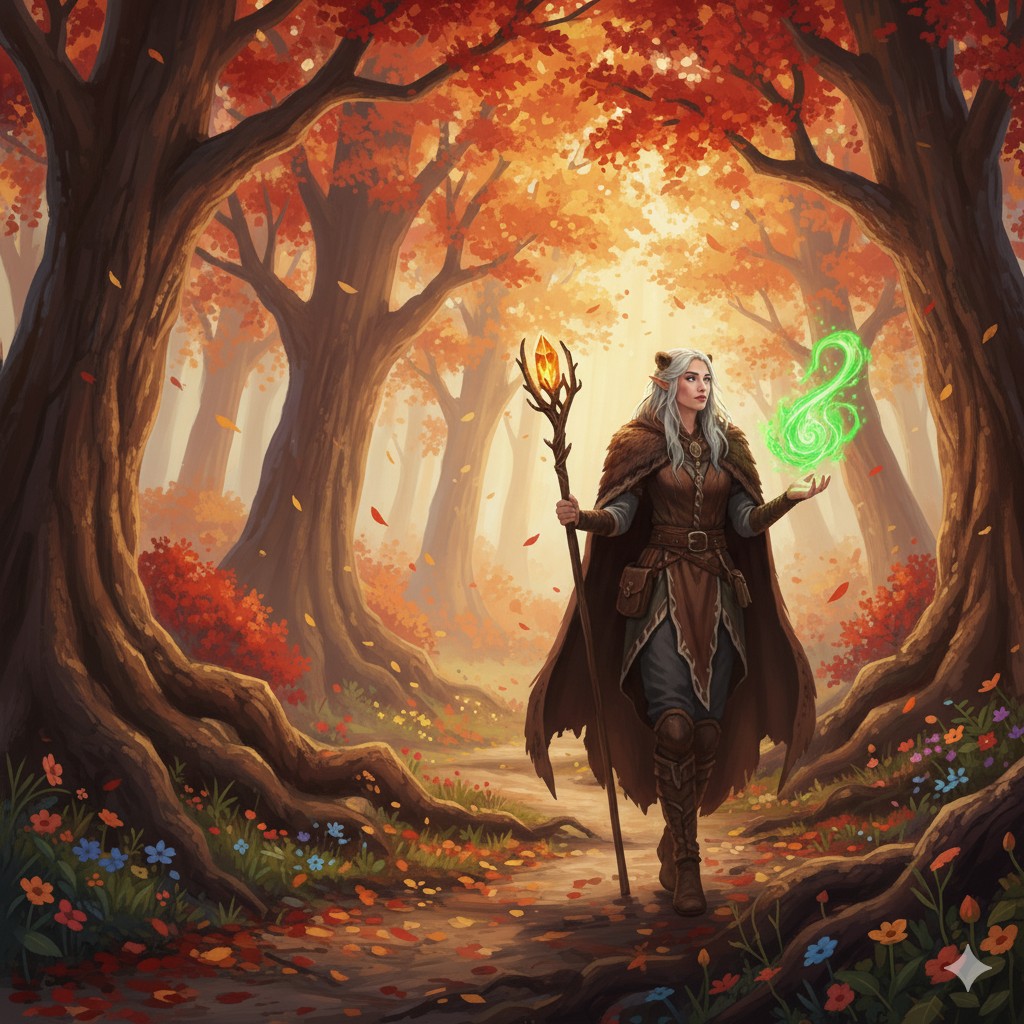 To be attuned with nature, they wear bear hides and cloth woven from residual tree bark. They consume only plants, such as wildflowers, white marigolds, spider grass, and shrub berries, which are rich in flavor. They also use the saline-rich tree sap of the Saltwood for basics like gluing, sealants, or even edible syrup. However, this practice is restricted to druids, as they fear its misuse by outsiders. As a result, the market for this tree sap is rare, with areas like the black market trade driven by its addictive quality, used as a smoke inhalant called after-burner. When they salvage animal bodies that die from natural or unnatural causes, they bury the bodies whole in unmarked graves near the trees. Believing in the cycle of nature, they consider that flesh and bones should only be returned to the earth and flora. No exceptions are made, and any absence of burial is considered sacrilege to the gods of nature.
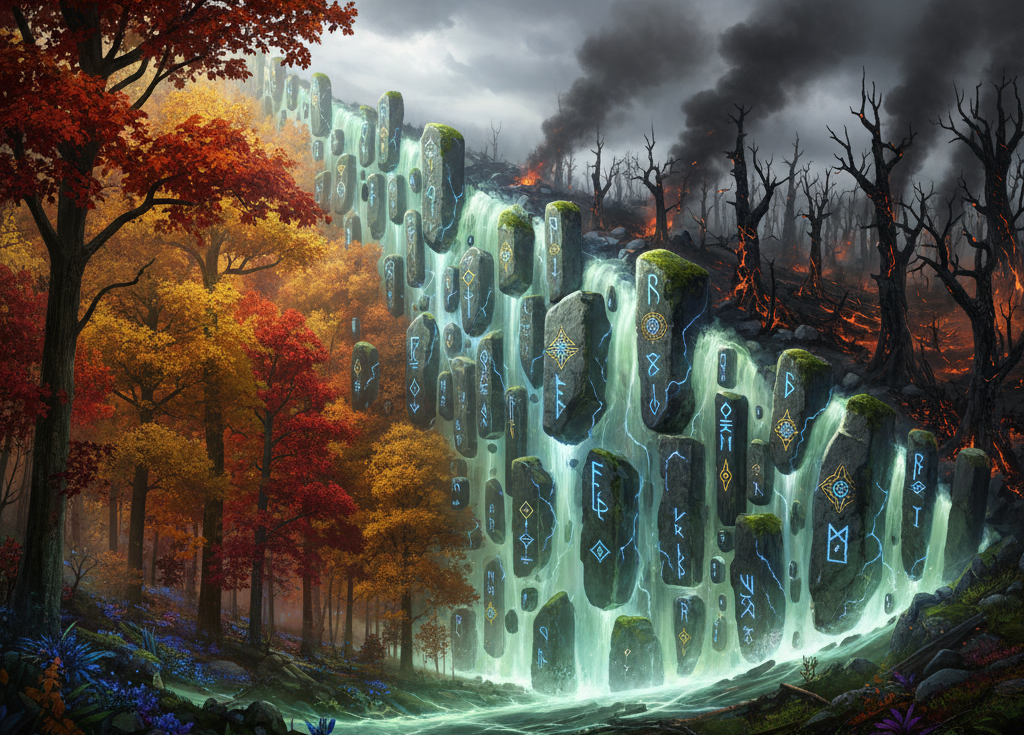
In their effort to rid the forest of the Scorchwood Curse, they have linked their faith to the mystic barrier that prevents the curse from reaching the last part of the forest. They see it as an act of the 4 Gods of Nature, even when evidence suggests by Owenarians it is a relic of the First-Born. Regardless, they rely on the magical wall as if the gods' hands are holding evil at bay. Any disruption or tampering with the ward stones that create this barrier is regarded as sacrilege. Depending on the severity of the crime, the punishment for such disruption can be a death sentence or exile.
To be attuned with nature, they wear bear hides and cloth woven from residual tree bark. They consume only plants, such as wildflowers, white marigolds, spider grass, and shrub berries, which are rich in flavor. They also use the saline-rich tree sap of the Saltwood for basics like gluing, sealants, or even edible syrup. However, this practice is restricted to druids, as they fear its misuse by outsiders. As a result, the market for this tree sap is rare, with areas like the black market trade driven by its addictive quality, used as a smoke inhalant called after-burner. When they salvage animal bodies that die from natural or unnatural causes, they bury the bodies whole in unmarked graves near the trees. Believing in the cycle of nature, they consider that flesh and bones should only be returned to the earth and flora. No exceptions are made, and any absence of burial is considered sacrilege to the gods of nature.
In their effort to rid the forest of the Scorchwood Curse, they have linked their faith to the mystic barrier that prevents the curse from reaching the last part of the forest. They see it as an act of the 4 Gods of Nature, even when evidence suggests by Owenarians it is a relic of the First-Born. Regardless, they rely on the magical wall as if the gods' hands are holding evil at bay. Any disruption or tampering with the ward stones that create this barrier is regarded as sacrilege. Depending on the severity of the crime, the punishment for such disruption can be a death sentence or exile.
Public Agenda
They are built upon a foundation of ecological stewardship and the critical, strategic partnership with the Kingdom of Owenar. This agenda is executed almost exclusively by the Archdruid, ensuring their deeply isolationist community maintains a necessary distance from civilization while protecting their natural domain and pursuing the cure for the Scorchwood Curse.
 The political engagement peaks during the annual parliamentary session known as "The Word of the Forests." During this traditional visit, the Archdruid—who remains stoic and objective—delivers a comprehensive report on the past year’s forest activity, seasonal shifts, and ecological health. This is not mere observation, but a powerful political tool. By detailing the accuracy of the changing seasons, the Grove provides invaluable, practical data that helps Owenarian farmers optimize planting, prepare transportation routes for weather shifts, and warn settlements of potential natural disasters. In return for this concrete, mutually beneficial service, the Grove's requests for improved protection and their strict restrictions on the forest's resources are generally respected by the Owenarian government and the general populace.
The Grove's agenda involves rigorous defense of the forest and a zero-tolerance policy for those who would violate the balance of nature. This focus is clearly directed against the criminal underworld, especially the Hollow Syndicate and other elements in Westenra's shadow economy. The Grove recognizes these organizations as direct enemies of nature for their attempts to illegally harvest the forest's precious flora and fauna and, most notably, for driving the black market trade of the addictive sap-based inhalant, After-Burner. While the Archdruid works through government policy to curb these activities, the druids themselves are known to take unilateral, direct action against those—including greedy merchants and smugglers—who attempt to sneak around the Owenarian resource policies. Conclusively, their commitment to curing the curse requires maintaining the political weight to protect the mystic barrier and continue the crucial research partnership with Janetown, ensuring that the solution for the blighted land remains aligned with the natural order.
The political engagement peaks during the annual parliamentary session known as "The Word of the Forests." During this traditional visit, the Archdruid—who remains stoic and objective—delivers a comprehensive report on the past year’s forest activity, seasonal shifts, and ecological health. This is not mere observation, but a powerful political tool. By detailing the accuracy of the changing seasons, the Grove provides invaluable, practical data that helps Owenarian farmers optimize planting, prepare transportation routes for weather shifts, and warn settlements of potential natural disasters. In return for this concrete, mutually beneficial service, the Grove's requests for improved protection and their strict restrictions on the forest's resources are generally respected by the Owenarian government and the general populace.
The Grove's agenda involves rigorous defense of the forest and a zero-tolerance policy for those who would violate the balance of nature. This focus is clearly directed against the criminal underworld, especially the Hollow Syndicate and other elements in Westenra's shadow economy. The Grove recognizes these organizations as direct enemies of nature for their attempts to illegally harvest the forest's precious flora and fauna and, most notably, for driving the black market trade of the addictive sap-based inhalant, After-Burner. While the Archdruid works through government policy to curb these activities, the druids themselves are known to take unilateral, direct action against those—including greedy merchants and smugglers—who attempt to sneak around the Owenarian resource policies. Conclusively, their commitment to curing the curse requires maintaining the political weight to protect the mystic barrier and continue the crucial research partnership with Janetown, ensuring that the solution for the blighted land remains aligned with the natural order.
History
During the Dark Ages, the Fuxenarian Empire quickly reached the Saltwood Forest, where the dragons fought valiantly to protect the land they cherished. Unfortunately, the empire's overwhelming strength forced the dragons to flee to the northern mountains. The empire forcefully occupied the forest they sought to defend. Those dragons, influenced by their addiction to the Saltwood tree sap, motivated one among them to take drastic measures to save it from the Fuxenarian hands of destruction. The black dragon known as Athreos, the Scorcher, cast a world-shaping curse that in 5 DA would destroy the forest rather than allow it to fall into the hands of the empire. Recognizing the severity and potential danger posed by the curse, the ward stones unified at the afflicted section of the forest, planted themselves into the earth, and activated a veil that repelled world-shaping curses. While the forest overall was saved, almost half of it had been afflicted with the Scorchwood Curse. A dark magic that causes plant life to burn from the inside out slowly. The sap of the afflicted trees created an anomaly, allowing its fluids to keep the trees from breaking apart into ashes. A balancing flux of burning and restoring bark, which turned half of the forest into an endlessly burning wasteland, releasing toxic fumes on the western winds. After the fall of the empire, the forest remained untouched by mortal hands for several centuries through the Dark Ages. The untamable nature and the danger of the Scorchwood Curse influenced the neighboring human tribes to avoid venturing into, let alone settling in, the Scorchwood. That was until the foundation of the Kingdom of Owenar.
In the year 575 of the Dark Ages (DA), Jane Gainevere came to the Saltwood Forest under the banner of the Royal House of Owenar. A kind-hearted and nature-loving individual, she saw the danger if the veil protecting the forest were to fade. In addition to her worries, she was asked by her friend King Utheos Owenar to find a suitable area within the forest where the kingdom could establish a settlement known as Janetown. A small town for citizens of the kingdom to explore and research a way to cure the forest of the Scorchwood Curse permanently. During the town's founding, Jane gathered her druidic allies to form the Saltwood Grove, a collective dedicated to strictly protecting the forest as their home. Seeking to start her grove in the woodlands, she explored every corner of the forest, looking for a place to establish her community. In the deepest parts of the forest, it is said that she found four pits, each of which contained a heightened presence of the season—places where the season stays the same forever, and druids are at their strongest. Keeping these places secretly hidden, they became the foundations of the grove.
Gathering members from the continents of Westenra and Forodren, the Gainevere family was granted nobility by the Owenarian monarchy to be caretakers of Janetown, earning them enough reputation to be given the title of Archdruid many times throughout history. In the year 83, after the Dark Ages (ADA), the land was threatened by an invasion from the Salted Steel Tribe, who attacked the western region of the forest. Janetown was nearly burned to the ground while the Saltwood Grove struggled with raids and ambushes. The heroic actions of the sword mage Sargon Killgrave and the elderly druid Emma Gainevere brought the invading tribe to heel as Queen Lauren Owenar led naval battles, cutting the tribe's conquest. The grove's weather prophecies aided Queen Lauren's naval movements to more quickly attack invaders. In 235 ADA, a resident botanist named David Ferom was brought before the Saltwood Grove for damaging one of the ward stones by pulling on a vine that held the structure together, threatening to destroy the veil. After the legal conflicts, the Saltwood Grove passed judgment and decided on the punishment of exile, as it was an accident, albeit a grievous one. After a while, peace and the balance of nature had been kept together, but would once again be interrupted by the appearance of the Hollow Syndicate.
In 622 ADA, a group of dangerous criminals known as the Hollow Syndicate infiltrated the forest seeking to incite discord. They constantly teased the destruction of the ward stones and harvested tree sap for illegal drug trades. Calling this high-dose of the tree sap, After-Burner, it quickly became an addictive substance on the black market. All to enrich themselves and to distract the druids, making it easy for them to sneak out of Hollow Canyon from the south to other parts of the continent, slipping past Owenarian eyes. This continues to trouble the Kingdom of Owenar even to this day as the grove tries to slow their harvesting while the king's military polices the black market trade. Many times did the Archdruid Othenos call for action against the gangs, but those proposed by Parliament weren't enough. Since then, the forest has increased its restrictions and reduced the number of entry permits to combat illegal activity better.
When the 2nd Salted Steel War began in 979 ADA, the Saltwood Grove created a nature-born defense that tore apart landing boats from the Salted Steel Tribe. Blocking raids compared to the last war, in which the druids learned how to counter their movements. Unfortunately, that did not last long as their numbers grew beyond their defenses. The invaders were not as careless as last time; they knew that attempting to break into their four circles would be more trouble than worth. Instead, they surrounded the borders by land and sea. Trapping them as they slowly choke their way to the borders of the four circles. The remaining druids and clerics who were outside the borders would join Lirael Whiteheart and Prince Talon Owenar, who marched with an army of knights to push back the occupying force into Averse's Landing in 989 ADA. In what would be known as the Battle of White Rain, in the northern region where the Winter Circle is located, Prince Talon and Archdruid Ashlin faced the infamous duo of the Salted Steel Tribe, Corbin and Arnaud. A battle-tested brother to a king and the most powerful druid of her age against the most skilled duo-style monks in the world. In the end, Talon was the last one standing. She gave her life to kill the two monks, becoming a sanctified hero in the grove. When the war ended in the kingdom's victory, the grove continued to keep the balance of nature and help the people of Janetown in the completion of the cure for the Scorchwood Curse. The war cost the lives of many of its members and created much harm to the wildlife in the process.
Reclaiming their forest and set on continuing their work, the grove once again imposed heavy restrictions to assess the damage caused by the war. Even now, they work tirelessly to both protect the forest and restore it like they have always done. While these disturbances have slowed progress toward a cure for the Sorchwood Curse, researchers and druids created a sizable artificial ward stone back in 566 ADA. It was designed to create a massive veil to purify the entire forest. However, it showed no magical activity until 627 ADA, when the druids managed to channel energy through it. By 820 ADA, the stone was able to purify recently afflicted plants. Despite this slow progress, the town's ingenuity led to the creation of ward stone glass that can contain afflicted samples and prevent their spread. Their strongest stone can purify afflicted vegetation for a few miles, but there's still a long way to go before it can heal the entire forest.
Mythology & Lore
The faith of Saltwood Grove is rooted in the natural events of the world. Their collective knowledge of their gods, passed down only through spoken word and magic, claims that nature itself was created by the combined power of four gods who embody the seasons: Ikbium of Summer, Halvos of Spring, Otuna of Fall, and Cadur of Winter. According to their stories around the campfire, these gods were born from the union of the celestial gods Daphine of Order and Behlios of Chaos. From order came winter and fall, and from chaos came summer and spring. Their birthplace is the four pits within Saltwood Forest, where the grove guards a closely kept secret. They say these areas have a powerful aura that resonates with the respective season, causing a natural phenomenon where the same season persists throughout the entire year. To the grove, the four gods exist within the seasons themselves—taking turns shaping the weather and the growth of life to maintain a balance of life and death. Each of the four gods has its own personality based on the season it rules.
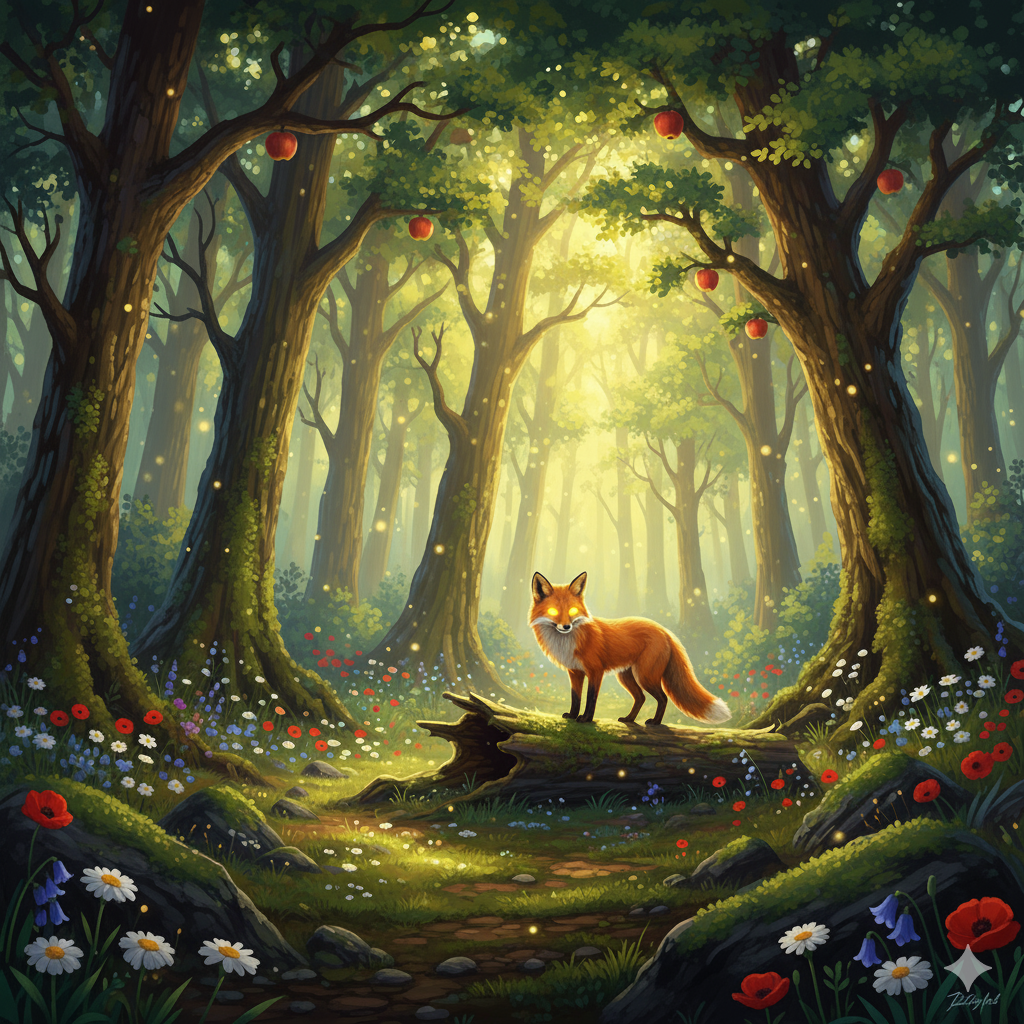 Ikbium, the second oldest, is an energetic and straightforward being. Loving the heat, he radiates the sun's light as it filters through the trees’ leaves. Through him, passion, motivation, strength, and action are driven. In his rituals, the druids transform into the native northern fox, an illuminating and ambitious creature. Ikbium cherishes his spring brother Halvos, cares for his fall sister Otuna, and dislikes his winter brother Cadur.
Halvos, the second youngest, is the most spirited and caring. Loving the scent of flowers and trees, he embraces the life-giving qualities so that those who survive winter’s cold can live again. Through him, healing, renewal, and freedom are fostered. In his rituals, the druids take the form of the forest bear, an animal that returns to nature after hibernation. Halvos feels no attachment to his siblings except Cadur, whom he sees as essential for life's renewal.
Otuna, the youngest, is a pragmatic and thoughtful being. Watching helplessly as plants wither and animals hide from the cold, she bears the burden of the approaching winter with stoicism. In her rituals, the druids become the Westenra deer, an elegant and reflective animal. Otuna loves all her siblings for their efforts to keep nature in balance.
Cadur, the oldest, is the strongest and most isolated. He brings winter’s chill to renew the cycle of life with silent determination. In his rituals, the druids become the white-stream falcon, a noble bird soaring even through harsh snowstorms and rain. Cadur refuses to interact with his siblings and dedicates himself solely to winter’s arrival. He believes his purpose outweighs family ties.
Over a thousand years ago, when the black dragon Athreos cursed the forest with the Scorchwood Curse, the four gods united in a desperate plea to their parent gods for help. Together, they crafted runes from large stones, enchanted to halt the curse—an alliance of powerful magic bridging order and chaos. The curse was contained, and the gods of nature rested for ages in their birthplace until the fall of the Fuxenarian Empire in 406 DA, awakening to a new world where life energies returned to nature and the forest flourished again. Recognizing the mortal races’ need to protect nature, the gods granted them druidism. The first mortal to do so was the elf Ievis of the Avenios Forest in Forodren, passing the arts to other elves in hopes of fulfilling the gods’ will. These elves searched every corner of the forest for the gods’ birthplaces, unaware they lay on Westenra. When Jane Gainevere founded Saltwood Grove, the gods spoke to her joyfully, revealing that the barrier held back the Scorchwood Curse and giving her a purpose. She was gifted with knowledge of the rune stones, hoping she could replicate them to purify the lost parts of the forest.
When the tree sap was used to create the addictive substance After-Burner, the gods expressed divine disapproval through their magic. They compelled the druids and clerics to act against any harvest that might harm the forest's precious resources. They warned that overharvesting would cause the trees’ life energies to fade, shrinking their birthplaces and weakening seasonal activity. Flowers would fail to bloom in spring, summers would scorch the branches, autumn would shorten, and winter’s cold would turn all life into cold husks that never return.
Ikbium, the second oldest, is an energetic and straightforward being. Loving the heat, he radiates the sun's light as it filters through the trees’ leaves. Through him, passion, motivation, strength, and action are driven. In his rituals, the druids transform into the native northern fox, an illuminating and ambitious creature. Ikbium cherishes his spring brother Halvos, cares for his fall sister Otuna, and dislikes his winter brother Cadur.
Halvos, the second youngest, is the most spirited and caring. Loving the scent of flowers and trees, he embraces the life-giving qualities so that those who survive winter’s cold can live again. Through him, healing, renewal, and freedom are fostered. In his rituals, the druids take the form of the forest bear, an animal that returns to nature after hibernation. Halvos feels no attachment to his siblings except Cadur, whom he sees as essential for life's renewal.
Otuna, the youngest, is a pragmatic and thoughtful being. Watching helplessly as plants wither and animals hide from the cold, she bears the burden of the approaching winter with stoicism. In her rituals, the druids become the Westenra deer, an elegant and reflective animal. Otuna loves all her siblings for their efforts to keep nature in balance.
Cadur, the oldest, is the strongest and most isolated. He brings winter’s chill to renew the cycle of life with silent determination. In his rituals, the druids become the white-stream falcon, a noble bird soaring even through harsh snowstorms and rain. Cadur refuses to interact with his siblings and dedicates himself solely to winter’s arrival. He believes his purpose outweighs family ties.
Over a thousand years ago, when the black dragon Athreos cursed the forest with the Scorchwood Curse, the four gods united in a desperate plea to their parent gods for help. Together, they crafted runes from large stones, enchanted to halt the curse—an alliance of powerful magic bridging order and chaos. The curse was contained, and the gods of nature rested for ages in their birthplace until the fall of the Fuxenarian Empire in 406 DA, awakening to a new world where life energies returned to nature and the forest flourished again. Recognizing the mortal races’ need to protect nature, the gods granted them druidism. The first mortal to do so was the elf Ievis of the Avenios Forest in Forodren, passing the arts to other elves in hopes of fulfilling the gods’ will. These elves searched every corner of the forest for the gods’ birthplaces, unaware they lay on Westenra. When Jane Gainevere founded Saltwood Grove, the gods spoke to her joyfully, revealing that the barrier held back the Scorchwood Curse and giving her a purpose. She was gifted with knowledge of the rune stones, hoping she could replicate them to purify the lost parts of the forest.
When the tree sap was used to create the addictive substance After-Burner, the gods expressed divine disapproval through their magic. They compelled the druids and clerics to act against any harvest that might harm the forest's precious resources. They warned that overharvesting would cause the trees’ life energies to fade, shrinking their birthplaces and weakening seasonal activity. Flowers would fail to bloom in spring, summers would scorch the branches, autumn would shorten, and winter’s cold would turn all life into cold husks that never return.
Divine Origins
The faith of the 4 Gods of Nature originates from the distant lands of Forodren, in the largest known forest, the Avenios Forest. There, the elves labored and conflicted over its vast expanse through war and conquest during ancient times. It wasn't until the fall of the Fuxenarian Empire in the Dark Ages that the elves attuned to nature were called upon by the gods Ikbium, Halvso, Otuna, and Cadur. They were granted the divine purpose of protecting nature through magic, called "Tylvan del Norus," which translates to "Weave of the Seasons." This ancient magic allowed elves to communicate with and become one with nature. Over the centuries, their faith drove them to seek the origin of the gods who granted them their strength. They never found their birthplace, where the aura of nature was strongest, until the human Jane Gainevere discovered it across the seas in the Saltwood Forest, where her grove would later be established. Since then, elves and humans seeking nature's harmony have joined the grove to be closer to these divine entities and witness the passing phenomena of the seasons.
Priesthood
While the druids bonded with nature through the magic of Tyvan del Norus, the clerics followed the faith and its magic in a more modern sense of control. Practicing the magic through modern tools, such as their weapons and armor made from wood enchanted to be as durable as steel. Following their words of the faith more than its magic, the clerics separate their talents and rituals based on the seasons. For instance, clerics who worship the God of Summer, Ikbium, use magic that grants sunlight and invokes fire. Their priesthood acts as the first line of defence against invaders of the forest and is effective in countering attacks from modern forces such as iron-plated knights or siegecraft. Many of them journey to other forests seeking enlightenment and fulfillment through the protections of other bountiful territories of nature.
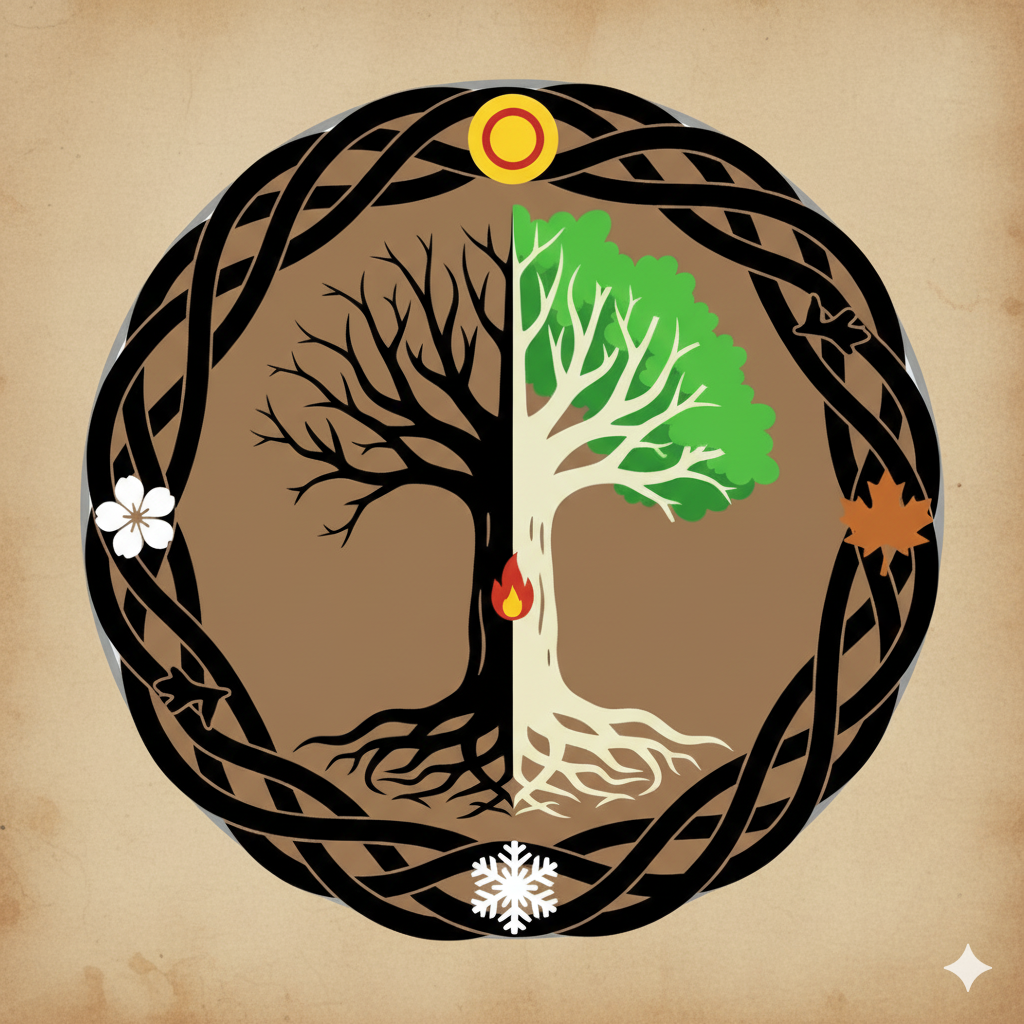
By Ikbium and Halvos we flourish, by Otuna and Cadur we shelter
Founding Date
575 DA
Type
Druidic Circle
Capital
Alternative Names
The Saltwood Druids
Training Level
Professional
Veterancy Level
Experienced
Leader
Leader Title
Founders
Government System
Meritocracy
Power Structure
Semi-autonomous area
Economic System
Barter system
Parent Organization
Deities
Location
Controlled Territories
Neighboring Nations

Comments