
Sameb (Sah-meb)
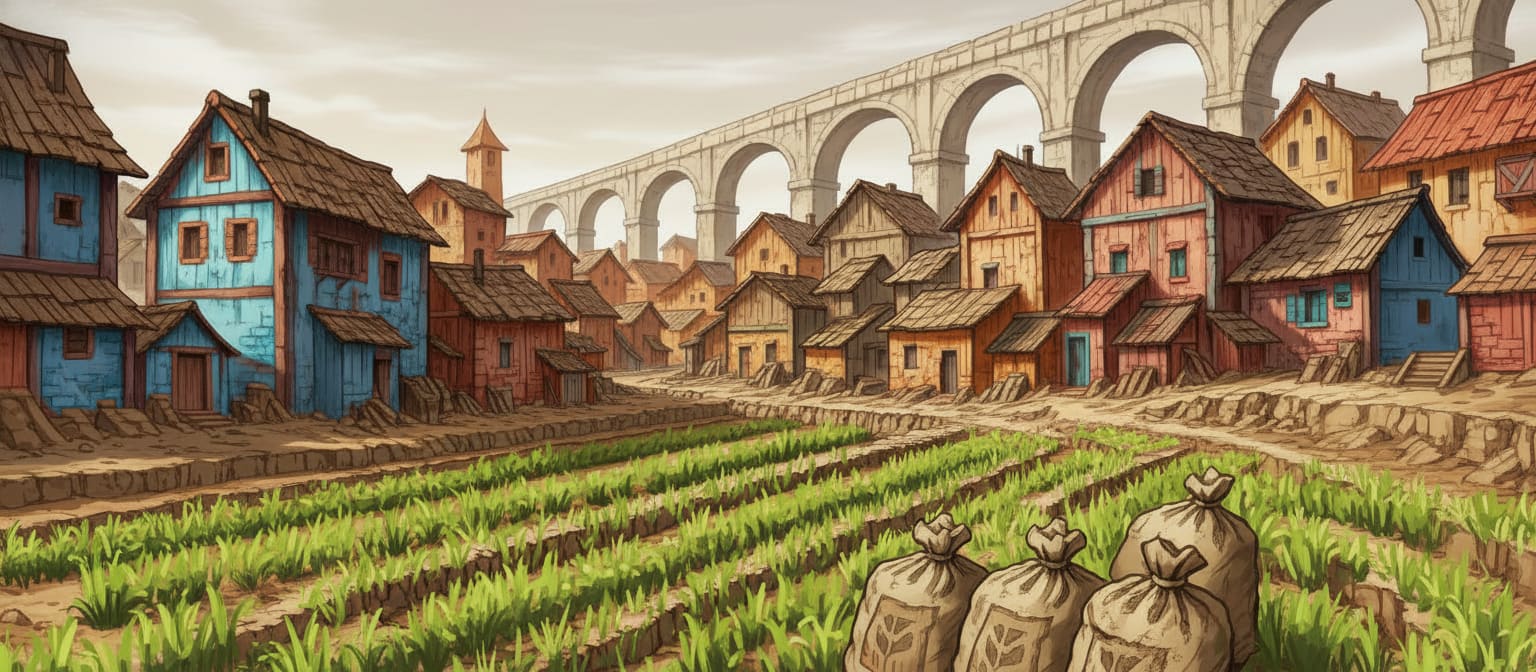
Sameb is the primary agricultural hub of the desert region, built around the junction point where the Luminara–Technara aqueduct system delivers steady water into an otherwise dry basin. The aqueducts were constructed using abericlase-powered machinery and joint engineering from both territories, and Sameb formed naturally at the point where water access, fertile terraces, and transport routes intersect.
The town’s farming output supports most of the desert settlements. It receives magical fertilizer shipments from Meggalor Mill. Sameb stores, redistributes, and applies those shipments to the terraces, making large-scale crop production possible.
To travelers, Sameb appears like a normal farming community with irrigation channels, terraced fields, and houses clustered around the main aqueduct junction. Only those who stay long enough notice the tension sitting beneath the surface.
Simmering Sands - SpoilerA number of individuals show signs of outside influence—changed behavior, sudden aggression, unexplained disappearances. Some operate quietly behind the scenes, disguised as ordinary residents, merchants, or workers. Their presence keeps tension high and steers the population toward unrest while hiding behind the appearance of a normal farming town.
To most people, Sameb is just a place where crops grow and caravans pass. To anyone who looks deeper, something else is running beneath the surface.
Demographics
Sameb is made up mostly of human farming families, aqueduct workers, and traders who have lived here for generations. Smaller populations of halflings, dwarves, and desert-adapted folk fill specialized roles such as masonry, channel maintenance, and caravan handling. The population fluctuates with planting and harvest seasons due to laborers and traveling merchants passing through.
Government
A single elected mayor oversees the town. The mayor’s responsibilities center on water allocation, irrigation scheduling, coordinating fertilizer deliveries from Meggalor Mill, resolving land conflicts, and managing seasonal labor. Administrative structure is minimal; decisions tend to be practical and tied directly to crop production and infrastructure upkeep.
Defences
Sameb has limited defenses. A volunteer militia patrols the terraces and roads, mostly to deter bandits and protect shipments. Watchtowers overlook the basin, but the town has no walls or formal military. Its remote location and the harsh desert act as natural barriers.
Industry & Trade
Agriculture is the town’s core industry. Sameb produces most of the desert’s locally grown food, including needlegrain, saltbeans, embermelon, dryleaf, and other hardy crops. Meggolar Mill’s magical fertilizer is stored and distributed here, enabling crop yields far beyond what local soil could normally support.
Caravans arrive regularly to purchase food supplies, acquire fertilizer allotments, and restock water before crossing the desert. Trade routes from the Bridge of Chuldriz and the surrounding settlements all converge on Sameb.
Infrastructure
The aqueducts define the town’s layout. They deliver water into large cisterns, which feed controlled irrigation channels branching across the terraced farmland. Old abericlase machinery remains embedded in several water-control stations, though much of it is locked behind reinforced housings for safety.
Houses are built from packed clay and stone. Roads are dust-packed and unpaved. Storage barns for fertilizer and harvest goods sit near the town center. Processing sheds for drying, milling, and sorting crops line the inner terraces.
Districts
Residents refer to three informal districts. The High Rows sit near the aqueduct arches and contain homes, workshops, and administrative buildings. The Low Rows cluster around the farmland where most workers live close to their fields. The Verge borders the the end of the town in the direction of Solmaris; or Bridge of Chuldriz it contains scavenger camps, unstable ground, and the town’s roughest activity.
History
Sameb formed immediately after water from the aqueducts reached the basin. Workers remained to maintain the channels, farmers established terraces, and fertilizer shipments made the location ideal for long-term agriculture. Over centuries, the town expanded as crop production increased and trade routes solidified. Sameb eventually became the central farming hub relied upon by much of the desert.
Geography
The town sits in a shallow desert basin with compacted clay and fractured sediment beneath the sand. The surrounding slopes are carved into terraces irrigated by controlled water releases. The region is otherwise flat, dry, and exposed.
Climate
Sameb experiences extreme heat during the day, sharp temperature drops at night, and frequent dust storms. Rain is rare, and when it occurs, irrigation gates must be adjusted to prevent overflooding. Growing seasons are defined by water availability rather than temperature shifts.
Comments