

Rifted Man
“The Rift took our homeland but not our strength. Here we stand still—unyielded, unbroken, and unmistakably human.”
The Rift-transplaced humans—formally recognised by Imperial scholars as Homo riftensis and known throughout the realm as the Gens Imperialis—are the only human lineage present in Exilum Novum. Drawn from the Nova Province of Rome eight centuries ago, they arrived bewildered but unbowed, carrying with them the laws, gods, ambitions, and martial organisation of their lost world. Their swift consolidation into the Imperium Novum marked a decisive turning point in the continent’s history, for no other people have expanded so rapidly nor reshaped the land so thoroughly.
Though still physiologically human, generations of exposure to arcane resonance have subtly altered their bloodlines. Average lifespans are markedly longer, a rare few develop innate magical potential, and entire families can trace such gifts through their ancestry like noble heraldry. Religious devotion, once symbolic, now channels demonstrably real divine power—though only the most devout are ever entrusted with it, and the gods withdraw their favour as swiftly as they bestow it.
Despite these changes, the Gens Imperialis remain fundamentally the same species that marched beneath Roman standards on Old Earth. Their adaptability, discipline, and cultural cohesion have allowed them not merely to survive but to dominate a land populated by elves, dwarves, halflings, jotun, and the warborn hordes. Minor variations are emerging among frontier communities exposed to elven glades or warborn battlegrounds, but these have yet to become distinct subgroups.
They are, in essence, humans forever changed yet eternally familiar—children of two worlds, shaped by neither alone.
Basic Information
Anatomy
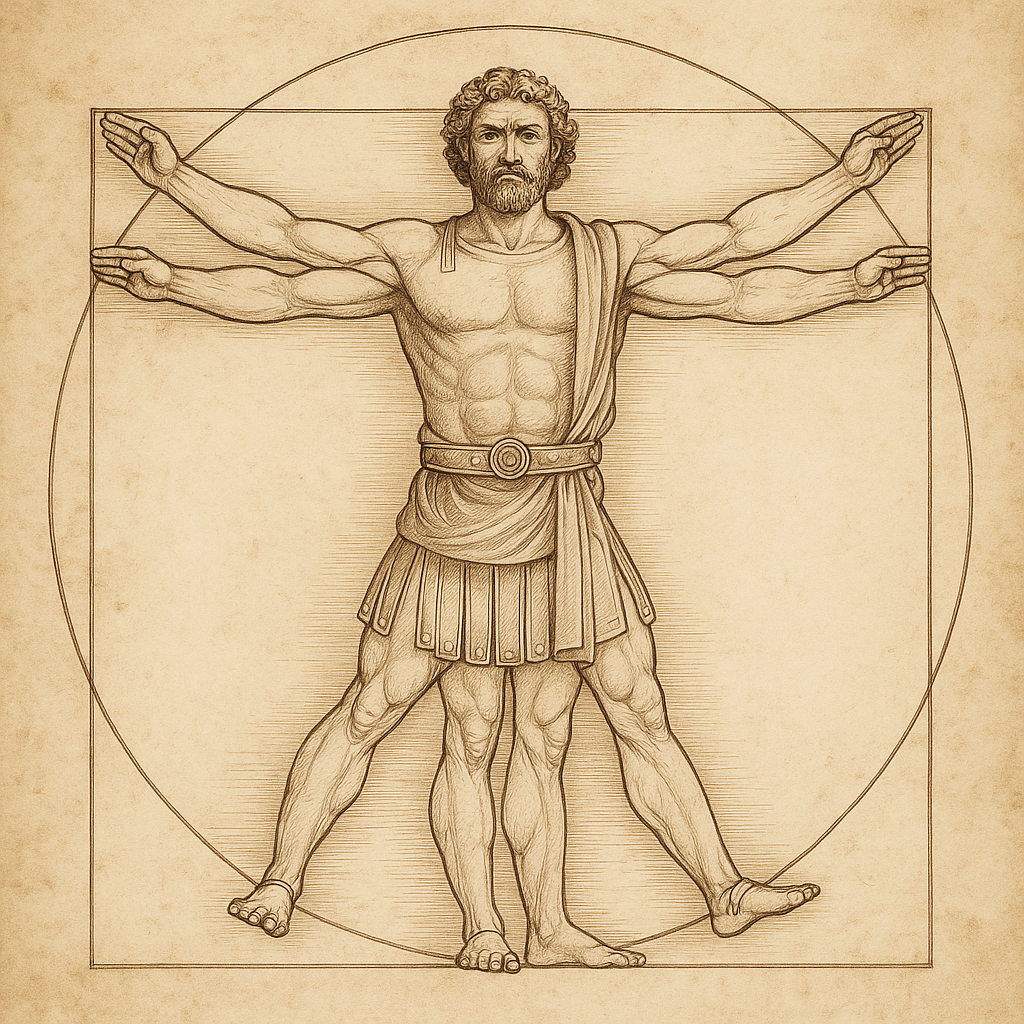
The Gens Imperialis retain the full anatomical range of their Old Earth ancestors, for the Rift altered none of the fundamental structures that define humankind. They are bipedal primates with upright posture, a versatile musculoskeletal system built for endurance, and a dexterous hand structure capable of fine manipulation—the bedrock upon which Imperial engineering, artistry, and warfare have thrived.
While their core physiology remains unchanged, eight centuries in Exilum Novum have introduced subtle pressures and arcane influences that now mark the species. Average stature has increased slightly, a trend Imperial physicians attribute to improved diet and the ambient magical resonance permeating the continent. Bone density is fractionally higher than historical Earth accounts suggest, perhaps a response to the varied climates and the physical demands of frontier life.
Most striking is the near-undetectable arcano-biological signature present in all humans, regardless of magical ability. This faint resonance is harmless and functionally dormant in most individuals, but in rare families it aligns with hereditary traits that permit latent or active spellcasting. Scholars note that this glow—observable only under certain arcane instruments—does not constitute a new organ or sensory system, but rather a subtle harmonisation of existing neural and circulatory structures with Rift energy.
Facially and structurally, humans remain highly diverse, with wide variation in skin tone, hair texture, and body type. The frontier-born often show adaptive traits: hardier musculature among the Warborn borderfolk, and a peculiar lightness of step or heightened poise among those raised near elven forests. None of these traits represent true subspeciation, but they hint at the earliest beginnings of regional human branches shaped by Exilum Novum’s unique environments.
Biological Traits
Humans of the Imperium display a broad but recognisably unified set of biological traits. Their average lifespan has extended to around ninety years, a change attributed to stable living conditions and low-level arcane resonance permeating the world. Height and build vary widely, though most adults fall within a moderate range shaped more by diet and lifestyle than genetics.
All members of the species possess a faint arcane signature—usually dormant—that reflects generations of exposure to the Rift. Fewer than five percent exhibit true magical aptitude, yet even the ungifted show a slightly elevated resistance to ambient magical effects compared to other peoples. Frontier populations sometimes develop minor regional traits: greater physical hardiness near Warborn territories or subtle elven-influenced gracefulness in those raised near ancient forests. Despite these variations, all remain fundamentally human without formal subspecies.
Genetics and Reproduction
Reproductively, the Gens Imperialis remain fully consistent with their Old Earth ancestry. They reproduce sexually, with gestation lasting roughly nine months, and hereditary traits—physical, temperamental, or arcane—passing through familiar Mendelian patterns. The Rift did not introduce new reproductive mechanisms but subtly reshaped the expression of some genes over many generations.
The most consequential genetic shift concerns arcane aptitude. Fewer than five percent of humans exhibit measurable magical potential, yet its inheritance follows an irregular pattern: a child born to a magically gifted parent is statistically more likely to possess latent or active ability, though the trait can also manifest spontaneously in bloodlines with no recorded history. This unpredictability suggests that human genetics now interact with Rift energies in complex ways that Imperial scholars have yet to fully map.
Interbreeding with other species remains highly constrained. Despite numerous cross-cultural unions with halflings, dwarves, and citizens of the Brass Cities, there are no known cases of viable offspring—an anatomical compatibility that fails at the genetic level. Only elves can bear hybrid children with humans, and even then, such births are exceedingly rare and follow a strict pattern: the mother is always elven, the father always human. These half-elven offspring inherit traits from both lineages, though they do not represent a separate human subspecies.
Across the Empire, fertility rates remain steady, with no evidence that arcane exposure has reduced reproductive viability. Frontier populations show slight increases in twinning and minor physiological variations, but nothing suggesting a branching of the human species. In all essential respects, the Gens Imperialis remain recognisably and resiliently human.
Growth Rate & Stages
Human development in Exilum Novum follows the same broad pattern recorded in Old Earth histories, though subtle shifts have emerged over the eight centuries since the Rift. Infancy and childhood progress at familiar rates, with children reaching early physical and cognitive milestones indistinguishable from their ancestral norms. Adolescence, however, has lengthened slightly; Imperial physicians note that full adult maturity—both in physique and temperament—tends to stabilise closer to seventeen or eighteen years rather than sixteen.
Culturally, the Imperium marks sixteen as the formal threshold of adulthood, a tradition inherited from Old Earth yet reinforced by centuries of military expectation and civic structure. At this age a young person is considered legally responsible and, unless apprenticed or mage-born, obligated to enter service in the legions upon turning eighteen.
Arcane lines show minor deviations in growth. Children born to magically gifted families may experience heightened sensory awareness or early emotional intensity, though these traits usually even out by adulthood. In rare cases, latent magic manifests during adolescence, often triggered by stress, strong emotion, or exposure to concentrated Rift energy.
Lifespan extension has subtly altered the later stages of life. Middle age now begins closer to the mid-forties, and elders remain active well into their seventies. Decline tends to occur more gradually, with most reaching their late eighties before frailty overtakes them. Despite this shift, the essential human lifecycle remains unchanged—proof that even in a world shaped by arcane tides, humanity’s rhythms endure.
Ecology and Habitats
Humans are among the most adaptable species in Exilum Novum, capable of thriving in nearly every environment the continent presents. Their arrival from Old Earth placed them initially in temperate farmlands and rolling river valleys—an ecology close enough to their native conditions that early survival required more resolve than reinvention. Over the centuries, however, the Gens Imperialis expanded into regions radically different from their ancestral home, proving their remarkable environmental flexibility.
Within the fertile heartlands of the Imperium, humans flourish in cultivated environments shaped by irrigation, terrace-farming, and extensive settlement networks. Urban populations cluster around river systems, where stable climates and rich soils support dense communities, civic architecture, and the bustling trade networks that sustain the Empire. These regions represent the ecological ideal for most humans: warm to temperate climates, reliable seasons, and landscapes easily shaped by labour and engineering.
Frontier populations reveal a different ecological relationship. In the northern marches, where bitter winds and Warborn incursions test endurance, humans have grown markedly hardier. Generations spent in fortified holds, rugged highlands, and sparse woodlands have produced communities attuned to harsher climates and physical demands. Meanwhile, the eastern borderlands—where Imperial settlements brush against ancient elven forests—show the opposite trend: humans living beneath the influence of old magic often develop subtle refinements in balance, perception, or temperament, which scholars attribute to long-term exposure to the forests’ ambient enchantments.
Coastal and maritime habitats also host significant human populations, particularly in partnership with halfling traders. These communities adapt readily to salt air, variable weather, and the demands of seafaring life, integrating shipcraft and navigation into their local identities. Even subterranean-adjacent human enclaves exist in dwarven treaty cities, though prolonged life underground remains uncommon due to limited sunlight and unfamiliar atmospheric conditions.
Ultimately, despite regional specialisations and the faint imprint of arcane environments upon their physiology, humans remain ecologically defined not by where they originate but by their ability to impose structure, agriculture, and civilisation upon any land they inhabit. Their habitats reflect this: wherever the Imperium reaches, humans root themselves deeply, reshape their environment purposefully, and endure.
Dietary Needs and Habits
Humans of the Imperium remain broadly omnivorous, capable of digesting native Exilum Novum flora and fauna with remarkable ease. Early speculation that alien ecosystems might prove incompatible with human biology proved unfounded; within a generation of the Rift, Imperial settlers were tilling local grains, hunting indigenous game, and cultivating fruits and vegetables unique to the continent. Imperial physicians attribute this compatibility to the Rift’s harmonising effect on translocated life—an arcane adjustment that, intentionally or not, rendered native species nutritionally viable for the newcomers.
Rifted species from other civilizations provide a more varied picture. Dwarven fungi, dense and mineral-rich, are safely consumed and have even become prized staples among legionaries for their longevity and restorative qualities. Elven plants—particularly silverbloom reeds and moonleaf greens—are edible but require careful preparation, as their natural magical resonance can overwhelm the untrained palate. Brass City spices and fruits are enthusiastically adopted across the Empire, their intense flavours and unusual textures well suited to human culinary creativity. Even halfling maritime species, including Rift-borne fish and shell-creatures, pose no hazard and are now commonly traded along the coasts.
The greatest caution concerns flora and fauna associated with the Orcs and Goblins. Their ecosystems are steeped in a corruption colloquially termed warborn taint—a malignant arcane signature that renders their plants and animals toxic to humans and most other species. Consumption results in immediate illness, and prolonged exposure can cause lingering debilitation. As a result, Imperial law forbids the trade, handling, or consumption of any biological material originating from Warborn territories, with severe penalties for violation.
Culturally, human diets vary by region. Heartland cuisine features grains, domesticated livestock, and river-fish; frontier diets lean heavily on hardy game and preserved foods; coastal communities embrace halfling maritime traditions. Despite this diversity, the unifying trait remains adaptability: wherever humans settle, they learn the rhythms of local ecosystems swiftly and fold new flavours into a cuisine that is, like their species itself, shaped by two worlds yet beholden to neither.
Biological Cycle
The biological rhythms of Homo sapiens riftensis remain fundamentally aligned with those of their Old Earth ancestors, yet centuries in Exilum Novum have introduced subtle influences—some environmental, some arcane—that now mark the human lifecycle. Seasonal changes affect humans less dramatically than many native species, but patterns of energy, temperament, and health do shift throughout the year in ways Imperial physicians have carefully recorded.
Humans thrive in temperate climates and follow a circadian cycle tied to the rising and setting of the sun, a rhythm that has remained intact despite the continent’s varied latitudes and magical disturbances. In the fertile provinces, seasonal transitions bring only modest changes: greater vigour in the long days of summer, mild lethargy during deep winter, and increased susceptibility to minor illnesses during the damp fluctuations of early Aestas and late Noctis.
Arcane influences play a quieter role. In regions where ambient Rift energy is higher—such as the eastern elven borderlands or territories near ancient Rift Scars—humans often show heightened sensitivity during certain lunar phases or Aetherion events. These effects are subtle: restless nights, vivid dreams, or fleeting moments of intuitive clarity. Magically gifted individuals experience these fluctuations more intensely, their abilities waxing and waning in faint correspondence with the continent’s arcane tides.
Reproductive cycles remain unchanged, though some midwives report that births cluster around periods of heightened arcane resonance, particularly in families with latent magical traits. Elders likewise feel the seasons more keenly in their final decades; some describe winter as “heavier” or “colder,” though no measurable physiological decline has been linked to specific months.
Despite these minor variations, humans do not undergo hibernation, metamorphosis, or dramatic seasonal transformation. Their biological cycle is steady, resilient, and remarkably unaltered—an enduring reminder that even when cast across worlds, humanity’s fundamental nature persists.
Behaviour
Human behaviour in Exilum Novum reflects the same vast spectrum of temperament, intellect, and impulse recorded in Old Earth histories, yet centuries of life beneath the banner of the Imperium Novum have instilled certain shared tendencies that distinguish the Gens Imperialis from their ancestral stock. Above all else, humans display an extraordinary capacity for adaptation—not merely to environment, but to culture, conflict, and the arcane realities of their adopted world. This adaptability manifests as pragmatism, ambition, and an almost instinctive drive to impose order upon their surroundings.
Imperial society prizes discipline, civic duty, and structured hierarchy, and these values shape human behaviour from childhood. Most humans internalise a sense of responsibility to community and Empire, resulting in cooperation, industriousness, and a respect for legal authority. In times of crisis, this cohesion sharpens into determination; in times of peace, it softens into civic participation, scholarly pursuit, or quiet domesticity. Yet this discipline does not negate the more chaotic aspects of human nature: ambition, rivalry, curiosity, and stubborn defiance remain as potent as ever, often fuelling innovation as readily as conflict.
Contact with other species has shaped regional temperaments. Borderfolk who live under constant threat from the Warborn become vigilant, stoic, and quick to action, their psychology shaped by generations of danger. Those raised near elven forests often develop contemplative habits and a heightened awareness of subtle cues, influenced more by environment than genetics. Inland populations, surrounded by stability, tend toward social complexity, political involvement, or scholarly intellectualism.
Humans exhibit no instinctive hostility toward other species, but centuries of warfare, alliances, and treaties have fostered learned biases. Suspicion toward the Warborn is nearly universal; respectful caution characterises relations with dwarves; curiosity marks interactions with elves; and halflings are met with an easy camaraderie rare between cultures. At their core, however, humans remain emotionally diverse—capable of kindness, cruelty, loyalty, treachery, and every shade between.
Psychologically, humans are driven by narrative and meaning. The Rift’s effect on religion—making the gods tangibly real—has reinforced a deep spiritual streak in many, while others channel their energy into legacy, family, or military service. Even in a world shaped by magic, human minds cling to purpose. Their behaviours are not uniform, but their defining trait endures: the will to endure, build, and shape the world around them, whatever its challenges.
165 - 185 cm
60 - 90 kg

Comments