
Legality and Reception:
in Practicing Magick:“In Everwealth, a spark is never just a spark. It is a confession, a crime, a prayer, or a death sentence, depending on who sees it first.”
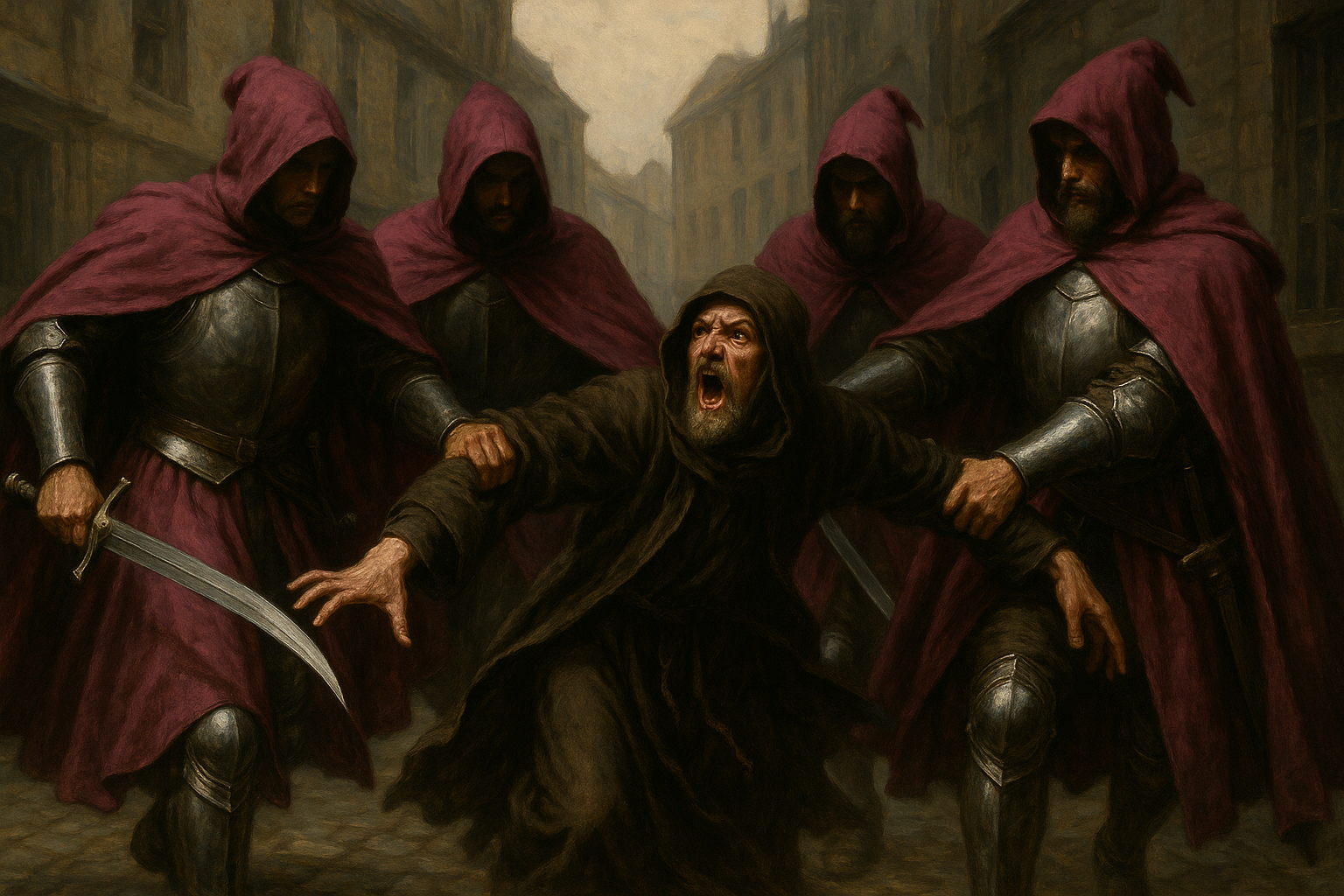
Magick in Everwealth occupies a place so narrow, so suffocating, that few dare to stand in it at all. It is neither sacred nor celebrated, neither trusted nor tolerated. It is managed. Contained. Watched. Feared. Every spell, no matter how small, is treated as a possible echo of The Great Schism; The world’s faith in magick has burned down to a cinder, and The Arcane Coalition has spent centuries since making sure the ember never spreads again. To practice magick is to invite scrutiny. To practice magick unlicensed is to invite death. Law divides all casters into three categories, the sanctioned, the suspect, and the doomed. The first walk on eggshells. The second hide in plain sight. The third are identified only by the absence of their corpses. The License to Practice Magick every mage of Everwealth requires, casts a long shadow across the land. It is both leash and litmus test, a parchment proving skill and more importantly, submission. A licensed mage must keep the document on their person at all times, losing it is treated as an admission of guilt. Every page is riddled with clauses designed less to protect the public than to test the soul’s obedience. Renewals are invasive. Inspections are random. And even those with spotless records are often dragged into the street for “re-evaluation” if a Task Mage’s detection scroll so much as flickers in their direction. To the commonfolk, magick is a ticking bomb. A threat. A temptation. A curse. Licensed casters might be greeted politely, but always at a distance. Many inns refuse them rooms. Some villages bar them entirely. Children cross the street when they see the magenta-cloaked silhouette of a Task Mage approaching, aware that those who stand too close sometimes vanish alongside their targets. Unlicensed casters, hedge mages, meanwhile, remain the lurking terror of Everwealth’s collective imagination. To many, they are villains-in-waiting, bearers of doom. To others, often those same casters, they are simply people denied the education needed to survive their own gifts. But the Coalition makes no distinction. A spark is a spark. Intent is irrelevant. Control is everything. Enforcement is swift and theatrical. Rogue mages are hunted with a religious fervor that borders on obsession. Coalition riders storm into villages without warning, dragging suspected casters from their homes in Hexsteel shackles that blister skin and shred the soul. Accused alchemists have their cauldrons overturned in the street, their shops burned, even if their only crime is brewing a tonic above their registered potency class. Entire families may be inspected if a single child shows arcane sensitivity. Records are kept by bloodline, and older citizens whisper that even death does not guarantee a name’s removal from surveillance ledgers. The risks of being a mage do not cease with licensure. One incorrect gesture, one misfired spark during a panic, one neighbor with a grudge, and your license becomes your own warrant for execution. And still, magick persists. It clings to the cracks of the world like moss on tombstones. Unauthorized practitioners hide in forest shacks, swamp huts, cellar crypts. They say the Coalition avoids these places not out of mercy but superstition, for the land itself remembers when magick ran free, and resents the boot upon its throat. Public reception is a study in contradiction. People hiss at known casters, yet line up for their help in secret. They fear sorcery, yet pray daily for miracles, they spit on licensed mages, yet curse the Coalition when no healer arrives in time to save a child’s life. Every Everwealthy soul carries the same shameful truth. They hate magick, but they need it. They loathe the Coalition, but they fear what comes without it. And in the darkest corners of taverns, under whispered breath, one question resurfaces again and again; Which is more dangerous, the mage who learns too much, or the Coalition that decides who may learn at all? Few dare to answer aloud. For in Everwealth, judgment falls not from the gods, but from the next set of magenta cloaks appearing over the horizon.
World Codex
Timelines
All writing and lore by author Patrick Enger; All art done by Chat-GPT (for now).